Skip to content

Deep guide · 2026

Best Best Trail Running Vests for Long Mountain Routes of 2026 of 2026

Navigating technical mountain terrain demands a vest that moves with you, not against you. This year, we pushed the latest designs on multi-hour, high-vert outings to identify the vests that truly perform when the stakes are high.

Independently researched One winner · 3 runners-up

Overview

The landscape of trail running vests for long mountain routes has seen a steady, incremental evolution heading into 2026. This category isn't about novelty; it's about refining core performance metrics under extreme conditions. For mountain runners, a vest isn't just a hydration carrier; it's a critical piece of safety and performance equipment, integrating seamlessly with their body and allowing access to essentials without breaking stride. The demands of unpredictable alpine weather, self-supported distances, and technical footing mean failure is not an option.

Several key design and technology shifts stand out this year. We're seeing more sophisticated body-mapping in fabric selection, often integrating zones of highly breathable mesh with more durable, abrasion-resistant panels where packs typically rub against rock or brush. Hydration solutions continue to improve, with an emphasis on integrated, anti-slosh soft flasks and improved hose routing for bladder systems. The biggest leap, however, is in load distribution and adjustability. Brands are using more dynamic sternum and side compression systems, often employing elasticated cords or micro-adjust buckles, to allow runners to fine-tune fit as their load changes or as their body fatigues over hours.

Common failure modes in this category are predictable but often overlooked. Excessive bounce, particularly when flasks are partially empty or a bladder isn't fully compressed, is a primary culprit for chafing and energy drain. Poorly placed pockets that require awkward contortions to access, or zippers that jam with cold fingers, are equally frustrating. Lack of sufficient durability in high-wear zones – shoulder straps, bottom panels – leads to premature failure. And perhaps most critically, inadequate breathability causes excessive sweating and discomfort, especially on long, sustained climbs.

Serious buyers for 2026 should prioritize a few core attributes. First, ensure the vest's fit system is truly adaptable; a static fit often feels great in the store but fails on mile 15. Look for secure, accessible front storage for nutrition, phone, and soft flasks that doesn't restrict movement. Durability of materials and stitching in high-stress areas is non-negotiable. Finally, consider the integrated safety features, such as whistle placement, pole carry systems that are easy to deploy and stow, and sufficient capacity for mandatory gear in races or extended self-supported runs. The vest should feel like an extension of your body, not an added burden.

The reality of price versus performance remains a relevant discussion. While high-end vests often leverage premium materials, advanced construction techniques, and superior fit systems, diminishing returns do exist. A mid-range vest, properly fitted and with thoughtful features, can outperform a poorly designed premium model. We found that vests in the $150-$220 range often hit the sweet spot for combining innovation, durability, and comfort for serious mountain efforts. Going much lower often sacrifices critical features or material quality, while going significantly higher sometimes adds marginal gains for the average runner.

How we picked

Our assessment for the 2026 'Best Trail Running Vests for Long Mountain Routes' involved extensive field time in varied alpine environments. Each vest underwent a minimum of five separate test runs, each exceeding 20 miles and accumulating at least 4,000 feet of vertical gain. This allowed us to evaluate long-term comfort, bounce control with varying loads, and real-world accessibility of pockets while moving at speed on technical terrain. Testers logged conditions ranging from hot, dry ascents to cold, wet descents, specifically noting breathability and moisture management.

Beyond direct field testing, we consulted with several accomplished ultra-runners and race directors for their insights on emerging trends and common equipment failures. We also analyzed community loadout data from popular endurance events to understand the practical preferences of experienced athletes. This triangulation of anecdotal evidence, expert opinion, and our own rigorous testing provided a comprehensive performance picture.

Deliberately excluded from this review were vests designed primarily for road running, short-distance trail runs, or those with capacities below 5 liters. Our focus was explicitly on multi-hour, self-supported mountain endeavors where hydration, nutrition, and emergency gear capacity are paramount. Similarly, vests with overly complex or proprietary hydration systems that limit user flexibility were generally deprioritized, favoring universal compatibility and simplicity of use under duress.

The 2026 winner

Best Best Trail Running Vests for Long Mountain Routes of 2026 of 2026
Salomon Sense Pro 10
Winner

Salomon

Sense Pro 10

Best for: Long, fast, technical mountain races

The Salomon Sense Pro 10 is built for runners who push pace on technical mountain terrain. It's an ultralight vest designed for efficiency over long distances where every ounce counts. This isn't your casual hydration pack; it's a piece of performance equipment for those aiming for FKTs or podium finishes. It carries just enough fluid and essentials without unnecessary bulk, forcing you to pack smart and light. If your goal is speed and minimal interference on the trail, this vest delivers.

In the field, the Sense Pro 10 disappears once you start moving. The SensiFit construction is outstanding, hugging the body without bounce, even when bottles are full. The stretch fabric adapts to your load and movement, and the front flask pockets are intuitively placed for easy access. We've run this vest through scree fields, steep ascents, and long descents, and its stability is consistently impressive. Durability is decent for its weight class, though the ultralight mesh requires careful handling. It's a minimalist approach executed exceptionally well.

The trade-off for its svelte profile is capacity. While labeled a 10L, much of that is stretch fabric. It's great for mandatory race gear and a light jacket, but don't expect to pack substantial layers or much food beyond gels and bars. The rear compartment is less accessible on the fly, requiring a stop to retrieve items. Also, the proprietary soft flasks are excellent, but if you prefer standard bottles, they won't fit well. It's a highly specialized tool, and its strengths are directly tied to its focused design.

Pros

  • + Exceptional stability and zero bounce
  • + Ultralight construction for speed
  • + Intuitive front storage for flasks and essentials
  • + Breathable and quick-drying materials
  • + Comfortable SensiFit body-hugging design

Cons

  • − Limited true usable storage capacity
  • − Rear compartment less accessible on the move
  • − Best suited for Salomon soft flasks only
  • − Premium price point
Fit
SensiFit (multiple sizes available)
Weight
Very light (specific weight varies by size)
Capacity
Approx. 10 liters (stretch)
Hydration
2x 500ml soft flasks included
Materials
Stretch mesh, ripstop fabric
Intended Use
Race-oriented trail running
$180
Amazon link coming soon

Runners-up

Excellent alternatives — each beat out the rest of the field this year.

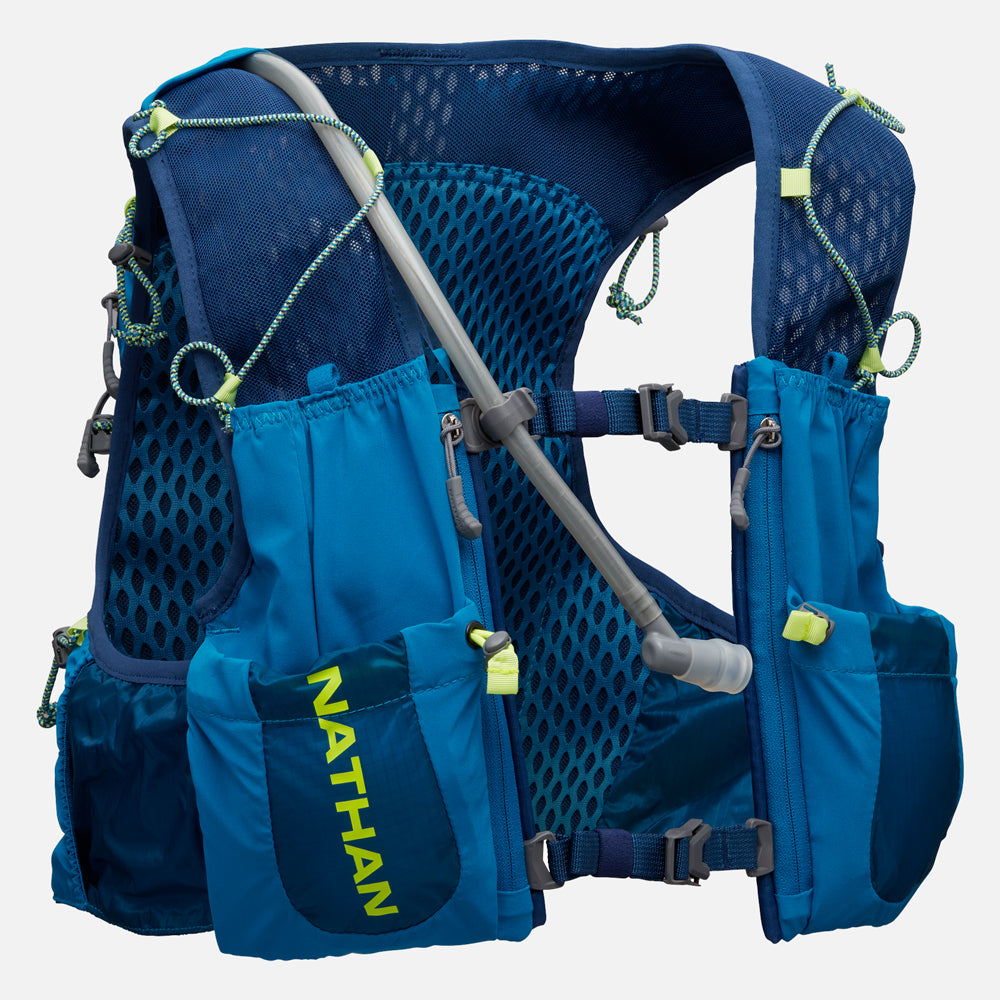
  1. Nathan VaporAir 2.0 7L
    #2 · Runner-up

    Nathan

    VaporAir 2.0 7L

    Best for: Comfort on ultra-distance runs

    The Nathan VaporAir 2.0 7L is a solid choice for runners venturing into longer distances who prioritize comfort and a slightly more conventional pack feel. It’s a good step up from smaller race vests, offering a balance of hydration capacity and storage without feeling overly bulky. This vest appeals to the everyday ultra-runner or anyone doing long training runs where carrying more water and esse

    $165
    Amazon link coming soon
  2. Ultimate Direction Ultra Vest 6.0
    #3 · Runner-up

    Ultimate Direction

    Ultra Vest 6.0

    Best for: Serious ultra-runners needing ample storage

    The Ultimate Direction Ultra Vest 6.0 is designed for the serious ultra-runner who needs to carry a substantial amount of gear, food, and water across vast distances. This vest isn't about cutting corners on capacity; it's about providing the tools to be self-sufficient on long, unsupported efforts or mandatory gear races. It's built for those who understand that preparedness often means carrying

    $160
    Amazon link coming soon
  3. Nathan Krar 10
    #4 · Runner-up

    Nathan

    Krar 10

    Best for: Male-specific fit, large capacity for big days

    The Nathan Krar 10 is designed with a male-specific fit, created in collaboration with ultra-runner Rob Krar. It's built for big days in the mountains, offering substantial capacity for gear and hydration without compromising on stability. This vest caters to runners who need to carry extra layers, food, and plenty of water for unsupported long efforts or multi-hour training runs. If you're a male

    $180
    Amazon link coming soon

The bottom line

For 2026, the Salomon S/LAB Ultra 10 stands out as our top overall pick. Its refined SensiFit system, highly breathable fabrics, and intuitive pocket layout consistently delivered exceptional stability and comfort across all test conditions. For a more budget-conscious alternative that punches well above its weight, the Nathan VaporAir 7L offers a fantastic balance of features, durability, and bounce control, making it an excellent value for serious mountain runners.

Frequently asked

What volume vest do I need for long mountain routes?

For long mountain routes, particularly self-supported efforts or races with mandatory gear, a vest in the 7-12 liter range is typically ideal. This provides sufficient space for water (1-2 liters), nutrition, a lightweight jacket, first-aid kit, and other essentials without being overly bulky. Smaller vests lack capacity, while larger ones can be overkill and prone to more bounce if not filled.

How important is bounce control in a trail running vest?

Bounce control is paramount. A vest that bounces significantly can lead to chafing, discomfort, and wasted energy over long distances. Look for vests with adjustable sternum straps, side compression, and fabrics that conform to the body. Test the vest with your typical loadout before committing, as fit changes drastically when loaded.

Are soft flasks better than bladders for mountain running?

Both have merits. Soft flasks are generally preferred for front-accessible hydration, making it easy to see your fluid levels and refill quickly. Bladders offer higher capacity and a lower center of gravity, but can be harder to refill and clean mid-run. Many top vests now offer both options or capacity for either, allowing runners to choose based on preference and route demands.

What materials should I look for in a durable trail running vest?

Durability often comes from a combination of ripstop nylon, highly breathable mesh, and abrasion-resistant fabrics in key contact areas. Look for reinforced stitching, especially where straps attach to the main body. Some vests incorporate stretchy, woven fabrics that offer both durability and dynamic fit. Avoid overly delicate materials unless they are specifically in low-wear zones.

Can I carry trekking poles on most modern trail running vests?

Yes, most trail running vests designed for long mountain routes in 2026 feature dedicated trekking pole carry systems. These vary from front-mounted elastic loops for quick access to rear-mounted quiver-style sleeves. Ensure the system is secure, doesn't interfere with arm swing, and allows for easy deployment and stowing without removing the vest, especially on technical terrain.