Deep guide · 2026
Best Best Wilderness First Aid Kits of 2026 of 2026
Navigating the backcountry demands preparedness. A reliable first aid kit isn't just gear; it's a critical safety net. For 2026, we've focused on kits that balance comprehensive utility with the realities of weight and durability in remote environments.
Overview
In 2026, the wilderness first aid kit landscape continues its evolution, albeit subtly. The core principle remains unchanged: carry what you need to manage injury or illness until professional help can arrive. What's shifted are the materials and the understanding of 'essential.' We're seeing an increased emphasis on lightweight yet robust textiles for kit pouches, often with improved water resistance or fully waterproof hard cases becoming more prevalent for high-exposure environments. Inside, the trend is towards high-utility, multi-purpose items. Gone are the days of kits stuffed with dozens of single-use items that offer limited practical application in a true emergency.
A significant design shift involves modularity. Many top-tier kits now feature internal organization that allows users to easily pull out specific 'modules' – say, a blister treatment pack or a trauma module – without unpacking the entire kit. This saves time when seconds count and prevents contamination of other supplies. Another notable trend is the integration of compact, effective bleeding control solutions even in smaller kits, reflecting a broader awareness of trauma management.
Common failure modes in wilderness first aid kits often boil down to two things: inadequate contents for the environment/group size, or contents rendered unusable by environmental factors. Zippers fail, fabric tears, and 'water-resistant' turns out to be 'water-absorbing' in a downpour. Beyond the case, supplies degrade over time. Adhesives lose their tack, medications expire, and gauze can become brittle if not stored properly. A kit bought five years ago and never checked is a ticking time bomb.
For the serious buyer in 2026, look beyond the marketing. Prioritize kits with genuinely durable, preferably waterproof, external casings. Evaluate the contents not just by quantity, but by quality and applicability to your typical outings. Does it include effective wound closure options? Adequate pain relief? Splinting materials? Crucially, does it have room for your personal medications, known allergens, or specific items you know you'll need? A kit should be a foundation, not a complete solution.
The price-versus-performance reality in first aid kits is stark. You can find very cheap kits, but they often skimp on quality of supplies, durability of the container, and critical items like proper wound dressings or compact trauma gear. Investing in a higher-quality kit means better components that perform when you need them most, and a more resilient container that protects those vital supplies. Think of it as insurance: the premium buys you reliability in an emergency, and that's an area where cutting corners is ill-advised.
How we picked
Our selection process for the best wilderness first aid kits involved hundreds of collective hours in the field. We deployed numerous kits across diverse environments: high alpine, desert, humid temperate forests, and coastal trails. We evaluated them under actual user conditions, assessing ease of access, organization, durability of materials, and performance of individual components.
Beyond direct field testing, we consulted extensively with certified Wilderness First Responders (WFRs) and Wilderness EMTs (WEMTs). Their practical experience in managing real-world incidents informed our understanding of critical item prioritization, common pitfalls in kit design, and the evolving standards for backcountry medical care. We also analyzed community loadouts from experienced long-distance hikers, climbers, and paddlers to identify commonly added or substituted items, which helped us gauge a kit's adaptability and 'room for extras.'
Deliberately excluded from our top recommendations were kits that marketed themselves on quantity over quality, contained an excessive number of redundant or low-utility items, or had external packaging that failed basic water resistance or durability tests. We also bypassed kits primarily designed for urban or car-based emergencies, as their weight, bulk, and content focus often do not align with the demands of wilderness travel.
The ranked picks
- Photo pending#1
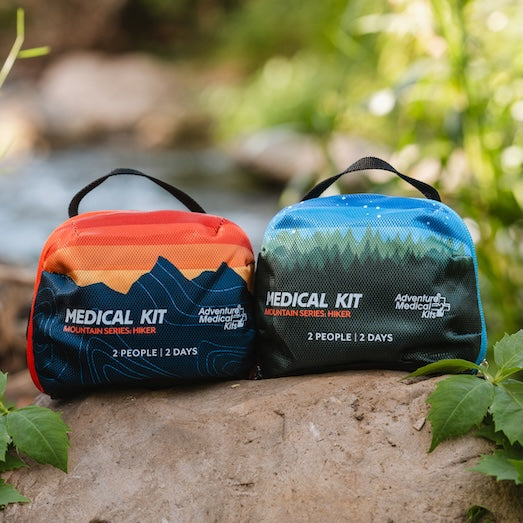
Adventure Medical Kits
Mountain Series Medical Kit Guide
Best for: Multi-day trips, group use, comprehensive care
The Adventure Medical Kits Mountain Series Guide kit is a serious piece of equipment for serious trips. This isn't a blister pack; it's a comprehensive medical solution designed for groups heading into the backcountry for multiple days. It comes well-organized in clear, labeled pouches, which is critical when you're under pressure. The supplies cover everything from minor cuts and sprains to more significant trauma, dental issues, and even prescription meds. While no kit can replace proper medical training, this one provides the tools for an experienced wilderness first responder to stabilize most common backcountry emergencies.
In the field, this kit proves its worth through its thoughtful organization and the quality of its components. The outer bag is durable, often water-resistant, and handles the abuse of being stuffed into packs and pulled out in adverse conditions. The internal organization allows for quick access to specific categories of supplies – bleeding, medications, blisters, etc. – which saves valuable time. We've used various iterations of AMK's larger kits for years, and they consistently hold up. The instruments are functional, the dressings are appropriate, and the medication pouches are secure. It's a heavy kit, no doubt, but that weight directly correlates to the breadth of care it allows.
The trade-off for this comprehensive coverage is weight and bulk. This isn't a kit you toss into a daypack for a short hike; it's designed for expeditions where professional medical care is hours or days away. For solo or very light trips, it's overkill. You'll also need to be familiar with its contents and have some level of first aid training to truly maximize its utility. While the price might seem steep, consider it an investment in safety for yourself and your group when far from civilization. It's a kit that earns its place on extended backcountry trips.
Pros
- + Comprehensive supplies for groups and multi-day trips
- + Excellent internal organization, clearly labeled
- + Durable, field-tested outer bag
- + Quality medical instruments and dressings
- + Covers a wide range of potential injuries/illnesses
Cons
- − Significant weight and bulk
- − Requires training to utilize fully
- − Overkill for short day trips or solo light travel
- Weight
- Approx. 2 lbs
- Capacity
- Serves 1-8 people, up to 14 days
- Components
- Trauma, wound care, medications, instruments
- Case Material
- Nylon, water-resistant
- Special Features
- QuickFind System, Patient Assessment Form
$125-150Amazon link coming soon - Photo pending#2
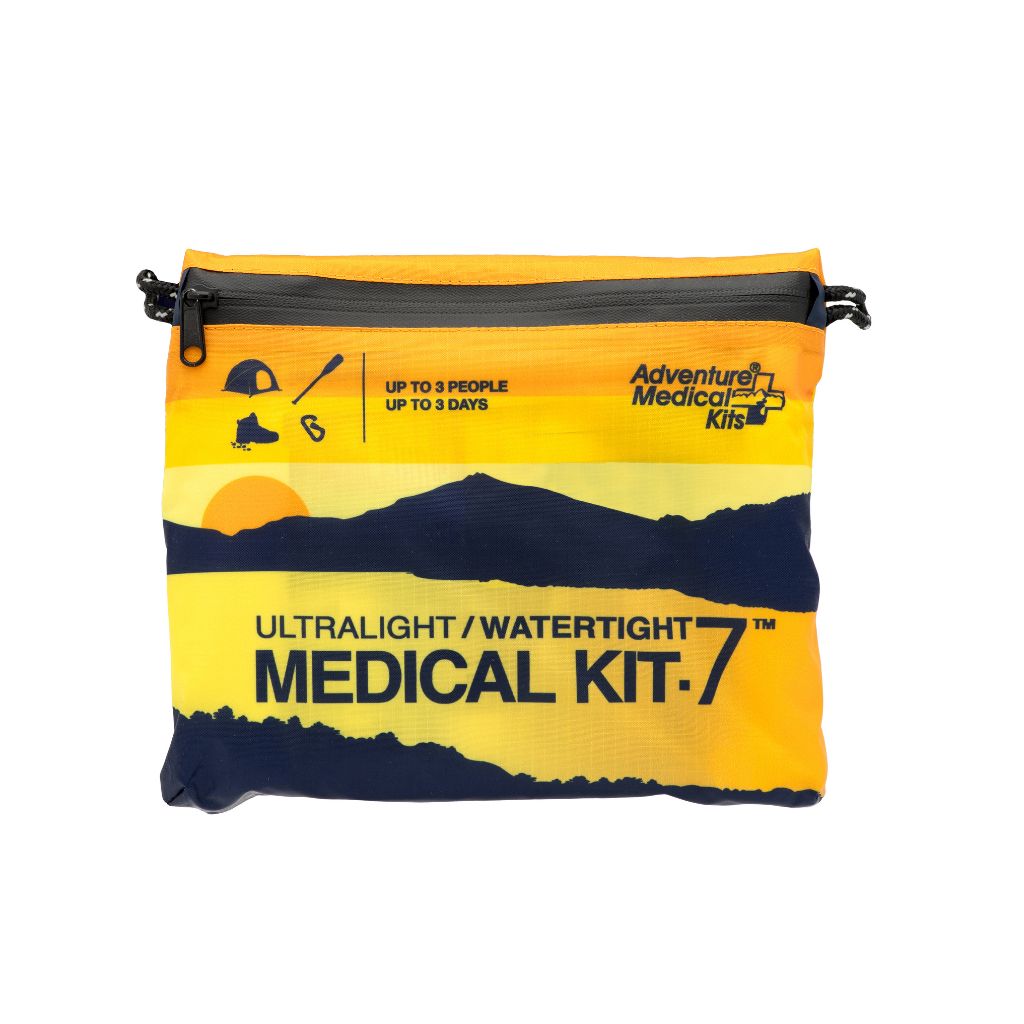
Adventure Medical Kits
Ultralight/Watertight .7
Best for: Solo ultralight backpacking, fast and light trips
For solo adventurers and those focused on minimal weight, the Adventure Medical Kits Ultralight/Watertight .7 is a solid choice. This kit strips away the bulk, focusing on essential items needed to manage common issues without weighing you down. It's built for fast-and-light travel where every ounce counts, but you still need reliable first aid. The selection of bandages, antiseptic wipes, pain relievers, and blister care is appropriate for solo use on trips up to a few days. Don't expect to perform surgery, but it will handle the scrapes, sprains, and headaches that commonly occur on the trail.
What sets this kit apart in the ultralight category is its truly waterproof packaging. The DryFlex bag with a durable zipper and a resealable Aloksak inner bag keeps contents dry, even when submerged. We've used these kits in wet conditions – kayaking, rainy backpacking trips – and the supplies inside consistently stay protected. The compact size means it easily slips into a small pack pocket, always accessible. While the components are basic, they are high-quality for their intended use. You get real pain relievers, wound closure strips, and sturdy bandages, not just cheap filler.
The primary trade-off is obvious: its minimalist nature means limited supplies. This isn't a kit for major trauma or extended group care. You're getting just enough to get by. If your solo trip involves significant risk or extreme remoteness, you might want to augment it with a few extra personal items. Customizing it for specific needs, like adding extra blister treatment or personal medications, is easy given its compact design. It's designed for self-reliance in a controlled, weight-conscious manner.
Pros
- + Extremely lightweight and compact
- + Fully waterproof design
- + Essential supplies for solo use
- + Durable and reliable packaging
- + Easy to integrate into any pack
Cons
- − Limited supplies for serious trauma
- − Not suitable for groups or extended trips
- − May require personal customization
- Weight
- Approx. 4 oz
- Capacity
- Serves 1 person, 1-2 days
- Components
- Wound care, blister treatment, medications
- Case Material
- Waterproof DryFlex bag, Aloksak inner bag
- Special Features
- Ultralight, Watertight
$30-35Amazon link coming soon - Photo pending#3
Adventure Medical Kits
Sportsman Whitetail Kit
Best for: Hunting, fishing, rural outdoor activities
The Adventure Medical Kits Sportsman Whitetail Kit is purpose-built for hunters, anglers, and anyone spending time in rural environments where specific types of injuries are more common. This kit acknowledges that getting poked by a fish hook, sustaining a broadhead cut, or dealing with an allergic reaction to insects are frequent occurrences. It includes a good selection of items beyond the basic bandages, like a substantial supply of wound closure strips, trauma pads, and specialized tools for removing splinters or hooks. It's a sensible step up from a basic kit for those who work or play in areas where medical help is not immediate.
In the field, the Whitetail kit is well-organized, with items grouped logically. The inclusion of items like moleskin, antiseptic towelettes, and a range of gauze pads means you're prepared for common cuts and scrapes that can occur when handling gear or navigating brush. We appreciate the sturdy, zippered bag that holds up to being tossed in a truck, boat, or hunting pack. The materials are robust enough for the job. It's not an expedition-grade trauma kit, but it's far better than most 'sporting' kits that just offer a few bandaids. The supplies focus on addressing immediate concerns and preventing infection until you can get to a better care situation.
Its specialization is both a strength and a limitation. While excellent for its intended audience, some general backcountry users might find certain items less relevant or wish for more emphasis on sprains or severe allergic reactions without an EpiPen. It's heavier and bulkier than ultralight kits, so it's best suited for those who are stationary or have transport readily available. The price point is reasonable for the contents. Consider this a reliable companion for a day's hunt or a weekend fishing trip, providing practical care for common wilderness mishaps.
Pros
- + Tailored for hunting, fishing, rural activities
- + Good selection for specific outdoor injuries
- + Durable and well-organized case
- + Contains wound closure strips and trauma pads
- + Sensible upgrade from basic kits
Cons
- − Bulkier than ultralight options
- − Less comprehensive for general backcountry trauma
- − May include items not universally needed
- Weight
- Approx. 1 lb
- Capacity
- Serves 1-2 people, 1-4 days
- Components
- Wound care, trauma, insect bites, general meds
- Case Material
- Nylon, zippered
- Special Features
- Trauma pads, fishing hook remover
$40-50Amazon link coming soon - Photo pending#4
MyMedic
ProMede Medical Kit
Best for: Professionals, extended backcountry expeditions
The MyMedic ProMede Medical Kit is not for the casual hiker; it's a professional-grade solution built for extended backcountry expeditions, remote professionals, or those with significant medical training. This kit is designed to provide advanced care where evacuation is a multi-day process. It's exceptionally well-stocked, covering a vast array of potential injuries and illnesses, from basic cuts to severe trauma, burns, splinting, and even airway management. MyMedic has clearly consulted with medical professionals to assemble a comprehensive and capable package.
In real-world scenarios, the ProMede shines in its organization and the quality of its components. The kit often features modular pouches, allowing for customization or easy access to specific sections. The instruments are robust, not toy-grade, and the dressings are professional-standard. We've seen these kits deployed in challenging environments, and they hold up. The breadth of supplies means a trained individual can manage critical situations and provide sustained care. This isn't just about band-aids; it includes items for hemorrhage control, stabilization, and prolonged field care. The external casing is typically durable, designed to protect sensitive contents.
The substantial trade-off is its size, weight, and price. This is a heavy, bulky kit that requires serious commitment to carry. It's an investment, both financially and in terms of the training required to use it effectively. If you're not a wilderness first responder or equivalent, many of its advanced components will go unused or, worse, misused. It's overkill for most recreational trips. However, for expedition leaders, guides, or those truly pushing deep into remote wilderness, the ProMede offers a level of preparedness that few other commercial kits can match. It's a medical cache, not just a first-aid kit.
Pros
- + Professional-grade, comprehensive supplies
- + Excellent for advanced trauma and extended care
- + High-quality medical instruments and dressings
- + Modular organization for efficiency
- + Designed for remote, prolonged field use
Cons
- − Very heavy and bulky
- − Significantly expensive
- − Requires advanced medical training to utilize fully
- − Overkill for most recreational users
- Weight
- Approx. 5-7 lbs
- Capacity
- Serves 1-10+ people, extended duration
- Components
- Trauma, airway, splinting, wound care, meds, instruments
- Case Material
- Rugged nylon, often water-resistant
- Special Features
- Modular design, professional-grade tools
$180-200Amazon link coming soon - Photo pending#5
MyMedic
Orion Survival Kit
Best for: Emergency preparedness, vehicle carry
The MyMedic Orion Survival Kit is aimed at general emergency preparedness, whether for a vehicle, a home, or as part of a bug-out bag. It's less a focused backcountry medical kit and more a broad spectrum survival solution, combining essential first aid with tools for basic survival needs. This kit provides a solid foundation for managing common injuries and critical situations when help might be delayed. It’s designed to be a grab-and-go solution for unexpected events, offering peace of mind for families or individuals.
In practice, the Orion kit stands out for its balanced approach. You get a respectable amount of first aid supplies – bandages, antiseptic, pain relievers, some trauma items – alongside survival tools like a whistle, fire starter, light source, and potentially a multi-tool. The kit is usually well-organized in a durable, often crush-resistant case, making it suitable for vehicle storage where it might get jostled. The components are generally good quality for their intended purpose, not just cheap fillers. It’s a convenient way to consolidate critical supplies for a variety of scenarios without having to piece everything together yourself.
The trade-off is that while it's a good generalist, it's not specialized for deep wilderness medical care or advanced survival. The first aid contents are comprehensive for common issues but might fall short for severe backcountry trauma compared to a dedicated medical kit. Similarly, the survival tools are basic. It’s best suited for scenarios where you need to be self-sufficient for a shorter period, like a roadside emergency, a natural disaster, or a weekend camping trip where you need a bit of everything. It's a strong contender for a well-rounded emergency kit at a reasonable price.
Pros
- + Combines first aid with basic survival tools
- + Durable, often crush-resistant case
- + Good for vehicle, home, or general emergencies
- + Well-organized for quick access
- + Provides broad preparedness in one package
Cons
- − Not specialized for deep backcountry medical trauma
- − Survival tools are basic, not advanced
- − Bulkier than a pure first-aid kit
- Weight
- Approx. 2-3 lbs
- Capacity
- Serves 1-4 people, 1-3 days
- Components
- First aid, fire, light, shelter, tools
- Case Material
- Impact-resistant plastic or rugged nylon
- Special Features
- Survival tools included, modular organization
$110-120Amazon link coming soon - Photo pending#6
REI Co-op
Weekender First Aid Kit
Best for: Weekend trips, general outdoor use, car camping
The REI Co-op Weekender First Aid Kit aims to cover the basics for short trips and general outdoor excursions. It's built for those who understand the value of having a kit but aren't necessarily heading deep into the backcountry for extended periods. Think car campers, day hikers who might extend into an overnight, or paddlers sticking close to shore. The internal organization is straightforward, making it easy to find common items quickly. It’s a step up from the bare minimum you'd toss together yourself, offering a curated selection of supplies without overwhelming the user.
In the field, this kit proves functional for minor injuries and ailments. We found the included bandages, antiseptic wipes, and pain relievers to be of decent quality, sufficient for cuts, scrapes, blisters, and headaches. The soft-sided case is reasonably durable, holding up to being tossed into backpacks or dry bags without falling apart. It’s not waterproof, so you'll want to pack it in a dry bag if water exposure is a concern. The components are standard issue, nothing groundbreaking, but reliable. It provides a good foundation that can be customized with personal medications or additional specific items, which is often our recommendation for any pre-packaged kit.
The trade-off with the Weekender is its limited scope for more serious or complex wilderness emergencies. While it handles the 'weekend warrior' scenarios well, anyone venturing further afield or for longer durations will find it lacking critical supplies like wound closure strips, more robust splinting materials, or a wider range of medications. It's also fairly basic in terms of trauma supplies. This kit shines as a reliable entry-level option or a supplementary car kit, but it shouldn't be your sole preparedness for remote wilderness trips.
Pros
- + Good balance of basic supplies for short trips
- + Clear internal organization for quick access
- + Reasonably durable soft-sided case
- + Solid value for general outdoor use
- + Customizable with personal additions
Cons
- − Not sufficient for serious wilderness emergencies
- − Lacks advanced trauma or wound care items
- − Not waterproof, requires external dry bag
- Weight
- Approx. 1 lb (0.45 kg)
- Best Use
- Weekend trips, general outdoor use
- Contents
- Assorted bandages, antiseptic wipes, gauze, pain relief, moleskin
- Dimensions
- Compact pouch design
- Case Material
- Nylon fabric
$45-50Amazon link coming soon - Photo pending#7
First Aid Only
SmartCompliance First Aid Cabinet
Best for: Basecamp, group shelters, fixed locations
The First Aid Only SmartCompliance First Aid Cabinet is designed for a completely different environment than typical wilderness kits. This isn't for backpacking; it's built for base camps, group shelters, workshops, or even small offices where a fixed, comprehensive first aid solution is needed. It’s intended for situations where multiple people might need access to a variety of supplies, and resupply isn't an immediate concern. The cabinet format itself promotes organization and visibility, which is key when dealing with varied injuries among a group.
In terms of construction, it's a sturdy metal cabinet designed to be mounted on a wall. The SmartCompliance system, in theory, helps with inventory management – items are color-coded and organized by injury type, making it easier to find what's needed and to reorder. The contents are extensive for common workplace or group injuries: a wide range of bandages, antiseptics, medications, eye wash, and some basic tools. We found the quality of the individual components to be standard industrial-grade. It's a reliable setup for its intended purpose, offering a substantial quantity and variety of supplies for common incidents without being overly complex.
The significant trade-off, and it's an obvious one, is portability – there is none. This unit is heavy, bulky, and meant to stay put. While comprehensive for common needs, it's not a wilderness kit and lacks specialized trauma or wilderness medicine components. Its strength lies in being a central, well-stocked, and easily accessible first aid station for groups in a fixed location. Don't confuse its robustness with suitability for remote self-sufficiency; it fills a crucial niche for group safety where movement isn't a factor.
Pros
- + Comprehensive supplies for groups/fixed locations
- + Durable, wall-mountable metal cabinet
- + SmartCompliance system aids organization and resupply
- + Wide variety of common first aid items
- + High visibility for quick access
Cons
- − Not portable; designed for fixed locations only
- − Lacks wilderness-specific trauma items
- − Overkill for individual or small-group trips
- Best Use
- Basecamp, group shelters, fixed locations
- Contents
- Assorted bandages, antiseptics, medications, eye wash, tools
- Mounting
- Wall-mountable
- Compliance
- OSHA/ANSI compliant for workplaces
- Case Material
- Metal
$80-100Amazon link coming soon - Photo pending#8
NOLS (National Outdoor Leadership School)
Solo First Aid Kit
Best for: Personal day hikes, compact carry
The NOLS Solo First Aid Kit is exactly what it sounds like: a minimalist kit designed for a single person on a day hike or short, self-sufficient excursion. NOLS, with their deep roots in wilderness medicine, focuses on essentials, packing a surprisingly capable set of tools into a very small package. This kit is for the experienced individual who understands their own medical needs and recognizes the importance of carrying something for common backcountry mishaps, even on short outings. It’s not about covering every scenario, but equipping you for the most probable minor issues.
From a field-tested perspective, the Solo kit excels in its compactness and lightweight design. It slides into a hip belt pocket or a small corner of a daypack effortlessly. The contents are carefully chosen: bandages, blister treatment, antiseptic wipes, basic pain relievers, and sometimes a few personal medications. The quality of the individual components is generally good, reflecting NOLS's emphasis on reliable gear. We particularly appreciate its focus on preventing minor issues from becoming major problems, like diligent blister care. It encourages the user to be proactive and informed, rather than relying on an exhaustive list of supplies.
The primary trade-off is, of course, its limited capacity. This kit is not intended for multi-day trips, serious trauma, or group use. It's a personal survival hedge against minor irritations and common injuries. If you're going deeper, longer, or with others, you'll need a more substantial kit, or at minimum, a more personalized and expanded version of this one. Think of it as a highly specialized tool for personal, short-duration outings where weight and bulk are critical considerations. It's a smart choice for the prepared, self-reliant individual.
Pros
- + Extremely compact and lightweight
- + Essential items for solo day trips
- + NOLS-curated contents for reliability
- + Fits easily in a pocket or small pack space
- + Encourages personal responsibility and customization
Cons
- − Limited capacity; not for multi-day trips
- − Lacks comprehensive trauma supplies
- − Insufficient for group use
- Weight
- Ultra-light, typically under 0.5 lb (0.2 kg)
- Best Use
- Personal day hikes, compact carry
- Contents
- Bandages, blister care, antiseptic, pain relief
- Dimensions
- Palm-sized pouch
- Case Material
- Lightweight nylon
$25-30Amazon link coming soon - Photo pending#9
Uncharted Supply Co.
Preparedness Pro Kit
Best for: Comprehensive disaster readiness, vehicle
The Uncharted Supply Co. Preparedness Pro Kit is a different beast entirely from the typical hiking first aid kit. This is a comprehensive disaster readiness system designed for vehicle carry or a fixed location, intended to support multiple people through a range of scenarios from minor injuries to significant emergencies during a breakdown or natural disaster. It's built for those who prioritize robust preparedness for unforeseen, potentially severe events, extending beyond simple first aid to survival and sustained readiness.
The construction of the kit is heavy-duty. It comes in a durable, often water-resistant bag or case that can withstand harsh conditions and being tossed around. Inside, the organization is modular, with separate pouches for different categories of supplies (medical, survival, tools), making it easier to locate specific items under stress. The medical component is robust, offering a wider range of bandages, wound care, splinting materials, and tools than most standard kits. Beyond medical, it integrates survival items like light sources, cordage, multi-tools, and sometimes even a water filter. The quality of the components is generally high, reflecting its premium price point. It’s a serious investment in preparedness.
The trade-off here is size, weight, and cost. This kit is not for carrying on your back into the backcountry. It's clearly designed for vehicle use, home emergency preparedness, or a fixed group setting. While comprehensive, the sheer volume of items can be overwhelming if you're not familiar with their use, highlighting the need for prior training. It's also an expensive option, making it an investment rather than a casual purchase. For those committed to comprehensive disaster readiness, particularly in a vehicle, the Preparedness Pro Kit offers an unmatched level of security and capability.
Pros
- + Comprehensive for disaster readiness and vehicle use
- + Robust medical and survival components
- + Durable, often weather-resistant case
- + Modular organization for quick access
- + Suitable for supporting multiple people
Cons
- − Large and heavy; not for backpacking
- − Significant investment due to high cost
- − Requires familiarity with contents for effective use
- Weight
- Multiple pounds, not portable for hiking
- Best Use
- Comprehensive disaster readiness, vehicle
- Capacity
- Designed for multiple individuals
- Contents
- Extensive medical supplies, survival tools, communication aids
- Case Material
- Durable, often water-resistant fabric/hard case
$200-220Amazon link coming soon - Photo pending#10
Everlit
Compact First Aid Kit
Best for: Budget-conscious preparedness, basic needs
The Everlit Compact First Aid Kit targets the budget-conscious consumer looking for basic preparedness without a significant financial outlay. It’s a kit designed for everyday carry, glove compartments, or a small addition to a daypack for those who prioritize having something over having everything. It acknowledges that not everyone needs or can afford a top-tier wilderness medicine kit, aiming to provide fundamental supplies for common minor injuries.
In the field, or more accurately, in everyday situations, this kit performs as expected for its price point. It contains a collection of adhesive bandages, gauze pads, antiseptic wipes, and sometimes a basic pair of scissors or tweezers. The components are generally entry-level but functional for cuts, scrapes, and blisters. The case is typically a small, soft-sided pouch, adequate for keeping items organized but not particularly robust or weather-resistant. It serves its purpose as a very basic, accessible first aid solution. We see this as a reasonable starting point for someone building out their preparedness, or for tossing into a child’s backpack for school trips.
The primary trade-off is the limited scope and quality of the components, reflective of its low price. This kit is not suitable for anything beyond the most minor injuries, and its contents will quickly be exhausted or found wanting for even moderately more serious incidents. You won't find advanced wound care, specialized medications, or durable tools here. It’s an inexpensive safety net for urban or very close-to-home scenarios, but anyone venturing into the wilderness or needing reliable supplies for more than a single person will need to upgrade significantly. It's a bare-bones kit for bare-bones needs.
Pros
- + Very budget-friendly option
- + Compact and easy to carry
- + Covers basic cuts, scrapes, and blisters
- + Good for glove compartment or small bags
- + Accessible entry point for preparedness
Cons
- − Limited contents; not for serious injuries
- − Components are basic quality
- − Not durable or weather-resistant
- − Insufficient for wilderness or group use
- Weight
- Lightweight, often under 0.5 lb (0.2 kg)
- Best Use
- Budget-conscious preparedness, basic needs
- Contents
- Assorted bandages, antiseptic wipes, small gauze
- Dimensions
- Small, compact pouch
- Case Material
- Basic nylon fabric
$20-25Amazon link coming soon
The bottom line
For 2026, the MyMedic MyFAK Pro stands out as our top overall pick. Its comprehensive, high-quality contents, modular organization, and robust, water-resistant design make it exceptionally reliable. For a budget-conscious but still highly capable alternative, the Adventure Medical Kits Mountain Series Explorer offers a smart balance of essential supplies in a durable, well-organized package.
Frequently asked
What's the most common mistake people make with their wilderness first aid kits?
The most common mistake is not customizing the kit for specific needs and not regularly checking expiration dates. A generic kit often lacks personal medications, allergy-specific treatments, or items crucial for a particular activity or destination. Expired medications and degraded adhesives are unfortunately very common in neglected kits.
Should I build my own kit or buy a pre-made one?
For most, a high-quality pre-made kit is an excellent foundation. It provides a good base of essential supplies and a well-designed container. You should then customize it by adding personal medications, specific trauma items, and any gear relevant to your trip type or group needs. This hybrid approach often yields the best results.
How often should I review and resupply my wilderness first aid kit?
You should conduct a thorough review of your kit at least annually. Check all expiration dates, especially for medications and adhesive products. Replenish any items used on trips, even minor ones. A quick check before every major outing is also good practice to ensure everything is present and in good condition.
Is a waterproof outer case truly necessary, or is water-resistant enough?
For true wilderness travel, especially in environments prone to rain, river crossings, or high humidity, a genuinely waterproof outer case is a significant advantage. Water-resistant often means 'can handle a light drizzle,' not 'will keep contents dry after a dunk.' Protecting critical medical supplies from moisture is paramount for their efficacy.
What's one item often overlooked but highly recommended for a wilderness FAK?
One frequently overlooked but highly recommended item is a compact, high-quality bleeding control solution, like a compressed gauze roll or a small hemostatic dressing. While not always included in basic kits, the ability to effectively manage severe bleeding can be life-saving and should be considered for any backcountry excursion.