



What Happened
Season 5 of Alone separates itself from previous installments by returning an all-star roster to a completely distinct biome: Northern Mongolia. Where Vancouver Island and Patagonia tested participants against hyper-dense temperate rain forest and persistent maritime moisture, the Mongolian river valleys and semi-arid steppes offer an inverted set of survival problems. In Episode 2, titled "The Haunting," the reality of this landscape sets in quickly, resulting in two early departures from experienced practitioners.
Survival on television often builds a narrative around catastrophic mistakes, but in prolonged wilderness challenges, attrition typically comes down to systemic physiological depletion and acute medical realities. The first exit of the episode belongs to Brad Richardson, who calls for extraction on Day 7. Richardson, an accomplished blacksmith and bushcrafter who previously lasted in Patagonia, finds himself facing the psychological and biological friction that sets in right as the initial surge of adrenaline wears off. By Day 7, glycogen reserves are thoroughly exhausted, hydration maintenance requires constant labor, and the calorie equation begins compounding in the wrong direction. Richardson concludes his run at the one-week mark.
Two days later, the field narrows again under strictly medical terms. Nicole Apelian, one of the most formidable naturalists and foragers to ever participate in the series, is medically evacuated on Day 9. Apelian’s deep ethnobotanical knowledge and proven track record in Season 2 made her a frontrunner for the Mongolian climate. However, the wilderness does not grant exemptions for prior competency. On Day 9, medical staff intervene, removing her from the field. Her extraction serves as an unvarnished reminder that wilderness survival is fundamentally biological: when physiological indicators flash red, skills and mental fortitude cannot override the body's baseline limits.
Who Is Under Pressure
With two competitors down by the end of the ninth day, the entire remaining roster is on notice. Mongolia applies a different form of stress than past locations. Contestants are dealing with cold continental nights, heavy winds, and a food web that requires distinct tactical adjustments.
Everyone remaining is now under compounding pressure in three specific areas:
- Caloric Transition: Days 7 through 10 represent the critical physiological transition zone. When body fat begins catabolizing at a higher rate and metabolic rates downshift to cope with starvation, cognitive clarity degrades. Those who have not secured a renewable protein or fat source by the end of week one face an exponential decline in work capacity.
- The Wildlife Factor: The presence of unfamiliar apex predators and local megafauna alters camp routines. In open or semi-wooded terrain, the psychological toll of predator awareness—specifically regional wolves and bears—prevents deep restorative sleep. Sleep deprivation accelerates poor decision-making, which in turn leads to tool accidents or systemic lethargy.
- Shelter Efficiency: The climate of the Mongolian steppe demands structures that can handle drastic diurnal temperature swings. Daytime temperatures can demand active cooling and sun management, while nightfall drops temperatures precipitously. Surviving here requires tight, low-volume shelters that trap ambient body heat without demanding eight hours of continuous firewood processing per day.
Gear That Mattered
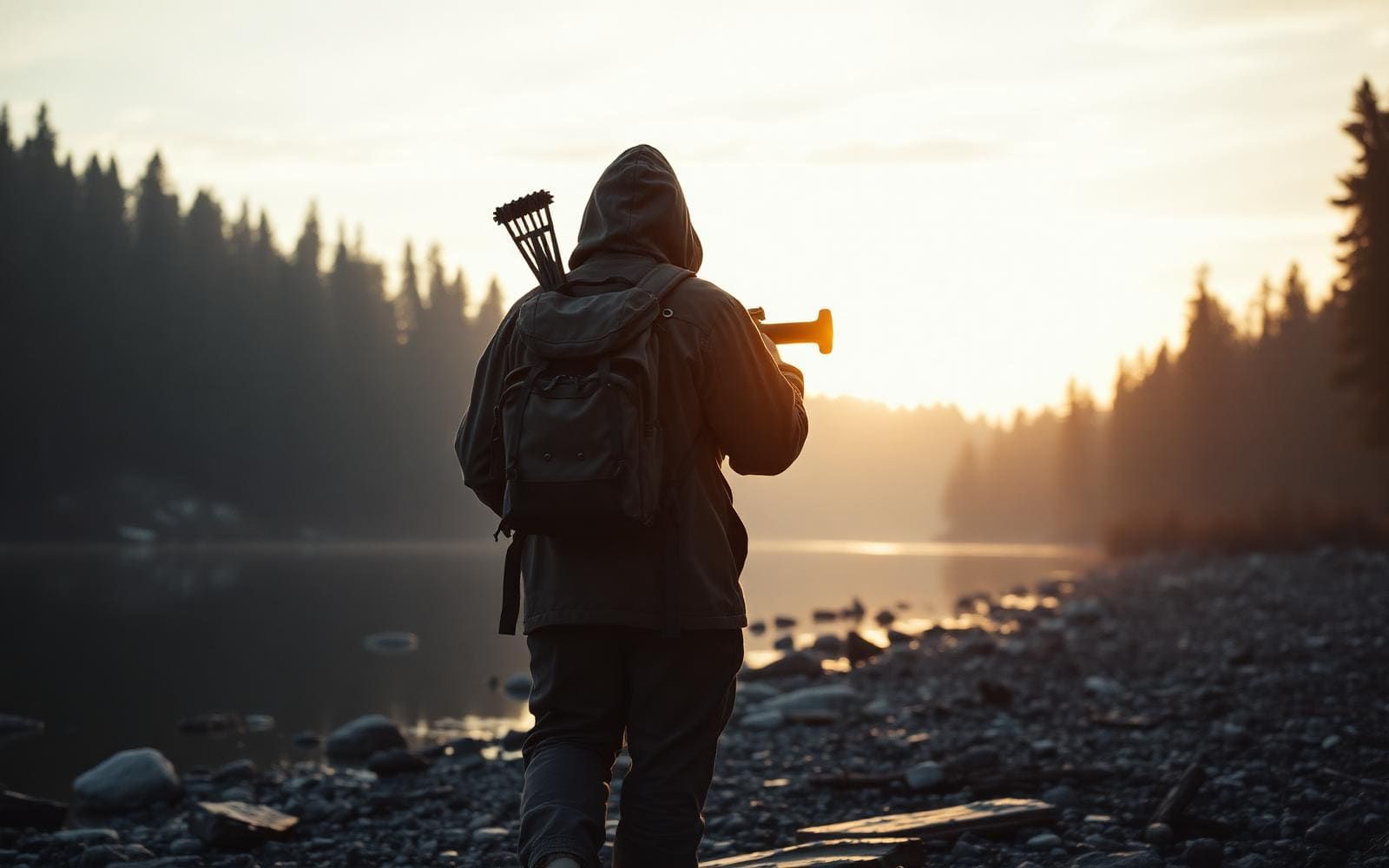
While the edit focuses on the human drama and physical toll, the mechanics of these early days hinge entirely on the standard ten-item gear selections. In an environment like Mongolia, specific gear categories prove decisive.
The Cutting Tools: Axes vs. Saws
In dense coastal woods, a heavy felling axe is indispensable. In northern Mongolia's river basins, where timber is often river birch, willow, and scattered larch or pine, a well-tensioned bow saw or heavy folding saw often outclasses a heavy axe in terms of calorie-to-output efficiency. Processing small-to-medium deadfall for overnight wood fires burns far fewer calories with a pull-stroke saw than swinging a two-pound axe head. Contestants who rely primarily on chopping rather than bucking with a saw waste systemic energy they cannot afford to lose during week one.
Sleep Systems and Ground Insulation
The sub-freezing continental air makes ground insulation the single most overlooked engineering problem in camp. A premium multi-layer sleeping bag rated to sub-zero temperatures is useless if compressed against bare earth or poorly constructed bough beds. Participants who prioritized thick, elevated sleeping platforms with dry grass or pine thatch can retain core body heat during the Day 7 to 9 drop. Those who sleep close to the cold soil burn vital brown fat stores just shivering through the night.
Cordage and Passive Trapping
With active foraging yielding diminishing returns as autumn advances across the steppe, the 2-strand or braided paracord brought by contestants becomes a primary food-procurement asset. Breaking down military-grade 550 cord into its internal individual strands allows for dozens of snare sets for local rodents and upland game birds. In an open environment where stalking game burns excessive energy, passive trapping is the only mathematically sound hunting strategy. If a competitor is not setting 20 to 30 traps within their first week, their odds of staying past Day 20 are functionally zero.
Standings
Following the events of Episode 2, the field drops from ten contestants down to eight. The official departures are recorded as follows:
- Brad Richardson: Tapped out on Day 7. Richardson's early departure ends his redemption bid, underscoring how brutally fast the transition phase tests mental resolve.
- Nicole Apelian: Medically evacuated on Day 9. An abrupt and deflating conclusion for one of the most capable survivalists on the roster, reminding viewers that medical thresholds are absolute and non-negotiable.
- Remaining Roster (8 Contestants): Randy Champagne, Carleigh Fairchild, Sam Larson, Britt Ahart, Larry Roberts, Brooke Whipple, Jesse Bosdell, and Dave Nessia remain scattered across the Mongolian landscape.
Bottom Line
Episode 2 strips away any assumption that veteran experience renders this process routine. Mongolia is not Patagonia, and it is not Vancouver Island. The terrain is stark, dry, and metabolically unforgiving. Brad Richardson's tap on Day 7 demonstrates the rapid collapse of psychological drive when expectations run into the wall of early starvation. Nicole Apelian's Day 9 medical evacuation proves that even pristine wilderness literacy cannot insulate a competitor against systemic physical failure.
As the show moves deeper into the first two weeks, the margin for error closes completely. The remaining eight survivalists are entering the phase where luck ceases to matter. Survival now relies entirely on caloric intake, sustainable shelter engineering, and the discipline to expend fewer calories than the landscape provides.
Build the kit you just watched
Every item below is ranked from field use — no filler, no budget picks.
- The 10 items, rankedWhat actually survives 100 days — our tested picks for every slot on the list.
- Best bushcraft axesThe axe is the highest-leverage pick in the game. Here are the ones worth the weight.
- Best bushcraft knivesEvery winner carried one. These are the fixed blades that hold up to a full season.
- What the winners carriedSeason-by-season loadout analysis of every Alone champion.