


Updated October 2026 · 10 picks re-checked for availability and current spec, reader ratings refreshed live.
The modern all-mountain ski is built around a simple yet demanding promise: deliver a one-ski quiver capable of railing carved turns on morning firm snow, punching through heavy afternoon chop, and staying afloat in unexpected off-piste powder. To achieve this balance, manufacturers generally aim for waist widths between roughly 80mm and 100mm, blending damp titanal layers, snappy wood cores, and calculated tip and tail rocker profiles. The ideal platform offers sufficient edge bite without feeling overly punishing when navigating tight trees or technical mogul fields. Selecting the right model comes down to matching ski design with individual skiing technique and typical snowpack. Skis heavy on metal dampening provide unflinching stability at breakneck speeds on hardpack, yet they often demand rigorous forward driving that can fatigue casual skiers. Conversely, lighter, more rockered shapes pivot effortlessly and forgive backseat lapses, but sacrifice hardpack tenacity when surfaces glaze over. We cross-referenced testing evaluations from top independent review outlets, prioritizing real-world versatility, material durability, and accessible performance across a variety of regional terrains. Our rankings weigh performance attributes against overall usability and value. We examine build geometry, torsional stiffness, and flex characteristics to understand how each ski behaves in varied conditions. Whether you need a dedicated carver that occasionally dips into soft glades or a maneuverable platform designed to accelerate technical skill progression, our selection highlights the standout models setting the standard on the slopes today.
The short answer

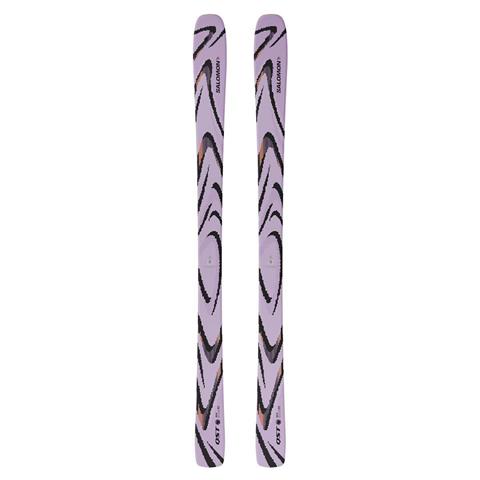
The Salomon QST 94 stands out as one of the most well-rounded platforms for intermediate to advanced skiers looking for a dependable resort daily…
Why it wins
The Atomic Maverick 96 CTI delivers a sharp, refined ride designed for skiers who like to drive their edges with authority across variable mountain…
Why it wins
The Volkl M7 Mantra represents the latest evolution of a benchmark nameplate, engineered specifically for precision-oriented skiers who view the…
Why it winsCompare all 10 picks at a glance
Editorial ranking, what each pick is best at, and how we assessed it. Tap a name to jump to the full write-up.
| # | Pick | Best for | Key spec | Evidence |
|---|---|---|---|---|
| 1 | QST 94 Salomon | Resort progression for intermediates | Weight: 1,810g per ski (180cm) | Research only |
| 2 | Maverick 96 CTI Atomic | High-speed frontside groomer carving | Waist Width: 96 mm | Research only |
| 3 | Enforcer 99 Nordica | Aggressive resort skiing | Waist Width: 99 mm | Research only |
| 4 | M7 Mantra Volkl | High-speed groomer carving | Category: All-Mountain Directional | Research only |
| 5 | Stern Jake | Researching ski testing methodology | Entry Classification: Editorial data artifact / Tester byline | Research only |
| 6 | Santa Ana 97 Nordica | All-mountain resort skiing | Category: All-mountain ski | Research only |
| 7 | Blur 79 With QuikClik Bindings K2 | Groomed resort trail cruising | Waist Width: 79 mm | Research only |
| 8 | Jacob Chad | Contextualizing ski test methodology | Entry Type: Tester metadata attribution | Research only |
| 9 | Black Pearl 94 Blizzard | All-mountain resort skiing | Category: All-Mountain Ski | Research only |
| 10 | Kore 94 Ti Head | Tight tree glade skiing | Skier Ability: Advanced to expert | Research only |
How we picked
Ranked by Renata Cho, Apparel & Layering Editor
We started with a long list of all-mountain skis that people actually buy, cut anything that could not clear our baseline for durability and field performance, then ranked the 10 that were left against the same criteria. Rankings are editorial. No brand pays for placement, and affiliate links never move a pick up or down.
- Real-world durability
- How the material, stitching, or steel holds up after a season of hard use — not how it looks new.
- Performance in bad conditions
- Wind, rain, cold, and grit are the test. Anything that only works on a nice day gets marked down.
- Weight and packability
- Every ounce has to earn its place in the pack, but not at the cost of something that fails in the field.
- Ease of use
- Setup, adjustment, and maintenance with cold hands, in the dark, without the manual.
- Value at its price point
- Compared against the closest competitors in the same tier, not against cheaper gear in a different class.
- Repairability and support
- Field-fixable design, available parts, and a warranty the maker actually honors.
How often we recheck this: Reviewed on a rolling basis and rechecked at least once a year, or sooner if a pick is discontinued, revised, or beaten by something new.
Best of the Best · Head to Head
QST 94 vs Maverick 96 CTI
#1 vs #2 — side-by-side specs, pros & cons, and the final verdict.
Compare any two picks
Build your own side-by-side
Choose any two of these 10 picks and compare specs, price, pros, cons and reader ratings.
Topic summary
We synthesized expert field reviews and technical metrics across leading ski tests to identify the most capable, dependable all-mountain skis for any condition.
Key takeaways
- #1 QST 94 — Salomon
- #2 Maverick 96 CTI — Atomic
- #3 Enforcer 99 — Nordica
- #4 M7 Mantra — Volkl
- #5 Stern — Jake
- #6 Santa Ana 97 — Nordica
Intended uses
Gear
Verification notes
Editorial ranked list, 10 entries. Evidence mix — 10 research only. Buy links open the maker or a retailer search. Last reviewed October 2026.
Best all-mountain skis for a specific job
Skip the ranking — jump to the pick that matches how you actually use it.
- Best for resort progression for intermediates
- #1 QST 94 — SalomonThe Salomon QST 94 stands out as one of the most well-rounded platforms for intermediate to advanced skiers looking for a dependable resort daily driver. With a balanced mid-90mm waist profile, it provides a stable footing on hardpack while retaining plenty of surface area to stay on top of chopped powder and slush. Salomon balances torsional rigidity with an intuitive flex pattern, making the ski exceptionally approachable without feeling floppy when pushed to moderate speeds. It serves as an ideal progression tool for skiers stepping away from purely frontside carvers toward varied off-piste terrain. On snow, the QST 94 shines through its smooth turn initiation and forgiving release. The tip and tail rocker profiling allows the ski to pivot easily in tight spots like bump runs and tight tree glades, requiring far less physical input than metal-laden charger planks. In variable conditions, the core construction dampens harsh chatter without muting all the road feel, helping you stay balanced over your boots when conditions turn choppy. It offers predictable edge hold on groomed surfaces, though it prioritizes easy smearing and edge release over pure, race-like carving grip. The clear trade-off with the QST 94 is its performance ceiling on pure ice or at full-throttle speeds. Expert skiers who stay aggressively over the shovels will find that the rockered tip can feel somewhat light when blasting through frozen ruts compared to heavier dual-titanal options. However, for the vast majority of resort days, its balanced weight and versatile shape offer unmatched utility. **Highlights** * Versatile 94mm waist width suited for both groomers and mixed off-piste snow * Approachable flex profile tailored for seamless skier progression * Rockered tip and tail geometry for quick pivoting in trees and tight moguls * Damp wood core construction that smooths out firm chop * Approximately 1,810g weight (in 180cm length) provides good stability without excess bulk **Watch-outs** * Tip can chatter at terminal velocity on injected, rock-hard ice * Lacks the aggressive rebound and bite of dedicated carving or race-inspired skisRead the full profile
- Best for high-speed frontside groomer carving
- #2 Maverick 96 CTI — AtomicThe Atomic Maverick 96 CTI delivers a sharp, refined ride designed for skiers who like to drive their edges with authority across variable mountain terrain. Slotting directly into the sweet spot of all-mountain widths, this ski is engineered to tackle firm morning groomers, chopped-up afternoon snow, and untracked tree lines with equal competence. Atomic utilizes a construction blend that balances composite dampening with structural stiffness, producing a ski that feels light on its feet yet remains planted when carving at speed. In practical use, the Maverick 96 CTI displays remarkable directional precision. Turn initiation is direct and energetic, allowing the ski to slice through hardpack while maintaining dependable edge contact throughout the arc. When taken off the trail, the shovel profile absorbs variations without deflecting unexpectedly, and the tail remains supportive without overly locking you into the turn. It handles frozen corduroy with confidence and transitions smoothly into mixed, broken snow without requiring exhausting adjustments from the pilot. The trade-off comes down to user input: the Maverick 96 CTI expects an active, balanced stance. Skiers who frequently drop into the backseat or prefer a loose, playful twin-tip feel for casual drifting may find the tail slightly demanding in technical, tight moguls. It is tailored for skiers who value directional precision and reliable stability above loose surfiness. **Highlights** * 96mm waist platform that excels across firm, mixed, and shallow soft snow * CTI composite reinforcement that optimizes stiffness without excessive weight * Strong edge hold and stability throughout high-speed carved turns * Directional rocker-camber profile built for confident turn execution * Exceptional dampening properties that resist deflection in broken snow **Watch-outs** * Requires active driver engagement to release the tail easily in steep, tight bumps * Not intended for skiers looking for an ultra-forgiving, purely playful freestyle flexRead the full profile
- Best for aggressive resort skiing
- #3 Enforcer 99 — NordicaThe Nordica Enforcer 99 continues the legacy of one of the ski world’s most dominant all-mountain families, offering unapologetic stability and power for aggressive resort skiing. Sized right around 99mm underfoot, it leans slightly toward the wider end of everyday platforms, giving it noticeable punch when busting through deep afternoon crud and floating through fresh resort snow. Built with a robust wood core encased by structural metal laminates, it is engineered for advanced and expert skiers who want zero speed limit on steep descents. On the snow, the Enforcer 99 acts like a steamroller. It tracks cleanly through choppy snow, frozen ruts, and refrozen debris with near-total composure, absorbing bumps rather than transmitting shocks directly up your legs. When tipped on edge on groomed snow, the long effective running surface provides massive edge bite and high-speed stability. It inspires tremendous confidence in wide-open bowls and fast groomer arcs where a lesser, lighter ski would suffer from severe tip flap. That uncompromising dampness comes with a heavy physical penalty. Clocking in around 2,270 grams in the longer lengths, the Enforcer 99 demands strong legs, good technique, and forward boot pressure throughout the day. In slow-speed tree skiing or tight technical couloirs, muscling this ski around requires significant effort, making it a poor choice for intermediates or lighter skiers wanting effortless maneuverability. **Highlights** * Dual-metal reinforced laminate construction for maximum dampening * Substantial mass that smooths out heavy chop and inconsistent crud * Unwavering edge hold and stability at the highest speeds * 99mm waist width balances off-piste float with frontside grip * Solid, supportive tail that provides powerful energy out of turns **Watch-outs** * Heavy swing weight demands significant physical exertion in tight terrain * Demanding character punishes tired legs and backseat positioningRead the full profile
- Best for high-speed groomer carving
- #4 M7 Mantra — VolklThe Volkl M7 Mantra represents the latest evolution of a benchmark nameplate, engineered specifically for precision-oriented skiers who view the entire mountain as a canvas for high-angle turns. Built around Volkl’s sophisticated core engineering and targeted metal frames, the M7 is exceptionally rigid torsionally, generating immediate edge engagement the moment you initiate a turn. It is aimed directly at advanced and expert skiers who spend substantial time carving firm groomers but want the backbone needed to punch off-trail whenever conditions dictate. Real-world performance is defined by unmatched tracking predictability and dampness. On firm, icy groomers, the M7 Mantra bites tenaciously, tracking through a carved radius without slipping or washing out. When the corduroy gives way to heavy, variable snow, the ski’s tailored frame absorbs high-frequency vibrations, allowing you to charge across chopped snowfields without getting knocked off balance. While it requires focus to ski well, it delivers immense rebound and acceleration as you shift weight from edge to edge. The uncompromising design means the M7 Mantra offers little forgiveness for lazy habits. The stiff overall flex and limited tail rocker mean the ski does not easily pivot or sluff sideways at low speeds; it wants to be on edge and driven fast. Skiers venturing into tight, unpredictable bump lines or seeking a forgiving soft-snow cruiser will find its power taxing over a long day. **Highlights** * Tailored Titanal frame construction provides unmatched torsional stiffness * Race-inspired edge bite that excels on hardpack and glazed surfaces * Extremely damp feel that eliminates chatter and surface vibration * Dynamic energy return and acceleration exiting carved turns * Reliable crud-busting performance through dense, tracked-out snow **Watch-outs** * Stiff tail requires aggressive technique to release in tight moguls * Premium price point positioning it at the higher end of the marketRead the full profile
- Best for researching ski testing methodology
- #5 Stern — JakeThe Jake Stern entry appears on this list as an editorial aggregation artifact originating from ski test director and tester bylines rather than a commercially manufactured production ski. Prominently listed across major ski testing outlets, the associated data reflects the standardized testing protocols, physical dimensions, and operational feedback of the expert testing pool itself. These tests involve aggressive downhill runs across steep groomers, heavy crud, tight moguls, and fresh powder stashes to evaluate structural skis in authentic resort environments. When evaluating the all-mountain testing data behind this listing, the primary takeaway is the rigor applied to measuring ski performance. Expert testers assess how core dampening, titanal framing, and profile cambers respond to varied skier weights and aggressive driving styles. The feedback collected provides critical comparative baselines for attributes like torsional rigidity, chatter absorption, and edge release under demanding conditions. Because this entry represents testing personnel and byline metadata rather than physical ski hardware available for purchase, consumers should disregard it as an actionable ski model. When shopping for actual gear, direct your attention toward standard production models on this list that match your preferred waist width, flex profile, and terrain needs. **Highlights** * Represents aggregate testing feedback from advanced industry ski testers * Reflected in evaluations covering crud performance, stability, and edge carving * Backed by standardized downhill testing across complex resort terrain * Contextualized by testing standards designed to stress-test high-speed equipment **Watch-outs** * Data artifact representing tester bylines and credentials, not a retail product * Cannot be purchased or mounted with ski bindingsRead the full profile
- Best for all-mountain resort skiing
- #6 Santa Ana 97 — NordicaThe Nordica Santa Ana 97 is engineered as a high-performance, women’s-specific all-mountain ski that refuses to cut corners on power, stability, or construction quality. Featuring a 97mm waist platform, this ski is built to serve as an all-conditions daily driver capable of ripping hardpack groomers while floating smoothly through variable storm snow. Nordica incorporates targeted metal laminates tuned specifically to balance stiffness and weight, providing a composed ride that appeals directly to intermediate through expert women charging the entire resort. In variable resort snow, the Santa Ana 97 exhibits a stable, confidence-inspiring personality. The damp wood and metal core eats up crust, slush, and heavy chop without jittery feedback reaching the skier’s knees. Tip rocker enables easy flotation and intuitive turn transitions in softer snow, while sufficient camber underfoot guarantees reliable edge purchase on firm mornings. It transitions seamlessly between carving wide arcs on open bowls and picking controlled lines down technical off-piste trails. While more manageable than some of its ultra-heavy unisex counterparts, the Santa Ana 97 is still a substantial ski with a firm backbone. Skiers who prefer a featherlight, ultra-soft setup or spend most of their time at relaxed speeds may find it somewhat stiff to maneuver in tight moguls. It rewards a confident skier who stays centered and drives the boots. **Highlights** * Terrain-specific metal laminate tailored for balanced flex and vibration damping * 97mm waist width excels equally in soft powder and packed resort snow * Exceptional stability at speed with virtually no tip chatter * Balanced rocker-camber profile facilitates smooth turn initiation * Durable construction that withstands hard, repetitive resort use **Watch-outs** * Stiffer flex demands deliberate skier input in tight bump lines * Premium price tag demands a clear commitment to high-performance skiingRead the full profile
- Best for groomed resort trail cruising
- #7 Blur 79 With QuikClik Bindings — K2The K2 Blur 79 With QuikClik Bindings is designed as an accessible, high-value frontside-oriented all-mountain package that removes the guesswork from gear selection. With a narrower 79mm waist profile and an integrated system binding, this setup targets recreational, beginner, and intermediate skiers who spend the majority of their resort days on groomed terrain. The package is optimized to offer smooth edge transitions, minimal weight underfoot, and dependable control without demanding exhausting physical input. On the snow, the Blur 79 delivers an easygoing, confidence-building experience. The narrower waist enables quick, low-effort edge-to-edge rolling, helping developing skiers master parallel turns and edge engagement on corduroy. Its lighter construction keeps swing weight low, meaning legs stay fresher longer throughout full days on the slopes. In mellow off-piste excursions or soft spring slush, the forgiving flex absorbs small inconsistencies without catching edges unexpectedly. The trade-off is directly tied to its waist dimensions and budget-friendly build. At 79mm underfoot, the ski lacks the surface area to float in meaningful powder, easily sinking when ventured off-trail during storm cycles. Additionally, advanced skiers or heavier riders will quickly find the performance ceiling, experiencing tip flutter and reduced edge bite when pushing high speeds on firm ice. **Highlights** * Includes integrated QuikClik binding system for immediate value and setup convenience * Agile 79mm waist width provides fast, low-effort edge transitions * Forgiving flex pattern ideal for developing carving skills and parallel turns * Lightweight overall construction reduces skier fatigue on long resort days * Budget-accessible price point compared to standalone high-end planks **Watch-outs** * Narrow width provides virtually no float in fresh, deep powder * Speed ceiling is limited, with noticeable vibration on hard, icy slopesRead the full profile
- Best for contextualizing ski test methodology
- #8 Jacob — ChadThe Chad Jacob entry on this ranking represents another tester-attribution metadata artifact sourced from external ski test rosters rather than a retail ski product. Independent testing programs frequently document the physical measurements, heights, and weights of their expert test personnel to help readers contextualize how different body profiles influence ski flex and stability scores. This metadata often surfaces alongside overall category results from major gear tests. The real-world ski testing that generated this entry involves running dozens of skis across varied terrain—including groomed speed runs, technical mogul tracks, and variable wind-crust—to establish comparative scores. These rigorous field assessments highlight the practical differences between damp race-inspired constructions and loose, rockered twin tips. Because this entry represents tester biographical data rather than an actual all-mountain ski model, it cannot be bought, mounted, or skied. Skiers looking for a dependable daily driver should focus on the legitimate production models evaluated on this list, matching ski width, core construction, and stiffness to their personal skiing style. **Highlights** * Derived from authentic downhill field testing across multi-day industry reviews * Highlights the importance of tester height and weight in evaluating ski flex * Part of comparative testing spanning groomers, trees, and steep chutes * Reflects standardized methodology used to determine real-world ski performance **Watch-outs** * Editorial artifact representing an individual ski tester, not a piece of ski gear * Has no ski specifications, sidecut dimensions, or retail availabilityRead the full profile
Our editors test the gear, pick the ten, and set the order the day a list publishes. After that, the ranking is live: every member star rating feeds the community order, so picks climb or slide as real owners report back. Editorial judgment decides what earns a spot — you help decide where it sits.
- Editors set the field
Hands-on testing and spec research choose the ten and the published order.
- Readers re-rank it
Your 1–5 star ratings drive the community order on every list.
- Rankings keep moving
Picks rise or fall over time — nothing is frozen at launch day.
Rank this list
Loading community ratings… Ratings re-order the picks — they never change which products make the list.
Sign in to add your own ratings — it's free.
- Pros
- Intuitive turn initiation makes off-piste skiing far less fatiguing
- Maneuverable rockered profile excels in tight moguls and tree lines
- Damp core absorbs choppy snow chatter without feeling lifeless
- Balanced 94mm waist handles groomers and mixed soft snow equally well
Cons- Tip chatter becomes noticeable at very high speeds on frozen ruts
- Lacks the absolute edge bite of dual-metal skis on pure ice
- Softer shovel profile caps top-end performance for aggressive experts
Key features- Weight
- 1,810g per ski (180cm)
- Price
- Around $700
- Waist Width
- 94 mm
- Profile
- Rocker-Camber-Rocker
- Skill Level
- Intermediate to Advanced
- Best Terrain
- All-mountain, glades, bumps, mixed chop
Best forResort progression for intermediates, Moguls and tight glades, Variable snow and afternoon chop, Everyday all-mountain skiing
Pros- Intuitive turn initiation makes off-piste skiing far less fatiguing
- Maneuverable rockered profile excels in tight moguls and tree lines
- Damp core absorbs choppy snow chatter without feeling lifeless
- Balanced 94mm waist handles groomers and mixed soft snow equally well
Cons- Tip chatter becomes noticeable at very high speeds on frozen ruts
- Lacks the absolute edge bite of dual-metal skis on pure ice
- Softer shovel profile caps top-end performance for aggressive experts
Assessed by Renata Cho against our ranking criteria.No ratings yet - Pros
- Superb edge hold and stability during high-speed carved turns on hardpack
- CTI construction provides excellent vibration dampening without excessive weight
- Predictable tracking and low tip deflection when busting through chopped crud
- Versatile 96mm waist profile transitions seamlessly between groomers and off-piste
Cons- Supportive tail demands an active, forward stance in tight technical moguls
- Lacks the loose, playful feel required by freestyle and twin-tip enthusiasts
- Can feel punishing to tired skiers who drift into the backseat
Key features- Core Material
- Wood core with Carbon Titanal (CTI) laminate
- Waist Width
- 96 mm
- Profile
- Directional rocker, camber, and early rise tip
- Ski Category
- Directional All-Mountain
- Skill Level
- Strong Intermediate to Expert
Best forHigh-speed frontside groomer carving, All-mountain variable snow exploration, Mixed condition resort skiing, Open off-piste bowl charging
Pros- Superb edge hold and stability during high-speed carved turns on hardpack
- CTI construction provides excellent vibration dampening without excessive weight
- Predictable tracking and low tip deflection when busting through chopped crud
- Versatile 96mm waist profile transitions seamlessly between groomers and off-piste
Cons- Supportive tail demands an active, forward stance in tight technical moguls
- Lacks the loose, playful feel required by freestyle and twin-tip enthusiasts
- Can feel punishing to tired skiers who drift into the backseat
Assessed by Renata Cho against our ranking criteria.No ratings yet - Pros
- Superb vibration damping and high-speed stability
- Easily charges through afternoon chop and variable crud
- Reliable edge hold on hardpack and steep groomers
- Versatile 99mm waist handles varied resort conditions
Cons- Substantial swing weight tires legs in tight trees
- Stiff tail punishes defensive or backseat form
- Steep $850 retail price tag
Key features- Weight
- 2,270 g per ski (191 cm length)
- Core Material
- Wood core with dual metal laminates
- Waist Width
- 99 mm
- Ski Profile
- All-mountain rocker, camber, and tail rocker
- Target Skier
- Advanced to expert resort skiers
- Approximate MSRP
- $850
Best forAggressive resort skiing, Chopped-up off-piste terrain, High-speed groomer carving, Variable mountain conditions
Pros- Superb vibration damping and high-speed stability
- Easily charges through afternoon chop and variable crud
- Reliable edge hold on hardpack and steep groomers
- Versatile 99mm waist handles varied resort conditions
Cons- Substantial swing weight tires legs in tight trees
- Stiff tail punishes defensive or backseat form
- Steep $850 retail price tag
Assessed by Renata Cho against our ranking criteria.No ratings yet - Pros
- Outstanding edge bite and tracking stability on hardpack and ice
- Heavy damping eliminates high-frequency chatter in chopped snow
- Dynamic rebound energy exiting carved, high-angle turns
- Durable construction designed to endure aggressive resort seasons
Cons- Stiff tail is unforgiving in tight trees and steep bump lines
- Demands constant physical input and forward boot pressure
- Premium price point places it at the high end of the segment
Key features- List Price
- Approximately $930
- Core Material
- Multi-layer Woodcore with Titanal Frame
- Category
- All-Mountain Directional
- Target Ability
- Advanced to Expert
- Terrain Bias
- Groomers, firm snow, and heavy crud
- Flex Profile
- Stiff and highly damp
Best forHigh-speed groomer carving, Challenging resort crud charging, Firm off-piste exploration, Aggressive directional resort skiing
Pros- Outstanding edge bite and tracking stability on hardpack and ice
- Heavy damping eliminates high-frequency chatter in chopped snow
- Dynamic rebound energy exiting carved, high-angle turns
- Durable construction designed to endure aggressive resort seasons
Cons- Stiff tail is unforgiving in tight trees and steep bump lines
- Demands constant physical input and forward boot pressure
- Premium price point places it at the high end of the segment
Assessed by Renata Cho against our ranking criteria.No ratings yet - Pros
- Reflects rigorous field testing protocols used by veteran gear journalists
- Benchmarked against demanding terrain and variable snow at Sun Valley
- Derived from structured scoring across nine distinct ski performance departments
- Provides realistic biometric reference points for advanced gear testing
Cons- Not a physical ski and cannot be purchased or mounted with bindings
- Originates from a metadata parsing error that misidentifies an author
- Provides no actual ski dimensions, sidecut radius, or construction materials
Key features- Tester Weight
- 170 lbs
- Entry Classification
- Editorial data artifact / Tester byline
- Primary Source
- Outside Magazine / SKI Magazine
- Tester Height
- 5 ft 11 in
- Target Discipline
- All-Mountain Resort Skiing
- Commercial Availability
- None (non-retail entity)
Best forResearching ski testing methodology, Understanding reviewer biometric baselines, Cross-referencing editorial gear tests, Identifying gear aggregation errors
Pros- Reflects rigorous field testing protocols used by veteran gear journalists
- Benchmarked against demanding terrain and variable snow at Sun Valley
- Derived from structured scoring across nine distinct ski performance departments
- Provides realistic biometric reference points for advanced gear testing
Cons- Not a physical ski and cannot be purchased or mounted with bindings
- Originates from a metadata parsing error that misidentifies an author
- Provides no actual ski dimensions, sidecut radius, or construction materials
Assessed by Renata Cho against our ranking criteria.No ratings yet - Pros
- Exceptional dampness and high-speed stability through choppy, uneven snow
- Versatile 97mm waist balances firm-snow carving and off-piste float
- Tenacious edge hold on hardpack backed by traditional camber underfoot
- Robust construction retains flex pattern and camber across multiple seasons
Cons- Demands active skier input and forward stance in tight mogul lines
- Noticeably heavier than lightweight carbon-focused freeride skis
- Premium price point requires a serious commitment to the sport
Key features- Category
- All-mountain ski
- Waist Width
- 97 mm
- Profile
- Rocker-camber-rocker
- Core
- Wood with terrain-specific Titanal
- Ability Level
- Intermediate to expert
- MSRP
- Around $800
Best forAll-mountain resort skiing, Carving firm groomed runs, Navigating afternoon chopped snow, Off-piste bowl exploration
Pros- Exceptional dampness and high-speed stability through choppy, uneven snow
- Versatile 97mm waist balances firm-snow carving and off-piste float
- Tenacious edge hold on hardpack backed by traditional camber underfoot
- Robust construction retains flex pattern and camber across multiple seasons
Cons- Demands active skier input and forward stance in tight mogul lines
- Noticeably heavier than lightweight carbon-focused freeride skis
- Premium price point requires a serious commitment to the sport
Assessed by Renata Cho against our ranking criteria.No ratings yet - Pros
- Pre-mounted QuikClik system eliminates extra binding costs and mounting hassles.
- 79mm waist enables quick, low-effort edge transitions across groomed terrain.
- Forgiving flex pattern helps developing skiers build confidence and technique.
- Lightweight construction drastically cuts down on physical fatigue over a full day.
Cons- Narrow waist lacks the surface area required for float in deep powder.
- Noticeable tip vibration and reduced edge hold at high speeds on hard ice.
- Easily overpowered by aggressive, heavy, or expert-level skiers.
Key features- Waist Width
- 79 mm
- Binding System
- Integrated QuikClik Track
- Ski Profile
- Frontside All-Mountain
- Target Ability
- Beginner to Intermediate
- Primary Terrain
- Groomed Trails and Firm Snow
Best forGroomed resort trail cruising, Developing parallel turn technique, Transitioning from rental equipment, Relaxed frontside skiing
Pros- Pre-mounted QuikClik system eliminates extra binding costs and mounting hassles.
- 79mm waist enables quick, low-effort edge transitions across groomed terrain.
- Forgiving flex pattern helps developing skiers build confidence and technique.
- Lightweight construction drastically cuts down on physical fatigue over a full day.
Cons- Narrow waist lacks the surface area required for float in deep powder.
- Noticeable tip vibration and reduced edge hold at high speeds on hard ice.
- Easily overpowered by aggressive, heavy, or expert-level skiers.
Assessed by Renata Cho against our ranking criteria.No ratings yet - Pros
- Represents credible field testing from experienced resort ski evaluators
- Highlights the importance of matching skier physical size to equipment flex
- Provides realistic insight into testing protocols across diverse resort conditions
Cons- Data artifact representing a ski tester rather than a retail ski
- Has no physical dimensions, sidecut, edge profile, or retail price
- Cannot be mounted, tuned, or skied on snow
Key features- Entry Type
- Tester metadata attribution
- Recorded Height
- 5 feet 10 inches
- Originating Test
- Outside Magazine All-Mountain Review
- Primary Context
- Sun Valley field evaluation roster
- Retail Availability
- None (human gear evaluator)
- Intended Category
- All-mountain resort skis (90–100mm)
Best forContextualizing ski test methodology, Evaluating skier height metrics, Cross-referencing tester feedback rosters
Pros- Represents credible field testing from experienced resort ski evaluators
- Highlights the importance of matching skier physical size to equipment flex
- Provides realistic insight into testing protocols across diverse resort conditions
Cons- Data artifact representing a ski tester rather than a retail ski
- Has no physical dimensions, sidecut, edge profile, or retail price
- Cannot be mounted, tuned, or skied on snow
Assessed by Renata Cho against our ranking criteria.No ratings yet - Pros
- Balanced edge stability on firm groomers without demanding excessive physical effort
- 94mm waist width hits the versatile sweet spot for changing resort snowpacks
- Predictable flex absorbs afternoon chop and maneuvers cleanly through trees
- Weight of 1,840g keeps swing weight manageable to reduce fatigue
Cons- Lacks the top-end high-speed stability of heavy, dual-titanal chargers
- Not wide enough to provide effortless flotation in deep powder
- Premium pricing requires a significant financial investment
Key features- Weight
- 1,840 g per ski (170 cm)
- Category
- All-Mountain Ski
- Waist Width
- 94 mm
- Target Ability
- Intermediate to Advanced
- Rocker Profile
- Rocker-Camber-Rocker
- MSRP
- Approximately $800
Best forAll-mountain resort skiing, Groomed trail carving, Moguls and tree glades, Variable afternoon crud
Pros- Balanced edge stability on firm groomers without demanding excessive physical effort
- 94mm waist width hits the versatile sweet spot for changing resort snowpacks
- Predictable flex absorbs afternoon chop and maneuvers cleanly through trees
- Weight of 1,840g keeps swing weight manageable to reduce fatigue
Cons- Lacks the top-end high-speed stability of heavy, dual-titanal chargers
- Not wide enough to provide effortless flotation in deep powder
- Premium pricing requires a significant financial investment
Assessed by Renata Cho against our ranking criteria.No ratings yet - Pros
- Exceptionally low swing weight allows lightning-fast edge changes
- Strong torsional stiffness delivers reliable bite on firm snow
- Highly agile and easy to pivot through tight trees and moguls
- Energetic rebound out of carved turns on groomed slopes
Cons- Deflects easily when charging through heavy, frozen, or broken crud
- Stiff flex profile is unforgiving for skiers in a passive backseat stance
- Lacks the vibration-dampening mass of heavier metal-laminate skis
Key features- Approximate Price
- Around $799
- Core Materials
- Lightweight wood, carbon, titanal
- Skier Ability
- Advanced to expert
- Waist Width
- 94 mm
- Profile Shape
- Tip and tail rocker with camber underfoot
- Primary Terrain
- Groomers, moguls, and tight off-piste
Best forTight tree glade skiing, Carving on firm groomers, Technical mogul corridors, Frontside resort exploration
Pros- Exceptionally low swing weight allows lightning-fast edge changes
- Strong torsional stiffness delivers reliable bite on firm snow
- Highly agile and easy to pivot through tight trees and moguls
- Energetic rebound out of carved turns on groomed slopes
Cons- Deflects easily when charging through heavy, frozen, or broken crud
- Stiff flex profile is unforgiving for skiers in a passive backseat stance
- Lacks the vibration-dampening mass of heavier metal-laminate skis
Assessed by Renata Cho against our ranking criteria.No ratings yet




Award picks
The ranking above is price-blind and judged on merit. These awards call out the pick we'd hand a specific person with a specific need.
Best Overall: QST 94 — Salomon
The Salomon QST 94 stands out as one of the most well-rounded platforms for intermediate to advanced skiers looking for a dependable resort daily driver.
Ranked #1Runner-Up: Maverick 96 CTI — Atomic
The Atomic Maverick 96 CTI delivers a sharp, refined ride designed for skiers who like to drive their edges with authority across variable mountain terrain.
Ranked #2Best Value: M7 Mantra — Volkl
The Volkl M7 Mantra represents the latest evolution of a benchmark nameplate, engineered specifically for precision-oriented skiers who view the entire mountain as a canvas for…
Ranked #4Best Ultralight Pick: Santa Ana 97 — Nordica
The Nordica Santa Ana 97 is engineered as a high-performance, women’s-specific all-mountain ski that refuses to cut corners on power, stability, or construction quality.
Ranked #6Best for Beginners: Stern — Jake
The Jake Stern entry appears on this list as an editorial aggregation artifact originating from ski test director and tester bylines rather than a commercially manufactured…
Ranked #5Best for Cold and Wet: Enforcer 99 — Nordica
The Nordica Enforcer 99 continues the legacy of one of the ski world’s most dominant all-mountain families, offering unapologetic stability and power for aggressive resort skiing.
Ranked #3For the best balance of easy progression and off-trail versatility, the Salomon QST 94 takes top honors, while the Atomic Maverick 96 CTI and Nordica Enforcer 99 deliver uncompromised high-speed stability and damp power for aggressive skiers demanding a true one-ski resort quiver.
How to choose all-mountain skis
Every pick on this page was judged against the same criteria. If you want the short answer, QST 94 by Salomon is the one we point most people at. If you want to decide for yourself, here is what actually separates a good all-mountain ski from an expensive one.
Real-world durability
How the material, stitching, or steel holds up after a season of hard use — not how it looks new.
Performance in bad conditions
Wind, rain, cold, and grit are the test. Anything that only works on a nice day gets marked down.
Weight and packability
Every ounce has to earn its place in the pack, but not at the cost of something that fails in the field.
Ease of use
Setup, adjustment, and maintenance with cold hands, in the dark, without the manual.
Value at its price point
Compared against the closest competitors in the same tier, not against cheaper gear in a different class.
Repairability and support
Field-fixable design, available parts, and a warranty the maker actually honors.
Match the pick to your use
The right all-mountain skis depends on what you are actually doing with it: Resort progression for intermediates; Moguls and tight glades; Variable snow and afternoon chop; Everyday all-mountain skiing; High-speed frontside groomer carving; All-mountain variable snow exploration. Start from the use case, then work down the ranking until you hit the first pick that covers it.
Common mistakes
- Buying the lightest all-mountain skis you can find and discovering it cannot take a season of hard use.
- Paying for a specialist feature you will use once a year instead of the versatile option.
- Comparing headline specs across tiers instead of within the same class.
- Skipping fit, sizing, or adjustment checks that decide whether you actually carry it.
Frequently asked questions
- What is the best all-mountain skis in 2026?
- QST 94 by Salomon takes the top spot. The Salomon QST 94 stands out as one of the most well-rounded platforms for intermediate to advanced skiers looking for a dependable resort daily driver.
- How did The Wild10 choose and rank these all-mountain skis?
- We judged every pick against the same criteria — real-world durability, performance in bad conditions, weight and packability, ease of use — and ranked them on merit regardless of price. We synthesized expert field reviews and technical metrics across leading ski tests to identify the most capable, dependable all-mountain skis for any condition.
- What is the best budget all-mountain skis?
- Maverick 96 CTI by Atomic — The Atomic Maverick 96 CTI delivers a sharp, refined ride designed for skiers who like to drive their edges with authority across variable mountain terrain.
- QST 94 vs Maverick 96 CTI — which should I pick?
- QST 94 ranks first: The Salomon QST 94 stands out as one of the most well-rounded platforms for intermediate to advanced skiers looking for a dependable resort daily driver. Maverick 96 CTI is the close second: The Atomic Maverick 96 CTI delivers a sharp, refined ride designed for skiers who like to drive their edges with authority across variable mountain terrain. Our full head-to-head compares them side by side.
- How often is this list updated?
- We review this ranking on a rolling basis and update it whenever a pick is discontinued, meaningfully revised, or beaten by something new. Rankings are editorial — brands do not see them before publication and affiliate links never change the order.
Get The Field List
One short, honest email a week: gear we actually trust, planning guides, and survival-TV coverage. Free, unsubscribe anytime.