


Reader rating
Rate it and you move it. Community ratings re-rank this product inside its Top 10 list.
Expert-picked, reader-ranked. Our editors choose the products and the launch order; member star ratings move picks up or down over time.
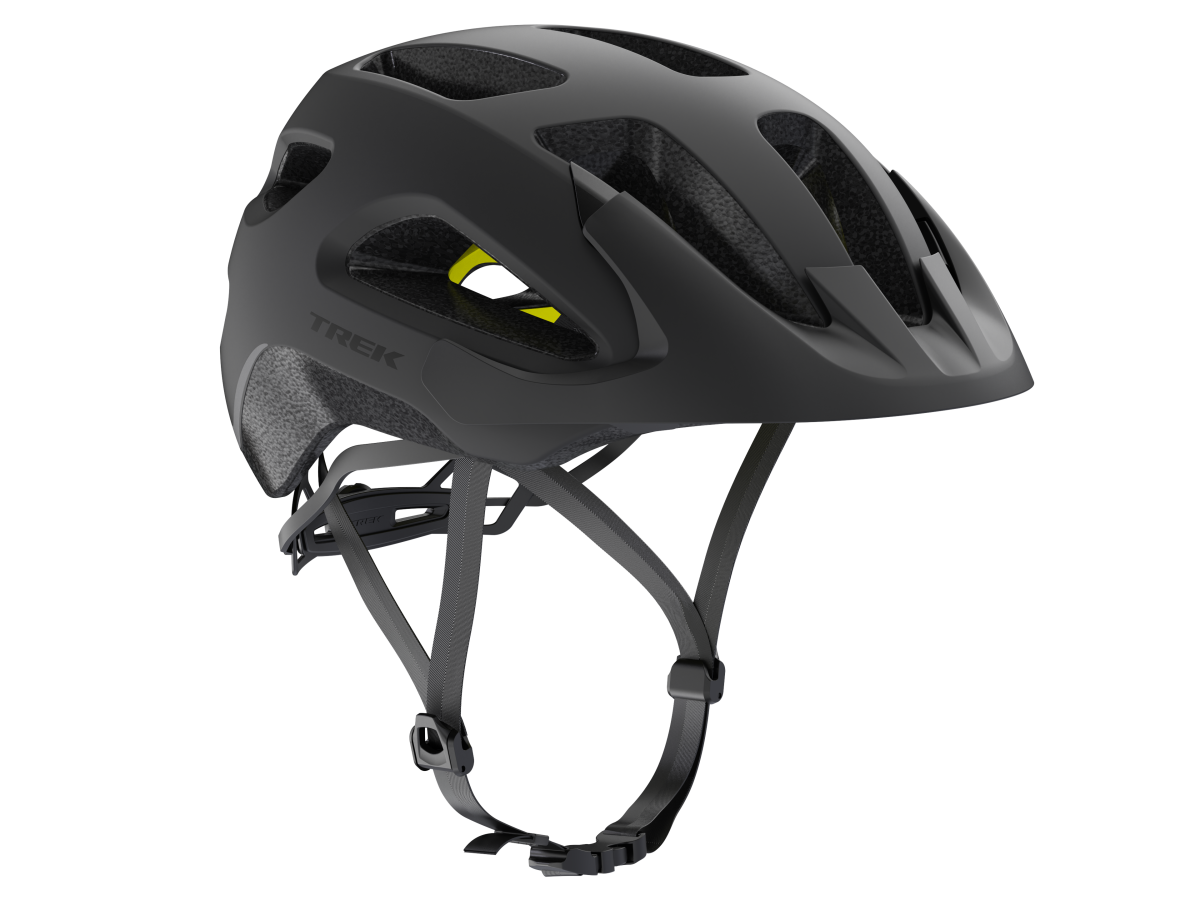
The Trek Solstice Mips stands out as an exceptional value proposition in modern cycling protection. At an approximate $70 retail price, it brings verified Mips rotational safety to casual riders, commuters, and entry-level mountain bikers without the steep financial barrier typical of performance gear. Weighing 360 grams, the Solstice utilizes an in-mold composite shell that bonds the outer polycarbonate structure directly to the EPS foam liner. This creates a durable, unified build that resists everyday garage dings and knocks. Independent impact assessments routinely rank the Solstice near the top of its price bracket, proving that reliable head safety does not require spending triple digits. The micro-adjust dial retention system is straightforward, providing an easy, one-handed fit that accommodates a wide variety of skull profiles. Where the Solstice shows its budget price is in the finishing details. The vent ports are fewer and smaller than those found on dedicated high-performance road or trail helmets, leading to warmth buildup during intense summer efforts. Additionally, the clip-on visor offers limited coverage and lacks vertical adjustment. Still, for everyday commuting, rail-trail exploring, and recreational fitness, its safety-to-cost ratio is tough to beat. **Highlights** - Accessible price around $70 with full Mips rotational protection. - Solid in-mold composite construction withstands daily commuting abuse. - Simple one-hand dial fit system adjusts easily on the move. - Built-in removable snap-on visor adds versatility across road and path. - Strong ratings in independent third-party impact assessments. **Watch-outs** - Basic venting profile traps heat during long, high-exertion climbs. - Non-adjustable visor snaps in place with fixed positioning. - Aesthetic profile is bulkier and less refined than premium performance lids.
Pros
- Mips rotational impact protection at a budget-friendly price point
- Proven in-mold composite shell withstands everyday knocks and dings
- Intuitive one-handed micro-adjust dial retention system fits securely
- Removable snap-on visor adds versatility across road and trail riding
Cons
- Modest vent design traps heat during high-intensity summer climbs
- Visor is fixed in position and lacks vertical tilt adjustment
- At 360 grams, it is heavier than dedicated performance road helmets
Best uses
- Urban and suburban commuting
- Recreational fitness riding
- Paved greenway and rail trails
- Casual gravel and dirt paths
Specifications
- MSRP
- Approximately $70
- Measured Weight
- 360 grams
- Rotational Protection
- Integrated Mips liner
- Construction
- In-mold polycarbonate with EPS foam
- Fit System
- Rear micro-adjust dial cradle
- Visor Style
- Removable snap-on visor
Pricing
We don't publish a price we haven't verified. The retailer links below open the live listing for this exact model.
Full catalog listing & offersBest for
Urban and suburban commuting, Recreational fitness riding, Paved greenway and rail trails, Casual gravel and dirt paths
Where to buy the Solstice Mips
We don't have a direct Amazon listing on file yet — this opens an Amazon search for the exact make and model.
Some links are affiliate links. Buying through them supports our testing at no extra cost to you.
The Trek Solstice Mips delivers dependable safety technology at an accessible price point, anchoring itself as a sensible choice for recreational cyclists, commuters, and fitness riders. Priced around $70, it bridges the gap between basic department store lids and expensive, race-oriented protection. Instead of stripping out critical safety mechanisms to hit a competitive budget, Trek equipped the Solstice with an integrated Multi-directional Impact Protection System (Mips) liner, designed to mitigate rotational forces during angled impacts. Weighing in at 360 grams, the Solstice carries a slight weight penalty over specialized road racing helmets, but it compensates with an adaptable build and user-friendly features. The helmet includes a removable snap-on visor for sun and rain deflection on rail trails or city streets, alongside a micro-adjust retention system that dials in a secure hold with minimal fuss. While the Solstice avoids gimmicks, its budget positioning entails noticeable trade-offs in thermal management and aerodynamic shaping. The ventilation channels are relatively modest, meaning riders will notice heat buildup during extended climbs under midday summer sun. However, for everyday utility, routine fitness miles, and cross-discipline riding, it delivers practical safety and straightforward comfort without demanding triple-digit expenditure.
Target Audience and Use
The Solstice Mips is configured primarily for everyday utility, commuting, paved greenway cruising, and light multi-surface gravel or dirt paths. It does not pretend to be an ultralight road climbing lid or an enduro-ready mountain bike helmet with extended occipital coverage. Instead, it appeals to riders who split their saddle time between local bike paths, routine errands, and weekend fitness loops. For cyclists upgrading from an old, unrated helmet or those who want reliable rotational safety without spending well over a hundred dollars, the Solstice fits the bill. The inclusion of a detachable visor broadens its appeal, allowing riders to adapt the helmet for road riding or sun-dappled gravel trails. While aggressive trail riders and drop-bar racers will want specialized gear offering more aggressive airflow or deeper temporal shielding, the Solstice remains an approachable, dependable option for the vast middle ground of general cycling.
Construction and Safety Features
At the core of the Solstice is an in-mold composite construction where the tough polycarbonate outer shell is fused directly to an expanded polystyrene (EPS) foam core. This structural fusion reduces dead space, helps resist minor everyday impacts against car trunks or garage shelves, and maintains structural integrity upon impact. Internally, Trek integrates a low-friction Mips liner designed to slide slightly relative to the skull during oblique impacts, theoretically decreasing the rotational forces transferred to the brain. Independent testing facilities, including noted impact evaluations from third-party testing programs, consistently award the Solstice strong marks for impact attenuation within its cost tier. Rather than utilizing expensive exotic composites or ultra-thin foam structures, Trek opts for proven, time-tested EPS densities that deliver consistent, predictable energy management while keeping production costs low.
Ventilation and Airflow Dynamics
Ventilation is where the Solstice's budget nature becomes most apparent. Trek designed the helmet with functional vents and internal air channels, but the ports are fewer in number and smaller in surface area compared to pricier performance models. At moderate commuting paces or during flat road cruising in temperate weather, internal airflow is entirely adequate to keep sweat in check. However, when pushed into high-exertion efforts—such as grinding up long, exposed ascents or pedaling through humid summer afternoons—air movement drops significantly. Heat tends to pool across the crown of the head, and the internal padding can quickly become saturated under continuous, heavy sweat output. Cyclists living in hot climates or those seeking a helmet strictly for high-intensity training may find the airflow restrictive, making this helmet best suited for moderate tempos and temperate seasons.
Build Durability and Finish
The Solstice avoids common pitfalls of cheap construction, exhibiting solid durability that holds up well to daily commuting abuse. Because the polycarbonate shell covers the majority of vulnerable EPS foam, the helmet resists the casual dings, scrapes, and abrasions common during bike-rack lockups and transport. The outer graphics and matte or gloss finishes resist peeling and fading over seasonal use. The chin webbing is standard woven nylon, which resists fraying, and the side strap splitters lock down securely once adjusted. The internal pads can be removed easily for hand washing when grime accumulates. The only structural vulnerability lies in the snap-on visor tabs; repeated removal and reinstallation can cause the plastic retention snaps to weaken or break over time. Treated with standard care, the helmet easily lasts its full recommended lifespan without premature material breakdown.
Retention System and Ergonomics
Trek outfits the Solstice with a single-dial micro-adjust fit system integrated directly into the rear cradle. Turning the dial provides crisp, fine-grained clicks that tighten or loosen the internal halo uniformly around the perimeter of the head. The cradle adjusts smoothly with one hand, even when wearing light cycling gloves, allowing on-the-fly tension changes if wearing a cycling cap or thermal beanie. The cradle shape accommodates a broad spectrum of oval and round head shapes without causing obvious pressure points on the temples or forehead. That said, the helmet lacks vertical height adjustment for the rear cradle, which can complicate fit for riders with low-hanging ponytails or atypical cranial shapes. Furthermore, the chin straps lack the supple, pliable texture found on premium helmets, though they lie reasonably flat along the jawline without causing skin irritation.
Value and Competing Options
Retailing around $70, the Solstice Mips occupies a highly competitive budget bracket alongside options like the Giro Fixture Mips and the Specialized Align II. The Specialized Align II often retails at a slightly lower price and boasts top-tier independent safety ratings, but its minimalist aesthetic lacks a visor option, limiting its adaptability for gravel or trail riding. The Giro Fixture provides a more trail-centric appearance and slightly deeper rear coverage, but it can feel slightly heavier and bulkier for pavement riding. The Solstice balances these extremes effectively: it provides a clean, neutral profile suitable for roads and paved paths while offering the versatility of a clip-on visor for light trail duty. For recreational cyclists who prefer one affordable helmet capable of handling commuting, trail riding, and fitness laps, the Solstice provides an exceptional return on investment.
How we picked
We started with a long list of bike helmets that people actually buy, cut anything that could not clear our baseline for durability and field performance, then ranked the 10 that were left against the same criteria. Rankings are editorial. No brand pays for placement, and affiliate links never move a pick up or down.
- Real-world durability
- How the material, stitching, or steel holds up after a season of hard use — not how it looks new.
- Performance in bad conditions
- Wind, rain, cold, and grit are the test. Anything that only works on a nice day gets marked down.
- Weight and packability
- Every ounce has to earn its place in the pack, but not at the cost of something that fails in the field.
- Ease of use
- Setup, adjustment, and maintenance with cold hands, in the dark, without the manual.
- Value at its price point
- Compared against the closest competitors in the same tier, not against cheaper gear in a different class.
- Repairability and support
- Field-fixable design, available parts, and a warranty the maker actually honors.
Solstice Mips — frequently asked questions
- Is the Solstice Mips worth it?
- We rank it #5 in Bike Helmets. The Trek Solstice Mips stands out as an exceptional value proposition in modern cycling protection. At an approximate $70 retail price, it brings verified Mips rotational safety to casual riders, commuters, and entry-level mountain bikers without the steep financial barrier typical of performance gear.
- What is the Solstice Mips best for?
- Best for urban and suburban commuting, recreational fitness riding, paved greenway and rail trails and casual gravel and dirt paths. Standouts: mips rotational impact protection at a budget-friendly price point and proven in-mold composite shell withstands everyday knocks and dings.
- What are the downsides of the Solstice Mips?
- Modest vent design traps heat during high-intensity summer climbs, Visor is fixed in position and lacks vertical tilt adjustment and At 360 grams, it is heavier than dedicated performance road helmets.
- What are the key specs of the Solstice Mips?
- MSRP: Approximately $70 · Measured Weight: 360 grams · Rotational Protection: Integrated Mips liner · Construction: In-mold polycarbonate with EPS foam · Fit System: Rear micro-adjust dial cradle
- Target Audience and Use — what should I know about the Solstice Mips?
- The Solstice Mips is configured primarily for everyday utility, commuting, paved greenway cruising, and light multi-surface gravel or dirt paths. It does not pretend to be an ultralight road climbing lid or an enduro-ready mountain bike helmet with extended occipital coverage.
- Construction and Safety Features — what should I know about the Solstice Mips?
- At the core of the Solstice is an in-mold composite construction where the tough polycarbonate outer shell is fused directly to an expanded polystyrene (EPS) foam core. This structural fusion reduces dead space, helps resist minor everyday impacts against car trunks or garage shelves, and maintains structural…
Compare side by side
Put the Solstice Mips against any other pick on this list — specs, price, pros, cons and reader ratings.