


Reader rating
Rate it and you move it. Community ratings re-rank this product inside its Top 10 list.
Expert-picked, reader-ranked. Our editors choose the products and the launch order; member star ratings move picks up or down over time.
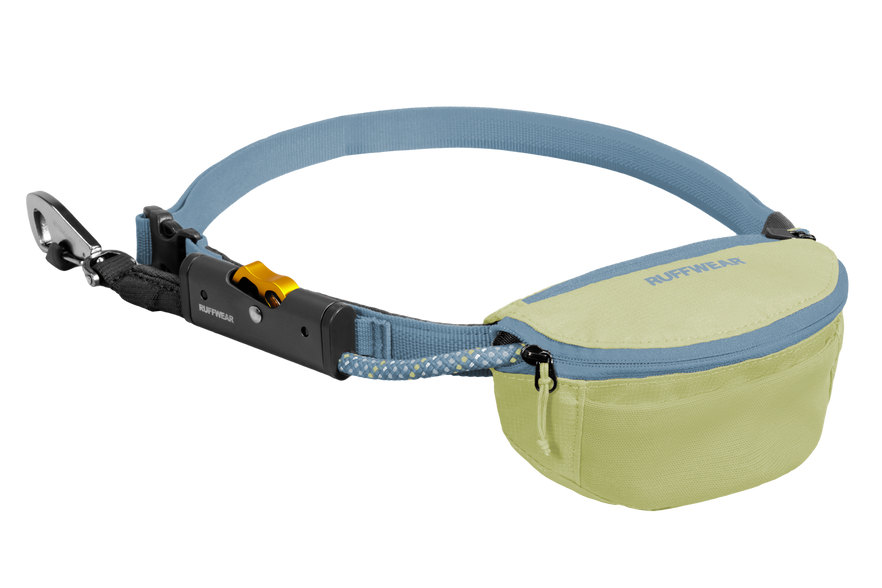
The Ruffwear Hitch Hiker Leash is an innovative, climbing-inspired tether and leash system engineered specifically for backcountry camping, road-tripping, and variable-distance trail hiking. Inspired by auto-blocking climbing belay devices, it serves as an all-in-one hand-held leash, hands-free waist system, and rapid tree-hitch tether for basecamp management. The core of the Hitch Hiker is its ergonomic, stowable adjuster hardware, which houses a supple, kernmantle-style rope. With a squeeze of the mechanical brake, you can smoothly pay out or reel in line, instantly shifting between a short heel-lead on technical singletrack and an extended line around a campsite fire ring. The rope packs away into a compact fabric hip pack that doubles as a comfortable waist belt or handle. Ruffwear’s lockable Crux Clip provides an exceptionally strong, secure attachment point to the dog's harness. The trade-off comes down to cost, complexity, and cleaning. The mechanical brake and enclosed bag mean this leash costs significantly more than conventional webbing leads. If dropped in fine sand, mud, or freezing slush, the rope-locking mechanism can collect debris and requires thorough rinsing and drying to maintain its buttery, friction-free operation. **Highlights** - Auto-blocking mechanical rope brake inspired by climbing hardware - Versatile design functions as hand-held leash, waist-worn lead, or tree tether - High-strength, supple kernmantle rope line - Integrated stowage pouch for line management and clean packability - Lockable, lightweight Crux Clip hardware for secure harness attachment **Watch-outs** - Substantially more expensive than standard trail leashes - Mechanical hardware requires cleaning if exposed to grit, sand, or mud - Heavier and more complex than minimalist webbing lines
Pros
- Mechanical rope brake provides controlled length adjustment without plastic springs.
- Easily converts between hands-free waist carry, handheld lead, and campsite tree tether.
- Integrated pouch cleanly stows excess rope slack away from dirt and brush.
- Lockable Crux Clip ensures a reliable, fail-safe harness connection.
Cons
- Significantly more expensive than traditional flat-webbing leashes.
- Brake mechanism requires rinsing if exposed to fine sand, mud, or grit.
- Retracting line requires manually feeding rope back into the stowage pouch.
Best uses
- Backcountry campsite tethering
- Hands-free trail hiking
- Road trips and vehicle camping
- Variable-distance trail walks
Specifications
- Design Style
- Adjustable rope tether and leash system
- Hardware
- Climbing-inspired auto-blocking rope adjuster
- Connection
- Lockable Ruffwear Crux Clip
- Line Type
- Kernmantle rope
- Storage
- Integrated fabric stowage waist pouch
- Carry Modes
- Handheld, hands-free waist, and tree tether
Pricing
We don't publish a price we haven't verified. The retailer links below open the live listing for this exact model.
Full catalog listing & offersBest for
Backcountry campsite tethering, Hands-free trail hiking, Road trips and vehicle camping, Variable-distance trail walks
Where to buy the Hitch Hiker Leash
Prices and stock change often, so check the current Amazon offer before you buy.
Some links are affiliate links. Buying through them supports our testing at no extra cost to you.
The Ruffwear Hitch Hiker Leash departs from traditional webbing leads by borrowing mechanics directly from rock climbing hardware. Built around an auto-blocking rope-adjuster mechanism and a length of supple kernmantle cord, the system operates as a handheld leash, a hands-free waist lead, and a rapid basecamp tether all in one. The rope feeds directly out of an integrated hip pouch that doubles as an ergonomic handle or belt, allowing owners to fine-tune roaming distance on the fly without dealing with tangled slack. This system is explicitly designed for outdoor enthusiasts, car campers, and hikers who routinely shift between open terrain and crowded basecamps. Instead of packing separate leads for hiking, trail running, and camp tie-outs, the Hitch Hiker combines those duties into a single piece of hardware. When a dog needs to stay close on technical singletrack, line tension holds fast; when it is time to relax around a picnic table or fire ring, paying out extra line requires only a light pinch on the brake. That ingenuity comes with mechanical complexity and a steep retail price. Unlike simple tubular webbing lines that rinse clean in seconds, the Hitch Hiker houses moving parts that demand attention when dragged through grit or wet sand. For owners who value clean versatility around camp and trail, however, it provides an uncommon level of control.
Climbing Hardware Architecture
The defining feature of the Hitch Hiker is its ergonomic rope-brake adjuster, clearly inspired by assisted-braking belay devices. Instead of relying on internal plastic spring reels like standard retractable leashes, this system utilizes friction and geometry to pinch a durable kernmantle cord under tension. Squeezing the hardware lever releases the rope so it pays out smoothly, while releasing the lever locks the line in place against canine pull. At the canine end, Ruffwear integrates their low-profile Crux Clip, which features a manual slide-lock sleeve to prevent unexpected gate openings on rough brush. The entire assembly feels reassuringly solid in hand, substituting brittle plastic components with field-proven mechanical design.
Versatility Across Camp and Trail
Traditional leashes serve one fixed purpose, forcing campers to carry extra tethers or daisy chains for camp management. The Hitch Hiker replaces that clutter by transforming between three distinct configurations. Worn around the waist, it functions as a hands-free walking system that keeps arm fatigue low over long trail miles. Handheld, it works like a variable-length urban lead. When arriving at a campsite, the waist strap loops around trees, posts, or picnic benches, creating an instant hitch without knot-tying. This flexibility makes it particularly valuable for road-trippers and backcountry campers who frequently transition between active trail navigation and sedentary camp chores where dogs still require secure tethering.
Durability and Debris Tolerance
The kernmantle cord displays strong resistance to rock abrasion, sharp branches, and repeated friction through the braking hardware. However, the system's mechanical nature introduces vulnerabilities unknown to basic webbing. If the rope adjuster is dropped into fine trail dust, river silt, or beach sand, grit can work into the braking cam, causing the lever to feel crunchy or sticky. Maintenance is not complicated—it requires soaking and flushing with fresh water followed by air drying—but owners cannot neglect it. In sub-freezing temperatures, wet cordage re-entering the brake housing can freeze and restrict fluid adjustment until thawed, making it better suited for three-season conditions than deep winter mountaineering.
Fit and Operating Ergonomics
Operating the Hitch Hiker requires a minor adjustment period for handlers accustomed to spring-loaded retractable leashes. Line retrieval is manual: you pull slack through the brake mechanism and stuff the excess rope into the zippered fabric pouch. While this eliminates dangerous high-speed recoil cords, it requires two hands when bringing a dog in quickly. The waist strap adjusts easily and sits comfortably on the hips during casual walking, though running with a heavy puller can cause the pack to bounce if not cinched securely. For casual hiking and camp setups, however, the compact pouch keeps excess rope neatly contained rather than dragging through pine needles and dirt.
Alternatives and Market Standing
At this price tier, the Hitch Hiker faces stiff competition from standard webbing systems. Handlers looking strictly for hands-free trail walking can buy elasticized waist leashes like the Ruffwear Roamer for significantly less money. Alternatively, dedicated tie-out cables provide simpler, weather-agnostic perimeter lines for basecamps. Where the Hitch Hiker stands distinct is in unifying these roles into a single packable unit. It replaces a separate walking lead, a hands-free waist belt, and an auxiliary camp hitch without needing carabiners or auxiliary webbing. Handlers willing to pay the premium gain unmatched adaptability, while minimalist hikers may find standard static lines less fussy and far lighter.
The Practical Trade-Offs
The Hitch Hiker is not a universal solution for every dog owner. Because line retraction relies on feeding cord into the pouch by hand, it is less convenient in high-distraction environments where rapid, one-handed leash shortening is constantly required. It is also noticeably heavier and bulkier in a daypack than a four-foot nylon strap. For high-energy pullers, holding the device directly in hand lacks the cushioned comfort of a padded webbing loop. Buyers must accept that they are purchasing an outdoor camp tether and adjustable hiking system, not an effortless daily sidewalk leash. For its intended backcountry remit, however, the engineering solves genuine line-management headaches.
How we picked
We started with a long list of dog leashes that people actually buy, cut anything that could not clear our baseline for durability and field performance, then ranked the 10 that were left against the same criteria. Rankings are editorial. No brand pays for placement, and affiliate links never move a pick up or down.
- Real-world durability
- How the material, stitching, or steel holds up after a season of hard use — not how it looks new.
- Performance in bad conditions
- Wind, rain, cold, and grit are the test. Anything that only works on a nice day gets marked down.
- Weight and packability
- Every ounce has to earn its place in the pack, but not at the cost of something that fails in the field.
- Ease of use
- Setup, adjustment, and maintenance with cold hands, in the dark, without the manual.
- Value at its price point
- Compared against the closest competitors in the same tier, not against cheaper gear in a different class.
- Repairability and support
- Field-fixable design, available parts, and a warranty the maker actually honors.
Hitch Hiker Leash — frequently asked questions
- Is the Hitch Hiker Leash worth it?
- We rank it #4 in Dog Leashes. The Ruffwear Hitch Hiker Leash is an innovative, climbing-inspired tether and leash system engineered specifically for backcountry camping, road-tripping, and variable-distance trail hiking. Inspired by auto-blocking climbing belay devices, it serves as an all-in-one hand-held leash, hands-free waist system, and…
- What is the Hitch Hiker Leash best for?
- Best for backcountry campsite tethering, hands-free trail hiking, road trips and vehicle camping and variable-distance trail walks. Standouts: mechanical rope brake provides controlled length adjustment without plastic springs. and easily converts between hands-free waist carry, handheld lead, and campsite tree tether..
- What are the downsides of the Hitch Hiker Leash?
- Significantly more expensive than traditional flat-webbing leashes., Brake mechanism requires rinsing if exposed to fine sand, mud, or grit. and Retracting line requires manually feeding rope back into the stowage pouch..
- What are the key specs of the Hitch Hiker Leash?
- Design Style: Adjustable rope tether and leash system · Hardware: Climbing-inspired auto-blocking rope adjuster · Connection: Lockable Ruffwear Crux Clip · Line Type: Kernmantle rope · Storage: Integrated fabric stowage waist pouch
- Climbing Hardware Architecture — what should I know about the Hitch Hiker Leash?
- The defining feature of the Hitch Hiker is its ergonomic rope-brake adjuster, clearly inspired by assisted-braking belay devices. Instead of relying on internal plastic spring reels like standard retractable leashes, this system utilizes friction and geometry to pinch a durable kernmantle cord under tension.
- Versatility Across Camp and Trail — what should I know about the Hitch Hiker Leash?
- Traditional leashes serve one fixed purpose, forcing campers to carry extra tethers or daisy chains for camp management. The Hitch Hiker replaces that clutter by transforming between three distinct configurations.
Compare side by side
Put the Hitch Hiker Leash against any other pick on this list — specs, price, pros, cons and reader ratings.