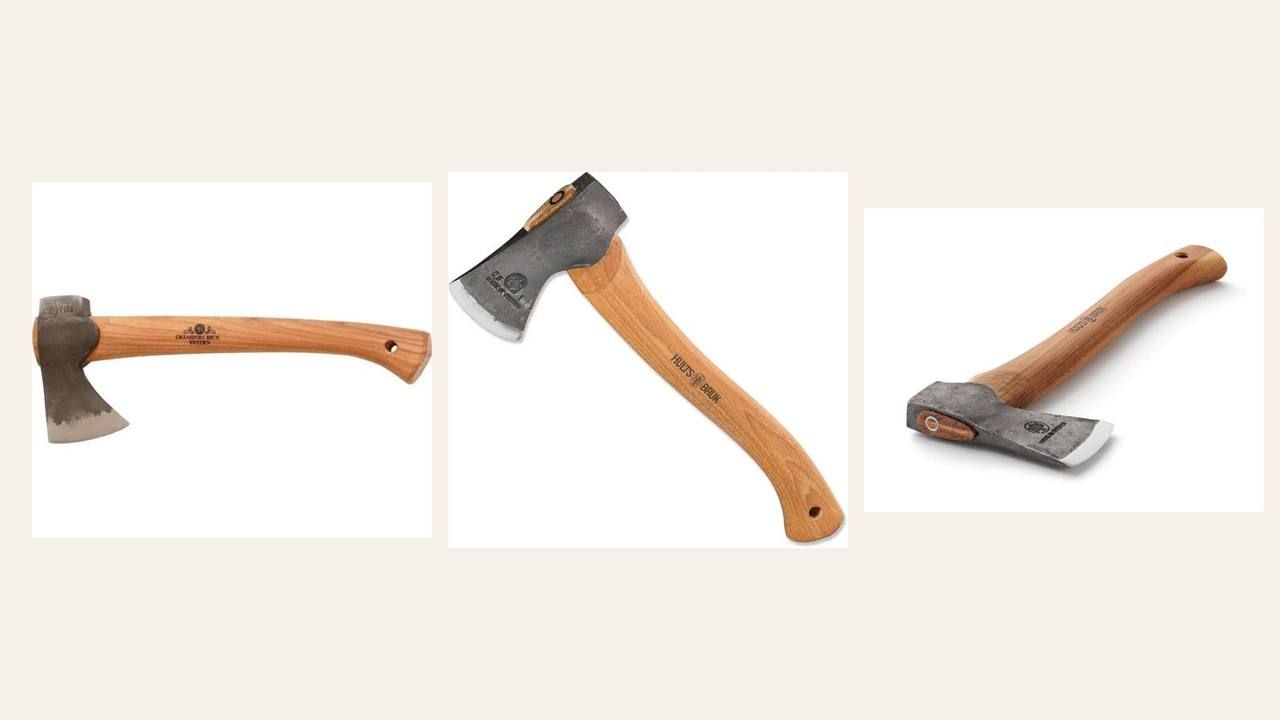
These research-based picks prioritize compact, one-handed camp tools rather than full-size axes; they are not a claim of hands-on testing. Most fit roughly 12–16 inches, with the smaller Gerber Pack Hatchet explicitly marked as an exception. Stock limitations and conflicting manufacturer specifications are flagged rather than hidden.
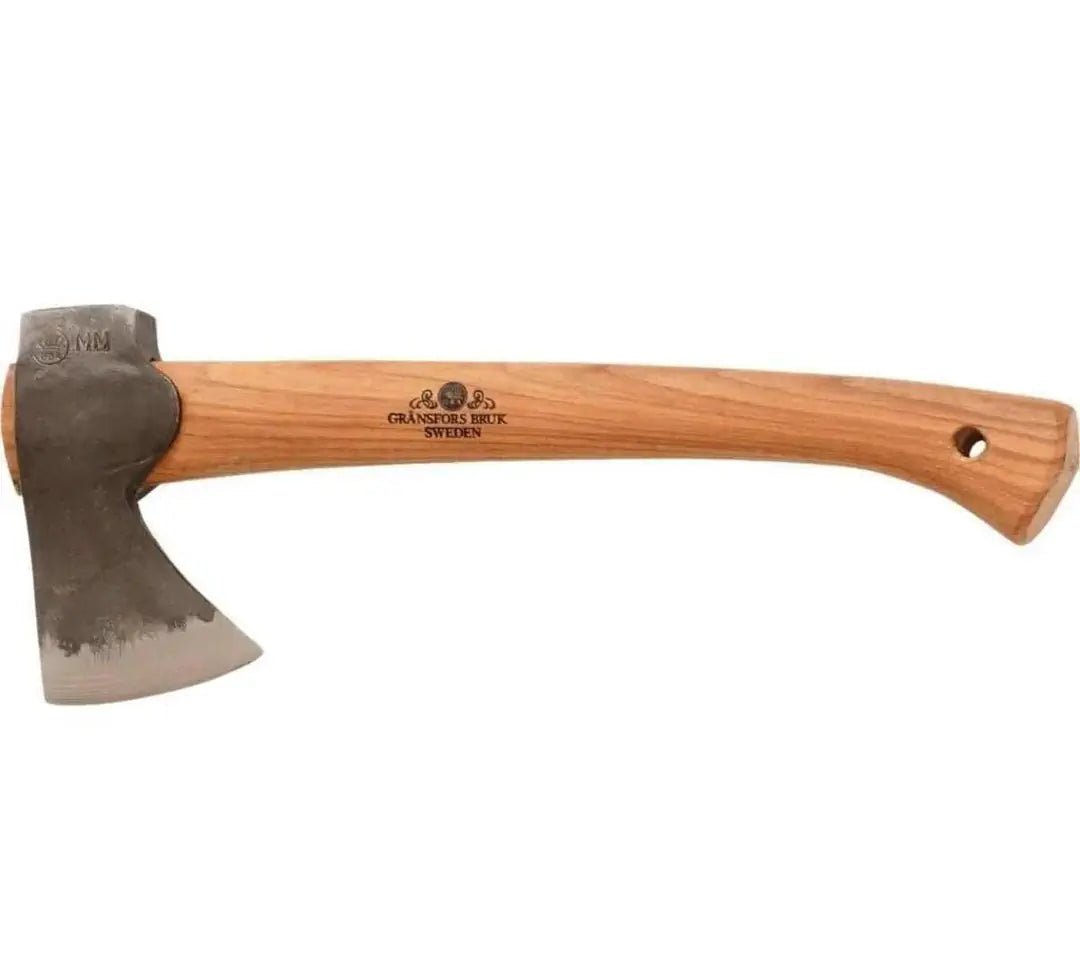
A traditional scouting hatchet with a compact profile and enough reach for useful camp chopping. It is the strongest all-round recommendation here for buyers prioritizing portability and traditional construction.
The Wildlife pairs a traditional axe head with a longer handle than the maker’s Hand Hatchet. Its leather cover protects both the edge and the upper poll during transport.
Camp tasks
The maker recommends it for branches and splitting small campfire logs. Those jobs fit its compact format better than processing a full campsite’s large firewood supply.
Trade-offs
This is a premium purchase rather than a casual campsite spare. Manufacturer and retailer length figures differ slightly, so use the manufacturer’s 13.77-inch specification when comparing.
Who should buy it
Choose it for a frequently carried camp tool rather than maximum splitting power. Its 1.3-pound listed weight also makes it attractive when pack weight matters.
As an Amazon Associate, Wild10 earns from qualifying purchases.
No ratings yet
Pick 02Research-based review
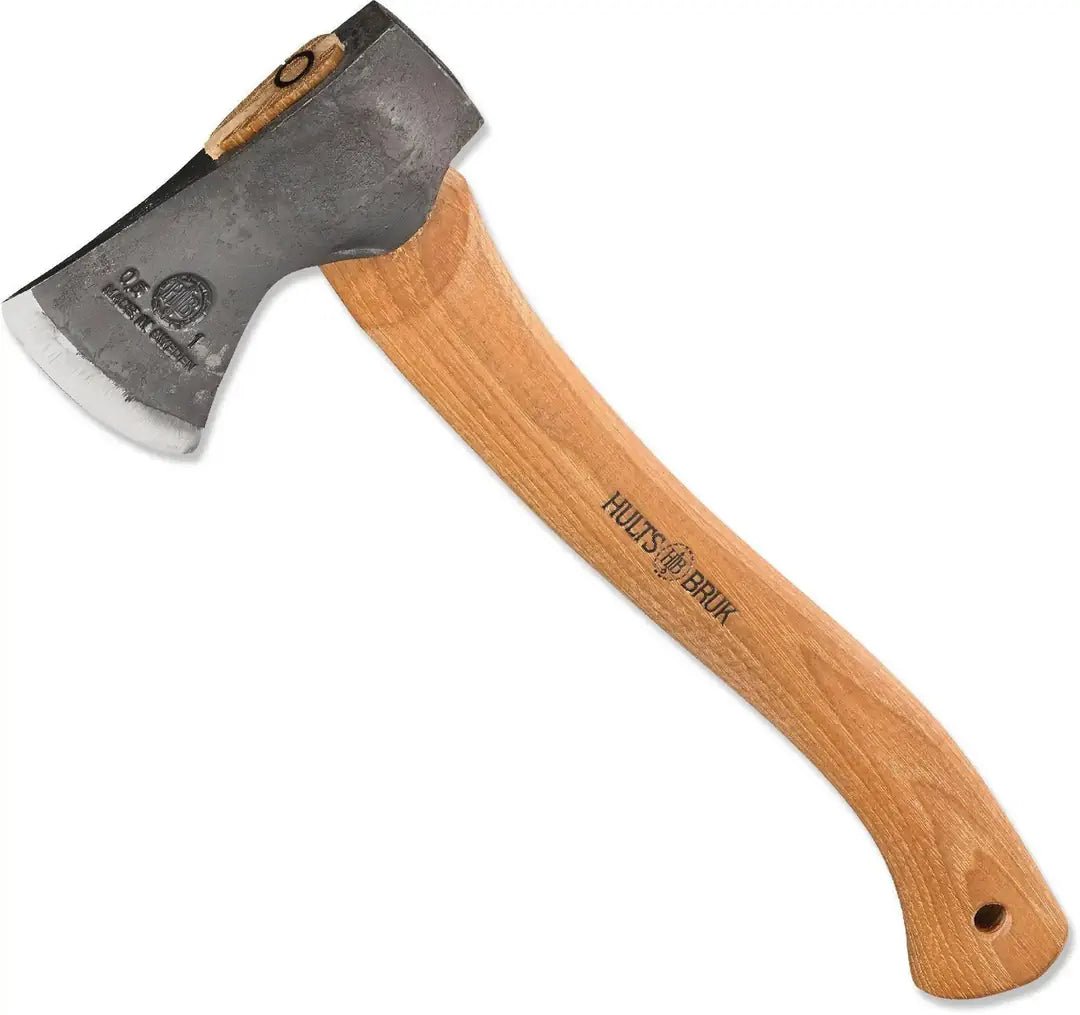
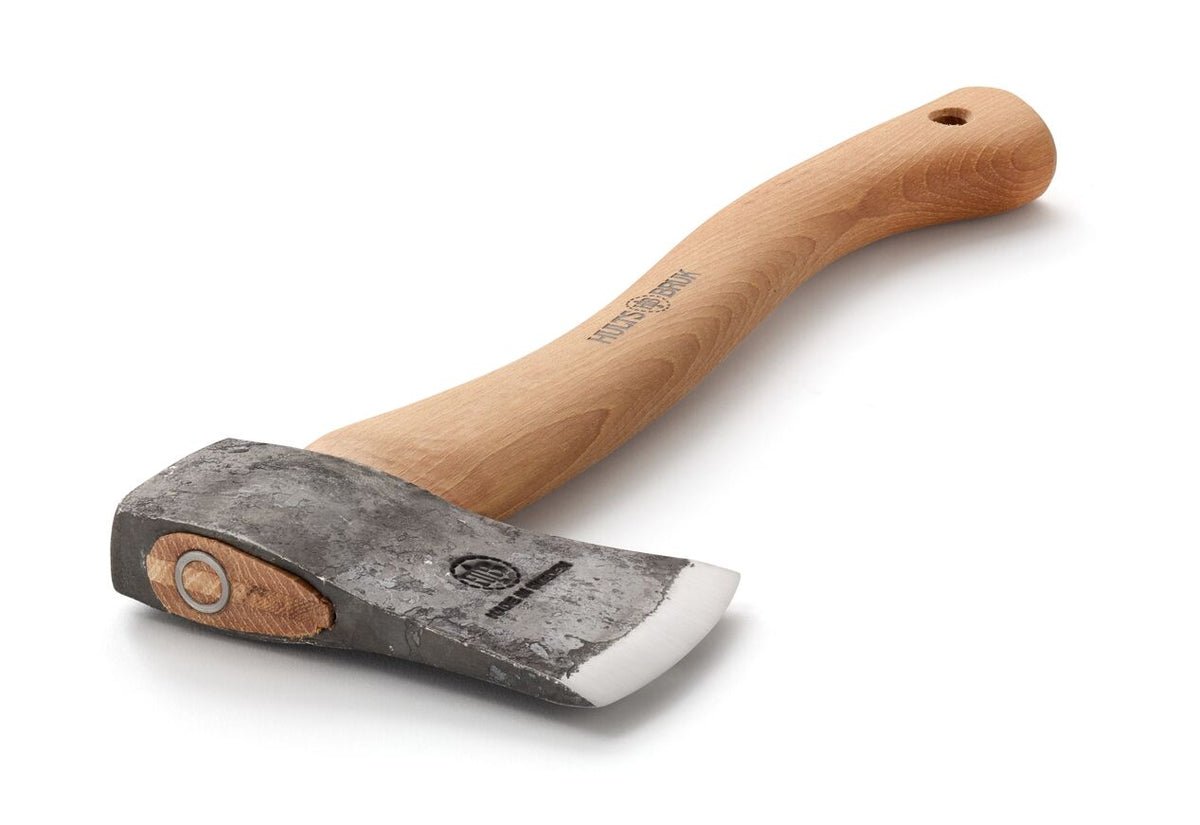
Almike 16-inch Hatchet
Hults Bruk
Handle length
16 in
Head weight
1 lb
Total weight
1.75 lb
Handle
American hickory
The Almike combines a light head with a full 16-inch hickory handle. Verified retailer stock makes it an option for buyers seeking this older model rather than automatically substituting the current Hultån.
The hand-forged Swedish steel head sits on linseed-oiled hickory. A leather protective sheath accompanies the hatchet.
Camp tasks
The retailer positions it for kindling, light clearing and backcountry chores. Its longer handle offers useful reach while retaining a one-handed hatchet format.
Trade-offs
It costs substantially more than basic utility hatchets. Stock is limited, and the Amazon listing found during research now titles the related Hultån rather than the exact Almike.
Who should buy it
Buy it if you specifically want the Almike and appreciate traditional materials. Compare current Hultån availability before paying a scarcity premium.
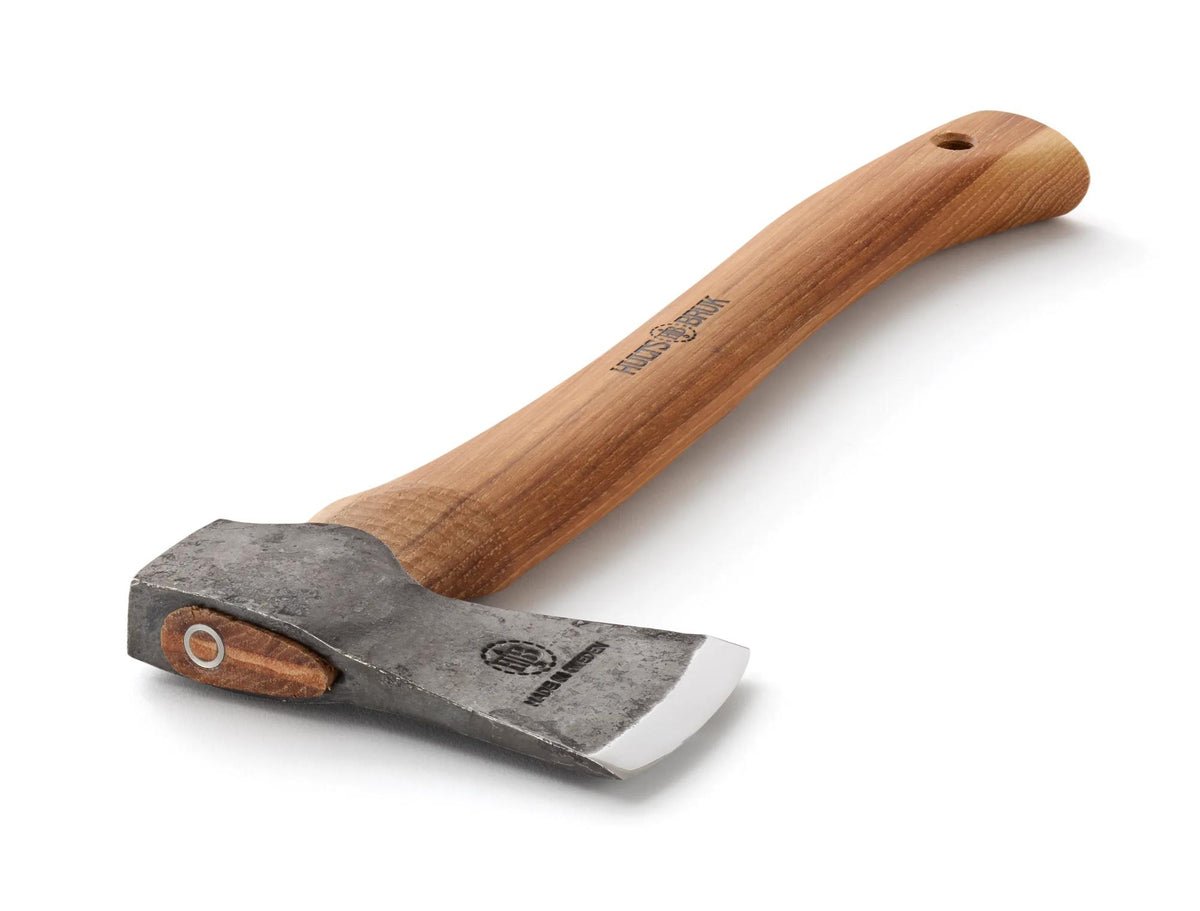
The maker describes a lightweight, versatile outdoor design. The current model uses a one-pound head and an American hickory handle.
Camp tasks
Its intended role spans hiking and everyday camp tasks. That makes it a logical shortlist choice for kindling preparation and small wood rather than large-scale splitting.
Trade-offs
The $200 listed price puts it firmly in premium territory. Do not assume an older Almike listing will ship the identical named model without checking.
Who should buy it
Choose it when you want a current maker-supported Swedish hatchet. It suits buyers who value traditional construction more than the lowest purchase price.
As an Amazon Associate, Wild10 earns from qualifying purchases.
No ratings yet
Pick 04Research-based review
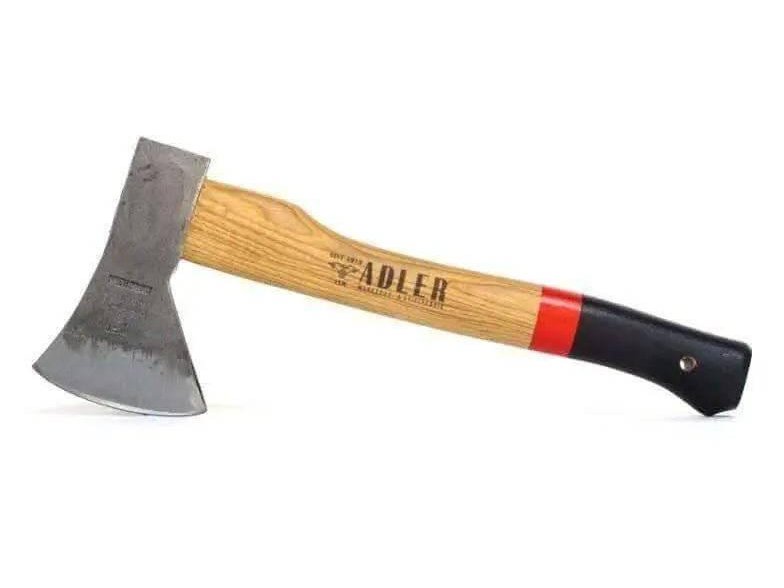
Rheinland Hatchet, Red/Black
Adler
Handle length
14 in
Head weight
1.35 lb
Steel
C45
Handle
US-sourced hickory
Adler’s Rheinland offers a broad curved cutting surface in a compact German-made package. The verified red-and-black variant includes a leather sheath and cotton storage bag.
The C45 head is drop-forged and hand-finished. The curved hickory handle has a black anti-slip area and red accent.
Camp tasks
The retailer recommends it for wilderness, bushcraft and camping. Its broad Rheinland edge is an appealing format for general-purpose camp cutting.
Trade-offs
The retailer lists it at $98, below the premium Swedish entries but above budget composites. A wooden handle still deserves inspection and sensible care.
Who should buy it
Choose it for traditional materials without the highest premium pricing. It is particularly appealing if you prefer a broader curved blade profile.
As an Amazon Associate, Wild10 earns from qualifying purchases.
No ratings yet
Pick 05Research-based review
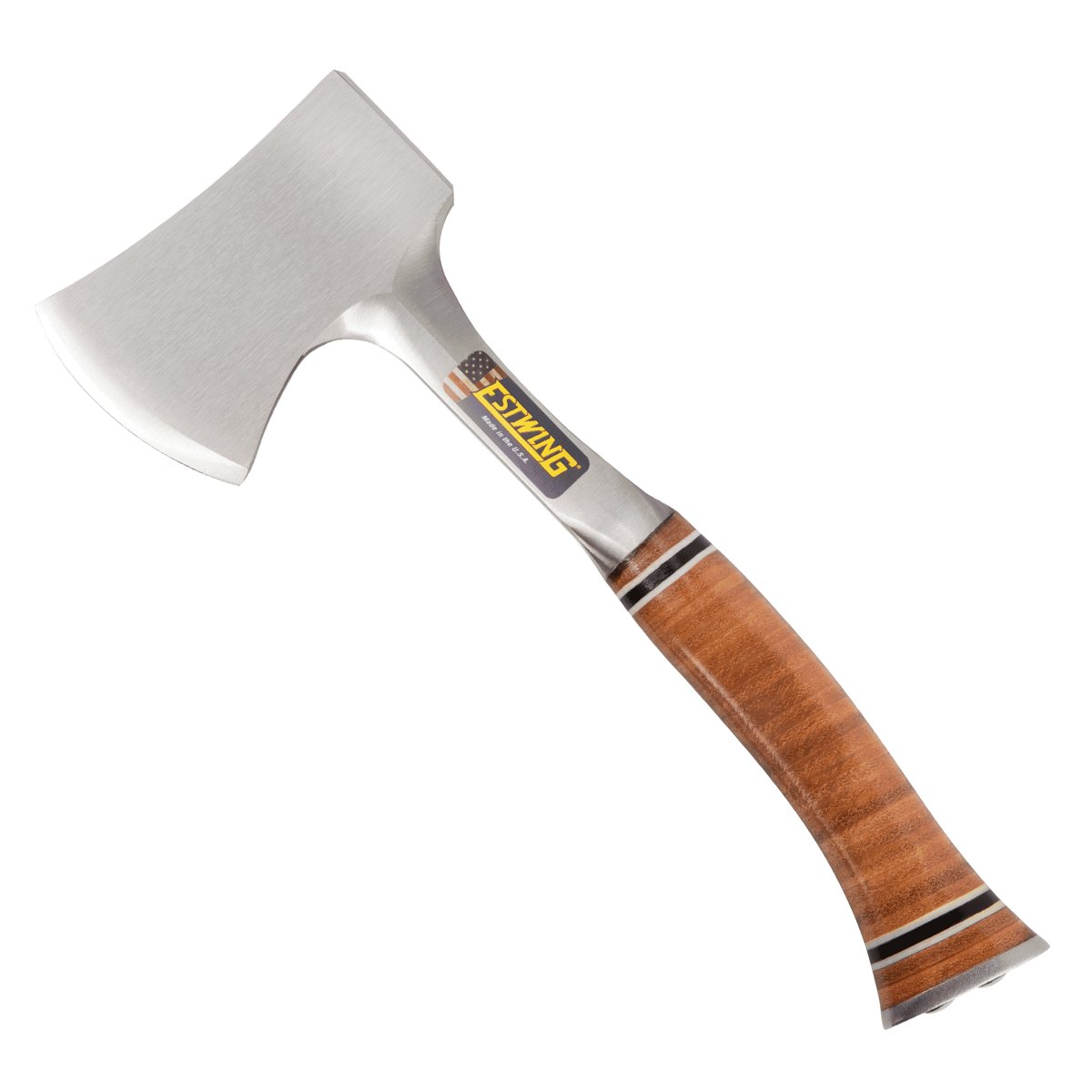
Sportsman’s Axe E14A
Estwing
Overall length
12.5 in
Cutting edge
2.75 in
Construction
One-piece forged steel
Grip
Genuine leather
Origin
USA
The E14A is the shorter leather-gripped Sportsman’s Axe, not the 13.5-inch E24A. Its one-piece forged construction removes the separate wooden handle-and-head joint.
Estwing forges the axe in one piece from American steel. A genuine leather grip and black nylon sheath complete the package.
Camp tasks
The manufacturer presents it as a camping axe. Its short overall length favors close camp chores over the reach of longer hatchets.
Trade-offs
Choose the model number carefully because the same page lists two lengths. The integrated steel construction does not offer the conventional replaceable hickory handle of a hung axe.
Who should buy it
Choose it if a one-piece tool is your priority. It fits campers who prefer steel construction and a traditional leather grip.
The Pjältån is an available current-model hatchet with a 1.3-pound head and 15-inch handle. It gives this list a more work-oriented Swedish option without reaching full forest-axe dimensions.
The hand-forged proprietary Swedish steel head has a forge-black finish. Its American hickory handle keeps the construction conventional and serviceable.
Camp tasks
The maker recommends it for kindling, carving and everyday camp tasks. The revised Yankee-pattern geometry is intended to release cleanly from wood.
Trade-offs
At two pounds total, it is not the lightest carrying option. The maker also notes that hand forging can produce small variations in dimensions and finish.
Who should buy it
Choose it for cabin, woodpile and campsite use where a little extra mass is acceptable. Weight-focused hikers should compare the lighter Wildlife instead.
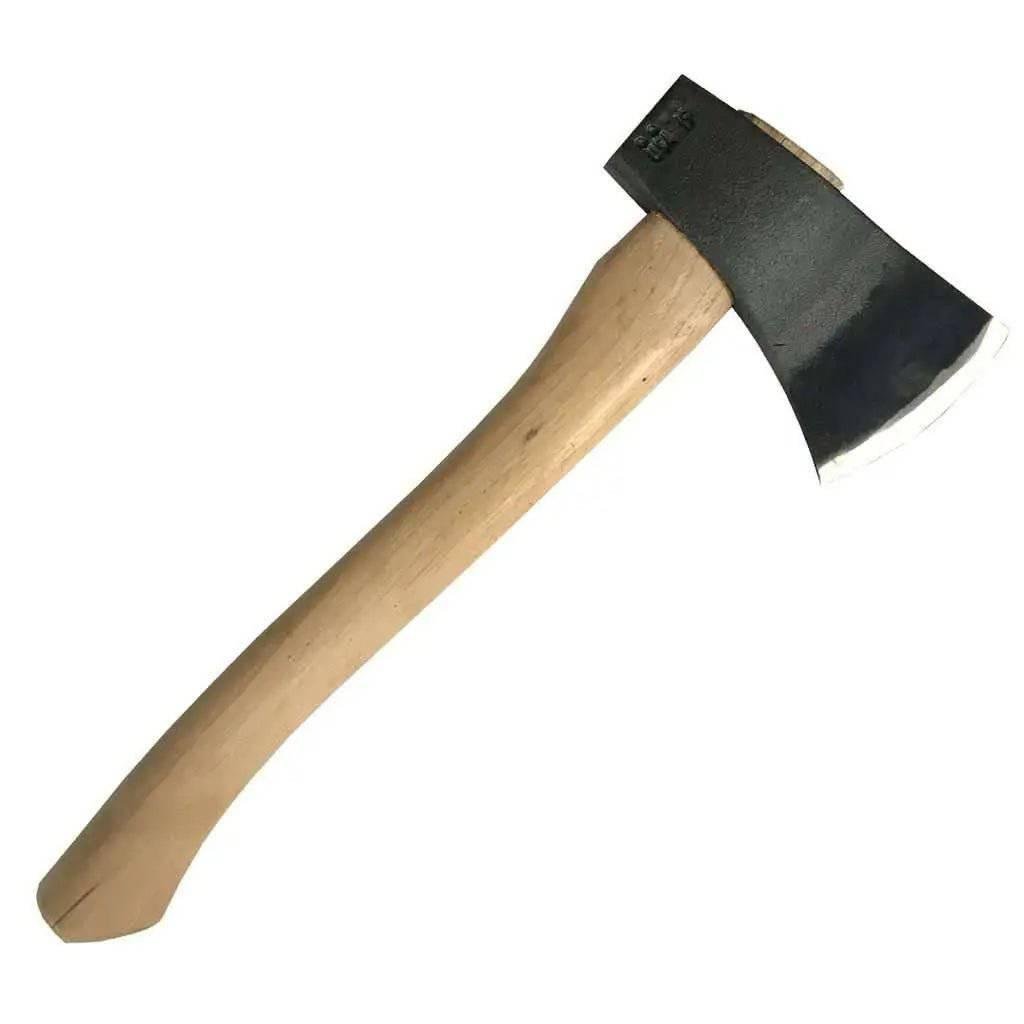
The Flying Fox combines a compact wooden handle with a hardened poll for utility work. It remains a cataloged product, although the photographed retailer listing was out of stock when checked.
Both the bit and poll are hardened according to the retailer. The US-made head is fitted to a hickory handle trimmed below 16 inches.
Camp tasks
The hardened poll is explicitly intended for nails, spikes and other fasteners. That capability distinguishes it from hatchets whose polls are not designed for such work.
Trade-offs
The leather mask is not included in this listing. Availability needs checking because the image-source retailer currently shows sold out.
Who should buy it
Choose it for camp maintenance and practical utility rather than minimum carrying weight. Buy a suitable edge cover before packing it.
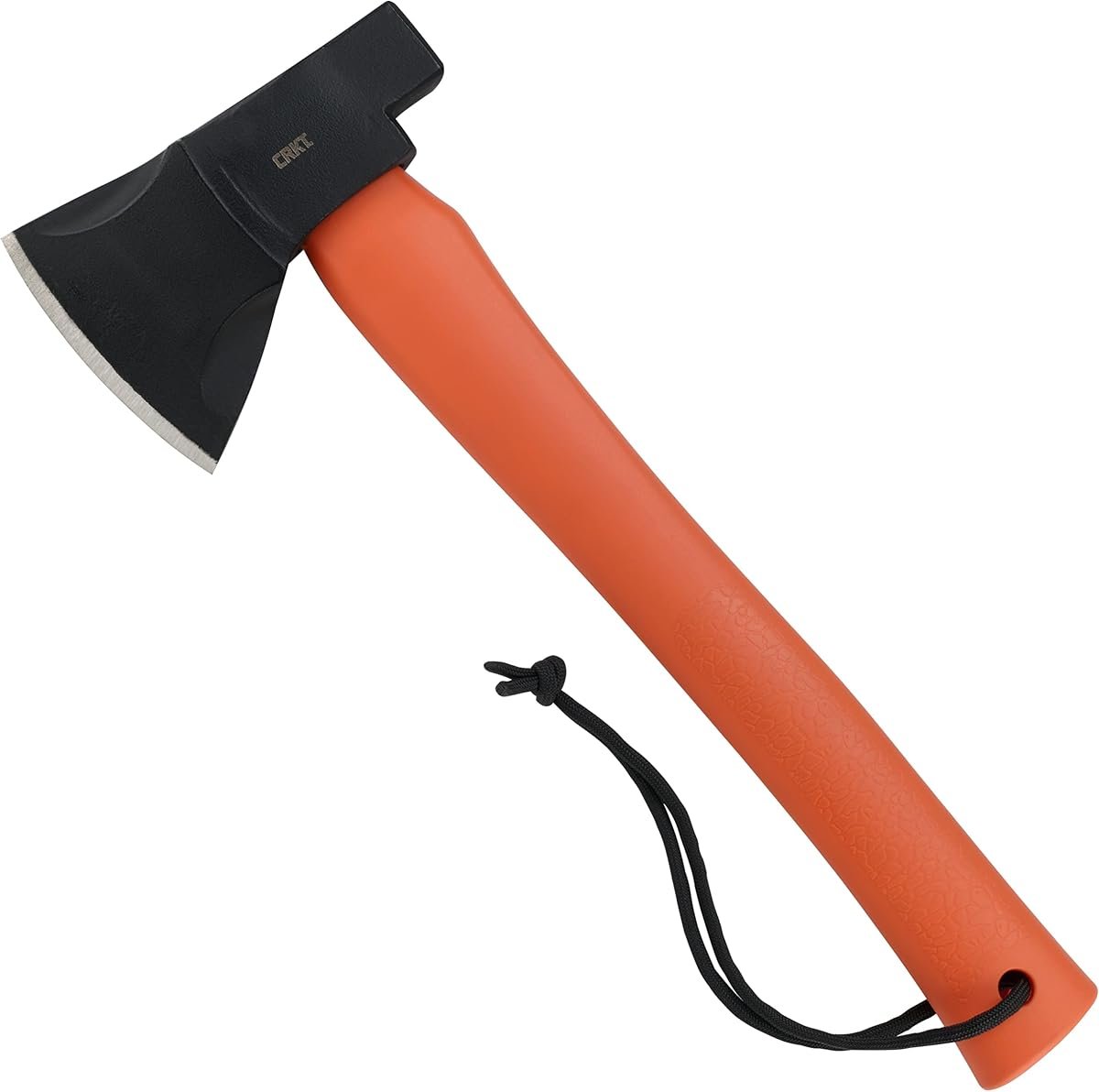
The orange Chogan 2727 is a compact camping hatchet with a dedicated hammer poll. It is distinct from longer Chogan tomahawks and wooden-handled models.
The hot-forged 1055 head has a manganese-phosphate coating. Its glass-reinforced nylon handle includes a lanyard hole.
Camp tasks
CRKT explicitly describes splitting kindling and driving tent stakes. The compact dimensions make it a practical camp setup tool rather than a large wood processor.
Trade-offs
Carbon steel still calls for cleaning and drying despite its coating. Buyers wanting a traditional wooden handle should look elsewhere.
Who should buy it
Choose it when campsite setup is as important as wood cutting. The orange handle also offers a visually conspicuous alternative to natural wood.
As an Amazon Associate, Wild10 earns from qualifying purchases.
No ratings yet
Pick 09Research-based review
Bushcraft Hatchet, Grey 31-003782
Gerber
Handle grip
Rubber overmold
Construction
Forged single-piece head with overstrike guard
Storage
Removable gear storage stick
Included cord
5 ft paracord
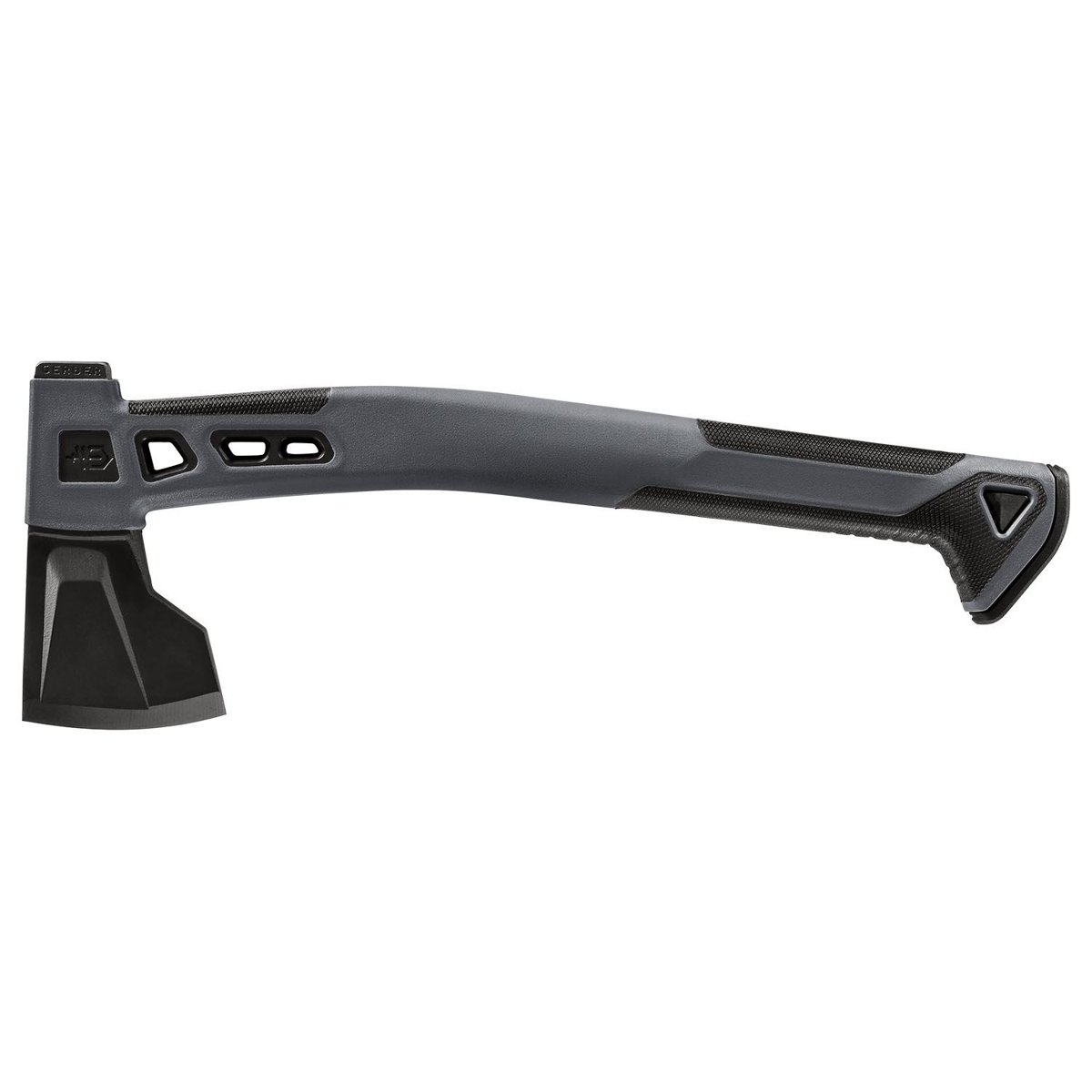
Gerber’s Bushcraft Hatchet integrates a hammerhead and a storage compartment into a rubber-gripped design. Its maker page currently shows sold out and contains conflicting dimensional specifications, so those figures are deliberately omitted.
A forged head and overstrike guard pair with a rubber overmold grip. The removable storage stick holds the supplied paracord and can accommodate tinder or a mini lighter.
Camp tasks
The manufacturer positions it around fire preparation and shelter building. The hammerhead adds camp-setup utility alongside wood cutting.
Trade-offs
The page gives incompatible length and blade figures, plus an implausible weight entry. Confirm dimensions with the seller before ordering, and check stock rather than treating the maker listing as immediately shippable.
Who should buy it
Choose it if storage and multifunction features appeal more than traditional simplicity. It is less suitable for buyers who need unambiguous published dimensions before purchase.
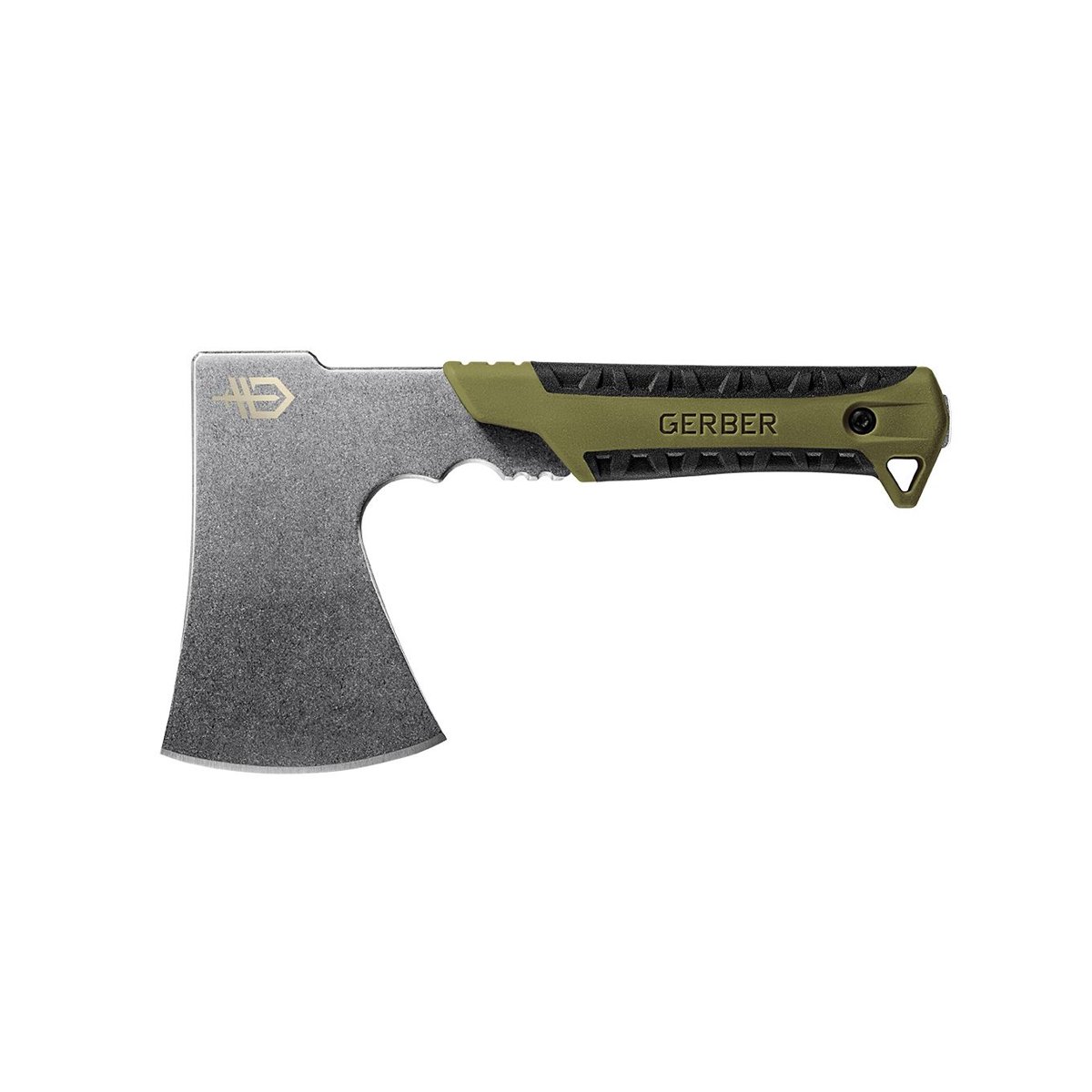
The Pack Hatchet is a deliberately undersized exception to this list’s roughly 12–16-inch target. Its short full-tang design emphasizes close control and easy carrying rather than chopping leverage.
The stainless-steel construction uses a full tang and rubber overmold. Pronounced finger grooves support choking up for detailed cuts.
Camp tasks
The maker emphasizes controlled detail work and precise cutting. A belt-carry sheath provides a practical transport option.
Trade-offs
At 9.46 inches overall it falls clearly below the requested size range. The maker also gives inconsistent blade lengths, so no blade-length figure is repeated here.
Who should buy it
Choose it only if compact dimensions matter more than swing reach. For routine firewood preparation, start with a longer hatchet elsewhere in this list.
Ranked by Theo Hartigan, Bushcraft & Survival Editor
We started with a long list of hatchets that people actually buy, cut anything that could not clear our baseline for durability and field performance, then ranked the 10 that were left against the same criteria. Rankings are editorial. No brand pays for placement, and affiliate links never move a pick up or down.
Real-world durability
How the material, stitching, or steel holds up after a season of hard use — not how it looks new.
Performance in bad conditions
Wind, rain, cold, and grit are the test. Anything that only works on a nice day gets marked down.
Weight and packability
Every ounce has to earn its place in the pack, but not at the cost of something that fails in the field.
Ease of use
Setup, adjustment, and maintenance with cold hands, in the dark, without the manual.
Value at its price point
Compared against the closest competitors in the same tier, not against cheaper gear in a different class.
Repairability and support
Field-fixable design, available parts, and a warranty the maker actually honors.
How often we recheck this: Reviewed on a rolling basis and rechecked at least once a year, or sooner if a pick is discontinued, revised, or beaten by something new.
Best hatchets for a specific job
Skip the ranking — jump to the pick that matches how you actually use it.
Our editors test the gear, pick the ten, and set the order the day a list publishes. After that, the ranking is live: every member star rating feeds the community order, so picks climb or slide as real owners report back. Editorial judgment decides what earns a spot — you help decide where it sits.
Editors set the field
Hands-on testing and spec research choose the ten and the published order.
Readers re-rank it
Your 1–5 star ratings drive the community order on every list.
Rankings keep moving
Picks rise or fall over time — nothing is frozen at launch day.
Award picks
The ranking above is price-blind and judged on merit. These awards call out the pick we'd hand a specific person with a specific need.
The Gränsfors Bruk Wildlife Hatchet is the best overall starting point, while Adler offers a less expensive traditional alternative. Confirm availability on the Council Tool and Gerber Bushcraft listings before buying.
How to choose hatchets
Every pick on this page was judged against the same criteria. If you want the short answer, Wildlife Hatchet 415 by Gränsfors Bruk is the one we point most people at. If you want to decide for yourself, here is what actually separates a good hatchet from an expensive one.
Real-world durability
How the material, stitching, or steel holds up after a season of hard use — not how it looks new.
Performance in bad conditions
Wind, rain, cold, and grit are the test. Anything that only works on a nice day gets marked down.
Weight and packability
Every ounce has to earn its place in the pack, but not at the cost of something that fails in the field.
Ease of use
Setup, adjustment, and maintenance with cold hands, in the dark, without the manual.
Value at its price point
Compared against the closest competitors in the same tier, not against cheaper gear in a different class.
Repairability and support
Field-fixable design, available parts, and a warranty the maker actually honors.
Match the pick to your use
The right hatchets depends on what you are actually doing with it: Camping; Bushcraft; Kindling; Light clearing; Hiking; Cabin chores. Start from the use case, then work down the ranking until you hit the first pick that covers it.
Common mistakes
Buying the lightest hatchets you can find and discovering it cannot take a season of hard use.
Paying for a specialist feature you will use once a year instead of the versatile option.
Comparing headline specs across tiers instead of within the same class.
Skipping fit, sizing, or adjustment checks that decide whether you actually carry it.
Frequently asked questions
What is the best hatchets?
Wildlife Hatchet 415 by Gränsfors Bruk takes the top spot. Best overall
How did The Wild10 choose and rank these hatchets?
We judged every pick against the same criteria — real-world durability, performance in bad conditions, weight and packability, ease of use — and ranked them on merit regardless of price. Traditional camp hatchets and modern utility picks, with verified specifications and clear buying caveats.
What is the best budget hatchets?
Hultån Hatchet by Hults Bruk — Best current-production Swedish option
Wildlife Hatchet 415 vs Almike 16-inch Hatchet — which should I pick?
Wildlife Hatchet 415 ranks first: Best overall Almike 16-inch Hatchet is the close second: Best traditional premium alternative Our full head-to-head compares them side by side.
How often is this list updated?
We review this ranking on a rolling basis and update it whenever a pick is discontinued, meaningfully revised, or beaten by something new. Rankings are editorial — brands do not see them before publication and affiliate links never change the order.