


Reader rating
Rate it and you move it. Community ratings re-rank this product inside its Top 10 list.
Expert-picked, reader-ranked. Our editors choose the products and the launch order; member star ratings move picks up or down over time.
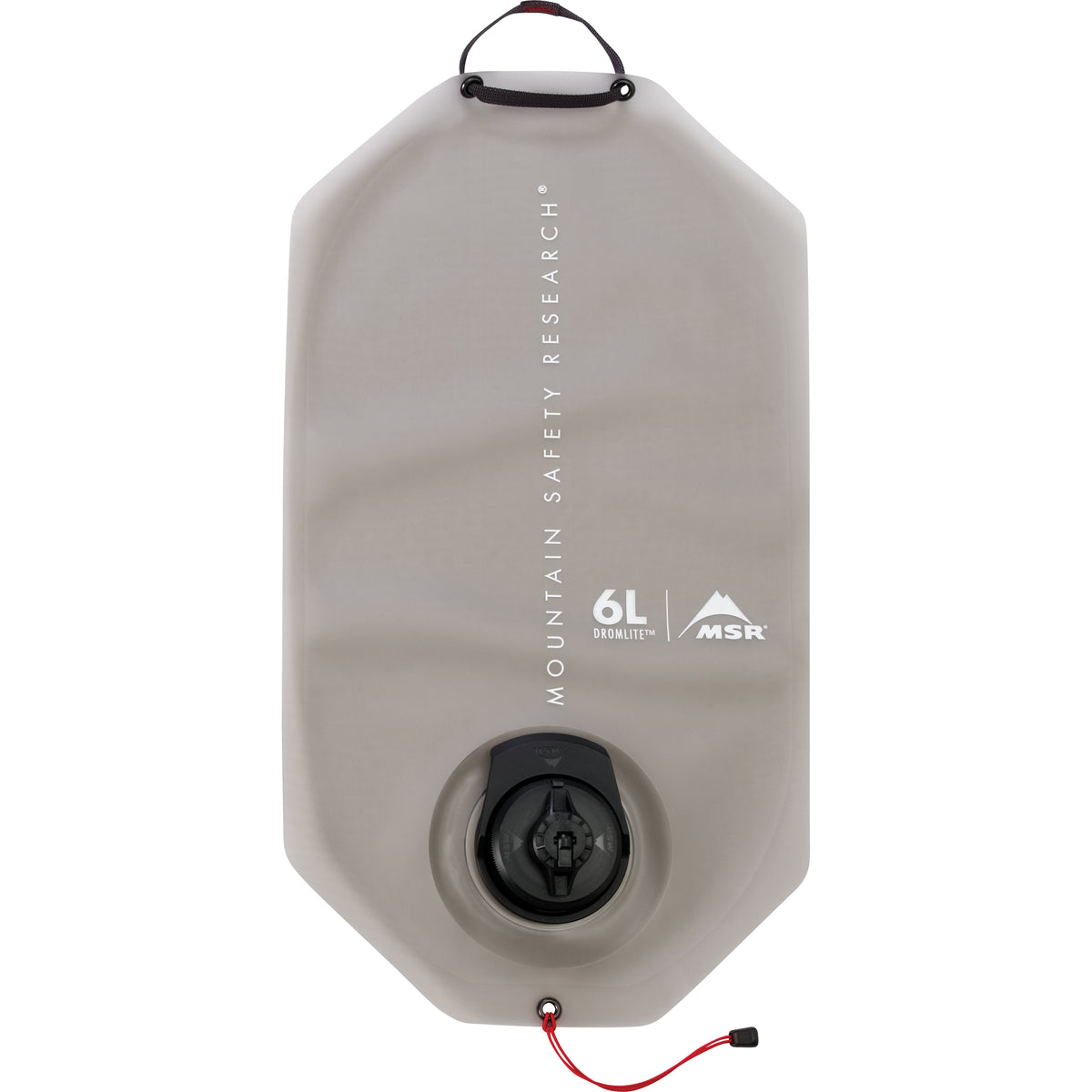
The MSR DromLite Bag occupies a unique space between a dedicated backpacking water reservoir and a rugged backcountry water hauler. Crafted from lightweight 200-denier Cordura fabric laminated with a food-grade polyurethane lining, the DromLite is built to withstand rough granite surfaces, overstuffed packs, and brutal field abuse that would puncture conventional film reservoirs. For rugged off-trail backpacking and basecamp water storage, it is exceptionally dependable. Unlike traditional hydration reservoirs that come pre-packaged with hoses and bite valves, the DromLite comes standard with a low-profile 3-in-1 cap that allows for pouring, dispensing, and filling. However, MSR sells a dedicated hydration kit that threads directly onto the cap, transforming the bag into an ultra-durable personal drinking system. When empty, the supple fabric collapses down to the size of its cap, packing away far more efficiently than standard plastic bladders. Using the DromLite as your primary on-trail hydration bladder does involve trade-offs. The Cordura exterior fabric absorbs surface moisture, meaning it takes longer to dry externally if splashed during filling. Additionally, purchasing the hydration hose accessory adds extra cost to an already premium base price. But if your trips involve abrasive desert canyon environments, bushwhacking, or you need a bladder that doubles as a high-capacity camp reservoir, its bombproof construction is hard to top. **Highlights** - Extremely rugged 200D Cordura exterior resists punctures, tears, and rough rock - Collapses completely flat to the size of the cap when drained - Multi-function 3-in-1 cap allows controlled pouring, filling, and slow dripping - Compatible with MSR hydration tube accessories and water filters - Perimeter webbing loops make hanging at camp or strapping to packs simple **Watch-outs** - Requires separate purchase of drinking tube accessory for use as a hydration bladder - Fabric exterior can absorb water and requires external drying time - Cap system is slower to fill than wide-mouth slide reservoirs
Pros
- 200D Cordura exterior provides exceptional puncture and abrasion resistance
- Highly packable fabric rolls down to the size of the cap when empty
- Versatile 3-in-1 cap works well for controlled camp dispensing and pouring
- Perimeter webbing loops make hanging and pack attachment easy
Cons
- Hydration hose and bite valve must be purchased separately
- Cordura exterior absorbs moisture and takes longer to dry when wet
- Opaque fabric prevents quick visual checks of remaining water volume
Best uses
- Rugged backcountry backpacking
- Desert and canyon trekking
- Remote basecamp water storage
- Packrafting expeditions
Specifications
- Shell Material
- 200D Cordura nylon
- Lining Material
- Food-grade polyurethane laminate
- Cap Style
- 3-in-1 threaded cap (fill, pour, dispense)
- Capacities Offered
- 2L, 4L, and 6L options
- Hydration Hose
- Sold separately via MSR Drink Tube kit
- Estimated MSRP
- Around $48 for base reservoir
Pricing
We don't publish a price we haven't verified. The retailer links below open the live listing for this exact model.
Full catalog listing & offersBest for
Rugged backcountry backpacking, Desert and canyon trekking, Remote basecamp water storage, Packrafting expeditions
Where to buy the DromLite Bags
We don't have a direct Amazon listing on file yet — this opens an Amazon search for the exact make and model.
Some links are affiliate links. Buying through them supports our testing at no extra cost to you.
The MSR DromLite bridges the gap between a high-capacity backcountry water hauler and a rugged pack reservoir. While standard hydration bladders rely entirely on thin thermoplastic polyurethane films, the DromLite employs a woven 200-denier Cordura shell laminated with an internal food-grade polyurethane lining. This build is engineered to withstand abrasive granite, thorny brush, and dense pack loading that would puncture typical transparent bladders. Functionally, the DromLite comes equipped out of the box with a multi-purpose 3-in-1 cap tailored for pouring, filling, and camp dispensing. Operating it as an on-the-move drinking bladder requires purchasing MSR's separate hydration hose accessory. Once outfitted with the drink tube, it delivers an exceptionally tough hydration setup that rolls down to roughly the dimensions of its cap when empty. It is not the most convenient choice for fast-paced day hikers who demand quick-fill slide tops or pre-packaged bite valves. Instead, the DromLite targets long-distance backpackers, desert trekkers, and mountaineers who prioritize puncture resistance and camp utility over out-of-the-box convenience.
Materials and Construction
The primary calling card of the MSR DromLite is its rugged textile construction. Rather than exposing bare plastic films to pack contents or rough ground, MSR wraps the reservoir in a 200-denier Cordura nylon fabric laminated internally with food-grade polyurethane. This laminate creates a completely taste-free interior that resists mildew while keeping the bladder pliable across broad temperature swings. Around the perimeter, low-profile webbing loops provide secure anchor points for lashing the bag to pack exteriors, packraft frames, or camp branches. The closure system relies on a heavy-duty threaded cap assembly rather than slide seals or zip-top closures. While this threaded opening lacks the wide-mouth accessibility of slide-top bladders, it eliminates mechanical closure failures and withstands immense internal pressure when stuffed inside a fully loaded expedition rucksack.
Hydration Conversion and Tuning
Out of the box, the DromLite functions strictly as a water storage vessel and camp dispenser. Turning it into a traditional hydration bladder requires purchasing MSR's Drink Tube kit, which threads into the multi-function cap. The standard cap incorporates three dispensing options: a wide opening for rapid filling, a medium spout for controlled pouring into cookware, and a narrow flip-top spout for a fine stream. When mated with the optional drinking hose, the system functions like a standard reservoir inside a pack sleeve. Thread compatibility also allows direct coupling with select MSR water filters, streamlining refills in the backcountry. Backpackers should note that the absence of a quick-disconnect hose fitting on the base means removing or routing the hose through pack ports takes deliberate effort compared to modular reservoir designs.
Real-World Performance
In backcountry settings, the DromLite provides distinct functional advantages alongside clear limitations. Because the supple fabric completely collapses as water is consumed, it reduces pack volume far more efficiently than semi-rigid bladders. Once drained, the entire bag rolls into a cylinder barely larger than the threaded cap itself. However, monitoring remaining water levels is difficult because the opaque Cordura exterior prevents quick visual checks; backpackers must judge remaining water by pack weight and feel. When used in basecamp settings, the multi-function spout shines. It dispenses water for dishwashing and hand hygiene far better than standard hydration bladders, which require awkward manipulation of a bite valve. The perimeter webbing loops allow the reservoir to hang inverted from tree branches, creating an effective gravity-fed camp faucet.
Backcountry Durability
Puncture and abrasion resistance are where the DromLite fundamentally outperforms film-based hydration bladders. Most consumer reservoirs utilize 0.2-millimeter to 0.4-millimeter TPU films that can develop pinholes when pressed against tent stakes, camp stove corners, or sharp tools inside a pack. The 200-denier Cordura shell acts as an armor layer, deflecting sharp impacts and resisting the grinding wear of rough granite or sandstone surfaces during water collection. It tolerates freezing conditions better than stiffened plastic reservoirs, and the laminated seams hold up under sustained compression without bursting. Unless punctured deliberately with a knife or subjected to extreme heat near campfires, the DromLite reliably survives multi-season expedition use where traditional translucent reservoirs routinely fail.
Key Practical Trade-Offs
Choosing the DromLite as a primary hydration bladder requires accepting several logistical compromises. The most notable issue is drying and hygiene maintenance. Because the exterior is woven Cordura, water splashed during filling soaks into the face fabric, requiring time to dry before stowing to prevent dampening inside gear. Furthermore, the narrow threaded port makes reaching inside to hand-dry or scrub the interior virtually impossible, demanding air-drying rigs or chemical sanitizing tablets for deep cleaning. Price is another hurdle. At roughly $48 for the base reservoir alone, adding the aftermarket drink tube pushes the total cost well past conventional all-inclusive hydration systems. Hikers must weigh whether superior fabric toughness justifies paying more for an incomplete out-of-the-box hydration setup.
Comparable Market Alternatives
At this price point, several alternatives offer different balances of weight, durability, and convenience. The standard MSR Dromedary uses a heavier 500-denier Cordura shell; it is virtually indestructible but adds noticeable weight and bulk, making the lighter DromLite a superior choice for backpackers. For users who prefer dedicated hydration bladders with included hoses and wide-mouth access, the HydraPak Shape-Shift and Platypus Big Zip EVO represent proven alternatives. Those bladders offer quick-disconnect hoses, easier cleaning, and transparent bodies for water tracking, but their film bodies lack the puncture resistance of the DromLite. For rugged desert travel or rough packrafting where bladder punctures are catastrophic, the DromLite remains in a class of its own despite the required accessories.
How we picked
We started with a long list of hydration bladders that people actually buy, cut anything that could not clear our baseline for durability and field performance, then ranked the 10 that were left against the same criteria. Rankings are editorial. No brand pays for placement, and affiliate links never move a pick up or down.
- Real-world durability
- How the material, stitching, or steel holds up after a season of hard use — not how it looks new.
- Performance in bad conditions
- Wind, rain, cold, and grit are the test. Anything that only works on a nice day gets marked down.
- Weight and packability
- Every ounce has to earn its place in the pack, but not at the cost of something that fails in the field.
- Ease of use
- Setup, adjustment, and maintenance with cold hands, in the dark, without the manual.
- Value at its price point
- Compared against the closest competitors in the same tier, not against cheaper gear in a different class.
- Repairability and support
- Field-fixable design, available parts, and a warranty the maker actually honors.
DromLite Bags — frequently asked questions
- Is the DromLite Bags worth it?
- We rank it #6 in Hydration Bladders. The MSR DromLite Bag occupies a unique space between a dedicated backpacking water reservoir and a rugged backcountry water hauler. Crafted from lightweight 200-denier Cordura fabric laminated with a food-grade polyurethane lining, the DromLite is built to withstand rough granite surfaces, overstuffed packs, and…
- What is the DromLite Bags best for?
- Best for rugged backcountry backpacking, desert and canyon trekking, remote basecamp water storage and packrafting expeditions. Standouts: 200d cordura exterior provides exceptional puncture and abrasion resistance and highly packable fabric rolls down to the size of the cap when empty.
- What are the downsides of the DromLite Bags?
- Hydration hose and bite valve must be purchased separately, Cordura exterior absorbs moisture and takes longer to dry when wet and Opaque fabric prevents quick visual checks of remaining water volume.
- What are the key specs of the DromLite Bags?
- Shell Material: 200D Cordura nylon · Lining Material: Food-grade polyurethane laminate · Cap Style: 3-in-1 threaded cap (fill, pour, dispense) · Capacities Offered: 2L, 4L, and 6L options · Hydration Hose: Sold separately via MSR Drink Tube kit
- Materials and Construction — what should I know about the DromLite Bags?
- The primary calling card of the MSR DromLite is its rugged textile construction. Rather than exposing bare plastic films to pack contents or rough ground, MSR wraps the reservoir in a 200-denier Cordura nylon fabric laminated internally with food-grade polyurethane.
- Hydration Conversion and Tuning — what should I know about the DromLite Bags?
- Out of the box, the DromLite functions strictly as a water storage vessel and camp dispenser. Turning it into a traditional hydration bladder requires purchasing MSR's Drink Tube kit, which threads into the multi-function cap.
Compare side by side
Put the DromLite Bags against any other pick on this list — specs, price, pros, cons and reader ratings.