


Reader rating
Rate it and you move it. Community ratings re-rank this product inside its Top 10 list.
Expert-picked, reader-ranked. Our editors choose the products and the launch order; member star ratings move picks up or down over time.
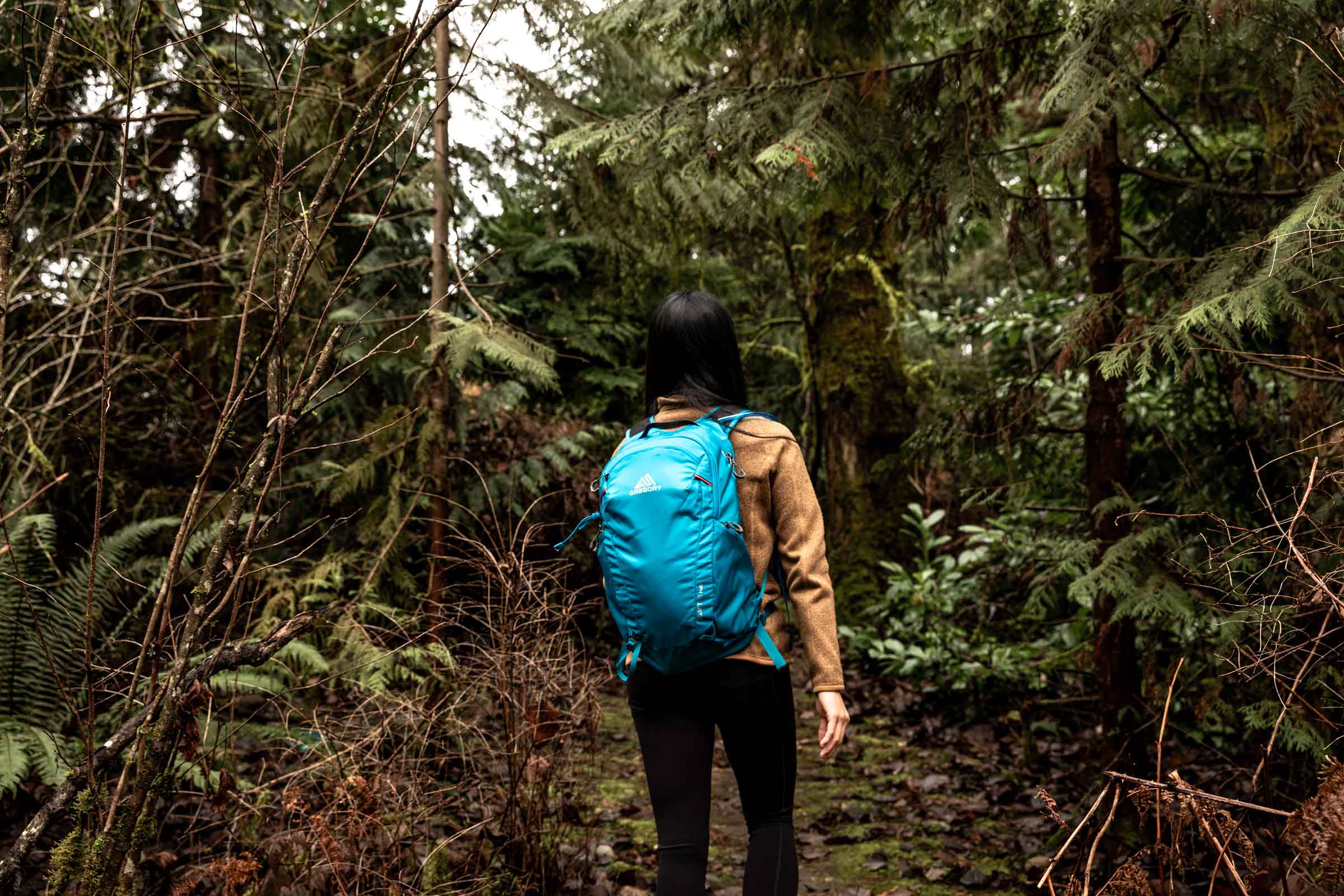
The Gregory Swift 16 (and men's-specific Inertia 18 H2O) is designed for streamlined, half-day hikes where agility and light weight are paramount. Tipping the scales at roughly one pound, this pack trims down bulk by eliminating heavy metal frame stays and wide, padded hipbelts. Instead, it relies on a lightweight foam backpanel with moisture-wicking mesh, making it an excellent match for quick morning loops and warm-weather summit bids. Despite its modest price point and minimalist build, Gregory includes their full-featured 3D Hydro reservoir. Independent testers routinely praise this inclusion, as budget-friendly hydration packs often cut corners by bundling subpar, hard-to-clean reservoirs. The pack also retains Gregory's secure SpeedClip hanger system, along with well-placed accessory pockets for keys, sunglasses, and snacks. The trade-off for this airy simplicity lies in total weight capacity. Because the webbing hipbelt provides stability rather than load transfer, loading the Swift or Inertia beyond basic essentials—water, a light jacket, and a headlamp—can cause the shoulder straps to dig in. It is purpose-built for light loads, and within that operating envelope, it performs with exceptional efficiency. **Highlights** - Minimalist base weight of just over one pound empty - Includes high-quality Gregory 3D Hydro reservoir with molded construction - Magnetic bite valve retainer keeps drinking tube accessible on the chest - Clean exterior profile minimizes snag points on overgrown trails - Accessible price point offers high value for casual day hikers **Watch-outs** - Unpadded webbing hipbelt does not transfer weight off the shoulders - Limited volume makes it unsuitable for carrying cool-weather bulk
Pros
- Included 3D Hydro reservoir is exceptionally easy to clean, dry, and mount
- Sub-one-and-a-half-pound base weight minimizes overall trail burden
- Streamlined exterior profile prevents snagging in dense brush
- Strong overall package value with high-end hydration hardware included
Cons
- Unpadded webbing waistbelt provides zero vertical load transfer
- Lack of internal frame causes shoulder fatigue if overloaded past 12 pounds
- Limited capacity leaves little room for bulky winter clothing
Best uses
- Warm-weather day hiking
- Fast-and-light summit pushes
- Short trail exploration
- Minimalist travel daypack
Specifications
- MSRP
- Around $120
- Cargo Capacity
- 16L (Swift) / 18L (Inertia)
- Empty Weight
- 1 lb. 2.7 oz. (Swift) / 1 lb. 0.6 oz. (Inertia)
- Hydration Capacity
- Gregory 3D Hydro Reservoir included
- Suspension Type
- Frameless foam backpanel with breathable mesh
- Hipbelt Style
- Removable 1-inch webbing strap
Pricing
We don't publish a price we haven't verified. The retailer links below open the live listing for this exact model.
Full catalog listing & offersBest for
Warm-weather day hiking, Fast-and-light summit pushes, Short trail exploration, Minimalist travel daypack
Where to buy the Swift 16 / Inertia 18 H2O
We don't have a direct Amazon listing on file yet — this opens an Amazon search for the exact make and model.
Some links are affiliate links. Buying through them supports our testing at no extra cost to you.
The Gregory Swift 16 and its men's counterpart, the Inertia 18 H2O, target day hikers who prioritize low pack weight and streamlined utility over excessive organization or heavy frame architecture. Weighing right around one pound empty, both packs strip away rigid internal stays and bulky perimeter wires in favor of a low-profile foam backpanel wrapped in moisture-wicking mesh. The result is an exceptionally agile pack built specifically for three-to-five-hour trail outings and summer summit bids. A central selling point is Gregory's inclusion of their proprietary 3D Hydro reservoir. Many manufacturers cut corners at this roughly $120 price tier by supplying basic, generic bladders that are difficult to dry and prone to awkward sloshing. Gregory instead equips the pack with their molded, semi-rigid reservoir and integrated hanger system, elevating the pack's functional value straight out of the box. The trade-off comes down to load limits. Without an internal frame or padded hip wings to transfer weight to the pelvis, the Swift and Inertia place all cargo weight directly on the user's shoulders. Hikers who stick to standard day essentials will find it nimble and unrestrictive, but trying to pack heavy camera setups or bulky thermal layers quickly exposes the suspension's physical boundaries.
Target Audience and Intended Use
The Swift 16 and Inertia 18 H2O are built for fast-moving day hikers, trail walkers, and minimalist scramblers who want hydration and a few key layers without feeling weighed down. With capacities capped at 16 and 18 liters respectively, these packs do not cater to all-day mountaineering or cold-weather trips requiring crampons, thick insulated parkas, and extensive emergency gear. Instead, they shine on moderate terrain where a fluid three-liter water carry, a windshirt, food rations, and a compact medical kit are all that is required. Trail runners stepping up to fastpacking or hikers moving quickly over desert and foothills terrain will appreciate the pack's low-slung, non-restrictive profile. If you routinely carry bulky equipment or hike in sub-freezing temperatures where layers multiply, a larger, fully framed daypack is a more appropriate choice.
Reservoir and Hardware Integration
Hydration integration is the centerpiece of the Swift and Inertia design. Gregory packages these bags with their 3D Hydro reservoir, a molded water vessel that holds a rounded shape rather than collapsing flat like traditional bladders. This structural curvature promotes airflow when hanging inside the pack and drastically cuts drying times after washing. The reservoir interfaces directly with Gregory's SpeedClip attachment point inside a dedicated hydration compartment, keeping the water weight pinned securely against the spine without sagging. The sternum strap features a magnetic dock for the bite valve, allowing you to drink on the move and snap the hose back into place without looking down. While the magnetic clip can occasionally pick up iron-rich trail dirt, the hose routing and bite valve flow rate rank among the most functional systems available in modern hydration packs.
Trail Handling and Load Dynamics
Because the backpanel relies on die-cut foam rather than a sprung mesh trampoline or an aluminum stay, the pack rides tight against the back. This close-to-body center of gravity prevents the sway and bounce common to deeper daypacks during steep scrambles or brisk descents. However, close contact naturally traps more body heat across the lower lumbar region during hot summer hikes, despite the grooved channels cut into the padding. Total load comfort peaks around ten to twelve pounds including water. When loaded beyond that threshold, the absence of load-lifter straps and hip padding becomes obvious. The thin, unpadded webbing hipbelt is designed entirely to prevent the base of the pack from swinging laterally rather than to transfer weight onto the hips, meaning your trapezius muscles bear the entire load throughout the hike.
Durability and Materials
Gregory constructs the main body of the Swift and Inertia using durable nylon textiles treated with a durable water repellent coating to shed light mist. The base panel features a heavier denier weave to withstand being set down on coarse granite, scree, and dry brush. Seams across stress points—notably where the shoulder straps anchor to the top of the backpanel—are reinforced to handle the pull of a full water bladder. Exterior mesh pockets provide quick access for a water bottle or wet rain shell, though like all elastic mesh materials, they demand caution around thorns and jagged brush. Zippers operate smoothly with large cord pulls that are easy to manipulate with cold fingers or light gloves. For typical trail use, the materials offer a dependable balance of abrasion resistance and low pack weight.
Fit and Ergonomics
The division between the Swift (women's-specific) and Inertia (men's-specific) centers on ergonomic shaping rather than simple color differences. The Swift features shoulder harnesses contoured to accommodate a narrower shoulder span and curve comfortably around the chest, paired with a slightly shorter torso length. The Inertia provides wider strap placement across the upper back and a moderately longer backpanel length. Neither pack offers an adjustable torso harness, so taller or shorter hikers outside the average range should verify fit before committing. The perforated EVA foam shoulder straps provide reasonable breathability, but they are relatively narrow. Tuning the fit requires balancing the sternum strap height and the simple webbing waistbelt to keep the pack snug against the torso without causing strap pressure points around the collarbones.
Competitive Alternatives and Trade-offs
At around $120, the Swift and Inertia occupy a competitive segment alongside hydration-focused daypacks from Osprey and CamelBak. The Osprey Skimmer and Skarab series offer similar volumes and include reservoirs, but feature slightly firmer foam backings and a marginally different harness geometry that some hikers find stiffer against the shoulders. The CamelBak Rim Runner 22 provides slightly more cargo room at a comparable price, but lacks the specialized 3D molded reservoir that makes Gregory's system so straightforward to clean and dry. The primary trade-off of choosing the Swift or Inertia is its commitment to minimalism: you surrender internal load transfer and heavy-duty organizational dividers in exchange for a lighter, faster trail silhouette. For hikers who pack sensibly, the bundled reservoir and refined fit make it an exceptional mid-range value.
How we picked
We started with a long list of hydration packs that people actually buy, cut anything that could not clear our baseline for durability and field performance, then ranked the 10 that were left against the same criteria. Rankings are editorial. No brand pays for placement, and affiliate links never move a pick up or down.
- Load carriage
- How the suspension handles the loads the pack is actually rated for, over long days.
- Real-world durability
- How the material, stitching, or steel holds up after a season of hard use — not how it looks new.
- Performance in bad conditions
- Wind, rain, cold, and grit are the test. Anything that only works on a nice day gets marked down.
- Weight and packability
- Every ounce has to earn its place in the pack, but not at the cost of something that fails in the field.
- Ease of use
- Setup, adjustment, and maintenance with cold hands, in the dark, without the manual.
- Value at its price point
- Compared against the closest competitors in the same tier, not against cheaper gear in a different class.
Swift 16 / Inertia 18 H2O — frequently asked questions
- Is the Swift 16 / Inertia 18 H2O worth it?
- We rank it #4 in Hydration Packs. The Gregory Swift 16 (and men's-specific Inertia 18 H2O) is designed for streamlined, half-day hikes where agility and light weight are paramount. Tipping the scales at roughly one pound, this pack trims down bulk by eliminating heavy metal frame stays and wide, padded hipbelts.
- What is the Swift 16 / Inertia 18 H2O best for?
- Best for warm-weather day hiking, fast-and-light summit pushes, short trail exploration and minimalist travel daypack. Standouts: included 3d hydro reservoir is exceptionally easy to clean, dry, and mount and sub-one-and-a-half-pound base weight minimizes overall trail burden.
- What are the downsides of the Swift 16 / Inertia 18 H2O?
- Unpadded webbing waistbelt provides zero vertical load transfer, Lack of internal frame causes shoulder fatigue if overloaded past 12 pounds and Limited capacity leaves little room for bulky winter clothing.
- What are the key specs of the Swift 16 / Inertia 18 H2O?
- MSRP: Around $120 · Cargo Capacity: 16L (Swift) / 18L (Inertia) · Empty Weight: 1 lb. 2.7 oz. (Swift) / 1 lb. 0.6 oz. (Inertia) · Hydration Capacity: Gregory 3D Hydro Reservoir included · Suspension Type: Frameless foam backpanel with breathable mesh
- Target Audience and Intended Use — what should I know about the Swift 16 / Inertia 18 H2O?
- The Swift 16 and Inertia 18 H2O are built for fast-moving day hikers, trail walkers, and minimalist scramblers who want hydration and a few key layers without feeling weighed down. With capacities capped at 16 and 18 liters respectively, these packs do not cater to all-day mountaineering or cold-weather trips…
- Reservoir and Hardware Integration — what should I know about the Swift 16 / Inertia 18 H2O?
- Hydration integration is the centerpiece of the Swift and Inertia design. Gregory packages these bags with their 3D Hydro reservoir, a molded water vessel that holds a rounded shape rather than collapsing flat like traditional bladders.
Compare side by side
Put the Swift 16 / Inertia 18 H2O against any other pick on this list — specs, price, pros, cons and reader ratings.