


Reader rating
Rate it and you move it. Community ratings re-rank this product inside its Top 10 list.
Expert-picked, reader-ranked. Our editors choose the products and the launch order; member star ratings move picks up or down over time.
Best early-season hunting hoodie
Pros
- Ultralight 120 gsm blend dries substantially faster than typical merino
- Nylon-core yarn construction dramatically improves tear resistance over pure wool
- Form-fitting scuba hood stays put in stiff winds without blocking peripheral vision
- Exceptional odor control for multi-day backcountry outings
Cons
- Thin weave will snag and pill if used unprotected in dense brush
- Premium price point for an ultralight baselayer
- Athletic hunting taper may feel restrictive for broader builds
Best uses
- Early-season backcountry hunting
- High-output summer alpine trekking
- Multi-day wilderness packing
- Exposed ridge sun protection
Specifications
- Fabric Weight
- 120 g/m² ultralight knit
- Material Blend
- Merino wool wrapped around nylon core
- Garment Fit
- Athletic, low-bulk profile
- Hood Style
- Form-fitting scuba hood
- Primary Climate
- Warm weather to cool transitions
- Odor Resistance
- Inherent antimicrobial performance
Pricing
We don't publish a price we haven't verified. The retailer links below open the live listing for this exact model.
Best for
Early-season backcountry hunting, High-output summer alpine trekking, Multi-day wilderness packing, Exposed ridge sun protection
Where to buy the Core Merino 120 Hoodie
We don't have a direct Amazon listing on file yet — this opens an Amazon search for the exact make and model.
Some links are affiliate links. Buying through them supports our testing at no extra cost to you.
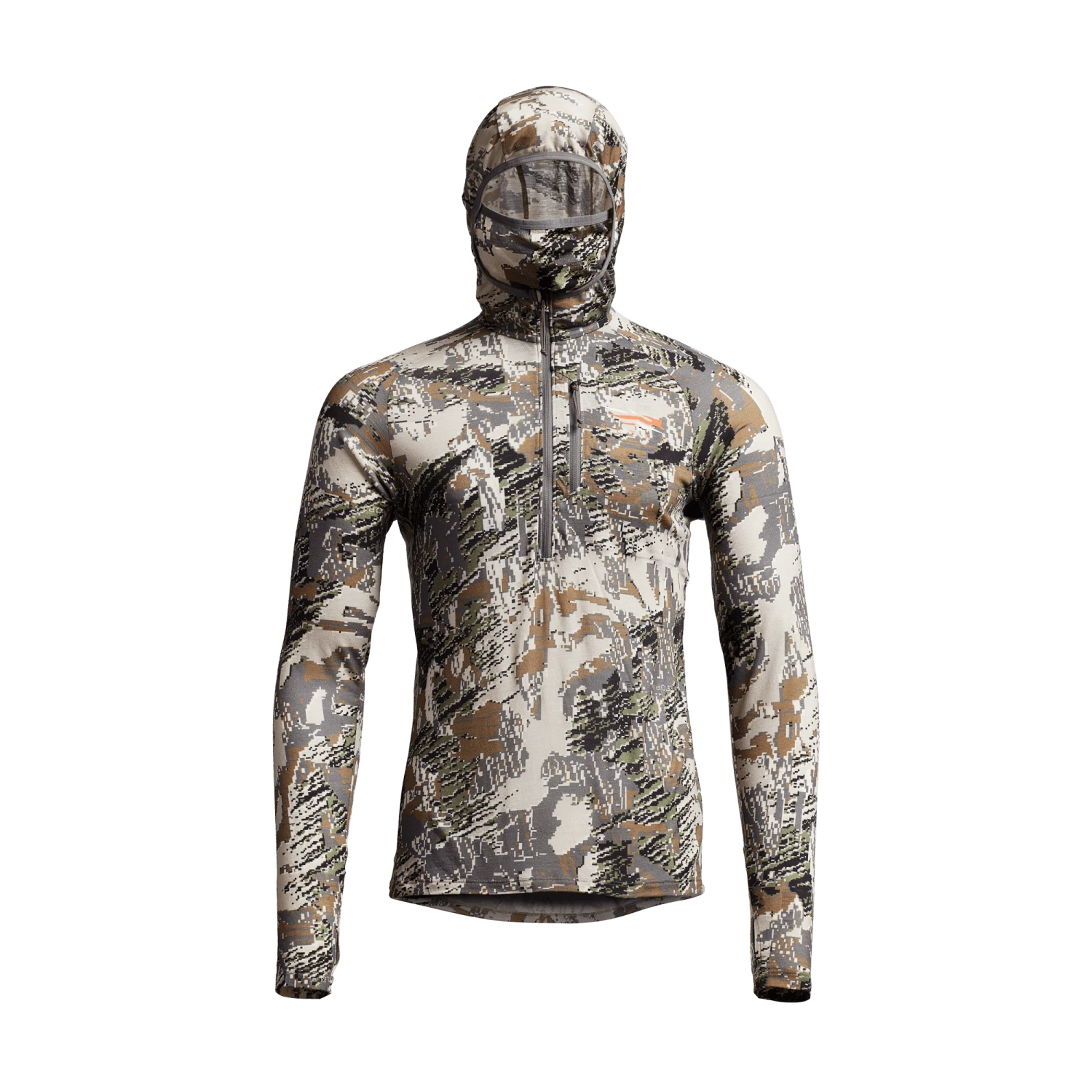
Hunting brands often over-engineer gear to the point of absurdity, but Sitka nailed the baseline mechanics with this piece. The Core Merino 120 Hoodie is built specifically for sweat-heavy ascents under high heat, where typical 150- to 200-weight merino garments quickly turn into sodden sponges. By utilizing an ultralight 120-gram wool blend, it delivers rapid vapor transfer and inherent scent management during multi-day pushes through early autumn backcountry terrain. The cut leans decidedly athletic. It hugs the torso close enough to prevent bunched fabric beneath bino harnesses, rifle slings, and heavy hip belts, yet it retains enough stretch to avoid restricting movement on steep scrambles. The low-profile hood acts as sun protection on exposed glassing ridges and provides quick concealment, performing much like a technical alpine sun hoody with the added benefit of wool's natural odor suppression. This piece is not an insulated midlayer for freezing mornings, nor will the thin fabric survive direct bushwhacking through thorny chaparral without a shell. For high-output hunting trips and warm-weather mountain hiking, however, few tops balance breathability, fit, and moisture regulation quite as cleanly.
Target Audience and Intent
Sitka built this hoodie primarily for big-game hunters facing blistering late-summer bow seasons, but any mountain athlete operating in warm-to-cool transitions will appreciate the design. The athletic taper suits hikers, trail runners, and backcountry anglers who need sun coverage without overheating. If you carry a heavy load uphill, traditional wool layers often trap excessive moisture across your back and shoulder blades. This 120-weight construction solves that bottleneck by prioritizing rapid evaporation over sheer insulation. It appeals to users who spend consecutive days off the grid and rely on merino to minimize scent buildup when laundry is not an option. It is less suited to casual around-town wear due to the technical silhouette and hunting-centric aesthetic, but on remote ridgelines, the functional focus makes absolute sense.
Fabric and Construction
The foundation of the garment is ArmorSpun merino, a process that spins fine merino fibers around a continuous nylon core filament. Pure wool at 120 grams per square meter is notoriously fragile, prone to developing pinholes along friction zones and losing its shape when soaked. The nylon spine reinforces the structure, imparting tensile strength, tear resistance, and mechanical elasticity while ensuring only soft merino wool contacts your skin. Flatlock stitching throughout the seams prevents abrasion under pack straps and sternum clips. The hood is cut tight to the head like a scuba hood, eliminating loose fabric that might whip in alpine wind or obstruct peripheral vision during critical stalks.
Field Performance and Thermoregulation
In hot, dry climates, the piece handles sweat as effectively as high-end synthetic sun shirts while avoiding the chemical stench synthetics develop after twenty-four hours. Moisture moves out through the knit quickly, drying noticeably faster than midweight alternatives. When the wind picks up on an exposed pass, the thin wool provides just enough barrier effect to fend off evaporative chill without forcing you to stop and put on a windshell. The thumb loops keep sleeves seated inside gloves or under midlayers, and the collar zips high enough to guard the back of the neck against relentless solar exposure. It remains comfortable across a surprising temperature band, from frosty dawn glassing sessions down in the forties up into full midday heat.
Packability and Durability Constraints
Weighing mere ounces, the garment compresses down to the size of a standard camp mug, slipping unnoticed into the corner of a daypack or chest rig. However, that minimal bulk comes with clear durability compromises. While the nylon core improves tear strength over standard ultrafine wool, 120 gsm fabric remains susceptible to abrasion. Scraping against abrasive granite or pushing directly through dense buckbrush will pull loops and snag threads. Sitka engineered this as a skin-contact baselayer; treating it like a standalone brush jacket is a fast way to ruin it. Treat it with standard wool care, keep it tucked beneath an uninsulated softshell when bushwhacking, and it will survive seasons of hard mountain use.
Market Alternatives and Context
At this price point, the hoodie sits in direct competition with pieces like the First Lite Wick Hoody and synthetic sun hoodies like the Patagonia Tropic Comfort or Voormi River Run. The First Lite Wick uses a comparable ultralight merino-synthetic blend and features an integrated face mask, which some bowhunters prefer, but the Sitka offers a cleaner, less bulky hood profile. Against pure synthetic alternatives, the Sitka dry time is slightly slower, but its odor resilience is vastly superior during multi-day backcountry bivies. If maximum snag resistance in dense brush is your sole priority, a heavy polyester shirt wins out, but for managing variable body output across wilderness terrain, Sitka strikes the better compromise.
How we chose
We compared widely available merino hoodies using maker specifications, retailer listings and published reviews, then ranked 10 against the same criteria below. This is desk research unless a pick is marked field tested. Rankings are editorial. No brand pays for placement, and affiliate links never move a pick up or down.
- Real-world durability
- How the material, stitching, or steel holds up after a season of hard use — not how it looks new.
- Performance in bad conditions
- Wind, rain, cold, and grit are the test. Anything that only works on a nice day gets marked down.
- Weight and packability
- Every ounce has to earn its place in the pack, but not at the cost of something that fails in the field.
- Ease of use
- Setup, adjustment, and maintenance with cold hands, in the dark, without the manual.
- Value at its price point
- Compared against the closest competitors in the same tier, not against cheaper gear in a different class.
- Repairability and support
- Field-fixable design, available parts, and a warranty the maker actually honors.
Core Merino 120 Hoodie — frequently asked questions
- Is the Core Merino 120 Hoodie worth it?
- We rank it #4 in Merino Hoodies. Best early-season hunting hoodie
- What is the Core Merino 120 Hoodie best for?
- Best for early-season backcountry hunting, high-output summer alpine trekking, multi-day wilderness packing and exposed ridge sun protection. Standouts: ultralight 120 gsm blend dries substantially faster than typical merino and nylon-core yarn construction dramatically improves tear resistance over pure wool.
- What are the downsides of the Core Merino 120 Hoodie?
- Thin weave will snag and pill if used unprotected in dense brush, Premium price point for an ultralight baselayer and Athletic hunting taper may feel restrictive for broader builds.
- What are the key specs of the Core Merino 120 Hoodie?
- Fabric Weight: 120 g/m² ultralight knit · Material Blend: Merino wool wrapped around nylon core · Garment Fit: Athletic, low-bulk profile · Hood Style: Form-fitting scuba hood · Primary Climate: Warm weather to cool transitions
- Target Audience and Intent — what should I know about the Core Merino 120 Hoodie?
- Sitka built this hoodie primarily for big-game hunters facing blistering late-summer bow seasons, but any mountain athlete operating in warm-to-cool transitions will appreciate the design. The athletic taper suits hikers, trail runners, and backcountry anglers who need sun coverage without overheating.
- Fabric and Construction — what should I know about the Core Merino 120 Hoodie?
- The foundation of the garment is ArmorSpun merino, a process that spins fine merino fibers around a continuous nylon core filament. Pure wool at 120 grams per square meter is notoriously fragile, prone to developing pinholes along friction zones and losing its shape when soaked.
Compare side by side
Put the Core Merino 120 Hoodie against any other pick on this list — specs, price, pros, cons and reader ratings.