


Reader rating
Rate it and you move it. Community ratings re-rank this product inside its Top 10 list.
Expert-picked, reader-ranked. Our editors choose the products and the launch order; member star ratings move picks up or down over time.
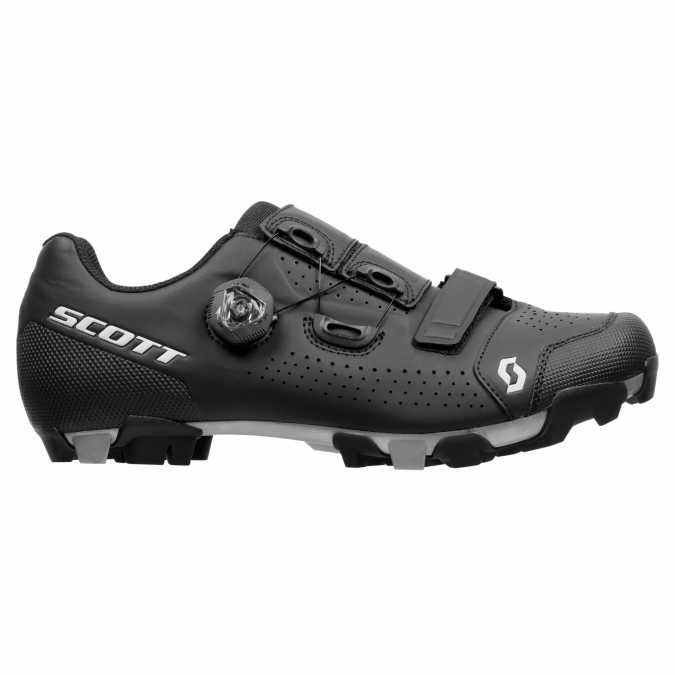
The Scott MTB Team Boa delivers dependable cross-country and fast-trail performance at an accessible price point. Recommended by independent review outlets as a high-value option for pedaling efficiency, it offers many of the fit and stiffness benefits of high-end XC shoes without the punishing $300-plus price tag. It suits riders who want a fast, responsive clipless shoe for local cross-country laps, gravel riding, or fitness-oriented trail riding. Power transfer is anchored by an injection-molded nylon and fiberglass sole rated at a stiffness index of 8. While not as unyielding as full carbon, it provides a firm pedaling platform that resists energy loss under hard efforts. The retention system combines an upper BOA IP1 dial with a lower anatomical strap, allowing riders to easily fine-tune tension across the instep while keeping the forefoot secure. The microfiber synthetic upper is durable and easy to wipe down after muddy rides, while Scott's Sticki rubber outsole lugs provide basic grip when stepping off the bike. As with most cross-country-oriented designs, off-bike mobility is compromised. The firm sole and hard plastic-backed rubber lugs feel slick on smooth rocks and wet wooden bridges, making extended hike-a-bikes precarious. The shoe also provides minimal upper armor, leaving toes exposed if you strike a hidden rock at speed. However, for riders focused on climbing efficiency and cadence who want an affordable, stiff shoe, the Scott MTB Team Boa hits the mark. **Highlights** - Nylon and glass fiber composite sole (stiffness index 8) for efficient power transfer - Single BOA IP1 dial paired with a lower anatomical hook-and-loop strap - Sticki rubber compound lugs on the outsole for basic off-bike footing - Durable, easy-to-clean synthetic polyurethane and 3D nylon mesh upper - Strong price-to-performance ratio for cross-country and gravel use **Watch-outs** - Hard outsole lugs offer slick traction on wet rocks and roots - Minimal toe and heel armor against aggressive trail impacts - Sole stiffness makes hike-a-bikes awkward and tiring
Pros
- Composite sole delivers excellent pedaling efficiency for the price
- BOA IP1 dial allows micro-adjustments in both directions while riding
- Durable synthetic upper is easy to wipe clean after muddy rides
- Snug, performance-oriented fit limits heel slippage on climbs
Cons
- Hard outsole lugs offer slick, precarious grip on wet rocks and roots
- Minimal toe box armor leaves feet vulnerable to stray rock strikes
- Stiff chassis makes extended hike-a-bikes uncomfortable and awkward
Best uses
- Cross-Country Racing
- Gravel Road Riding
- Fast Singletrack Laps
- Fitness-Focused Mountain Biking
Specifications
- Closure System
- BOA IP1 dial with lower anatomical strap
- Sole Material
- Nylon and fiberglass composite
- Stiffness Rating
- 8 (Scott stiffness index)
- Cleat Compatibility
- 2-bolt SPD style
- Intended Riding
- Cross-country and gravel
- Approximate Price
- Around $150
Pricing
We don't publish a price we haven't verified. The retailer links below open the live listing for this exact model.
Best for
Cross-Country Racing, Gravel Road Riding, Fast Singletrack Laps, Fitness-Focused Mountain Biking
Where to buy the MTB Team Boa
We don't have a direct Amazon listing on file yet — this opens an Amazon search for the exact make and model.
Some links are affiliate links. Buying through them supports our testing at no extra cost to you.
The Scott MTB Team Boa occupies a pragmatic sweet spot for riders who prioritize pedaling efficiency but do not want to spend top-tier racing money. Positioned around the $150 mark, this shoe targets cross-country racers, gravel cyclists, and fitness-focused trail riders looking for direct power transfer. It takes architectural cues from premium race footwear, emphasizing a snug fit and a rigid pedaling platform. Rather than relying on fragile full-carbon plates, Scott builds the Team Boa around a nylon and fiberglass composite sole. Paired with a hybrid closure system featuring a micro-adjustable Boa dial over the midfoot and a hook-and-loop strap across the toes, it locks the foot down securely to minimize heel lift on steep climbs. The synthetic upper resists trail debris and washes clean with minimal effort. As expected with cross-country footwear, walkability remains an afterthought. The aggressive outsole lugs provide sufficient purchase in loose dirt, but the rigid chassis and minimal tread surface offer little security on slick rocks or root-choked hike-a-bikes. For riders who measure success in miles covered and cadence maintained, it represents a cost-effective route to high-efficiency riding.
Intended Rider Profile
The MTB Team Boa caters specifically to cyclists who spend the bulk of their saddle time turning over high-cadence pedaling efforts on non-technical trails, gravel roads, and XC courses. It is not designed for all-mountain riders who routinely session rock gardens, descend loose scree, or spend half their ride pushing a bike uphill. Instead, it appeals to budget-conscious cross-country competitors, marathon riders, and gravel enthusiasts who want an ultra-responsive shoe that prevents energy loss. Because it skips the punishing stiffness and high price tag of pure carbon-soled shoes, it also works well for intermediate riders graduating from softer entry-level shoes who want sharper pedal feedback without severe underfoot fatigue over long distances.
Sole Rigidity and Pedaling
At the heart of the shoe is an injection-molded composite chassis constructed from nylon and glass fiber, graded at an 8 on Scott's 10-point stiffness scale. In practice, this rating delivers a firm, unwavering platform beneath the cleat that feels substantially stiffer than casual trail shoes while retaining just enough microscopic flex to dampen high-frequency trail chatter. Power transfer is immediate when standing up to mash up steep pitches, making sprints and sustained climbing feel crisp. Cleat channels follow standard two-bolt SPD patterns, offering reasonable fore-and-aft adjustment for dialing in cleat placement. Riders looking to maximize pedaling economy without paying three hundred dollars for unyielding carbon will find the composite platform hits a well-engineered middle ground.
Retention and Volume Tuning
Fit management relies on a split configuration: a single upper BOA IP1 dial across the instep and a lower hook-and-loop strap over the metatarsals. The IP1 dial allows for precise two-way micro-adjustments on the fly, letting riders slacken tension slightly as feet swell in summer heat or crank down before a sprint. The lower strap acts as an anchor to tune forefoot volume independently, which helps prevent toes from sliding forward under braking. The heel pocket features an ergonomic cup designed to lock the rearfoot down, substantially cutting down on friction that causes hot spots. The overall profile leans toward a traditional European performance fit, meaning riders with particularly wide forefeet may need to size carefully.
Upper Durability and Protection
Scott constructs the upper from a blend of smooth synthetic polyurethane and breathable 3D nylon mesh. The synthetic sections shed mud effectively and clean up quickly after wet rides, resisting abrasion against trailside brush and light debris. However, protection is decidedly minimal. Because this is an XC race-derived design, there are no heavy rubberized toe bumpers or reinforced ankle cuffs to guard against rock strikes or stray crankarm impacts. If your toe catches a hidden granite boulder at speed, you will feel it. Durability over time depends on keeping the shoe within its intended domain; on fast singletrack and dirt roads, the materials hold up admirably, but rowdy enduro use will rapidly chew through the exterior.
Traction and Hike-a-Bike Compromises
Off-bike performance represents the primary functional compromise of the MTB Team Boa. The outsole is surfaced with Scott's Sticki rubber compound molded over hard lugs, intended to provide basic traction when dismounting at trail crossings or gates. On dry soil and packed dirt, the lugs bite adequately. However, the combination of a stiff chassis and minimal surface contact makes scrambling across wet logs, slippery creek beds, or smooth slab rock a nerve-wracking exercise. Walkability is rigid and clunky, showing that this shoe was engineered to keep riders on the pedals rather than exploring on foot. If your standard rides feature extended hike-a-bike sections, this is not the right tool for the job.
Market Alternatives and Trade-offs
At roughly $150, the Scott MTB Team Boa contends directly with proven competitors like the Shimano XC3 and XC5, as well as the Giro Privateer Lace. Shimano's mid-tier XC models often feature integrated seamless midsoles that lower stack height, though some use lower-spec Boa dials that lack two-way micro-adjustment. The Giro Privateer offers a more traditional lace-up aesthetic and a slightly more supple walking feel, but forfeits the fast on-the-fly tension changes of the IP1 system. The Scott stands apart primarily because it integrates premium retention hardware on a properly stiff composite sole at an accessible price. The trade-off remains standard for the category: exceptional pedaling efficiency exchanged for limited walking comfort and virtually zero rock-strike armor.
How we picked
We started with a long list of mountain bike shoes that people actually buy, cut anything that could not clear our baseline for durability and field performance, then ranked the 10 that were left against the same criteria. Rankings are editorial. No brand pays for placement, and affiliate links never move a pick up or down.
- Fabric behavior over time
- Breathability, DWR life, loft retention, and how the piece performs after repeated washing.
- Real-world durability
- How the material, stitching, or steel holds up after a season of hard use — not how it looks new.
- Performance in bad conditions
- Wind, rain, cold, and grit are the test. Anything that only works on a nice day gets marked down.
- Weight and packability
- Every ounce has to earn its place in the pack, but not at the cost of something that fails in the field.
- Ease of use
- Setup, adjustment, and maintenance with cold hands, in the dark, without the manual.
- Value at its price point
- Compared against the closest competitors in the same tier, not against cheaper gear in a different class.
MTB Team Boa — frequently asked questions
- Is the MTB Team Boa worth it?
- We rank it #9 in Mountain Bike Shoes. The Scott MTB Team Boa delivers dependable cross-country and fast-trail performance at an accessible price point. Recommended by independent review outlets as a high-value option for pedaling efficiency, it offers many of the fit and stiffness benefits of high-end XC shoes without the punishing $300-plus price tag.
- What is the MTB Team Boa best for?
- Best for cross-country racing, gravel road riding, fast singletrack laps and fitness-focused mountain biking. Standouts: composite sole delivers excellent pedaling efficiency for the price and boa ip1 dial allows micro-adjustments in both directions while riding.
- What are the downsides of the MTB Team Boa?
- Hard outsole lugs offer slick, precarious grip on wet rocks and roots, Minimal toe box armor leaves feet vulnerable to stray rock strikes and Stiff chassis makes extended hike-a-bikes uncomfortable and awkward.
- What are the key specs of the MTB Team Boa?
- Closure System: BOA IP1 dial with lower anatomical strap · Sole Material: Nylon and fiberglass composite · Stiffness Rating: 8 (Scott stiffness index) · Cleat Compatibility: 2-bolt SPD style · Intended Riding: Cross-country and gravel
- Intended Rider Profile — what should I know about the MTB Team Boa?
- The MTB Team Boa caters specifically to cyclists who spend the bulk of their saddle time turning over high-cadence pedaling efforts on non-technical trails, gravel roads, and XC courses. It is not designed for all-mountain riders who routinely session rock gardens, descend loose scree, or spend half their ride…
- Sole Rigidity and Pedaling — what should I know about the MTB Team Boa?
- At the heart of the shoe is an injection-molded composite chassis constructed from nylon and glass fiber, graded at an 8 on Scott's 10-point stiffness scale. In practice, this rating delivers a firm, unwavering platform beneath the cleat that feels substantially stiffer than casual trail shoes while retaining just…
Compare side by side
Put the MTB Team Boa against any other pick on this list — specs, price, pros, cons and reader ratings.