


Reader rating
Rate it and you move it. Community ratings re-rank this product inside its Top 10 list.
Expert-picked, reader-ranked. Our editors choose the products and the launch order; member star ratings move picks up or down over time.
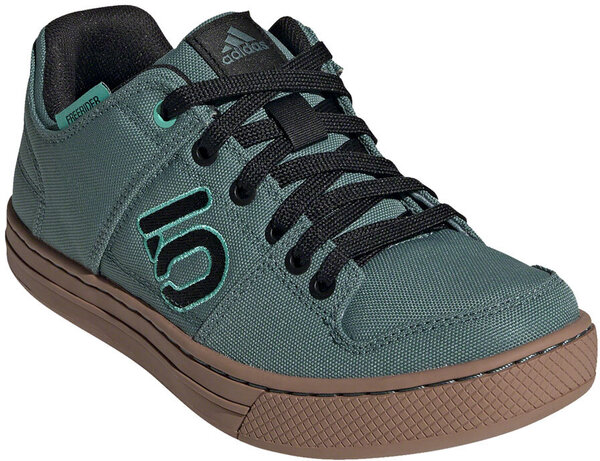
The Five Ten Freerider remains the defining benchmark for flat-pedal mountain bike shoes. Built around the legendary Stealth S1 rubber outsole with its classic dotty tread pattern, the Freerider provides a level of grip that virtually locks rider feet to pedal pins. Independent testing outlets routinely cite this shoe as the gold standard against which all other flat shoes are judged, making it an enduring favorite for trail riders, dirt jumpers, and casual weekend warriors alike. Performance is defined by its approachable flex and casual, skate-inspired aesthetic. The medium-flex midsole offers exceptional trail feel, allowing riders to sense exactly where their feet sit on the pedal body, which aids micro-adjustments and bike handling. The upper combines suede and breathable mesh, secured by traditional laces that allow for an evenly distributed fit along the entire length of the foot. Its cushioned interior delivers immediate, out-of-the-box comfort with virtually no break-in period required. The compromises of the standard Freerider are well-documented. Its casual construction lacks the heavy-duty toe armor found on the Freerider Pro or dedicated downhill shoes, leaving feet somewhat vulnerable to rock strikes on rowdy terrain. Additionally, the suede and standard mesh materials absorb water readily in wet conditions and dry slowly. For riders navigating technical, rocky downhills in foul weather, upgraded protection may be warranted; for dry-to-moderate trail riding at a fair price, the Freerider is tough to beat. **Highlights** - Stealth S1 dotty rubber outsole provides unmatched flat-pedal grip - Classic lace-up closure provides customizable tension across the foot - Medium-flex EVA midsole delivers excellent pedal feel and compliance - Breathable suede and mesh upper provides immediate comfort - Casual styling transitions effortlessly from trail to town **Watch-outs** - Absorbs moisture quickly and is slow to dry after stream crossings - Minimal toe cap protection against hard rock strikes - Traditional laces can snag on trailside brush if not tucked away
Pros
- Stealth S1 rubber provides benchmark-setting grip on pedal pins
- Padded skate-style upper delivers out-of-the-box comfort without break-in
- Balanced sole flex offers excellent pedal feedback and walking comfort
- Spacious toe box accommodates wider foot shapes comfortably
Cons
- Suede and mesh construction absorbs moisture and dries slowly
- Toe box offers minimal armor against high-speed rock strikes
- Flexible midsole can cause foot fatigue on extended pedaling climbs
Best uses
- All-around trail riding
- Dirt jumping and pump tracks
- Commuting and casual town riding
- Dry-weather bike park laps
Specifications
- Pedal Interface
- Flat pedal only
- Outsole Rubber
- Stealth S1 dotty rubber
- Upper Material
- Suede leather and breathable mesh
- Closure System
- Traditional lace closure
- Claimed Weight
- 1 lb 11.6 oz per pair
- Typical Price
- Approximately $150
Pricing
We don't publish a price we haven't verified. The retailer links below open the live listing for this exact model.
Best for
All-around trail riding, Dirt jumping and pump tracks, Commuting and casual town riding, Dry-weather bike park laps
Where to buy the Ten Freerider
Prices and stock change often, so check the current Amazon offer before you buy.
Some links are affiliate links. Buying through them supports our testing at no extra cost to you.
The Five Ten Freerider stands as the defining flat-pedal shoe against which nearly every competitor is judged. Originally developed under the Five Ten banner and continuing under Adidas ownership, this shoe introduced mountain bikers to climbing-derived rubber compounds that transformed flat-pedal riding. It is designed primarily for trail riders, dirt jumpers, and everyday mountain bikers who prioritize maximum pedal connection, casual comfort, and walkability over race-oriented stiffness or high-tech closures. At the core of its enduring appeal is a skate-shoe-inspired build paired with high-friction rubber. Rather than relying on rigid carbon shanks or complex dial systems, the Freerider uses a moderate-flex sole and traditional lacing. This construction yields a distinct ride quality characterized by intuitive pedal feedback and immediate comfort straight out of the box, avoiding the harsh break-in period common to more aggressive cycling footwear. While newer iterations and specialized shoes have emerged for rough enduro racing, the standard Freerider maintains a dominant market presence due to its balanced performance profile. It remains an ideal option for riders seeking dependable traction across standard trail systems, pump tracks, and commuting routes, provided they understand its performance limits in wet weather and heavily armored terrain.
Outsole Grip and Pedal Interface
The centerpiece of the Freerider is the proprietary Stealth S1 rubber outsole, molded in the brand's classic dotty lug pattern. This compound offers a noticeably soft durometer that allows pedal pins to sink deeply into the rubber matrix without shredding the surface prematurely. The result is an adhesive-like mechanical interlock that limits unwanted foot repositioning over rough roots and braking bumps. Reviewers consistently note that moving your foot on the pedal requires deliberately unweighting the shoe, as it will not slide across the pedal face under pressure. While this tenacity can occasionally frustrate riders who frequently readjust foot angle on the fly, it delivers unmatched security among flat shoes in dry and mixed conditions.
Sole Stiffness and Trail Feel
Unlike stiff cross-country or gravity race shoes, the Freerider features a medium-density molded EVA midsole that emphasizes compliance and ground feel. This tuned flex profile gives riders tactile awareness of where the pedal body sits under the arch and ball of the foot, which aids subtle bike handling adjustments during technical maneuvers. The trade-off for this sensitivity is reduced arch support on long, seated pedal grinds and less vibration dampening on high-speed downhill runs. Riders who spend full days grinding up fire roads may experience foot fatigue or hot spots due to the flex. However, that same pliability makes hike-a-bike sections and casual post-ride walking far more comfortable than rigid alternatives.
Upper Construction and Durability
The upper is constructed from a hybrid blend of suede leather panels and textile mesh inserts, secured by traditional laces. This package mimics the styling and fit of a classic skate shoe, wrapping the foot with thick, padded collar foam and an even tension distribution. Durability is generally solid across trail use, with reinforced stitching in high-wear zones around the toe and heel. However, the suede and open mesh weave present distinct compromises. In wet or muddy conditions, the materials absorb water readily, significantly increasing the weight of the shoe. They also dry slowly compared to fully synthetic, weather-resistant uppers, making the Freerider less practical for sustained wet-weather climates.
Impact Protection Considerations
Protection levels on the standard Freerider align with everyday trail riding rather than extreme gravity applications. The shoe features an internal toe bumper and a moderately reinforced heel counter, providing basic defense against stray trail debris and low-speed rock strikes. It lacks the hardened, molded toe cap and dense foam perimeter armor found on purpose-built downhill options or the stepped-up Freerider Pro. Aggressive riders who frequent loose boulder fields or high-speed rock gardens may find the soft toe box vulnerable during hard front-wheel impacts. For trail systems featuring modest obstacles, dirt jumps, and flow trails, the level of protection remains entirely sufficient.
Fit Characteristics and Sizing
The Freerider is built on a relatively neutral, high-volume last that accommodates a broad spectrum of foot shapes. The toe box offers generous width, allowing natural toe splay under heavy landings without pinching the sides of the forefoot. Sizing generally runs true to standard street shoes, though riders with particularly narrow feet may need to cinch the laces tightly to prevent heel slip during hike-a-bike pushes. The thick tongue padding prevents lace bite across the top of the instep. Because the suede relaxes slightly over time, the fit tends to become incrementally roomier after several weeks of continuous riding.
Market Context and Alternatives
At around $150, the Freerider occupies the middle tier of dedicated flat-pedal footwear. Riders seeking greater weather resistance and enhanced impact protection often look toward the Five Ten Freerider Pro, which incorporates a synthetic upper, stiffer shank, and hardened toe cap at a slightly higher price point. Another primary alternative is the Ride Concepts Livewire, which provides comparable grip alongside high-tech D3O impact insoles and a more structured upper. The Specialized 2FO Roost also competes closely, offering fast-drying synthetic construction with similar casual aesthetics. The standard Freerider remains the benchmark primarily because its Stealth S1 compound still holds an edge in outright mechanical stickiness.
How we picked
We started with a long list of mountain bike shoes that people actually buy, cut anything that could not clear our baseline for durability and field performance, then ranked the 10 that were left against the same criteria. Rankings are editorial. No brand pays for placement, and affiliate links never move a pick up or down.
- Fabric behavior over time
- Breathability, DWR life, loft retention, and how the piece performs after repeated washing.
- Real-world durability
- How the material, stitching, or steel holds up after a season of hard use — not how it looks new.
- Performance in bad conditions
- Wind, rain, cold, and grit are the test. Anything that only works on a nice day gets marked down.
- Weight and packability
- Every ounce has to earn its place in the pack, but not at the cost of something that fails in the field.
- Ease of use
- Setup, adjustment, and maintenance with cold hands, in the dark, without the manual.
- Value at its price point
- Compared against the closest competitors in the same tier, not against cheaper gear in a different class.
Ten Freerider — frequently asked questions
- Is the Ten Freerider worth it?
- We rank it #3 in Mountain Bike Shoes. The Five Ten Freerider remains the defining benchmark for flat-pedal mountain bike shoes. Built around the legendary Stealth S1 rubber outsole with its classic dotty tread pattern, the Freerider provides a level of grip that virtually locks rider feet to pedal pins.
- What is the Ten Freerider best for?
- Best for all-around trail riding, dirt jumping and pump tracks, commuting and casual town riding and dry-weather bike park laps. Standouts: stealth s1 rubber provides benchmark-setting grip on pedal pins and padded skate-style upper delivers out-of-the-box comfort without break-in.
- What are the downsides of the Ten Freerider?
- Suede and mesh construction absorbs moisture and dries slowly, Toe box offers minimal armor against high-speed rock strikes and Flexible midsole can cause foot fatigue on extended pedaling climbs.
- What are the key specs of the Ten Freerider?
- Pedal Interface: Flat pedal only · Outsole Rubber: Stealth S1 dotty rubber · Upper Material: Suede leather and breathable mesh · Closure System: Traditional lace closure · Claimed Weight: 1 lb 11.6 oz per pair
- Outsole Grip and Pedal Interface — what should I know about the Ten Freerider?
- The centerpiece of the Freerider is the proprietary Stealth S1 rubber outsole, molded in the brand's classic dotty lug pattern. This compound offers a noticeably soft durometer that allows pedal pins to sink deeply into the rubber matrix without shredding the surface prematurely.
- Sole Stiffness and Trail Feel — what should I know about the Ten Freerider?
- Unlike stiff cross-country or gravity race shoes, the Freerider features a medium-density molded EVA midsole that emphasizes compliance and ground feel. This tuned flex profile gives riders tactile awareness of where the pedal body sits under the arch and ball of the foot, which aids subtle bike handling adjustments…
Compare side by side
Put the Ten Freerider against any other pick on this list — specs, price, pros, cons and reader ratings.