


Reader rating
Rate it and you move it. Community ratings re-rank this product inside its Top 10 list.
Expert-picked, reader-ranked. Our editors choose the products and the launch order; member star ratings move picks up or down over time.
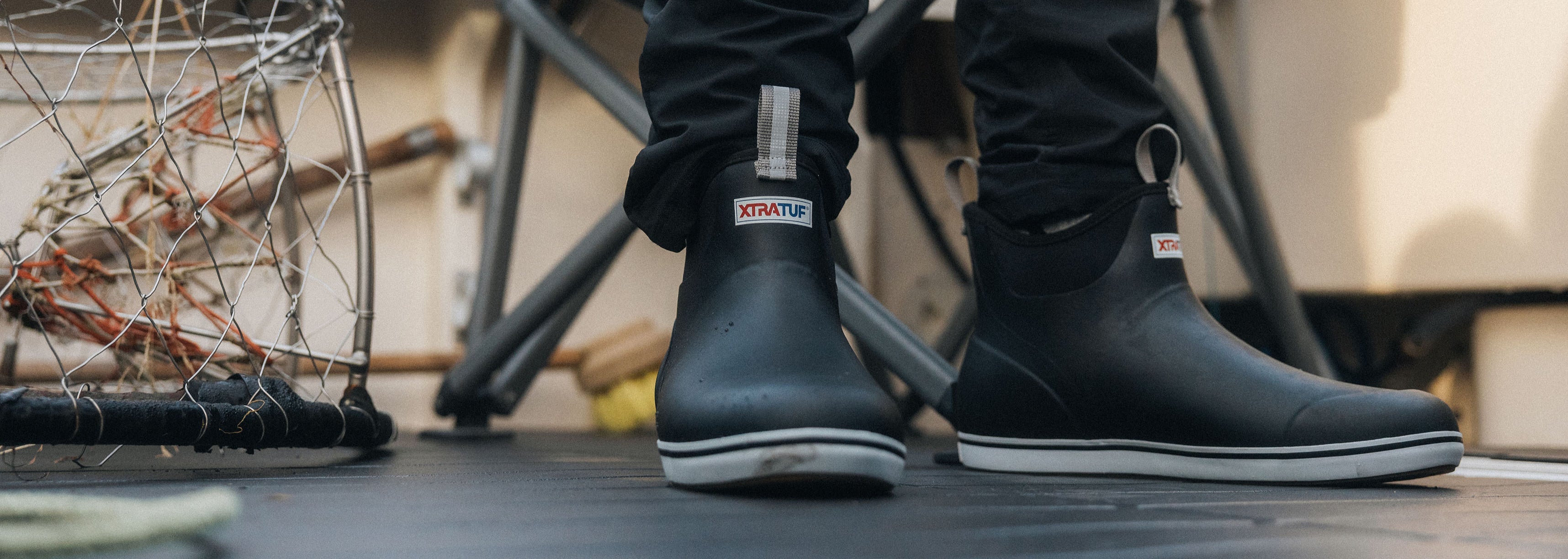
Evaluated by Treeline Review as a benchmark ankle-height option for both men and women, the Xtratuf Deck Boot represents the gold standard in quick-entry marine footwear. Designed for boat decks, dock work, and wet coastal living, this six-inch slip-on boot delivers the proven waterproofing of commercial fishing footwear in an ultra-convenient silhouette. The exterior is built from hand-laid rubber paired with flexible neoprene around the collar, making it exceptionally comfortable right out of the box with zero break-in period. Two sturdy webbing pull loops allow the boot to be pulled on in seconds. Underneath, Xtratuf's signature siped chevron outsole channels water away beneath the foot, offering unmatched security on wet wood docks, slippery aluminum ramps, and wet boat cockpits. The primary trade-off is height and versatility. With only six inches of clearance, stepping into deep puddles or working in thick mud will quickly swamp the boot from above. Furthermore, the interior uses a smooth lining that can hold foot perspiration during humid weather, and the flexible sole lacks the shank rigidity required for extended digging with heavy garden spades. **Highlights** * Six-inch low-profile height enables effortless slip-on wear * Signature siped non-marking Chevron sole grips wet, smooth surfaces * Front and rear pull loops built for heavy daily use * Neoprene collar provides flexible, chafe-free ankle mobility * Molded EVA insole offers basic shock absorption on hard decks **Watch-outs** * Low collar permits water entry when wading beyond ankle depth * Soft, flexible sole provides inadequate support for shovel work * Non-breathable rubber shell can cause feet to sweat in warm weather
Pros
- Effortless slip-on design with durable dual pull loops
- Industry-standard Chevron outsole grips wet, smooth decks reliably
- Pliable neoprene collar prevents ankle rubbing right out of the box
- Zero break-in required thanks to flexible vulcanized rubber
Cons
- Low six-inch height easily permits water entry in deeper puddles
- Flexible sole lacks a rigid shank for heavy shovel or garden work
- Rubber shell traps foot perspiration during warmer conditions
Best uses
- Boating and dock work
- Rainy town commuting
- Campground and yard chores
- Coastal dog walking
Specifications
- Shaft Height
- 6 inches
- Upper Material
- Hand-laid vulcanized rubber
- Collar
- Neoprene with dual pull loops
- Outsole
- Non-marking siped Chevron rubber
- Insole
- Removable molded EVA
- Approximate Price
- $125
Pricing
We don't publish a price we haven't verified. The retailer links below open the live listing for this exact model.
Full catalog listing & offersBest for
Boating and dock work, Rainy town commuting, Campground and yard chores, Coastal dog walking
Where to buy the Deck Boots
Prices and stock change often, so check the current Amazon offer before you buy.
Some links are affiliate links. Buying through them supports our testing at no extra cost to you.
Originally developed for commercial fishing crews in the Pacific Northwest and Alaska, Xtratuf built its reputation on slip-resistant footwear capable of enduring harsh marine conditions. The 6-inch Ankle Deck Boot translates that working-class maritime heritage into a low-profile, easy-wearing silhouette tailored for everyday wet weather. It primarily serves boaters, coastal residents, dock workers, and casual commuters who need dependable traction and moisture protection without the bulk, weight, or calf constriction of standard knee-high gumboots. Constructed from hand-laid vulcanized rubber and finished with a pliable neoprene collar, the boot balances waterproof utility with immediate comfort. Dual webbing pull tabs make stepping in and out frictionless, eliminating the struggle common to taller pull-on rubber boots. The boot trades deep-water submersion capability for day-to-day mobility, relying on its renowned siped rubber outsole to deliver exceptional footing across flat, waterlogged terrain. At approximately $125, it sits in a competitive tier alongside offerings from commercial and outdoor lifestyle brands. However, its specific balance of flexibility, lightweight design, and proven deck traction keeps it standard issue for anyone prioritizing slip resistance and rapid access over tall protection.
Target User and Scope
The Xtratuf Ankle Deck Boot is purpose-built for environments where slick footing is common but water depth remains manageable. Commercial mariners, recreational anglers, and marina workers rely on it as an everyday deck shoe, but its utility extends well beyond the water. Coastal residents, dog walkers, and urban commuters find the low-cut design much easier to wear than tall rubber wellies during shoulder-season rains. It excels during quick outdoor chores, garden tasks on level ground, and boat ramp launches where water rarely exceeds ankle height. Conversely, this is not an off-camber hiking boot or a swamp-wading muck boot. Users tackling deep standing water, heavy brush, or unstable mountain trails will quickly find the six-inch clearance and flexible chassis inadequate for their needs.
Materials and Construction
Xtratuf builds the lower shell from hand-laid rubber over an internal neoprene bootie layer, creating a 100 percent waterproof barrier up to the top rim. The vulcanized rubber remains notably supple, flexing naturally with the foot rather than stiffening in cold temperatures. At the opening, a flexible neoprene collar wraps closely around the lower leg, preventing chafing against bare skin while accommodating various pant hems. Heavy-duty webbing pull loops are securely stitched at the front and back of the collar, allowing wearers to haul the boot on with minimal effort. Because the construction relies on solid vulcanized rubber rather than a breathable membrane, water cannot penetrate from the outside, though internal moisture management is naturally limited to what the interior mesh lining can absorb.
Outsole and Slip Resistance
The hallmark feature of the boot is its non-marking Chevron outsole. Unlike aggressive lugged boots designed to bite into soft earth, this flat rubber sole features fine razor siping. When weight comes down on a wet surface, the siped rubber channels water away from the contact patch, allowing direct friction against smooth substrates. This makes the boot exceptional on slick fiberglass boat decks, wet varnished wood, painted dock planks, and slick concrete boat ramps. On smooth wet floors where deep mud lugs would skate, the Chevron sole bites cleanly. However, that flat profile is a liability in deep, unctuous mud or steep loose scree, where the shallow tread quickly packs out and offers minimal braking power.
Fit and Walking Comfort
Comfort out of the box is a defining attribute of this boot. There is virtually no break-in period required, as the pliable rubber and neoprene upper flex without pinching or binding. The boot is sold in whole unisex sizes, generally fitting true to size, though wearers with wide feet or those planning to wear thick wool socks often benefit from sizing up. Underneath, a molded EVA insole provides basic cushioning for long days standing on hard decks. The insole is removable, which is helpful for users wishing to install custom orthotics, as the factory footbed offers minimal arch contouring. The sole lacks a rigid steel or composite shank, prioritizing flexibility and ground feel over heavy-duty foot protection.
Durability and Rubber Care
When exposed to standard marine and wet-weather use, the hand-laid rubber holds up well against saltwater exposure, sunlight, and routine abrasion. The seams are well-sealed, and the pull tabs can withstand years of vigorous yanking without tearing loose. That said, like all natural and vulcanized rubber footwear, the material can degrade if neglected. Prolonged exposure to direct UV rays, extreme heat, or ozone will eventually cause micro-cracking along flex points near the forefoot. Regularly rinsing away saltwater, drying the boots in a shaded area, and applying rubber conditioner helps maintain elasticity. Heavy agricultural users should also note that animal fats and harsh chemical fertilizers can accelerate rubber breakdown faster than standard river or ocean water.
Trade-Offs and Alternatives
The obvious compromise of the Xtratuf Deck Boot is its six-inch shaft height. Stepping into a puddle that exceeds ankle depth or walking through wet tall grass will result in water splashing straight into the boot, saturating the interior lining. Additionally, because the rubber does not breathe, the interior can become damp from sweat in temperatures above 65 degrees Fahrenheit. Buyers seeking more water clearance often look to mid-calf options like the Xtratuf 12-inch boot or the Muck Wetland. Within the ankle boot category, competitors like the Grundens Deck Boss Ankle Boot offer a slightly thicker footbed, while the Bogs Sauvie provides a bit more arch support. Still, Xtratuf remains the standard for low-profile deck grip.
How we picked
We started with a long list of rain boots that people actually buy, cut anything that could not clear our baseline for durability and field performance, then ranked the 10 that were left against the same criteria. Rankings are editorial. No brand pays for placement, and affiliate links never move a pick up or down.
- Fabric behavior over time
- Breathability, DWR life, loft retention, and how the piece performs after repeated washing.
- Real-world durability
- How the material, stitching, or steel holds up after a season of hard use — not how it looks new.
- Performance in bad conditions
- Wind, rain, cold, and grit are the test. Anything that only works on a nice day gets marked down.
- Weight and packability
- Every ounce has to earn its place in the pack, but not at the cost of something that fails in the field.
- Ease of use
- Setup, adjustment, and maintenance with cold hands, in the dark, without the manual.
- Value at its price point
- Compared against the closest competitors in the same tier, not against cheaper gear in a different class.
Deck Boots — frequently asked questions
- Is the Deck Boots worth it?
- We rank it #8 in Rain Boots. Evaluated by Treeline Review as a benchmark ankle-height option for both men and women, the Xtratuf Deck Boot represents the gold standard in quick-entry marine footwear. Designed for boat decks, dock work, and wet coastal living, this six-inch slip-on boot delivers the proven waterproofing of commercial fishing…
- What is the Deck Boots best for?
- Best for boating and dock work, rainy town commuting, campground and yard chores and coastal dog walking. Standouts: effortless slip-on design with durable dual pull loops and industry-standard chevron outsole grips wet, smooth decks reliably.
- What are the downsides of the Deck Boots?
- Low six-inch height easily permits water entry in deeper puddles, Flexible sole lacks a rigid shank for heavy shovel or garden work and Rubber shell traps foot perspiration during warmer conditions.
- What are the key specs of the Deck Boots?
- Shaft Height: 6 inches · Upper Material: Hand-laid vulcanized rubber · Collar: Neoprene with dual pull loops · Outsole: Non-marking siped Chevron rubber · Insole: Removable molded EVA
- Target User and Scope — what should I know about the Deck Boots?
- The Xtratuf Ankle Deck Boot is purpose-built for environments where slick footing is common but water depth remains manageable. Commercial mariners, recreational anglers, and marina workers rely on it as an everyday deck shoe, but its utility extends well beyond the water.
- Materials and Construction — what should I know about the Deck Boots?
- Xtratuf builds the lower shell from hand-laid rubber over an internal neoprene bootie layer, creating a 100 percent waterproof barrier up to the top rim. The vulcanized rubber remains notably supple, flexing naturally with the foot rather than stiffening in cold temperatures.
Compare side by side
Put the Deck Boots against any other pick on this list — specs, price, pros, cons and reader ratings.