


Reader rating
Rate it and you move it. Community ratings re-rank this product inside its Top 10 list.
Expert-picked, reader-ranked. Our editors choose the products and the launch order; member star ratings move picks up or down over time.
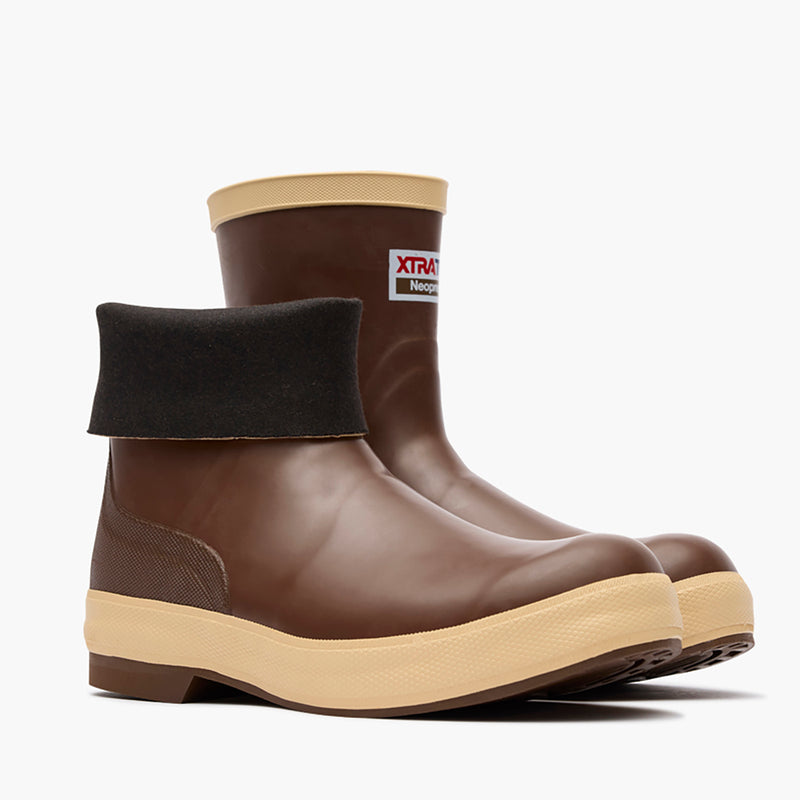
The Xtratuf Legacy is an institution along the Pacific Northwest and Alaskan coastlines, originally designed for commercial fishermen who spend eighteen-hour shifts on slick, tossing decks. Its reputation among testers at OutdoorGearLab and Treeline Review stems from its seamless triple-dipped latex neoprene construction, which remains supple and pliable in freezing temperatures where standard vulcanized rubber turns rigid and unforgiving. What sets the Legacy apart in real-world conditions is mobility. The shaft is flexible enough to roll down when temperatures rise or when extra calf ventilation is needed. Underfoot, the non-marking Chevron outsole provides exceptional grip on wet fiberglass, slick metal docks, and wet river stones. Unlike bulky agricultural boots, the Legacy hugs the foot more closely, minimizing internal slop and blisters during active movement. There are clear trade-offs to keep in mind. The Chevron tread prioritizes surface contact over deep, aggressive lugs, meaning it can load up and lose bite in deep, soupy trail mud. The standard footbed is relatively flat, so anyone needing substantial arch support will want to swap in an aftermarket insole. Furthermore, uninsulated versions offer minimal warmth in freezing slush without heavy wool socks. **Highlights** * Triple-dipped latex neoprene shell fully impervious to water and fish acids * Highly pliable shaft can be rolled down to mid-calf * Signature non-marking Chevron outsole grips wet, hard surfaces reliably * Snug ankle pocket helps lock the heel in place * Available in versatile 12-inch and 15-inch shaft heights **Watch-outs** * Non-lugged tread pattern struggles in thick, slick mud * Flat interior provides minimal native arch support * Narrow fit can feel restrictive on wider feet
Pros
- Supple latex neoprene moves naturally without stiff calf resistance
- Chevron outsole provides exceptional grip on wet, hard surfaces
- Snug ankle contour prevents heel slippage and reduces blisters
- Shaft rolls down smoothly to adjust height and ventilate heat
Cons
- Shallow tread packs quickly with thick mud and loses traction
- Factory footbed is relatively flat with minimal built-in arch support
- Narrow instep and toe box can feel constricting on wider feet
Best uses
- Boating and dock work
- Coastal foul-weather chores
- Wet-weather commuting
- Garden and light farm utility
Specifications
- Shaft Heights
- 12 inches or 15 inches
- Shell Material
- Triple-dipped seamless latex neoprene
- Outsole
- Non-marking Chevron slip-resistant rubber
- Insulation
- Uninsulated (standard version)
- Approximate Price
- $165
- Waterproof Rating
- 100% waterproof construction
Pricing
We don't publish a price we haven't verified. The retailer links below open the live listing for this exact model.
Full catalog listing & offersBest for
Boating and dock work, Coastal foul-weather chores, Wet-weather commuting, Garden and light farm utility
Where to buy the Legacy
Prices and stock change often, so check the current Amazon offer before you buy.
Some links are affiliate links. Buying through them supports our testing at no extra cost to you.
The Xtratuf Legacy has earned its reputation in demanding maritime environments, where workers spend long hours on wet, shifting boat decks. Built from triple-dipped latex neoprene rather than standard vulcanized rubber, the boot prioritizes suppleness and full waterproof integrity. Over decades of widespread adoption from Alaska to coastal New England, it has crossed over from commercial fishing fleets into mainstream outdoor use for rainy climates and utility chores. What sets the Legacy apart from generic rubber boots is its mobility. The shaft is thin, remarkably flexible, and can be rolled down to mid-calf to vent heat when temperatures rise. At the base, a non-marking Chevron outsole maximizes contact area to prevent slipping on wet fiberglass, slick wood, and soaked pavement. Rather than relying on a loose, bucket-like fit, the Legacy narrows through the ankle to secure the heel, making walking far less fatiguing. This specialized design comes with realistic trade-offs. The low-profile outsole lacks deep lugs, meaning it packs full of clay and loses traction in soupy wilderness mud. Similarly, the factory footbed is flat, and the standard model provides zero thermal insulation against freezing slush. It remains an exceptional tool for wet, hard surfaces, provided users understand its specific footwear niche.
Target User Profile
The Xtratuf Legacy is primarily built for people who spend extended hours working or moving on wet, level terrain. It is a staple for commercial fishermen, dock workers, coastal homeowners, and gardeners who need dependable waterproof protection without the rigid, heavy feel of standard agricultural boots. Commuters in rainy Pacific Northwest or maritime climates also gravitate toward it because the shaft easily rolls down, functioning like a casual mid-cut slip-on when walking into stores or dry buildings. It is decidedly less suited for backcountry trail hikers navigating steep scree or outdoor workers needing puncture-resistant heavy steel shanks. If your day involves rain, wet decks, hoses, or concrete aprons, this boot delivers the right balance of protection and agility.
Materials and Construction
Unlike standard rubber boots that use thick, vulcanized sheets joined by glued seams, the Legacy uses a triple-dipping process in liquid neoprene latex. This creates a seamless outer shell that is inherently supple and resistant to degradation from fish oils, mild acids, and common marine chemicals. The latex retains its pliable nature across a broad range of temperatures, avoiding the stiff, brittle feel common to cheap PVC or dense rubber in cold weather. Inside, a soft fabric liner facilitates pulling the boot on and off while preventing bare skin from sticking to the rubber. The 12-inch and 15-inch uppers can be easily folded down, revealing the inner lining and providing instant airflow when working in mild ambient conditions.
Underfoot Traction Dynamics
The Legacy's non-marking Chevron outsole is optimized for slick, hard surfaces. Its dense, multidirectional siping acts like a squeegee, forcing surface water out from under the foot to maximize direct rubber contact with wet fiberglass, polished concrete, metal boat ramps, and slick timber docks. Reviewers consistently praise this design for providing confident footing where aggressive mountain boots slip. However, this specific tread geometry reveals its limitation on soft earth. Because the outsole lacks tall, open lugs, wet mud, sticky clay, and wet grass easily clog the shallow grooves. Once packed, the flat profile turns slick, making the Legacy a poor choice for steep, untamed woodland trails or deep agricultural muck.
Fit and Sizing Considerations
Fit is one of the most distinctive aspects of the Legacy. The boot features a pronounced taper through the ankle area designed to lock the heel in place. This contour eliminates the heel slippage that causes blisters in traditional wide-shaft rain boots, but it also makes pulling the boot off require some deliberate effort. The toe box runs fairly narrow, which can cause lateral squeezing for individuals with wide feet or higher insteps. Arch support from the standard, removable EVA footbed is minimal and relatively flat. Anyone planning to spend eight or more hours on their feet should budget for a supportive aftermarket insole, and sizing up may be necessary to accommodate thicker insoles or heavy winter socks.
Durability and Maintenance
With proper care, the Legacy's seamless latex body can endure years of heavy coastal use without developing leaks at flex points. The natural flexibility of latex reduces the risk of cracking at the forefoot crease, a common failure zone in rigid rubber boots. However, latex requires care to maximize its lifespan. Long-term exposure to direct sunlight, extreme ozone, or prolonged contact with harsh solvents can degrade the compound over time, leading to surface crazing. Rinsing salt water, mud, and organic matter away with fresh water after hard use helps maintain elasticity. The Chevron outsole wears evenly on smooth ground, though regular abrasive use on rough asphalt will noticeably accelerate tread wear compared to dense work-boot compounds.
Competitive Trade-Offs
At around $165, the Legacy occupies an intermediate tier between generic budget rubber boots and heavy-duty insulated work boots. Compared to options like the Muck Boot Chore or Bogs Classic, the uninsulated Legacy is significantly lighter, far more supple through the calf, and much easier to pack or roll down. The trade-off is warmth: the uninsulated Legacy provides almost no thermal barrier against cold water or freezing air, making it strictly a three-season or wool-sock-dependent boot in northern climates. Compared to commercial marine alternatives like Grundéns Deck-Boss, the Legacy maintains a slimmer, less clunky profile, but concedes some underfoot cushioning and aggressive mud traction in exchange for agile mobility.
How we picked
We started with a long list of rain boots that people actually buy, cut anything that could not clear our baseline for durability and field performance, then ranked the 10 that were left against the same criteria. Rankings are editorial. No brand pays for placement, and affiliate links never move a pick up or down.
- Fabric behavior over time
- Breathability, DWR life, loft retention, and how the piece performs after repeated washing.
- Real-world durability
- How the material, stitching, or steel holds up after a season of hard use — not how it looks new.
- Performance in bad conditions
- Wind, rain, cold, and grit are the test. Anything that only works on a nice day gets marked down.
- Weight and packability
- Every ounce has to earn its place in the pack, but not at the cost of something that fails in the field.
- Ease of use
- Setup, adjustment, and maintenance with cold hands, in the dark, without the manual.
- Value at its price point
- Compared against the closest competitors in the same tier, not against cheaper gear in a different class.
Legacy — frequently asked questions
- Is the Legacy worth it?
- We rank it #1 in Rain Boots. The Xtratuf Legacy is an institution along the Pacific Northwest and Alaskan coastlines, originally designed for commercial fishermen who spend eighteen-hour shifts on slick, tossing decks. Its reputation among testers at OutdoorGearLab and Treeline Review stems from its seamless triple-dipped latex neoprene…
- What is the Legacy best for?
- Best for boating and dock work, coastal foul-weather chores, wet-weather commuting and garden and light farm utility. Standouts: supple latex neoprene moves naturally without stiff calf resistance and chevron outsole provides exceptional grip on wet, hard surfaces.
- What are the downsides of the Legacy?
- Shallow tread packs quickly with thick mud and loses traction, Factory footbed is relatively flat with minimal built-in arch support and Narrow instep and toe box can feel constricting on wider feet.
- What are the key specs of the Legacy?
- Shaft Heights: 12 inches or 15 inches · Shell Material: Triple-dipped seamless latex neoprene · Outsole: Non-marking Chevron slip-resistant rubber · Insulation: Uninsulated (standard version) · Approximate Price: $165
- Target User Profile — what should I know about the Legacy?
- The Xtratuf Legacy is primarily built for people who spend extended hours working or moving on wet, level terrain. It is a staple for commercial fishermen, dock workers, coastal homeowners, and gardeners who need dependable waterproof protection without the rigid, heavy feel of standard agricultural boots.
- Materials and Construction — what should I know about the Legacy?
- Unlike standard rubber boots that use thick, vulcanized sheets joined by glued seams, the Legacy uses a triple-dipping process in liquid neoprene latex. This creates a seamless outer shell that is inherently supple and resistant to degradation from fish oils, mild acids, and common marine chemicals.
Compare side by side
Put the Legacy against any other pick on this list — specs, price, pros, cons and reader ratings.