


Reader rating
Rate it and you move it. Community ratings re-rank this product inside its Top 10 list.
Expert-picked, reader-ranked. Our editors choose the products and the launch order; member star ratings move picks up or down over time.
Best structured low-cut
Pros
- Unmatched lateral stability and arch support for a low-cut shoe
- Tough nubuck leather construction resists thorns and sharp rocks
- Dense polyurethane midsole does not collapse under heavy pack loads
- Gore-Tex membrane seals out swamp water and saturated brush
- Reliable Vibram outsole sheds mud and bites into loose dirt
Cons
- Significantly heavier and stiffer than typical synthetic trail shoes
- Low collar invites debris unless paired with gaiters
- Runs warm during high-exertion hikes in midsummer heat
Best uses
- Early season archery hunts
- Rough off-trail backcountry scouting
- Rocky approach hikes with weight
- Heavy daypack wilderness treks
Specifications
- Upper Material
- Heubach nubuck leather with cordura collar
- Waterproof Lining
- Gore-Tex Extended Comfort membrane
- Chassis System
- Support Monowrap polyurethane frame
- Midsole Tech
- Double-injection DuraPU foam
- Outsole
- Vibram Renevo rubber compound
- Build Origin
- Handcrafted in Slovakia
Pricing
We don't publish a price we haven't verified. The retailer links below open the live listing for this exact model.
Best for
Early season archery hunts, Rough off-trail backcountry scouting, Rocky approach hikes with weight, Heavy daypack wilderness treks
Where to buy the Renegade EVO GTX Lo
We don't have a direct Amazon listing on file yet — this opens an Amazon search for the exact make and model.
Some links are affiliate links. Buying through them supports our testing at no extra cost to you.
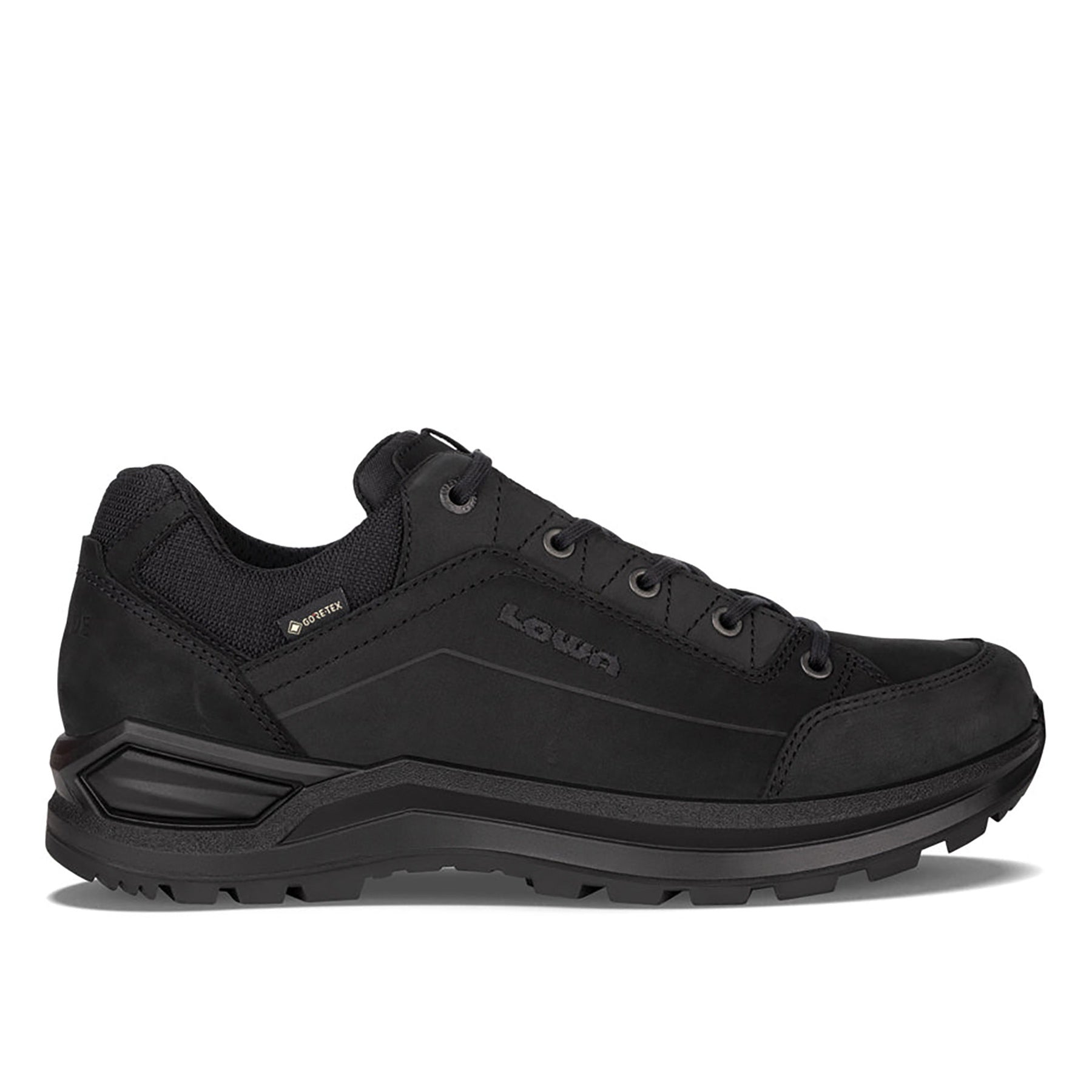
Hunters and backcountry hikers often run into a frustrating trade-off when selecting footwear. Flimsy trail runners yield nimbleness but collapse under a heavy pack, while traditional eight-inch boots can feel like overbuilt anchors on hot, fast-moving scouting trips. This low-cut build bridges that divide cleanly, stripping away upper cuff height while preserving the rigid underfoot architecture of a serious mountain boot. At the heart of the design is a proven support skeleton that wraps up around the perimeter of the foot, delivering exceptional torsional stability that keeps your heel planted across off-camber sidehills and scree. The recent EVO iteration refines the fit around the instep and collar, eliminating common pinch points without sacrificing the dense, supportive platform that made its predecessor an industry standard. It is engineered for people who value ankle mobility but still demand an uncompromising chassis beneath their arches. For early-season hunts, rough trail scouting, and long bushwhacking miles with a moderate pack, few low-cut shoes match this level of structural integrity. It feels substantial straight out of the box, leaning far closer to a chopped alpine boot than an athletic cross-trainer.
Chassis and Underfoot Stability
Most low-cut hikers lean heavily on soft EVA foam midsoles that compress rapidly under load, leaving your feet fatigued after six miles on broken rock. This shoe relies instead on a dense polyurethane midsole integrated directly with an external stability frame. The wrap-around skeletal wing stabilizes the lateral edges of the foot, preventing ankle roll when stepping on wet roots, bowling-ball river stones, or steep sidehill angles. Torsional rigidity is remarkably high for a low-top silhouette; you cannot easily twist this shoe by hand like an ordinary sneaker. That stiffness translates to direct power transfer when edging across talus and eliminates underfoot stone bruising on jagged terrain. If you regularly haul fifty pounds of gear over terrain with no trail in sight, this platform holds up where lighter shoes turn mushy.
Materials and Weather Barrier
The upper is dominated by thick, high-grade nubuck leather rather than fragile open-mesh panels. This exterior shrugs off sharp deadfall, buckbrush, and flinty scree that would rip open lightweight running shoes in an afternoon. Inside, a full Gore-Tex bootie keeps external moisture at bay during early morning treks through dew-soaked prairie grass or shallow creek hops. Breathability is modest because of the durable leather shell, making it run slightly warmer in midsummer heat than a fabric shoe, but the trade-off in water resistance and puncture protection is well worth it for rugged environments. Double-stitched seams reinforce key flex zones, and the hardware is burly enough to crank down hard without worrying about stripping out an eyelet in camp.
Traction in Varied Conditions
The proprietary Vibram outsole features multi-directional, widely spaced lugs designed to self-clean thick mud while providing reliable bite on loose duff. Braking lugs at the heel bite hard on steep descents, preventing uncontrolled slides down slick timber slopes. On wet granite and river rocks, the rubber compound delivers dependable friction without feeling greasy, although it remains slightly firmer than dedicated sticky-rubber approach shoes in order to prolong tread life. The pronounced heel brake is especially useful when descending steep timber with deadfall, letting you drop weight into your heels with confidence. It cleans out debris effectively, preventing that dreaded slick clay plateau that renders shallow tread patterns useless in boggy draws.
Weight and Hauling Dynamics
There is no pretending this is an ultralight shoe. Carrying dense leather, a rigid polyurethane midsole, and an internal shank inevitably adds grams, placing it near the heavier end of the low-cut spectrum. That weight, however, works in your favor the moment you shoulder a heavy meat pack or a full weekend rucksack. Instead of allowing your foot muscles to strain over every uneven contour, the stiff sole bears the brunt of the terrain. The low cuff allows total freedom of movement through the Achilles and lower calf, reducing fatigue on fast-paced, high-mileage days compared to restrictive mid-cut boots. For hunters who find full-height leather boots overly hot or restrictive, this configuration offers heavy-duty hauling capability with athletic mobility.
Field Durability and Care
Long-term durability is a clear strength here compared to glued, mesh-heavy alternatives. Polyurethane midsoles do not pack out or lose their shock-absorbing rebound over time like standard EVA foam does, meaning the underfoot geometry feels consistent even after several hundred rough trail miles. To maximize longevity, the nubuck leather demands periodic cleaning and conditioning to prevent grit from drying out the hide near the forefoot flex point. The rand along the toe provides sufficient protection against rock strikes, though it is not a full wraparound climbing rand. If kept clean and treated after wet seasons, the upper will easily survive multiple hard seasons of heavy hunting pressure and rocky trail abuse.
Honest Trade-Offs and Alternatives
Choosing a low-cut shoe for rough country carries inherent limitations. Without an upper collar, scree, pine needles, and trail dirt inevitably find their way inside unless you pair the shoe with a short gaiter. It will also flood in stream crossings that exceed ankle height, relying on the waterproof membrane only up to the tongue bellows. For comparison, the Salewa Mountain Trainer offers a narrower, more technical climbing fit with a full rubber rand, but lacks the plush, all-day walking comfort found here. Hikers with wider feet or those requiring softer step-in cushioning might prefer an Altra or Hoka, but neither will match this shoe for load-bearing stiffness, leather abrasion resistance, or sheer mechanical support.
How we chose
We compared widely available rugged hiking shoes using maker specifications, retailer listings and published reviews, then ranked 10 against the same criteria below. This is desk research unless a pick is marked field tested. Rankings are editorial. No brand pays for placement, and affiliate links never move a pick up or down.
- Fabric behavior over time
- Breathability, DWR life, loft retention, and how the piece performs after repeated washing.
- Real-world durability
- How the material, stitching, or steel holds up after a season of hard use — not how it looks new.
- Performance in bad conditions
- Wind, rain, cold, and grit are the test. Anything that only works on a nice day gets marked down.
- Weight and packability
- Every ounce has to earn its place in the pack, but not at the cost of something that fails in the field.
- Ease of use
- Setup, adjustment, and maintenance with cold hands, in the dark, without the manual.
- Value at its price point
- Compared against the closest competitors in the same tier, not against cheaper gear in a different class.
Renegade EVO GTX Lo — frequently asked questions
- Is the Renegade EVO GTX Lo worth it?
- We rank it #2 in Rugged Hiking Shoes. Best structured low-cut
- What is the Renegade EVO GTX Lo best for?
- Best for early season archery hunts, rough off-trail backcountry scouting, rocky approach hikes with weight and heavy daypack wilderness treks. Standouts: unmatched lateral stability and arch support for a low-cut shoe and tough nubuck leather construction resists thorns and sharp rocks.
- What are the downsides of the Renegade EVO GTX Lo?
- Significantly heavier and stiffer than typical synthetic trail shoes, Low collar invites debris unless paired with gaiters and Runs warm during high-exertion hikes in midsummer heat.
- What are the key specs of the Renegade EVO GTX Lo?
- Upper Material: Heubach nubuck leather with cordura collar · Waterproof Lining: Gore-Tex Extended Comfort membrane · Chassis System: Support Monowrap polyurethane frame · Midsole Tech: Double-injection DuraPU foam · Outsole: Vibram Renevo rubber compound
- Chassis and Underfoot Stability — what should I know about the Renegade EVO GTX Lo?
- Most low-cut hikers lean heavily on soft EVA foam midsoles that compress rapidly under load, leaving your feet fatigued after six miles on broken rock. This shoe relies instead on a dense polyurethane midsole integrated directly with an external stability frame.
- Materials and Weather Barrier — what should I know about the Renegade EVO GTX Lo?
- The upper is dominated by thick, high-grade nubuck leather rather than fragile open-mesh panels. This exterior shrugs off sharp deadfall, buckbrush, and flinty scree that would rip open lightweight running shoes in an afternoon.
Compare side by side
Put the Renegade EVO GTX Lo against any other pick on this list — specs, price, pros, cons and reader ratings.