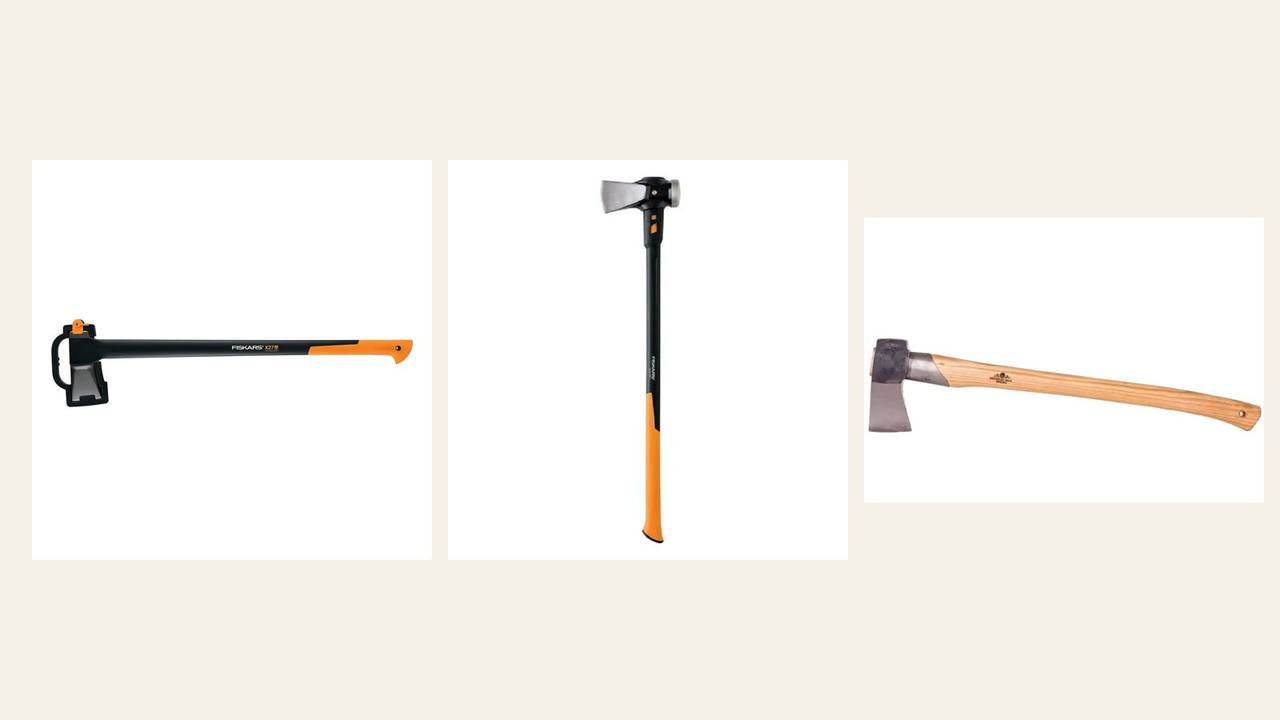
A good firewood setup starts with a splitter that matches your logs and your swing, not simply the heaviest head available. These research-based picks compare manufacturer and retailer specifications; they are not a hands-on test. Unverified Amazon listings and unavailable product images are left null rather than guessed.
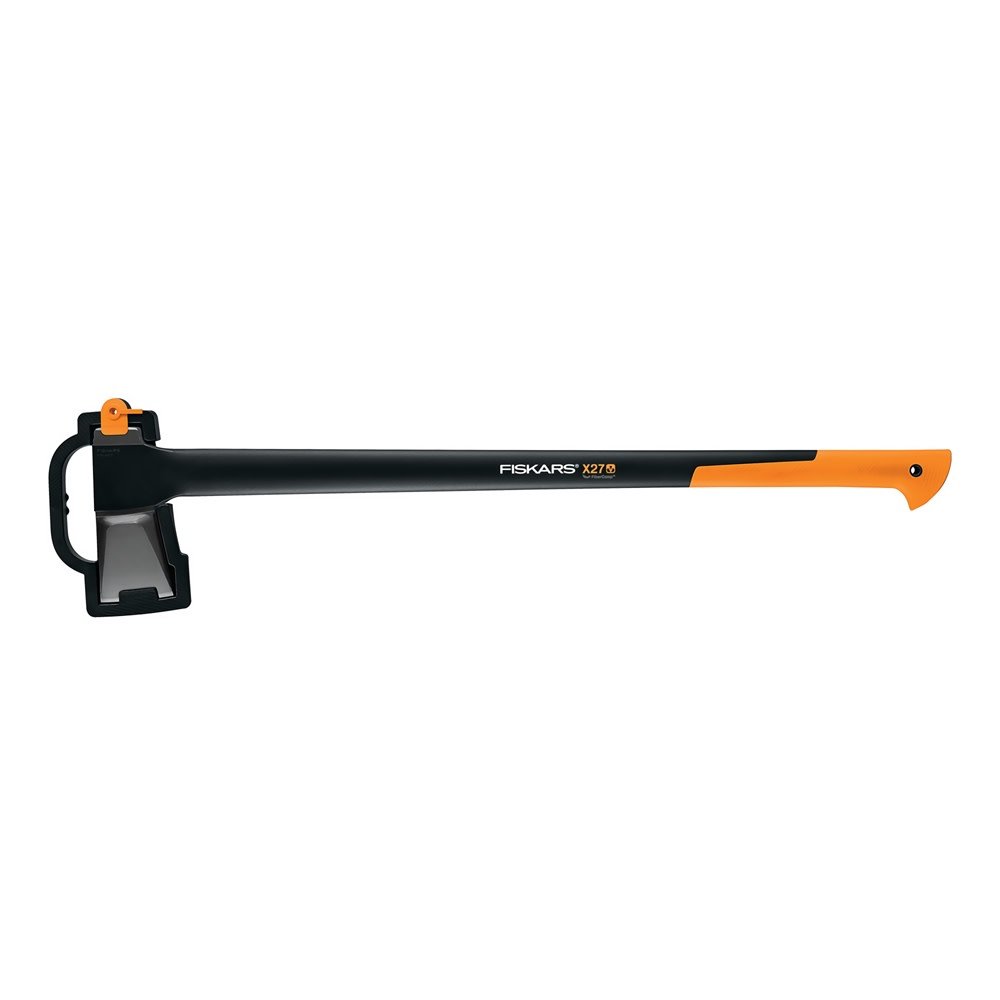
A long-handled splitter for medium to extra-large firewood rounds. Its coated blade and composite handle make it a practical first choice for a home woodpile.
The X27 combines a forged steel blade with a shock-absorbing FiberComp handle. Its 36-inch format is aimed particularly at taller users.
Splitting role
The convex blade geometry is designed to push wood apart rather than cut across the grain. Fiskars also uses a low-friction coating to help the head release from wood.
Trade-offs
The long handle is the main reason to choose this over the X25. That same length can be less manageable when storage space or swinging room is limited.
Who it is for
Choose it as a primary splitter for a home firewood supply. It is especially appealing if you prefer a long swing and regularly process larger rounds.
As an Amazon Associate, Wild10 earns from qualifying purchases.
No ratings yet
Pick 02Research-based review
Fiskars IsoCore Wood Splitting Maul, 8 lb, 36 in
Head weight
8 lb
Length
36 in
Head
Forged steel
Handle
IsoCore shock-control system
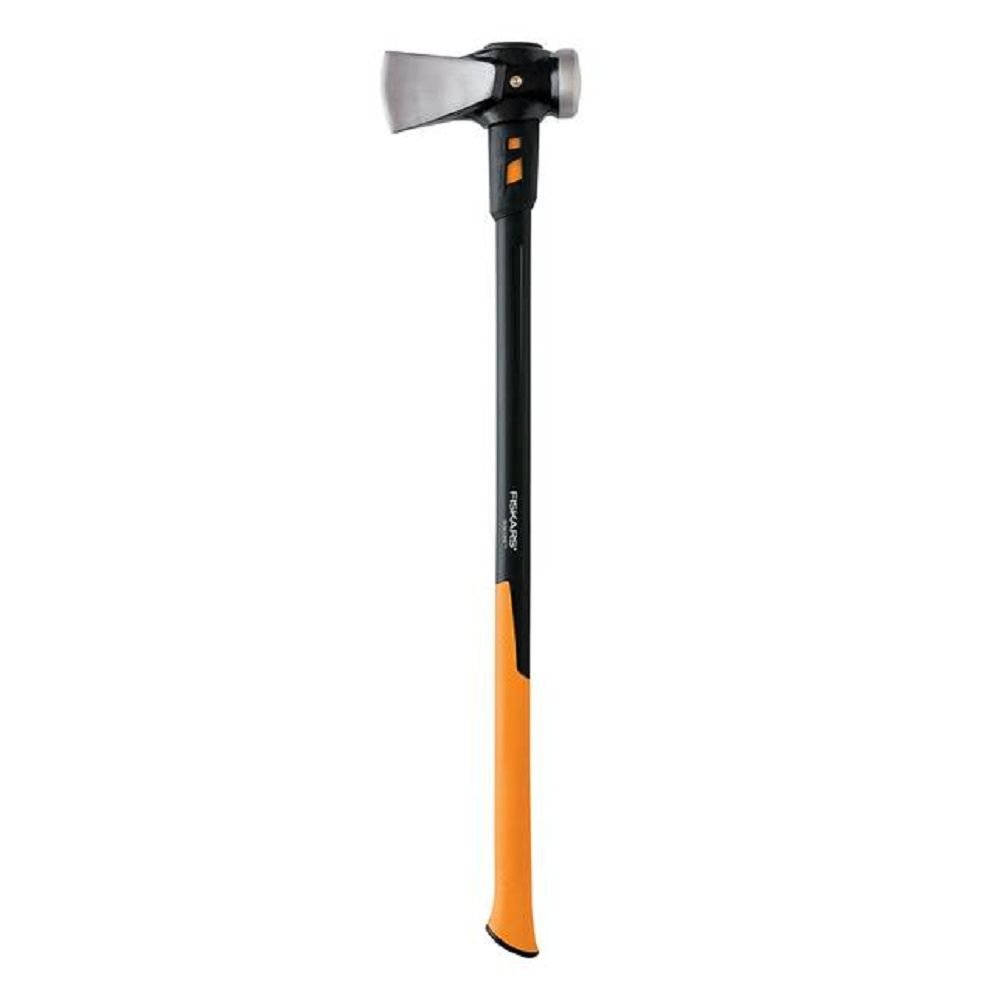
A heavy maul for jobs that call for more mass than a conventional splitting axe. Its splitting and driving faces give it a useful supporting role beside an everyday splitter.
The forged steel head combines splitting and driving faces. A riveted attachment secures it to a handle with the IsoCore shock-control system.
Splitting role
The blade geometry targets difficult splitting, while the opposite face can drive wedges. Fiskars says the handle system reduces transmitted shock and vibration compared with wood handles.
Trade-offs
An eight-pound head puts substantial mass into each swing. That also makes this a more demanding choice than a lighter axe for repetitive work.
Who it is for
Choose this for the rounds your lighter splitter struggles to open. It also suits buyers who specifically need a manufacturer-approved wedge-driving face.
As an Amazon Associate, Wild10 earns from qualifying purchases.
No ratings yet
Pick 03Research-based review
Gränsfors Bruk Large Splitting Axe 442, 27 in
Model
442
Length
27 in, per US listing
Total weight
5 lb
Handle
Hickory
Protection
Steel collar and leather sheath
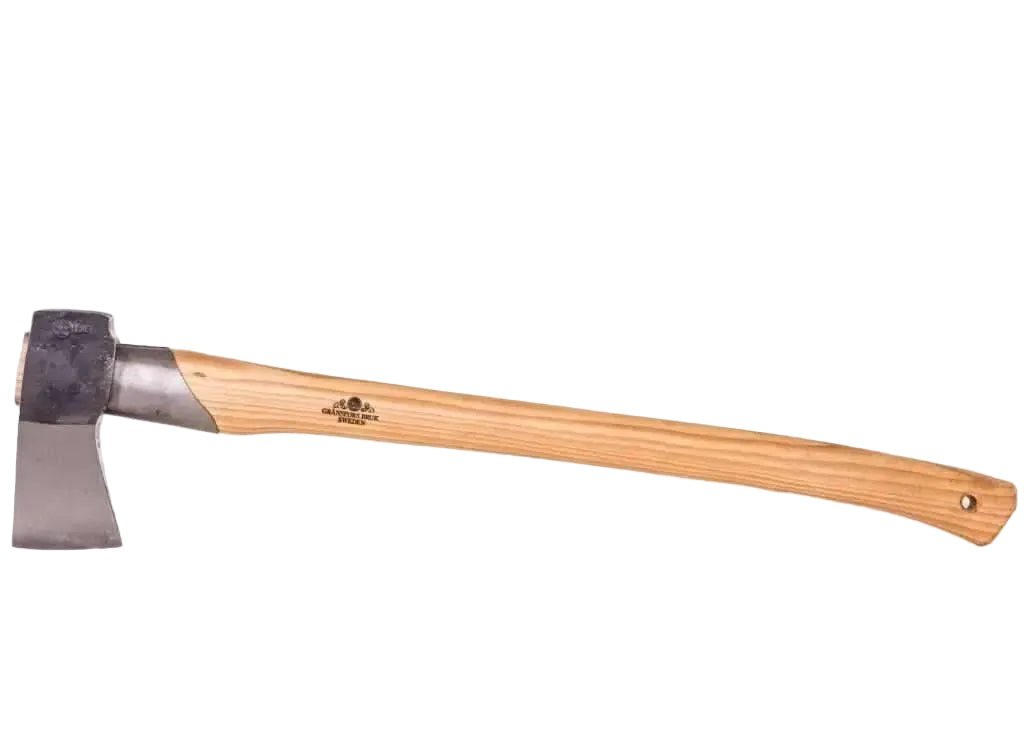
A Swedish-made traditional splitter with a protective collar and a concave blade. The 442 is the shorter Large Splitting Axe, not the longer-handled version.
A thin, concave entry section transitions into a broader splitting head. The hickory handle has a steel collar beneath the head and grooves near its end.
Splitting role
The narrow bit is intended to enter the log readily. As the head travels deeper, its broader section forces the grain apart.
Trade-offs
Gränsfors explicitly prohibits using its splitting axes to strike wedges or as wedges. Buyers needing that function should choose a suitable maul instead.
Who it is for
Choose the 442 if you want a shorter traditional splitter with handle protection. Check the model number carefully because the Large Splitting Axe also comes in a longer version.
As an Amazon Associate, Wild10 earns from qualifying purchases.
No ratings yet
Pick 04Research-based review
Fiskars X25 Splitting Axe, 28 in
Length
28 in
Handle
FiberComp composite
Blade
Hardened forged steel
Included
Protective sheath
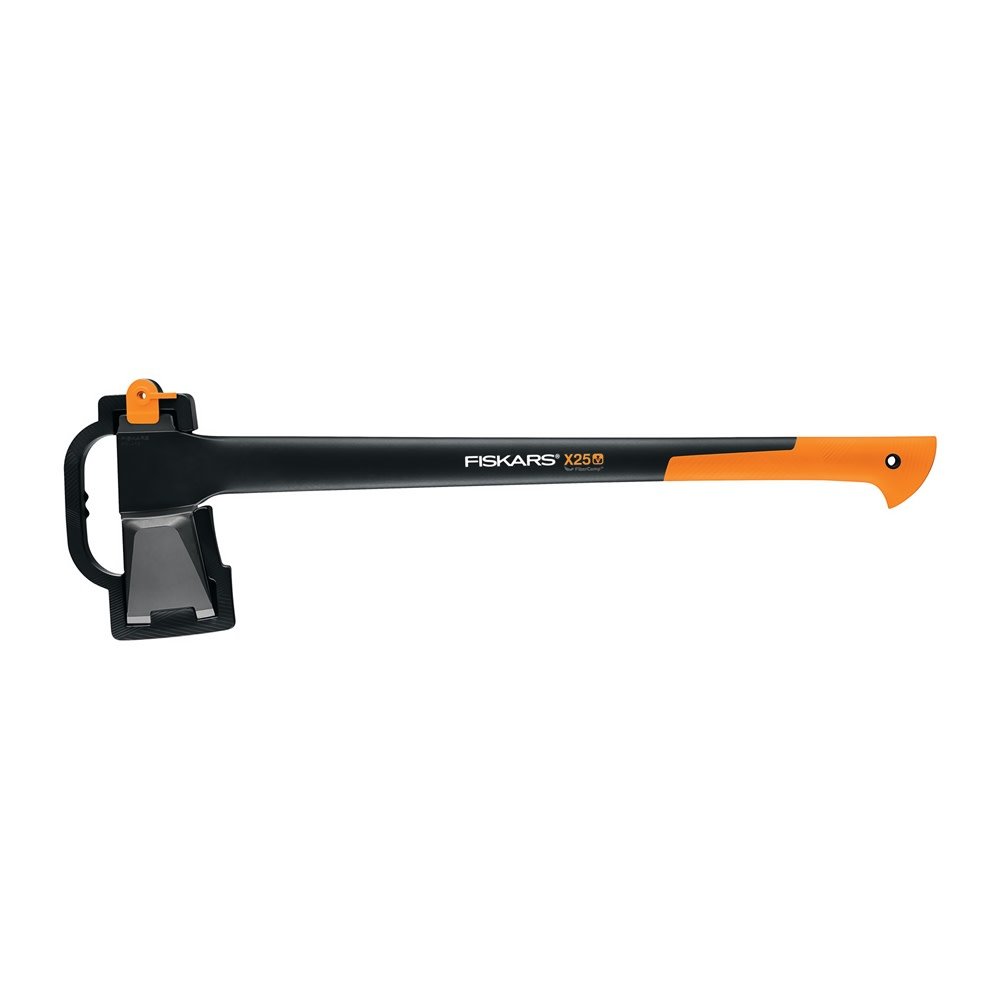
The X25 offers Fiskars splitting geometry in a shorter package than the X27. It is intended for medium to large logs and suits buyers who prefer less handle length.
The forged steel blade uses convex geometry and a low-friction coating. An insert-molded head joins a shock-absorbing FiberComp handle.
Splitting role
Fiskars positions this model for medium to large logs. The head shape is designed to disperse wood and make removal easier if the blade does not finish the split.
Trade-offs
Its 28-inch format sacrifices some reach compared with the X27. The choice is chiefly about fit and control rather than assuming longer is always better.
Who it is for
Choose it when a 36-inch splitter feels unnecessarily long. It remains a woodpile tool rather than a compact camping hatchet.
As an Amazon Associate, Wild10 earns from qualifying purchases.
No ratings yet
Pick 05Research-based review
Council Tool Ol’ No. 7 Axe-Eye Splitting Maul
Head weight
7 lb
Handle
36 in straight American hickory
Finished length
Slightly less than 36 in
Bit length
3.75 in
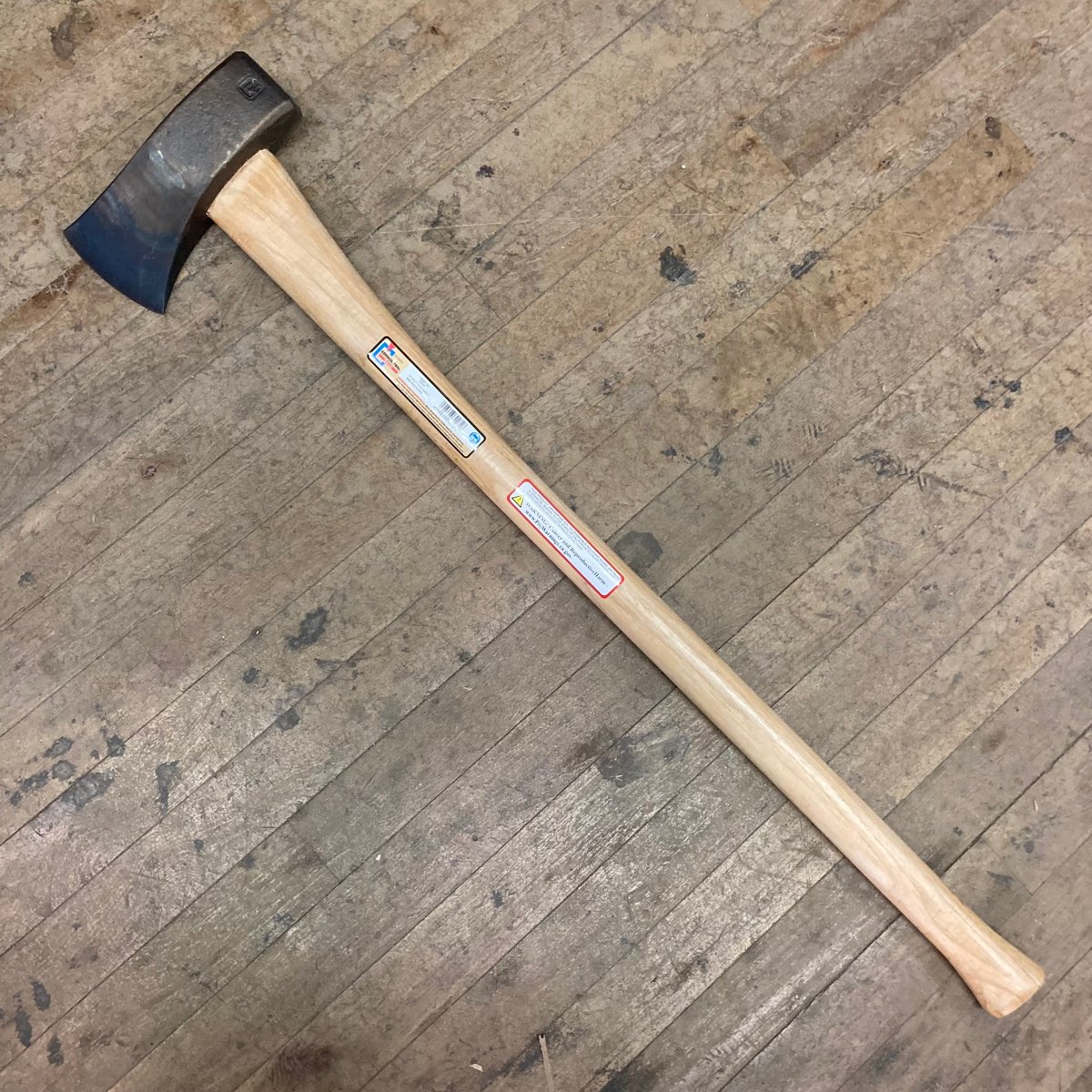
A seven-pound maul designed to sit between common six- and eight-pound options. The axe-eye version pairs its concave-wedge head with a straight hickory handle.
The head uses a concave-wedge blade and a high centerline. A tapered poll balances the head around the eye.
Splitting role
Council designed the wider body to help push a split open. The tapered poll can also finish an already opened split as described by the maker.
Trade-offs
This is not the discontinued eight-pound Council maul. Be sure to distinguish the axe-eye version from the separately offered sledge-eye model.
Who it is for
Choose it if you want a conventional wooden-handled maul without moving to an eight-pound head. It is a deliberate woodpile tool, not a lightweight carry axe.
As an Amazon Associate, Wild10 earns from qualifying purchases.
No ratings yet
Pick 06Research-based review
Hults Bruk Hult Splitting Axe, 3.5 lb head
Head weight
3.5 lb
Total weight
4.5 lb
Handle length
30 in
Handle
American hickory
Former name
Sarek
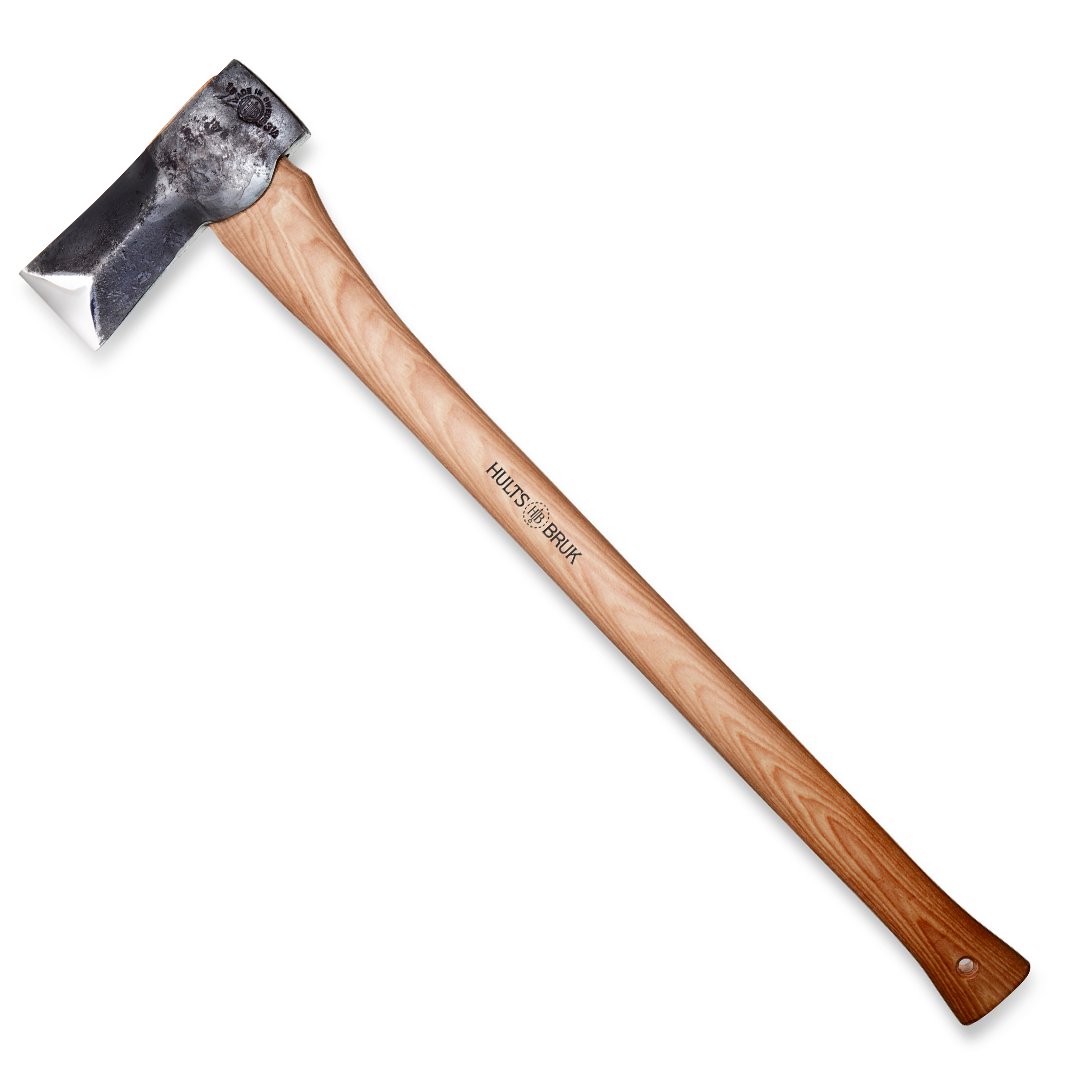
The Hult is the current name of the splitting axe formerly sold as the Sarek. It combines a Swedish-pattern head with a straight 30-inch hickory handle.
The head has a straight blade, small cheeks and a metal spine along its sides. Hults Bruk pairs it with a straight American hickory handle.
Splitting role
The side geometry is intended to reduce friction while enhancing wedging action. Its listed 4.5-pound total weight places it below the heavy mauls here.
Trade-offs
The current product is named Hult, although older material calls it Sarek. The maker also cautions that hand forging can produce small differences in dimensions and finish.
Who it is for
Choose it for a traditional Swedish splitter with a 30-inch handle. It suits buyers who value a wood handle and forged head more than a composite construction.
As an Amazon Associate, Wild10 earns from qualifying purchases.
No ratings yet
Pick 07Research-based review
Helko Werk Vario Heavy Log Splitter
Head weight
5 lb
Total weight
8.5 lb
Handle length
36 in
Steel
C50 high-carbon steel
Handle
American hickory
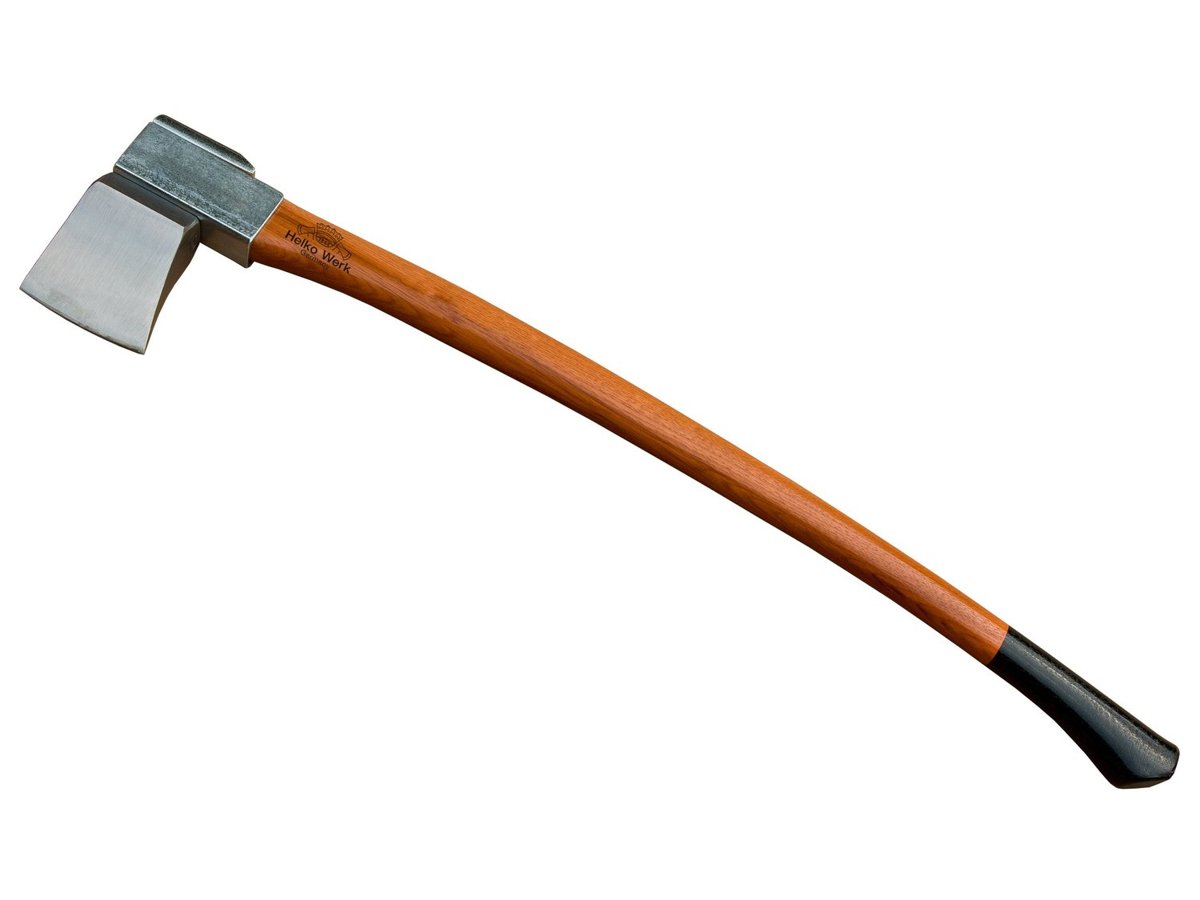
A German-made heavy splitting axe using Helko’s modular Vario fastening system. Its deep wedge and substantial assembled weight target demanding firewood work.
The C50 steel head mounts through the Vario bolted assembly. A steel protector shields the front and sides of the handle near the head.
Splitting role
Helko specifies a deep wedge for large rounds and heavy firewood. The complete tool weighs 8.5 pounds, so its head weight alone understates what you swing.
Trade-offs
The maker requires checking that the bolts remain snug before use. It explicitly says not to strike the retainer cap or use the poll as a maul.
Who it is for
Choose it if modular heads and handles appeal to you. It is best approached as a heavy splitting axe with specific maintenance needs, not as a wedge-driving maul.
As an Amazon Associate, Wild10 earns from qualifying purchases.
No ratings yet
Pick 08Research-based review
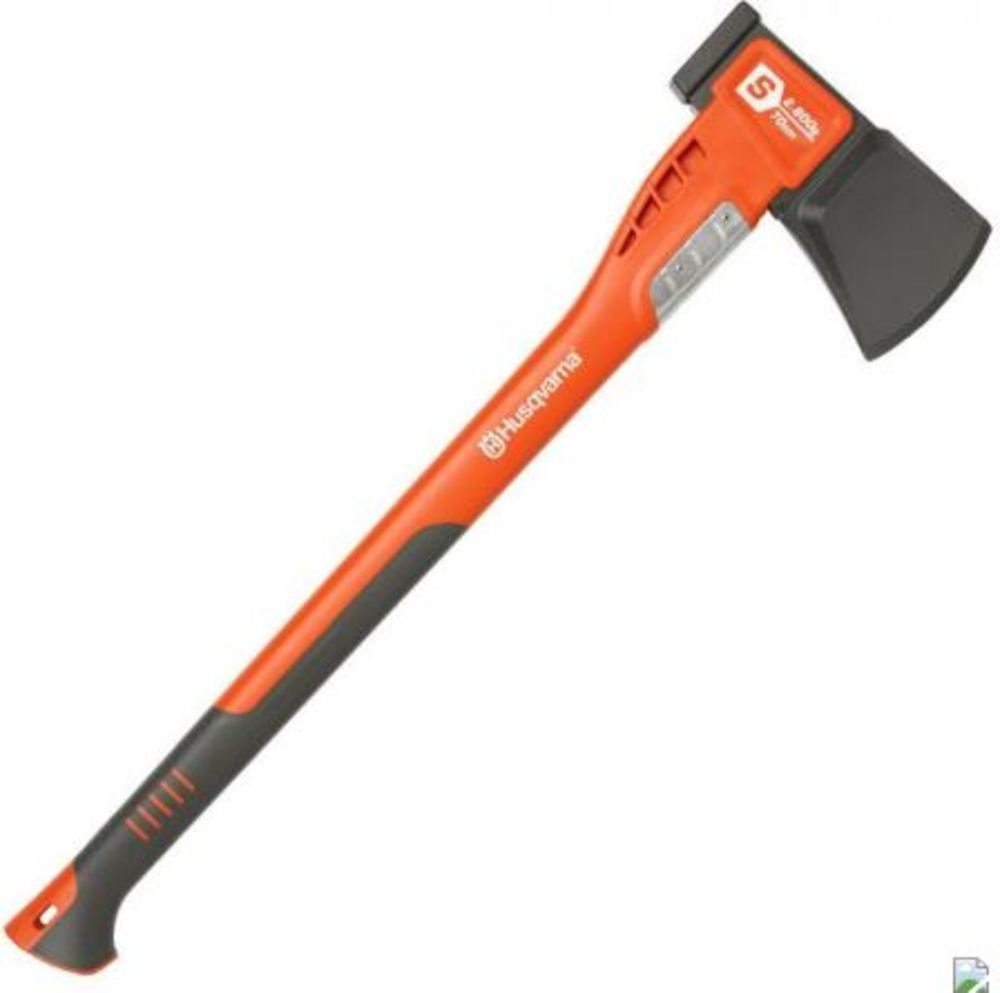
Husqvarna Splitting Axe S2800
Length
70 cm
Head weight
2.3 kg
Total weight
2.958 kg
Shaft
Fibre-reinforced polyamide
Protection
Stainless steel shaft guard
The S2800 combines a coated splitting head with a reinforced composite shaft. Its stainless steel shaft protection makes it an interesting alternative to wooden-handled splitters.
The S2800 uses a fibre-reinforced polyamide shaft and a stainless steel protective section. A soft grip and hooked end support secure handling.
Splitting role
Husqvarna shapes and coats the head for splitting larger logs. The balance point is close to the head to concentrate weight toward the cut.
Trade-offs
The hammer function carries an explicit restriction against steel wedges. Verify local availability because the source used here is Husqvarna’s UK product page.
Who it is for
Choose it if you prefer a protected composite shaft over hickory. It is intended for substantial firewood rather than small camp kindling.
As an Amazon Associate, Wild10 earns from qualifying purchases.
No ratings yet
Pick 09Research-based review
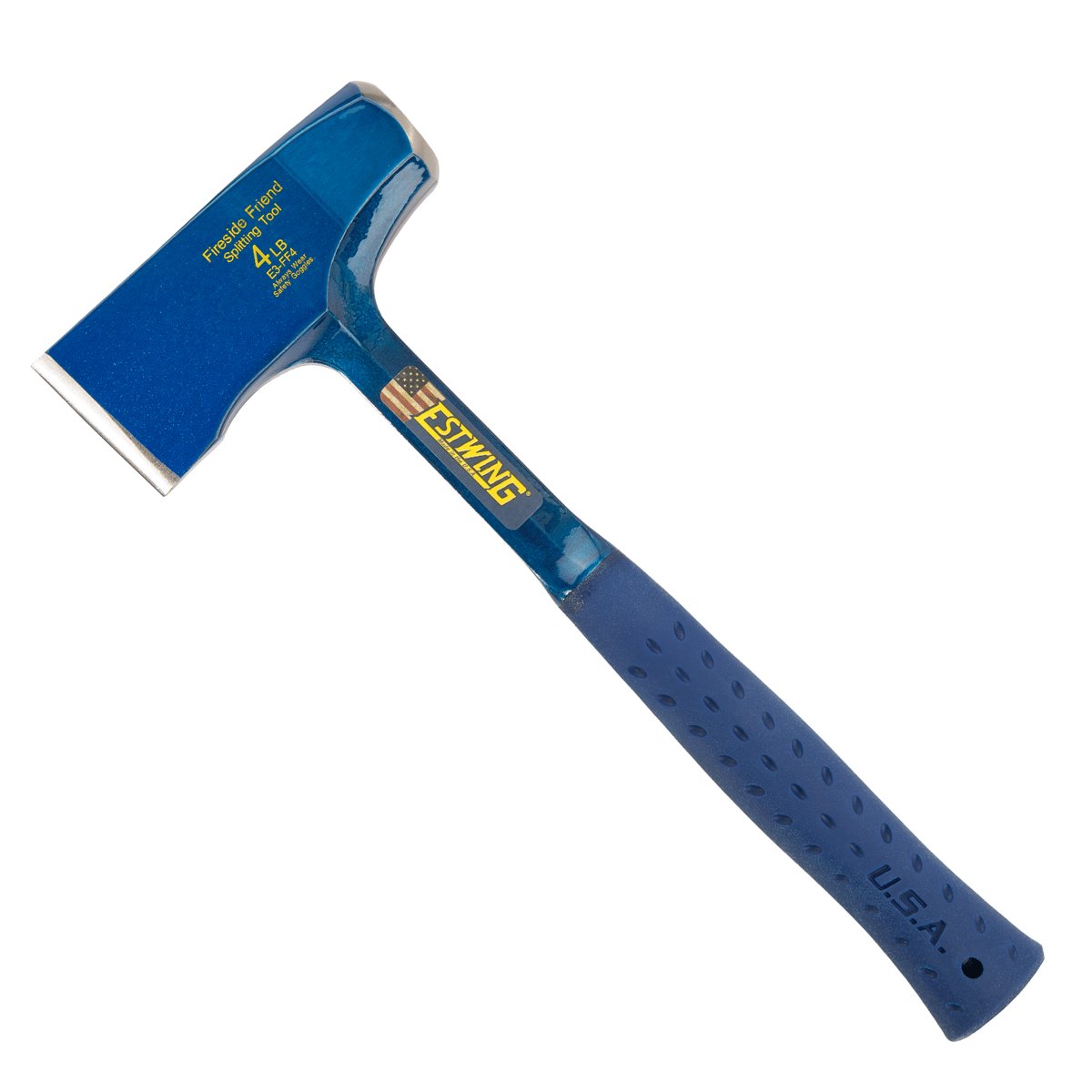
Estwing Fireside Friend E3-FF4
Model
E3-FF4
Overall length
14 in
Cutting edge
2.375 in
Construction
One-piece forged American steel
Included
Nylon sheath
A compact weighted splitting tool rather than a replacement for a full-size woodpile axe. Its one-piece steel construction and short format suit smaller firewood preparation.
The head and handle are forged in one piece from American steel. A blue Shock Reduction Grip covers the handle, and a nylon sheath protects the edge.
Splitting role
Estwing describes it as a weighted tool specifically for splitting. Its short length makes it a different proposition from the long two-handed axes in this list.
Trade-offs
The compact format limits leverage for large rounds. Treat it as a complementary small splitter rather than a universal firewood solution.
Who it is for
Choose it for preparing smaller splits near the fireplace or campsite. Buyers processing an entire heating supply should start with a full-size axe or maul.
As an Amazon Associate, Wild10 earns from qualifying purchases.
No ratings yet
Pick 10Research-based review
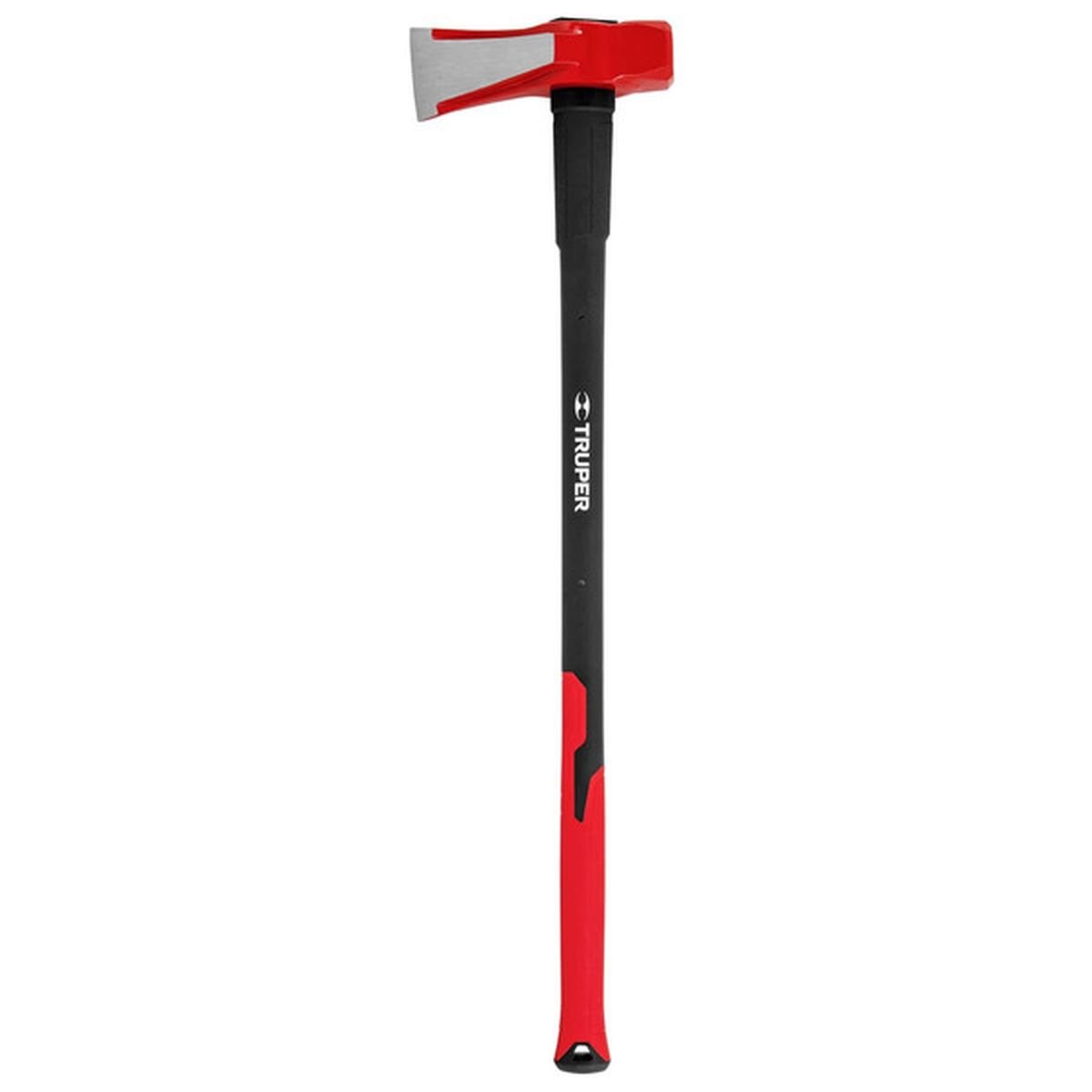
Truper 8-lb Steel Wood Splitter TJR-8SOF-K 34744
Model
TJR-8SOF-K 34744
Head weight
8 lb
Handle length
36 in
Handle
Fiberglass
Head
Forged, heat-treated steel
A straightforward eight-pound splitting tool with a fiberglass handle. The verified Lowe’s model is TJR-8SOF-K 34744, not the differently numbered Truper 30958.
Lowe’s lists a forged, heat-treated steel head with a polished, lacquered finish. The 36-inch handle is fiberglass.
Splitting role
An eight-pound head gives this the mass of a conventional heavy maul. That makes it a candidate for substantial firewood work rather than delicate kindling preparation.
Trade-offs
The retailer specifies that it does not have a cushioned grip. Do not confuse this model with the 30958 simply because both descriptions mention an eight-pound fiberglass-handled tool.
Who it is for
Choose it if you want a simple heavy splitter without paying for a modular system. Confirm the model number and current local stock before ordering.
As an Amazon Associate, Wild10 earns from qualifying purchases.
No ratings yet
How we picked
Ranked by Theo Hartigan, Bushcraft & Survival Editor
We started with a long list of splitting axes that people actually buy, cut anything that could not clear our baseline for durability and field performance, then ranked the 10 that were left against the same criteria. Rankings are editorial. No brand pays for placement, and affiliate links never move a pick up or down.
Edge geometry and steel
Grind, stock thickness, and how the steel behaves between sharpenings in real camp tasks.
Real-world durability
How the material, stitching, or steel holds up after a season of hard use — not how it looks new.
Performance in bad conditions
Wind, rain, cold, and grit are the test. Anything that only works on a nice day gets marked down.
Weight and packability
Every ounce has to earn its place in the pack, but not at the cost of something that fails in the field.
Ease of use
Setup, adjustment, and maintenance with cold hands, in the dark, without the manual.
Value at its price point
Compared against the closest competitors in the same tier, not against cheaper gear in a different class.
How often we recheck this: Reviewed on a rolling basis and rechecked at least once a year, or sooner if a pick is discontinued, revised, or beaten by something new.
Best splitting axes for a specific job
Skip the ranking — jump to the pick that matches how you actually use it.
Our editors test the gear, pick the ten, and set the order the day a list publishes. After that, the ranking is live: every member star rating feeds the community order, so picks climb or slide as real owners report back. Editorial judgment decides what earns a spot — you help decide where it sits.
Editors set the field
Hands-on testing and spec research choose the ten and the published order.
Readers re-rank it
Your 1–5 star ratings drive the community order on every list.
Rankings keep moving
Picks rise or fall over time — nothing is frozen at launch day.
Award picks
The ranking above is price-blind and judged on merit. These awards call out the pick we'd hand a specific person with a specific need.
The Fiskars X27 is our general-purpose starting point, while the IsoCore maul adds mass and a driving face for tougher work. Choose a shorter axe for preferred handling, and reserve the compact Estwing for smaller splits.
How to choose splitting axes
Every pick on this page was judged against the same criteria. If you want the short answer, Fiskars X27 Super Splitting Axe by Fiskars is the one we point most people at. If you want to decide for yourself, here is what actually separates a good splitting axe from an expensive one.
Edge geometry and steel
Grind, stock thickness, and how the steel behaves between sharpenings in real camp tasks.
Real-world durability
How the material, stitching, or steel holds up after a season of hard use — not how it looks new.
Performance in bad conditions
Wind, rain, cold, and grit are the test. Anything that only works on a nice day gets marked down.
Weight and packability
Every ounce has to earn its place in the pack, but not at the cost of something that fails in the field.
Ease of use
Setup, adjustment, and maintenance with cold hands, in the dark, without the manual.
Value at its price point
Compared against the closest competitors in the same tier, not against cheaper gear in a different class.
Match the pick to your use
The right splitting axes depends on what you are actually doing with it: Routine firewood splitting; Larger rounds; Stubborn firewood rounds; Driving splitting wedges; Traditional woodpile splitting; Medium and larger firewood. Start from the use case, then work down the ranking until you hit the first pick that covers it.
Common mistakes
Buying the lightest splitting axes you can find and discovering it cannot take a season of hard use.
Paying for a specialist feature you will use once a year instead of the versatile option.
Comparing headline specs across tiers instead of within the same class.
Skipping fit, sizing, or adjustment checks that decide whether you actually carry it.
Frequently asked questions
What is the best splitting axes?
Fiskars X27 Super Splitting Axe by Fiskars takes the top spot. Best overall
How did The Wild10 choose and rank these splitting axes?
We judged every pick against the same criteria — edge geometry and steel, real-world durability, performance in bad conditions, weight and packability — and ranked them on merit regardless of price. Ten splitting axes and mauls for everyday firewood, stubborn rounds and compact kindling work.
What is the best budget splitting axes?
Truper 8-lb Steel Wood Splitter TJR-8SOF-K 34744 by Truper — Best straightforward fiberglass maul
Fiskars X27 Super Splitting Axe vs Fiskars IsoCore Wood Splitting Maul, 8 lb, 36 in — which should I pick?
Fiskars X27 Super Splitting Axe ranks first: Best overall Fiskars IsoCore Wood Splitting Maul, 8 lb, 36 in is the close second: Best for stubborn rounds Our full head-to-head compares them side by side.
How often is this list updated?
We review this ranking on a rolling basis and update it whenever a pick is discontinued, meaningfully revised, or beaten by something new. Rankings are editorial — brands do not see them before publication and affiliate links never change the order.