


Reader rating
Rate it and you move it. Community ratings re-rank this product inside its Top 10 list.
Expert-picked, reader-ranked. Our editors choose the products and the launch order; member star ratings move picks up or down over time.
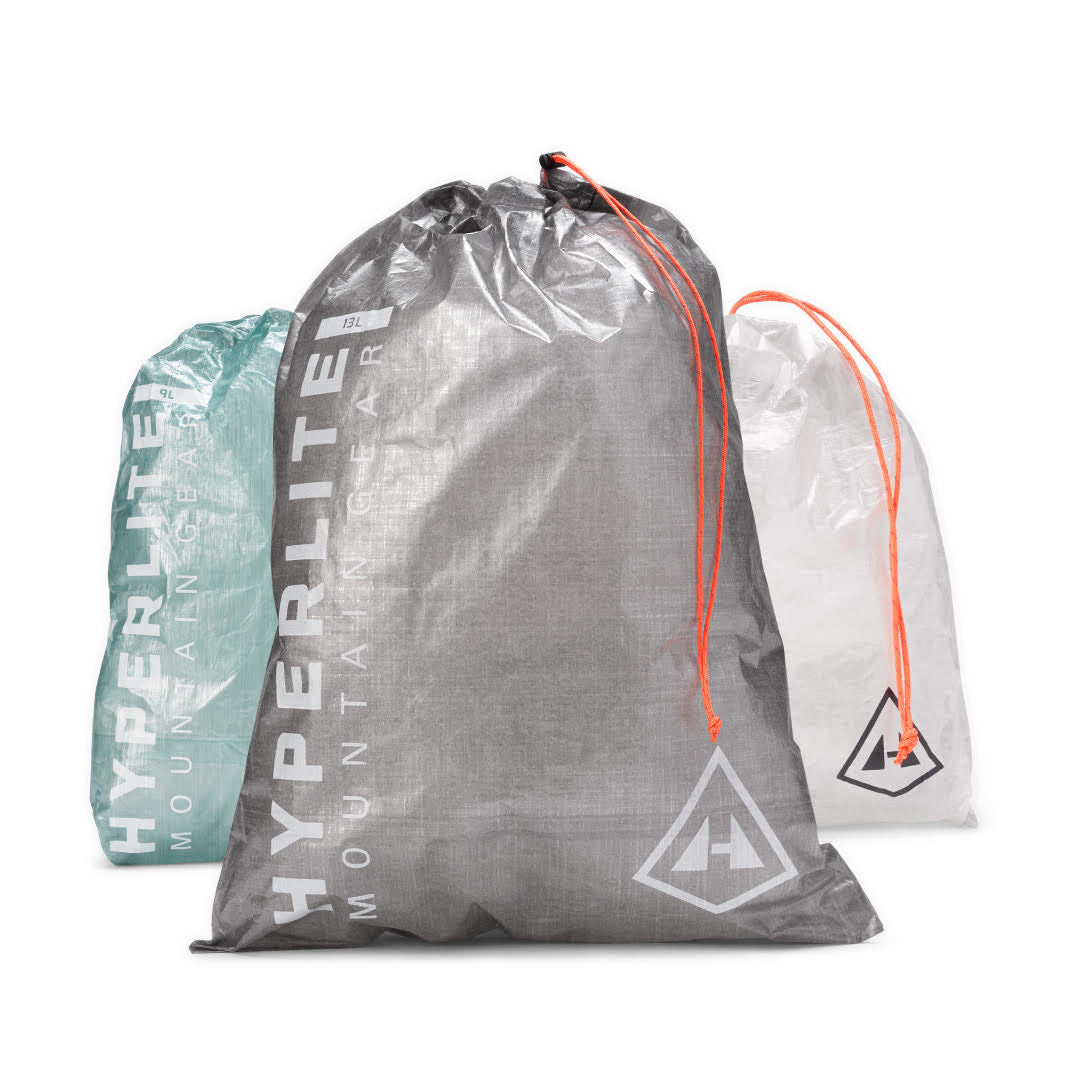
The Hyperlite Mountain Gear Drawstring sack is tailored for ultralight hikers who prioritize minimal base weight and durable organization over mechanical compression. Built from Dyneema Composite Fabric (DCF), it serves as a featherweight organizer for ditty gear, electronics, spare socks, or cook systems, offering near-weightless utility inside an already protected backpack. Unlike traditional nylon pouches that absorb water when wet, DCF is inherently hydrophobic and naturally resistant to stretching or tearing. Independent reviewers frequently commend its semi-translucent nature, which allows you to identify contents without having to untie the cord and dump out the interior. The simple micro-cord closure with a tiny cord lock operates smoothly with cold or gloved hands. Because the top opening uses a simple cinched drawstring, the opening does not create a watertight seal. It shields your items from dirt and light splashes inside a pack liner, but it will not protect sensitive gear if dropped into a creek or packed in a flooded compartment. For general trail organization where ounces matter, it represents one of the lightest dependable sacks on the market. **Highlights** - Built from high-strength Dyneema Composite Fabric - Extremely low tare weight (approximately 11 grams for a 4-liter sack) - Translucent fabric allows easy identification of internal items - Non-absorbent material stays dry and cleans easily - Wide variety of smaller capacities ranging from 0.3 to 13 liters **Watch-outs** - Drawstring closure is not waterproof or submersible - High cost per liter compared to standard nylon utility pouches
Pros
- Extremely lightweight at roughly 11 grams for a 4-liter capacity
- Translucent Dyneema fabric makes identifying packed gear effortless
- Inherently hydrophobic fabric will not absorb water or gain weight
- High tensile strength resists blowing out under heavy internal strain
Cons
- Drawstring closure will not prevent water entry if dropped or submerged
- Significantly more expensive than traditional nylon utility sacks
- Can develop small pinholes over time if packed against sharp metal tools
Best uses
- Ultralight backpacking organization
- Ditty bag storage
- Cook kit consolidation
- Spare clothing organization
Specifications
- Primary Material
- Dyneema Composite Fabric (DCF)
- Weight (4 L)
- 11 g (0.39 oz)
- Volume Range
- 0.3 L to 13 L
- Closure Style
- Micro-drawstring with mini cord lock
- Water Resistance
- Water-resistant fabric (unsealed top)
- MSRP
- Around $31
Pricing
We don't publish a price we haven't verified. The retailer links below open the live listing for this exact model.
Full catalog listing & offersBest for
Ultralight backpacking organization, Ditty bag storage, Cook kit consolidation, Spare clothing organization
Where to buy the Drawstring
We don't have a direct Amazon listing on file yet — this opens an Amazon search for the exact make and model.
Some links are affiliate links. Buying through them supports our testing at no extra cost to you.
The Hyperlite Mountain Gear Drawstring Stuff Sack is engineered specifically for ultralight backpackers and thru-hikers who want to organize their kit without adding dead weight. Built around high-performance Dyneema Composite Fabric, this minimalist pouch strips away heavy coatings, unnecessary seams, and cumbersome hardware. It exists to solve a single logistical problem: keeping smaller camp necessities, clothing, and cook kits tidy inside an existing backpack system. Earning widespread praise across independent gear publications, including top honors from CleverHiker, the design emphasizes practical trail efficiency over gimmicks. At roughly 11 grams for the 4-liter size, the sack is virtually weightless in hand. Unlike standard nylon sacks that absorb moisture when damp, the non-porous laminate sheds liquid effortlessly and dries off with a simple shake. Because it employs a streamlined drawstring rather than a rolling buckle closure, it trades full submersion protection for faster access and minimal packed volume. It commands a premium price of around $31, which is noticeably steep for a simple storage pouch. However, for backcountry travelers seeking maximum weight efficiency, durability, and translucent visibility, it remains one of the finest organization tools on the market.
Target Audience and Intended Use
This sack caters directly to weight-conscious hikers, fastpackers, and long-distance backpackers who already employ a primary pack liner or waterproof backpack. It is not built for paddle sports or open-boat expeditions where gear might float downriver. Instead, it is aimed at the hiker who desires modular organization without the cumulative weight penalty of multiple nylon bags. Hikers managing ditty gear, medical kits, charging banks, or loose insulating layers will appreciate how little space the collapsed sack occupies. If your packing philosophy relies on dense mechanical compression via heavy straps, this sack is not the answer. It is made for loose packing methods where clothing or gear conforms naturally to the negative space within a pack body, optimizing interior volume while keeping essentials grouped systematically.
Materials and Construction
The standout element of this sack is its Dyneema Composite Fabric construction. The material integrates ultra-high-molecular-weight polyethylene filaments laminated between thin polyester films, yielding exceptional tensile strength and virtually zero water absorption. Unlike woven nylon or polyester fabrics, this laminate will not stretch under tension or hold onto ambient moisture when exposed to condensation. The seams are bonded and taped to maximize strength and resist unraveling under strain. At the top opening, Hyperlite integrates an ultralight micro-cord running through a clean fabric channel, secured with a miniature, low-profile cord lock. The closure hardware is deliberately scaled down to shave grams, yet remains large enough to pinch and release with cold fingers. The overall build reflects a clean, stripped-down industrial design.
Real-World Usability
In daily trail use, the semi-translucent nature of Dyneema proves to be one of its most practical advantages. You can easily identify contents—distinguishing a headlamp from a charging cable or wool socks from thermal bottoms—without pulling the cinch cord and dumping the entire contents onto the dirt. The slick surface finish of the fabric makes it effortless to slide into and out of tightly packed backpacks, minimizing friction against pack walls or other gear. The drawstring slides freely through its collar without snagging, allowing rapid one-handed cinching. Because the laminate does not breathe, it can hold some trapped air if cinched down rapidly, but gentle pressure easily expels excess volume through the unsealed top opening before you finalize your packing sequence.
Durability and Fabric Quirks
Dyneema possesses phenomenal tensile strength, meaning it is almost impossible to burst the seams or rip the fabric through sheer pulling force. However, like all composite laminates, it has distinct behavioral traits. With repeated folding and packing, the fabric softens, taking on a crinkled, paper-like texture. While this does not compromise the structural integrity of the fibers, the material is more susceptible to localized puncture or abrasion from sharp, hard corners than heavy Cordura nylon. Storing stoves, sharp tent stakes, or uncapped tent poles inside the sack without protective padding can eventually wear small pinholes into the laminate over hundreds of miles. For clothing, food, and rounded gear, the sack will outlast multiple seasons of aggressive trail abuse.
Sizing and Selection Guidelines
Hyperlite manufactures this sack across an expansive size range, spanning from 0.3 liters up to 13 liters. Choosing the correct capacity depends strictly on the role it plays in your pack system. The sub-liter and 1-liter options excel as ditty bags for pocket knives, repair patches, and personal hygiene kits. The 2-liter to 4-liter models serve as the sweet spot for solo cook kits, headlamps, charging banks, and warm-weather midlayers. For larger insulation pieces like down jackets or compact sleeping quilts, the 9-liter and 13-liter options provide ample room to corral loft without forcing excessive compression. Because the drawstring collar gathers tightly at the top, opting for a slightly larger capacity than your gear strictly requires makes packing and closure significantly easier.
Competing Market Alternatives
At roughly $31, the Hyperlite Drawstring commands a significant price premium over standard nylon alternatives like the Sea to Summit Ultra-Sil stuff sack. The Sea to Summit option costs considerably less and uses slippery siliconized Cordura nylon that provides solid water resistance and durability. However, silnylon absorbs moisture over time and stretches under strain. On the ultralight end, Zpacks offers comparable composite cinch sacks at a similar price and weight profile, often differing only in minor details like cord hardware or seam tape width. If raw budget is your deciding factor, budget silnylon pouches deliver far more volume per dollar. But for those dedicated to composite fabrics and domestic manufacturing standards, Hyperlite’s execution justifies the expense.
Clear Trade-offs and Limitations
The primary trade-off with this design is its deliberate lack of a waterproof seal. While the Dyneema fabric itself is completely impervious to water penetration, the cinched drawstring closure leaves a gathered hole at the top. If dropped into a stream or subjected to sustained heavy rain without an external pack cover or liner, water will run directly into the opening. Furthermore, the lack of compression webbing means you cannot mechanically squish bulky sleeping bags into miniature bricks. Finally, the price per liter is exceptionally steep; spending over thirty dollars for a four-liter pouch requires a firm commitment to ultralight philosophy. It is an uncompromising piece of gear meant for a specific packing methodology, not a catch-all dry bag.
How we picked
We started with a long list of stuff sacks that people actually buy, cut anything that could not clear our baseline for durability and field performance, then ranked the 10 that were left against the same criteria. Rankings are editorial. No brand pays for placement, and affiliate links never move a pick up or down.
- Real-world durability
- How the material, stitching, or steel holds up after a season of hard use — not how it looks new.
- Performance in bad conditions
- Wind, rain, cold, and grit are the test. Anything that only works on a nice day gets marked down.
- Weight and packability
- Every ounce has to earn its place in the pack, but not at the cost of something that fails in the field.
- Ease of use
- Setup, adjustment, and maintenance with cold hands, in the dark, without the manual.
- Value at its price point
- Compared against the closest competitors in the same tier, not against cheaper gear in a different class.
- Repairability and support
- Field-fixable design, available parts, and a warranty the maker actually honors.
Drawstring — frequently asked questions
- Is the Drawstring worth it?
- We rank it #2 in Stuff Sacks. The Hyperlite Mountain Gear Drawstring sack is tailored for ultralight hikers who prioritize minimal base weight and durable organization over mechanical compression. Built from Dyneema Composite Fabric (DCF), it serves as a featherweight organizer for ditty gear, electronics, spare socks, or cook systems, offering…
- What is the Drawstring best for?
- Best for ultralight backpacking organization, ditty bag storage, cook kit consolidation and spare clothing organization. Standouts: extremely lightweight at roughly 11 grams for a 4-liter capacity and translucent dyneema fabric makes identifying packed gear effortless.
- What are the downsides of the Drawstring?
- Drawstring closure will not prevent water entry if dropped or submerged, Significantly more expensive than traditional nylon utility sacks and Can develop small pinholes over time if packed against sharp metal tools.
- What are the key specs of the Drawstring?
- Primary Material: Dyneema Composite Fabric (DCF) · Weight (4 L): 11 g (0.39 oz) · Volume Range: 0.3 L to 13 L · Closure Style: Micro-drawstring with mini cord lock · Water Resistance: Water-resistant fabric (unsealed top)
- Target Audience and Intended Use — what should I know about the Drawstring?
- This sack caters directly to weight-conscious hikers, fastpackers, and long-distance backpackers who already employ a primary pack liner or waterproof backpack. It is not built for paddle sports or open-boat expeditions where gear might float downriver.
- Materials and Construction — what should I know about the Drawstring?
- The standout element of this sack is its Dyneema Composite Fabric construction. The material integrates ultra-high-molecular-weight polyethylene filaments laminated between thin polyester films, yielding exceptional tensile strength and virtually zero water absorption.
Compare side by side
Put the Drawstring against any other pick on this list — specs, price, pros, cons and reader ratings.