


Reader rating
Rate it and you move it. Community ratings re-rank this product inside its Top 10 list.
Expert-picked, reader-ranked. Our editors choose the products and the launch order; member star ratings move picks up or down over time.
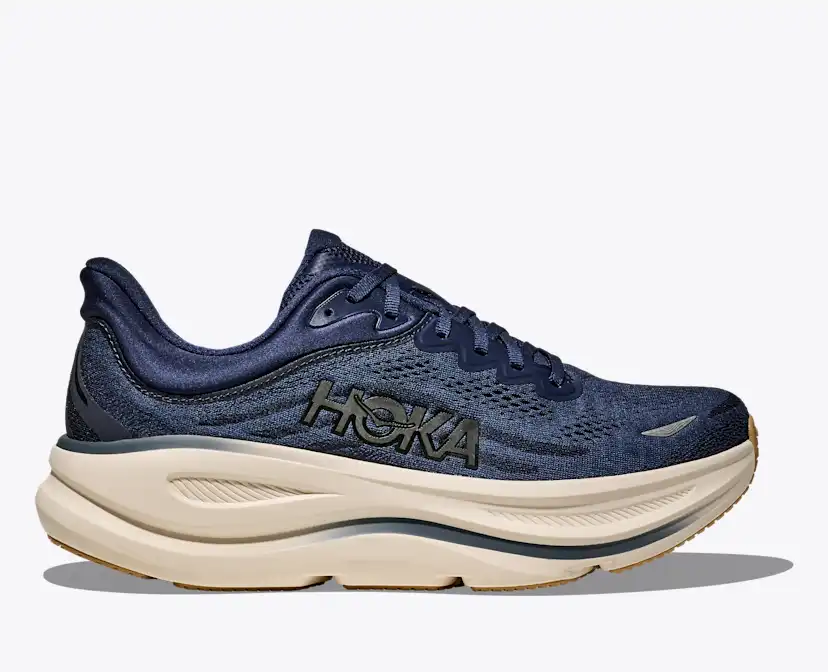
The Hoka Speedgoat 6 continues its reign as the gold standard for long-haul trail runners and fastpackers who prioritize underfoot protection without wanting a clunky shoe. Hoka refined the upper with a lighter, more resilient woven textile that breathes noticeably better than previous iterations while eliminating midfoot bagging. Underneath, the dual-density compression-molded EVA provides a slightly firmer, more responsive rebound than the squishy feel of the Speedgoat 5, preventing that dead-legged feeling forty miles into an ultramarathon. Traction remains elite courtesy of the Vibram Megagrip outsole with stepped Traction Lugs. Whether clawing up loose granite scree or bombing wet switchbacks, the bite is predictable and secure. The shoe lacks a traditional rigid rock plate, relying instead on its generous stack of dense foam to mute sharp edges and root impacts. Fit remains the classic Hoka silhouette: dialed and snug through the midfoot and heel, but decidedly tapered in the toe box. Runners with wide forefeet will definitely want the wide sizing option. It is a workhorse engineered for grinding out 20- to 100-mile efforts where fatigue resistance matters more than nimble ground feel. **Highlights** - Vibram Megagrip outsole with micro-textured Traction Lugs - Breathable, high-tenacity woven textile upper - Substantial midsole cushion absorbs sharp rock impact - Balanced late-stage Meta-Rocker promotes smooth turnover - Gusseted tongue prevents trail debris from entering **Watch-outs** - Tapered toe box can feel constricting on wider feet - High stack height reduces agility and trail feel on off-camber rock - Slightly firmer ride out of the box than the Speedgoat 5
Pros
- Vibram Megagrip outsole with Traction Lugs delivers class-leading wet and dry grip
- Dense, maximal EVA cushion absorbs brutal rock impacts without requiring a plate
- Woven upper eliminates internal foot shifting and resists abrasive trail wear
- Late-stage Meta-Rocker facilitates efficient turnover over rolling terrain
Cons
- Tapered toe box constricts wide feet unless you opt for wide sizing
- High stack height compromises stability on technical, off-camber trails
- Firm out-of-the-box ride requires a short break-in period compared to v5
Best uses
- Ultramarathon racing and training
- High-mileage alpine fastpacking
- Rugged mountain day hiking
- Loose scree and wet granite
Specifications
- Heel-to-Toe Drop
- 4 mm
- Lug Depth
- 5 mm
- Outsole Rubber
- Vibram Megagrip with Traction Lug
- Midsole Foam
- Compression-molded EVA
- Rock Plate
- None (relies on midsole stack)
- Upper Material
- Breathable woven textile
Pricing
We don't publish a price we haven't verified. The retailer links below open the live listing for this exact model.
Full catalog listing & offersBest for
Ultramarathon racing and training, High-mileage alpine fastpacking, Rugged mountain day hiking, Loose scree and wet granite
Where to buy the Speedgoat 6
We don't have a direct Amazon listing on file yet — this opens an Amazon search for the exact make and model.
Some links are affiliate links. Buying through them supports our testing at no extra cost to you.
The Hoka Speedgoat has earned its reputation as the benchmark for maximal-cushion mountain running, and the Speedgoat 6 preserves that status by addressing the chief flaw of its predecessor: a sloppy, stretch-prone upper. Hoka swapped the loose engineered mesh for a dense, woven textile that locks the midfoot securely against the footbed. Paired with a re-tuned compression-molded EVA midsole that trades squish for resilience, this iteration feels more stable and responsive when traversing technical terrain. Underneath, the platform retains what made the franchise dominant. The Vibram Megagrip outsole with stepped Traction Lugs bites relentlessly into loose scree, wet granite, and slick mud. Because Hoka relies on a high volume of dense foam rather than a stiff plastic rock plate, you get continuous deflection against sharp underfoot hazards without losing the rolling turnover provided by the late-stage rocker geometry. This shoe is built for long-distance trail runners, ultramarathoners, and fastpackers who demand maximum impact mitigation over 20- to 100-mile efforts. It is not an agile fell-running shoe or a nimble ground-feel racer. If you prioritize joint preservation across long descents and need dependable grip in remote backcountry, the Speedgoat 6 remains the undisputed front-runner.
Traction and Outsole Grip
The Speedgoat 6 relies on Vibram Megagrip rubber arranged in five-millimeter stepped Traction Lugs, and the compound remains the industry gold standard. The micro-textures molded along the edges of each lug increase surface contact area, providing reliable purchase on greasy roots, river-slick granite, and loose shale. Mud sheds efficiently from the midfoot thanks to strategic spacing between the chevron patterns, preventing the heavy, slick clumping that plagues tighter tread designs. Downhill braking traction is especially confidence-inspiring on loose gravel descents, where the heel lugs bite deeply and consistently. The exposed foam cutouts in the central outsole save weight without exposing high-wear zones to premature abrasion. For mixed alpine terrain that transitions between dry hardpack, mud, and exposed slab, few outsoles match this level of predictable, all-weather bite.
Cushioning and Underfoot Protection
Rather than incorporating a rigid rock plate, Hoka protects the foot through sheer volume of compression-molded EVA. Sharp rocks, jagged roots, and angular scree sink harmlessly into the thick platform rather than bruising your metatarsals. In version 6, the foam compound is noticeably firmer and denser than the pillowy compound found on the Speedgoat 5. This adjustment is an objective improvement over marathon distances: it eliminates the bottoming-out sensation on steep descents and preserves energy return late in a run. The late-stage Meta-Rocker facilitates quick transitions from heel-strike to toe-off, helping you maintain a consistent cadence on moderate gradients. The trade-off is proprioception. You do not feel the trail beneath you, which requires trusting the shoe to absorb the terrain rather than carefully finessing foot placement.
Upper Architecture and Breathability
The biggest update to the platform is its high-tenacity woven textile upper. Previous models suffered from midfoot bagging when wet, allowing the foot to slide internally across off-camber slopes. The new woven shell has virtually zero mechanical stretch, providing a rigid sidewall containment that keeps the foot planted squarely over the midsole. Breathability is surprisingly solid; moisture vents efficiently through the vamp, and the fabric dries much faster than heavily padded engineered meshes after creek crossings. A thin, partially gusseted tongue sits flush against the instep to prevent scree and trail grit from migrating inside the collar. Lacing pressure is distributed evenly, eliminating bite across the top of the foot. It feels lean, stripped-down, and much more durable against abrasive brush and granite scrapes.
Fit, Sizing, and Foot Shape
Fit follows the traditional Hoka mountain contour: locked-in at the heel, snug through the midfoot, and distinctly tapered in the forefoot. Runners with narrow-to-medium feet will find the lockdown exceptional, as the internal heel counter and non-stretch upper eradicate heel slip on steep climbs. However, the tapered toe box does not accommodate significant natural toe splay, nor does it allow much room for foot swelling over ultra-distance efforts. If you have a wide forefoot, broad toes, or a history of pinky-toe blisters from tight uppers, you must purchase the wide version. Length runs true to size with a standard running sock, but sizing up a half size is a smart move if you routinely run steep, sustained mountain descents to keep your toenails intact.
Durability and Wear Testing
Maximum-cushion shoes often fail when soft foams pack out or delicate mesh uppers split along the flex points. The Speedgoat 6 addresses both failure points. The woven upper shows minimal signs of fraying even after repeated contact with jagged rock fields, and the TPU overlays at the toe bumper effectively shield the textile from direct punctures. The Vibram Megagrip compound holds up well on dirt and rock, typically delivering 350 to 450 miles before the lugs wear smooth, though extended pavement sections will grind the rubber down quickly. Because the midsole foam is slightly firmer than its predecessor, it resists premature compression set and keeps its protective properties for substantially more miles than softer, hyper-plush alternatives on the market.
The Competitive Landscape
At this price and performance tier, the Speedgoat 6 competes directly with the Saucony Xodus Ultra 3 and the Brooks Cascadia 18. The Cascadia offers a traditional rock plate and superior torsional rigidity, making it more stable on extreme off-camber routes, but it is noticeably heavier and lacks the Speedgoat's plush impact absorption. The Saucony Xodus Ultra 3 features a roomier toe box and a bouncier PEBA-blend core, but its proprietary rubber outsole slips noticeably on wet rock where Hoka's Vibram Megagrip bites. Altra's Olympus 5 matches the thick stack height and Vibram grip, but its zero-drop platform and cavernous toe box appeal to an entirely different biomechanical profile. For pure high-mileage mountain protection with elite grip, the Speedgoat remains the most balanced package.
How we picked
We started with a long list of trail running shoes that people actually buy, cut anything that could not clear our baseline for durability and field performance, then ranked the 10 that were left against the same criteria. Rankings are editorial. No brand pays for placement, and affiliate links never move a pick up or down.
- Fabric behavior over time
- Breathability, DWR life, loft retention, and how the piece performs after repeated washing.
- Real-world durability
- How the material, stitching, or steel holds up after a season of hard use — not how it looks new.
- Performance in bad conditions
- Wind, rain, cold, and grit are the test. Anything that only works on a nice day gets marked down.
- Weight and packability
- Every ounce has to earn its place in the pack, but not at the cost of something that fails in the field.
- Ease of use
- Setup, adjustment, and maintenance with cold hands, in the dark, without the manual.
- Value at its price point
- Compared against the closest competitors in the same tier, not against cheaper gear in a different class.
Speedgoat 6 — frequently asked questions
- Is the Speedgoat 6 worth it?
- We rank it #1 in Trail Running Shoes. The Hoka Speedgoat 6 continues its reign as the gold standard for long-haul trail runners and fastpackers who prioritize underfoot protection without wanting a clunky shoe. Hoka refined the upper with a lighter, more resilient woven textile that breathes noticeably better than previous iterations while eliminating…
- What is the Speedgoat 6 best for?
- Best for ultramarathon racing and training, high-mileage alpine fastpacking, rugged mountain day hiking and loose scree and wet granite. Standouts: vibram megagrip outsole with traction lugs delivers class-leading wet and dry grip and dense, maximal eva cushion absorbs brutal rock impacts without requiring a plate.
- What are the downsides of the Speedgoat 6?
- Tapered toe box constricts wide feet unless you opt for wide sizing, High stack height compromises stability on technical, off-camber trails and Firm out-of-the-box ride requires a short break-in period compared to v5.
- What are the key specs of the Speedgoat 6?
- Heel-to-Toe Drop: 4 mm · Lug Depth: 5 mm · Outsole Rubber: Vibram Megagrip with Traction Lug · Midsole Foam: Compression-molded EVA · Rock Plate: None (relies on midsole stack)
- Traction and Outsole Grip — what should I know about the Speedgoat 6?
- The Speedgoat 6 relies on Vibram Megagrip rubber arranged in five-millimeter stepped Traction Lugs, and the compound remains the industry gold standard. The micro-textures molded along the edges of each lug increase surface contact area, providing reliable purchase on greasy roots, river-slick granite, and loose…
- Cushioning and Underfoot Protection — what should I know about the Speedgoat 6?
- Rather than incorporating a rigid rock plate, Hoka protects the foot through sheer volume of compression-molded EVA. Sharp rocks, jagged roots, and angular scree sink harmlessly into the thick platform rather than bruising your metatarsals.
Compare side by side
Put the Speedgoat 6 against any other pick on this list — specs, price, pros, cons and reader ratings.