


Reader rating
Rate it and you move it. Community ratings re-rank this product inside its Top 10 list.
Expert-picked, reader-ranked. Our editors choose the products and the launch order; member star ratings move picks up or down over time.
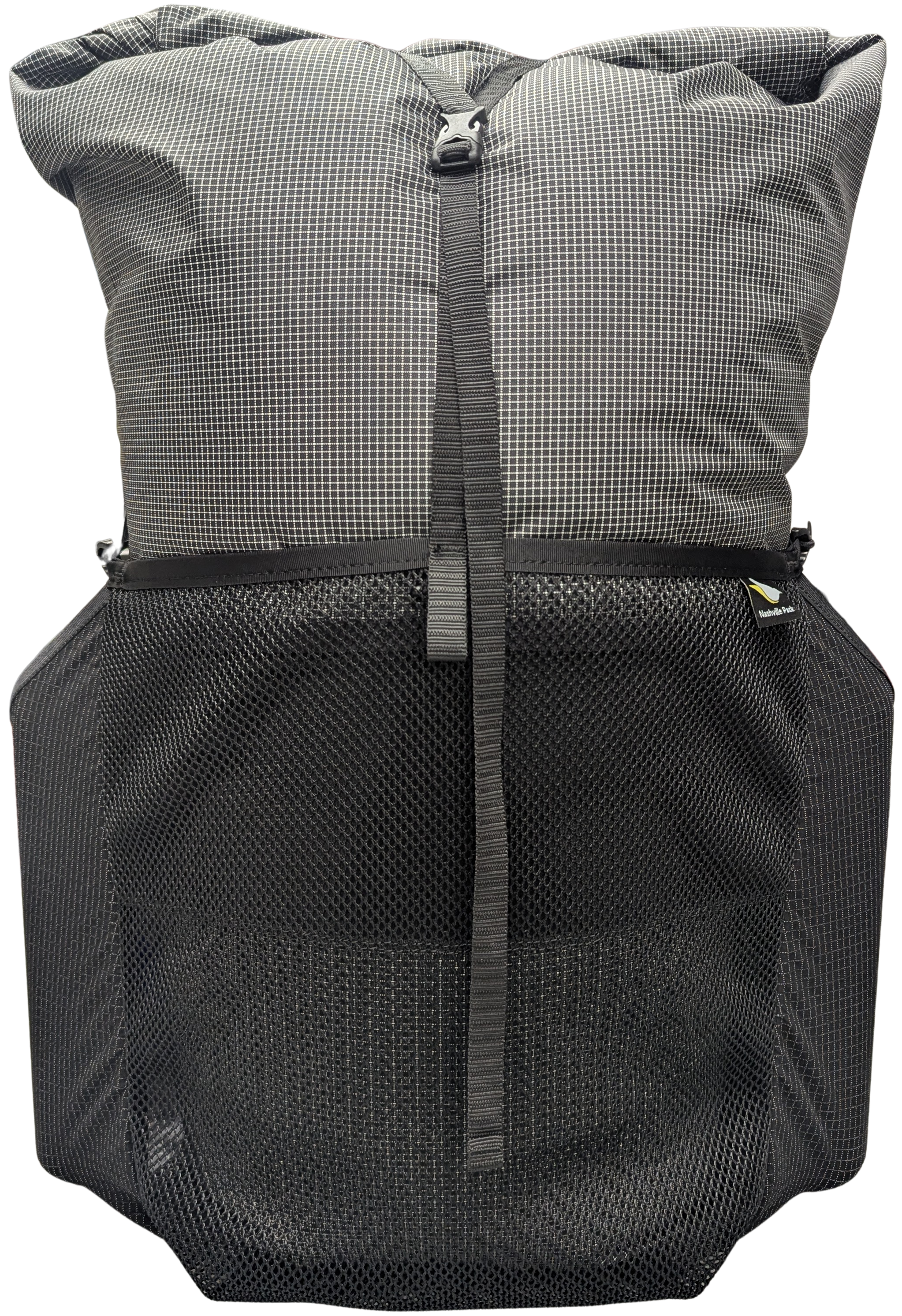
The Nashville Pack The Cutaway 40 is built for fastpackers, endurance hikers, and ultra-minimalists who prioritize movement speed and quick access above all else. It is purpose-built for hikers whose base weights sit well under 10 pounds and who want a pack that behaves like a running vest. By discarding the conventional rigid frame and traditional hipbelt, The Cutaway utilizes a wide, vest-style harness that secures the load across your chest and ribs. This system eliminates pack bounce while running flats or descending steep technical trails. The vest straps are equipped with layered pockets, putting food, soft flasks, navigation devices, and headlamps directly on your chest. An open bottom pocket lets you grab snacks and trash on the go without breaking your stride. Because this is an entirely frameless pack, your upper body carries the full weight. If your gear and food push total pack weight past roughly 20 to 22 pounds, your shoulders will feel significant strain. It also demands careful, disciplined packing; hard or sharp items packed poorly against the back panel will press directly into your spine. **Highlights** - Running vest harness system eliminates bounce and stabilizes dynamic movement. - Multiple harness pockets keep water, nutrition, and gear instantly accessible. - Ultralight frameless design weighs barely over one pound. - Functional bottom pocket allows fast on-trail storage without taking the pack off. - Highly customizable torso and harness sizing accommodates diverse runners. **Watch-outs** - Lacks a rigid frame, transferring all weight directly to the shoulders and torso. - Discomfort increases rapidly with total pack loads over 20 pounds. - Requires careful packing technique to prevent gear from poking your back.
Pros
- Vest-style harness eliminates pack bounce during dynamic trail running
- Generous chest and bottom pockets allow non-stop access to gear and food
- Extremely light carrying profile weighing just over one pound
- Customizable harness-to-torso attachment ensures a secure, tailored fit
Cons
- Carrying comfort drops significantly with total weights exceeding 20 pounds
- Lack of back padding requires rigid, meticulous packing discipline
- Premium price point for a specialized, frameless carrying system
Best uses
- Fastpacking and endurance hiking
- Sub-10-pound thru-hiking
- Fastest Known Time attempts
- Minimalist warm-weather backpacking
Specifications
- Base Weight
- 1 lb 0.5 oz (18-inch torso)
- Capacity
- 39 to 47 L (torso dependent)
- Suspension Type
- Frameless vest harness
- Load Capacity
- Optimal under 20–22 lbs
- Closure Style
- Roll-top with side compression
- Typical Price
- Around $335
Pricing
We don't publish a price we haven't verified. The retailer links below open the live listing for this exact model.
Full catalog listing & offersBest for
Fastpacking and endurance hiking, Sub-10-pound thru-hiking, Fastest Known Time attempts, Minimalist warm-weather backpacking
Where to buy the The Cutaway 40
We don't have a direct Amazon listing on file yet — this opens an Amazon search for the exact make and model.
Some links are affiliate links. Buying through them supports our testing at no extra cost to you.
The Nashville Pack The Cutaway 40 occupies a distinct niche in the ultralight landscape, built specifically for fastpackers and endurance hikers who treat backpacking as a dynamic, continuous push. Rather than relying on standard backpack geometry, the Cutaway borrows the wide, torso-hugging suspension of an ultra-running hydration vest and attaches it to a minimalist roll-top pack body. This structural choice targets hikers whose base weights routinely sit well below the ten-pound mark and who move fast enough that pack bounce becomes a primary concern. Produced by a boutique manufacturer, the Cutaway is engineered around movement efficiency. The vest-style harness and the accessible bottom pocket allow hikers to access calories, water, electronics, and small layers without ever breaking stride or unbuckling. It shifts storage forward onto the chest, balancing the center of gravity while keeping high-turnover items immediately at hand. That dynamic stability comes with direct operational limitations. The Cutaway is an entirely frameless pack that completely omits a rigid structure and traditional padded hipbelt. All pack weight rests across the shoulders, upper back, and ribcage. When total load weights creep beyond roughly twenty pounds, the harness system begins to strain the upper body, making meticulous gear selection essential.
Target Audience and Intent
The Cutaway 40 is explicitly built for hikers operating with stripped-down, sub-ten-pound base kits who maintain an aggressive pace over long distances. It appeals to fastpackers who alternate between trail running and power hiking, as well as experienced thru-hikers who find traditional backpacking suspensions unnecessarily cumbersome. If your itinerary involves lingering at camp, carrying heavy luxury items, or hauling five days of food between mountain resupplies, this pack will quickly frustrate you. However, for athletes who prioritize rapid movement, low pack inertia, and zero stopping time during twelve-hour trail days, the Cutaway solves specific mechanical issues that standard ultralight bags cannot address.
Harness Architecture and Access
The core of the Cutaway design is its wide, dual-strap vest harness. Unlike narrow shoulder straps that focus pressure onto the clavicles, these broad straps distribute weight across the pectoral muscles and ribcage. Layered pockets run down both straps, accommodating 500-milliliter soft flasks, smartphone navigation devices, trail snacks, and sun protection. Below the pack body sits an accessible bottom stretch pocket, allowing you to discard trash or grab nutrition while moving at full speed. This layout reduces the need to halt your gait to retrieve gear, aligning perfectly with endurance routines.
Real-World Load Limits
Because the Cutaway lacks both an internal frame and an effective load-transferring hipbelt, the carrier's upper torso absorbs the entire weight of the payload. In field conditions, performance is exemplary with total pack weights under sixteen to eighteen pounds. At this threshold, the pack moves as a direct extension of the body with virtually no vertical oscillation. Once food and water pushes total pack weight past twenty to twenty-two pounds, the absence of lower-body load transfer becomes obvious. Trapezius fatigue accelerates quickly, making disciplined water management and compact gear essential.
Materials and Structural Durability
Constructed with durable woven technical fabrics common to high-end cottage manufacturers, the pack body resists abrasion from brush, rock friction, and repetitive trail stress. High-wear zones, including the lower pocket and side water bottle sleeves, utilize resilient stretch-mesh materials designed to retain elasticity over hundreds of miles. Stress points on the harness attachment points and roll-top closures feature reinforced bar-tack stitching to prevent failure under dynamic tension. While the fabrics are built to survive abrasive environments, the pack requires respectful handling around sharp internal items that lack a back panel buffer.
Fit Nuances and Packing Discipline
Fitting the Cutaway requires careful coordination between torso length and harness sizing. The harness system attaches via adjustable webbing ladders, enabling users to fine-tune where the vest wraps along the ribs and chest. Because there is no internal foam sheet or plastic frame against your back, the pack demands precise interior organization. Soft items like an ultralight quilt or clothing must be packed along the rear wall to form an artificial back panel. Stiff cook pots, bear canisters, or tent stakes positioned poorly will immediately press against your spine.
Market Alternatives and Trade-Offs
Priced around $335, the Cutaway sits in the premium tier of ultralight gear. It competes directly with specialized fastpacks like the Pa'lante Joey and minimalist frameless rucksacks from Mountain Laurel Designs. The Joey shares the running vest DNA, but the Cutaway provides greater overall capacity, making it more practical for multi-day stretches between resupplies. Traditional frameless options offer slightly simpler packing geometry, but they bounce significantly during active running. The Cutaway's higher cost buys specialized suspension engineering that excels only if you actually run or speed-hike your routes.
How we picked
We started with a long list of ultralight packs that people actually buy, cut anything that could not clear our baseline for durability and field performance, then ranked the 10 that were left against the same criteria. Rankings are editorial. No brand pays for placement, and affiliate links never move a pick up or down.
- Load carriage
- How the suspension handles the loads the pack is actually rated for, over long days.
- Real-world durability
- How the material, stitching, or steel holds up after a season of hard use — not how it looks new.
- Performance in bad conditions
- Wind, rain, cold, and grit are the test. Anything that only works on a nice day gets marked down.
- Weight and packability
- Every ounce has to earn its place in the pack, but not at the cost of something that fails in the field.
- Ease of use
- Setup, adjustment, and maintenance with cold hands, in the dark, without the manual.
- Value at its price point
- Compared against the closest competitors in the same tier, not against cheaper gear in a different class.
The Cutaway 40 — frequently asked questions
- Is the The Cutaway 40 worth it?
- We rank it #7 in Ultralight Packs. The Nashville Pack The Cutaway 40 is built for fastpackers, endurance hikers, and ultra-minimalists who prioritize movement speed and quick access above all else. It is purpose-built for hikers whose base weights sit well under 10 pounds and who want a pack that behaves like a running vest.
- What is the The Cutaway 40 best for?
- Best for fastpacking and endurance hiking, sub-10-pound thru-hiking, fastest known time attempts and minimalist warm-weather backpacking. Standouts: vest-style harness eliminates pack bounce during dynamic trail running and generous chest and bottom pockets allow non-stop access to gear and food.
- What are the downsides of the The Cutaway 40?
- Carrying comfort drops significantly with total weights exceeding 20 pounds, Lack of back padding requires rigid, meticulous packing discipline and Premium price point for a specialized, frameless carrying system.
- What are the key specs of the The Cutaway 40?
- Base Weight: 1 lb 0.5 oz (18-inch torso) · Capacity: 39 to 47 L (torso dependent) · Suspension Type: Frameless vest harness · Load Capacity: Optimal under 20–22 lbs · Closure Style: Roll-top with side compression
- Target Audience and Intent — what should I know about the The Cutaway 40?
- The Cutaway 40 is explicitly built for hikers operating with stripped-down, sub-ten-pound base kits who maintain an aggressive pace over long distances. It appeals to fastpackers who alternate between trail running and power hiking, as well as experienced thru-hikers who find traditional backpacking suspensions…
- Harness Architecture and Access — what should I know about the The Cutaway 40?
- The core of the Cutaway design is its wide, dual-strap vest harness. Unlike narrow shoulder straps that focus pressure onto the clavicles, these broad straps distribute weight across the pectoral muscles and ribcage.
Compare side by side
Put the The Cutaway 40 against any other pick on this list — specs, price, pros, cons and reader ratings.