


Reader rating
Rate it and you move it. Community ratings re-rank this product inside its Top 10 list.
Expert-picked, reader-ranked. Our editors choose the products and the launch order; member star ratings move picks up or down over time.
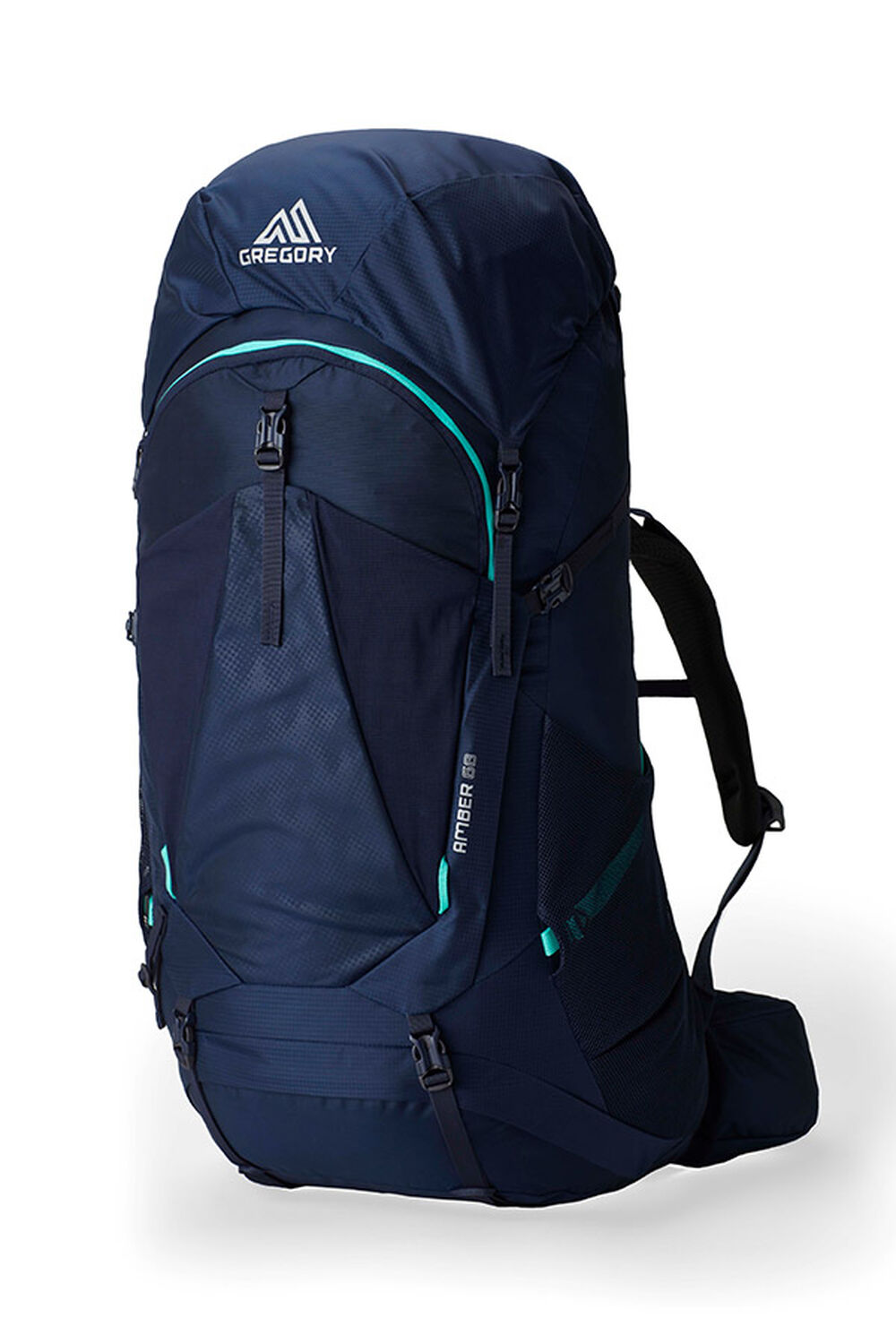
The Gregory Amber 68—the updated high-capacity model in Gregory's core backpacking line—is built for extended backcountry routes and gear-intensive itineraries. It is aimed at women needing a large-volume hauler with a simple, forgiving adjustment system that can manage bulky multiday loads without unnecessary mechanical complexity. The pack relies on the VersaFit suspension system, which couples an adjustable torso length with an alloy Wishbone frame. The harness height adjusts along a continuous hook-and-loop panel, connecting directly to breathable 3D foam back padding. The frame transfers weight effectively into a wraparound, padded hipbelt. While it does not offer the dynamic pivoting articulation of the top-tier Deva, the Amber provides a dependable, close-contact carry that keeps heavy gear stable and centered. At 68 liters, the pack accommodates bear canisters, bulky synthetic sleeping bags, and multi-day food rations easily. It features a lower zippered compartment, dual mesh side water bottle pockets, a front stretch-mesh pocket, and an integrated raincover. The trade-off is standard foam ventilation; without an elevated trampoline mesh screen, your back will run warmer during hard climbs. For broad capacity and straightforward durability, it delivers honest multiday performance. **Highlights** - VersaFit adjustable torso system with breathable 3D foam backpanel - Wishbone alloy internal perimeter frame for heavy load stability - Generous 68-liter capacity suited for extended multiday itineraries - Dedicated sleeping bag bottom compartment with removable divider - Front stretch-mesh pocket for quick outerwear storage - Included custom-fit raincover stowed in a dedicated zippered pocket **Watch-outs** - Close-contact foam backpanel offers less ventilation than trampoline mesh packs - Hipbelt is fixed to the frame without dynamic swivel or rotation joints - High volume can encourage overpacking if base gear is already compact
Pros
- Massive 68-liter volume easily swallows bear canisters and bulky gear
- VersaFit suspension allows continuous, tool-free torso length tuning
- Wishbone alloy frame transfers heavy gear weight directly to the hips
- Integrated raincover included in a dedicated exterior zippered pocket
Cons
- Close-contact foam backpanel runs warm and ventilates poorly in heat
- Fixed hipbelt lacks active pivot articulation for dynamic hip motion
- Substantial volume can tempt backpackers into overpacking unnecessary items
Best uses
- Extended multiday backcountry routes
- Shoulder-season and cold-weather backpacking
- Carrying bulky synthetic gear
- Gear-intensive family backpacking trips
Specifications
- Capacity
- 68 Liters
- Frame Design
- Wishbone alloy internal perimeter frame
- Suspension
- VersaFit adjustable torso system
- Backpanel
- Breathable 3D foam contact padding
- Access
- Top loading with bottom sleeping bag access
- Weather Protection
- Included custom-fit raincover
Pricing
We don't publish a price we haven't verified. The retailer links below open the live listing for this exact model.
Full catalog listing & offersBest for
Extended multiday backcountry routes, Shoulder-season and cold-weather backpacking, Carrying bulky synthetic gear, Gear-intensive family backpacking trips
Where to buy the Amber 68
We don't have a direct Amazon listing on file yet — this opens an Amazon search for the exact make and model.
Some links are affiliate links. Buying through them supports our testing at no extra cost to you.
The Gregory Amber 68 is engineered for backpackers who need substantial carrying capacity without the mechanical complexity of top-tier expedition rigs. As gear lists expand to include bulky synthetic insulation, mandatory bear canisters, and week-long food provisions, mid-volume packs often fall short. The Amber 68 answers that demand with an uncomplicated, high-volume layout centered on straightforward load management and practical trail organization. At its core, the pack utilizes Gregory's VersaFit suspension, combining an adjustable torso harness with a perimeter Wishbone alloy frame. This system provides a stable, close-to-body center of gravity that anchors heavy gear securely against the back. Rather than incorporating moving swivels or intricate mechanical adjustments, the harness secures via a broad hook-and-loop interface, linking seamlessly with a padded, wraparound hipbelt for predictable weight transfer. While the pack lacks the airy, trampoline-style suspended backpanels found on lighter or more specialized designs, its reliance on breathable 3D foam keeps trail maintenance low and structural integrity high. For wilderness itineraries where brute carrying volume and dependable hardware take priority over ultralight minimalism, the Amber 68 functions as an honest workhorse pack for demanding multiday routes.
Target Audience and Load Needs
The Amber 68 caters to hikers tackling week-long itineraries, shoulder-season trips, or gear-intensive outings where pack volume cannot be compromised. It is especially suited for backpackers carrying bulkier, entry-level, or synthetic sleeping kits that struggle to fit into standard 50- to 60-liter bags. Because the architecture favors capacity and straightforward durability, it also serves guides, field researchers, and parents carrying shared gear. Ultralight purists with dialed, sub-ten-pound base weights will find the 68-liter volume excessive, as underfilled bags can shift awkwardly without aggressive compression. However, for backpackers who prioritize load security over featherweight gram-counting and require dedicated space for large bear-resistant food canisters, winter layers, and multiple days of provisions, this pack provides an accessible, high-capacity solution that eliminates the stress of overstuffing gear on long wilderness routes.
Structural Architecture and Materials
The foundation of the Amber 68 is Gregory's Wishbone alloy perimeter frame, designed to stabilize heavy contents and prevent the pack body from barreling outward when packed tight. This internal alloy stay directly routes the pack's weight downward into the lumbar pad and wraparound hipbelt, ensuring that load transfer remains centered on the pelvis rather than hanging from the shoulders. The backpanel incorporates multi-density 3D foam wrapped in breathable mesh, balancing padding with moisture management. Exterior contact areas rely on rugged, abrasion-resistant fabrics that withstand contact with coarse granite, thick brush, and dusty camp surfaces. The storage layout incorporates durable side water bottle pockets, a stretchy front stash pocket for quick wet-layer storage, a lower compartment with a dedicated divider, and hardwearing webbing straps. Gregory also integrates an included raincover into its own zippered pocket, protecting internal contents from sudden precipitation without requiring aftermarket accessory purchases.
Trail Balance and Ventilation
Under loaded conditions, the Amber 68 behaves with the steady, grounded manners of a traditional internal-frame pack. The close-contact 3D foam backpanel holds the pack's center of mass directly against the spine, minimizing lateral sway and maintaining stability across uneven river crossings or scree slopes. Because the pack sits flush against the torso, it keeps heavy cargo well under control, though this proximity comes with an unavoidable thermal cost. Without the open-air airspace of an elevated trampoline suspension, the 3D foam inevitably traps body heat and sweat during strenuous climbs in warm or humid conditions. The hipbelt provides solid, unyielding support, clamping firmly over the iliac crest to bear the bulk of the load. Compression straps along the sides and bottom effectively pull the pack tight against the frame, keeping partial loads stabilized when supplies dwindle toward the end of a long trail section.
Suspension Adjustment and Fit
Gregory's VersaFit system prioritizes straightforward, micro-adjustable sizing over complex multi-piece harness assemblies. Torso length adjustments are made via an expansive hook-and-loop panel situated behind the shoulder harness. By peeling back the harness, hikers can shift the yoke up or down along a continuous track, ensuring that the shoulder straps contour naturally over the clavicles without leaving unpadded gaps or pulling downward. Because women's body shapes vary widely in torso length and hip angles, this continuous adjustment prevents the awkward in-between sizing issues common to fixed-position snap designs. The shoulder harness and hipbelt are specifically contoured to fit female anatomical proportions, preventing pinching across the chest and riding comfortably around the pelvic girdle. Backpackers should ensure they adjust the harness height with a fully weighted load inside, verifying that the load lifter straps angle back toward the frame at roughly forty-five degrees.
Trade-offs and Market Alternatives
When compared against higher-tier models like the Gregory Deva or Osprey Ariel, the Amber 68 foregoes advanced pivoting hipbelts and customizable heat-moldable foam in favor of lower mechanical complexity and an accessible price point. The fixed hipbelt connection means the pack body moves rigidly with the hips rather than articulating independently during aggressive hip flexion. Compared to ventilated multiday packs like the Gregory Maven or Osprey Aura, the Amber carries more overall volume but delivers noticeably less backpanel airflow. The sheer 68-liter capacity also presents a potential pitfall: if your kit consists primarily of compact ultralight gear, the pack invites overpacking, which can result in unnecessary trail weight. For hikers who carry substantial loads, require simple adjustments without fragile moving parts, and accept moderate back sweat in exchange for direct weight transfer and massive internal volume, the Amber 68 remains an exceptionally pragmatic choice.
How we picked
We started with a long list of women's backpacking packs that people actually buy, cut anything that could not clear our baseline for durability and field performance, then ranked the 10 that were left against the same criteria. Rankings are editorial. No brand pays for placement, and affiliate links never move a pick up or down.
- Load carriage
- How the suspension handles the loads the pack is actually rated for, over long days.
- Real-world durability
- How the material, stitching, or steel holds up after a season of hard use — not how it looks new.
- Performance in bad conditions
- Wind, rain, cold, and grit are the test. Anything that only works on a nice day gets marked down.
- Weight and packability
- Every ounce has to earn its place in the pack, but not at the cost of something that fails in the field.
- Ease of use
- Setup, adjustment, and maintenance with cold hands, in the dark, without the manual.
- Value at its price point
- Compared against the closest competitors in the same tier, not against cheaper gear in a different class.
Amber 68 — frequently asked questions
- Is the Amber 68 worth it?
- We rank it #10 in Women's Backpacking Packs. The Gregory Amber 68—the updated high-capacity model in Gregory's core backpacking line—is built for extended backcountry routes and gear-intensive itineraries. It is aimed at women needing a large-volume hauler with a simple, forgiving adjustment system that can manage bulky multiday loads without unnecessary…
- What is the Amber 68 best for?
- Best for extended multiday backcountry routes, shoulder-season and cold-weather backpacking, carrying bulky synthetic gear and gear-intensive family backpacking trips. Standouts: massive 68-liter volume easily swallows bear canisters and bulky gear and versafit suspension allows continuous, tool-free torso length tuning.
- What are the downsides of the Amber 68?
- Close-contact foam backpanel runs warm and ventilates poorly in heat, Fixed hipbelt lacks active pivot articulation for dynamic hip motion and Substantial volume can tempt backpackers into overpacking unnecessary items.
- What are the key specs of the Amber 68?
- Capacity: 68 Liters · Frame Design: Wishbone alloy internal perimeter frame · Suspension: VersaFit adjustable torso system · Backpanel: Breathable 3D foam contact padding · Access: Top loading with bottom sleeping bag access
- Target Audience and Load Needs — what should I know about the Amber 68?
- The Amber 68 caters to hikers tackling week-long itineraries, shoulder-season trips, or gear-intensive outings where pack volume cannot be compromised. It is especially suited for backpackers carrying bulkier, entry-level, or synthetic sleeping kits that struggle to fit into standard 50- to 60-liter bags.
- Structural Architecture and Materials — what should I know about the Amber 68?
- The foundation of the Amber 68 is Gregory's Wishbone alloy perimeter frame, designed to stabilize heavy contents and prevent the pack body from barreling outward when packed tight. This internal alloy stay directly routes the pack's weight downward into the lumbar pad and wraparound hipbelt, ensuring that load…
Compare side by side
Put the Amber 68 against any other pick on this list — specs, price, pros, cons and reader ratings.