


Reader rating
Rate it and you move it. Community ratings re-rank this product inside its Top 10 list.
Expert-picked, reader-ranked. Our editors choose the products and the launch order; member star ratings move picks up or down over time.
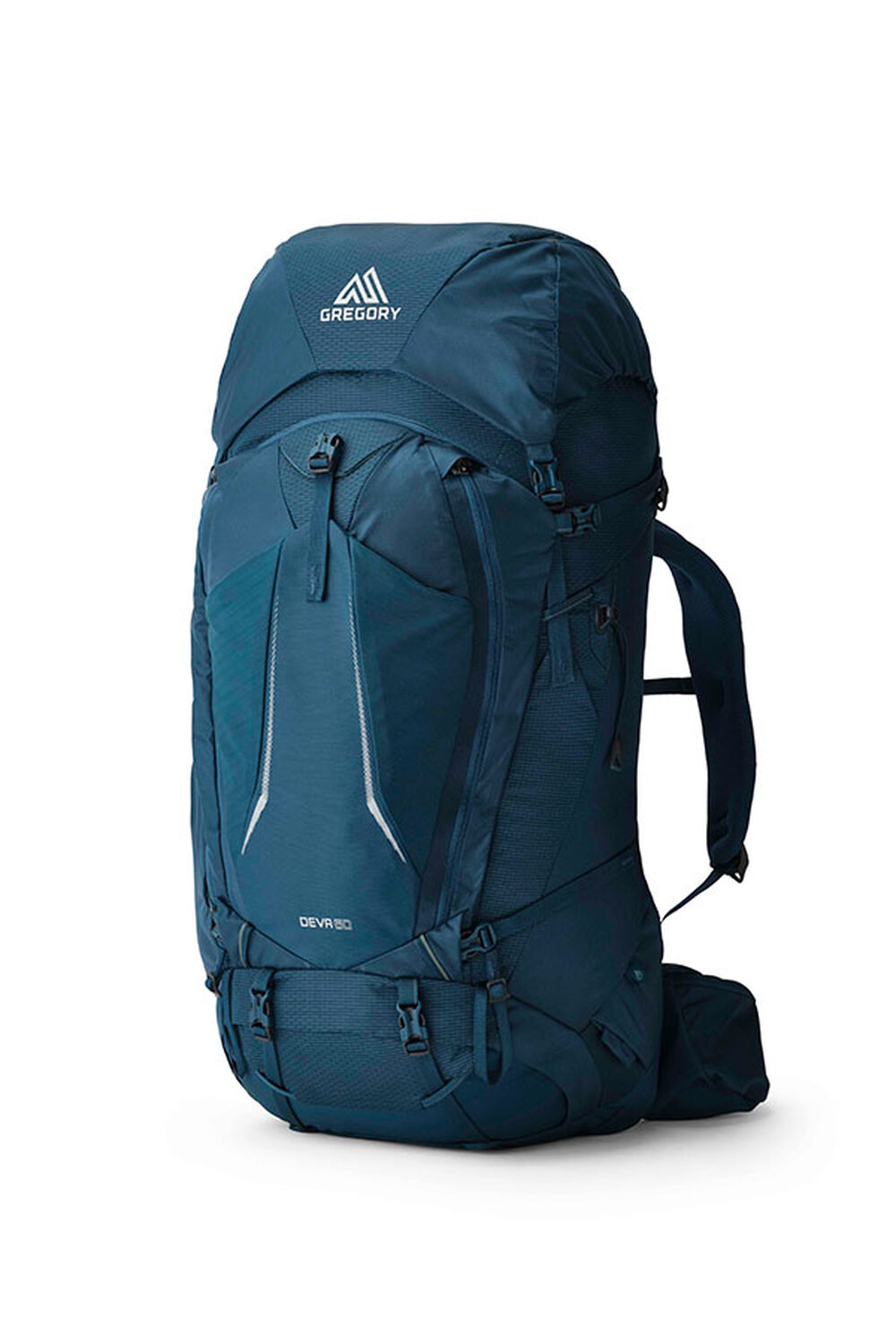
The Gregory Deva 60 is designed for multiday hikers who carry dense, demanding loads and need maximum frame support over technical terrain. Where lightweight packs rely on flexible framesheets, the Deva utilizes Gregory's FreeFloat A3 suspension, built around an alloy perimeter frame and an auto-rotating shoulder harness. This mechanical design allows the pack body to pivot dynamically with hip motion, stabilizing heavy kits without shifting off-balance. The back panel pairs 3D AirCushion mesh with a close-contact lumbar pad. This keeps the pack’s center of gravity close to the spine, delivering steady load transfer directly to the pelvis. Unlike trampoline-style packs that push the pack weight away from your back to maximize airflow, the Deva prioritizes absolute load control and trail balance. The trade-off is reduced back cooling on high-output uphill sections. The construction is heavily featured and robust. It includes a dedicated U-zip front opening for wide access to the main compartment, oversized hipbelt pockets shaped to fit modern electronics, and independent torso and hipbelt size customization. Hikers traveling with disciplined, lightweight kits may find the Deva overbuilt, but for extended routes requiring heavy food carries or winter layers, the structural support is purpose-built. **Highlights** - FreeFloat A3 dynamic suspension with auto-rotating shoulder harness - AirCushion mesh backpanel engineered for close-contact load stability - Full front U-zip access to the main compartment - Custom-fit 3D shoulder harness and hipbelt components - Oversized zippered hipbelt pockets for trail accessories - Hydration sleeve that doubles as a lightweight daypack **Watch-outs** - Substantial empty pack weight compared to lightweight multiday alternatives - Close-contact back panel retains more heat than fully suspended mesh designs - Extensive strap and pocket layout can feel overly complex for minimalists
Pros
- Dynamic FreeFloat A3 suspension absorbs natural hip and shoulder movement
- Exceptional load transfer prevents sagging when carrying heavy or bulky gear
- Wide U-zip front opening provides immediate access to packed gear
- Independent torso and hipbelt adjustments accommodate varied body shapes
Cons
- Substantial empty pack weight compared to lightweight alternatives
- Close-contact backpanel traps heat more than suspended trampoline mesh
- Complex array of straps and buckles can feel overbuilt for minimalists
Best uses
- Heavy Multiday Backpacking
- Extended Wilderness Expeditions
- Cold-Weather Gear Hauling
- Technical Off-Trail Routes
Specifications
- Suspension Type
- FreeFloat A3 dynamic perimeter frame
- Backpanel Design
- AirCushion mesh with close-contact lumbar pad
- Access Points
- Top lid, front U-zip, bottom sleeping bag hatch
- Gender Fit
- Women's specific harness and hipbelt geometry
- Hipbelt Features
- Independent rotation with oversized zippered pockets
- Intended Use
- Expedition and heavy multiday load hauling
Pricing
We don't publish a price we haven't verified. The retailer links below open the live listing for this exact model.
Full catalog listing & offersBest for
Heavy Multiday Backpacking, Extended Wilderness Expeditions, Cold-Weather Gear Hauling, Technical Off-Trail Routes
Where to buy the Deva 60
We don't have a direct Amazon listing on file yet — this opens an Amazon search for the exact make and model.
Some links are affiliate links. Buying through them supports our testing at no extra cost to you.
The Gregory Deva 60 sits at the heavy-hauling end of the women's multiday pack spectrum. Designed specifically for backpackers managing dense gear lists, bear canisters, or remote routes requiring substantial food and water carries, this pack prioritizes chassis rigidity and anatomical support over ultralight minimalism. It is engineered to carry significant poundage without collapsing onto the collarbones or sagging away from the spine. At the core of the design is the FreeFloat A3 suspension system, which integrates an alloy perimeter frame with dynamic, auto-rotating shoulder straps and a swiveling hipbelt. This mechanical interface moves in tandem with the natural tilt of the pelvis and shoulders, keeping the load centered and secure across uneven ground. Rather than separating the cargo from your back via an expansive mesh trampoline, the Deva keeps the mass pulled tightly to your center of gravity. While hikers aiming for sub-ten-pound base weights will find the Deva overbuilt, it remains a benchmark for stability and organization when hauling gear-intensive setups. The comprehensive pocket architecture, full front-panel access, and custom fit options make it a reliable workhorse for traditional multiday backpacking.
Target User Profile
The Deva 60 is targeted at hikers who routinely carry total pack weights exceeding thirty to thirty-five pounds. This includes wilderness leaders, photographers carrying delicate electronics, parents packing extra provisions for children, and backpackers navigating prolonged dry stretches requiring heavy water storage. It is not intended for ultralight purists who prioritize shaving ounces above all else. Instead, the pack serves hikers who accept a heavier base pack weight in exchange for an unyielding frame that isolates dense mass from the shoulders and lower back. For week-long self-supported trips where supply weights fluctuate dramatically, the chassis ensures the pack remains predictable and stable under shifting cargo demands.
Suspension and Load Transfer
Gregory relies on its FreeFloat A3 suspension to handle substantial weights without destabilizing the hiker. Built on an alloy internal perimeter frame reinforced with a cross-stay, the pack resists barreling and torsional twisting when packed tightly. The shoulder harness connects via auto-rotating attachment points that swivel with the user's natural torso angles, while the hipbelt panels articulate independently around the hips. This multi-axis movement absorbs trail vibration and prevents the waistbelt from scrubbing over the iliac crest during steep ascents. By anchoring the weight close to the back panel, the system transfers the bulk of downward force straight into a supportive lumbar pad, shielding the upper body from downward torque.
Materials and Construction Integrity
The Deva 60 is constructed from heavy-gauge nylon fabrics selected to withstand coarse granite, dense overgrowth, and rough transport. High-wear zones, including the pack bottom and front abrasion panels, use reinforced high-density textiles that resist puncturing and fabric tears. The zippers throughout the main compartment and access ports are heavy-duty coil variants built to operate under tension without binding or splitting. Even the plastic hardware, including tension buckles and hipbelt clips, is sized larger than average to resist snapping in freezing temperatures or under sudden impact. While these robust materials contribute directly to the pack's higher tare weight, they provide reliable field longevity over seasons of hard wilderness use.
Ventilation and Heat Management
Ventilation on the Deva 60 represents an intentional engineering compromise. The backpanel features an AirCushion mesh construction, which uses an open-cell, three-dimensional honeycomb matrix designed to facilitate moisture evaporation and eliminate pressure points. However, because the pack is built to hug the spine closely to optimize balance under heavy loads, it does not offer the continuous airflow found on trampoline-style suspended mesh packs. On high-output ascents in warm or humid climates, users can expect heat and perspiration buildup across the mid-back and lumbar area. For hikers hauling heavy loads, this warmth is the necessary operational trade-off for keeping the pack's center of gravity tight against the body.
Fit and Component Tuning
Achieving the correct geometry requires careful loaded fitting prior to field use. The Deva provides independent adjustability for both torso length and hipbelt cant, allowing hikers to match the harness precisely to their spinal measurements. Gregory shapes the shoulder straps with specific curves that accommodate women's chest contours, reducing sternum pressure, while the pre-curved hipbelt matches typical female pelvic angles. Because the lumbar pad and rotating belt rely on firm physical contact to carry weight efficiently, testing the pack with thirty or more pounds of ballast is essential. A poorly adjusted harness will negate the dynamic swivel mechanisms, shifting unwanted pressure onto the clavicles.
Comparative Context and Alternatives
Within the internal frame market, the Deva 60 competes against traditional load haulers like the Osprey Ariel 65 and lighter internal designs such as Gregory's own Maven 58 or Amber 68. The Amber 68 offers a simpler, classic trail build with lower complexity, while the Maven 58 strips away structural framing and features to save measurable pack weight for disciplined, lighter kits. Compared to those lighter options, the Deva provides far superior chassis rigidity, multi-access zippers, and dynamic hip articulation when loaded past forty pounds. Backpackers committed to sub-thirty-pound total loads may find the Deva needlessly complex, but for demanding, heavy itineraries, its structural integrity remains unmatched.
How we picked
We started with a long list of women's backpacking packs that people actually buy, cut anything that could not clear our baseline for durability and field performance, then ranked the 10 that were left against the same criteria. Rankings are editorial. No brand pays for placement, and affiliate links never move a pick up or down.
- Load carriage
- How the suspension handles the loads the pack is actually rated for, over long days.
- Real-world durability
- How the material, stitching, or steel holds up after a season of hard use — not how it looks new.
- Performance in bad conditions
- Wind, rain, cold, and grit are the test. Anything that only works on a nice day gets marked down.
- Weight and packability
- Every ounce has to earn its place in the pack, but not at the cost of something that fails in the field.
- Ease of use
- Setup, adjustment, and maintenance with cold hands, in the dark, without the manual.
- Value at its price point
- Compared against the closest competitors in the same tier, not against cheaper gear in a different class.
Deva 60 — frequently asked questions
- Is the Deva 60 worth it?
- We rank it #2 in Women's Backpacking Packs. The Gregory Deva 60 is designed for multiday hikers who carry dense, demanding loads and need maximum frame support over technical terrain. Where lightweight packs rely on flexible framesheets, the Deva utilizes Gregory's FreeFloat A3 suspension, built around an alloy perimeter frame and an auto-rotating shoulder…
- What is the Deva 60 best for?
- Best for heavy multiday backpacking, extended wilderness expeditions, cold-weather gear hauling and technical off-trail routes. Standouts: dynamic freefloat a3 suspension absorbs natural hip and shoulder movement and exceptional load transfer prevents sagging when carrying heavy or bulky gear.
- What are the downsides of the Deva 60?
- Substantial empty pack weight compared to lightweight alternatives, Close-contact backpanel traps heat more than suspended trampoline mesh and Complex array of straps and buckles can feel overbuilt for minimalists.
- What are the key specs of the Deva 60?
- Suspension Type: FreeFloat A3 dynamic perimeter frame · Backpanel Design: AirCushion mesh with close-contact lumbar pad · Access Points: Top lid, front U-zip, bottom sleeping bag hatch · Gender Fit: Women's specific harness and hipbelt geometry · Hipbelt Features: Independent rotation with oversized zippered pockets
- Target User Profile — what should I know about the Deva 60?
- The Deva 60 is targeted at hikers who routinely carry total pack weights exceeding thirty to thirty-five pounds. This includes wilderness leaders, photographers carrying delicate electronics, parents packing extra provisions for children, and backpackers navigating prolonged dry stretches requiring heavy water…
- Suspension and Load Transfer — what should I know about the Deva 60?
- Gregory relies on its FreeFloat A3 suspension to handle substantial weights without destabilizing the hiker. Built on an alloy internal perimeter frame reinforced with a cross-stay, the pack resists barreling and torsional twisting when packed tightly.
Compare side by side
Put the Deva 60 against any other pick on this list — specs, price, pros, cons and reader ratings.