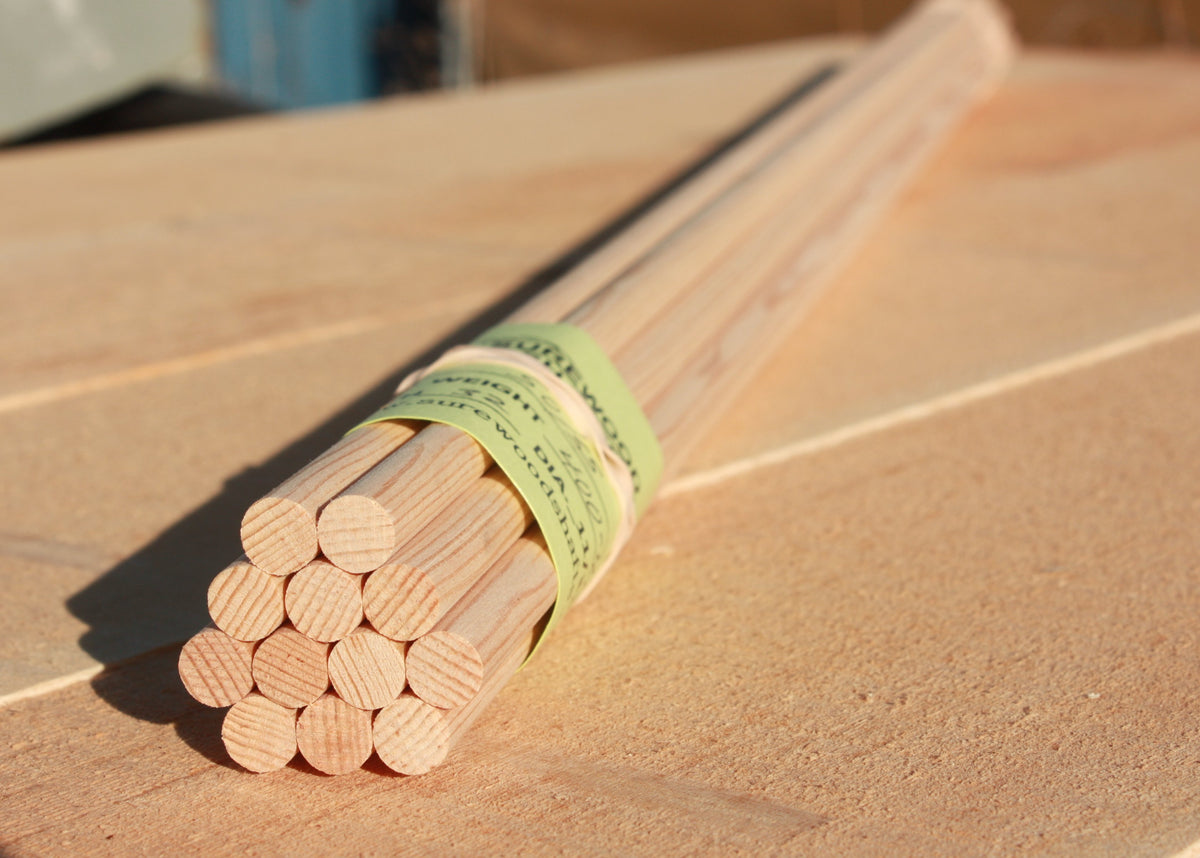
Port Orford cedar, 500 spine, 125 gr blunt or judo, 5" shield feathers
Cedar Stump-Shooter
Best for: Roving archery
For generations, the cedar stump-shooter has been the go-to for archers looking for a durable, affordable, and incredibly fun arrow for informal target practice and roving. This isn't a precision hunting arrow; it's built for abuse, designed to withstand the impacts of stumps, rocks, and the occasional errant shot into the unknown. The beauty of cedar lies in its resilience; it flexes and absorbs shock, often surviving impacts that would shatter carbon or permanently bend aluminum. It's the kind of arrow you don't mind losing a few of, yet you'll still be surprised how many survive the gauntlet of a afternoon's roving.
What truly sets the cedar stump-shooter apart is its unapologetic simplicity and ruggedness. Paired with a blunt or judo head, it transforms into an ideal tool for small game hunting or simply honing your field archery skills without the constant worry of damaging expensive broadheads or arrows. The larger fletching and heft provide excellent stability for close to medium range shots, making it forgiving for archers of all skill levels. It’s a testament to traditional archery that something so basic can remain so effective and enjoyable, proving that sometimes, the oldest designs are indeed the best.
Construction & Materials
The Port Orford cedar shaft is the backbone here, chosen for its strength-to-weight ratio and natural elasticity. This isn't just any wood; it's renowned in archery for its consistent grain and ability to absorb impact without splintering catastrophically. The 500 spine offers a good balance for most traditional bows in the 35-50 lb draw weight range, ensuring good flight characteristics. Five-inch shield cut feathers provide ample steerage and stability, crucial for a roving arrow that might be shot through brush or in breezy conditions. These feathers are also durable, able to handle minor scuffs and still perform adequately.
Real-World Performance
In the field, this arrow shines for its intended purpose. The heavier 125-grain blunt or judo point provides excellent kinetic energy for knocking down small game or simply thumping into a stump with satisfying authority. The larger fletching, while potentially increasing wind drift slightly on longer shots, helps stabilize the arrow quickly after release, leading to more consistent impacts at typical roving distances (up to 30-40 yards). It’s remarkably forgiving, flying true even with slight imperfections in form, which makes it ideal for archers who are still developing their shot or just want to have fun without worrying about precision.
Durability & Longevity
This is where the cedar stump-shooter truly earns its stripes. It’s built to take a beating. Unlike carbon, which can fracture internally, or aluminum, which bends permanently, cedar often recovers from impacts that would sideline other arrows. You’ll find nicks, dings, and even some compression, but it often keeps flying. While not indestructible, a properly constructed cedar shaft with a robust point will withstand dozens, if not hundreds, of impacts into hard targets. The feathers, being natural, will compress and fray over time, but are easily replaced, extending the life of the arrow significantly.
Value & Alternatives
At its price point, the cedar stump-shooter offers unparalleled value. You can buy several of these for the cost of a single high-end carbon arrow, making them an economical choice for high-volume shooting or when the risk of loss is high. Alternatives like fiberglass arrows offer similar durability for impact, but often lack the consistent spine and straightness of good cedar, leading to erratic flight. While aluminum or carbon arrows can be fitted with blunts, their susceptibility to permanent damage from hard impacts makes them less suitable for dedicated roving and stump shooting at this price and performance level.
Who It's Really For
This arrow is for the archer who loves the outdoors, enjoys informal shooting, and wants to practice without constant concern for expensive gear. It’s perfect for traditional bowhunters practicing for small game season, recreational archers looking to hone their instincts in the woods, or anyone who appreciates the tactile feedback and natural aesthetics of a wooden arrow. It’s not for the competitive target archer needing pinpoint accuracy at extreme distances, nor is it designed for high-poundage hunting bows where specialized heavy carbon or aluminum might be preferred for deep penetration.
Pros
- + Extremely durable for repeated impacts
- + Affordable, easy to replace
- + Excellent for roving and small game
- + Forgiving flight characteristics
- + Traditional aesthetic and feel
Cons
- − Heavier than carbon, slower flight speed
- − Not ideal for long-range precision
- − Feathers require maintenance or replacement
- − Can occasionally take a permanent set from extreme impacts
- Spine
- 500
- Best Use
- Roving, Small Game, Practice
- Fletching
- 5" Shield Feathers
- Point Weight
- 125 grains
- Shaft Material
- Port Orford Cedar