MSR
Reactor 1.0 L System
Best for: Mountaineering and alpine starts
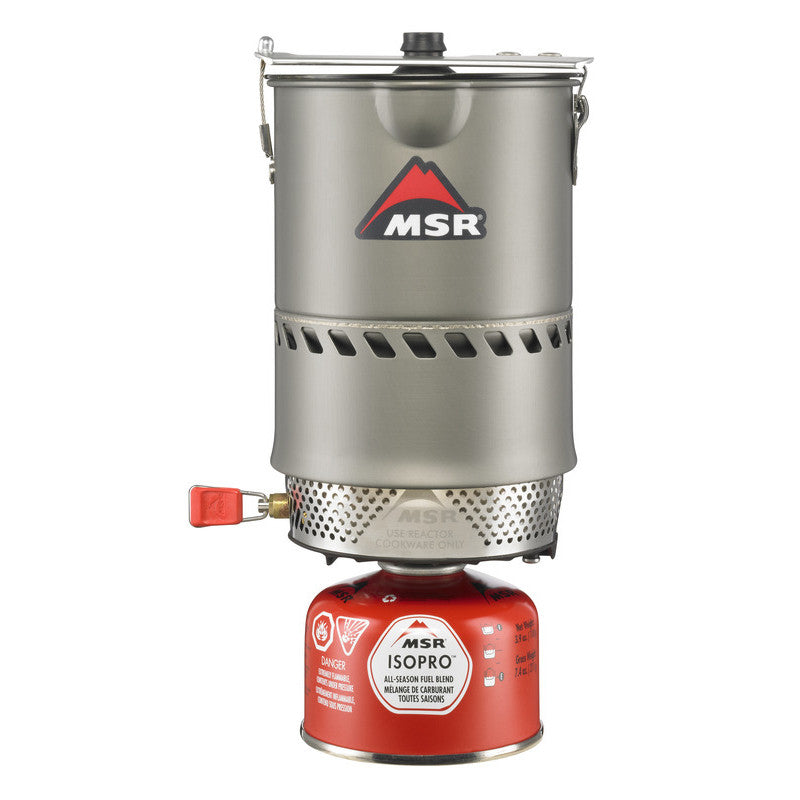
The MSR Reactor 1.0 L System isn't just a stove; it's a meticulously engineered piece of kit designed for serious backcountry use where efficiency and reliability are paramount. MSR built this system from the ground up to address the fundamental challenges of outdoor cooking: wind and fuel consumption. The integrated burner and pot create a closed system, virtually eliminating heat loss to the elements, making it an unrivaled performer in blustery conditions. This isn't a stove for gourmet meals or simmering; it's for boiling water fast, consistently, and with minimal fuel. Its robust construction speaks to its intended use in harsh environments, making it a favorite among mountaineers, winter campers, and anyone prioritizing speed and certainty over weight savings or culinary versatility.
While its initial cost might seem steep compared to more basic canister stoves, the Reactor's long-term value lies in its fuel efficiency and unwavering performance. Over many trips, the savings in fuel and the peace of mind knowing you can reliably boil water in almost any weather condition easily justify the investment. It's a specialized tool, but for those who operate within its strengths – boiling water for rehydrated meals, hot drinks, or snowmelt – it's an indispensable companion. This system is a testament to MSR's commitment to creating gear that doesn't just work, but excels when you need it most.
Real-World Performance
In the field, the Reactor 1.0 L truly shines. Its most striking feature is its imperviousness to wind. Unlike traditional burner designs that lose significant heat to gusts, the Reactor's radiant burner and integrated heat exchanger pot system mean that performance remains remarkably consistent even in high winds. Boiling water happens with impressive speed, often within three to four minutes, which is a game-changer when you're cold, tired, or need to conserve fuel. The pressure regulator ensures consistent output as the canister empties or in colder temperatures, avoiding the dreaded flame sputter. It's a workhorse for boiling, not simmering, so set expectations accordingly.
Materials & Construction
MSR designed the Reactor for serious abuse. The pot is made from hard-anodized aluminum, providing excellent durability and efficient heat transfer. The handle locks securely into place for cooking and carrying but folds away neatly for packing. The burner assembly itself feels exceptionally robust, with stainless steel components built to withstand repeated use and the stresses of backcountry travel. Every element, from the pot's lid to the burner's housing, feels substantial and well-engineered, inspiring confidence that it will hold up to the rigors of expeditions and frequent use.
Weight & Packability
Weighing in at 14.7 ounces (417 grams) for the system, the Reactor 1.0 L is not the lightest option on the market, but its integrated design makes it quite packable. The 4 oz (110g) MSR IsoPro fuel canister, along with the stove burner, nests perfectly inside the 1.0-liter pot, creating a compact and rattle-free unit. This internal nesting keeps the cooking system tidy and protects the burner during transport. While it adds a bit more bulk than a minimalist standalone burner, the all-in-one design is very efficient for stowing in a pack, especially given its performance capabilities.
Durability & Longevity
The Reactor system is built to last. Its robust construction and quality materials contribute to exceptional durability. The hard-anodized pot resists dents and scratches better than untreated aluminum, and the stainless steel burner components are designed for high temperatures and repeated use. There are few moving parts to break, and the primary failure point, like any canister stove, would likely be accidental damage to the regulator or fuel line connection. With reasonable care, this system can provide years, if not decades, of reliable service in challenging conditions, making it a long-term investment.
Trade-offs & Alternatives
The primary trade-offs for the Reactor's stellar boiling performance are its weight, bulk, and lack of simmering capability. For those focused on ultralight pursuits where every gram counts, a smaller, lighter system might be preferred, even if it's less wind-resistant. Similarly, if your backcountry cooking involves more than just boiling water – actual cooking, sautéing, or slow simmering – this isn't the right tool. Alternatives like the Jetboil Flash offer similar integrated efficiency for boiling but often with less wind resistance, while more versatile systems like the MSR WhisperLite Universal allow for simmering and use a wider range of fuels, albeit with a greater setup time and weight.
Pros
- + Unmatched wind performance and fuel efficiency
- + Extremely fast boil times, even in adverse conditions
- + Durable, robust construction for serious use
- + Integrated design for compact packing
- + Consistent performance in cold weather due to pressure regulator
Cons
- − Heavier and bulkier than minimalist stove setups
- − No simmering capability, strictly for boiling
- − Higher initial cost compared to basic canister stoves
- − Limited pot size options
- Fuel
- Isobutane-propane canister
- Volume
- 1.0 Liter
- Weight
- 14.7 oz (417 g)
- Ignition
- Manual (lighter/match required)
- Material
- Hard-anodized aluminum pot, stainless steel burner
- Boil Time
- Approx. 3 minutes for 1L (ideal conditions)