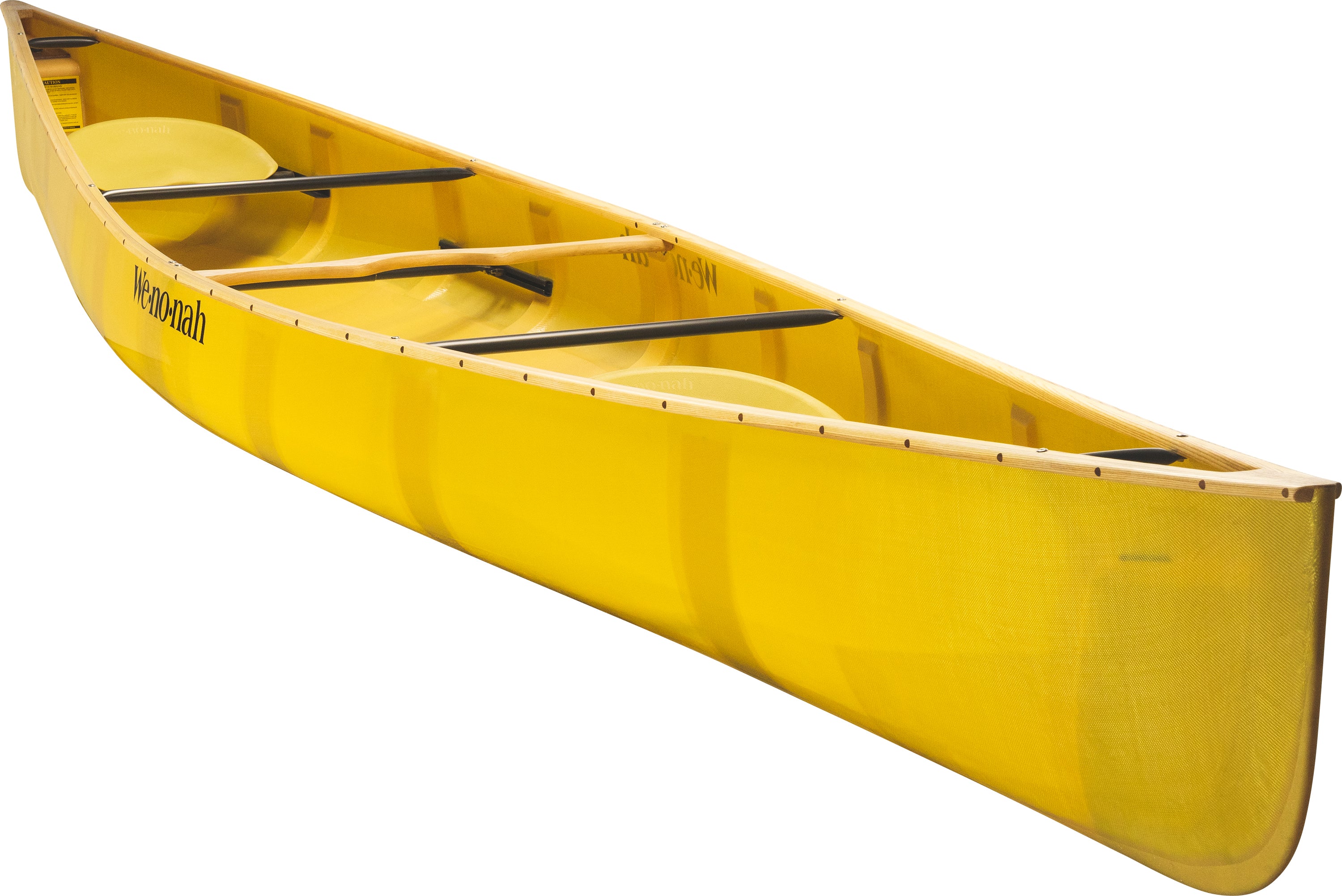
Wenonah
Minnesota II (Kevlar)
Best for: Extended lake tripping
The Wenonah Minnesota II in Kevlar is a workhorse, pure and simple. For paddlers who regularly embark on extended trips in the Boundary Waters, Quetico, or similar lake country, this canoe is almost an essential tool. It’s designed to cover distance efficiently, holding a true line even in a crosswind, which saves considerable energy over a long day. Its relatively narrow beam and shallow arch hull contribute to its speed, making it a favorite for those who prioritize mileage. However, this design also means a slight trade-off in initial stability, though experienced paddlers will find its secondary stability more than adequate for most conditions.
What truly sets the Minnesota II apart is its capacity-to-weight ratio. At just 42 pounds for the Kevlar layup, it's remarkably easy to portage, especially when compared to aluminum or Royalex alternatives carrying similar loads. This lightness doesn't come at the expense of durability; the Kevlar composite handles bumps and scrapes with surprising resilience, though it's not indestructible. This canoe isn't for casual river floats or whitewater. It's built for serious lake tripping, carrying two paddlers and enough gear for a two-week expedition with ease, making it a top choice for those who value efficiency and robust performance in wilderness settings.
Construction and Materials
Wenonah's Kevlar construction for the Minnesota II is a proven blend of lightweight strength. It utilizes a core material sandwiched between layers of Kevlar cloth, infused with resin. This results in a stiff, efficient hull that flexes minimally under load or in choppy water, translating to better power transfer with each paddle stroke. While Kevlar is tough against abrasion and impact, it's not impervious to damage. Hard, sharp impacts on rocks can still crack the gel coat or even puncture the hull, necessitating repair. However, for its weight, it offers exceptional resilience and a repairability that surpasses many cheaper alternatives, extending the life of the craft significantly.
On-Water Performance
The Minnesota II shines on open water. Its long, slender hull tracks exceptionally well, requiring minimal correction strokes from the stern paddler. This efficiency is a huge advantage over long distances, reducing fatigue. While it's not the most maneuverable canoe for tight turns or technical rivers, it responds predictably to leans and draws from an experienced bow paddler. Its speed makes covering 20-plus miles in a day entirely feasible, even with a full load. In windy conditions, its relatively low profile helps mitigate windage, though a stiff crosswind will still demand attention. The canoe feels stable once moving, inspiring confidence in mild to moderate chop.
Portage and Packability
This is where the Minnesota II truly sets itself apart from heavier tripping canoes. At approximately 42 pounds, it’s one of the lightest canoes in its class capable of carrying such substantial loads. A solo portage, while never easy with an 18-and-a-half-foot boat, is entirely manageable for a fit paddler. The lightweight construction also means less strain on muscles over multiple portages in a day, which can be a trip-saver in areas like the Boundary Waters. Its length can be a minor challenge on very narrow or winding portage trails, but its overall ease of transport far outweighs this small consideration for its intended use.
Durability and Longevity
Kevlar is renowned for its strength, and the Minnesota II leverages this effectively. The hull is designed to withstand the typical scrapes and bumps encountered during wilderness travel. While not as impact-resistant as Royalex or robust as aluminum, the Kevlar layup offers an excellent balance of durability and minimal weight. Small scratches and minor dings are common and largely cosmetic. More significant damage, like punctures, is repairable with common composite repair kits, allowing for many years, even decades, of service. Proper care, including storing out of direct sunlight, will significantly extend its lifespan, making it a wise long-term investment.
Value and Alternatives
The Minnesota II in Kevlar sits at the higher end of the price spectrum for tandem canoes, reflecting its specialized construction and performance. At this price point, alternatives include other lightweight composite canoes like those from Bell, Northstar, or Swift, which often offer slightly different hull designs catering to specific stability or maneuverability preferences. However, few match the Minnesota II's proven track record and specific optimization for fast, efficient lake tripping with heavy loads. For paddlers who demand top-tier performance for extended wilderness expeditions and prioritize portage ease, the initial investment in the Minnesota II is easily justified by its longevity and efficiency on the water.
Pros
- + Exceptional speed and tracking for long distances
- + Remarkably lightweight for its size and capacity
- + Excellent secondary stability for choppy waters
- + Generous carrying capacity for extended trips
- + Durable Kevlar construction withstands wilderness use
Cons
- − High initial cost compared to other materials
- − Lower initial stability can feel tippy to beginners
- − Less maneuverable in tight, winding waterways
- − Kevlar can be susceptible to sharp impacts if abused
- Length
- 18 ft 6 in
- Weight
- 42 lbs (approx)
- Capacity
- Up to 950 lbs
- Stability
- Good secondary, moderate initial
- Construction
- Kevlar Composite
- Intended Use
- Extended wilderness lake tripping