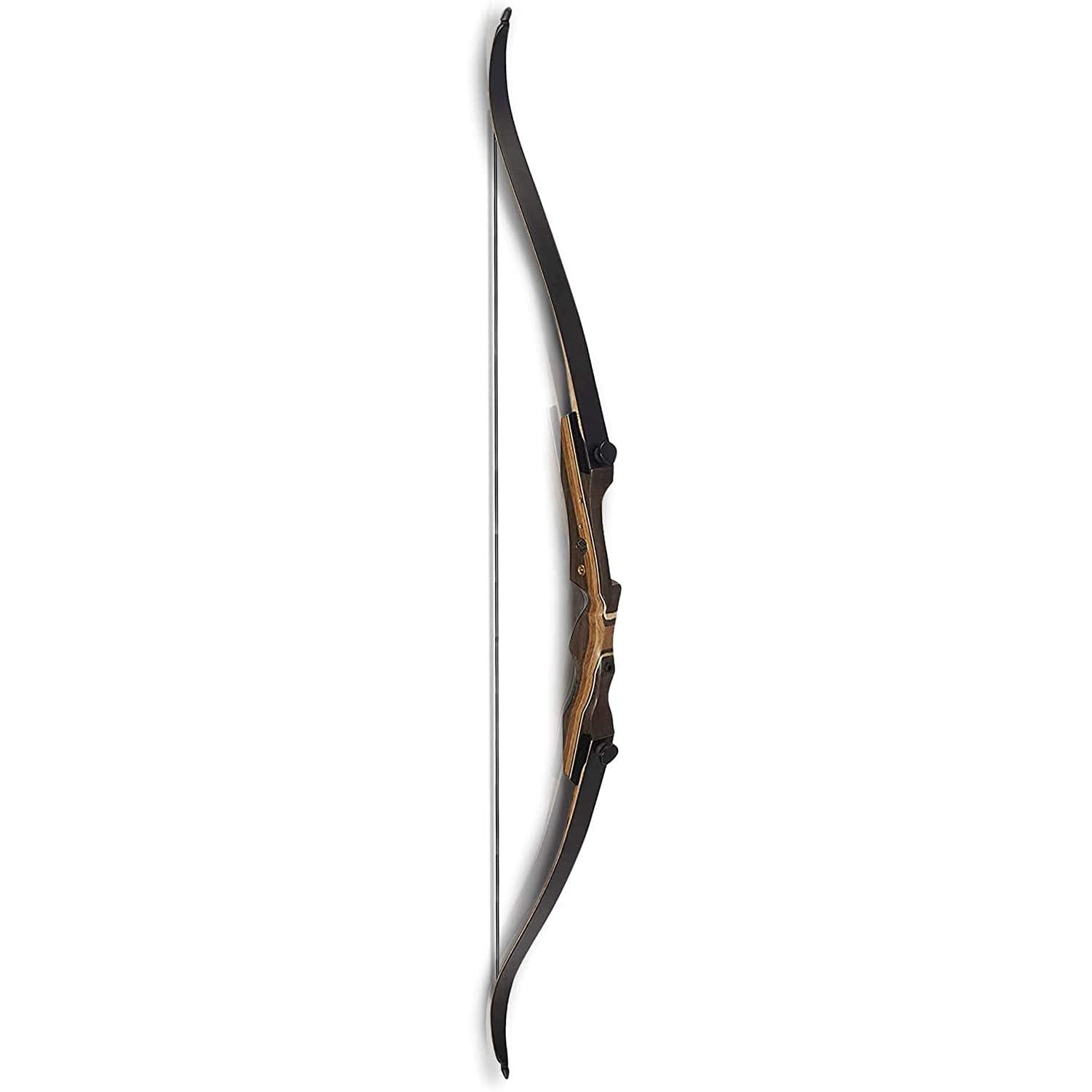
Bear Archery
Hunter Takedown Recurve
Best for: Traditional bowhunting
The Bear Archery Hunter Takedown Recurve isn't just a bow; it's an institution. Originally designed by Fred Bear himself, this bow embodies a legacy of American traditional archery. It's a no-nonsense, hardworking piece of equipment that has introduced countless archers to the joys of instinctive shooting. Its design prioritizes a smooth draw cycle and inherent shootability, making it remarkably forgiving for both seasoned barebow shooters and those just starting their journey. This isn't a flashy, carbon-fiber wonder; it's a tool built for the woods, for hunting, and for a deep connection to the history of the sport. Its enduring popularity stems from its rock-solid construction and the simple fact that it performs exactly as intended, year after year, with minimal fuss. Owning a Hunter Takedown is often seen as a rite of passage in the traditional archery community, a testament to its timeless design and reliable performance. It consistently holds its value in the secondary market, a clear indicator of its quality and desirability.
Who It's Really For
This bow is an ideal choice for anyone looking to seriously get into traditional archery, whether for target shooting, bowhunting, or just recreational plinking. It's forgiving enough for beginners to learn on, yet offers the performance and precision that experienced archers demand. Its takedown design makes it practical for transport and storage, appealing to those who might not have dedicated space for a one-piece recurve. It's also a fantastic option for archers who appreciate heritage and a connection to the roots of the sport, as its design has remained largely unchanged for decades, a testament to its original brilliance. This is a bow for the archer who values reliability and a direct, unadorned shooting experience over flashy technology.
Materials & Construction
The Hunter Takedown is built with a sturdy hardwood riser, typically dymondwood or similar dense, layered hardwoods, providing a solid and stable platform. The limbs are crafted from laminated wood cores faced with durable fiberglass, a classic combination that delivers a smooth draw and consistent arrow flight. This traditional material choice isn't just for aesthetics; it contributes to the bow's robust nature and its ability to withstand the rigors of field use. The limb attachment system is simple and secure, relying on proven engineering rather than complex, prone-to-failure mechanisms. This construction methodology prioritizes durability and long-term performance, ensuring the bow can handle years of active use without issue.
Real-World Performance
In the field, the Hunter Takedown is remarkably consistent and surprisingly quiet for a recurve. The draw is smooth with no discernible stack, even at longer draw lengths, which contributes significantly to shot consistency and comfort. Its moderate brace height makes it forgiving to shoot and less sensitive to minor form imperfections. Arrow speeds are respectable for its draw weight class, making it effective for hunting common game at ethical distances. The bow's natural balance in hand inspires confidence, allowing archers to focus on their anchor and release. It's a bow that simply works, delivering accurate shots with a satisfying thump, time and time again.
Weight & Packability
Being a takedown, the Hunter offers excellent packability. The limbs detach easily from the riser, reducing the overall length significantly. This makes it convenient for stowing in a backpack, a car trunk, or for air travel. While not ultralight, the overall weight is manageable for extended periods in the field, typically ranging from 2.5 to 3 pounds depending on the specific riser and limb combination. This balanced weight contributes to its stability and reduces fatigue during long shooting sessions or hunts. It's substantial enough to feel solid, but not so heavy as to become a burden, striking an optimal balance for a traditional hunting bow.
Durability & Longevity
Durability is a cornerstone of the Hunter Takedown's reputation. The robust hardwood riser and fiberglass-backed limbs are built to take a beating. It's not uncommon to find these bows still in excellent shooting condition decades after they were manufactured, a testament to the quality of materials and construction. Minor nicks and scratches from field use often add character rather than detract from its value or performance. With basic care – keeping it waxed, avoiding extreme temperature fluctuations, and proper stringing/unstringing – this bow is designed to be a lifelong companion, easily outlasting many of its more modern, less robust counterparts. It's an heirloom-quality piece of equipment.
Comparable Alternatives
At a similar price point, some archers might consider options like the Samick Sage or Southwest Archery Spyder, which offer similar takedown functionality at a slightly lower entry cost, though often with a less refined finish or historical pedigree. For those seeking a more premium, custom-built feel, bows from smaller, specialized bowyers might be considered, but at a significantly higher investment. However, few bows offer the unique combination of the Hunter Takedown's historical significance, proven field performance, and strong resale value. Its smooth draw and inherent shootability often surpass generic entry-level takedowns, justifying its slightly higher cost for serious enthusiasts looking for a long-term investment.
Honest Trade-Offs
While exceptional, the Hunter Takedown isn't without its trade-offs. It's a traditional bow, meaning it requires more practice and skill to shoot accurately than a compound bow with sights and release aids. It also lacks the inherent speed of some modern recurves that utilize advanced limb designs and materials, though its speed is perfectly adequate for hunting. The grip, while classic and functional, might not suit every hand shape perfectly without some customization. Lastly, while its aesthetic is beloved by many, its traditional look might not appeal to archers seeking a more futuristic or aggressively styled bow. These aren't flaws, but rather characteristics inherent to its traditional design philosophy.
Pros
- + Exceptionally smooth draw cycle and forgiving shot
- + Time-tested, durable construction built to last
- + Excellent packability with takedown design
- + Holds its value remarkably well on the used market
- + Historic design with a deep connection to archery heritage
Cons
- − Not the fastest recurve on the market
- − Traditional grip might require minor customization for some
- − Requires significant practice to master instinctive shooting
- − More expensive than entry-level takedown recurves
- Maker
- Bear Archery
- Bow Type
- Takedown Recurve
- Materials
- Hardwood Riser, Laminated Wood/Fiberglass Limbs
- Handedness
- Right or Left
- Price Point
- Mid-range