



What Happened: The Toll of Caloric Deprivation and Internal Stoppage
Season 6 of Alone has consistently demonstrated the unforgiving baseline of the sub-Arctic environment around Great Slave Lake. In Episode 7, titled "Night Raider," the physical margin for error narrows to an absolute minimum. As the operational window extends past seven weeks, the challenge transitions from raw bushcraft proficiency into a grim metabolic holding action. Two major medical extractions take place in this installment: Michelle Wohlberg is pulled on Day 48, followed by Nikki van Schyndel on Day 52.
Michelle's exit highlights one of the most dangerous, under-discussed physical hazards of sustained northern survival: severe digestive breakdown. On Day 48, medical staff intervened to remove her from the field due to extreme constipation and symptoms indicating a probable impacted bowel. When survivalists exist on skewed macronutrient profiles—primarily lean wild proteins, minimal roughage, and inadequate hydration caused by freezing ambient conditions—gut motility slows dramatically. Without adequate dietary fat or dietary fiber, the digestive tract fails to process solid waste. An impacted bowel is an acute, potentially life-threatening surgical emergency if left untreated in the backcountry. Michelle's extraction was not a matter of mental concession; her internal physiology simply locked up under the demands of the environment.
Four days later, on Day 52, Nikki van Schyndel met the hard physiological boundary enforced by production's medical staff: a critically depleted Body Mass Index (BMI). Nikki had absorbed significant punishment throughout her tenure on Great Slave Lake, dealing with early injuries, severe gear wear, and chronic caloric insufficiency. By Day 52, the medical team determined that her body mass had dropped below the threshold required to safely sustain core organ function in sub-zero conditions. When adipose tissue is exhausted, the human body begins aggressively catabolizing skeletal muscle and organ tissue to maintain basic thermoregulation. Nikki's mandatory medical pull underscores the reality that determination cannot override the laws of thermodynamics.
Who Is Under Pressure: Winter Closes In on Great Slave Lake
With Michelle and Nikki evacuated, the remaining camp roster faces an intensifying double front: aggressive local wildlife activity and catastrophic systemic weight loss. The title "Night Raider" speaks directly to the nocturnal pressures confronting the remaining camps. In the sub-Arctic late fall, predators and scavengers—ranging from wolverines and foxes to bears—face their own pre-winter food urgency. For contestants attempting to cache meat or safeguard passive fishing and trapping areas, night incursions present a dual threat. A raid on a food cache destroys days of accumulated calories, while unexpected proximity to hungry apex carnivores inside a shelter footprint introduces lethal liability.
The psychological strain at this phase of the season shifts. During the first thirty days, participants are preoccupied with labor-intensive infrastructure: timber felling, moss chinking, chimney engineering, and gill-net fabrication. By Day 50, physical stamina is depleted. Every caloric expenditure must balance against a predictable return. Moving timber or trekking a mile across frozen muskeg to check snare lines becomes a calculated risk. Those still standing are feeling the systemic cold deep in their joints, experiencing orthostatic hypotension from rapid weight loss, and spending extended hours confined to their sleeping systems to arrest basal metabolic burn.
Gear That Mattered: Rations, Cooking Vessels, and Cold-Weather Sleep Systems
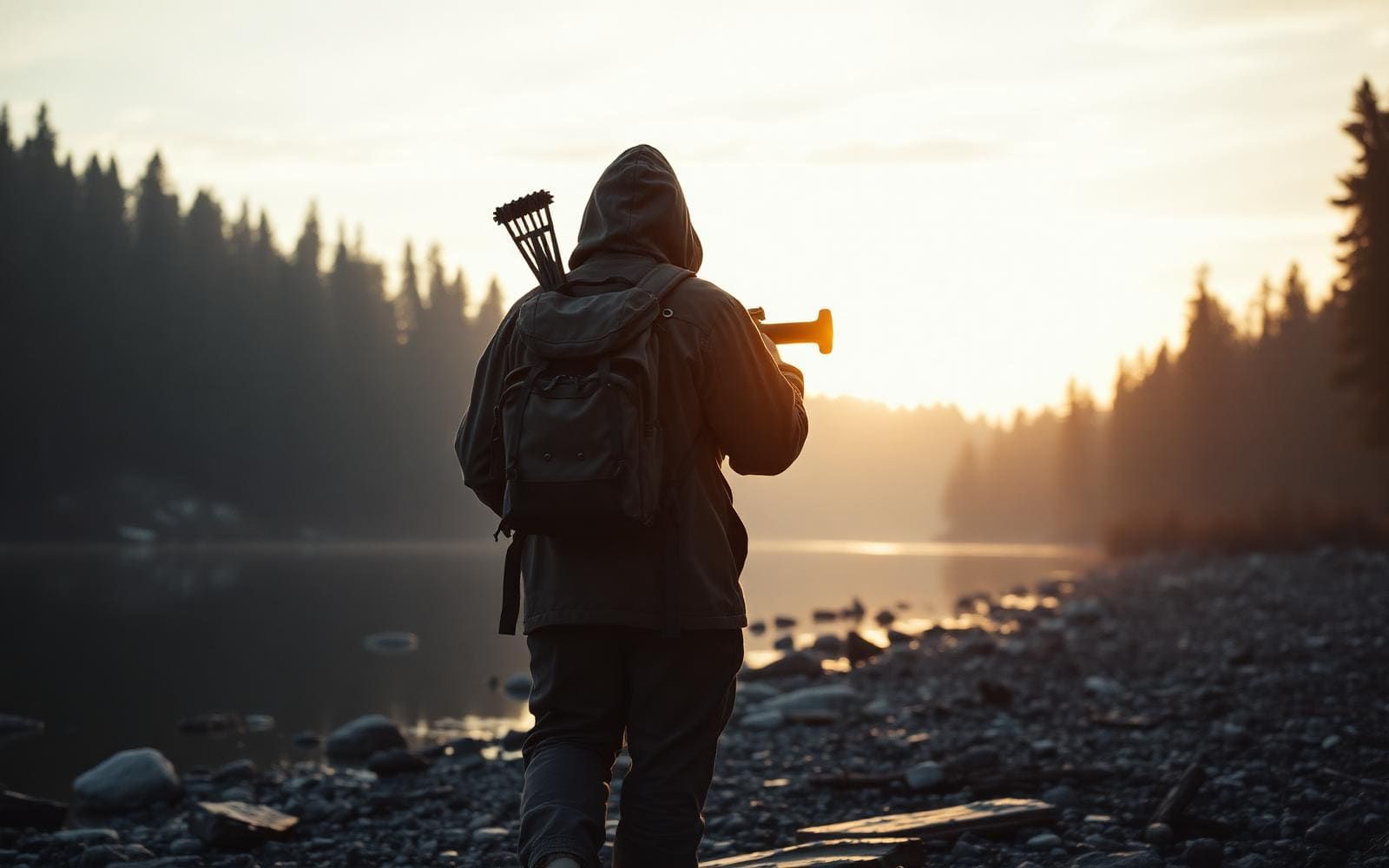
When a survival competition enters the fifty-day bracket, the utility of heavy-duty tools changes, and the gear supporting basic hydration, digestion, and caloric absorption takes precedence.
The Cooking Pot and Water Processing
Michelle's bowel impaction points directly to the critical role of the camp cooking vessel. In sub-freezing temperatures, contestants often make the error of cutting back on fluid consumption because melting ice and boiling water consumes finite firewood and energy. However, processing lean game without sufficient liquid intake exacerbates gastrointestinal blockages. The standard two-quart bush pot is no longer just a vessel for boiling broth; it is a life-support tool required to render bone fats, steep medicinal pine needles for minimal tannins and vitamins, and produce massive quantities of warm water to prevent the visceral dehydration that leads to digestive shutdown.
Sleep Systems and Thermal Envelopes
As Nikki's critical BMI extraction proved, insulation is what keeps a starving body alive when ambient temperatures dive below freezing. Standard issue sleeping bags—typically rated for sub-zero performance—are pushed to their design limits when occupied by individuals with single-digit body fat percentages. Without subcutaneous fat to generate and hold heat, a sleeper requires an airtight, moisture-managed microclimate. Bough beds must be constantly fluffed and refreshed to prevent conductive heat loss to the permafrost, and tarps or canvas bivy covers must be arrayed to prevent radiant loss without trapping condensation that destroys down loft.
Passive Trapping Wire and Fishing Rigs
With active hunting using recurve bows becoming increasingly inefficient due to energy deficits, passive food gathering gear becomes paramount. Twenty-gauge snare wire and gill nets represent the only mathematically viable path to halting BMI collapse. A snare line set for snowshoe hares works twenty-four hours a day without demanding sustained human caloric expenditure. However, as noted in the episode's thematic focus, passive systems are perpetually vulnerable to camp raiders. If a wolverine or marten clears a snare line before the contestant inspects it at first light, the contestant has essentially subsidized the local predator population with their own wire.
Current Standings: Days 48 to 52
- Michelle Wohlberg: Medically evacuated on Day 48. Removed due to advanced constipation and indications of an impacted bowel, ending a resilient and mechanically competent run.
- Nikki van Schyndel: Medically evacuated on Day 52. Pulled by the safety crew following routine vitals and weight monitoring that revealed a dangerously degraded BMI.
- Remaining Contestants: The active roster is significantly trimmed. The survivors are forced to navigate plummeting temperatures, frozen shorelines that eliminate open-water gill netting, and relentless nighttime wildlife interference.
Bottom Line
Episode 7 serves as an objective reminder of what Alone actually measures at this advanced stage. Bushcraft ingenuity, shelter aesthetics, and mental fortitude can secure an individual a place past Day 40, but Day 50 and beyond are governed entirely by internal biology. Michelle Wohlberg's impaction and Nikki van Schyndel's BMI extraction demonstrate that the wilderness does not need to deliver an overt catastrophe like an axe wound or a shelter fire to end a campaign. Simple biological failure—the stoppage of the intestinal tract or the depletion of cellular energy reserves—is more than enough to force an extraction.
Build the kit you just watched
Every item below is ranked from field use — no filler, no budget picks.
- The 10 items, rankedWhat actually survives 100 days — our tested picks for every slot on the list.
- Best bushcraft axesThe axe is the highest-leverage pick in the game. Here are the ones worth the weight.
- Best bushcraft knivesEvery winner carried one. These are the fixed blades that hold up to a full season.
- What the winners carriedSeason-by-season loadout analysis of every Alone champion.