


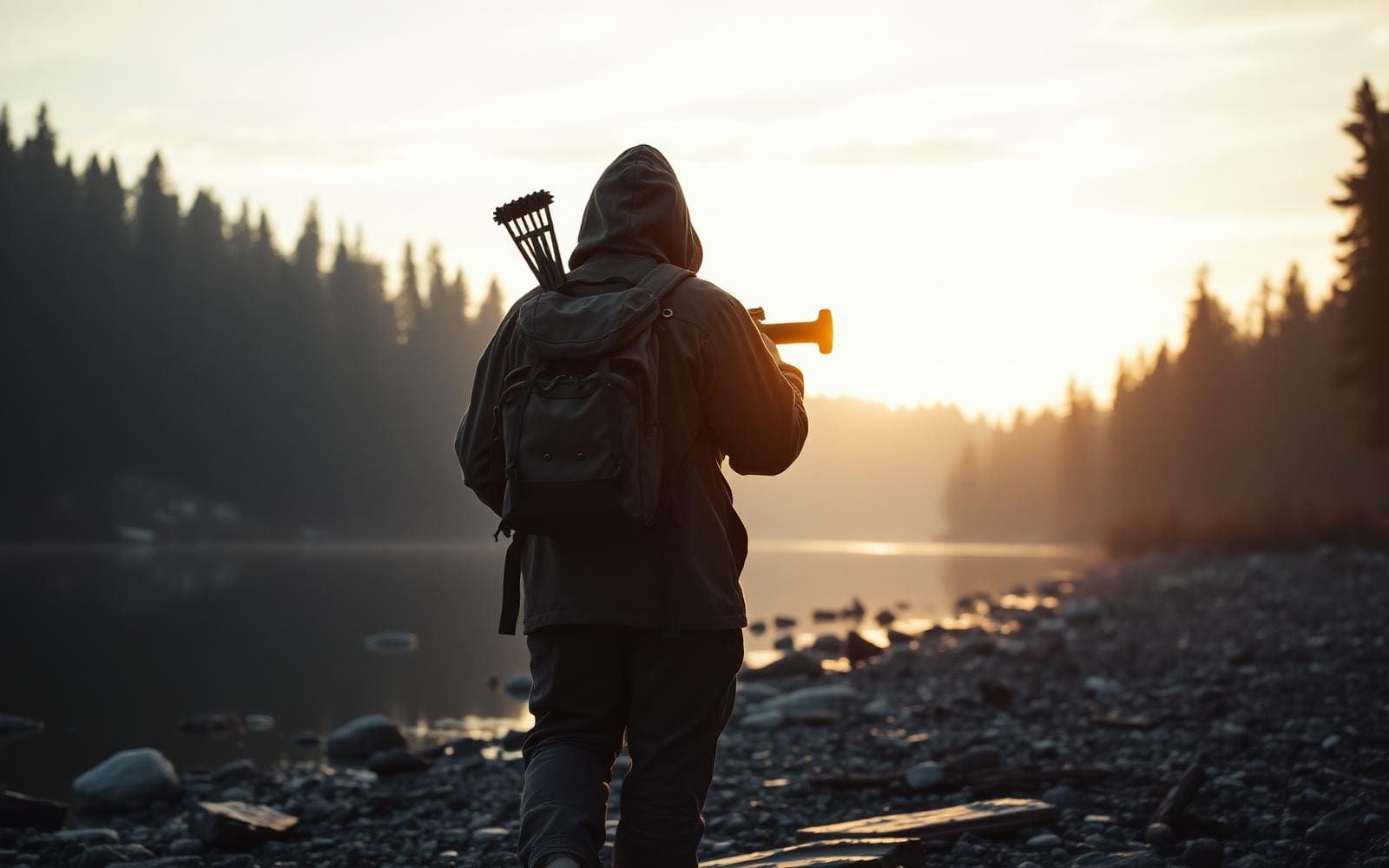
Whitetail hunting success often boils down to a single factor: stand placement. You can have the best rifle, the latest camo, and hours of practice, but if your stand isn't in the right spot, your chances plummet. It’s a chess match with a wary opponent, and the board is the deer woods. The three critical elements to consider are wind, terrain, and access.
Reading the Wind Correctly
Deer rely heavily on their sense of smell. It’s their primary defense, and ignoring it is a recipe for an empty tag. Always consider the prevailing wind direction for the time of day you plan to hunt and, just as importantly, how it might shift. A thermals effect, for example, often causes winds to flow downhill in the morning and uphill in the evening.
Before you hang a stand or even commit to a ground blind, take the wind's direction into account. Your scent cone will drift downwind, and any deer catching a whiff will likely vanish.
- Check multiple sources: Don't rely on just one weather app. Cross-reference wind forecasts.
- Use a wind checker: A small bottle of unscented powder or milkweed down is invaluable for showing micro-currents.
- Hunt accordingly: If the wind isn't right for your primary spot, have a secondary or tertiary option that favors the current conditions.
- Play the thermals: In hilly or mountainous terrain, understand how air currents move with the warming and cooling of the day.
Utilizing Terrain to Your Advantage
Terrain isn't just what you walk on; it's how deer move and how you should position yourself. Funnels, pinch points, ridges, and natural barriers all dictate deer travel. A funnel could be a narrow strip of woods between two open fields, or a saddle in a ridge line.
- Natural funnels: Look for areas where topography or vegetation forces deer into a constricted travel path. These are prime ambush points.
- Ridge lines and saddles: Deer often travel along ridge tops to conserve energy and keep an eye on their surroundings. Saddles are natural crossings.
- Bedding areas: Locate dense cover where deer prefer to bed down. Your stand should be positioned between bedding and feeding areas, often on the downwind side of their likely travel corridor.
- Water sources: In dry periods, water can be a significant draw. Position stands overlooking ponds, creeks, or even seeps.
- Food sources: Acorn flats, planted food plots, or agricultural fields are magnets for deer. Understand when and how deer visit these areas.
Planning Quiet and Undetected Access
Even the best stand placement is useless if deer know you're there before you ever climb into it. Access and egress are often overlooked but are paramount to success. A loud approach or a careless exit can educate deer and ruin your spot for future hunts.
- Scout access routes: Identify paths that offer concealment and minimize noise. Consider ditches, creek beds, or thick brush.
- Use the wind: Your entry and exit routes should also consider wind direction. Avoid blowing your scent into the area you intend to hunt.
- Approach in darkness: Especially for morning hunts, arrive well before daylight. For evening hunts, leave after dark.
- Minimize disturbance: Avoid breaking branches, stepping on crunchy leaves unnecessarily, or making excessive noise.
- Post-hunt exit: Resist the urge to quickly get down after your hunt. Give the woods time to settle, or wait for full darkness before exiting.
Mastering stand selection is an ongoing process. It requires observation, adaptation, and an understanding of how deer interact with their environment. By diligently factoring in wind direction, strategic use of terrain, and careful access, you'll significantly improve your chances of success in the whitetail woods.