


By Wild10 Editorial · October 19, 2026
Researched product profile · Manufacturer specifications, not a hands-on field test.
As an Amazon Associate, Wild10 earns from qualifying purchases.
The verdict
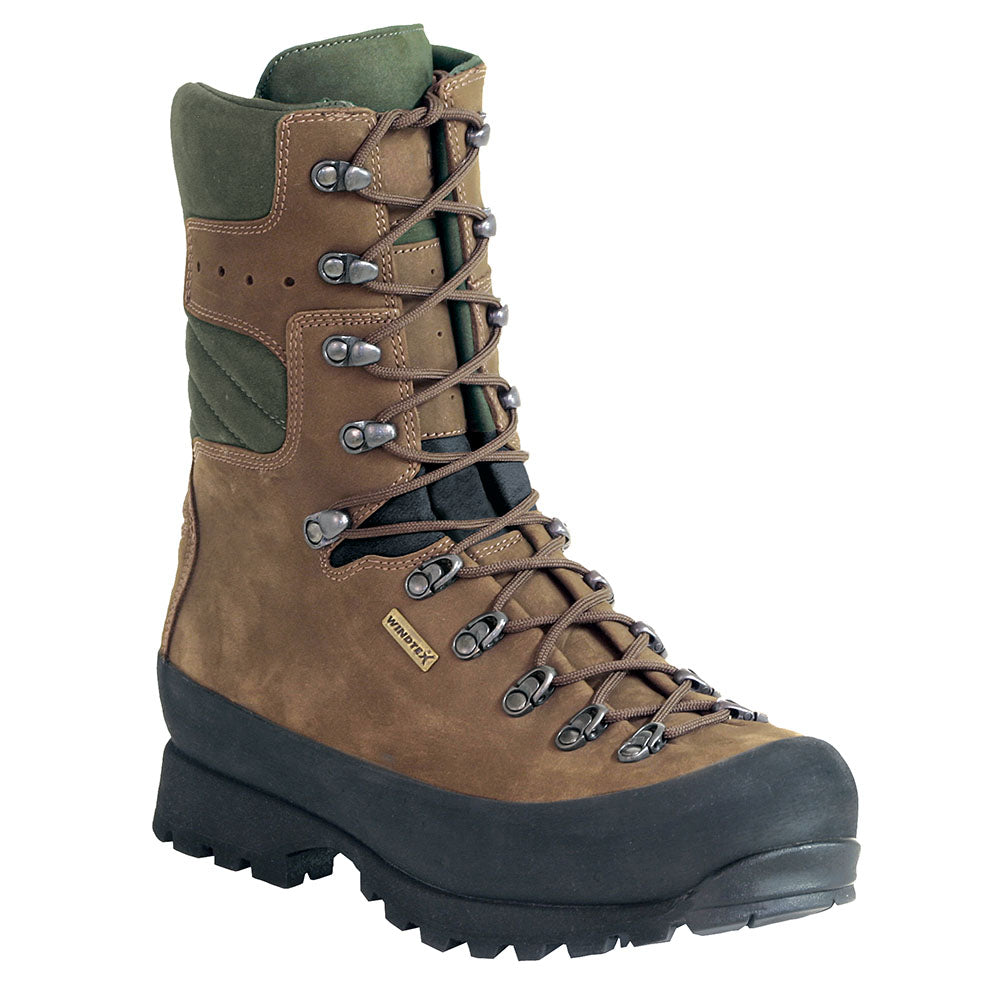
The Mountain Extreme 400 is worth considering when your hunt combines cold conditions, uneven terrain and a loaded pack. Kenetrek specifies 10-inch leather uppers, 400g Thinsulate, a waterproof Windtex membrane and 7mm nylon midsoles intended for heavy-pack support. Those features explain its mountain-hunting brief, but also the trade-off: this is a substantial leather boot that needs a careful fit and gradual break-in, not an airy early-season shoe. Wild10 has not field-tested this model, so comfort, grip and temperature performance are manufacturer-informed considerations rather than our own test results.
Check Amazon for current price, seller, size and width availability. Prices and stock change; Amazon inventory and checkout availability have not been independently verified.
Key strengths
- 400g Thinsulate insulation paired with a waterproof Windtex membrane
- 10-inch uppers made with 2.8mm leather and a one-piece vamp
- 7mm nylon midsoles designed for support with heavy packs
- Reinforced rubber sole guard, high-wear stitching and K-Talon outsoles
- Narrow, medium and wide options listed by Kenetrek; manufacturer resole service available
Watch out for
- Insulation is a trade-off for warm weather and high-output hiking
- Stiff new construction calls for gradual break-in before a demanding trip
- A tall leather boot is not a lightweight trail-shoe substitute
- 400g is an insulation specification, not a guaranteed temperature rating
- Resoling is a paid service; leather and rubber-rand care need attention
Best for
- Cold-weather mountain hunters seeking an insulated leather boot
- Backcountry trips where a supportive platform under a loaded pack matters
- Buyers willing to break in and maintain a substantial mountain boot
Why this boot belongs on a mountain-hunting shortlist
The Mountain Extreme 400 is a specific insulated model in Kenetrek’s mountain-boot family. The official page frames it around high-altitude hunting where cold and snow can arrive unexpectedly. Its tall leather upper, supportive midsole and insulation are coherent choices for that brief, rather than features meant to make it a casual summer hiker.
The important question is whether that brief matches your hunt. Cold days on rough ground with a pack justify considering support and insulation together. Warm scouting trips, fast hiking and stationary winter sits place different demands on footwear; no single boot specification guarantees the right balance for all three.
Source: Kenetrek — Mountain Extreme 400
400g Thinsulate and Windtex: warmth and water protection are different jobs
Kenetrek lists 400 gram Thinsulate insulation and a waterproof, breathable Windtex membrane. The insulation addresses warmth, while the membrane addresses water entry through the boot’s construction. Neither feature establishes a precise safe temperature for every wearer, nor makes the boot suitable for water deeper than its cuff.
Activity, socks, circulation, moisture and time spent standing still all affect warmth. For long cold sits, compare an appropriately insulated alternative; for hot, high-output use, compare the non-insulated Mountain Extreme. We have not measured thermal performance, drying time or waterproof endurance, and do not claim that 400g makes this an all-weather solution.
Source: Kenetrek — Mountain Extreme 400
Leather, rubber protection and the supportive platform
The manufacturer specifies 10-inch uppers made from 2.8mm leather, a one-piece vamp without seams down the tongue, and double or triple stitching in high-wear areas. A reinforced rubber sole guard adds abrasion protection around the lower boot. Kenetrek also describes swiveling, corrosion-resistant hardware.
Underfoot, a 7mm nylon midsole is intended to provide support with heavy pack loads. K-Talon outsoles and supportive footbeds complete the platform. These are documented design details, not an independent proof of ankle-injury prevention, a maximum load rating or a Wild10 traction score. Fit and appropriate route choices still matter.
Source: Kenetrek — Mountain Extreme 400
Sizing and width: start with measurements, not a guess
Kenetrek’s fitting guidance says Mountain Boots run true to a Brannock measurement and notes that many customers choose a half size above street-shoe size for downhill toe room. Treat that as guidance rather than an instruction to size up regardless of your foot. The official 400 page offers narrow, medium and wide options, with different size ranges for each width.
Try the selected size indoors with your intended hunting socks. Check toe room, heel hold and pressure across the forefoot, then reassess on a controlled incline. If you use an aftermarket footbed, try it before committing to the size. Verify the Amazon listing’s exact width and return terms; the presence of a wide option on Kenetrek’s site does not guarantee that Amazon stocks it.
Source: Kenetrek — boot fitting charts
Break-in is part of the buying decision
Kenetrek describes Mountain Extreme boots as stiff out of the box and recommends a gradual break-in: wear them at home and on errands, move to short easy hikes with light weight, and build toward uneven ground and a loaded pack. That is more useful than assigning an invented break-in mileage or promising immediate all-day comfort.
Buy early enough to evaluate fit before a major hunt. Persistent pressure, toe impact or rubbing should trigger a fit reassessment rather than simply more miles. We have not worn this model, so we cannot promise how quickly your pair will soften or whether its shape suits your feet.
Care, resoling and the real cost of ownership
Kenetrek recommends its Boot Wax and warns that dressings with heavy oils or animal fats can weaken the rubber-rand glue bond. Its care guidance also cautions against drying boots near a campfire or wood stove. Follow the current manufacturer instructions instead of treating all leather conditioners and heat sources as interchangeable.
The company offers a paid Mountain Boot resole service, including new outsoles and specified accompanying work. Ask Kenetrek to assess your actual pair and confirm current terms before relying on a future repair. Serviceability is a reason to consider the boot, not a guarantee that every liner, upper or damaged component can be restored indefinitely.
Source: Kenetrek — care and maintenance
The 400 versus Non-insulated and 1000 models
The clearest distinction within the Mountain Extreme family is insulation: the Non-insulated model has none, this model has 400g Thinsulate, and the 1000 has 1000g. The manufacturer lists broadly similar leather, membrane and outsole features, but available widths and listed weights vary. Do not transfer the other models’ weight or warmth claims to the 400.
The current 400 product page lists 4.2 lb without explaining a reference size or whether that figure is for a pair. We therefore preserve that limitation instead of silently calling it a per-boot or pair measurement. Older retailer descriptions may differ. Use the current exact-model specifications and a try-on when comparing it with the Crispi West River 2.0 GTX or another insulated hunting boot.
Source: Kenetrek — Mountain Extreme 400
Buying checklist and review method
Your supplied Amazon short link redirects to a Mountain Extreme 400 Insulated listing, ASIN B002MXYSCO, with the Wild10 affiliate tag. Confirm the selected size, width, seller, condition and model before ordering. This article uses current official Kenetrek specifications and a matching manufacturer photo; the linked Amazon listing may contain older text or different available variants.
Wild10 researched Kenetrek’s product, fit, break-in, care and repair guidance on October 19, 2026. This is not a hands-on field test, and no retailer customer stars have been repackaged as our own rating. The short-link destination and affiliate attribution were checked, but Amazon blocked automated page access, so current stock and checkout availability remain unverified.
Source: Kenetrek — boot repair service
Common questions
Is it insulated? Yes—the linked Mountain Extreme 400 uses 400g Thinsulate. Is it GORE-TEX? No; Kenetrek specifies Windtex for this model. How tall is it? Ten inches. Where is it made? Italy, according to Kenetrek.
Is it ready for a major hunt straight out of the box? Follow Kenetrek’s gradual break-in guidance and test your fit first. Can it be resoled? Kenetrek offers a paid Mountain Boot repair service, subject to its assessment and current terms. Is there a guaranteed cold-weather temperature rating? We have not found one in the reviewed official specifications.
Source: Kenetrek — Mountain Extreme 400
Specs at a glance
- Reviewed variant
- Men’s Mountain Extreme 400 Insulated; not the Non-insulated or 1000 model
- Upper height
- 10 inches
- Leather
- 2.8mm premium leather; one-piece vamp
- Insulation
- 400 gram Thinsulate
- Waterproof membrane
- Windtex
- Midsole
- 7mm nylon
- Outsole
- K-Talon
- Footbed
- Kenetrek Supportive Footbed with arch support and pronounced heel pocket
- Protection
- Reinforced rubber sole guard; double/triple stitching in high-wear areas
- Manufacturer-listed weight
- 4.2 lb on the current product page; reference size and weight basis not specified there
- Widths
- Narrow, medium and wide; size ranges vary by width
- Origin
- Made in Italy
As an Amazon Associate, Wild10 earns from qualifying purchases.