


Reader rating
Rate it and you move it. Community ratings re-rank this product inside its Top 10 list.
Expert-picked, reader-ranked. Our editors choose the products and the launch order; member star ratings move picks up or down over time.
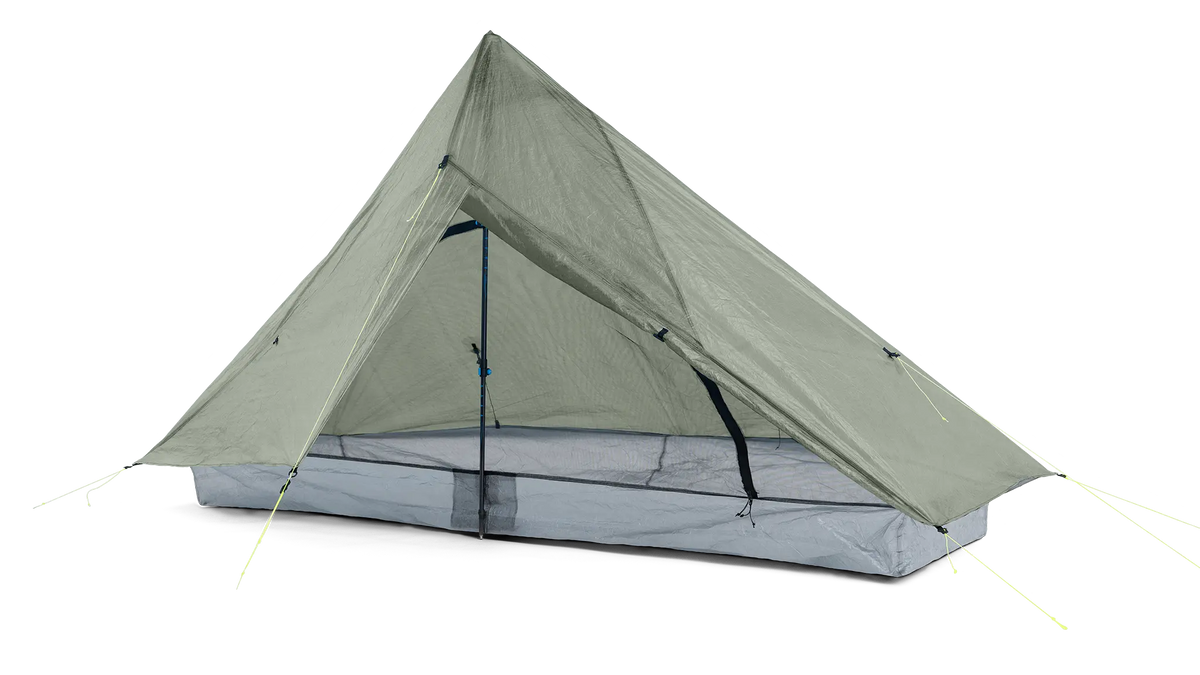
The Zpacks Plex Solo is engineered for dedicated ultralight backpackers and long-distance thru-hikers where every fraction of an ounce matters. Built around a single-wall architecture supported by a single trekking pole set to approximately 52 inches, the shelter strips away unnecessary hardware to achieve an astonishingly low trail weight. It packs down remarkably small, making it a staple among high-mileage hikers tackling extended trail systems. The entire canopy is constructed from Dyneema Composite Fabric (DCF), an exceptionally strong, inherently waterproof non-woven laminate. Unlike nylon or polyester, DCF absorbs zero water, meaning the tent will not sag during prolonged rainstorms and can be packed away wet without gaining significant water weight. The bathtub floor is sewn directly to the canopy via breathable perimeter mesh, which aids airflow while keeping ground moisture and insects out. Operating a single-wall DCF shelter introduces clear practical trade-offs. Condensation is an unavoidable reality in humid or poorly ventilated conditions, requiring users to wipe down interior walls with a camp towel and practice smart campsite selection. Setup requires a firm foundation with at least six stakes—often ten in high winds—and the single-pole pyramid profile leaves limited elbow room away from the apex. **Highlights** - Dyneema Composite Fabric construction eliminates wet fabric stretch and water absorption. - Exceptionally low total weight and minimal packed volume for ultralight kits. - Single-pole pitch utilizes standard trekking poles adjusted to fixed heights. - Deep bathtub floor keeps splash and running ground water away from your sleep system. - Storm doors feature metal hooks and overlapping panels for straightforward weather adjustments. **Watch-outs** - High retail cost associated with premium Dyneema Composite Fabric construction. - Single-wall design demands active condensation management in humid environments. - Requires secure staking across multiple guy points to maintain structural integrity.
Pros
- Dyneema Composite Fabric absorbs zero water and will not sag in sustained rain.
- Remarkably low trail weight and compact packed size for ultralight kits.
- Single-pole pitch uses standard trekking poles adjusted to roughly 52 inches.
- Deep bathtub floor keeps running ground runoff away from sleeping gear.
Cons
- Single-wall geometry requires active condensation wiping in damp environments.
- High retail price compared to conventional silnylon or silpoly solo shelters.
- Non-freestanding structure relies entirely on secure ground stakes to pitch.
Best uses
- Long-distance thru-hiking
- Ultralight backpacking trips
- High-mileage fastpacking
- Three-season mountain routes
Specifications
- Shelter Type
- Non-freestanding trekking-pole tent
- Wall Structure
- Single-wall with perimeter mesh
- Canopy Fabric
- Dyneema Composite Fabric (DCF)
- Support Pole
- One trekking pole (approx. 52 inches)
- Staking Needs
- 6 stakes baseline, up to 10 in wind
- Intended Use
- Ultralight backpacking and thru-hiking
Pricing
We don't publish a price we haven't verified. The retailer links below open the live listing for this exact model.
Full catalog listing & offersBest for
Long-distance thru-hiking, Ultralight backpacking trips, High-mileage fastpacking, Three-season mountain routes
Where to buy the Plex Solo
We don't have a direct Amazon listing on file yet — this opens an Amazon search for the exact make and model.
Some links are affiliate links. Buying through them supports our testing at no extra cost to you.
The Zpacks Plex Solo is a purpose-built shelter engineered specifically for high-mileage thru-hikers and dedicated ultralight backpackers who prioritize weight reduction above traditional creature comforts. Operating as a non-freestanding single-wall tent, it utilizes a single trekking pole set to approximately 52 inches to form its primary apex, supported by an array of perimeter guyline attachment points. The defining characteristic of this shelter is its Dyneema Composite Fabric canopy. Because DCF is an inherently waterproof non-woven laminate, it does not absorb moisture, stretch when wet, or experience the sagging common to silnylon shelters during overnight rain. The integrated bathtub floor attaches directly to the canopy via a band of perimeter mesh, providing insect protection and passive low-level airflow around the sleeper. Choosing a shelter of this caliber requires accepting the standard compromises of single-wall architecture. Interior moisture condensation is an operational reality in humid or stagnant conditions, demanding routine wipe-downs and thoughtful campsite selection. For hikers committed to moving fast with minimal pack volume, the Plex Solo delivers exceptional weight-to-protection efficiency.
Target Audience and Intent
The Zpacks Plex Solo is not intended for casual weekend campers or anyone looking for a palatial backcountry bedroom. It is built strictly for gram-counting thru-hikers and experienced ultralight backpackers who treat their shelter primarily as a functional recovery capsule. Hikers covering long daily distances benefit most from its exceptionally low trail weight and compressed volume, which free up vital pack capacity for food and water. Operating this shelter requires a solid grasp of non-freestanding tent pitching, tension adjustment, and site selection. Backpackers transitioning from traditional freestanding double-wall tents will face an operational learning curve. If you want upright livability, room to lounge, or effortless set-and-forget pitching on hard-packed soil, a heavier semi-freestanding model remains the more sensible choice. For those focused entirely on minimalism and forward momentum, the design strips away extraneous bulk.
Materials and Construction
At the core of the Plex Solo is Dyneema Composite Fabric, a specialized laminate that pairs ultra-high-molecular-weight polyethylene filaments with polyester films. This construction provides high tensile strength along fiber pathways while remaining completely impervious to water absorption. When heavy precipitation hits, the canopy stays taut rather than stretching and pooling water, and it can be packed away wet in the morning without taking on additional liquid weight. The bathtub floor is sewn directly to the canopy walls through a continuous strip of breathable insect mesh, maintaining floor elevation off the ground. The vestibule storm doors secure with metal hooks and overlapping panels, bypassing the failure points of traditional door zippers on the exterior fly. Every design decision serves the objective of stripping weight without sacrificing fundamental weather barrier capability.
Condensation and Moisture Management
Because the Plex Solo is a single-wall shelter, interior condensation management is an integral part of using it. In humid climates, temperature inversions, or sheltered forested sites, moisture from breath and ground evaporation will condense along the underside of the DCF canopy. Because DCF does not absorb water, moisture collects as distinct droplets on the smooth laminate surface. The perimeter mesh allows minor runoff to drain safely outside the raised bathtub floor, but contact between sleeping bags and the sloping walls can transfer dampness to insulation. Managing this environment requires proactive campsite selection under tree canopies and aligning vestibule doors to take advantage of cross breezes. Users should plan on carrying a small camp towel to wipe down interior walls before packing, which quickly restores a dry living surface.
Pitching Dynamics and Tuning
Pitching the Plex Solo centers on a single adjustable trekking pole set to roughly 52 inches, positioned handle-up or tip-up depending on user preference. Achieving a solid, weather-resistant structure requires setting a minimum of six ground stakes to establish base perimeter tension before raising the center pole. In exposed or gusty terrain, utilizing the additional storm guylines brings the stake count up to ten. Ground composition plays a decisive role in stability because the shelter cannot stand without tension; rocky terrain or loose sand demands specialized anchoring tactics like deadman anchors or rock weighting. Properly tuning guyline angles ensures the deep bathtub floor remains lifted above ground level, stopping splashback from rebounding under the fly during intense rain.
Interior Space and Geometry
The interior layout of the Plex Solo reflects an offset pyramid geometry. Headroom is concentrated near the center apex, giving users sufficient vertical clearance to sit upright while changing layers or sorting gear. However, the usable volume slopes down sharply toward the head and foot ends. Tall hikers on thick inflatable sleeping pads may find their head or foot box resting near the inward-sloping DCF canopy, highlighting the importance of pitching the end guylines with adequate outward tension. The side vestibule provides sheltered staging for trail footwear and smaller items, but large expedition packs must generally remain inside the perimeter floor or beneath the covered door flap. Space efficiency takes precedence over sprawling interior mobility.
Cost and Market Context
The primary barrier to entry for the Plex Solo is its premium price point, dictated by the raw material cost of Dyneema Composite Fabric and specialized production requirements. Hikers weighing options in this ultralight bracket often compare it to high-end silnylon or silpoly single-pole shelters. While woven alternatives from niche cottage manufacturers are considerably more affordable, they come with a moderate weight penalty and stretch when soaked, requiring tension adjustments during wet nights. Freestanding double-wall solo shelters offer simpler pitching and better condensation isolation, but they often carry double the packed weight. The Plex Solo occupies a narrow high-performance niche, trading structural interior space and mechanical simplicity for absolute minimum base weight.
How we picked
We started with a long list of 1-person tents that people actually buy, cut anything that could not clear our baseline for durability and field performance, then ranked the 10 that were left against the same criteria. Rankings are editorial. No brand pays for placement, and affiliate links never move a pick up or down.
- Storm worthiness and livability
- Pitch tension in wind, condensation management, and usable interior space for the weight.
- Load carriage
- How the suspension handles the loads the pack is actually rated for, over long days.
- Real-world durability
- How the material, stitching, or steel holds up after a season of hard use — not how it looks new.
- Performance in bad conditions
- Wind, rain, cold, and grit are the test. Anything that only works on a nice day gets marked down.
- Weight and packability
- Every ounce has to earn its place in the pack, but not at the cost of something that fails in the field.
- Ease of use
- Setup, adjustment, and maintenance with cold hands, in the dark, without the manual.
Plex Solo — frequently asked questions
- Is the Plex Solo worth it?
- We rank it #3 in 1-Person Tents. The Zpacks Plex Solo is engineered for dedicated ultralight backpackers and long-distance thru-hikers where every fraction of an ounce matters. Built around a single-wall architecture supported by a single trekking pole set to approximately 52 inches, the shelter strips away unnecessary hardware to achieve an…
- What is the Plex Solo best for?
- Best for long-distance thru-hiking, ultralight backpacking trips, high-mileage fastpacking and three-season mountain routes. Standouts: dyneema composite fabric absorbs zero water and will not sag in sustained rain. and remarkably low trail weight and compact packed size for ultralight kits..
- What are the downsides of the Plex Solo?
- Single-wall geometry requires active condensation wiping in damp environments., High retail price compared to conventional silnylon or silpoly solo shelters. and Non-freestanding structure relies entirely on secure ground stakes to pitch..
- What are the key specs of the Plex Solo?
- Shelter Type: Non-freestanding trekking-pole tent · Wall Structure: Single-wall with perimeter mesh · Canopy Fabric: Dyneema Composite Fabric (DCF) · Support Pole: One trekking pole (approx. 52 inches) · Staking Needs: 6 stakes baseline, up to 10 in wind
- Target Audience and Intent — what should I know about the Plex Solo?
- The Zpacks Plex Solo is not intended for casual weekend campers or anyone looking for a palatial backcountry bedroom. It is built strictly for gram-counting thru-hikers and experienced ultralight backpackers who treat their shelter primarily as a functional recovery capsule.
- Materials and Construction — what should I know about the Plex Solo?
- At the core of the Plex Solo is Dyneema Composite Fabric, a specialized laminate that pairs ultra-high-molecular-weight polyethylene filaments with polyester films. This construction provides high tensile strength along fiber pathways while remaining completely impervious to water absorption.
Compare side by side
Put the Plex Solo against any other pick on this list — specs, price, pros, cons and reader ratings.