


Reader rating
Rate it and you move it. Community ratings re-rank this product inside its Top 10 list.
Expert-picked, reader-ranked. Our editors choose the products and the launch order; member star ratings move picks up or down over time.
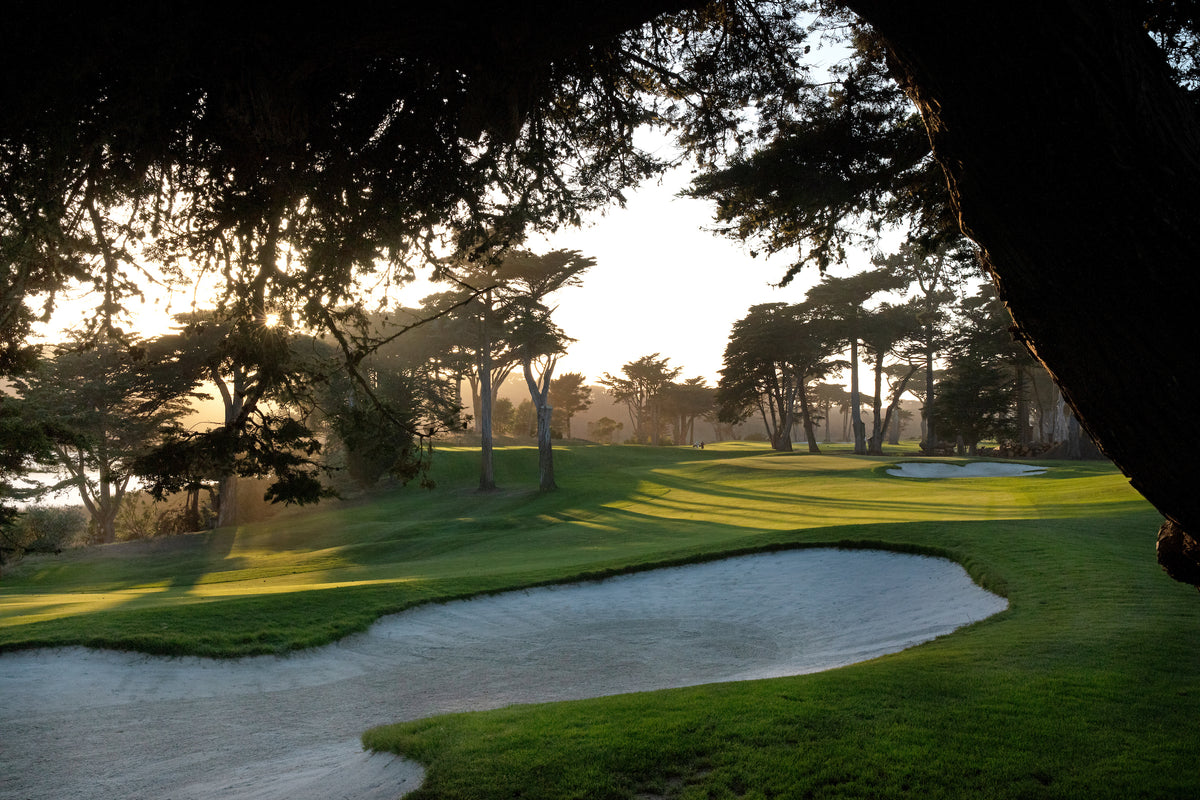
TPC Harding Park suits golf purists who appreciate Golden Age parkland layouts framed by urban natural beauty. Set along the perimeter of Lake Merced in southwest San Francisco, this city-owned landmark was originally established in the 1920s and underwent a comprehensive restoration before joining the PGA Tour's TPC network. It has since hosted the Presidents Cup, the World Golf Championships, and the 2020 PGA Championship. The course is characterized by towering Monterey cypress trees lining narrow corridors of lush turf. The relatively flat coastal terrain makes it an enjoyable, traditional walk, but the visual intimidation from off the tee is real. Approaches require working the ball beneath hanging branches and into tight, well-guarded green complexes. Heavy coastal marine air from the nearby Pacific keeps fairways soft, meaning drives generate limited rollout and play longer than the scorecard numbers indicate. Availability and pricing represent the core trade-offs. San Francisco residents enjoy some of the best municipal rates in the country, but non-residents pay steep premium fees. Additionally, coastal fog and wind can bring chilly, damp conditions even in the middle of summer, requiring proper outer layers and water-resistant footwear. **Highlights** - Historic 1920s routing framed by towering Monterey cypress trees - Venue for major professional events including the 2020 PGA Championship - Excellent walking layout with level, walkable topography - Beautiful natural setting bordering scenic Lake Merced - High maintenance standards maintained through the TPC network partnership **Watch-outs** - Non-resident green fees are significantly higher than local resident rates - Coastal fog and marine air can make conditions cold, wet, and heavy
Pros
- Championship pedigree having hosted the 2020 PGA Championship and Presidents Cup
- Exceptionally walkable routing with minimal grade changes along Lake Merced
- PGA Tour-grade agronomic conditioning and green maintenance
- Heavily discounted, world-class value for verified San Francisco residents
Cons
- Hefty premium greens fees for non-resident and out-of-town players
- Frequent coastal fog and damp air make conditions cold and reduce ball rollout
- High visitor volume often leads to round durations approaching five hours
Best uses
- Championship parkland golf
- Dedicated walking rounds
- Competitive amateur practice
- San Francisco golf trips
Specifications
- Location
- San Francisco, California
- Facility Type
- Municipal facility operated with TPC Network
- Architectural Style
- Classical tree-lined parkland
- Topography
- Flat, highly walkable coastal basin
- Signature Feature
- Towering Monterey cypress corridors
- Major Events
- 2020 PGA Championship, 2009 Presidents Cup
Pricing
We don't publish a price we haven't verified. The retailer links below open the live listing for this exact model.
Best for
Championship parkland golf, Dedicated walking rounds, Competitive amateur practice, San Francisco golf trips
Where to buy the Harding Park
We don't have a direct Amazon listing on file yet — this opens an Amazon search for the exact make and model.
Some links are affiliate links. Buying through them supports our testing at no extra cost to you.
TPC Harding Park represents one of the most successful municipal restorations in American golf history. Owned by the City and County of San Francisco and operated in partnership with the PGA Tour's TPC network, the venue occupies a forested promontory surrounded by the freshwater shores of Lake Merced. Originally designed in the 1920s, the facility underwent extensive overhauls in the early 2000s, elevating its conditioning from a deteriorating urban track to a championship layout capable of hosting premier tournaments like the Presidents Cup and the 2020 PGA Championship. The architectural identity of the course is defined by its mature canopy of Monterey cypress trees. These dense corridors demand precise shot shaping off the tee and disciplined distance control on approach. Because the property sits less than two miles from the Pacific Ocean, the heavy marine layer keeps the bentgrass and poa annua turf lush and damp, significantly cutting down on roll and forcing the track to play considerably longer than its posted yardage. While San Francisco residents can secure heavily subsidized tee times, out-of-town visitors face substantial greens fees that rival luxury resort destinations. For players willing to manage coastal weather and premium non-resident pricing, it provides a rare chance to play a public-access parkland layout preserved at tour-caliber standards.
Who It Is Really For
TPC Harding Park caters squarely to traditionalists and competitive amateurs who value structural shot values over dramatic elevation changes or wide-open resort fairways. Golfers who thrive here possess reliable dispersion off the tee and can manage low-trajectory approaches when the coastal wind picks up. Because the property is virtually flat, it is an ideal routing for dedicated walkers who prefer carrying their bag or using a pushcart rather than riding in a golf cart. Conversely, high-handicap players who struggle with directional control will find the dense timberlines and hanging cypress canopies deeply frustrating, as errant drives routinely leave no direct path to the green. Golfers seeking panoramic ocean vistas rather than enclosed forest corridors might also prefer coastal bluffs elsewhere. It is best suited to purists looking to test their tactical discipline against a proven major championship venue that rewards patience, club management, and steady striking.
Layout and Architectural Design
Originally routed by William Watson and Sam Whiting in 1925, Harding Park avoids artificial earthmoving in favor of an organic routing dictated by the Lake Merced shoreline. The front nine weaves through inland pockets of towering Monterey cypress, while the closing stretch brings water hazards and perimeter boundaries into closer focus. The signature finishing sequence, culminating in the dogleg 18th hole that traces the lake, requires both nerve and strategic placement rather than mindless distance. Unlike modern minimalist tracks characterized by wide corridors and firm-and-fast ground games, Harding Park adheres to mid-century parkland aesthetics. Narrow fairways, thick perimeter rough, and small-to-medium green complexes emphasize aerial precision. Approach angles dictate scoring potential, as several greens are defended by overhanging branches that complicate straight shots from the incorrect side of the fairway.
Turf Conditions and Microclimate
The course's proximity to the Pacific Ocean plays a dominant role in its turf management and everyday playing characteristics. The grounds feature poa annua and bentgrass surfaces maintained to PGA Tour specifications by the TPC agronomy staff. Because San Francisco's marine layer frequently blankets the area in fog, fairways retain considerable moisture throughout the year. Tee shots produce minimal roll, turning mid-length par fours into grueling long-iron tests for average-swing-speed golfers. The green surfaces run smooth, true, and moderately quick, though late-afternoon moisture can lead to foot traffic indentations and slight deceleration typical of poa annua greens. Players must also prepare equipment and apparel for rapid meteorological shifts; clear skies can vanish within an hour, replaced by gusty coastal crosswinds and chilling dampness that necessitate high-performance waterproof layers and moisture-wicking gear.
Pace and Walkability
Unlike modern resort courses built across vast residential subdivisions, Harding Park remains an exceptionally walkable track. Tee boxes sit adjacent to preceding greens, eliminating long transitions and preserving the natural cadence of a classic walking round. The gentle grades around Lake Merced present virtually no cardiovascular strain, making it accessible to walkers of all fitness levels. However, its popularity as a top-tier public course can result in extended round times. Typical weekend paces can hover between four and a half and five hours, especially during prime morning slots when mixed-skill groups tackle tournament-length tee boxes. Players should account for this deliberate pace, particularly when booking late afternoon times where failing light can become a factor under the dense tree cover before reaching the clubhouse.
Pricing and Access Trade-offs
The central tension at TPC Harding Park lies in its tiered municipal pricing structure. San Francisco residents with a verified resident card enjoy some of the most affordable high-caliber golf rates in the western United States. For non-residents and out-of-state travelers, however, green fees climb into premium resort territory, often exceeding several hundred dollars per player. This stark financial dichotomy means non-residents must carefully weigh whether a classic parkland layout justifies a top-dollar expenditure compared to nearby public options or destination courses along the coast. While conditioning and service standards closely match private TPC network venues, booking lead times are competitive, and tee sheets open rapidly to local demand. Out-of-market visitors need to plan reservations weeks in advance to secure desirable starting times.
Comparable Municipal Alternatives
When examining elite public golf in the West, Harding Park sits alongside heavyweights like Torrey Pines South in La Jolla and Chambers Bay in Washington. Compared to Torrey Pines, which delivers exposed ocean-bluff drama, brutal coastal length, and deep Kikuyu rough, Harding Park offers a tighter, tree-lined environment with simpler topography and less punishing physical exertion. Against Chambers Bay's sweeping fescue links and massive elevation swings, Harding Park delivers an entirely different, traditional parkland experience defined by aerial target golf and softer surfaces. Regionally, Bay Area golfers often weigh Harding against Pasatiempo in Santa Cruz; while Pasatiempo presents more complex, contour-heavy Alister MacKenzie green complexes, Harding Park provides superior accessibility within city limits and the logistical conveniences of a tour-managed municipal flagship.
How we picked
We started with a long list of america’s 20 best municipal golf courses that people actually buy, cut anything that could not clear our baseline for durability and field performance, then ranked the 10 that were left against the same criteria. Rankings are editorial. No brand pays for placement, and affiliate links never move a pick up or down.
- Real-world durability
- How the material, stitching, or steel holds up after a season of hard use — not how it looks new.
- Performance in bad conditions
- Wind, rain, cold, and grit are the test. Anything that only works on a nice day gets marked down.
- Weight and packability
- Every ounce has to earn its place in the pack, but not at the cost of something that fails in the field.
- Ease of use
- Setup, adjustment, and maintenance with cold hands, in the dark, without the manual.
- Value at its price point
- Compared against the closest competitors in the same tier, not against cheaper gear in a different class.
- Repairability and support
- Field-fixable design, available parts, and a warranty the maker actually honors.
Harding Park — frequently asked questions
- Is the Harding Park worth it?
- We rank it #4 in America’S 20 Best Municipal Golf Courses. TPC Harding Park suits golf purists who appreciate Golden Age parkland layouts framed by urban natural beauty. Set along the perimeter of Lake Merced in southwest San Francisco, this city-owned landmark was originally established in the 1920s and underwent a comprehensive restoration before joining the PGA Tour's TPC…
- What is the Harding Park best for?
- Best for championship parkland golf, dedicated walking rounds, competitive amateur practice and san francisco golf trips. Standouts: championship pedigree having hosted the 2020 pga championship and presidents cup and exceptionally walkable routing with minimal grade changes along lake merced.
- What are the downsides of the Harding Park?
- Hefty premium greens fees for non-resident and out-of-town players, Frequent coastal fog and damp air make conditions cold and reduce ball rollout and High visitor volume often leads to round durations approaching five hours.
- What are the key specs of the Harding Park?
- Location: San Francisco, California · Facility Type: Municipal facility operated with TPC Network · Architectural Style: Classical tree-lined parkland · Topography: Flat, highly walkable coastal basin · Signature Feature: Towering Monterey cypress corridors
- Who It Is Really For?
- TPC Harding Park caters squarely to traditionalists and competitive amateurs who value structural shot values over dramatic elevation changes or wide-open resort fairways. Golfers who thrive here possess reliable dispersion off the tee and can manage low-trajectory approaches when the coastal wind picks up.
- Layout and Architectural Design — what should I know about the Harding Park?
- Originally routed by William Watson and Sam Whiting in 1925, Harding Park avoids artificial earthmoving in favor of an organic routing dictated by the Lake Merced shoreline. The front nine weaves through inland pockets of towering Monterey cypress, while the closing stretch brings water hazards and perimeter…
Compare side by side
Put the Harding Park against any other pick on this list — specs, price, pros, cons and reader ratings.