


Reader rating
Rate it and you move it. Community ratings re-rank this product inside its Top 10 list.
Expert-picked, reader-ranked. Our editors choose the products and the launch order; member star ratings move picks up or down over time.
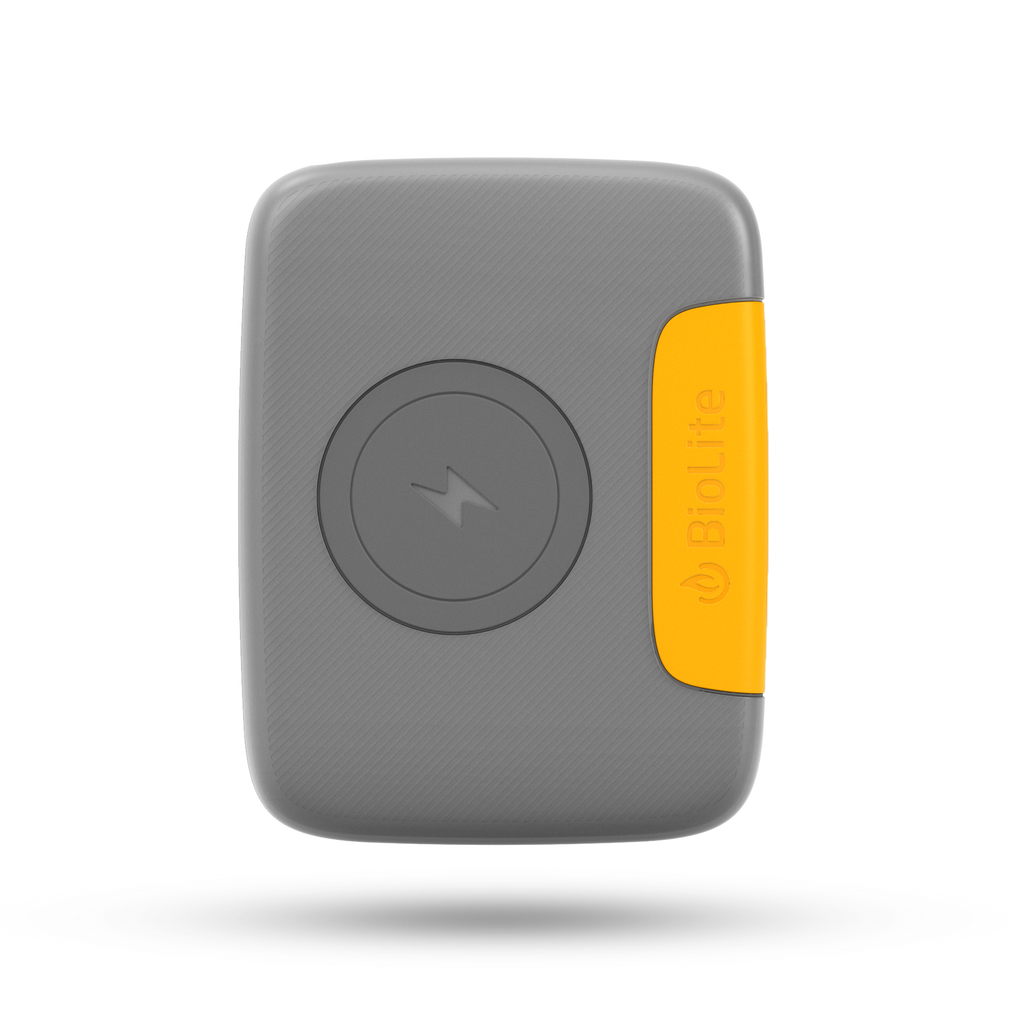
The BioLite Charge 100 Max is engineered for multi-device backcountry users, guide services, and group expeditions that need a versatile, centralized charging depot. Housing a 25,000 mAh battery, this unit differentiates itself with an integrated wireless charging pad on its top surface alongside multiple high-speed USB-C PD and USB-A ports, allowing an entire tent crew to top off phones, headlamps, and GPS units at once. BioLite builds gear intended for camp life, and that ethos shows in the Charge 100 Max’s construction. The battery is surrounded by a rigid, impact-resistant housing that withstands being tossed into gear tubs, pack bottoms, and dusty environments. Outdoor outlets praise its high total power output, which lets you fast-charge modern laptops while simultaneously running auxiliary camp accessories. The clean, utilitarian design makes battery status and port activity immediately clear. At 1 pound 4 ounces (20 ounces) and carrying a premium price tag around $180, this is a specialized investment. Wireless charging, while convenient around camp, incurs inherent energy losses via heat dissipation—a drawback when every percentage point of stored battery counts in the wilderness. It belongs in expedition duffels, raft frames, or hunting camps rather than an ultralight solo pack. **Highlights** - 25,000 mAh capacity capable of running group gear over multi-day trips - Integrated wireless charging surface adds cable-free convenience - Dual 100W-capable USB-C PD ports support laptops and fast-charge devices - Durable, impact-resistant housing designed for rigorous outdoor handling - Clean digital status screen tracks input and output metrics **Watch-outs** - Substantial weight of 1 pound 4 ounces is prohibitive for solo hikers - Premium price point requires a major investment - Wireless charging generates heat and reduces overall electrical efficiency
Pros
- Substantial 25,000 mAh capacity reliably powers multiple camp devices
- High-wattage USB-C Power Delivery easily handles modern laptops
- Rugged, impact-resistant chassis built for rigorous outdoor environments
- Integrated wireless deck provides cable-free phone charging utility
Cons
- Substantial 1 lb 4 oz weight is excessive for solo backpackers
- Induction wireless charging loses stored energy through heat dissipation
- Premium $180 price point demands a significant financial investment
Best uses
- Group Backcountry Expeditions
- Remote Field Photography
- Multi-Day River Trips
- Vehicle and Basecamp Charging
Specifications
- Battery Capacity
- 25,000 mAh
- Weight
- 1 lb 4 oz (567 g)
- Primary Output
- High-speed USB-C Power Delivery
- Additional Ports
- USB-A and integrated wireless deck
- Display
- Digital status screen
- Approximate Price
- $180
Pricing
We don't publish a price we haven't verified. The retailer links below open the live listing for this exact model.
Full catalog listing & offersBest for
Group Backcountry Expeditions, Remote Field Photography, Multi-Day River Trips, Vehicle and Basecamp Charging
Where to buy the Charge 100 Max
We don't have a direct Amazon listing on file yet — this opens an Amazon search for the exact make and model.
Some links are affiliate links. Buying through them supports our testing at no extra cost to you.
The BioLite Charge 100 Max is engineered as a heavy-duty, multi-device power hub rather than a minimalist battery for solo hikers. Built around a substantial 25,000 mAh battery cell, it is tailored specifically to address the high energy demands of group outings, commercial guiding, and outdoor professionals who need to recharge an array of devices simultaneously. Instead of forcing users to cycle through ports, the unit functions as a shared basecamp depot capable of powering laptops, mirrorless camera bodies, smartphones, and field electronics in a single charging session. BioLite differentiated this model by integrating an induction wireless charging pad into the top deck alongside multi-port USB-C Power Delivery and USB-A connections. The exterior is wrapped in a ruggedized, impact-resistant chassis designed to withstand loose storage in duffels, raft dry boxes, and gear bins without suffering housing fractures. A crisp digital display provides real-time visibility into stored energy reserves and ongoing power draws, bringing reliable oversight to camp power management.
Target User and Ideal Scenarios
The Charge 100 Max is specifically designed for group leaders, backcountry photographers, and remote field workers rather than fast-and-light solo hikers. When a party of three or four needs to maintain satellite communicators, headlamps, and phones over a week-long journey, dividing one high-capacity battery among the group is often more efficient than carrying multiple individual power banks. It also suits adventure media creators who need to reliably top off laptop batteries and camera power packs in remote locations. For solo backpackers watching base weight, carrying over a pound of lithium cells is rarely justifiable, but for canoe expeditions, hunting camps, and multi-person trekking itineraries, the consolidated capacity makes operational sense.
Chassis Construction and Durability
BioLite constructs the Charge 100 Max with camp life in mind, utilizing a thick, rigid composite shell that resists drops and internal compression. Traditional consumer-grade power bricks often use thin plastics that can crack when crushed beneath heavy camp stoves or shifted inside loaded pack bottoms. The Charge 100 Max features reinforced edges and recessed interface points designed to limit dust intrusion and impact damage. While it is not fully submersible, the housing is built to endure gritty environments, sandy camp tables, and damp picnic benches. The textured surface on the upper wireless pad also helps keep devices from vibrating off during charging cycles when rested on uneven surfaces.
Power Delivery and Output Performance
With a 25,000 mAh storage reserve, the Charge 100 Max delivers substantial throughput across multiple devices at once. The unit features high-wattage USB-C Power Delivery ports capable of putting out enough wattage to run or recharge modern USB-C laptops at full speed. This makes it an effective companion for fieldwork requiring on-site data offloading and editing. Simultaneously, additional ports allow smaller peripherals like GPS units and rechargeable lanterns to draw power without thermal throttling. The integrated digital screen eliminates guesswork, clearly showing remaining percentage and current input/output status so camp managers can accurately pace their power consumption between available recharge windows.
The Wireless Charging Trade-Off
The inclusion of a wireless charging pad on the top deck offers convenience, but it introduces an inherent trade-off in outdoor efficiency. Wireless induction allows users to rest a compatible smartphone or earbud case directly on the battery without digging through dry sacks for charging cords. However, induction charging inherently loses a noticeable percentage of energy to ambient heat compared to direct copper cable connections. In a backcountry setting where every milliamp-hour represents stored survival margins or communication capability, losing energy to heat is an inefficiency to avoid. The pad remains a welcome utility around camp, but standard cord connections remain the recommended method for conserving the battery reserve.
Weight and Trail Packability
At 1 pound 4 ounces, the Charge 100 Max demands deliberate packing. Its rectangular shape and dense footprint make it relatively simple to slide vertically into an internal pack pocket or against a hydration sleeve, but its sheer mass will immediately alter your pack balance if placed carelessly near the top or sides. For extended backpackers, energy density per ounce is a critical metric, and consumer bricks built without high-output circuitry or wireless coils sometimes post slightly better weight-to-capacity ratios. The extra weight here buys durability, internal thermal management, and versatile interface choices that cater to stationary basecamp utility rather than brisk trail miles.
Market Context and Alternatives
At roughly $180, the BioLite Charge 100 Max sits in the premium bracket of expedition charging hardware. In this price category, it competes against high-end bricks from brands like Anker and Goal Zero. Sleeker commuter-oriented banks often deliver equivalent 24,000 to 27,000 mAh capacities in slightly lighter packages, but they generally lack the impact protection and wireless integration that BioLite prioritizes for outdoor use. Conversely, heavy solar generators and expedition power stations provide more watt-hours but cannot be realistically carried inside a trekking pack. The Charge 100 Max hits a distinct middle ground, offering expedition-grade output in a package that remains portable enough for group duffel transport.
How we picked
We started with a long list of backpacking power banks that people actually buy, cut anything that could not clear our baseline for durability and field performance, then ranked the 10 that were left against the same criteria. Rankings are editorial. No brand pays for placement, and affiliate links never move a pick up or down.
- Real-world output
- Usable charging in clouds or cold, not just the rated wattage or capacity.
- Ports and packability
- Port types, charging speed and weight for the power delivered.
- Real-world durability
- How the material, stitching, or steel holds up after a season of hard use — not how it looks new.
- Performance in bad conditions
- Wind, rain, cold, and grit are the test. Anything that only works on a nice day gets marked down.
- Weight and packability
- Every ounce has to earn its place in the pack, but not at the cost of something that fails in the field.
- Ease of use
- Setup, adjustment, and maintenance with cold hands, in the dark, without the manual.
Charge 100 Max — frequently asked questions
- Is the Charge 100 Max worth it?
- We rank it #5 in Backpacking Power Banks. The BioLite Charge 100 Max is engineered for multi-device backcountry users, guide services, and group expeditions that need a versatile, centralized charging depot. Housing a 25,000 mAh battery, this unit differentiates itself with an integrated wireless charging pad on its top surface alongside multiple high-speed…
- What is the Charge 100 Max best for?
- Best for group backcountry expeditions, remote field photography, multi-day river trips and vehicle and basecamp charging. Standouts: substantial 25,000 mah capacity reliably powers multiple camp devices and high-wattage usb-c power delivery easily handles modern laptops.
- What are the downsides of the Charge 100 Max?
- Substantial 1 lb 4 oz weight is excessive for solo backpackers, Induction wireless charging loses stored energy through heat dissipation and Premium $180 price point demands a significant financial investment.
- What are the key specs of the Charge 100 Max?
- Battery Capacity: 25,000 mAh · Weight: 1 lb 4 oz (567 g) · Primary Output: High-speed USB-C Power Delivery · Additional Ports: USB-A and integrated wireless deck · Display: Digital status screen
- Target User and Ideal Scenarios — what should I know about the Charge 100 Max?
- The Charge 100 Max is specifically designed for group leaders, backcountry photographers, and remote field workers rather than fast-and-light solo hikers. When a party of three or four needs to maintain satellite communicators, headlamps, and phones over a week-long journey, dividing one high-capacity battery among…
- Chassis Construction and Durability — what should I know about the Charge 100 Max?
- BioLite constructs the Charge 100 Max with camp life in mind, utilizing a thick, rigid composite shell that resists drops and internal compression. Traditional consumer-grade power bricks often use thin plastics that can crack when crushed beneath heavy camp stoves or shifted inside loaded pack bottoms.
Compare side by side
Put the Charge 100 Max against any other pick on this list — specs, price, pros, cons and reader ratings.