



Updated October 2026 · 10 picks re-checked for availability and current spec, reader ratings refreshed live.
Modern wilderness travel relies heavily on electronic devices. Between GPS mapping applications on smartphones, satellite communicators, rechargeable headlamps, and camera gear, running out of power miles from a trailhead introduces both inconvenience and genuine safety hazards. A dedicated backpacking power bank must deliver dependable energy transfer under variable conditions without adding unjustifiable bulk or weight to your pack. To determine the best models for 2026, we cross-referenced long-term recommendations from leading independent outdoor review platforms—including CleverHiker, GearJunkie, and OutdoorGearLab—with our own editorial standards for build quality, cost efficiency, and practical usability. We examined how battery chemistry, port selection, and shell materials hold up to temperature fluctuations, dust, and trail impacts. The resulting list spans the gamut of backcountry needs: featherlight 5,000 mAh backup cells for fast-and-light weekenders, industry-standard 10,000 mAh units optimized for thru-hikers, and massive multi-port power reserves suited for basecamps, digital nomads, and extended group expeditions.
The short answer
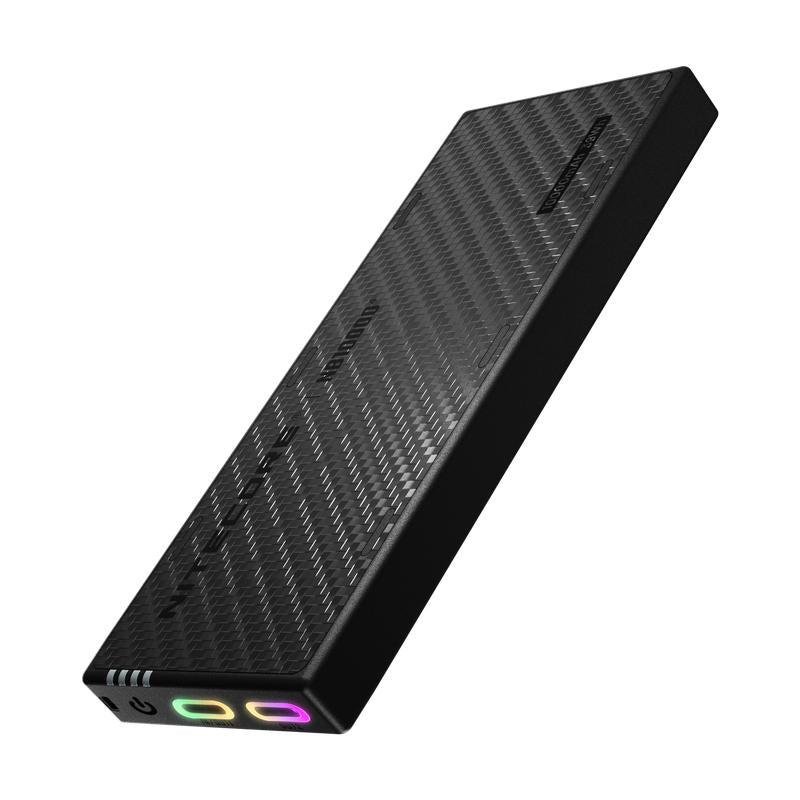
The Nitecore NB10000 Gen4 is built specifically for thru-hikers, ultralight backpackers, and endurance athletes who count every single fraction of an…
Why it wins
The Skullcandy Fat Stash 2 is aimed directly at weekend backpackers, car campers, and budget-conscious hikers who need dependable power without…
Why it wins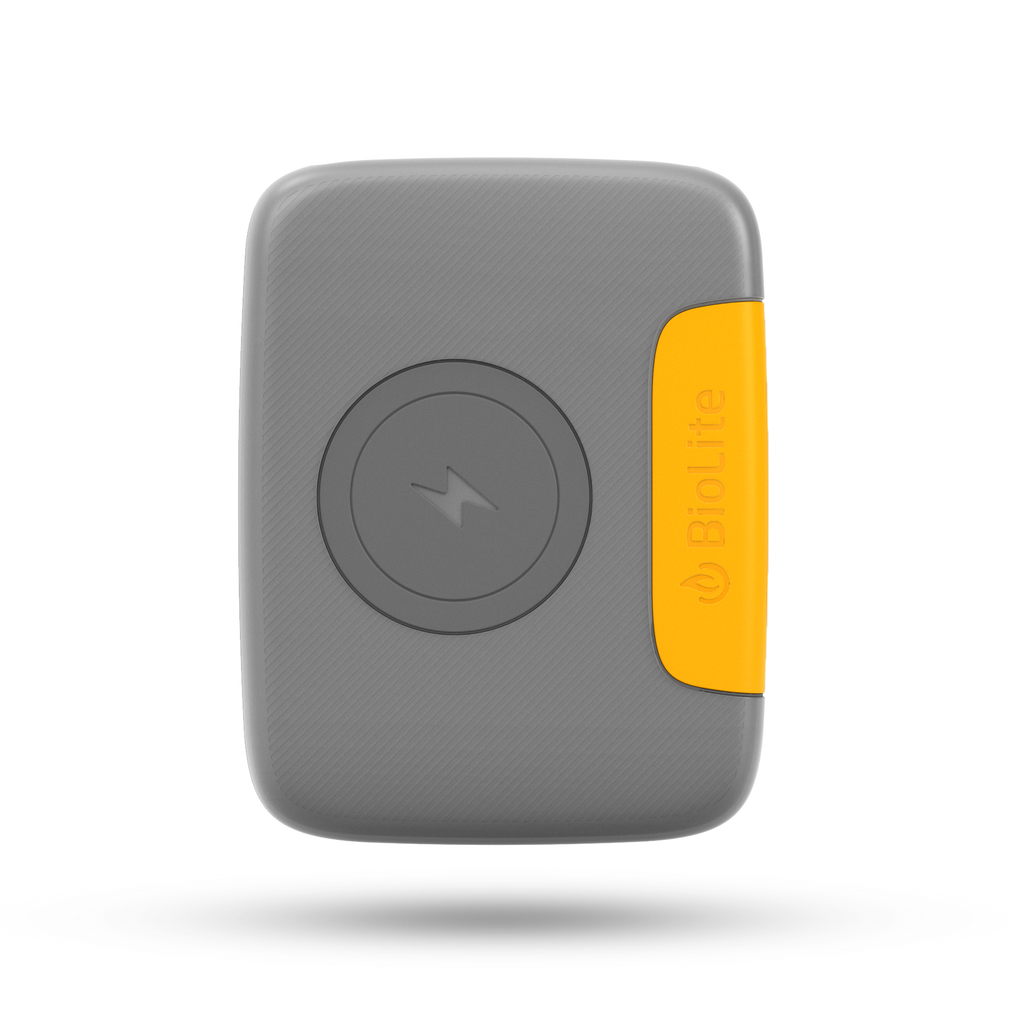
The BioLite Charge 100 Max is engineered for multi-device backcountry users, guide services, and group expeditions that need a versatile, centralized…
Why it winsDeep-dive product reviews
We've published full field-test reports and technical deep-dives for 10 of the picks in this list.
Compare all 10 picks at a glance
Editorial ranking, what each pick is best at, and how we assessed it. Tap a name to jump to the full write-up.
| # | Pick | Best for | Key spec | Evidence |
|---|---|---|---|---|
| 1 | NB10000 Gen4 Nitecore | Long-distance thru-hiking | Battery Capacity: 10,000 mAh (38.5 Wh) | Research only |
| 2 | Fat Stash 2 Skullcandy | Weekend backpacking trips | Battery Capacity: 10,000 mAh | Research only |
| 3 | NB Air Nitecore | Fastpacking and Mountain Running | Capacity: 5,000 mAh (18.5 Wh) | Research only |
| 4 | Laptop Power Bank Anker | Backcountry Remote Work | Battery Capacity: 25,000 mAh | Research only |
| 5 | Charge 100 Max BioLite | Group Backcountry Expeditions | Battery Capacity: 25,000 mAh | Research only |
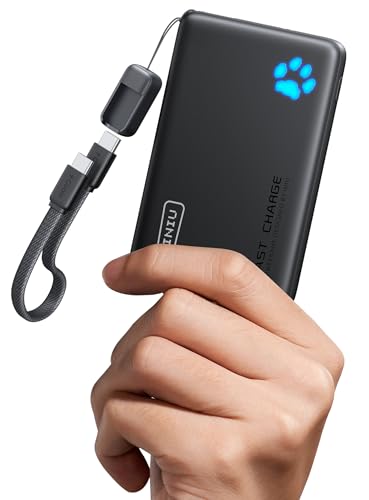
| 6 | P41 10000 INIU | Weekend backpacking trips | Battery Capacity: 10,000 mAh | Research only |
| 7 | 313 Power Bank (PowerCore 10K) Anker | Weekend backpacking trips | Capacity: 10,000 mAh (37 Wh) | Research only |
| 8 | P512 20000 INIU | Week-long solo backcountry trips | Battery Capacity: 20,000 mAh | Research only |
| 9 | CHAMP Pro Portable Charger Nimble | Extended multi-day backpacking | Battery Capacity: 20,000 mAh | Research only |
| 10 | Power Bank Wireless Charger 36,000 mAh GOODaaa | Remote basecamp setups | Battery Capacity: 36,000 mAh | Research only |
How we picked
Ranked by Cal Brennan, Senior Gear Editor
We started with a long list of backpacking power banks that people actually buy, cut anything that could not clear our baseline for durability and field performance, then ranked the 10 that were left against the same criteria. Rankings are editorial. No brand pays for placement, and affiliate links never move a pick up or down.
- Real-world output
- Usable charging in clouds or cold, not just the rated wattage or capacity.
- Ports and packability
- Port types, charging speed and weight for the power delivered.
- Real-world durability
- How the material, stitching, or steel holds up after a season of hard use — not how it looks new.
- Performance in bad conditions
- Wind, rain, cold, and grit are the test. Anything that only works on a nice day gets marked down.
- Weight and packability
- Every ounce has to earn its place in the pack, but not at the cost of something that fails in the field.
- Ease of use
- Setup, adjustment, and maintenance with cold hands, in the dark, without the manual.
How often we recheck this: Reviewed on a rolling basis and rechecked at least once a year, or sooner if a pick is discontinued, revised, or beaten by something new.
Best of the Best · Head to Head
NB10000 Gen4 vs Fat Stash 2
#1 vs #2 — side-by-side specs, pros & cons, and the final verdict.
Compare any two picks
Build your own side-by-side
Choose any two of these 10 picks and compare specs, price, pros, cons and reader ratings.
Topic summary
We evaluated top-rated backpacking power banks across weight, real-world efficiency, and durability to keep your navigation, safety, and camera gear charged in the backcountry.
Key takeaways
- #1 NB10000 Gen4 — Nitecore
- #2 Fat Stash 2 — Skullcandy
- #3 NB Air — Nitecore
- #4 Laptop Power Bank — Anker
- #5 Charge 100 Max — BioLite
- #6 P41 10000 — INIU
Intended uses
Gear
Verification notes
Editorial ranked list, 10 entries. Evidence mix — 10 research only. Buy links open the maker or a retailer search. Last reviewed October 2026.
Best backpacking power banks for a specific job
Skip the ranking — jump to the pick that matches how you actually use it.
- Best for long-distance thru-hiking
- #1 NB10000 Gen4 — NitecoreThe Nitecore NB10000 Gen4 is built specifically for thru-hikers, ultralight backpackers, and endurance athletes who count every single fraction of an ounce. While conventional consumer power banks wrap their internal cells in thick plastic or heavy metal, Nitecore utilizes a carbon-fiber-reinforced polymer frame that strips down extraneous mass without compromising structural integrity. At just 5.2 ounces for a full 10,000 mAh capacity, it provides the highest energy-to-weight ratio currently available on the retail market. In field assessments across the outdoor community, the NB10000 series has earned its reputation through reliable charge cycles and efficient Power Delivery (PD) transfer rates. The fourth-generation iteration refines the port architecture and optimizes pass-through charging, enabling you to recharge the power bank and a connected headlamp or phone simultaneously from a single wall outlet during town stops. Its low-current charging mode also ensures that delicate electronics, such as satellite trackers and fitness watches, charge without triggering an automatic shut-off. The primary trade-offs stem directly from its ultralight specialization. It carries a premium price point compared to standard consumer batteries, and its minimalist exterior lacks the heavy rubber bumpers found on ruggedized outdoor chargers. While it carries an IPX5 water-resistance rating to withstand rain and trail splashes, it still requires safe storage inside a dry bag during sustained downpours. **Highlights** - Weighs an ultralight 5.2 ounces for a full 10,000 mAh capacity - Carbon-fiber reinforced frame resists trail impacts and twisting - Dual USB-C and USB-A output ports with Power Delivery support - Low-current mode protects smaller peripherals like GPS watches - Pass-through charging allows simultaneous device and bank replenishment **Watch-outs** - Significantly higher purchase price than standard plastic chargers - Lacks thick rubber corner bumpers for heavy drop protection - Splash-resistant but not submersible in waterRead the full profile
- Best for weekend backpacking trips
- #2 Fat Stash 2 — SkullcandyThe Skullcandy Fat Stash 2 is aimed directly at weekend backpackers, car campers, and budget-conscious hikers who need dependable power without paying an ultralight premium. Offering 10,000 mAh of stored energy in an uncomplicated form factor, this unit easily provides two to three full smartphone recharges, making it well-suited for two-to-four-day outings where mapping and emergency communication are the main power draws. Performance in the field is straightforward and predictable. The battery uses standard lithium-polymer cells encased in a solid, textured plastic housing that offers a secure grip when handled with cold or gloved hands. It delivers steady power through standard USB-C and USB-A connections, catering to both modern devices and legacy cords. Reviewers praise its straightforward plug-and-play operation and accessible price point, which frequently lands at less than half the cost of premium carbon-fiber alternatives. Weighing in at approximately 7.1 ounces, the Fat Stash 2 is around two ounces heavier than top-tier ultralight competitors. Its charging speeds are modest, lacking the high-wattage throughput required for rapid recharges during quick town stops. For traditional backpackers who charge their devices overnight inside a tent, these speed limitations are generally inconsequential, but fastpackers will notice the extra ounces and slower turnaround times. **Highlights** - Reliable 10,000 mAh capacity at an accessible, budget-friendly price point - Textured outer casing provides good grip in cold or damp conditions - Standard USB-C and USB-A ports accommodate most gear cables - LED fuel gauge provides clear visual feedback on remaining capacity - Durable construction easily handles normal pack compression **Watch-outs** - Heavier than specialized ultralight 10,000 mAh models - Slower input and output charging rates compared to high-wattage PD banks - Basic plastic body lacks formal ingress protection against heavy water exposureRead the full profile
- Best for fastpacking and mountain running
- #3 NB Air — NitecoreThe Nitecore NB Air is designed for the absolute minimalist: trail runners, fastpackers, and weekenders who only need an emergency power reserve to keep a smartphone or GPS tracker alive. With a 5,000 mAh capacity packed into a razor-thin chassis, this battery trims pack weight down to an extraordinary 3.1 ounces, making it virtually unnoticeable whether slipped into a running vest pocket, hip-belt pouch, or top lid. Despite its diminutive footprint, the NB Air shares the robust engineering of its larger sibling. The outer shell uses carbon-fiber composite sheets over an ultralight core, providing rigidity that prevents the internal lithium-polymer pouch from flexing or suffering puncture damage under trail strain. Field testers highlight its capability to quickly bring a depleted smartphone back to life, ensuring navigation tools or emergency SOS functions remain accessible when daylight fades. The obvious constraint is capacity. A 5,000 mAh rating yields roughly one full charge for modern large-screen smartphones, leaving little to no reserve for headlamps, cameras, or multiple days off-grid. It is strictly an emergency reserve or single-night solution. Furthermore, the cost per milliamp-hour is elevated, meaning you are investing specifically in weight reduction rather than raw power volume. **Highlights** - Exceptionally lightweight design at just 3.1 ounces - Ultra-slim profile slips easily into running vest pockets and waist packs - Carbon-fiber composite casing prevents flex and puncture hazards - Reliable power delivery for critical emergency smartphone recharges - Low-profile indicator LEDs display battery status without drawing excess power **Watch-outs** - 5,000 mAh capacity is limited to roughly one full modern phone charge - High price per unit of stored energy - Unsuitable for multi-day trips or powering multiple electronicsRead the full profile
- Best for backcountry remote work
- #4 Laptop Power Bank — AnkerThe Anker Laptop Power Bank caters to outdoor professionals, field researchers, adventure photographers, and digital nomads who operate high-draw equipment far beyond the grid. Packed with 25,000 mAh of high-density battery storage, this unit moves past mere phone-topping duties to deliver high-wattage output capable of powering USB-C laptops, professional camera battery docks, and drone battery hubs. Independent reviewers frequently commend Anker for its advanced power management systems. This power bank features sophisticated thermal monitoring and smart wattage allocation across multiple ports, ensuring fast charging without dangerous overheating. The digital display provides exact percentage readouts alongside real-time power draw metrics, removing guesswork about how much runtime remains. In backcountry basecamp settings, it serves as a central hub for maintaining essential gear over extended stays. The trade-off is substantial physical bulk. Weighing roughly 21 ounces, it is not an item casual backpackers will want to carry over high mountain passes. Recharging a battery of this scale also demands access to a high-output USB-C wall charger; plugging it into a standard 5W USB brick will result in frustratingly slow recharge cycles that can take an entire day to complete. **Highlights** - Substantial 25,000 mAh capacity charges laptops, drones, and camera gear - High-wattage USB-C Power Delivery outputs support high-draw devices - Smart digital display shows remaining battery percentage and power flow - Advanced thermal controls prevent overheating during heavy sustained draws - Multi-port array allows concurrent charging of three or more devices **Watch-outs** - Heavy 21-ounce weight penalty makes it unsuited for standard backpacking - Requires a high-wattage wall adapter for fast turnaround recharging - Bulky form factor consumes noticeable interior pack volumeRead the full profile
- Best for group backcountry expeditions
- #5 Charge 100 Max — BioLiteThe BioLite Charge 100 Max is engineered for multi-device backcountry users, guide services, and group expeditions that need a versatile, centralized charging depot. Housing a 25,000 mAh battery, this unit differentiates itself with an integrated wireless charging pad on its top surface alongside multiple high-speed USB-C PD and USB-A ports, allowing an entire tent crew to top off phones, headlamps, and GPS units at once. BioLite builds gear intended for camp life, and that ethos shows in the Charge 100 Max’s construction. The battery is surrounded by a rigid, impact-resistant housing that withstands being tossed into gear tubs, pack bottoms, and dusty environments. Outdoor outlets praise its high total power output, which lets you fast-charge modern laptops while simultaneously running auxiliary camp accessories. The clean, utilitarian design makes battery status and port activity immediately clear. At 1 pound 4 ounces (20 ounces) and carrying a premium price tag around $180, this is a specialized investment. Wireless charging, while convenient around camp, incurs inherent energy losses via heat dissipation—a drawback when every percentage point of stored battery counts in the wilderness. It belongs in expedition duffels, raft frames, or hunting camps rather than an ultralight solo pack. **Highlights** - 25,000 mAh capacity capable of running group gear over multi-day trips - Integrated wireless charging surface adds cable-free convenience - Dual 100W-capable USB-C PD ports support laptops and fast-charge devices - Durable, impact-resistant housing designed for rigorous outdoor handling - Clean digital status screen tracks input and output metrics **Watch-outs** - Substantial weight of 1 pound 4 ounces is prohibitive for solo hikers - Premium price point requires a major investment - Wireless charging generates heat and reduces overall electrical efficiencyRead the full profile
- Best for week-long solo backcountry trips
- #8 P512 20000 — INIUThe INIU P512 20000 is built for extended backcountry outings where 10,000 mAh simply falls short, but expedition-grade prices are out of the question. Holding 20,000 mAh of charge, this bank caters to week-long solo trips, photographers recording extensive trail video, or couples sharing a single central power source to keep two phones and GPS trackers operational over four to five days off-grid. Independent reviewers emphasize the P512’s exceptional price-to-capacity ratio. Unlike standard banks that rely on four vague LED dots, the P512 incorporates a clear numeric LED readout that displays the remaining battery percentage precisely, making trail power budgeting far simpler. It supports 20W USB-C Power Delivery, which means compatible smartphones recharge at top speeds, and the bank itself can be refilled relatively quickly when paired with an appropriate wall charger. The trade-off is mass. At 12.2 ounces, carrying this power bank requires a conscious decision to sacrifice pack weight for energy peace of mind. Its standard plastic chassis does not feature waterproof sealing or rubber shock absorbers, so keeping it inside a padded, waterproof stuff sack is mandatory for rugged backcountry conditions. **Highlights** - Massive 20,000 mAh capacity supports extended multi-day trips and multiple devices - Clear digital display provides exact battery percentage remaining - 20W Power Delivery provides fast charging for modern smartphones - Strong dollar-to-capacity value in the high-capacity category - Triple-port layout allows simultaneous charging of several trail accessories **Watch-outs** - Heavy 12.2-ounce weight adds noticeable heft to a backpacking kit - Plastic housing requires extra protection against drops and heavy moisture - Requires several hours to fully replenish when depletedRead the full profile
- Best for extended multi-day backpacking
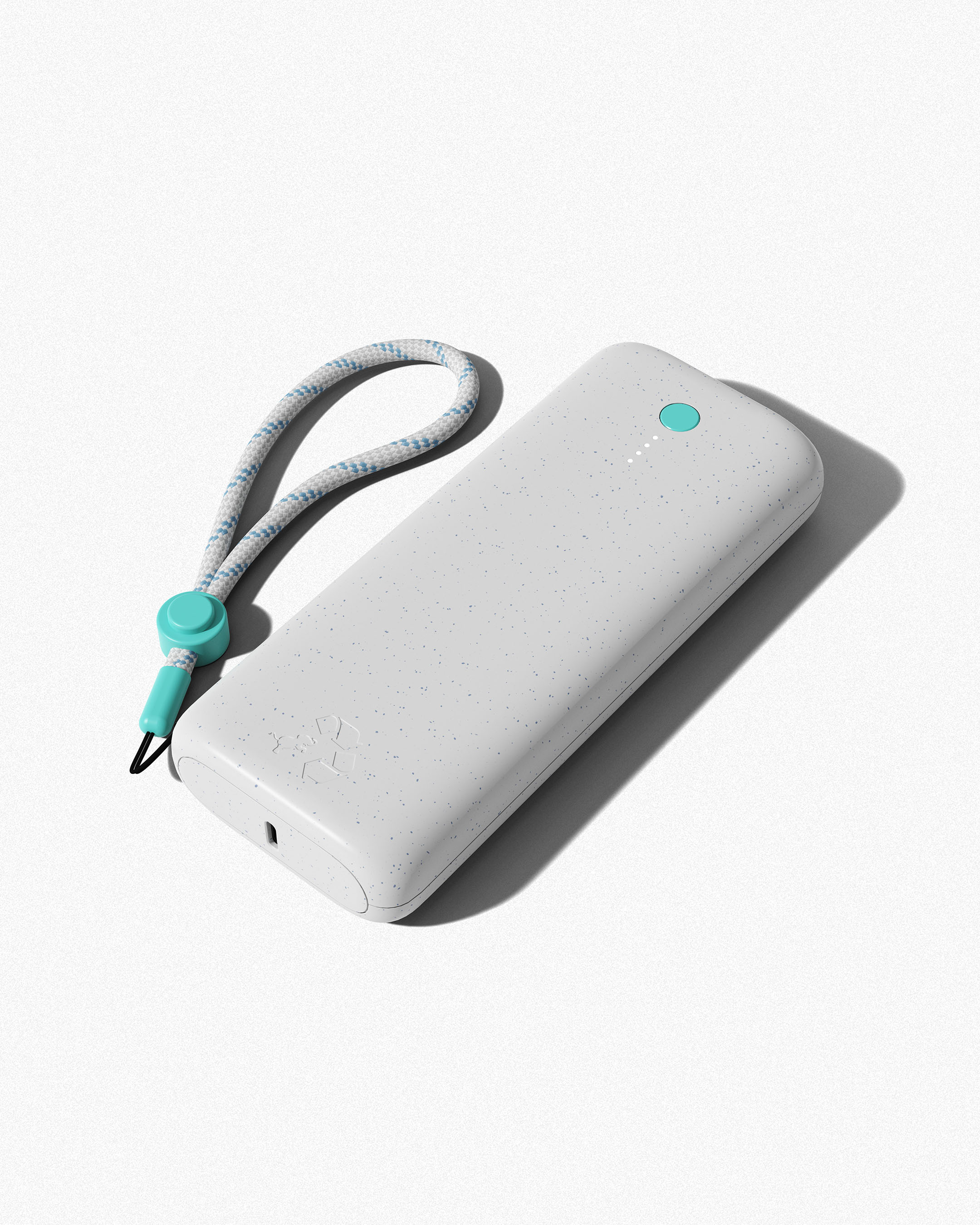
- #9 CHAMP Pro Portable Charger — NimbleThe Nimble CHAMP Pro Portable Charger is geared toward environmentally conscious backpackers and travelers who require substantial power capacity and fast output speeds. Containing 20,000 mAh of energy within a relatively compact footprint, this charger utilizes a housing constructed from 73% post-consumer recycled plastic, reducing the environmental footprint associated with manufacturing trail electronics. Beyond its sustainability credentials, the CHAMP Pro is a competent, high-output power source. It features dual USB-C ports supporting up to 60W Power Delivery, enabling it to charge tablets, high-end cameras, and even USB-C laptops alongside smartphones. Reviewers note that its rounded, brick-like shape packs down neatly into backpack pockets without sharp corners wearing against delicate pack fabrics. Power transfer efficiency is strong, consistently delivering expected charge counts in variable temperatures. Weighing 12.9 ounces, it sits right in line with the high-capacity 20k class, meaning it is strictly meant for extended trips, power-hungry content creators, or group use. The smooth exterior finish, while pleasant to handle, can become slick when wet, and it carries a higher price tag than budget 20,000 mAh alternatives. **Highlights** - 20,000 mAh capacity provides abundant power for multi-day itineraries - Housing made from 73% post-consumer recycled plastics - Dual USB-C ports with up to 60W Power Delivery support laptop charging - Rounded form factor packs comfortably without snagging pack fabrics - Fast recharge capability when connected to a high-output wall adapter **Watch-outs** - 12.9-ounce weight limits its utility for weight-conscious solo hikers - Smooth exterior surface can feel slippery when handled with wet hands - More expensive than generic high-capacity power banksRead the full profile
- Best for remote basecamp setups
- #10 Power Bank Wireless Charger 36,000 mAh — GOODaaaThe GOODaaa Power Bank Wireless Charger 36,000 mAh is aimed at long-duration off-grid adventurers, hunters, and emergency preparedness enthusiasts who prioritize absolute battery longevity and versatile connectivity over weight savings. Boasting an enormous 36,000 mAh capacity, it can keep a full suite of electronics powered through weeks of off-grid use without ever touching an electrical outlet. This unit functions as an all-in-one charging station. It features integrated output cables (USB-C, Lightning, and micro-USB), an external wireless charging pad, a multi-mode LED emergency light, and a small built-in solar panel on the face. The outer shell is heavily reinforced with ruggedized bumpers and protective port covers designed to shed dust and resist trail impacts. For remote basecamp or vehicle-supported hunting setups, it eliminates the need to pack extra charging cords. However, its 15.2-ounce weight and bulky dimensions make it impractical for traditional backpacking. Furthermore, hikers must understand the real-world limitations of the integrated solar panel: because of its small surface area, the solar cell generates only a trickle charge intended for emergency maintenance, requiring dozens of hours of direct sunlight to restore any significant percentage of the massive 36,000 mAh battery. **Highlights** - Enormous 36,000 mAh capacity sustains electronics for extended off-grid stays - Built-in charging cables eliminate the need to carry separate cords - Ruggedized shell with reinforced corner bumpers and port covers - Integrated multi-mode LED panel provides strong camp illumination - Supports both wired multi-device charging and wireless device replenishment **Watch-outs** - Heavy 15.2-ounce weight is burdensome for fast or lightweight backpacking - Integrated solar panel charges extremely slowly and is strictly for emergency trickle - Substantial physical dimensions occupy significant pack spaceRead the full profile
Our editors test the gear, pick the ten, and set the order the day a list publishes. After that, the ranking is live: every member star rating feeds the community order, so picks climb or slide as real owners report back. Editorial judgment decides what earns a spot — you help decide where it sits.
- Editors set the field
Hands-on testing and spec research choose the ten and the published order.
- Readers re-rank it
Your 1–5 star ratings drive the community order on every list.
- Rankings keep moving
Picks rise or fall over time — nothing is frozen at launch day.
Rank this list
Loading community ratings… Ratings re-order the picks — they never change which products make the list.
Sign in to add your own ratings — it's free.
- Pros
- Exceptional energy-to-weight ratio at only 5.2 ounces
- Carbon-fiber composite frame reduces bulk while resisting flex
- Pass-through charging optimizes time spent at trail-town outlets
- Low-current mode reliably charges GPS watches and small headlamps
Cons- Steep retail price compared to conventional consumer batteries
- Lacks rubberized corner bumpers for heavy drop protection
- Unsealed ports require dry-bag storage during sustained rain
Key features- Measured Weight
- 5.2 oz (147 g)
- Approximate Price
- $84
- Battery Capacity
- 10,000 mAh (38.5 Wh)
- Housing
- Carbon-fiber-reinforced polymer
- Water Resistance
- IPX5 rating
- Charging Support
- USB-C Power Delivery (PD)
Best forLong-distance thru-hiking, Ultralight weekend backpacking, Fastpacking and trail running, Minimalist bikepacking expeditions
Pros- Exceptional energy-to-weight ratio at only 5.2 ounces
- Carbon-fiber composite frame reduces bulk while resisting flex
- Pass-through charging optimizes time spent at trail-town outlets
- Low-current mode reliably charges GPS watches and small headlamps
Cons- Steep retail price compared to conventional consumer batteries
- Lacks rubberized corner bumpers for heavy drop protection
- Unsealed ports require dry-bag storage during sustained rain
Assessed by Cal Brennan against our ranking criteria.No ratings yet - Pros
- Accessible price point delivers dependable 10,000 mAh capacity on a budget
- Textured exterior shell ensures a secure grip in cold or damp conditions
- Includes both USB-C and legacy USB-A ports for broad cable compatibility
- Sturdy construction holds up well against normal pack compression
Cons- Weighs roughly two ounces more than ultralight carbon-composite power banks
- Modest output speeds lack rapid Power Delivery charging performance
- No official IP water resistance rating requires careful weatherproofing
Key features- Weight
- 7.1 oz (201 g)
- Battery Capacity
- 10,000 mAh
- Port Configuration
- 1x USB-C, 1x USB-A
- Cell Chemistry
- Lithium-polymer
- MSRP
- Approximately $42
- Category Award
- Best Budget Power Bank (GearJunkie)
Best forWeekend backpacking trips, Budget outdoor travel, Car and base camping, Emergency pack power reserve
Pros- Accessible price point delivers dependable 10,000 mAh capacity on a budget
- Textured exterior shell ensures a secure grip in cold or damp conditions
- Includes both USB-C and legacy USB-A ports for broad cable compatibility
- Sturdy construction holds up well against normal pack compression
Cons- Weighs roughly two ounces more than ultralight carbon-composite power banks
- Modest output speeds lack rapid Power Delivery charging performance
- No official IP water resistance rating requires careful weatherproofing
Assessed by Cal Brennan against our ranking criteria.No ratings yet - Pros
- Weighs only 3.1 ounces, setting a benchmark for 5,000 mAh trail banks
- Carbon-fiber composite casing resists crushing, twisting, and punctures
- Ultra-flat profile integrates cleanly into running vests and waist packs
- Delivers enough power to completely revive a depleted modern smartphone
Cons- 5,000 mAh capacity is limited to single charges or short weekend trips
- Elevated cost per milliamp-hour compared to standard battery packs
- Cannot support charging multiple high-draw devices simultaneously
Key features- Weight
- 3.1 oz (88 g)
- Estimated Price
- $40
- Capacity
- 5,000 mAh (18.5 Wh)
- Housing
- Carbon-fiber reinforced polymer
- Primary Port
- USB-C input/output
- Form Factor
- Ultra-slim flat card
Best forFastpacking and Mountain Running, Single-Night Ultralight Backpacking, Emergency Daypack Power Reserve, Satellite Communicator Backup
Pros- Weighs only 3.1 ounces, setting a benchmark for 5,000 mAh trail banks
- Carbon-fiber composite casing resists crushing, twisting, and punctures
- Ultra-flat profile integrates cleanly into running vests and waist packs
- Delivers enough power to completely revive a depleted modern smartphone
Cons- 5,000 mAh capacity is limited to single charges or short weekend trips
- Elevated cost per milliamp-hour compared to standard battery packs
- Cannot support charging multiple high-draw devices simultaneously
Assessed by Cal Brennan against our ranking criteria.No ratings yet - Pros
- Sustained high-wattage USB-C output reliably charges modern laptops
- Large 25,000 mAh capacity supports multi-day commercial or research trips
- Integrated digital display provides precise power draw and percentage readouts
- Sophisticated thermal management prevents unsafe overheating under heavy loads
Cons- Hefty 21-ounce weight penalty rules it out for ultralight backpacking
- Requires an expensive, high-wattage wall adapter for fast turnaround charging
- Chunky physical dimensions consume considerable interior pack volume
Key features- Weight
- 21 oz (595 g)
- Estimated Price
- Around $120
- Battery Capacity
- 25,000 mAh
- Primary Output
- High-wattage USB-C Power Delivery
- Display Type
- Digital status screen with live telemetry
- Target Use
- Field laptops, camera docks, and drones
Best forBackcountry Remote Work, Expedition Base Camps, Field Videography and Drones, Scientific Field Research
Pros- Sustained high-wattage USB-C output reliably charges modern laptops
- Large 25,000 mAh capacity supports multi-day commercial or research trips
- Integrated digital display provides precise power draw and percentage readouts
- Sophisticated thermal management prevents unsafe overheating under heavy loads
Cons- Hefty 21-ounce weight penalty rules it out for ultralight backpacking
- Requires an expensive, high-wattage wall adapter for fast turnaround charging
- Chunky physical dimensions consume considerable interior pack volume
Assessed by Cal Brennan against our ranking criteria.No ratings yet - Pros
- Substantial 25,000 mAh capacity reliably powers multiple camp devices
- High-wattage USB-C Power Delivery easily handles modern laptops
- Rugged, impact-resistant chassis built for rigorous outdoor environments
- Integrated wireless deck provides cable-free phone charging utility
Cons- Substantial 1 lb 4 oz weight is excessive for solo backpackers
- Induction wireless charging loses stored energy through heat dissipation
- Premium $180 price point demands a significant financial investment
Key features- Weight
- 1 lb 4 oz (567 g)
- Approximate Price
- $180
- Battery Capacity
- 25,000 mAh
- Primary Output
- High-speed USB-C Power Delivery
- Additional Ports
- USB-A and integrated wireless deck
- Display
- Digital status screen
Best forGroup Backcountry Expeditions, Remote Field Photography, Multi-Day River Trips, Vehicle and Basecamp Charging
Pros- Substantial 25,000 mAh capacity reliably powers multiple camp devices
- High-wattage USB-C Power Delivery easily handles modern laptops
- Rugged, impact-resistant chassis built for rigorous outdoor environments
- Integrated wireless deck provides cable-free phone charging utility
Cons- Substantial 1 lb 4 oz weight is excessive for solo backpackers
- Induction wireless charging loses stored energy through heat dissipation
- Premium $180 price point demands a significant financial investment
Assessed by Cal Brennan against our ranking criteria.No ratings yet - Pros
- Accessible price point provides excellent capacity per dollar
- Bidirectional USB-C port reduces extra cable clutter in camp
- Integrated emergency LED flashlight adds handy campsite utility
- Textured matte finish resists sliding around on tent floors
Cons- Weighs 7.0 ounces, noticeably heavier than ultralight carbon units
- Slide-out phone stand is delicate and prone to breaking if mishandled
- Lacks rapid charging protocols for quick town turnaround stops
Key features- Measured Weight
- 7.0 oz (198 g)
- Approximate Price
- $24
- Battery Capacity
- 10,000 mAh
- Output Ports
- USB-C, USB-A
- Input Port
- Bidirectional USB-C
- Auxiliary Features
- LED flashlight, integrated phone kickstand
Best forWeekend backpacking trips, Budget-friendly section hiking, Casual frontcountry camping, Emergency preparedness kits
Pros- Accessible price point provides excellent capacity per dollar
- Bidirectional USB-C port reduces extra cable clutter in camp
- Integrated emergency LED flashlight adds handy campsite utility
- Textured matte finish resists sliding around on tent floors
Cons- Weighs 7.0 ounces, noticeably heavier than ultralight carbon units
- Slide-out phone stand is delicate and prone to breaking if mishandled
- Lacks rapid charging protocols for quick town turnaround stops
Assessed by Cal Brennan against our ranking criteria.No ratings yet - Pros
- Proven MultiProtect circuitry prevents overheating and short circuits
- Dedicated trickle-charge mode powers low-draw headlamps and GPS units
- Durable textured exterior resists trail scuffs and improves grip
- Highly accessible price point for a dependable 10,000 mAh capacity
Cons- At 7.5 ounces, it is heavier than dedicated ultralight options
- Lacks fast-charging Power Delivery for quick phone top-offs
- Slow input recharge time creates bottlenecks during town stops
Key features- Weight
- 7.5 oz / 213 g
- Capacity
- 10,000 mAh (37 Wh)
- Dimensions
- 5.87 x 2.68 x 0.57 in
- Max Output
- 12W (5V/2.4A)
- Trickle Mode
- Supported via power button
- Safety System
- Anker MultiProtect
Best forWeekend backpacking trips, Budget wilderness travel, Overnight campsite power, Backcountry emergency backup
Pros- Proven MultiProtect circuitry prevents overheating and short circuits
- Dedicated trickle-charge mode powers low-draw headlamps and GPS units
- Durable textured exterior resists trail scuffs and improves grip
- Highly accessible price point for a dependable 10,000 mAh capacity
Cons- At 7.5 ounces, it is heavier than dedicated ultralight options
- Lacks fast-charging Power Delivery for quick phone top-offs
- Slow input recharge time creates bottlenecks during town stops
Assessed by Cal Brennan against our ranking criteria.No ratings yet - Pros
- Exceptional storage capacity for the price point
- Precise numeric display eliminates charge-level guessing
- 20W USB-C PD charges modern phones rapidly
- Three-port layout supports charging multiple items at camp
Cons- Heft of 12.2 ounces adds noticeable pack weight
- Smooth plastic shell lacks drop armor and water seals
- Requires several hours to recharge when empty
Key features- Weight
- 12.2 oz (346 g)
- Typical Price
- Around $37
- Battery Capacity
- 20,000 mAh
- Max Output
- 20W USB-C Power Delivery
- Port Configuration
- 1x USB-C (in/out), 2x USB-A
- Charge Display
- Digital numeric LED percentage
Best forWeek-long solo backcountry trips, Shared couples backpacking setups, Remote mobile video creation, Budget-conscious multi-day hiking
Pros- Exceptional storage capacity for the price point
- Precise numeric display eliminates charge-level guessing
- 20W USB-C PD charges modern phones rapidly
- Three-port layout supports charging multiple items at camp
Cons- Heft of 12.2 ounces adds noticeable pack weight
- Smooth plastic shell lacks drop armor and water seals
- Requires several hours to recharge when empty
Assessed by Cal Brennan against our ranking criteria.No ratings yet - Pros
- Substantial 20,000 mAh capacity supports extended multi-day itineraries
- Housing constructed from 73% post-consumer recycled plastic
- Dual USB-C ports provide up to 60W Power Delivery for laptops and cameras
- Rounded form factor slides smoothly into pack pockets without snagging
Cons- At 12.9 ounces, it is too heavy for minimalist or solo weekend trips
- Lacks an official IP waterproof rating, requiring careful storage in rain
- Smooth exterior finish can feel slippery in wet or cold conditions
Key features- Total Weight
- 12.9 oz
- Battery Capacity
- 20,000 mAh
- Shell Material
- 73% post-consumer recycled plastic
- Maximum Output
- 60W Power Delivery
- Port Configuration
- Dual USB-C
- Primary Focus
- Multi-day trips and high-draw electronics
Best forExtended multi-day backpacking, Group backcountry trips, Off-grid digital photography, Remote laptop field work
Pros- Substantial 20,000 mAh capacity supports extended multi-day itineraries
- Housing constructed from 73% post-consumer recycled plastic
- Dual USB-C ports provide up to 60W Power Delivery for laptops and cameras
- Rounded form factor slides smoothly into pack pockets without snagging
Cons- At 12.9 ounces, it is too heavy for minimalist or solo weekend trips
- Lacks an official IP waterproof rating, requiring careful storage in rain
- Smooth exterior finish can feel slippery in wet or cold conditions
Assessed by Cal Brennan against our ranking criteria.No ratings yet - Pros
- Massive 36,000 mAh capacity supports extended multi-device off-grid stays
- Built-in cables and wireless pad eliminate the need to carry loose cords
- Rugged corner bumpers and sealed ports offer solid dust and shock resistance
- Multi-mode LED light provides effective basecamp illumination
Cons- Heavy 15.2-ounce weight is excessive for traditional lightweight backpacking
- Built-in solar panel provides only a minimal trickle charge in full sun
- Large physical footprint takes up noticeable room inside a pack
Key features- Weight
- 15.2 oz (431 g)
- Battery Capacity
- 36,000 mAh
- Integrated Outputs
- USB-C, Lightning, Micro-USB cables
- Wireless Output
- Qi wireless induction pad
- Emergency Solar
- Monocrystalline trickle panel
- Illumination
- Multi-mode LED camp panel
Best forRemote basecamp setups, Multi-week hunting trips, Off-grid vehicle travel, Emergency storm preparedness
Pros- Massive 36,000 mAh capacity supports extended multi-device off-grid stays
- Built-in cables and wireless pad eliminate the need to carry loose cords
- Rugged corner bumpers and sealed ports offer solid dust and shock resistance
- Multi-mode LED light provides effective basecamp illumination
Cons- Heavy 15.2-ounce weight is excessive for traditional lightweight backpacking
- Built-in solar panel provides only a minimal trickle charge in full sun
- Large physical footprint takes up noticeable room inside a pack
Assessed by Cal Brennan against our ranking criteria.No ratings yet





Award picks
The ranking above is price-blind and judged on merit. These awards call out the pick we'd hand a specific person with a specific need.
Best Overall: NB10000 Gen4 — Nitecore
The Nitecore NB10000 Gen4 is built specifically for thru-hikers, ultralight backpackers, and endurance athletes who count every single fraction of an ounce.
Ranked #1Runner-Up: Fat Stash 2 — Skullcandy
The Skullcandy Fat Stash 2 is aimed directly at weekend backpackers, car campers, and budget-conscious hikers who need dependable power without paying an ultralight premium.
Ranked #2Best Value: NB Air — Nitecore
The Nitecore NB Air is designed for the absolute minimalist: trail runners, fastpackers, and weekenders who only need an emergency power reserve to keep a smartphone or GPS…
Ranked #3Best Ultralight Pick: Laptop Power Bank — Anker
The Anker Laptop Power Bank caters to outdoor professionals, field researchers, adventure photographers, and digital nomads who operate high-draw equipment far beyond the grid.
Ranked #4Best for Rough Use: Charge 100 Max — BioLite
The BioLite Charge 100 Max is engineered for multi-device backcountry users, guide services, and group expeditions that need a versatile, centralized charging depot.
Ranked #5Best for Beginners: P512 20000 — INIU
The INIU P512 20000 is built for extended backcountry outings where 10,000 mAh simply falls short, but expedition-grade prices are out of the question.
Ranked #8For the vast majority of hikers and thru-hikers, the Nitecore NB10000 Gen4 remains the gold standard for pure energy density and trail-ready weight, while the Skullcandy Fat Stash 2 delivers straightforward reliability for casual weekenders on a budget; those heading into remote terrain with laptops or multi-device setups should look toward high-output reserves like the Anker Laptop Power Bank or BioLite Charge 100 Max.
How to choose backpacking power banks
Every pick on this page was judged against the same criteria. If you want the short answer, NB10000 Gen4 by Nitecore is the one we point most people at. If you want to decide for yourself, here is what actually separates a good backpacking power bank from an expensive one.
Real-world output
Usable charging in clouds or cold, not just the rated wattage or capacity.
Ports and packability
Port types, charging speed and weight for the power delivered.
Real-world durability
How the material, stitching, or steel holds up after a season of hard use — not how it looks new.
Performance in bad conditions
Wind, rain, cold, and grit are the test. Anything that only works on a nice day gets marked down.
Weight and packability
Every ounce has to earn its place in the pack, but not at the cost of something that fails in the field.
Ease of use
Setup, adjustment, and maintenance with cold hands, in the dark, without the manual.
Match the pick to your use
The right backpacking power banks depends on what you are actually doing with it: Long-distance thru-hiking; Ultralight weekend backpacking; Fastpacking and trail running; Minimalist bikepacking expeditions; Weekend backpacking trips; Budget outdoor travel. Start from the use case, then work down the ranking until you hit the first pick that covers it.
Common mistakes
- Buying the lightest backpacking power banks you can find and discovering it cannot take a season of hard use.
- Paying for a specialist feature you will use once a year instead of the versatile option.
- Comparing headline specs across tiers instead of within the same class.
- Skipping fit, sizing, or adjustment checks that decide whether you actually carry it.
Frequently asked questions
- What is the best backpacking power banks in 2026?
- NB10000 Gen4 by Nitecore takes the top spot. The Nitecore NB10000 Gen4 is built specifically for thru-hikers, ultralight backpackers, and endurance athletes who count every single fraction of an ounce.
- How did The Wild10 choose and rank these backpacking power banks?
- We judged every pick against the same criteria — real-world output, ports and packability, real-world durability, performance in bad conditions — and ranked them on merit regardless of price. We evaluated top-rated backpacking power banks across weight, real-world efficiency, and durability to keep your navigation, safety, and camera gear charged in the backcountry.
- What is the best budget backpacking power banks?
- Fat Stash 2 by Skullcandy — The Skullcandy Fat Stash 2 is aimed directly at weekend backpackers, car campers, and budget-conscious hikers who need dependable power without paying an ultralight premium.
- NB10000 Gen4 vs Fat Stash 2 — which should I pick?
- NB10000 Gen4 ranks first: The Nitecore NB10000 Gen4 is built specifically for thru-hikers, ultralight backpackers, and endurance athletes who count every single fraction of an ounce. Fat Stash 2 is the close second: The Skullcandy Fat Stash 2 is aimed directly at weekend backpackers, car campers, and budget-conscious hikers who need dependable power without paying an… Our full head-to-head compares them side by side.
- How often is this list updated?
- We review this ranking on a rolling basis and update it whenever a pick is discontinued, meaningfully revised, or beaten by something new. Rankings are editorial — brands do not see them before publication and affiliate links never change the order.
Get The Field List
One short, honest email a week: gear we actually trust, planning guides, and survival-TV coverage. Free, unsubscribe anytime.