


Reader rating
Rate it and you move it. Community ratings re-rank this product inside its Top 10 list.
Expert-picked, reader-ranked. Our editors choose the products and the launch order; member star ratings move picks up or down over time.
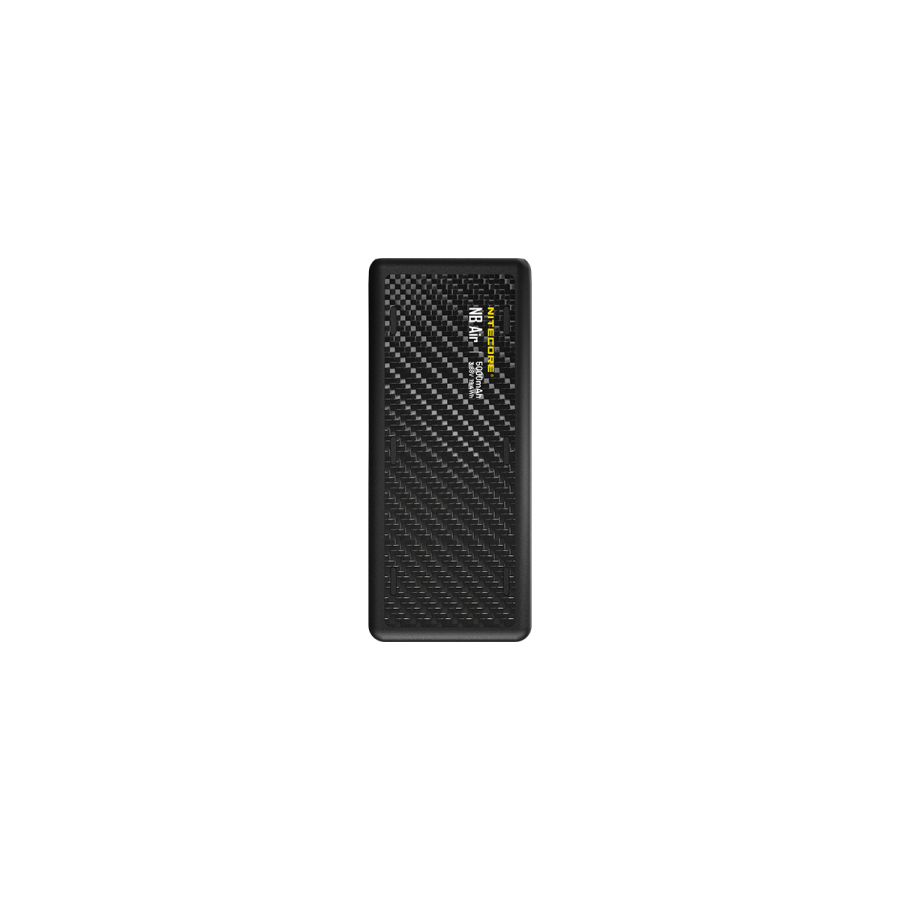
The Nitecore NB Air is designed for the absolute minimalist: trail runners, fastpackers, and weekenders who only need an emergency power reserve to keep a smartphone or GPS tracker alive. With a 5,000 mAh capacity packed into a razor-thin chassis, this battery trims pack weight down to an extraordinary 3.1 ounces, making it virtually unnoticeable whether slipped into a running vest pocket, hip-belt pouch, or top lid. Despite its diminutive footprint, the NB Air shares the robust engineering of its larger sibling. The outer shell uses carbon-fiber composite sheets over an ultralight core, providing rigidity that prevents the internal lithium-polymer pouch from flexing or suffering puncture damage under trail strain. Field testers highlight its capability to quickly bring a depleted smartphone back to life, ensuring navigation tools or emergency SOS functions remain accessible when daylight fades. The obvious constraint is capacity. A 5,000 mAh rating yields roughly one full charge for modern large-screen smartphones, leaving little to no reserve for headlamps, cameras, or multiple days off-grid. It is strictly an emergency reserve or single-night solution. Furthermore, the cost per milliamp-hour is elevated, meaning you are investing specifically in weight reduction rather than raw power volume. **Highlights** - Exceptionally lightweight design at just 3.1 ounces - Ultra-slim profile slips easily into running vest pockets and waist packs - Carbon-fiber composite casing prevents flex and puncture hazards - Reliable power delivery for critical emergency smartphone recharges - Low-profile indicator LEDs display battery status without drawing excess power **Watch-outs** - 5,000 mAh capacity is limited to roughly one full modern phone charge - High price per unit of stored energy - Unsuitable for multi-day trips or powering multiple electronics
Pros
- Weighs only 3.1 ounces, setting a benchmark for 5,000 mAh trail banks
- Carbon-fiber composite casing resists crushing, twisting, and punctures
- Ultra-flat profile integrates cleanly into running vests and waist packs
- Delivers enough power to completely revive a depleted modern smartphone
Cons
- 5,000 mAh capacity is limited to single charges or short weekend trips
- Elevated cost per milliamp-hour compared to standard battery packs
- Cannot support charging multiple high-draw devices simultaneously
Best uses
- Fastpacking and Mountain Running
- Single-Night Ultralight Backpacking
- Emergency Daypack Power Reserve
- Satellite Communicator Backup
Specifications
- Capacity
- 5,000 mAh (18.5 Wh)
- Weight
- 3.1 oz (88 g)
- Housing
- Carbon-fiber reinforced polymer
- Estimated Price
- $40
- Primary Port
- USB-C input/output
- Form Factor
- Ultra-slim flat card
Pricing
We don't publish a price we haven't verified. The retailer links below open the live listing for this exact model.
Full catalog listing & offersBest for
Fastpacking and Mountain Running, Single-Night Ultralight Backpacking, Emergency Daypack Power Reserve, Satellite Communicator Backup
Where to buy the NB Air
We don't have a direct Amazon listing on file yet — this opens an Amazon search for the exact make and model.
Some links are affiliate links. Buying through them supports our testing at no extra cost to you.
The Nitecore NB Air occupies a hyper-focused segment of the portable power market, targeted directly at gram-counting backpackers, fastpackers, and trail runners. Where standard battery bricks carry enough energy for multiple days off-grid, this unit strips away excess bulk in pursuit of absolute pack efficiency. Packing a 5,000 milliamp-hour capacity into a 3.1-ounce chassis, it provides just enough juice to keep critical electronics operational without weighing down a shoulder strap or running vest pocket. The device features the same carbon-fiber composite construction that established Nitecore's reputation among ultralight hikers. Instead of standard molded plastic, rigid composite sheets protect the internal lithium-polymer cell against drops, impacts, and torsional flex. This construction keeps the form factor remarkably flat and easy to slip into narrow pockets alongside a map or nutrition bars. However, choosing the NB Air requires accepting clear operational trade-offs. With 5,000 mAh of rated capacity, real-world energy transfer yields roughly one complete charge for a standard contemporary smartphone after typical conversion losses. It serves best as a targeted emergency reserve for weekend outings or satellite communicators, rather than a versatile power station for multi-day backcountry trips.
Target User and Intent
The NB Air is engineered specifically for backcountry travelers who measure gear in grams and rely on a single primary device. Fastpackers, endurance runners, and weekend backpackers represent the core audience. If an itinerary demands only an emergency top-up for an off-grid navigation app or a satellite messenger like an inReach, carrying a heavier 10,000 mAh brick is unnecessary dead weight. The NB Air eliminates that surplus mass. Conversely, hikers who film extensive video footage, carry rechargeable headlamps, or use power-hungry GPS watches across several consecutive days will find the capacity restrictive. This is an intentional single-purpose tool meant to guarantee safety communication or recover an unexpected dead battery, rather than sustain an entire consumer electronics kit through extended wilderness travel.
Carbon-Fiber Construction
Nitecore distinguishes its outdoor batteries through structural composite materials rather than ordinary ABS plastic shells. The NB Air integrates carbon-fiber reinforced sheets across its primary faces, supported by a specialized frame designed to stabilize the internal cell. In the backcountry, battery packs regularly endure compression inside overstuffed packs or accidental drops onto granite. Standard plastic banks can crack, potentially exposing soft lithium-polymer pouch cells to puncture hazards or atmospheric moisture. The carbon composite provides exceptional torsional rigidity, ensuring the slim profile does not bow or flex under trail strain. This structural choice also aids thermal conductivity, dispersing localized heat generated during rapid discharge cycles. The result is a tough, puncture-resistant envelope that weighs significantly less than traditional plastic-encased alternatives.
Real-World Charging Limits
Evaluating any portable battery requires accounting for energy loss during voltage conversion and internal circuit operation. While rated at 5,000 milliamp-hours, practical usable output hovers closer to 3,000 to 3,300 mAh under field conditions. For contemporary smartphones carrying batteries sized between 3,200 and 4,400 mAh, this translates to roughly one full recharge from near-empty, or an emergency boost from critical thresholds. Cold temperatures will degrade this output further, meaning late-season backpackers must store the bank inside a jacket pocket or sleeping bag to preserve cell efficiency. Users must plan charging routines strictly: the NB Air can comfortably revive an emergency messenger several times or replenish a dead phone once, but it will not accomplish both on the same overnight outing.
Durability and Pack Integration
The most significant advantage of the NB Air beyond raw weight is its physical geometry. Traditional batteries are bulky, rounded blocks that sit awkwardly in running vest chest pockets or hip-belt pouches. The NB Air mimics a slim deck of cards, sliding smoothly into flat exterior sleeves alongside hydration flasks or trail snacks without creating uncomfortable pressure points against the ribcage. It carries an IPX5 water-resistance rating, meaning it can tolerate driving rain and splashing, though it cannot survive prolonged submersion in stream crossings. Low-profile indicator lights signal remaining charge levels without blinding users in dark camp settings. The clean exterior lacks rubberized bumpers, so careful packing against abrasive metal tools like tent stakes remains prudent.
Value and Price Trade-Offs
At an approximate retail price of forty dollars, the NB Air carries a steep cost-per-milliamp-hour metric. Mainstream consumer electronics brands sell standard 5,000 mAh power banks for fifteen to twenty dollars, though those models routinely weigh between four and six ounces. When purchasing the NB Air, the investment is made entirely in weight reduction, structural composite materials, and a specialized outdoor form factor. For casual car campers or travelers who prioritize cost over pack weight, the pricing makes little sense. For ultralight hikers calculating base weight down to the single ounce, however, shedding two to three ounces from an essential electronics kit easily justifies the premium over heavier commodity alternatives.
Key Trailhead Alternatives
Hikers weighing the NB Air must decide whether the weight savings outweigh the convenience of higher-capacity alternatives. Nitecore's own NB10000 remains the benchmark across the long-distance thru-hiking community. That unit doubles the available power reserve to 10,000 mAh while weighing roughly 5.3 ounces, adding only two ounces of pack weight for a massive leap in multi-day security. On the budget side, compact cylindrical or plastic 5,000 mAh units from mainstream manufacturers cost roughly half as much, but they introduce extra bulk and vulnerability to trail impacts. For genuine single-night minimalist trips, the NB Air stands almost alone in its weight class, but those taking on extended resupply stretches will almost always prefer the larger NB10000.
How we picked
We started with a long list of backpacking power banks that people actually buy, cut anything that could not clear our baseline for durability and field performance, then ranked the 10 that were left against the same criteria. Rankings are editorial. No brand pays for placement, and affiliate links never move a pick up or down.
- Real-world output
- Usable charging in clouds or cold, not just the rated wattage or capacity.
- Ports and packability
- Port types, charging speed and weight for the power delivered.
- Real-world durability
- How the material, stitching, or steel holds up after a season of hard use — not how it looks new.
- Performance in bad conditions
- Wind, rain, cold, and grit are the test. Anything that only works on a nice day gets marked down.
- Weight and packability
- Every ounce has to earn its place in the pack, but not at the cost of something that fails in the field.
- Ease of use
- Setup, adjustment, and maintenance with cold hands, in the dark, without the manual.
NB Air — frequently asked questions
- Is the NB Air worth it?
- We rank it #3 in Backpacking Power Banks. The Nitecore NB Air is designed for the absolute minimalist: trail runners, fastpackers, and weekenders who only need an emergency power reserve to keep a smartphone or GPS tracker alive. 1 ounces, making it virtually unnoticeable whether slipped into a running vest pocket, hip-belt pouch, or top lid.
- What is the NB Air best for?
- Best for fastpacking and mountain running, single-night ultralight backpacking, emergency daypack power reserve and satellite communicator backup. Standouts: weighs only 3.1 ounces, setting a benchmark for 5,000 mah trail banks and carbon-fiber composite casing resists crushing, twisting, and punctures.
- What are the downsides of the NB Air?
- 5,000 mAh capacity is limited to single charges or short weekend trips, Elevated cost per milliamp-hour compared to standard battery packs and Cannot support charging multiple high-draw devices simultaneously.
- What are the key specs of the NB Air?
- Capacity: 5,000 mAh (18.5 Wh) · Weight: 3.1 oz (88 g) · Housing: Carbon-fiber reinforced polymer · Estimated Price: $40 · Primary Port: USB-C input/output
- Target User and Intent — what should I know about the NB Air?
- The NB Air is engineered specifically for backcountry travelers who measure gear in grams and rely on a single primary device. Fastpackers, endurance runners, and weekend backpackers represent the core audience.
- Carbon-Fiber Construction — what should I know about the NB Air?
- Nitecore distinguishes its outdoor batteries through structural composite materials rather than ordinary ABS plastic shells. The NB Air integrates carbon-fiber reinforced sheets across its primary faces, supported by a specialized frame designed to stabilize the internal cell.
Compare side by side
Put the NB Air against any other pick on this list — specs, price, pros, cons and reader ratings.