


Reader rating
Rate it and you move it. Community ratings re-rank this product inside its Top 10 list.
Expert-picked, reader-ranked. Our editors choose the products and the launch order; member star ratings move picks up or down over time.
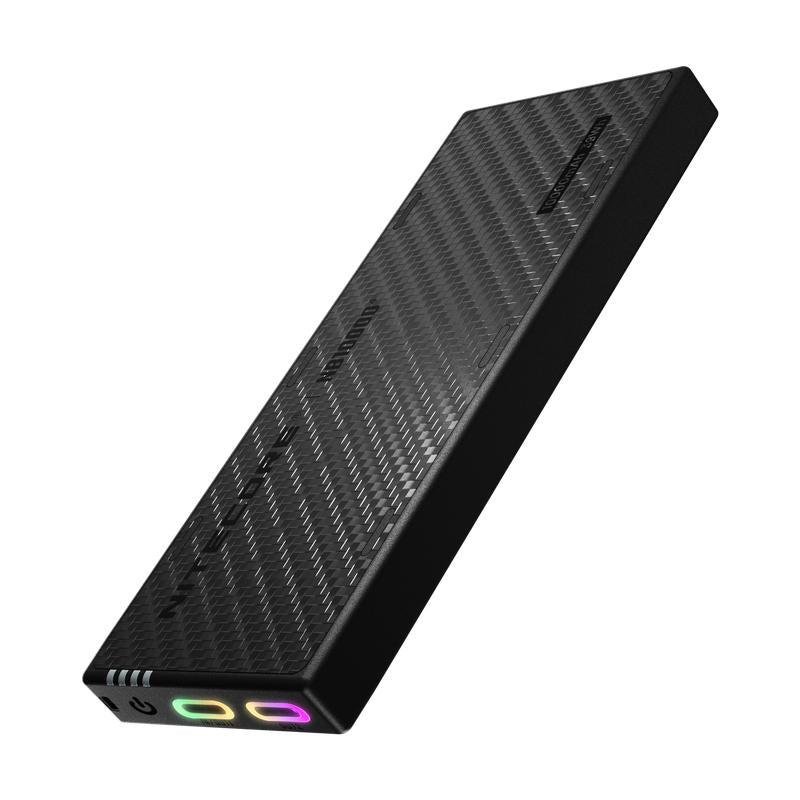
The Nitecore NB10000 Gen4 is built specifically for thru-hikers, ultralight backpackers, and endurance athletes who count every single fraction of an ounce. While conventional consumer power banks wrap their internal cells in thick plastic or heavy metal, Nitecore utilizes a carbon-fiber-reinforced polymer frame that strips down extraneous mass without compromising structural integrity. At just 5.2 ounces for a full 10,000 mAh capacity, it provides the highest energy-to-weight ratio currently available on the retail market. In field assessments across the outdoor community, the NB10000 series has earned its reputation through reliable charge cycles and efficient Power Delivery (PD) transfer rates. The fourth-generation iteration refines the port architecture and optimizes pass-through charging, enabling you to recharge the power bank and a connected headlamp or phone simultaneously from a single wall outlet during town stops. Its low-current charging mode also ensures that delicate electronics, such as satellite trackers and fitness watches, charge without triggering an automatic shut-off. The primary trade-offs stem directly from its ultralight specialization. It carries a premium price point compared to standard consumer batteries, and its minimalist exterior lacks the heavy rubber bumpers found on ruggedized outdoor chargers. While it carries an IPX5 water-resistance rating to withstand rain and trail splashes, it still requires safe storage inside a dry bag during sustained downpours. **Highlights** - Weighs an ultralight 5.2 ounces for a full 10,000 mAh capacity - Carbon-fiber reinforced frame resists trail impacts and twisting - Dual USB-C and USB-A output ports with Power Delivery support - Low-current mode protects smaller peripherals like GPS watches - Pass-through charging allows simultaneous device and bank replenishment **Watch-outs** - Significantly higher purchase price than standard plastic chargers - Lacks thick rubber corner bumpers for heavy drop protection - Splash-resistant but not submersible in water
Pros
- Exceptional energy-to-weight ratio at only 5.2 ounces
- Carbon-fiber composite frame reduces bulk while resisting flex
- Pass-through charging optimizes time spent at trail-town outlets
- Low-current mode reliably charges GPS watches and small headlamps
Cons
- Steep retail price compared to conventional consumer batteries
- Lacks rubberized corner bumpers for heavy drop protection
- Unsealed ports require dry-bag storage during sustained rain
Best uses
- Long-distance thru-hiking
- Ultralight weekend backpacking
- Fastpacking and trail running
- Minimalist bikepacking expeditions
Specifications
- Battery Capacity
- 10,000 mAh (38.5 Wh)
- Measured Weight
- 5.2 oz (147 g)
- Housing
- Carbon-fiber-reinforced polymer
- Water Resistance
- IPX5 rating
- Charging Support
- USB-C Power Delivery (PD)
- Approximate Price
- $84
Pricing
We don't publish a price we haven't verified. The retailer links below open the live listing for this exact model.
Full catalog listing & offersBest for
Long-distance thru-hiking, Ultralight weekend backpacking, Fastpacking and trail running, Minimalist bikepacking expeditions
Where to buy the NB10000 Gen4
We don't have a direct Amazon listing on file yet — this opens an Amazon search for the exact make and model.
Some links are affiliate links. Buying through them supports our testing at no extra cost to you.
The Nitecore NB10000 Gen4 sits at the top of the ultralight backpacking category primarily because of its exceptional energy-to-weight ratio. Weighing roughly 5.2 ounces, it packs a standard 10,000 mAh capacity into a footprint substantially lighter and more compact than conventional consumer power banks. For long-distance hikers, fastpackers, and backcountry travelers who monitor pack base weight ounce by ounce, this unit minimizes dead weight without forcing a compromise on battery storage. The fourth iteration refines port functionality and power management while maintaining the core appeal of the NB series. Constructed with a carbon-fiber-reinforced polymer chassis, the bank resists torsional flex and impact despite having minimal external bulk. Features like pass-through charging and a dedicated low-current mode make it easy to top off sensitive electronics—such as satellite communicators, fitness watches, and headlamps—without premature shutoffs during town resupply stops or campsite routines. However, this targeted ultralight engineering comes with straightforward trade-offs. It carries an approximate retail price of $84, putting it far above common plastic alternatives, and it foregoes the thick rubberized armor found on heavy-duty outdoor power banks. While weather-resistant enough for light trail exposure, it still demands responsible storage inside a pack liner or dry sack.
Target User and Intent
The NB10000 Gen4 targets backcountry travelers who prioritize minimal pack weight above all else. Thru-hikers tackling high-mileage days on trails like the PCT or AT will appreciate that it delivers roughly two full charges to modern smartphones while weighing barely over five ounces. It also fits the profile of fastpackers, bikepackers, and endurance athletes who need emergency reserves for navigational devices without carrying bulky auxiliary bricks. Conversely, casual car campers or day hikers who rarely venture far from trailheads will find the performance benefits unnecessary given the steep retail price. Standard consumer packs costing a third of the price provide similar total energy if an extra two to three ounces of pack weight is of no concern. For those whose entire packing list is calibrated to minimize base weight, however, the engineering here solves a very specific logistical problem efficiently.
Materials and Construction
Traditional external batteries enclose cylindrical or pouch lithium-ion cells in thick injection-molded ABS plastic or heavy aluminum sleeves. Nitecore takes an alternative structural approach by using carbon-fiber-reinforced polymer sheets bonded to the perimeter frame. This composite shell acts as a structural exoskeleton, granting the battery substantial resistance to bending, twisting, and crushing forces that can occur inside an overstuffed rucksack. By distributing localized pressure across the carbon weave, Nitecore reduces the overall volume and mass of the protective housing. The corners are subtly reinforced to absorb small drops onto packed dirt, though the unit noticeably lacks the thick rubber bumpers and port covers typical of heavy survivalist gear. The build is slim, pocket-friendly, and deliberately Spartan, stripping away ornamental styling in favor of pure utilitarian efficiency and compact exterior dimensions.
Charging and Field Performance
Power delivery on trail depends on both output speed and internal circuit efficiency. The Gen4 utilizes USB-C Power Delivery alongside a secondary USB-A port to provide modern fast-charging speeds to contemporary smartphones, GPS units, and cameras. A notable operational feature is pass-through charging, which enables the power bank to accept current from a wall plug while simultaneously feeding power to an attached device. For hikers taking short rest stops in trail towns, this feature cuts down the time spent waiting near limited electrical outlets in cafes or post offices. Additionally, the unit incorporates a manually triggered low-current mode. This setting bypasses the automatic shutoff threshold common in smart batteries, ensuring that low-draw peripherals like Bluetooth earbuds, fitness trackers, and ultralight headlamps reach full charge reliably without the bank misinterpreting the low current draw as an idle state.
Durability and Environmental Limits
While the carbon-fiber frame prevents structural deformation under normal trail pressure, this battery is not an indestructible field brick. It features an IPX5 water-resistance rating, meaning it can withstand direct low-pressure water streams, light rain, and trail spray without internal short-circuiting. However, it is not submersible, and the open charging ports have no protective rubber flaps to block direct grit ingress. In practice, backpackers must keep the battery stored inside a zip-top bag or waterproof pack liner during heavy downpours or stream crossings. Temperature tolerance is also a factor inherent to lithium-polymer chemistry; the unit experiences standard voltage dips in sub-freezing alpine conditions. Hikers sleeping in freezing weather need to stow the bank inside their sleeping bag overnight to preserve cell capacity and prevent cold-induced power loss before starting their morning routine.
Market Alternatives and Value
At around $84, the NB10000 Gen4 represents a significant financial investment for a 10,000 mAh capacity reserve. The primary justification for this price premium is the weight savings. Conventional options, such as popular consumer batteries from Anker, typically register between 6.5 and 7.5 ounces and retail for $25 to $40. Choosing the Nitecore saves roughly two ounces, an increment that seems trivial to casual users but is substantial for ultralight hikers who calculate weight down to the single gram. Another comparison point is heavier ruggedized batteries with integrated solar panels or flashlights, which often weigh 10 to 14 ounces without providing additional usable energy. Unless you specifically require built-in emergency lighting or rubberized impact protection, the NB10000 offers a cleaner, more energy-dense package that justifies its cost for specialized long-distance applications.
Field Operation and Maintenance
Operating the Gen4 is straightforward, but maximizing its lifespan requires a few deliberate habits. The LED indicator lights display remaining battery capacity in clean increments, and a simple button press toggles the low-current mode. To maintain optimal charging speeds, pairing the bank with quality, short-length cables is essential, as cheap or degraded cords introduce line resistance that slows down Power Delivery protocols. Users should also clean the USB ports periodically with a dry brush or compressed air, as pocket lint and pack dust can accumulate in the unsealed openings. When storing the device between backpacking trips, avoid leaving it completely depleted or charged to 100 percent for months on end. Storing it around 50 to 70 percent capacity in a cool, dry closet protects long-term cell health and prevents premature degradation.
How we picked
We started with a long list of backpacking power banks that people actually buy, cut anything that could not clear our baseline for durability and field performance, then ranked the 10 that were left against the same criteria. Rankings are editorial. No brand pays for placement, and affiliate links never move a pick up or down.
- Real-world output
- Usable charging in clouds or cold, not just the rated wattage or capacity.
- Ports and packability
- Port types, charging speed and weight for the power delivered.
- Real-world durability
- How the material, stitching, or steel holds up after a season of hard use — not how it looks new.
- Performance in bad conditions
- Wind, rain, cold, and grit are the test. Anything that only works on a nice day gets marked down.
- Weight and packability
- Every ounce has to earn its place in the pack, but not at the cost of something that fails in the field.
- Ease of use
- Setup, adjustment, and maintenance with cold hands, in the dark, without the manual.
NB10000 Gen4 — frequently asked questions
- Is the NB10000 Gen4 worth it?
- We rank it #1 in Backpacking Power Banks. The Nitecore NB10000 Gen4 is built specifically for thru-hikers, ultralight backpackers, and endurance athletes who count every single fraction of an ounce. While conventional consumer power banks wrap their internal cells in thick plastic or heavy metal, Nitecore utilizes a carbon-fiber-reinforced polymer frame that…
- What is the NB10000 Gen4 best for?
- Best for long-distance thru-hiking, ultralight weekend backpacking, fastpacking and trail running and minimalist bikepacking expeditions. Standouts: exceptional energy-to-weight ratio at only 5.2 ounces and carbon-fiber composite frame reduces bulk while resisting flex.
- What are the downsides of the NB10000 Gen4?
- Steep retail price compared to conventional consumer batteries, Lacks rubberized corner bumpers for heavy drop protection and Unsealed ports require dry-bag storage during sustained rain.
- What are the key specs of the NB10000 Gen4?
- Battery Capacity: 10,000 mAh (38.5 Wh) · Measured Weight: 5.2 oz (147 g) · Housing: Carbon-fiber-reinforced polymer · Water Resistance: IPX5 rating · Charging Support: USB-C Power Delivery (PD)
- Target User and Intent — what should I know about the NB10000 Gen4?
- The NB10000 Gen4 targets backcountry travelers who prioritize minimal pack weight above all else. Thru-hikers tackling high-mileage days on trails like the PCT or AT will appreciate that it delivers roughly two full charges to modern smartphones while weighing barely over five ounces.
- Materials and Construction — what should I know about the NB10000 Gen4?
- Traditional external batteries enclose cylindrical or pouch lithium-ion cells in thick injection-molded ABS plastic or heavy aluminum sleeves. Nitecore takes an alternative structural approach by using carbon-fiber-reinforced polymer sheets bonded to the perimeter frame.
Compare side by side
Put the NB10000 Gen4 against any other pick on this list — specs, price, pros, cons and reader ratings.