


Reader rating
Rate it and you move it. Community ratings re-rank this product inside its Top 10 list.
Expert-picked, reader-ranked. Our editors choose the products and the launch order; member star ratings move picks up or down over time.
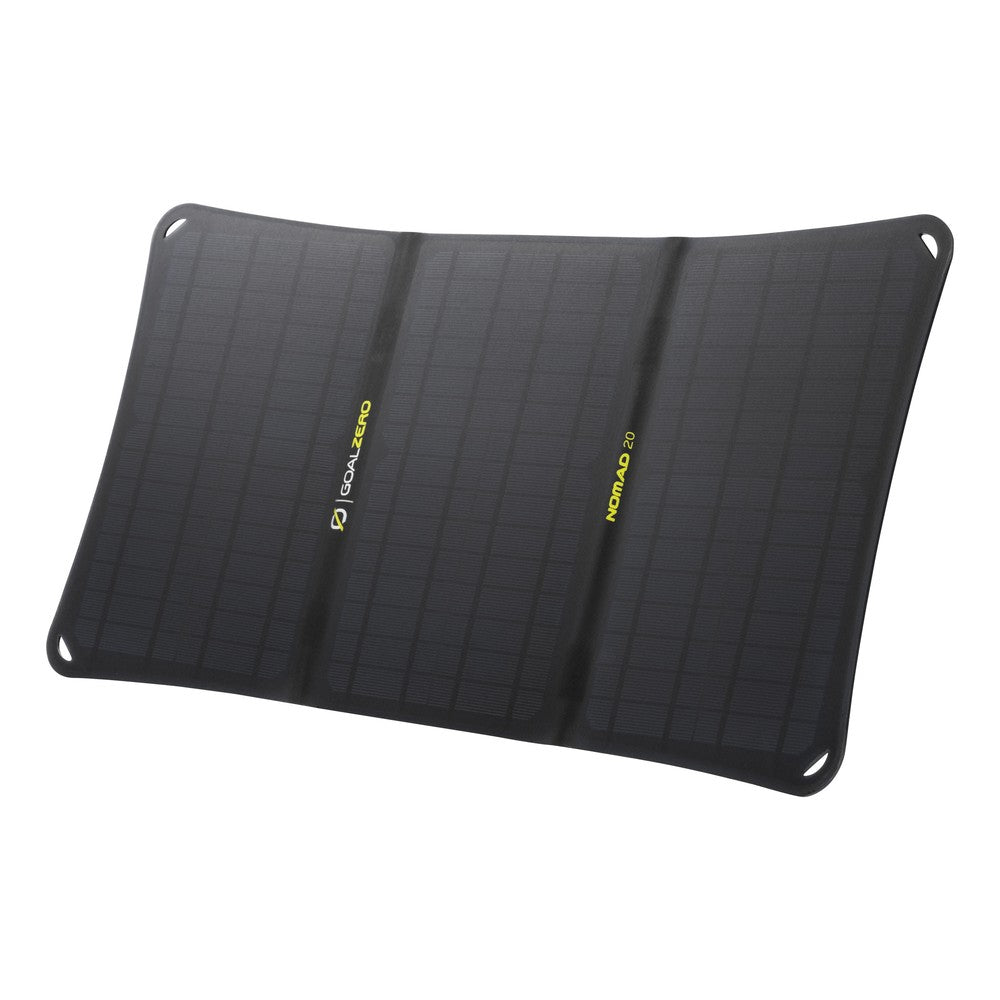
The Nomad 20 is a camp panel. It is too heavy for most backpacks but can charge Goal Zero banks through its 8mm port. **Highlights** - 8mm solar output up to 20 W - Kickstand - Available when checked **Watch-outs** - 2.28 lb - USB-A only Research only: Wild10 has not field tested this model. Specifications come from the maker page; any measured figure is credited to the outlet that measured it.
Pros
- 8mm solar output up to 20 W
- Kickstand
- Available when checked
Cons
- 2.28 lb
- USB-A only
Best uses
- Basecamps
- Canoe trips with portages
Specifications
- Rated panel power
- 20 W
- Ports
- USB 5V up to 2.1A (10.5 W max); 8mm solar port up to 20 W
- Built-in battery
- None
- Weight
- 2.28 lb (1.03 kg) per maker
- Wild10 evidence
- Research only, not field tested
- Best for
- Camp panel for small power stations
Pricing
We don't publish a price we haven't verified. The retailer links below open the live listing for this exact model.
Best for
Basecamps, Canoe trips with portages
Where to buy the Nomad 20
Prices and stock change often, so check the current Amazon offer before you buy.
Some links are affiliate links. Buying through them supports our testing at no extra cost to you.
The Nomad 20 is a camp panel. It is too heavy for most backpacks but can charge Goal Zero banks through its 8mm port.
Why it ranks here
Its 8mm port can send up to 20 W to compatible banks, which is more than its 10.5 W USB port.
Specs that matter on trail
Rated panel power: 20 W; Ports: USB 5V up to 2.1A (10.5 W max); 8mm solar port up to 20 W; Built-in battery: None; Weight: 2.28 lb (1.03 kg) per maker. All figures are maker-stated unless a review outlet is named.
Limits and caveats
2.28 lb is heavy for backpacking. No USB-C. No independent measured output found.
How we picked
We started with a long list of backcountry solar chargers that people actually buy, cut anything that could not clear our baseline for durability and field performance, then ranked the 10 that were left against the same criteria. Rankings are editorial. No brand pays for placement, and affiliate links never move a pick up or down.
- Real-world output
- Usable charging in clouds or cold, not just the rated wattage or capacity.
- Ports and packability
- Port types, charging speed and weight for the power delivered.
- Real-world durability
- How the material, stitching, or steel holds up after a season of hard use — not how it looks new.
- Performance in bad conditions
- Wind, rain, cold, and grit are the test. Anything that only works on a nice day gets marked down.
- Weight and packability
- Every ounce has to earn its place in the pack, but not at the cost of something that fails in the field.
- Ease of use
- Setup, adjustment, and maintenance with cold hands, in the dark, without the manual.
Nomad 20 — frequently asked questions
- Is the Nomad 20 worth it?
- We rank it #10 in Backcountry Solar Chargers. The Nomad 20 is a camp panel. It is too heavy for most backpacks but can charge Goal Zero banks through its 8mm port.
- What is the Nomad 20 best for?
- Best for basecamps and canoe trips with portages. Standouts: 8mm solar output up to 20 w and kickstand.
- What are the downsides of the Nomad 20?
- 2.28 lb and USB-A only.
- What are the key specs of the Nomad 20?
- Rated panel power: 20 W · Ports: USB 5V up to 2.1A (10.5 W max); 8mm solar port up to 20 W · Built-in battery: None · Weight: 2.28 lb (1.03 kg) per maker · Wild10 evidence: Research only, not field tested
- Why it ranks here?
- 5 W USB port.
- Specs that matter on trail — what should I know about the Nomad 20?
- 03 kg) per maker. All figures are maker-stated unless a review outlet is named.
Compare side by side
Put the Nomad 20 against any other pick on this list — specs, price, pros, cons and reader ratings.