


Reader rating
Rate it and you move it. Community ratings re-rank this product inside its Top 10 list.
Expert-picked, reader-ranked. Our editors choose the products and the launch order; member star ratings move picks up or down over time.
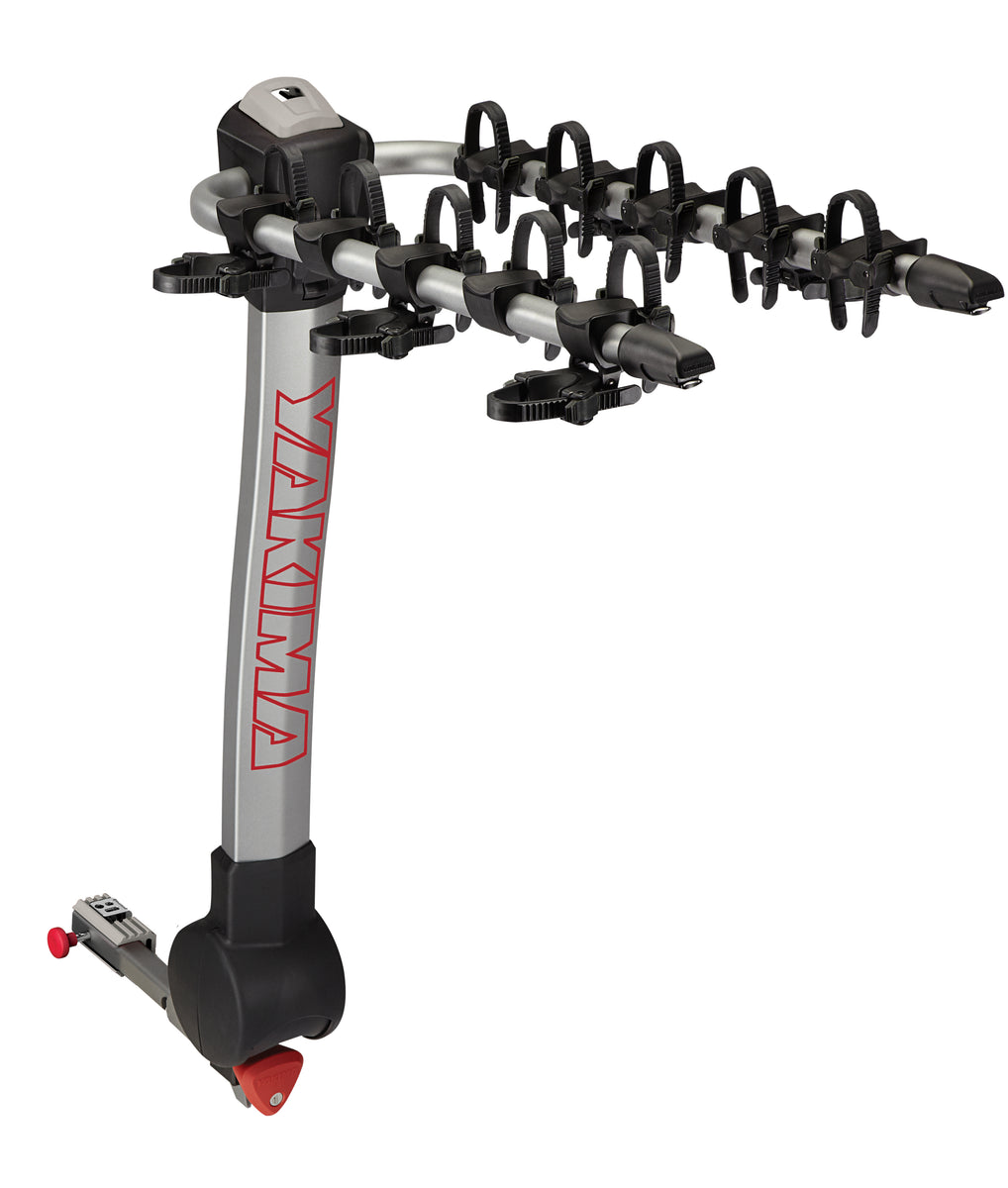
The Yakima RidgeBack targets families, casual cyclists, and camping groups needing to haul up to four bikes without spending four figures on an oversized tray system. Weighing around 35 pounds, it is substantially lighter and far easier to install or store in a closet than multi-bike platform racks. It operates via a traditional hanging mast, supporting bikes by the top tube using soft rubber cradles and ratcheting straps that hold frames in place during transit. Reviewers consistently praise the RidgeBack for its tool-free SpeedKnob hitch installation, which expands an internal wedge inside the receiver to eliminate wobble without requiring wrenches. Anti-sway cradles clip onto vertical frame tubes to minimize the front-to-back pendulum motion typical of older hanging designs. When bikes are removed, the dual support arms fold down flat against the mast with a single upper latch, keeping the vehicle compact for parallel parking or garage clearance. Because it is a hanging rack, the RidgeBack has inherent limitations compared to tray-style platforms. Step-through frames, kids' bikes, and modern full-suspension mountain bikes with horizontal rear shocks often require separate top-tube adapter bars to sit level. Furthermore, because bikes hang in close proximity, pedals and wheel rims can rub against adjacent frames unless you use supplementary bungee cords or padding on bumpy dirt roads. **Highlights** - Lightweight 35-pound build simplifies seasonal vehicle installation - Tool-free SpeedKnob locks rack securely to hitch receiver - Folding support arms reduce rear profile when unloaded - Upper-mast tilt lever provides rear tailgate access - Anti-sway cradles limit contact between bikes **Watch-outs** - Requires separate top-tube adapter bars for step-through and many full-suspension bikes - Bikes can swing into each other on uneven dirt roads without extra strapping - Upper arms can be a tight squeeze for four modern, wide-handlebar mountain bikes
Pros
- Manageable 35-pound weight makes solo vehicle installation and storage easy
- Tool-free SpeedKnob eliminates receiver wobble without requiring wrenches
- Folding dual arms lower smoothly to shorten vehicle length when unloaded
- Tilt-away mast provides quick tailgate clearance without removing the rack
Cons
- Requires separate top-tube adapter bars for step-through and full-suspension frames
- Four-bike capacity is extremely tight for wide-handlebar modern mountain bikes
- Risk of cosmetic bike-to-bike rubbing on rough backroads without extra strapping
Best uses
- Family camping and road trips
- Weekend road bike carpools
- Recreational mixed-bike hauling
- Vehicles with limited tongue capacities
Specifications
- Rack Type
- Hitch-mount hanging mast
- Total Weight
- 35 lbs
- Max Capacity
- Up to 4 bikes
- Hitch Size
- 1.25-inch and 2-inch compatible
- Attachment
- Tool-free SpeedKnob system
- Price Point
- Around $479
Pricing
We don't publish a price we haven't verified. The retailer links below open the live listing for this exact model.
Full catalog listing & offersBest for
Family camping and road trips, Weekend road bike carpools, Recreational mixed-bike hauling, Vehicles with limited tongue capacities
Where to buy the RidgeBack
We don't have a direct Amazon listing on file yet — this opens an Amazon search for the exact make and model.
Some links are affiliate links. Buying through them supports our testing at no extra cost to you.
The Yakima RidgeBack offers a sensible, space-efficient middle ground for cyclists who need to carry up to four bicycles without surrendering their trunk space or spending four figures on an oversized platform system. While tray-style racks dominate the enthusiast scene, their sheer footprint and heavy frames make daily vehicle living and off-season storage a chore. The RidgeBack uses a traditional hanging-mast design, keeping both mechanical complexity and overall bulk to a minimum. Weighing approximately 35 pounds, this rack is light enough for a single person to lift, mount, and pull off a vehicle without strained backs or skinned knuckles. Yakima integrates its proprietary SpeedKnob attachment mechanism, which tightens an expanding internal wedge directly against the hitch receiver walls to eliminate mechanical slop and wobble before you ever hit the road. Because the rack suspends bikes from their upper frame tubes, it is best aligned with traditional diamond frames, including standard road, commuter, and hardtail mountain bikes. Transporting kids' models or full-suspension mountain bikes with low-slung shock configurations will generally demand separate top-tube adapters. For weekend family trips and group pavement rides, however, the RidgeBack delivers straightforward utility at roughly half the cost and half the heft of multi-bike tray platforms.
Target Audience and Practicality
The RidgeBack is purpose-built for recreational cyclists, family fleets, and casual road riders who need four-bike capacity without the intense storage penalties of a tray-style platform rack. Platform racks designed for four bicycles regularly exceed 80 pounds, require deep garages, and turn parallel parking into an ordeal. The RidgeBack solves this logistical hurdle by folding its carrying arms flat against the mast when empty. It suits suburban households that frequently remove the rack between weekend outings, as well as drivers of compact SUVs and wagons where excessive tongue weight from heavier racks could strain the suspension.
Materials and Hardware Construction
Built around a heavy-gauge steel mast with a durable powder-coated exterior, the RidgeBack handles road debris, gravel spray, and wet weather without early surface corrosion. The critical interface points rely on reinforced composite latches and soft rubberized cradles designed to shield painted frame finishes from scuffing. Yakima equips the rack with ratcheting straps that hold frame tubes firmly into deep grooved beds, paired with integrated anti-sway cradles that clip lower along the seat tube. The central folding pivots and the lower vehicle tilt hinge feature positive-locking steel pins that snap distinctly into place, ensuring structural integrity under highway wind resistance.
Hitch Interface and Performance
The standout usability feature on the RidgeBack is the tool-free SpeedKnob receiver lock. Traditional hitch racks require a dedicated wrench to tighten an anti-rattle threaded pin through the receiver holes, turning installation into a dirty, knuckle-busting chore. The RidgeBack slides straight into standard hitch receivers, after which rotating the outer knob forces an internal wedge against the inside of the hitch tube. This locks the rack solidly to the vehicle frame, almost completely eliminating lateral swaying at highway speeds. A central foot pedal or upper hand lever releases the mast to tilt rearward, granting unobstructed access to the tailgate when unloaded.
Fit Dynamics and Tuning
Loading bikes on a hanging mast requires a methodical approach compared to wheel-tray designs. Because bicycles hang by their top tubes, standard road, gravel, and rigid commuter frames slide into place effortlessly. However, modern full-suspension mountain bikes featuring horizontal shock linkages, extreme top-tube curvature, or small sloping children's frames frequently lack the open frame triangle needed to clear the dual support arms. Carrying these designs requires purchasing supplemental crossbar adapters that span from the seatpost to the headset. Furthermore, alternating the direction of handlebars and saddles is essential to prevent brake levers and derailleurs from tangling during transit.
Durability and Longevity Notes
The mechanical simplicity of a hanging rack translates to high long-term reliability. Unlike platform racks with telescoping wheel hooks, internal ratchets, and intricate slide mechanisms that can jam with trail dust, the RidgeBack has relatively few failure-prone parts. The rubber cradles and ratcheting straps remain flexible in sub-freezing temperatures and resist UV breakdown over multiple seasons. If a strap is dropped or worn out, replacement parts are widely stocked and inexpensive to swap. The primary long-term maintenance task involves keeping the internal wedge mechanism clean and applying an occasional light grease to the SpeedKnob threads.
Market Context and Alternatives
At approximately $479, the RidgeBack occupies the premium tier of hanging racks. Budget competitors like entry-level Allen Sports or basic Curt racks cost considerably less, but they rely on bolted anti-wobble pins, lack anti-sway dampeners, and wobble noticeably on the road. The Thule Camber matches the RidgeBack closely in quality and price, but Yakima holds an edge in sheer ease of installation thanks to the toolless wedge design. For riders with carbon enduro mountain bikes or heavy electric bikes, stepping up to a platform rack like the Kuat Transfer or Yakima StageTwo is mandatory, but for standard acoustic bikes, the RidgeBack maximizes value.
Trade-offs and Frame Contact
The primary disadvantage of the RidgeBack is the potential for bike-on-bike contact. When four adult mountain bikes with 800mm-wide handlebars and protruding flat pedals are mounted side by side, clearances shrink dramatically. On rough dirt washboards or during aggressive cornering, adjacent front wheels and rear triangles will naturally oscillate. Experienced users often pack foam pipe insulation or supplementary webbing straps around rims and pedals to prevent cosmetic scratches. Additionally, the RidgeBack is strictly incompatible with heavy e-bikes due to individual cradle weight ratings and the physical challenge of lifting 50-pound bicycles up onto high horizontal arms.
How we picked
We started with a long list of bike racks that people actually buy, cut anything that could not clear our baseline for durability and field performance, then ranked the 10 that were left against the same criteria. Rankings are editorial. No brand pays for placement, and affiliate links never move a pick up or down.
- Real-world durability
- How the material, stitching, or steel holds up after a season of hard use — not how it looks new.
- Performance in bad conditions
- Wind, rain, cold, and grit are the test. Anything that only works on a nice day gets marked down.
- Weight and packability
- Every ounce has to earn its place in the pack, but not at the cost of something that fails in the field.
- Ease of use
- Setup, adjustment, and maintenance with cold hands, in the dark, without the manual.
- Value at its price point
- Compared against the closest competitors in the same tier, not against cheaper gear in a different class.
- Repairability and support
- Field-fixable design, available parts, and a warranty the maker actually honors.
RidgeBack — frequently asked questions
- Is the RidgeBack worth it?
- We rank it #2 in Bike Racks. The Yakima RidgeBack targets families, casual cyclists, and camping groups needing to haul up to four bikes without spending four figures on an oversized tray system. Weighing around 35 pounds, it is substantially lighter and far easier to install or store in a closet than multi-bike platform racks.
- What is the RidgeBack best for?
- Best for family camping and road trips, weekend road bike carpools, recreational mixed-bike hauling and vehicles with limited tongue capacities. Standouts: manageable 35-pound weight makes solo vehicle installation and storage easy and tool-free speedknob eliminates receiver wobble without requiring wrenches.
- What are the downsides of the RidgeBack?
- Requires separate top-tube adapter bars for step-through and full-suspension frames, Four-bike capacity is extremely tight for wide-handlebar modern mountain bikes and Risk of cosmetic bike-to-bike rubbing on rough backroads without extra strapping.
- What are the key specs of the RidgeBack?
- Rack Type: Hitch-mount hanging mast · Total Weight: 35 lbs · Max Capacity: Up to 4 bikes · Hitch Size: 1.25-inch and 2-inch compatible · Attachment: Tool-free SpeedKnob system
- Target Audience and Practicality — what should I know about the RidgeBack?
- The RidgeBack is purpose-built for recreational cyclists, family fleets, and casual road riders who need four-bike capacity without the intense storage penalties of a tray-style platform rack. Platform racks designed for four bicycles regularly exceed 80 pounds, require deep garages, and turn parallel parking into an…
- Materials and Hardware Construction — what should I know about the RidgeBack?
- Built around a heavy-gauge steel mast with a durable powder-coated exterior, the RidgeBack handles road debris, gravel spray, and wet weather without early surface corrosion. The critical interface points rely on reinforced composite latches and soft rubberized cradles designed to shield painted frame finishes from…
Compare side by side
Put the RidgeBack against any other pick on this list — specs, price, pros, cons and reader ratings.