



Updated October 2026 · 10 picks re-checked for availability and current spec, reader ratings refreshed live.
Transporting bikes securely over washboard gravel, highway crosswinds, and potholed access roads requires a rack built with tight tolerances and durable materials. While cheap carriers might hold a frame steady across a paved suburb, outdoor use demands reliable hardware that prevents frame-on-frame contact, clears steep departure angles, and holds heavy modern wheelbases without loosening over time. Tray-style hitch racks have largely become the standard for trailheads because they isolate bikes by the tires, eliminating rub on carbon frames and suspension components. To build this ranking, we aggregated test conclusions and long-term reviews from top independent outdoor outlets, including OutdoorGearLab, Switchback Travel, GearJunkie, and Treeline Review. We cross-referenced their real-world findings with our own editorial weighting, prioritizing build durability, ease of loading, tilt functionality with loaded gear, and overall value. Whether you need a heavy-duty platform for sixty-pound e-bikes, a modular aluminum tray built for backcountry clearance, or a lightweight roof carrier, this guide cuts through marketing claims to identify racks that hold up to regular outdoor abuse.
The short answer

The Thule T2 Pro XTR sits at the top of the category because it consistently solves the biggest headaches of hitch-rack ownership: ground clearance,…
Why it wins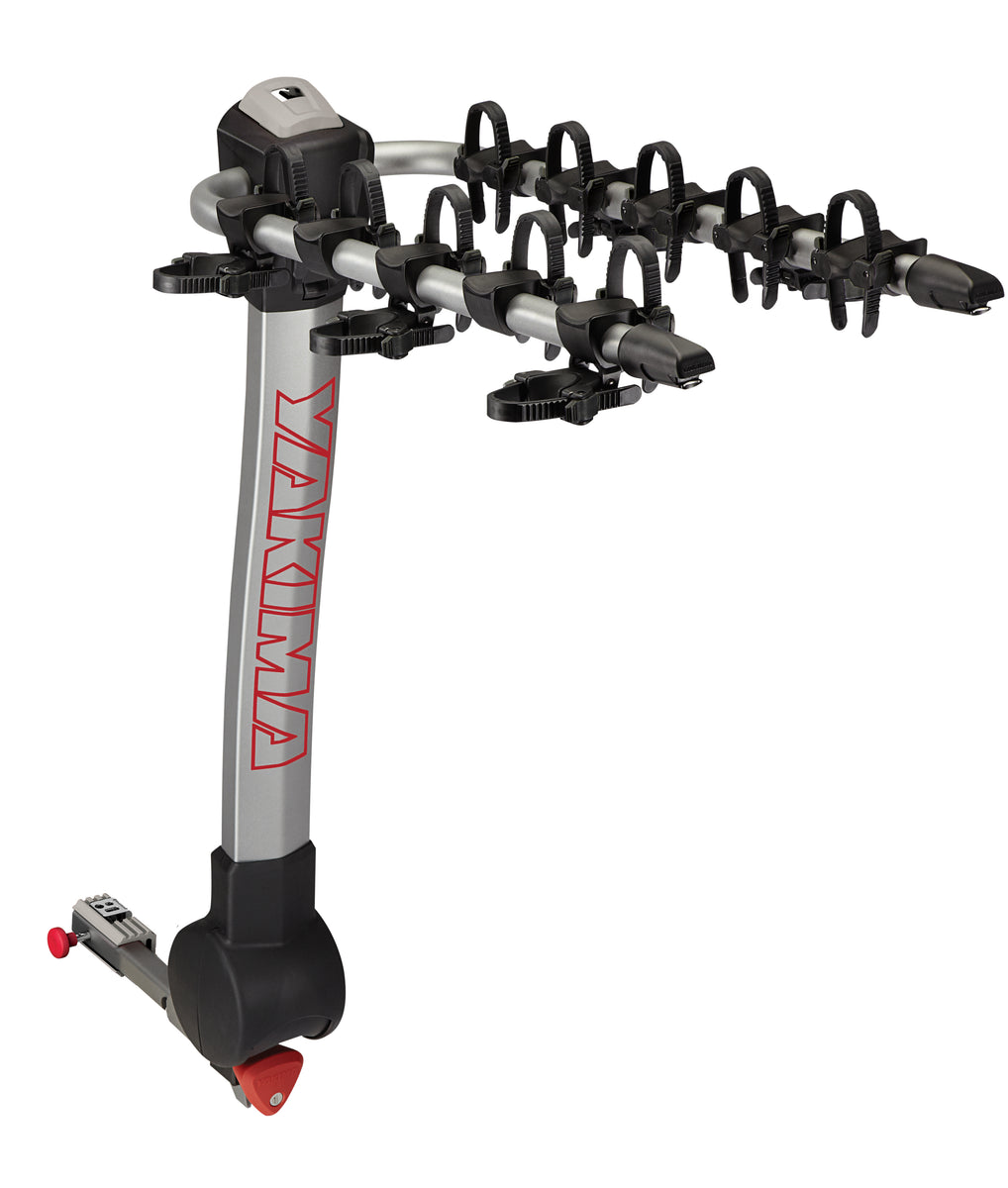
The Yakima RidgeBack targets families, casual cyclists, and camping groups needing to haul up to four bikes without spending four figures on an…
Why it wins
The Yakima StageTwo is built specifically for the realities of modern cycling: heavier electric mountain bikes, extended wheelbases, and wide…
Why it winsDeep-dive product reviews
We've published full field-test reports and technical deep-dives for 10 of the picks in this list.
Compare all 10 picks at a glance
Editorial ranking, what each pick is best at, and how we assessed it. Tap a name to jump to the full write-up.
| # | Pick | Best for | Key spec | Evidence |
|---|---|---|---|---|
| 1 | T2 Pro XTR Thule | Mountain and trail riding | Rack Style: Platform hitch rack | Research only |
| 2 | RidgeBack Yakima | Family camping and road trips | Rack Type: Hitch-mount hanging mast | Research only |
| 3 | Verse Thule | Carbon Frame Bike Transport | Rack Style: Platform hitch rack | Research only |
| 4 | Heavy Duty 1Up | Unpaved washboard road travel | Base Weight: 47 lbs | Research only |
| 5 | StageTwo Yakima | Heavy Electric Mountain Bikes | Rack Weight: 66 lbs | Research only |
| 6 | Transfer v2 2-Bike Kuat | Frequent Rack Removal | Carrying Capacity: 2 bikes | Research only |
| 7 | Piston Ion Kuat | Heavy E-Bike Transport | Rack Style: Hitch-mounted tray | Research only |
| 8 | Vero Hitch Bike Rack Thule | Multi-discipline cycling households | Total Weight: 56 lbs | Research only |
| 9 | Trio Fork Mount Kuat | Gravel and road riding | Mount Type: Roof crossbar or T-slot channel | Research only |
| 10 | Outpace Thule | Apartment and urban storage | Rack Style: Platform / tray hitch rack | Research only |
How we picked
Ranked by Wes Donnelly, Camp Kitchen & Power Editor
We started with a long list of bike racks that people actually buy, cut anything that could not clear our baseline for durability and field performance, then ranked the 10 that were left against the same criteria. Rankings are editorial. No brand pays for placement, and affiliate links never move a pick up or down.
- Real-world durability
- How the material, stitching, or steel holds up after a season of hard use — not how it looks new.
- Performance in bad conditions
- Wind, rain, cold, and grit are the test. Anything that only works on a nice day gets marked down.
- Weight and packability
- Every ounce has to earn its place in the pack, but not at the cost of something that fails in the field.
- Ease of use
- Setup, adjustment, and maintenance with cold hands, in the dark, without the manual.
- Value at its price point
- Compared against the closest competitors in the same tier, not against cheaper gear in a different class.
- Repairability and support
- Field-fixable design, available parts, and a warranty the maker actually honors.
How often we recheck this: Reviewed on a rolling basis and rechecked at least once a year, or sooner if a pick is discontinued, revised, or beaten by something new.
Best of the Best · Head to Head
T2 Pro XTR vs RidgeBack
#1 vs #2 — side-by-side specs, pros & cons, and the final verdict.
Compare any two picks
Build your own side-by-side
Choose any two of these 10 picks and compare specs, price, pros, cons and reader ratings.
Topic summary
We evaluated the top bike racks for real outdoor use, analyzing expert trail tests and long-term durability data to find the best hitch, tray, and roof carriers.
Key takeaways
- #1 T2 Pro XTR — Thule
- #2 RidgeBack — Yakima
- #3 Verse — Thule
- #4 Heavy Duty — 1Up
- #5 StageTwo — Yakima
- #6 Transfer v2 2-Bike — Kuat
Intended uses
Gear
Verification notes
Editorial ranked list, 10 entries. Evidence mix — 10 research only. Buy links open the maker or a retailer search. Last reviewed October 2026.
Best bike racks for a specific job
Skip the ranking — jump to the pick that matches how you actually use it.
- Best for mountain and trail riding
- #1 T2 Pro XTR — ThuleThe Thule T2 Pro XTR sits at the top of the category because it consistently solves the biggest headaches of hitch-rack ownership: ground clearance, bike stability, and off-vehicle mobility. It is aimed at mountain, road, and gravel cyclists who want a secure, zero-frame-contact platform capable of withstanding rough access roads. Thule equips the carrier with small integrated wheels on the base, which makes rolling this hefty steel-and-aluminum rack between your garage and vehicle hitch remarkably painless. In field assessments across major review outlets, the T2 Pro XTR earns top marks for its ergonomic tilt lever. Located on the outer handle rather than hidden underneath near the hitch receiver, the tilt mechanism lets you drop the loaded rack away from your vehicle with one hand to open rear hatches. The ratcheting front-wheel arms swing wide and clamp down firmly over tires up to five inches wide, while deep rear wheel cradles eliminate side-to-side wobble on rough terrain. Trade-offs are mostly tied to footprint and price. At roughly $900, it represents a substantial investment, and the assembly is heavy enough that users without mechanical confidence may find initial setup tedious. While the integrated transport wheels help, lifting the unit into the receiver still takes reasonable strength. Over years of use, plastic components on the ratcheting levers require basic cleaning to keep road grime from binding the internal springs. **Highlights** - Integrated rolling wheels for easy transport and storage - Ergonomic tilt lever positioned at the rack's exterior - Tool-free AutoPin and locking hitch cam system - Accommodates tire widths from road slicks up to 5-inch fat tires - Integrated cable locks secure bikes directly to ratcheting arms **Watch-outs** - Significant overall weight makes hitch insertion physically demanding - Premium price point near the top of the standard hitch class - Cable locks offer basic deterrent but remain vulnerable to heavy bolt cuttersRead the full profile
- Best for family camping and road trips
- #2 RidgeBack — YakimaThe Yakima RidgeBack targets families, casual cyclists, and camping groups needing to haul up to four bikes without spending four figures on an oversized tray system. Weighing around 35 pounds, it is substantially lighter and far easier to install or store in a closet than multi-bike platform racks. It operates via a traditional hanging mast, supporting bikes by the top tube using soft rubber cradles and ratcheting straps that hold frames in place during transit. Reviewers consistently praise the RidgeBack for its tool-free SpeedKnob hitch installation, which expands an internal wedge inside the receiver to eliminate wobble without requiring wrenches. Anti-sway cradles clip onto vertical frame tubes to minimize the front-to-back pendulum motion typical of older hanging designs. When bikes are removed, the dual support arms fold down flat against the mast with a single upper latch, keeping the vehicle compact for parallel parking or garage clearance. Because it is a hanging rack, the RidgeBack has inherent limitations compared to tray-style platforms. Step-through frames, kids' bikes, and modern full-suspension mountain bikes with horizontal rear shocks often require separate top-tube adapter bars to sit level. Furthermore, because bikes hang in close proximity, pedals and wheel rims can rub against adjacent frames unless you use supplementary bungee cords or padding on bumpy dirt roads. **Highlights** - Lightweight 35-pound build simplifies seasonal vehicle installation - Tool-free SpeedKnob locks rack securely to hitch receiver - Folding support arms reduce rear profile when unloaded - Upper-mast tilt lever provides rear tailgate access - Anti-sway cradles limit contact between bikes **Watch-outs** - Requires separate top-tube adapter bars for step-through and many full-suspension bikes - Bikes can swing into each other on uneven dirt roads without extra strapping - Upper arms can be a tight squeeze for four modern, wide-handlebar mountain bikesRead the full profile
- Best for carbon frame bike transport
- #3 Verse — ThuleThe Thule Verse is engineered for riders who want the rock-solid frame isolation of a heavy-duty platform rack combined with refined, modern aesthetic styling. Geared toward daily commuters, road riders, and trail cyclists carrying standard to moderately heavy bikes, the Verse focuses on fast loading and rigid vehicle attachment. It replaces older cradle geometries with broader, contoured wheel trays that accommodate varying wheelbases without requiring loose hardware adjustments. Independent testers highlight the Verse for its solid hitch connection and smooth ratcheting wheel arms, which clamp down securely over front tires to eliminate frame contact entirely. At 58 pounds, the steel-reinforced spine gives the rack a planted feel at highway speeds, resisting the lateral oscillation that plagues lighter entry-level trays. The rack also incorporates Thule's signature folding architecture, tilting downward to clear liftgates when loaded and folding upright against the vehicle bumper when empty. That 58-pound mass is also the rack's primary drawback. Installing or removing the Verse is a deliberate, two-handed task that can strain your lower back if you routinely swap racks between vehicles. While it handles standard trail and gravel rigs effortlessly, riders transporting maximum-capacity electric cargo bikes will need to verify weight limits against the beefiest dedicated e-bike platforms. **Highlights** - Sturdy tray platform completely prevents frame contact - Wide-profile wheel trays cradle road, gravel, and mountain tires - One-handed tilt mechanism for vehicle hatch access - Folds vertically against the rear bumper when not in use - High-durability steel and aluminum chassis **Watch-outs** - Heavy 58-pound chassis makes off-vehicle handling cumbersome - Substantial physical footprint requires dedicated garage storage space - Ratchet mechanisms require periodic clearing of road grit to maintain smooth travelRead the full profile
- Best for unpaved washboard road travel
- #4 Heavy Duty — 1UpThe 1Up Heavy Duty has developed a devoted following among backcountry drivers, mountain bikers, and gear purists who value all-metal industrial durability over plastic fairings. Machined and assembled in the United States, this hitch rack is constructed almost entirely of raw, anodized aluminum and stainless steel hardware. It is built specifically for users who venture down rutted Forest Service roads where plastic levers and spring-loaded pivots can crack or rattle apart. Rather than using a front hook and a rear wheel strap, the 1Up utilizes two slotted aluminum arms that pivot upward to clamp both tires simultaneously. This dual-arm approach keeps the entire rack free of frame contact while centering the bike directly over the aluminum tray. At 47 pounds for the base dual-bike configuration, it is lighter than most heavy-duty steel competitors while offering an unmatched modular design: riders can bolt on single-bike expansion trays as their group size changes. Operation requires a brief learning curve. Releasing the stepped sliding arms involves pulling an under-tray lever that can feel stiff until you master the leverage angle, and the rack does not come with integrated cable locks out of the box (relying instead on separate wheel locks). Additionally, the minimalist, machined-edge aesthetic looks distinctly utilitarian compared to the sleekly molded consumer competition. **Highlights** - All-aluminum and stainless steel construction with zero plastic wear parts - Dual-arm design clamps both tires without touching frame or fork - Modular design supports bolt-on add-on trays - Exceptional departure clearance for high-clearance off-road vehicles - Expander-ball hitch mechanism eliminates receiver rattle **Watch-outs** - Release lever mechanism requires finger strength and a practiced technique - No integrated cable locks; requires separate padlock accessories - Bare-metal, industrial look lacks the refined styling of mass-market brandsRead the full profile
- Best for heavy electric mountain bikes
- #5 StageTwo — YakimaThe Yakima StageTwo is built specifically for the realities of modern cycling: heavier electric mountain bikes, extended wheelbases, and wide fat-bike tires. Designed for outdoor travelers, RV owners, and e-bike enthusiasts, this burly platform carrier focuses on maximum load stability and eliminating bike-to-bike interference. Its staggered tray geometry steps bikes at different heights and allows side-to-side tray adjustment, ensuring handlebars and seatposts never grind against each other on transit. Testing across overland and outdoor publications emphasizes the StageTwo’s high load ratings and off-pavement composure. When mounted to a standard 2-inch receiver, it handles substantial weight per tray, making it one of the few platform carriers approved for use on travel trailers and RVs (which subject racks to extreme whip forces). Yakima’s heavy-duty front-wheel ratchets operate with solid clicks, and integrated steel locking cables route through both the frame and rear wheel for solid trailhead security. All of this stability comes at the cost of immense weight. Tipping the scales at 66 pounds unloaded, the StageTwo is a beast to carry from the garage to the bumper. Its wide base also extends the vehicle’s footprint significantly, which can obstruct backup cameras and rear parking sensors even when folded upright. The roughly $950 retail tag places it firmly in the premium category. **Highlights** - Tiered stadium seating prevents handlebar-to-saddle interference - High weight capacity per tray rated for heavy e-bikes and RV use - Fully integrated heavy-duty locking cables for frames and wheels - Side-to-side tray adjustability provides custom bike spacing - Accommodates wide fat tires and long modern wheelbases **Watch-outs** - Extremely heavy 66-pound frame makes mounting a multi-person job for many - High price point near $950 before adding optional ramps - Bulk easily obscures rear vehicle cameras and parking sensorsRead the full profile
- Best for frequent rack removal
- #6 Transfer v2 2-Bike — KuatThe Kuat Transfer v2 2-Bike is targeted at cyclists who want the security of a modern tray-style hitch rack without paying near a thousand dollars or wrestling with sixty pounds of steel. By stripping away extraneous covers and utilizing an exposed U-shaped steel frame, Kuat brings the Transfer v2 in at an accessible price of around $550 while keeping the overall unit weight down to roughly 35 to 37 pounds. It is an ideal mid-tier solution for trail riders who regularly take their rack on and off their vehicle. Reviewers consistently praise Kuat’s unique foot-pedal pivot system. Located at the pivot base, the spring-loaded pedal allows you to tilt the rack down for hatch clearance or fold it upright using your foot, keeping your hands free to steady a bike. The ratcheting hook arms securely hold the front wheels of everything from 20-inch kids' bikes to 29-inch mountain rigs, and the updated v2 architecture offers broader spacing to reduce bike rub. To hit its competitive price and low weight, the Transfer v2 uses more composite plastic in its cradles and pivots than Kuat's flagship NV or Piston lines. It lacks integrated locking cables out of the box, requiring riders to purchase locks separately or carry their own heavy chain. The open-arch frame design can also catch more road spray and mud behind the rear tires during winter driving. **Highlights** - Accessible weight between 35 and 37 pounds simplifies vehicle installation - Hands-free foot pedal tilts rack down or folds it upright - Flatlock hitch cam reduces receiver play and rattle - Modular arch design clears long wheelbases and varied wheel sizes - Accessible price point compared to premium platform racks **Watch-outs** - Integrated bike locks are not included standard - Higher proportion of plastic structural elements than top-tier models - Open tubular frame gathers road salt and slush in wet climatesRead the full profile
- Best for heavy e-bike transport
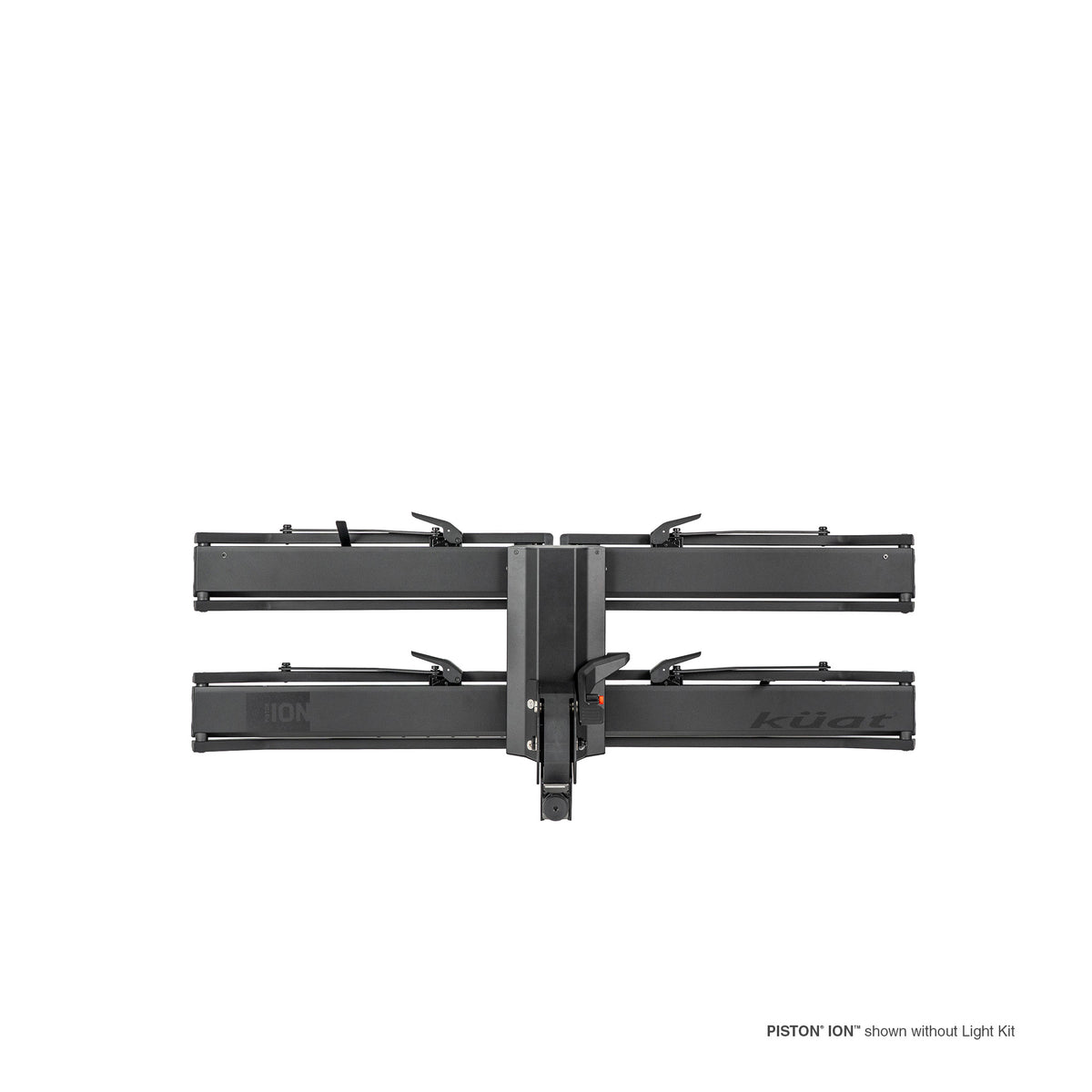
- #7 Piston Ion — KuatThe Kuat Piston Ion is designed for e-bike owners who want an effortless loading experience and refuse to compromise on build quality. Positioned at the pinnacle of Kuat's lineup with a price tag around $1,289, this premium hitch carrier utilizes hydro-pneumatic arms to eliminate the physical effort of ratcheting down heavy-duty clamps. It is tailored for cyclists carrying heavy, expensive electric rigs, carbon trail bikes, or high-end road machines where zero frame contact is an absolute requirement. In field reviews, the Piston Ion’s pneumatic release mechanism is consistently singled out as the smoothest in the industry. Tapping the release lever deploys the arms with controlled hydraulic damping, opening wide without catching or binding. The arms secure both tires directly, avoiding all frame tubes, cables, and painted surfaces. Kuat coats the stanchions with durable, low-friction finishes reminiscent of high-end mountain bike suspension forks, ensuring dirt and grit do not impede sliding travel. Cost is the obvious barrier: at well over $1,200, the Piston Ion is an elite investment. It is also a specialized, substantial rack that adds noticeable length and weight to the rear of your car. For owners of standard, non-motorized lightweight bikes, the hydraulic technology and massive load capacity represent pure overkill, but for heavy e-bike transport, it sets the current benchmark. **Highlights** - Hydro-pneumatic arms open automatically with a single tap - Dual-tire retention system eliminates all frame contact - High weight ratings engineered explicitly for heavy electric bikes - Premium suspension-grade coatings resist corrosion and trail grit - Integrated high-strand security cables and hitch lock **Watch-outs** - Extremely expensive price tag topping $1,280 - High physical footprint and weight demand dedicated garage storage - Advanced hydraulic hardware introduces complexity compared to raw mechanical armsRead the full profile
- Best for multi-discipline cycling households
- #8 Vero Hitch Bike Rack — ThuleThe Thule Vero Hitch Bike Rack caters to households and dedicated cyclists who manage an eclectic 'full quiver' of rides, ranging from fat-tire winter rigs and commuter step-throughs to lightweight aero road bikes. The Vero is built to solve fit issues across drastically different frame architectures, eliminating the need for specialized aftermarket adapters or tricky arm positioning. It is a substantial 56-pound platform designed to remain anchored on the vehicle through long road trips and variable weather. Reviewers award high marks to the Vero for its adjustable platform spacing and robust wheel-clamping stability. The trays are designed with deep channel geometries that stabilize narrow 23mm tires just as effectively as wide four-inch fat bike casings. Thule’s integrated hitch-tightening system locks into the receiver with minimal play, and the deep tilt angle offers sufficient tailgate clearance even on SUVs and trucks with wide swing-out doors. At 56 pounds, the Vero sits on the heavier side of two-bike carriers, making routine removal a deliberate chore. It also occupies significant vertical and horizontal space behind the bumper, meaning drivers must stay mindful of clearance when reversing or maneuvering tight trailhead parking spots. The ratcheting straps and wheel clamps perform reliably, though keeping them free of road salt is crucial for long-term smooth operation. **Highlights** - Versatile tray profile securely fits road, gravel, mountain, and fat tires - Deep tilt mechanism provides exceptional clearance for large rear liftgates - Sturdy 56-pound build minimizes highway vibration and bounce - Integrated locks secure the rack to vehicle and bikes to rack - Generous spacing between trays prevents component rub **Watch-outs** - Heavy 56-pound mass requires two hands and back strength to mount - Substantial extension off the rear bumper complicates parking - Premium pricing typical of Thule’s full-feature platform lineRead the full profile
Our editors test the gear, pick the ten, and set the order the day a list publishes. After that, the ranking is live: every member star rating feeds the community order, so picks climb or slide as real owners report back. Editorial judgment decides what earns a spot — you help decide where it sits.
- Editors set the field
Hands-on testing and spec research choose the ten and the published order.
- Readers re-rank it
Your 1–5 star ratings drive the community order on every list.
- Rankings keep moving
Picks rise or fall over time — nothing is frozen at launch day.
Rank this list
Loading community ratings… Ratings re-order the picks — they never change which products make the list.
Sign in to add your own ratings — it's free.
- Pros
- Exterior tilt lever allows effortless one-handed hatch access while loaded.
- Integrated rolling wheels simplify off-vehicle transport and garage storage.
- Zero-frame contact fits tires from skinny road rubber up to 5-inch fat bikes.
- Tool-free hitch wedge cam secures tightly inside the receiver without tools.
Cons- Hefty 52-pound chassis requires strong physical lifting during hitch insertion.
- Included cable locks provide only modest deterrent against determined thieves.
- High retail price sits near the top of the platform hitch rack market.
Key features- Unit Weight
- Approximately 52 lbs
- Base Capacity
- 2 bikes (expandable to 4 on 2-inch hitch)
- Wheel Sizes
- 20 to 29 inches
- Rack Style
- Platform hitch rack
- Max Tire Width
- Up to 5.0 inches
- Tilt Function
- Exterior squeeze lever
Best forMountain and trail riding, Mixed-discipline households, Rough access road driving, Fat bike and e-bike hauling
Pros- Exterior tilt lever allows effortless one-handed hatch access while loaded.
- Integrated rolling wheels simplify off-vehicle transport and garage storage.
- Zero-frame contact fits tires from skinny road rubber up to 5-inch fat bikes.
- Tool-free hitch wedge cam secures tightly inside the receiver without tools.
Cons- Hefty 52-pound chassis requires strong physical lifting during hitch insertion.
- Included cable locks provide only modest deterrent against determined thieves.
- High retail price sits near the top of the platform hitch rack market.
Assessed by Wes Donnelly against our ranking criteria.No ratings yet - Pros
- Manageable 35-pound weight makes solo vehicle installation and storage easy
- Tool-free SpeedKnob eliminates receiver wobble without requiring wrenches
- Folding dual arms lower smoothly to shorten vehicle length when unloaded
- Tilt-away mast provides quick tailgate clearance without removing the rack
Cons- Requires separate top-tube adapter bars for step-through and full-suspension frames
- Four-bike capacity is extremely tight for wide-handlebar modern mountain bikes
- Risk of cosmetic bike-to-bike rubbing on rough backroads without extra strapping
Key features- Total Weight
- 35 lbs
- Price Point
- Around $479
- Max Capacity
- Up to 4 bikes
- Hitch Size
- 1.25-inch and 2-inch compatible
- Rack Type
- Hitch-mount hanging mast
- Attachment
- Tool-free SpeedKnob system
Best forFamily camping and road trips, Weekend road bike carpools, Recreational mixed-bike hauling, Vehicles with limited tongue capacities
Pros- Manageable 35-pound weight makes solo vehicle installation and storage easy
- Tool-free SpeedKnob eliminates receiver wobble without requiring wrenches
- Folding dual arms lower smoothly to shorten vehicle length when unloaded
- Tilt-away mast provides quick tailgate clearance without removing the rack
Cons- Requires separate top-tube adapter bars for step-through and full-suspension frames
- Four-bike capacity is extremely tight for wide-handlebar modern mountain bikes
- Risk of cosmetic bike-to-bike rubbing on rough backroads without extra strapping
Assessed by Wes Donnelly against our ranking criteria.No ratings yet - Pros
- Zero frame contact protects carbon fiber, custom paint, and odd tube shapes
- Stout 58-pound chassis minimizes wobble and flex at interstate speeds
- Broad trays comfortably hold various wheelbases without hardware adjustment
- Loaded tilt feature drops down smoothly for complete rear cargo access
Cons- Heft makes seasonal installation, removal, and garage storage cumbersome
- Incompatible with full front fenders due to the over-the-tire clamping arm
- Ratcheting slide rails require routine cleaning to prevent grit buildup
Key features- Total Weight
- 58 lbs
- Primary Materials
- Powder-coated steel and aluminum
- Rack Style
- Platform hitch rack
- Frame Contact
- Zero (front tire ratchet arm)
- Tilt Mechanism
- Foot/hand tilt for rear hatch clearance
- Bike Retention
- Front wheel hook and rear wheel strap
Best forCarbon Frame Bike Transport, Gravel and Road Cycling, Trail Mountain Biking, Dedicated Season-Long Hitch Mounting
Pros- Zero frame contact protects carbon fiber, custom paint, and odd tube shapes
- Stout 58-pound chassis minimizes wobble and flex at interstate speeds
- Broad trays comfortably hold various wheelbases without hardware adjustment
- Loaded tilt feature drops down smoothly for complete rear cargo access
Cons- Heft makes seasonal installation, removal, and garage storage cumbersome
- Incompatible with full front fenders due to the over-the-tire clamping arm
- Ratcheting slide rails require routine cleaning to prevent grit buildup
Assessed by Wes Donnelly against our ranking criteria.No ratings yet - Pros
- All-metal aluminum and stainless construction eliminates plastic failure points
- Dual-arm retention secures bikes firmly without touching frame or fork
- Stepped tray geometry preserves vehicle departure angle on rough roads
- Modular architecture allows adding or removing individual bike trays
Cons- Arm releases and tilt bar require an awkward reach beneath the trays
- Lacks integrated locking cables in the standard base package
- Requires a proprietary hex tool to install and remove from the hitch
Key features- Base Weight
- 47 lbs
- Standard Capacity
- 2 bikes (expandable up to 4)
- Primary Materials
- Anodized aluminum and stainless steel
- Receiver Compatibility
- 2-inch hitch receiver
- Frame Contact
- Zero (clamps tires only)
- Origin
- Machined and assembled in the USA
Best forUnpaved washboard road travel, Carbon fiber mountain biking, High-clearance vehicle builds, Modular family bike hauling
Pros- All-metal aluminum and stainless construction eliminates plastic failure points
- Dual-arm retention secures bikes firmly without touching frame or fork
- Stepped tray geometry preserves vehicle departure angle on rough roads
- Modular architecture allows adding or removing individual bike trays
Cons- Arm releases and tilt bar require an awkward reach beneath the trays
- Lacks integrated locking cables in the standard base package
- Requires a proprietary hex tool to install and remove from the hitch
Assessed by Wes Donnelly against our ranking criteria.No ratings yet - Pros
- Approved for RV and travel trailer use on 2-inch receiver models
- Tiered stadium tray design prevents handlebar and saddle interference
- Accommodates tires up to 5 inches wide and wheelbases up to 52 inches
- Integrated heavy-duty cable locks secure both frame and wheels
Cons- At 66 pounds unloaded, installation and removal require significant effort
- Large folded footprint frequently blocks vehicle backup cameras and sensors
- Lacks built-in transport wheels found on some competing heavy carriers
Key features- Rack Weight
- 66 lbs
- Carrying Capacity
- 2 bikes (expandable to 4)
- Hitch Sizes
- 2-inch or 1.25-inch variants
- Max Tire Width
- Up to 5 inches
- RV Compatibility
- Rated for RVs and trailers (2-inch model)
- Security
- Integrated SKS cable locks and hitch lock
Best forHeavy Electric Mountain Bikes, Travel Trailer and RV Hauling, Fat Tire Trail Riding, Long-Distance Vehicle Road Trips
Pros- Approved for RV and travel trailer use on 2-inch receiver models
- Tiered stadium tray design prevents handlebar and saddle interference
- Accommodates tires up to 5 inches wide and wheelbases up to 52 inches
- Integrated heavy-duty cable locks secure both frame and wheels
Cons- At 66 pounds unloaded, installation and removal require significant effort
- Large folded footprint frequently blocks vehicle backup cameras and sensors
- Lacks built-in transport wheels found on some competing heavy carriers
Assessed by Wes Donnelly against our ranking criteria.No ratings yet - Pros
- Manageable 35 to 37 lb total weight makes installation and storage easy
- Hands-free foot pedal allows effortless tilting and folding
- Zero frame contact protects carbon, painted, and uniquely shaped frames
- Flatlock hitch cam eliminates receiver wobble on rough surfaces
Cons- Integrated bike lock cables are not included standard
- Open tubular architecture catches road spray and grime in wet climates
- Higher reliance on composite plastics compared to all-metal alternatives
Key features- Rack Weight
- 35–37 lb
- Price Point
- Around $550
- Carrying Capacity
- 2 bikes
- Wheel Compatibility
- 20" to 29" wheels
- Tilt Mechanism
- Spring-loaded foot pedal
- Hitch Interface
- Flatlock cam system
Best forFrequent Rack Removal, Sedans and Compact SUVs, Mountain and Trail Biking, Budget-Minded Tray Transport
Pros- Manageable 35 to 37 lb total weight makes installation and storage easy
- Hands-free foot pedal allows effortless tilting and folding
- Zero frame contact protects carbon, painted, and uniquely shaped frames
- Flatlock hitch cam eliminates receiver wobble on rough surfaces
Cons- Integrated bike lock cables are not included standard
- Open tubular architecture catches road spray and grime in wet climates
- Higher reliance on composite plastics compared to all-metal alternatives
Assessed by Wes Donnelly against our ranking criteria.No ratings yet - Pros
- Hydro-pneumatic arms deploy smoothly with a single touch for effortless loading
- Dual-wheel retention ensures zero contact with bike frames, cables, or paint
- Engineered explicitly to support the weight and geometry of modern e-bikes
- Suspension-quality stanchion coatings resist gritty road spray and wear
Cons- High price tag near $1,289 represents an enormous upfront investment
- Substantial physical weight makes installing and removing the rack difficult
- Pneumatic internal hardware introduces mechanical complexity over raw metal racks
Key features- Approximate Price
- $1,289
- Rack Style
- Hitch-mounted tray
- Securing Method
- Dual tire hydro-pneumatic arms
- Frame Contact
- Zero contact (wheels only)
- Target Use
- Heavy e-bikes and carbon rigs
Best forHeavy E-Bike Transport, Carbon Fiber Protection, Frequent Weekly Trailhead Travel, Low-Effort Solo Loading
Pros- Hydro-pneumatic arms deploy smoothly with a single touch for effortless loading
- Dual-wheel retention ensures zero contact with bike frames, cables, or paint
- Engineered explicitly to support the weight and geometry of modern e-bikes
- Suspension-quality stanchion coatings resist gritty road spray and wear
Cons- High price tag near $1,289 represents an enormous upfront investment
- Substantial physical weight makes installing and removing the rack difficult
- Pneumatic internal hardware introduces mechanical complexity over raw metal racks
Assessed by Wes Donnelly against our ranking criteria.No ratings yet - Pros
- Accommodates narrow road tires to wide fat bike tires without extra adapters
- Generous tray-to-tray spacing prevents handlebar and saddle interference
- Deep-drop tilting mechanism grants clearance for large SUV hatches and tailgates
- Stout 56-pound platform delivers exceptional highway stability
Cons- Significant 56-pound mass makes off-vehicle handling and storage demanding
- Considerable extension behind the bumper complicates tight-space parking
- Ratchet levers require regular rinsing to prevent dirt and road-salt binding
Key features- Total Weight
- 56 lbs
- Bike Capacity
- 2 bikes
- Mount Type
- Hitch receiver platform
- Tire Range
- Narrow road to wide fat tires
- Tilt Function
- Deep drop with bikes loaded
- Security
- Integrated bike and hitch locks
Best forMulti-discipline cycling households, SUV and truck cargo access, Mixed road and fat bike hauling, High-speed highway travel
Pros- Accommodates narrow road tires to wide fat bike tires without extra adapters
- Generous tray-to-tray spacing prevents handlebar and saddle interference
- Deep-drop tilting mechanism grants clearance for large SUV hatches and tailgates
- Stout 56-pound platform delivers exceptional highway stability
Cons- Significant 56-pound mass makes off-vehicle handling and storage demanding
- Considerable extension behind the bumper complicates tight-space parking
- Ratchet levers require regular rinsing to prevent dirt and road-salt binding
Assessed by Wes Donnelly against our ranking criteria.No ratings yet - Pros
- Zero frame contact protects delicate carbon tubes and custom finishes.
- Comes standard with adapters for 9mm quick release and 15mm thru-axles.
- Maintains clear rear hatch access and unblocked vehicle backup cameras.
- Low-profile aluminum extrusion reduces drag and overhead garage clearance issues.
Cons- Requires removing the front wheel and storing it inside the vehicle.
- Overhead bike loading is difficult on tall trucks and large SUVs.
- Weight limit and axle geometry exclude heavy modern e-bikes.
Key features- Bike Capacity
- 1 bike, up to 45 lbs
- Mount Type
- Roof crossbar or T-slot channel
- Axle Standards
- 9x100mm, 15x100mm, and 15x110mm Boost
- Frame Contact
- Zero contact (fork and rear wheel only)
- Security
- Integrated cable lock and locking mount
- Crossbar Fit
- Round, square, and factory aerodynamic bars
Best forGravel and road riding, Vehicles with rear towing hitches, Station wagons and hatchbacks, Low-profile roof cargo setups
Pros- Zero frame contact protects delicate carbon tubes and custom finishes.
- Comes standard with adapters for 9mm quick release and 15mm thru-axles.
- Maintains clear rear hatch access and unblocked vehicle backup cameras.
- Low-profile aluminum extrusion reduces drag and overhead garage clearance issues.
Cons- Requires removing the front wheel and storing it inside the vehicle.
- Overhead bike loading is difficult on tall trucks and large SUVs.
- Weight limit and axle geometry exclude heavy modern e-bikes.
Assessed by Wes Donnelly against our ranking criteria.No ratings yet - Pros
- Folds down into a compact footprint for easy trunk or closet storage
- Low overall weight makes single-person hitch installation straightforward
- Wheel-clamp mechanism secures bikes without touching delicate frame paint
- Tool-free hitch attachment installs quickly into standard vehicle receivers
Cons- Exhibits noticeable chassis flex over rough roads and railroad crossings
- Lacks the weight capacity required for heavy modern e-bikes
- Wheel trays cannot accommodate wide fat-bike tires
Key features- Approximate Price
- $600
- Bike Capacity
- 2 bicycles
- Rack Style
- Platform / tray hitch rack
- Frame Contact
- Zero (front wheel hook and rear strap)
- Primary Focus
- Compact folding and portable storage
- Hitch Fitment
- Standard receiver compatible
Best forApartment and urban storage, Road and gravel cycling, Compact car hitch mounts, Casual weekend trail riding
Pros- Folds down into a compact footprint for easy trunk or closet storage
- Low overall weight makes single-person hitch installation straightforward
- Wheel-clamp mechanism secures bikes without touching delicate frame paint
- Tool-free hitch attachment installs quickly into standard vehicle receivers
Cons- Exhibits noticeable chassis flex over rough roads and railroad crossings
- Lacks the weight capacity required for heavy modern e-bikes
- Wheel trays cannot accommodate wide fat-bike tires
Assessed by Wes Donnelly against our ranking criteria.No ratings yet




Award picks
The ranking above is price-blind and judged on merit. These awards call out the pick we'd hand a specific person with a specific need.
Best Overall: T2 Pro XTR — Thule
The Thule T2 Pro XTR sits at the top of the category because it consistently solves the biggest headaches of hitch-rack ownership: ground clearance, bike stability, and…
Ranked #1Runner-Up: RidgeBack — Yakima
The Yakima RidgeBack targets families, casual cyclists, and camping groups needing to haul up to four bikes without spending four figures on an oversized tray system.
Ranked #2Best Value: Heavy Duty — 1Up
The 1Up Heavy Duty has developed a devoted following among backcountry drivers, mountain bikers, and gear purists who value all-metal industrial durability over plastic fairings.
Ranked #4Best Ultralight Pick: Verse — Thule
The Thule Verse is engineered for riders who want the rock-solid frame isolation of a heavy-duty platform rack combined with refined, modern aesthetic styling.
Ranked #3Best for Rough Use: StageTwo — Yakima
The Yakima StageTwo is built specifically for the realities of modern cycling: heavier electric mountain bikes, extended wheelbases, and wide fat-bike tires.
Ranked #5Best for Beginners: Outpace — Thule
The Thule Outpace is tailored for urban riders, apartment residents, and weekend cyclists who need the frame-safe security of a platform hitch rack without the massive bulk.
Ranked #10For most riders seeking heavy-duty dependability, the Thule T2 Pro XTR and 1Up Heavy Duty represent the gold standards of tray durability, while the Yakima RidgeBack remains the pragmatic budget pick for hauling multiple family bikes. If you are regularly transporting heavy e-bikes, the high-load Yakima StageTwo and Kuat Piston Ion deliver the frame clearance and weight ratings needed for heavy machines.
How to choose bike racks
Every pick on this page was judged against the same criteria. If you want the short answer, T2 Pro XTR by Thule is the one we point most people at. If you want to decide for yourself, here is what actually separates a good bike rack from an expensive one.
Real-world durability
How the material, stitching, or steel holds up after a season of hard use — not how it looks new.
Performance in bad conditions
Wind, rain, cold, and grit are the test. Anything that only works on a nice day gets marked down.
Weight and packability
Every ounce has to earn its place in the pack, but not at the cost of something that fails in the field.
Ease of use
Setup, adjustment, and maintenance with cold hands, in the dark, without the manual.
Value at its price point
Compared against the closest competitors in the same tier, not against cheaper gear in a different class.
Repairability and support
Field-fixable design, available parts, and a warranty the maker actually honors.
Match the pick to your use
The right bike racks depends on what you are actually doing with it: Mountain and trail riding; Mixed-discipline households; Rough access road driving; Fat bike and e-bike hauling; Family camping and road trips; Weekend road bike carpools. Start from the use case, then work down the ranking until you hit the first pick that covers it.
Common mistakes
- Buying the lightest bike racks you can find and discovering it cannot take a season of hard use.
- Paying for a specialist feature you will use once a year instead of the versatile option.
- Comparing headline specs across tiers instead of within the same class.
- Skipping fit, sizing, or adjustment checks that decide whether you actually carry it.
Frequently asked questions
- What is the best bike racks in 2026?
- T2 Pro XTR by Thule takes the top spot. The Thule T2 Pro XTR sits at the top of the category because it consistently solves the biggest headaches of hitch-rack ownership: ground clearance, bike stability, and off-vehicle mobility.
- How did The Wild10 choose and rank these bike racks?
- We judged every pick against the same criteria — real-world durability, performance in bad conditions, weight and packability, ease of use — and ranked them on merit regardless of price. We evaluated the top bike racks for real outdoor use, analyzing expert trail tests and long-term durability data to find the best hitch, tray, and roof carriers.
- What is the best budget bike racks?
- RidgeBack by Yakima — The Yakima RidgeBack targets families, casual cyclists, and camping groups needing to haul up to four bikes without spending four figures on an oversized tray system.
- T2 Pro XTR vs RidgeBack — which should I pick?
- T2 Pro XTR ranks first: The Thule T2 Pro XTR sits at the top of the category because it consistently solves the biggest headaches of hitch-rack ownership: ground clearance, bike… RidgeBack is the close second: The Yakima RidgeBack targets families, casual cyclists, and camping groups needing to haul up to four bikes without spending four figures on an oversized tray… Our full head-to-head compares them side by side.
- How often is this list updated?
- We review this ranking on a rolling basis and update it whenever a pick is discontinued, meaningfully revised, or beaten by something new. Rankings are editorial — brands do not see them before publication and affiliate links never change the order.
Get The Field List
One short, honest email a week: gear we actually trust, planning guides, and survival-TV coverage. Free, unsubscribe anytime.