



Updated October 2026 · 10 picks re-checked for availability and current spec, reader ratings refreshed live.
Pulling off damp, trail-beaten hiking shoes at the end of a long push is one of the distinct pleasures of outdoor travel. A dedicated camp shoe serves several practical duties: it lets your trail footwear air out, gives your feet room to breathe and recover, and protects your soles while you collect firewood, cook, or make late-night bathroom trips. However, outdoor travelers often disagree on what belongs in a pack, swinging between bare-bones ultralight flip-flops, rugged river sandals, and insulated alpine booties. To build this ranking, we synthesized field reports and long-term evaluations from leading independent outdoor publications, including CleverHiker, Switchback Travel, and Treeline Review. We cross-referenced their findings with objective specs, prioritizing packability, weight-to-utility ratio, durability, and versatility. Not every trip requires the same solution; a sub-three-ounce slipper makes sense on an ultralight thru-hike, while a rugged, grippy sandal is indispensable on canyon routes with repeated river crossings. Our ranking places the strongest all-around options first, balancing weight, protective capability, and terrain adaptability. Whether you need winter warmth around a snow cave or an airy sandal that packs flat into a weekend pack, these ten models represent the best choices currently available.
The short answer

The Feathered Friends Down Booties consistently earn top accolades across outdoor testing outlets for one core reason: they solve the freezing-foot…
Why it wins
The Luna Sandals Leadville Pacer answers the call of backpackers who want the terrain competence of a rugged sandal without the brutal weight penalty…
Why it wins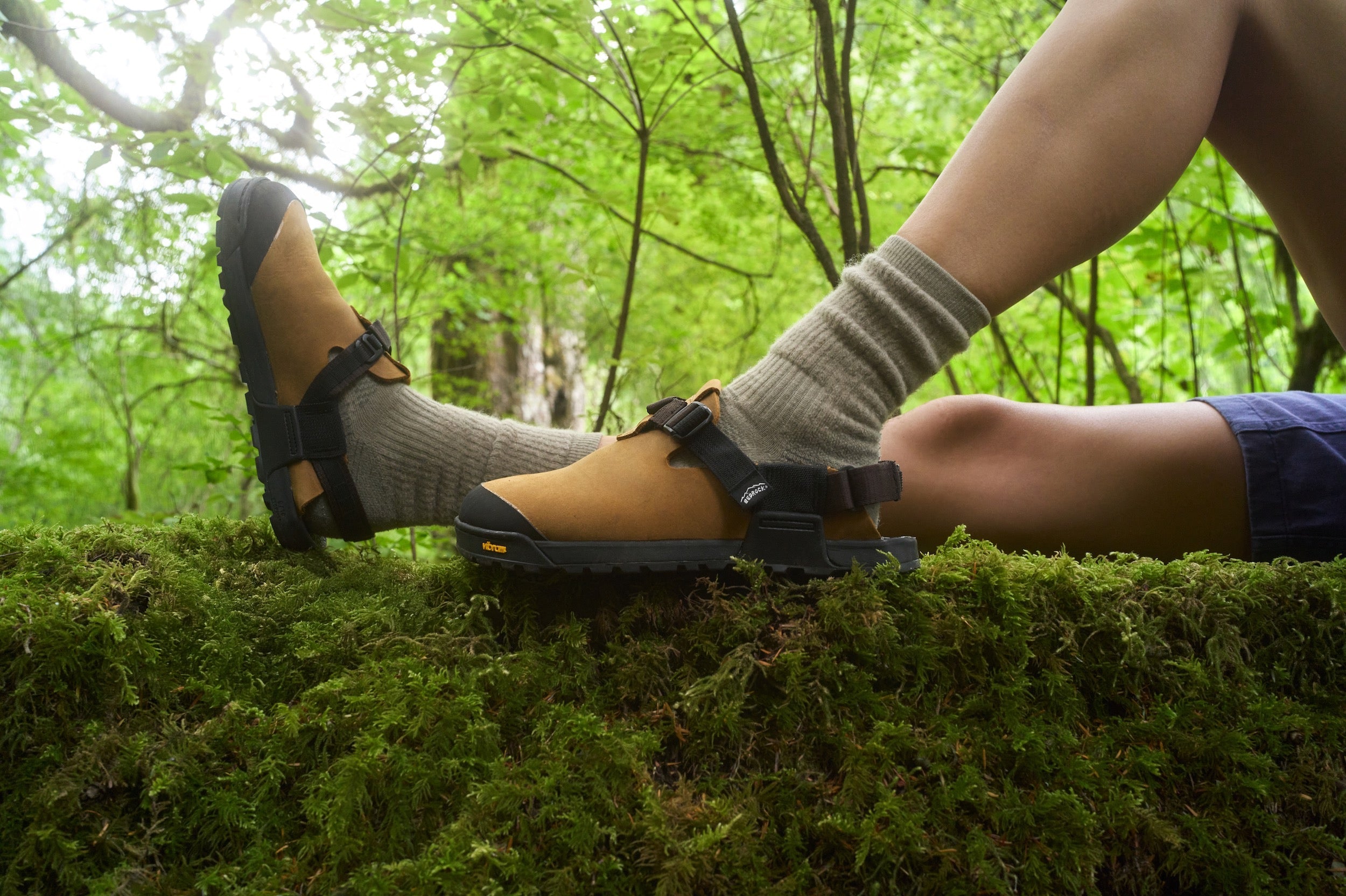
The Bedrock Sandals Mountain Clog is an unconventional piece of backcountry footwear built for people who want the airy, zero-drop ethos of…
Why it winsDeep-dive product reviews
We've published full field-test reports and technical deep-dives for 10 of the picks in this list.
Compare all 10 picks at a glance
Editorial ranking, what each pick is best at, and how we assessed it. Tap a name to jump to the full write-up.
| # | Pick | Best for | Key spec | Evidence |
|---|---|---|---|---|
| 1 | Down Booties Feathered Friends | Winter backpacking and snowshoeing | Weight: 9.3 oz per pair | Research only |
| 2 | Z/Cloud Chaco | River rafting and paddling | Weight per Pair: 1 lb. 14.1 oz. | Research only |
| 3 | Leadville Pacer Luna Sandals | Ultralight wilderness backpacking | Weight Per Pair: 8.9 oz | Research only |
| 4 | ReEmber Terrain Slip On Teva | Shoulder-season car camping | Weight: 1 lb. 3 oz. (pair, men's 8 / women's 10) | Research only |
| 5 | Mountain Clog Bedrock Sandals | Vehicle and Overland Camping | Weight: 1 lb 9 oz (pair, size 9) | Research only |
| 6 | Arizona Essentials EVA Birkenstock | Post-hike camp recovery | Weight (Pair): Approximately 8 oz (varies by size) | Research only |
| 7 | evo Cairn Bedrock | Backcountry river crossings | Weight: 13.6 oz per pair (women's 8 / men's 7) | Research only |
| 8 | OOriginal OOFOS | Established campsite lounging | Weight: 9.5 oz per pair | Research only |
| 9 | Ultralight Camp Shoes Zpacks | Long-distance thru-hiking | Weight: 2.3 oz (pair) | Research only |
| 10 | Tundra Trax Booties OR | Backcountry ski hut trips | MSRP: Around $99 | Research only |
How we picked
Ranked by Renata Cho, Apparel & Layering Editor
We started with a long list of camp shoes that people actually buy, cut anything that could not clear our baseline for durability and field performance, then ranked the 10 that were left against the same criteria. Rankings are editorial. No brand pays for placement, and affiliate links never move a pick up or down.
- Fabric behavior over time
- Breathability, DWR life, loft retention, and how the piece performs after repeated washing.
- Real-world durability
- How the material, stitching, or steel holds up after a season of hard use — not how it looks new.
- Performance in bad conditions
- Wind, rain, cold, and grit are the test. Anything that only works on a nice day gets marked down.
- Weight and packability
- Every ounce has to earn its place in the pack, but not at the cost of something that fails in the field.
- Ease of use
- Setup, adjustment, and maintenance with cold hands, in the dark, without the manual.
- Value at its price point
- Compared against the closest competitors in the same tier, not against cheaper gear in a different class.
How often we recheck this: Reviewed on a rolling basis and rechecked at least once a year, or sooner if a pick is discontinued, revised, or beaten by something new.
Best of the Best · Head to Head
Down Booties vs Z/Cloud
#1 vs #2 — side-by-side specs, pros & cons, and the final verdict.
Compare any two picks
Build your own side-by-side
Choose any two of these 10 picks and compare specs, price, pros, cons and reader ratings.
Topic summary
We analyzed real-world outdoor tests and independent reviews to rank the best camp shoes for backpacking, river trips, winter huts, and campsite downtime.
Key takeaways
- #1 Down Booties — Feathered Friends
- #2 Z/Cloud — Chaco
- #3 Leadville Pacer — Luna Sandals
- #4 ReEmber Terrain Slip On — Teva
- #5 Mountain Clog — Bedrock Sandals
- #6 Arizona Essentials EVA — Birkenstock
Intended uses
Gear
Verification notes
Editorial ranked list, 10 entries. Evidence mix — 10 research only. Buy links open the maker or a retailer search. Last reviewed October 2026.
Best camp shoes for a specific job
Skip the ranking — jump to the pick that matches how you actually use it.
- Best for winter backpacking and snowshoeing
- #1 Down Booties — Feathered FriendsThe Feathered Friends Down Booties consistently earn top accolades across outdoor testing outlets for one core reason: they solve the freezing-foot problem better than anything else on the market. Engineered around high-loft down and a smart two-piece modular design, these booties feature a removable, water-resistant outer shell equipped with a durable foam footbed and reinforced sole. Inside rests an ultralight, down-filled slipper that can be worn independently inside a sleeping bag. At 9.3 ounces per pair, they hit a sweet spot for mountaineers, winter backpackers, and shoulder-season hikers who spend cold hours sitting outside their tents. The outer shell provides enough weather resistance and abrasion protection to handle walks across snow and frozen dirt without soaking the internal down. Reviewers frequently highlight the dual cinches—one at the ankle and one at the top hem—which effectively trap warm air and keep snow from creeping in. The clear trade-off is terrain limitation. While the reinforced outer sole handles snowbanks and smooth campsite perimeters, it lacks the aggressive tread and puncture resistance required for sharp rock scrambles or wet, muddy riverbanks. They are dedicated cold-weather tools rather than three-season bushwhacking slippers, and their premium price reflects high-grade down construction. **Highlights** - Two-piece design with removable down inner slipper - High-loft down insulation provides supreme warmth-to-weight ratio - Weather-resistant exterior shell with non-slip sole - Dual drawcord adjustments at ankle and calf - Weighs approximately 9.3 ounces per pair **Watch-outs** - Minimal traction on slick ice or steep mud - High cost for a specialized cold-weather item - Down loses insulation value if completely saturatedRead the full profile
- Best for river rafting and paddling
- #2 Z/Cloud — ChacoChaco's Z/Cloud sandals are built for situations where camp life looks less like quiet lounging and more like wading rocky riverbanks, portaging canoes, or scrambling over granite slabs. Featuring a signature continuous-strap webbing system and a soft, dual-density polyurethane midsole, the Z/Cloud takes the burly chassis of the classic Chaco platform and adds a cushioned top layer that softens direct impact under tired feet. This is the choice for backcountry travelers who demand real stability and underfoot protection from their camp shoe. If you need a shoe capable of technical stream crossings, moderate day hikes without your primary boots, or wet-weather camp chores, the Chaco platform delivers. Reviewers regularly praise the non-marking ChacoGrip rubber outsole for its sticky grip on wet river stones, making it a staple among river guides and canyon backpackers. The primary drawback is heft. Tipping the scales at roughly 1 pound 14 ounces for the pair, the Z/Cloud is far too heavy and bulky for traditional ultralight backpacking. Additionally, the polyester webbing straps absorb water and take several hours to fully dry, meaning you may have damp straps resting against your feet when stepping out of the tent in the morning. **Highlights** - Dual-density PU midsole with soft top-layer cushioning - ChacoGrip rubber outsole excels on wet, slippery rock - Continuous pull-through strap system offers fully customized fit - Podiatrist-certified LUVSEAT footbed provides substantial arch support - Extremely durable construction lasts multiple seasons **Watch-outs** - Heavy and bulky in a backpack (nearly two pounds) - Webbing straps stay damp for hours after submersion - Breaking in the footbed and strap routing takes timeRead the full profile
- Best for ultralight wilderness backpacking
- #3 Leadville Pacer — Luna SandalsThe Luna Sandals Leadville Pacer answers the call of backpackers who want the terrain competence of a rugged sandal without the brutal weight penalty of traditional river footwear. Weighing in at 8.9 ounces per pair, these minimalist sandals pack completely flat against the inside or outside of a pack frame. They utilize a firm, low-profile Vibram outsole that delivers surprising grip across loose dirt and river rocks while preserving ground feel. Designed with roots in barefoot running, the Leadville Pacer caters to hikers who prefer zero-drop footwear and unconstrained foot mechanics around camp. The climbing-grade webbing and padded heel strap anchor your foot securely, preventing the forward foot slippage common to cheap foam flip-flops. Outdoor testers frequently point out that the materials shed water almost instantaneously, making them an excellent choice for wet crossings followed by immediate camp setup. Because they feature a minimalist sole with virtually zero arch support, they demand adapted feet. Hikers accustomed to supportive, high-cushion footwear may find that walking over sharp stones around camp produces foot fatigue. Furthermore, the traditional thong-style toe post prevents wearing standard camp socks unless you carry split-toe socks or don the sandals barefoot in cool conditions. **Highlights** - Lightweight design at 8.9 ounces per pair - Low-profile Vibram outsole provides dependable outdoor traction - Barefoot-style, zero-drop footbed allows natural foot splay - Non-absorbent strap system dries almost instantly - Packs completely flat inside or strapped to a pack **Watch-outs** - Thong toe-post design requires toe socks in cold weather - No arch support and minimal cushion on sharp terrain - Premium price point for an open-air minimalist designRead the full profile
- Best for shoulder-season car camping
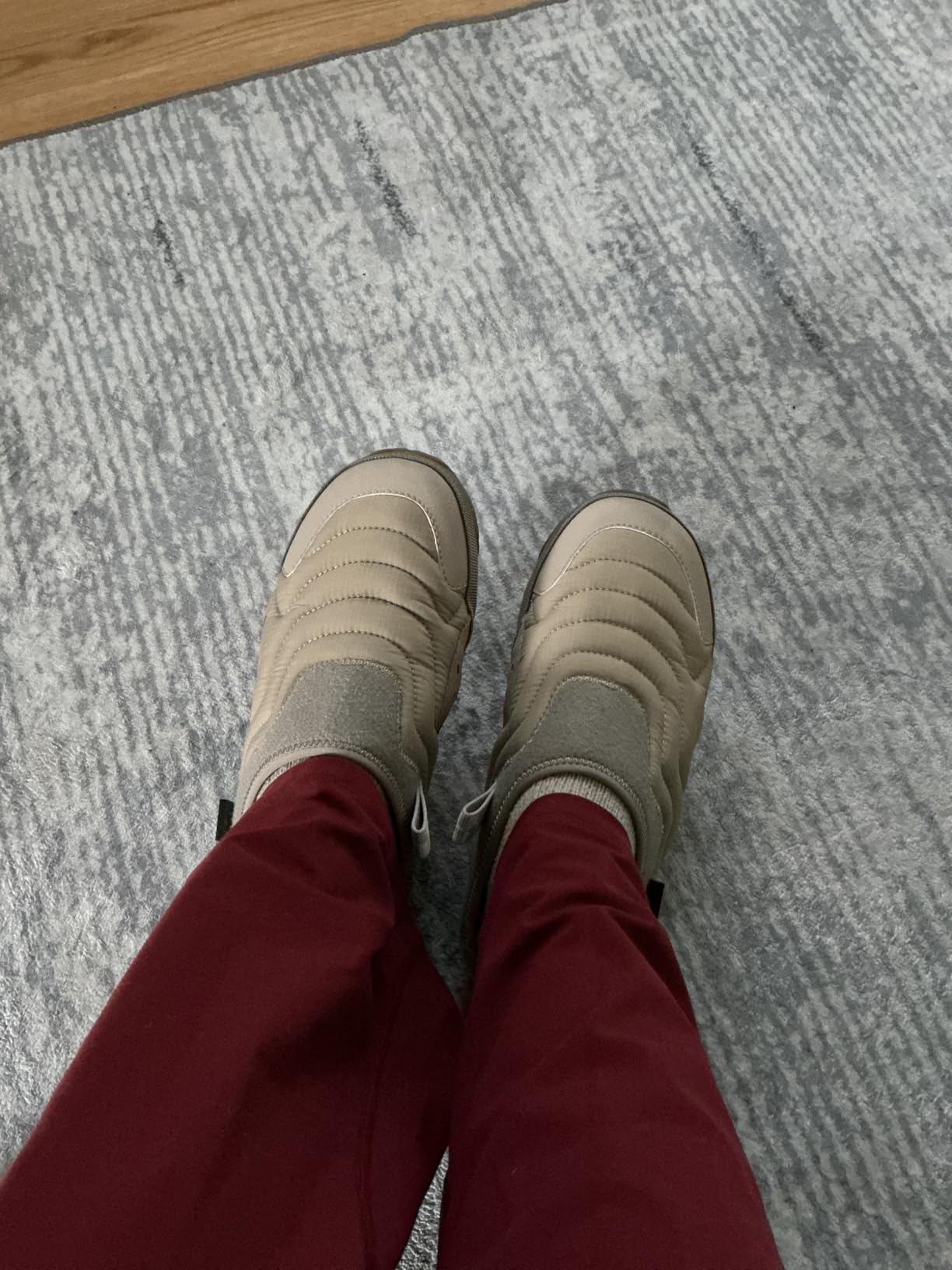
- #4 ReEmber Terrain Slip On — TevaThe Teva ReEmber Terrain Slip On merges the soft, insulated comfort of a sleeping bag bootie with the genuine walking utility of a lightweight trail shoe. Designed for cool mornings, car camping setups, and established backcountry campsites, it features a quilted ripstop upper coated with a water-resistant treatment and a collapsible heel counter that lets you transition effortlessly between a supportive slip-on and a slide. Where the ReEmber Terrain distinguishes itself from typical house slippers is its bottom unit. Teva equipped this iteration with an ULTRA-COMF dual-layer foam footbed and a textured rubber outsole featuring legitimate perimeter lugs. Reviewers note that this sole package allows you to carry water, chop kindling, and navigate slick pine needles without rolling an ankle or feeling sharp stones punch through the foam. At roughly 1 pound 3 ounces, it is on the heavier side for fast-and-light backpacking, occupying noticeable volume in a tight pack. It also falls into a middle ground thermally: it is too insulated for warm summer nights by the lake, yet it lacks the calf-height coverage and sheer insulation needed for sub-freezing snow camps. For mild shoulder-season outings and overland vehicle travel, however, its comfort is hard to beat. **Highlights** - Collapsible heel counter converts shoe from slip-on to casual slide - Quilted ripstop upper treated with water-resistant finish - Real rubber outsole with perimeter lugs for genuine campsite traction - Cushioned dual-density foam footbed for all-day underfoot comfort - Microfiber collar provides a soft feel against the ankle **Watch-outs** - Moderately bulky when packed into a tight backpack - Not warm enough for extreme winter snow conditions - Upper is water-resistant, not fully waterproofRead the full profile
- Best for vehicle and overland camping
- #5 Mountain Clog — Bedrock SandalsThe Bedrock Sandals Mountain Clog is an unconventional piece of backcountry footwear built for people who want the airy, zero-drop ethos of minimalist sandals paired with complete toe protection. Constructed with a durable upper (available in synthetic or oiled leather varieties) and a deep, contoured PU footbed, the Mountain Clog locks down via Bedrock's proven three-point webbing adjustment and climbing-grade hardware. Performance in rocky, root-strewn camps is where this clog shines. Unlike open-toe sandals, the closed front keeps dirt, rocks, and stray sticks from battering your toes while gathering firewood in the dark. The Vibram Megagrip outsole provides exceptional friction on slick surfaces and loose soil. Independent reviews highlight its versatility as an expedition shoe that can handle dry camp chores, bicycle touring, and easy day hikes straight out of the tent. Weighing around 1 pound 9 ounces per pair, this is not an ultralight piece of kit. It occupies significant space and carries a high price tag near $160, making it an investment piece for serious outdoor enthusiasts rather than a budget throw-in. The wide, zero-drop footbed is also an acquired taste that may feel flat to hikers needing elevated arches. **Highlights** - Closed toe box protects against trail debris and stubbed toes - High-traction Vibram Megagrip rubber outsole - Secure three-point webbing system prevents heel slippage - Anatomical zero-drop footbed encourages natural foot movement - Robust materials built to endure multiple seasons of heavy abuse **Watch-outs** - Heavy and space-consuming for minimalist pack loads - High initial cost compared to standard camp shoes - Requires an adjustment period for those unaccustomed to zero-drop solesRead the full profile
- Best for post-hike camp recovery
- #6 Arizona Essentials EVA — BirkenstockThe Birkenstock Arizona Essentials EVA translates the iconic two-strap anatomical sandal into a one-piece, waterproof molded EVA design. Weighing approximately 8 ounces per pair and retailing for around $50, this model has earned a devoted following among backpackers and weekend campers looking for orthopedic support without the water sensitivity or weight of traditional cork-and-leather footwear. Unlike traditional Birkenstocks, the EVA version is completely immune to water, mud, and river soakings. It washes clean with a splash of water and dries almost instantly. The molded footbed provides substantial arch support, a deep heel cup, and a pronounced toe bar, giving tired feet familiar structural relief after miles spent inside flat trail runners. Furthermore, the dual wide straps accommodate thick wool camp socks with ease. The main drawback stems from the nature of molded EVA foam. While it delivers excellent lightweight shock absorption, it offers minimal grip on wet, mossy river rocks or steep muddy banks. In addition, leaving these sandals exposed to high ambient heat or direct sunlight—such as inside a hot vehicle or baking on a rock—can cause the EVA material to shrink and warp permanently. **Highlights** - Ultralight one-piece molded EVA construction (around 8 oz per pair) - Built-in anatomical arch support and deep heel cup - Fully waterproof, washable, and quick to dry - Dual-strap design accommodates thick socks easily - Very accessible price point around $50 **Watch-outs** - Sole can be slick on wet, smooth surfaces - Susceptible to shrinking and warping if left in intense direct heat - Rigid sole shape makes them awkward to compress in a small packRead the full profile
- Best for backcountry river crossings
- #7 evo Cairn — BedrockThe Bedrock evo Cairn represents one of the most capable adventure sandals ever designed for backcountry foot travel. Weighing 13.6 ounces per pair, the Cairn strips away all excess bulk while retaining a heavy-duty Vibram outsole and an ultra-secure, patented strap system. It is favored by long-distance hikers and river travelers who need a camp shoe capable of handling technical trail miles when primary boots fail. The standout feature of the Cairn is its lock-down fit. Using a three-point adjustment setup anchored by a climbing-spec metal ladder-lock hook, the sandal keeps your heel firmly centered, virtually eliminating forward slide on steep descents. The Vibram sole provides dependable traction over greasy mud and slick granite, allowing backpackers to wear them confidently during challenging stream fords without switching back to boots afterward. While packable and exceptionally durable, the Cairn does demand trade-offs. The between-the-toe thong layout means you cannot slip them over regular wool socks on cold evenings unless you carry specialized split-toe socks. Furthermore, the firm, zero-drop platform offers minimal plush cushioning, which may not appeal to hikers seeking soft, pillowy relief at the end of a 20-mile day. **Highlights** - Vibram outsole delivers exceptional traction on wet and dry terrain - Patented three-point strap system provides rock-solid foot stability - Low-profile design packs remarkably flat against pack gear - Completely non-absorbent materials dry in minutes - Proven durability under long-distance thru-hiking conditions **Watch-outs** - Thong post prevents wearing standard socks in cool weather - Zero-drop footbed is stiff with little soft cushioning - Premium price compared to basic foam sandalsRead the full profile
- Best for established campsite lounging
- #8 OOriginal — OOFOSThe OOFOS OOriginal flip-flop is engineered entirely around active recovery. At 9.5 ounces per pair, it uses the brand's proprietary OOfoam technology, a closed-cell material designed to absorb 37 percent more impact than traditional EVA foam footbeds. For backpackers dealing with plantar fasciitis, sore heels, or achy joints after pounding out technical miles, slipping into the OOriginal offers immediate, cloud-like relief. The footbed geometry incorporates a distinct, aggressive arch support cradle that takes pressure off the lower legs and ankles. Because the OOfoam is entirely waterproof and non-porous, these sandals do not absorb river water, sweat, or moisture, making them simple to hose off at camp. Reviewers frequently praise the marshmallow-soft underfoot sensation for post-hike lounging around the campfire or walking on smooth grass and dirt. However, that extreme softness comes with real structural compromises outdoors. The thick, squishy sole provides virtually zero lateral stability, making it prone to rolling ankles if you attempt to traverse uneven scree, steep slopes, or root-tangled paths. Additionally, the soft foam outsole can be abraded or punctured by sharp rock edges, and the classic thong post excludes standard hiking socks when temperatures plunge. **Highlights** - Proprietary OOfoam absorbs substantial ground impact - Pronounced arch cradle relieves stress on feet, knees, and back - Completely waterproof closed-cell foam does not retain moisture - Soft underfoot feel ideal for sore, swollen feet - Relatively lightweight at 9.5 ounces per pair **Watch-outs** - Poor lateral stability on uneven, rocky campsite terrain - Soft foam outsole wears down rapidly on abrasive granite - Thong design prevents wearing conventional camp socksRead the full profile
Our editors test the gear, pick the ten, and set the order the day a list publishes. After that, the ranking is live: every member star rating feeds the community order, so picks climb or slide as real owners report back. Editorial judgment decides what earns a spot — you help decide where it sits.
- Editors set the field
Hands-on testing and spec research choose the ten and the published order.
- Readers re-rank it
Your 1–5 star ratings drive the community order on every list.
- Rankings keep moving
Picks rise or fall over time — nothing is frozen at launch day.
Rank this list
Loading community ratings… Ratings re-order the picks — they never change which products make the list.
Sign in to add your own ratings — it's free.
- Pros
- Modular two-piece build allows clean inner slipper use in sleeping bags
- Exceptional warmth-to-weight ratio driven by high-loft goose down
- Dense foam footbed insulates effectively against frozen ground
- Dual drawcords seal out drafts and secure the fit around ankles
Cons- Limited sole traction on steep mud and slick, hard ice
- Vulnerable to punctures from sharp rocks and campfire embers
- High price point for a specialized, cold-weather camp shoe
Key features- Weight
- 9.3 oz per pair
- MSRP
- Around $119
- Insulation
- High-loft goose down
- Design
- Two-piece modular (shell and slipper)
- Closure
- Dual drawcord cinch (ankle and calf)
- Primary Use
- Winter camping and alpine expeditions
Best forWinter backpacking and snowshoeing, Mountaineering basecamp relaxation, Shoulder-season cold weather camping, Cold-sleeper foot insulation
Pros- Modular two-piece build allows clean inner slipper use in sleeping bags
- Exceptional warmth-to-weight ratio driven by high-loft goose down
- Dense foam footbed insulates effectively against frozen ground
- Dual drawcords seal out drafts and secure the fit around ankles
Cons- Limited sole traction on steep mud and slick, hard ice
- Vulnerable to punctures from sharp rocks and campfire embers
- High price point for a specialized, cold-weather camp shoe
Assessed by Renata Cho against our ranking criteria.No ratings yet - Pros
- Dual-density PU midsole softens foot impact without sacrificing arch support
- ChacoGrip rubber provides exceptional traction across wet, slick surfaces
- Continuous pull-through webbing delivers a precise, fully customized fit
- Extremely durable construction supported by official resoling services
Cons- Substantial weight and bulk make it inefficient for ultralight packing
- Polyester webbing absorbs moisture and takes several hours to air dry
- Prominent arch support may feel uncomfortable for campers with flat feet
Key features- Weight per Pair
- 1 lb. 14.1 oz.
- Upper Material
- Polyester jacquard webbing
- MSRP
- Around $105
- Midsole
- Dual-density LUVSEAT polyurethane
- Outsole
- Non-marking ChacoGrip rubber compound
- Arch Profile
- High, structured contour
Best forRiver rafting and paddling, Canoe portage and scouting, Basecamp and car camping, Rugged water crossings
Pros- Dual-density PU midsole softens foot impact without sacrificing arch support
- ChacoGrip rubber provides exceptional traction across wet, slick surfaces
- Continuous pull-through webbing delivers a precise, fully customized fit
- Extremely durable construction supported by official resoling services
Cons- Substantial weight and bulk make it inefficient for ultralight packing
- Polyester webbing absorbs moisture and takes several hours to air dry
- Prominent arch support may feel uncomfortable for campers with flat feet
Assessed by Renata Cho against our ranking criteria.No ratings yet - Pros
- Exceptionally flat profile packs effortlessly into tight backpacks
- High-traction Vibram outsole provides dependable grip on wet rocks and dirt
- Hydrophobic materials dry almost instantly after water crossings
- Anchored webbing harness prevents foot drift on steep or uneven terrain
Cons- Thong toe post prevents wearing conventional hiking socks in cold weather
- Zero-drop, minimal cushion sole requires prior foot conditioning
- Premium price point for a minimalist open sandal design
Key features- Weight Per Pair
- 8.9 oz
- Approximate Price
- $125
- Outsole
- Low-profile Vibram rubber
- Drop
- 0 mm (zero-drop)
- Closure
- Continuous webbing with padded heel
- Design Style
- Minimalist thong-style sandal
Best forUltralight wilderness backpacking, Deep water river crossings, Warm-weather campsite relaxation, Barefoot-style trail recovery
Pros- Exceptionally flat profile packs effortlessly into tight backpacks
- High-traction Vibram outsole provides dependable grip on wet rocks and dirt
- Hydrophobic materials dry almost instantly after water crossings
- Anchored webbing harness prevents foot drift on steep or uneven terrain
Cons- Thong toe post prevents wearing conventional hiking socks in cold weather
- Zero-drop, minimal cushion sole requires prior foot conditioning
- Premium price point for a minimalist open sandal design
Assessed by Renata Cho against our ranking criteria.No ratings yet - Pros
- Lugged rubber outsole delivers legitimate outdoor grip on dirt and gravel
- Collapsible heel converts effortlessly between a supportive shoe and a slide
- Thick dual-density footbed effectively blocks sharp rocks underfoot
- Water-resistant ripstop upper protects against damp morning grass
Cons- At 19 ounces per pair, it is heavy and bulky for fastpacking
- Fabric is water-resistant rather than fully waterproof in sustained rain
- Not adequately insulated for sub-freezing winter conditions
Key features- Weight
- 1 lb. 3 oz. (pair, men's 8 / women's 10)
- Upper Material
- Quilted ripstop with water-resistant finish
- MSRP
- Around $100
- Footbed
- ULTRA-COMF dual-layer foam
- Outsole
- Perimeter-lugged rubber
- Heel Design
- Collapsible step-down heel counter
Best forShoulder-season car camping, Post-hike basecamp recovery, Overland and vanlife travel, Relaxed weekend backpacking
Pros- Lugged rubber outsole delivers legitimate outdoor grip on dirt and gravel
- Collapsible heel converts effortlessly between a supportive shoe and a slide
- Thick dual-density footbed effectively blocks sharp rocks underfoot
- Water-resistant ripstop upper protects against damp morning grass
Cons- At 19 ounces per pair, it is heavy and bulky for fastpacking
- Fabric is water-resistant rather than fully waterproof in sustained rain
- Not adequately insulated for sub-freezing winter conditions
Assessed by Renata Cho against our ranking criteria.No ratings yet - Pros
- Vibram Megagrip outsole delivers class-leading traction on slick rock and mud
- Three-point harness holds heel securely during movement across uneven terrain
- Enclosed toe box shields feet from sharp camp debris, roots, and rocks
- Anatomical zero-drop platform encourages natural toe splay and post-hike recovery
Cons- Substantial weight at 1 lb 9 oz limits appeal for standard backpacking
- High retail price around $160 is steep for a camp shoe
- Zero-drop footbed lacks arch support and can cause fatigue for unaccustomed arches
Key features- Weight
- 1 lb 9 oz (pair, size 9)
- MSRP
- Around $160
- Outsole
- Vibram Megagrip rubber
- Footbed
- Anatomical zero-drop polyurethane
- Closure
- Three-point webbing harness
- Upper Options
- Oiled leather or synthetic suede
Best forVehicle and Overland Camping, Rocky Backcountry Basecamps, Shoulder-Season Camp Relaxation, Bicycle Touring Layover Footwear
Pros- Vibram Megagrip outsole delivers class-leading traction on slick rock and mud
- Three-point harness holds heel securely during movement across uneven terrain
- Enclosed toe box shields feet from sharp camp debris, roots, and rocks
- Anatomical zero-drop platform encourages natural toe splay and post-hike recovery
Cons- Substantial weight at 1 lb 9 oz limits appeal for standard backpacking
- High retail price around $160 is steep for a camp shoe
- Zero-drop footbed lacks arch support and can cause fatigue for unaccustomed arches
Assessed by Renata Cho against our ranking criteria.No ratings yet - Pros
- Significantly lighter than traditional cork Birkenstocks at around 8 oz per pair
- Pronounced arch support and deep heel cup provide structured recovery for tired feet
- Completely waterproof material rinses clean and dries in minutes
- Dual adjustable straps easily accommodate thick wool camp socks
Cons- Shallow foam outsole lacks traction on wet, mossy, or steep terrain
- EVA material shrinks and deforms permanently if exposed to intense heat
- Rigid footbed takes up substantial volume when lashed to a pack
Key features- Weight (Pair)
- Approximately 8 oz (varies by size)
- Retail Price
- Around $50
- Primary Material
- One-piece injection-molded EVA foam
- Closure Type
- Dual adjustable plastic pin buckles
- Water Resistance
- Fully waterproof and non-absorbent
- Footbed Profile
- Anatomical arch support with deep heel cup
Best forPost-hike camp recovery, Car camping lounging, Campground shower runs, Warm-weather river trips
Pros- Significantly lighter than traditional cork Birkenstocks at around 8 oz per pair
- Pronounced arch support and deep heel cup provide structured recovery for tired feet
- Completely waterproof material rinses clean and dries in minutes
- Dual adjustable straps easily accommodate thick wool camp socks
Cons- Shallow foam outsole lacks traction on wet, mossy, or steep terrain
- EVA material shrinks and deforms permanently if exposed to intense heat
- Rigid footbed takes up substantial volume when lashed to a pack
Assessed by Renata Cho against our ranking criteria.No ratings yet - Pros
- Vibram outsole provides unmatched traction on slick riverbeds and trails
- Three-point strap system completely locks the foot to prevent slipping
- Low-profile silhouette packs flat against the inside or outside of a pack
- Non-absorbent synthetic materials dry almost instantly in the sun
- Exceptional durability with factory resoling options available
Cons- Thong post prevents wearing standard wool socks in cold weather
- Firm, zero-drop footbed offers minimal plush recovery cushioning
- Substantially higher price point than conventional foam camp slides
Key features- Weight
- 13.6 oz per pair (women's 8 / men's 7)
- Outsole Material
- Vibram rubber compound
- Footwear Style
- Minimalist adventure sandal
- Heel-to-Toe Drop
- 0 mm (zero-drop platform)
- Closure System
- Patented three-point webbing adjustment
- Primary Focus
- Camp relaxation and technical river travel
Best forBackcountry river crossings, Thru-hiking camp utility, Packrafting and paddle trips, Technical warm-weather hiking
Pros- Vibram outsole provides unmatched traction on slick riverbeds and trails
- Three-point strap system completely locks the foot to prevent slipping
- Low-profile silhouette packs flat against the inside or outside of a pack
- Non-absorbent synthetic materials dry almost instantly in the sun
- Exceptional durability with factory resoling options available
Cons- Thong post prevents wearing standard wool socks in cold weather
- Firm, zero-drop footbed offers minimal plush recovery cushioning
- Substantially higher price point than conventional foam camp slides
Assessed by Renata Cho against our ranking criteria.No ratings yet - Pros
- Unmatched underfoot impact absorption eases heel and arch strain
- Pronounced arch contouring actively aids foot and plantar fascia recovery
- Non-porous closed-cell foam will not absorb water or trail mud
- Single-piece molded construction eliminates blown strap anchor points
Cons- Virtually zero lateral stability on rocky, rooted, or off-camber ground
- Thong post design prevents wearing standard warm camp socks
- Soft foam outsole degrades quickly on abrasive granite or sharp gravel
Key features- Weight
- 9.5 oz per pair
- Price
- Around $60
- Material
- Proprietary closed-cell OOfoam
- Design
- Thong-style recovery sandal
- Water Resistance
- 100% waterproof, non-absorbent
- Arch Profile
- Aggressive biomechanical contour
Best forEstablished campsite lounging, Post-hike foot recovery, Thru-hike town days, Plantar fasciitis relief
Pros- Unmatched underfoot impact absorption eases heel and arch strain
- Pronounced arch contouring actively aids foot and plantar fascia recovery
- Non-porous closed-cell foam will not absorb water or trail mud
- Single-piece molded construction eliminates blown strap anchor points
Cons- Virtually zero lateral stability on rocky, rooted, or off-camber ground
- Thong post design prevents wearing standard warm camp socks
- Soft foam outsole degrades quickly on abrasive granite or sharp gravel
Assessed by Renata Cho against our ranking criteria.No ratings yet - Pros
- Weighs only 2.3 ounces, making it acceptable for strict ultralight base weights
- Packs completely flat in exterior pack pockets without taking up volume
- Closed-cell foam does not absorb water and wipes dry instantly
- Protects clean camp socks from damp soil while trail runners air out
Cons- Negligible traction on wet roots, slick mud, and sloping granite
- Zero puncture protection against sharp thorns, roots, or jagged gravel
- Lacks lateral stability, causing the foot to slip off the pad on uneven ground
Key features- Weight
- 2.3 oz (pair)
- Sole Material
- Closed-cell foam
- Packed Profile
- Lays completely flat
- Footwear Style
- Ultralight slip-on
- Retention System
- Elastic cord lacing
Best forLong-distance thru-hiking, Fast-and-light backpacking trips, Campsite chore footwear, Shelter perimeter sock protection
Pros- Weighs only 2.3 ounces, making it acceptable for strict ultralight base weights
- Packs completely flat in exterior pack pockets without taking up volume
- Closed-cell foam does not absorb water and wipes dry instantly
- Protects clean camp socks from damp soil while trail runners air out
Cons- Negligible traction on wet roots, slick mud, and sloping granite
- Zero puncture protection against sharp thorns, roots, or jagged gravel
- Lacks lateral stability, causing the foot to slip off the pad on uneven ground
Assessed by Renata Cho against our ranking criteria.No ratings yet - Pros
- PrimaLoft Gold insulation preserves warmth even when wet from snow
- Durable rubber outsole provides grip on ice, snow, and cabin decks
- Cushioned memory foam insole blocks ground-level conductive cold
- Ankle drawcord cinch effectively seals out drafts and spindrift
Cons- Substantially heavier and bulkier than ultralight down alternatives
- Too warm and structured for three-season backpacking kits
Key features- Men's Weight
- 1 lb 3.7 oz per pair
- Women's Weight
- 1 lb 0.1 oz per pair
- MSRP
- Around $99
- Insulation
- PrimaLoft Gold with Cross Core
- Shell
- 100% recycled nylon ripstop
- Outsole
- EVA and slip-resistant rubber
Best forBackcountry ski hut trips, Winter car camping, Alpine mountaineering basecamps, Sub-freezing cabin retreats
Pros- PrimaLoft Gold insulation preserves warmth even when wet from snow
- Durable rubber outsole provides grip on ice, snow, and cabin decks
- Cushioned memory foam insole blocks ground-level conductive cold
- Ankle drawcord cinch effectively seals out drafts and spindrift
Cons- Substantially heavier and bulkier than ultralight down alternatives
- Too warm and structured for three-season backpacking kits
Assessed by Renata Cho against our ranking criteria.No ratings yet



Award picks
The ranking above is price-blind and judged on merit. These awards call out the pick we'd hand a specific person with a specific need.
Best Overall: Down Booties — Feathered Friends
The Feathered Friends Down Booties consistently earn top accolades across outdoor testing outlets for one core reason: they solve the freezing-foot problem better than anything…
Ranked #1Runner-Up: Z/Cloud — Chaco
Chaco's Z/Cloud sandals are built for situations where camp life looks less like quiet lounging and more like wading rocky riverbanks, portaging canoes, or scrambling over granite…
Ranked #2Best Value: Leadville Pacer — Luna Sandals
The Luna Sandals Leadville Pacer answers the call of backpackers who want the terrain competence of a rugged sandal without the brutal weight penalty of traditional river footwear.
Ranked #3Best Ultralight Pick: ReEmber Terrain Slip On — Teva
The Teva ReEmber Terrain Slip On merges the soft, insulated comfort of a sleeping bag bootie with the genuine walking utility of a lightweight trail shoe.
Ranked #4Best for Rough Use: Mountain Clog — Bedrock Sandals
The Bedrock Sandals Mountain Clog is an unconventional piece of backcountry footwear built for people who want the airy, zero-drop ethos of minimalist sandals paired with complete…
Ranked #5Best for Beginners: OOriginal — OOFOS
The OOFOS OOriginal flip-flop is engineered entirely around active recovery.
Ranked #8For cold alpine shoulder seasons and winter snow, the modular Feathered Friends Down Booties deliver unmatched warmth-to-weight, while Chaco's Z/Cloud remains the gold standard for rugged stability around rivers and rocky campsites. Ultralight backpackers counting ounces will find their match in Luna's Leadville Pacer or the spartan Zpacks Camp Shoes, whereas casual car campers and hut visitors should look directly to Teva's ReEmber Terrain or Birkenstock's affordable EVA Arizona.
How to choose camp shoes
Every pick on this page was judged against the same criteria. If you want the short answer, Down Booties by Feathered Friends is the one we point most people at. If you want to decide for yourself, here is what actually separates a good camp shoe from an expensive one.
Fabric behavior over time
Breathability, DWR life, loft retention, and how the piece performs after repeated washing.
Real-world durability
How the material, stitching, or steel holds up after a season of hard use — not how it looks new.
Performance in bad conditions
Wind, rain, cold, and grit are the test. Anything that only works on a nice day gets marked down.
Weight and packability
Every ounce has to earn its place in the pack, but not at the cost of something that fails in the field.
Ease of use
Setup, adjustment, and maintenance with cold hands, in the dark, without the manual.
Value at its price point
Compared against the closest competitors in the same tier, not against cheaper gear in a different class.
Match the pick to your use
The right camp shoes depends on what you are actually doing with it: Winter backpacking and snowshoeing; Mountaineering basecamp relaxation; Shoulder-season cold weather camping; Cold-sleeper foot insulation; River rafting and paddling; Canoe portage and scouting. Start from the use case, then work down the ranking until you hit the first pick that covers it.
Common mistakes
- Buying the lightest camp shoes you can find and discovering it cannot take a season of hard use.
- Paying for a specialist feature you will use once a year instead of the versatile option.
- Comparing headline specs across tiers instead of within the same class.
- Skipping fit, sizing, or adjustment checks that decide whether you actually carry it.
Frequently asked questions
- What is the best camp shoes in 2026?
- Down Booties by Feathered Friends takes the top spot. The Feathered Friends Down Booties consistently earn top accolades across outdoor testing outlets for one core reason: they solve the freezing-foot problem better than anything else on the market.
- How did The Wild10 choose and rank these camp shoes?
- We judged every pick against the same criteria — fabric behavior over time, real-world durability, performance in bad conditions, weight and packability — and ranked them on merit regardless of price. We analyzed real-world outdoor tests and independent reviews to rank the best camp shoes for backpacking, river trips, winter huts, and campsite downtime.
- What is the best budget camp shoes?
- Leadville Pacer by Luna Sandals — The Luna Sandals Leadville Pacer answers the call of backpackers who want the terrain competence of a rugged sandal without the brutal weight penalty of traditional river footwear.
- Down Booties vs Z/Cloud — which should I pick?
- Down Booties ranks first: The Feathered Friends Down Booties consistently earn top accolades across outdoor testing outlets for one core reason: they solve the freezing-foot problem… Z/Cloud is the close second: Chaco's Z/Cloud sandals are built for situations where camp life looks less like quiet lounging and more like wading rocky riverbanks, portaging canoes, or… Our full head-to-head compares them side by side.
- How often is this list updated?
- We review this ranking on a rolling basis and update it whenever a pick is discontinued, meaningfully revised, or beaten by something new. Rankings are editorial — brands do not see them before publication and affiliate links never change the order.
Related gear comparisons
Get The Field List
One short, honest email a week: gear we actually trust, planning guides, and survival-TV coverage. Free, unsubscribe anytime.