



Updated October 2026 · 10 picks re-checked for availability and current spec, reader ratings refreshed live.
Clear off-grid communication is essential for backcountry safety, whether you are managing rope intervals on a multi-pitch climb, organizing ski partners through dense timber, or coordinating a caravan on rough logging roads. Cellular coverage drops away quickly once you enter steep canyons and mountain passes, leaving two-way radios as the most dependable method for real-time group communication. Today’s handheld radio landscape is divided across different power classes and operational rules. Standard FRS (Family Radio Service) radios require no licensing and work well for short-range line of sight, while higher-wattage GMRS (General Mobile Radio Service) units punch through thicker cover at the cost of a simple FCC paperwork license. At the high-capability extreme, programmable amateur ham radios offer broad frequency control for licensed operators. Backcountry utility depends far less on inflated manufacturer range specs and far more on battery resilience in sub-zero cold, water sealing, audio clarity in high winds, and glove-friendly controls. To build this ranking, we synthesized field findings from leading independent testing publications, including OutdoorGearLab, Switchback Travel, and GearJunkie. We balanced their multi-month assessments with Wild10’s editorial criteria, prioritizing cold-weather battery life, physical toughness, audio intelligibility, and overall value to determine the ten best walkie talkies for outdoor use.
The short answer
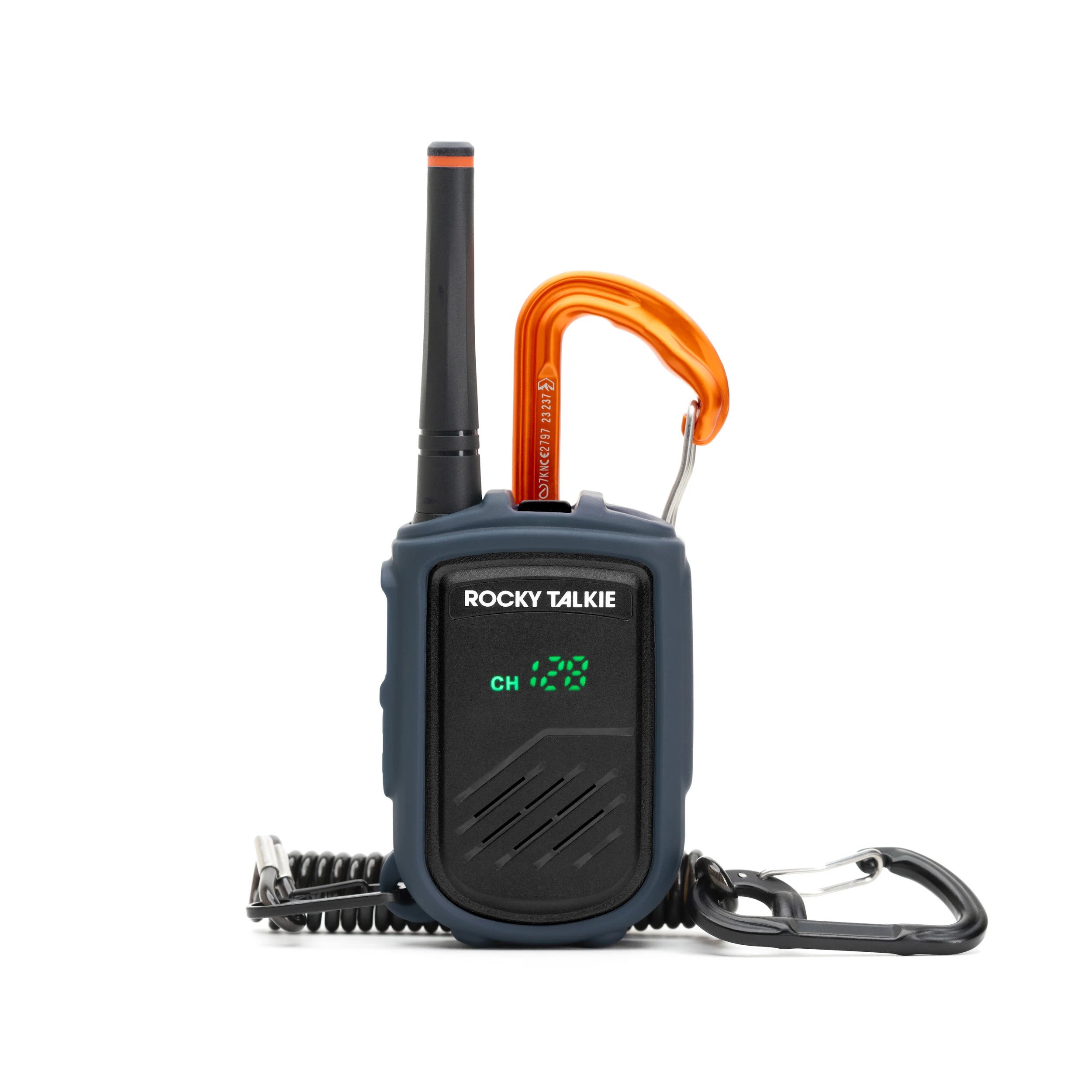
Designed specifically for climbers, mountaineers, and off-grid adventurers, the Rocky Talkie Mountain Radio has rapidly established itself as the…
Why it wins
The BaoFeng BF-F8HP stands apart from standard consumer walkie talkies as an advanced, high-output amateur dual-band radio.
Why it wins
The Backcountry Access BC Link 2.
Why it winsDeep-dive product reviews
We've published full field-test reports and technical deep-dives for 10 of the picks in this list.
Compare all 10 picks at a glance
Editorial ranking, what each pick is best at, and how we assessed it. Tap a name to jump to the full write-up.
| # | Pick | Best for | Key spec | Evidence |
|---|---|---|---|---|
| 1 | Talkie Mountain Radio Rocky | Backcountry Ski Touring | Weight: 7.9 oz with leash and carabiner | Research only |
| 2 | BF-F8HP BaoFeng | Licensed amateur backcountry communications | Output Power: Up to 8 watts (selectable 1W, 4W, 8W) | Research only |
| 3 | Access BC Link 2.0 Backcountry | Backcountry ski touring | Weight: 11 oz (312 g) | Research only |
| 4 | Access BC Link Mini Backcountry | Fast-and-light ski touring | Weight: 6 oz | Research only |
| 5 | ACXT1035R FLT Cobra | Whitewater and sea kayaking | Dimensions: 7.5 x 2.4 x 1.5 inches | Research only |
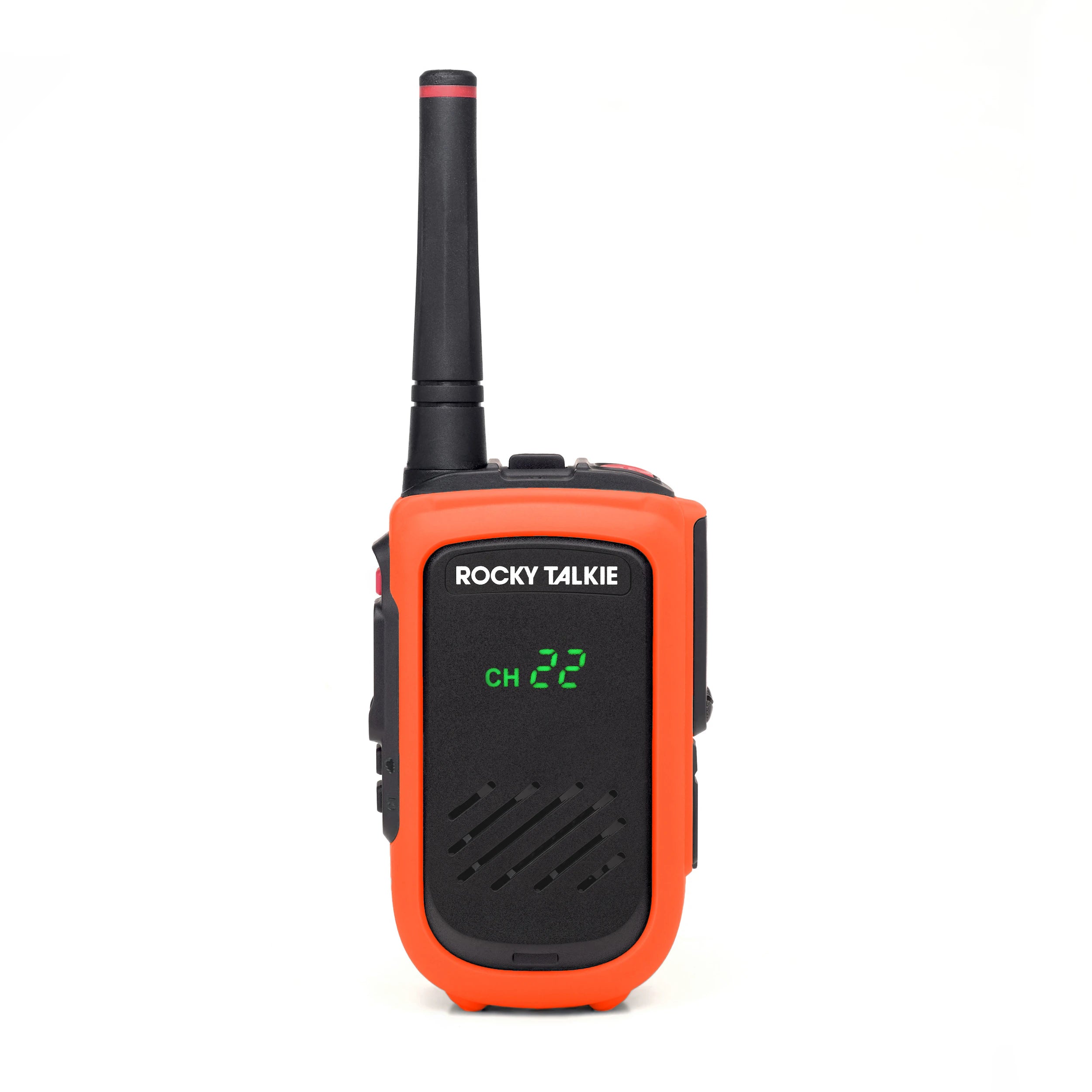
| 6 | T10 2-Way Radio Midland | Frontcountry car camping | Weight: 2.7 oz (76 g) per radio | Research only |
| 7 | Talkie 5 Watt Expedition Radio Rocky | Backcountry ski mountaineering | Weight: 9.1 oz (258 g) | Research only |
| 8 | GXT67 Pro Midland | Overlanding and vehicle convoys | Transmit Power: 5 watts (maximum legal GMRS limit) | Research only |
| 9 | GXT1000VP4 Midland | Overland vehicle caravans | Radio Service: GMRS and FRS hybrid | Research only |
| 10 | X-Talker T51VP3 Midland | Frontcountry family camping | Weight: 4.3 oz per handset | Research only |
How we picked
Ranked by Renata Cho, Apparel & Layering Editor
We started with a long list of walkie talkies that people actually buy, cut anything that could not clear our baseline for durability and field performance, then ranked the 10 that were left against the same criteria. Rankings are editorial. No brand pays for placement, and affiliate links never move a pick up or down.
- Real-world durability
- How the material, stitching, or steel holds up after a season of hard use — not how it looks new.
- Performance in bad conditions
- Wind, rain, cold, and grit are the test. Anything that only works on a nice day gets marked down.
- Weight and packability
- Every ounce has to earn its place in the pack, but not at the cost of something that fails in the field.
- Ease of use
- Setup, adjustment, and maintenance with cold hands, in the dark, without the manual.
- Value at its price point
- Compared against the closest competitors in the same tier, not against cheaper gear in a different class.
- Repairability and support
- Field-fixable design, available parts, and a warranty the maker actually honors.
How often we recheck this: Reviewed on a rolling basis and rechecked at least once a year, or sooner if a pick is discontinued, revised, or beaten by something new.
Best of the Best · Head to Head
Talkie Mountain Radio vs BF-F8HP
#1 vs #2 — side-by-side specs, pros & cons, and the final verdict.
Compare any two picks
Build your own side-by-side
Choose any two of these 10 picks and compare specs, price, pros, cons and reader ratings.
Topic summary
Field-ready two-way radios for climbing, backcountry skiing, and remote trails, ranked by real-world reliability, battery life, and durability across independent tests.
Key takeaways
- #1 Talkie Mountain Radio — Rocky
- #2 BF-F8HP — BaoFeng
- #3 Access BC Link 2.0 — Backcountry
- #4 Access BC Link Mini — Backcountry
- #5 ACXT1035R FLT — Cobra
- #6 T10 2-Way Radio — Midland
Intended uses
Gear
Verification notes
Editorial ranked list, 10 entries. Evidence mix — 10 research only. Buy links open the maker or a retailer search. Last reviewed October 2026.
Best walkie talkies for a specific job
Skip the ranking — jump to the pick that matches how you actually use it.
- Best for backcountry ski touring
- #1 Talkie Mountain Radio — RockyDesigned specifically for climbers, mountaineers, and off-grid adventurers, the Rocky Talkie Mountain Radio has rapidly established itself as the modern outdoor standard. Independent reviews from GearJunkie, OutdoorGearLab, and Switchback Travel consistently rate it as the top all-around pick, praising its minimalist, durable construction that strips away extraneous buttons in favor of bulletproof reliability. Operating on standard license-free FRS frequencies, it allows seamless group communication straight out of the box without regulatory paperwork. Where the Mountain Radio separates itself from legacy blister-pack radios is its cold-weather battery chemistry and harness integration. Powered by a specialized lithium-ion cell, it maintains battery life deep into sub-freezing conditions where traditional alkaline or NiMH cells fail within hours. The radio comes housed in a thick thermoplastic case and includes an integrated steel-reinforced leash paired with a climbing-rated carabiner, ensuring the unit stays anchored to a pack strap or harness gear loop during high-consequence movement. Because it adheres strictly to FRS power limits, the Mountain Radio cannot match the raw wattage of high-output GMRS or amateur units. Transmission range is bound by line-of-sight physics; heavy timber, ridge spurs, and deep granite couloirs will truncate your signal. It also lacks a remote shoulder microphone, meaning users must tilt their heads toward the pack strap or unclip the handset to transmit, though its oversized push-to-talk button is easy to work with bulky winter gloves. **Highlights** - Specialized thermoplastic shell with shatterproof LED screen - Cold-weather lithium-ion battery rated down to freezing temperatures - Integrated steel-reinforced backup leash and climbing-spec carabiner - License-free FRS operation with 128 privacy channel combinations - Large, glove-friendly push-to-talk button and volume controls **Watch-outs** - Lower wattage output limits penetration through dense mountain topography - No native remote speaker-mic attachment - Premium price point for an FRS-class radioRead the full profile
- Best for licensed amateur backcountry communications
- #2 BF-F8HP — BaoFengThe BaoFeng BF-F8HP stands apart from standard consumer walkie talkies as an advanced, high-output amateur dual-band radio. Heavily praised by OutdoorGearLab, GearJunkie, and Switchback Travel for its unmatched power-to-price ratio, this handheld pushes up to 8 watts of transmission power across VHF and UHF frequencies. For backcountry operators traversing rugged canyons or dense tree cover, that extra wattage delivers noticeable range gains over standard consumer FRS handsets. That performance requires serious technical buy-in. The BF-F8HP is not a plug-and-play radio for casual campers; transmitting on amateur bands legally requires an FCC amateur radio (Ham) license. Programming frequencies, CTCSS tones, and repeater offsets can be done via the front keypad, but it is far easier using third-party computer software like CHIRP. In the hands of a knowledgeable user, it provides access to regional repeaters, emergency dispatch monitoring, and NOAA weather alerts. The trade-offs center on durability and user complexity. While the hard plastic body handles everyday drops, the radio lacks the deep waterproofing, rubber overmolding, and alpine-ready clips of dedicated outdoor models. The antenna is tall and stiff, making pack attachment awkward, and the busy multi-line display and deep menu trees make it virtually impossible for an untrained partner to pick up and use in a sudden emergency. **Highlights** - Tri-power output settings capable of transmitting up to 8 watts - Dual-band frequency coverage across VHF and UHF spectrums - Repeater compatibility to dramatically extend emergency backcountry range - High-capacity rechargeable lithium-ion battery pack - Full alphanumeric keypad with built-in FM receiver and LED flashlight **Watch-outs** - Requires an FCC amateur radio license to transmit legally - Complex menu structure and steep operational learning curve - Minimal weather sealing against driving rain or snowRead the full profile
- Best for fast-and-light ski touring
- #4 Access BC Link Mini — BackcountryThe Backcountry Access BC Link Mini addresses the primary complaint leveled against the flagship BC Link 2.0: bulk. Highlighted by OutdoorGearLab and Switchback Travel as a streamlined, pocket-friendly alternative, the Mini condenses BCA’s winter-focused engineering into a compact six-ounce, single-piece unit. It is tailored for fast-and-light ski tourers, trail runners, and climbers who want dependable group communication without routing cords through a pack. Instead of a separate base unit and corded mic, the BC Link Mini mounts directly to a shoulder harness or sternum strap via an included multi-point attachment system. The interface remains centered on glove usability, featuring low-profile dials for channel selection and volume adjustments. It charges via a modern USB-C port, making it easy to top off from a portable power bank or vehicle inverter without packing proprietary charging cradles into the field. The trade-off for this compact footprint is battery reserves and speaker volume. Because the battery sits directly in the cold air on your pack strap, it does not match the deep-freeze longevity of the larger pack-stashed BC Link 2.0 battery. The integrated speaker is also smaller, which can make transmissions difficult to decipher in roaring ridgeline winds unless the unit is positioned close to your ear. **Highlights** - Compact single-piece chassis weighing approximately 6 ounces - USB-C rechargeable battery for simple off-grid power management - Low-profile dials designed for gloved winter operation - Versatile attachment system for shoulder straps, waist belts, and pockets - Weather-resistant construction engineered for snow and freezing drizzle **Watch-outs** - Speaker output is quieter than corded external mic systems in high winds - Smaller battery drains faster in sustained sub-zero temperatures - Fixed FRS power output limits maximum terrain penetrationRead the full profile
- Best for whitewater and sea kayaking
- #5 ACXT1035R FLT — CobraThe Cobra ACXT1035R FLT is engineered primarily for aquatic and foul-weather recreation. Recommended by GearJunkie and Switchback Travel as an outstanding waterproof value, this handset is a favorite among whitewater kayakers, packrafters, canoe trippers, and coastal sea kayakers. Its bright orange housing floats face-up if dropped overboard, making water recoveries straightforward instead of watching gear sink to the riverbed. A standout feature on the ACXT1035R is Cobra’s proprietary Rewind-Say-Again recording buffer. When paddling through roaring rapids or dealing with coastal wind gusts, incoming transmissions are frequently garbled or missed; pressing the rewind button replays the last 20 seconds of audio, eliminating the need to ask partners to repeat critical messages. The radio also includes built-in NOAA weather alerts, providing early warnings of approaching storm fronts. The trade-offs surface in the power architecture and physical ergonomics. The unit runs on rechargeable NiMH batteries, which lose their charge rapidly when exposed to near-freezing temperatures compared to modern lithium-ion packs (though it can accept standard alkaline AAs). The buttons are relatively small and closely spaced, making them difficult to operate with heavy gloves, and the speaker port needs to be vigorously shaken clear of water if fully submerged to restore clear audio. **Highlights** - Floating, waterproof housing with high-visibility orange accents - Rewind-Say-Again digital recorder replays the last 20 seconds of missed audio - Dual power capability using included NiMH pack or standard AA batteries - Direct access to NOAA weather channels with hazard alerts - Integrated LED flashlight located in the base of the handle **Watch-outs** - NiMH battery cells degrade quickly in freezing temperatures - Speaker audio sounds muffled until water clears the front grill - Small buttons are difficult to operate while wearing thick glovesRead the full profile
- Best for frontcountry car camping
- #6 T10 2-Way Radio — MidlandThe Midland T10 represents the ultralight, budget-focused entry point for outdoor communication. Earning a nod from Switchback Travel as an exceptional low-cost option, this miniature walkie talkie is designed for casual campground logistics, neighborhood coordination, festival groups, and short day hikes where users simply need line-of-sight voice contact without spending technical-gear money. At a mere 2.7 ounces per handset, it is light enough to clip to a child’s jacket or vanish into a waist pack. Simplicity is the T10’s strongest asset. Powered by three standard AAA alkaline batteries, it eliminates the need to pack specialized charging cables or charging docks on quick trips. The front interface consists of basic call, channel, and volume buttons surrounding a legible LCD screen. Operating on license-free FRS frequencies with standard privacy codes, it works reliably right out of the blister pack with zero configuration required. Its low cost and featherweight build carry severe backcountry compromises. The casing is thin plastic without rubber armor, meaning a drop onto granite or hardpack can crack the housing. It has no formal waterproof rating, leaving it completely vulnerable to rainstorms or river splashes. Furthermore, its modest transmission power drops off quickly once rolling topography, dense pine forest, or rock outcroppings interrupt direct line-of-sight. **Highlights** - Extremely lightweight profile at roughly 2.7 ounces per radio - Runs on widely available AAA alkaline batteries with no charging docks needed - Intuitive, simplified button layout ideal for children and non-technical users - High-contrast LCD screen with battery indicator and call alerts - Highly affordable pair pricing for casual recreational use **Watch-outs** - No formal water resistance rating; vulnerable to rain and damp gear bags - Transmission range deteriorates rapidly in rolling terrain and heavy trees - Lightweight plastic casing lacks impact protection against dropsRead the full profile
- Best for backcountry ski mountaineering
- #7 Talkie 5 Watt Expedition Radio — RockyThe Rocky Talkie 5 Watt Expedition Radio takes the ruggedized mountain philosophy of the original Mountain Radio and upgrades it with maximum handheld GMRS output and commercial-grade waterproofing. Highlighted by Switchback Travel as a top-tier waterproof communicator, this radio is designed for expedition mountaineering, remote guiding operations, and deep wilderness travel where transmission power and element resistance cannot be compromised. Built to an IP67 standard, the Expedition Radio is completely dustproof and fully submersible in water, making it immune to torrential rain, river dunks, and melting spring snowpacks. It pushes the legal handheld limit of 5 watts on GMRS frequencies, yielding significantly better signal penetration through dense timber and around mountain ridges than low-power FRS models. Like its sibling, it features an advanced cold-weather lithium-ion battery, a burly steel-reinforced leash, and a climbing-rated carabiner for secure harness integration. The added power and armor come with distinct requirements. Transmitting on high-power GMRS frequencies legally requires an FCC GMRS license in the United States, which costs a modest fee but requires no examination. The radio is also substantially heavier and bulkier than standard recreational units, weighing over 9 ounces, and its premium pricing makes outfitting an entire backcountry party a significant financial commitment. **Highlights** - 5-watt maximum GMRS transmission power for superior mountain range - IP67 waterproof and fully submersible construction - Specialized cold-weather battery engineered for sub-zero alpine use - Heavy-duty steel leash and climbing-spec carabiner attachment - Compatible with optional remote hand mics and audio headsets **Watch-outs** - Requires an FCC GMRS license for legal transmission in the US - Heavier and more noticeable on a pack strap at 9.1 ounces - Substantial financial investmentRead the full profile
- Best for overlanding and vehicle convoys
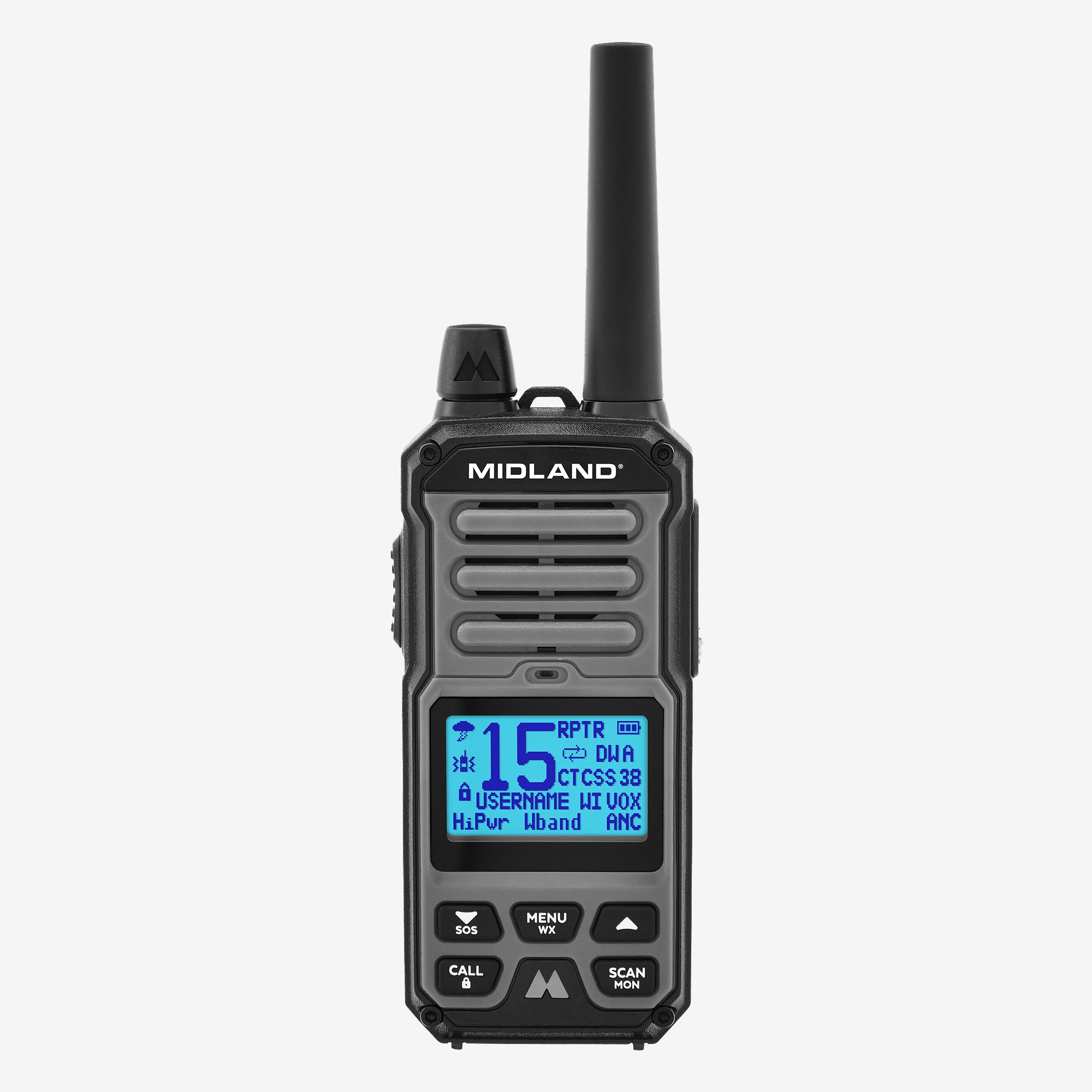
- #8 GXT67 Pro — MidlandThe Midland GXT67 Pro is a commercial-grade GMRS radio built for rigorous overland expeditions, remote hunting basecamps, and heavy agricultural use. Designated by GearJunkie as a premier advanced walkie talkie, the GXT67 Pro departs from the lightweight plastic shells typical of recreational radios in favor of a heavy-duty cast-metal chassis that can endure genuine field abuse and heavy impacts. Operating at a full 5 watts of GMRS power, the GXT67 Pro excels at cutting through terrain interference that stops standard walkie talkies cold. It features dedicated repeater channels, allowing overland travelers to link into high-elevation repeater towers to extend voice contact across dozens of miles of wilderness. The unit carries an IP67 waterproof and dustproof rating, and the high-contrast display provides direct readouts of operational parameters without relying on confusing two-digit shorthand. At 10 ounces and featuring a long, rigid antenna, the GXT67 Pro is too hefty for ultralight backpackers or climbers seeking a low-profile harness companion. It is also an advanced piece of equipment that demands familiarity with GMRS rules and repeater tone programming to unlock its full capabilities. Users must hold an FCC GMRS license to operate it legally, and the radio sits firmly in the professional price bracket. **Highlights** - Maximum 5-watt output with full GMRS repeater channel capability - Rugged cast-metal chassis built to IP67 waterproof and dustproof standards - High-capacity rechargeable lithium-ion battery pack with fast-charge cradle - High-contrast backlit display with clear alphanumeric menu options - Dual-watch function allows monitoring two separate frequencies simultaneously **Watch-outs** - Requires an FCC GMRS license to transmit legally - Substantial weight and bulk make it cumbersome for human-powered travel - Complex setup and programming compared to basic FRS walkie talkiesRead the full profile
- Best for overland vehicle caravans
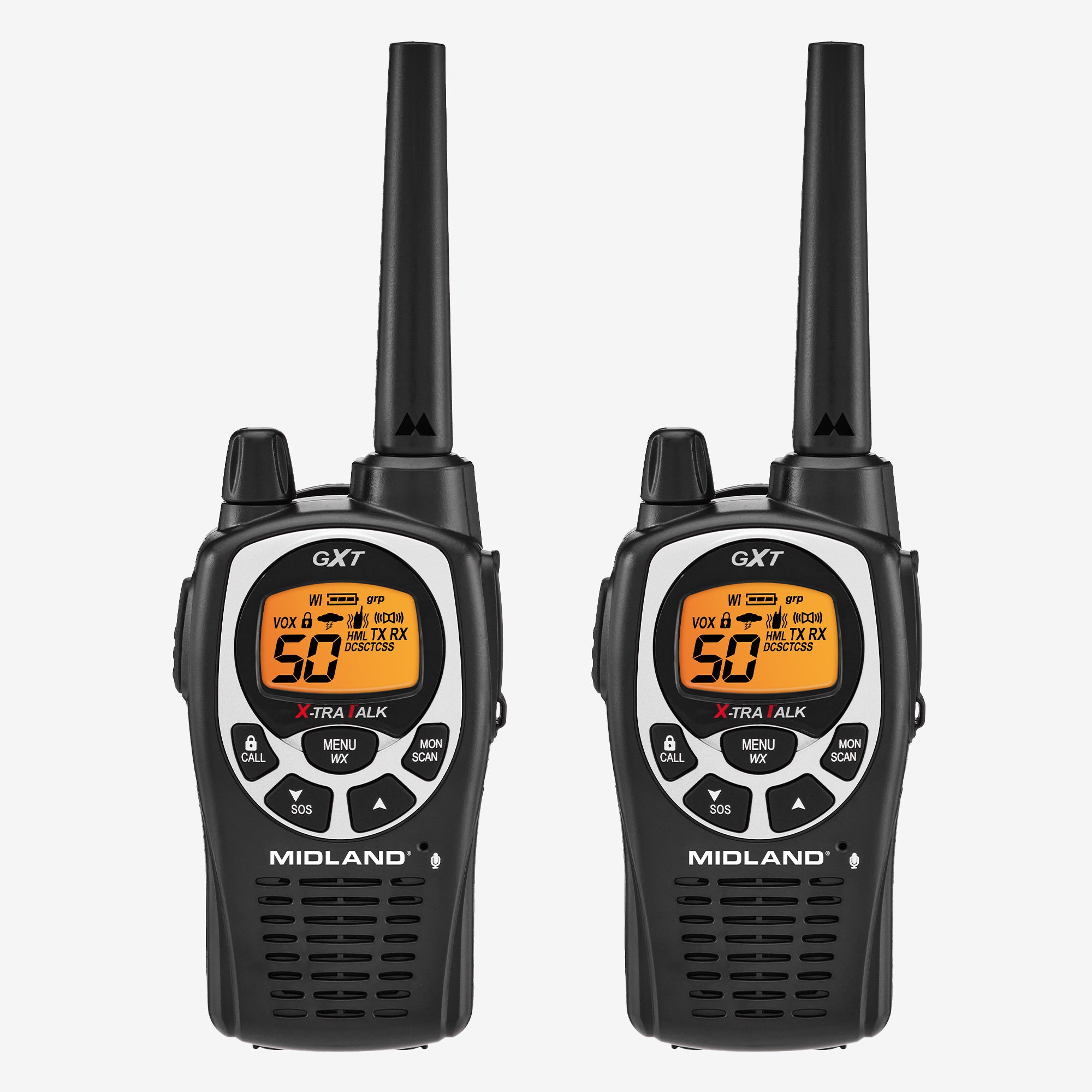
- #9 GXT1000VP4 — MidlandThe Midland GXT1000VP4 is one of the most widely used GMRS radios on the market, long serving as a benchmark for hunters, car campers, and trail caravans. Noted by Switchback Travel for delivering reliable baseline performance in a utilitarian design, this radio pair bridges the gap between cheap blister-pack toys and high-dollar commercial handsets, delivering boosted transmission power at an approachable price. Transmitting on GMRS frequencies allows the GXT1000VP4 to push higher wattage on select channels than standard FRS radios, offering cleaner reception across open clearings, lake basins, and desert plains. The kit typically includes desktop charging docks, 12-volt vehicle adapters, and boom-mic headsets. It carries a JIS4 splash-resistance rating, protecting internal circuits from passing drizzle and wet hands around camp, along with integrated NOAA weather hazard scanning. The radio relies on older battery and chassis technology. It runs on rechargeable NiMH battery packs that suffer from noticeable self-discharge when stored in a gear bin and lose run-time rapidly in cold conditions (though it can run on AA alkalines in an emergency). The chassis is constructed from hard, unarmored plastic that will scuff and crack if dropped onto rocks, and the long fixed antenna makes shoulder-strap mounting somewhat awkward. **Highlights** - High-power GMRS transmission capability for improved open-country range - JIS4 splash-resistant construction protects against light rain - Dual-power operation using rechargeable NiMH packs or standard AA alkalines - Integrated NOAA weather alert radio with direct hazard monitoring - Whisper mode allows low-volume voice transmission for hunting **Watch-outs** - NiMH batteries degrade rapidly in cold alpine weather - Hard plastic body lacks shock-absorbing rubber armor - High-power channels legally require an FCC GMRS licenseRead the full profile
Our editors test the gear, pick the ten, and set the order the day a list publishes. After that, the ranking is live: every member star rating feeds the community order, so picks climb or slide as real owners report back. Editorial judgment decides what earns a spot — you help decide where it sits.
- Editors set the field
Hands-on testing and spec research choose the ten and the published order.
- Readers re-rank it
Your 1–5 star ratings drive the community order on every list.
- Rankings keep moving
Picks rise or fall over time — nothing is frozen at launch day.
Rank this list
Loading community ratings… Ratings re-order the picks — they never change which products make the list.
Sign in to add your own ratings — it's free.
- Pros
- Specialized lithium-ion battery retains charge reliably in deep winter conditions
- Integrated steel-core leash and rated carabiner prevent accidental drops
- Straightforward interface with large push-to-talk button works easily with gloves
- License-free FRS operation works right out of the box without paperwork
Cons- FRS wattage limits signal penetration across dense timber and complex terrain
- Significantly higher upfront cost than conventional consumer radio multi-packs
- Lacks a remote shoulder mic in the standard configuration
Key features- Weight
- 7.9 oz with leash and carabiner
- Approximate Price
- Around $220 per pair
- Radio Service
- License-free FRS
- Attachment
- Steel-reinforced leash and climbing carabiner
- Battery Cell
- Cold-weather rated lithium-ion
- Channels
- 22 FRS channels with 128 privacy codes
Best forBackcountry Ski Touring, Multi-Pitch Rock Climbing, Alpine Mountaineering, Four-Season Wilderness Trekking
Pros- Specialized lithium-ion battery retains charge reliably in deep winter conditions
- Integrated steel-core leash and rated carabiner prevent accidental drops
- Straightforward interface with large push-to-talk button works easily with gloves
- License-free FRS operation works right out of the box without paperwork
Cons- FRS wattage limits signal penetration across dense timber and complex terrain
- Significantly higher upfront cost than conventional consumer radio multi-packs
- Lacks a remote shoulder mic in the standard configuration
Assessed by Renata Cho against our ranking criteria.No ratings yet - Pros
- Selectable output up to 8 watts for superior signal penetration
- Repeater access dramatically extends range across mountain terrain
- Dual-band VHF and UHF scanning covers emergency and weather channels
- Highly customizable memory banks via open-source computer software
Cons- Requires an FCC amateur radio license to legally transmit
- Steep learning curve makes handover to untrained partners impractical
- Lacks certified waterproof ratings and rugged alpine drop protection
Key features- Unit Weight
- 10.1 oz (with battery and antenna)
- Dimensions
- 10.5 x 2.0 x 2.0 in (with stock antenna)
- Output Power
- Up to 8 watts (selectable 1W, 4W, 8W)
- Frequency Bands
- VHF and UHF amateur bands
- Licensing
- FCC Amateur Radio (Ham) license required to transmit
- Battery Type
- 2000 mAh rechargeable lithium-ion pack
Best forLicensed amateur backcountry communications, Remote mountain repeater monitoring, Search and rescue support, Multi-vehicle overland expeditions
Pros- Selectable output up to 8 watts for superior signal penetration
- Repeater access dramatically extends range across mountain terrain
- Dual-band VHF and UHF scanning covers emergency and weather channels
- Highly customizable memory banks via open-source computer software
Cons- Requires an FCC amateur radio license to legally transmit
- Steep learning curve makes handover to untrained partners impractical
- Lacks certified waterproof ratings and rugged alpine drop protection
Assessed by Renata Cho against our ranking criteria.No ratings yet - Pros
- Smart Mic puts oversized, glove-friendly controls within easy reach
- Base unit stashes inside the backpack to protect battery life from freezing air
- IP56 weather sealing shrugs off blizzard snow, moisture, and hard impacts
- Loud, distinct speaker output easily cuts through high mountain winds
Cons- At 11 ounces, it is significantly heavier than single-piece trail radios
- External coiled cord demands deliberate routing to avoid snagging on branches
- Steep purchase price creates a substantial barrier for outfitting full groups
Key features- Weight
- 11 oz (312 g)
- Weather Rating
- IP56 water- and dust-resistant
- Power Source
- Integrated 2300 mAh lithium-ion battery
- Band Type
- FRS channels
- Interface
- Shoulder-mounted Smart Mic with dial controls
- Charging Port
- Mini-USB rechargeable base
Best forBackcountry ski touring, Avalanche safety education, Winter splitboard descents, Snowmobile-assisted mountain travel
Pros- Smart Mic puts oversized, glove-friendly controls within easy reach
- Base unit stashes inside the backpack to protect battery life from freezing air
- IP56 weather sealing shrugs off blizzard snow, moisture, and hard impacts
- Loud, distinct speaker output easily cuts through high mountain winds
Cons- At 11 ounces, it is significantly heavier than single-piece trail radios
- External coiled cord demands deliberate routing to avoid snagging on branches
- Steep purchase price creates a substantial barrier for outfitting full groups
Assessed by Renata Cho against our ranking criteria.No ratings yet - Pros
- Weighs only six ounces with no external cables to snag on mountaineering gear
- Glove-friendly control dials streamline channel and volume adjustments
- Modern USB-C port enables straightforward recharging from standard battery packs
- Sturdy multi-point mount anchors securely to backpack sternum and shoulder straps
Cons- Integrated speaker struggles to compete with howling alpine ridgeline winds
- Shoulder-mounted battery suffers accelerated drain in sustained sub-zero cold
- Premium price point compared to generic consumer-grade FRS walkie talkies
Key features- Weight
- 6 oz
- Approximate Price
- Around $240
- Form Factor
- Integrated single-piece handheld
- Frequency Band
- FRS (Family Radio Service)
- Charging Port
- USB-C rechargeable
- Primary Focus
- Backcountry touring and climbing
Best forFast-and-light ski touring, Backcountry splitboarding, Alpine mountaineering, Off-piste group communication
Pros- Weighs only six ounces with no external cables to snag on mountaineering gear
- Glove-friendly control dials streamline channel and volume adjustments
- Modern USB-C port enables straightforward recharging from standard battery packs
- Sturdy multi-point mount anchors securely to backpack sternum and shoulder straps
Cons- Integrated speaker struggles to compete with howling alpine ridgeline winds
- Shoulder-mounted battery suffers accelerated drain in sustained sub-zero cold
- Premium price point compared to generic consumer-grade FRS walkie talkies
Assessed by Renata Cho against our ranking criteria.No ratings yet - Pros
- Floats face-up in water with high-visibility orange accents for quick recovery
- Rewind-Say-Again buffer replays the last 20 seconds of garbled or missed audio
- Dual-power support accepts rechargeable NiMH packs or standard AA batteries
- Includes NOAA weather band scanning and automated hazard alerts
Cons- NiMH battery packs suffer noticeable power loss in freezing temperatures
- Speaker grill muffles audio output until shaken dry after submersion
- Front-panel buttons are small and difficult to manipulate with heavy gloves
Key features- Weight
- 5.6 oz (per handset)
- Approximate Price
- $130 (two-pack)
- Dimensions
- 7.5 x 2.4 x 1.5 inches
- Submersion Rating
- Floating, submersible waterproof
- Battery Platform
- Rechargeable NiMH or 3 AA alkaline
- Replay Buffer
- 20-second digital audio rewind
Best forWhitewater and sea kayaking, Canoe and raft touring, Foul-weather hiking, Lakeside family camping
Pros- Floats face-up in water with high-visibility orange accents for quick recovery
- Rewind-Say-Again buffer replays the last 20 seconds of garbled or missed audio
- Dual-power support accepts rechargeable NiMH packs or standard AA batteries
- Includes NOAA weather band scanning and automated hazard alerts
Cons- NiMH battery packs suffer noticeable power loss in freezing temperatures
- Speaker grill muffles audio output until shaken dry after submersion
- Front-panel buttons are small and difficult to manipulate with heavy gloves
Assessed by Renata Cho against our ranking criteria.No ratings yet - Pros
- Exceptionally lightweight at just 2.7 ounces per handset
- Affordable entry price for casual family or campground communication
- Powered by accessible standard AAA batteries without need for cables
- Clean, straightforward button layout with minimal learning curve
Cons- No water resistance rating leaves circuitry vulnerable to rain
- Unreinforced plastic shell can crack upon impact with hard surfaces
- Range drops off sharply in dense forest or hilly terrain
Key features- Weight
- 2.7 oz (76 g) per radio
- Power Source
- 3 AAA alkaline batteries per unit
- Radio Service
- License-free FRS
- Water Resistance
- No formal IP rating
- Channels
- 22 FRS channels with privacy codes
- MSRP
- Approximately $40 per pair
Best forFrontcountry car camping, Festival and event coordination, Neighborhood family monitoring, Short fair-weather day hikes
Pros- Exceptionally lightweight at just 2.7 ounces per handset
- Affordable entry price for casual family or campground communication
- Powered by accessible standard AAA batteries without need for cables
- Clean, straightforward button layout with minimal learning curve
Cons- No water resistance rating leaves circuitry vulnerable to rain
- Unreinforced plastic shell can crack upon impact with hard surfaces
- Range drops off sharply in dense forest or hilly terrain
Assessed by Renata Cho against our ranking criteria.No ratings yet - Pros
- Full five-watt GMRS output maximizes communication range in uneven terrain
- Submersible IP67 rating withstands heavy rain, snowmelt, and river dunks
- Cold-weather battery retains charge in harsh sub-zero temperatures
- Steel-reinforced leash prevents accidental drops down cliff faces
Cons- Requires an FCC GMRS license to operate legally within the United States
- At 9.1 ounces, it is significantly heavier than basic recreational walkie talkies
- High upfront cost makes outfitting large backcountry teams expensive
Key features- Weight
- 9.1 oz (258 g)
- Power Output
- 5 Watts (GMRS)
- Water Resistance
- IP67 fully submersible (1m for 30 min)
- Battery Type
- Cold-weather optimized lithium-ion
- Licensing
- FCC GMRS license required in the US
- Attachment
- Steel-reinforced leash with carabiner
Best forBackcountry ski mountaineering, Multi-pitch alpine climbing, Wilderness search and rescue, Remote guiding operations
Pros- Full five-watt GMRS output maximizes communication range in uneven terrain
- Submersible IP67 rating withstands heavy rain, snowmelt, and river dunks
- Cold-weather battery retains charge in harsh sub-zero temperatures
- Steel-reinforced leash prevents accidental drops down cliff faces
Cons- Requires an FCC GMRS license to operate legally within the United States
- At 9.1 ounces, it is significantly heavier than basic recreational walkie talkies
- High upfront cost makes outfitting large backcountry teams expensive
Assessed by Renata Cho against our ranking criteria.No ratings yet - Pros
- Full 5-watt GMRS output maximizes transmission power in difficult terrain
- Rugged cast-metal chassis with IP67 waterproof and dustproof protection
- Built-in GMRS repeater channels expand regional communication range
- Intuitive alphanumeric display eliminates cryptic menu codes
Cons- Weighs 10 ounces, making it noticeably bulky for human-powered travel
- Requires an FCC GMRS license to operate legally
- Relies on a charging cradle rather than direct on-body USB charging
Key features- Weight
- 10 oz (283 g)
- Dimensions
- 8.0 x 1.2 x 2.2 inches
- Ingress Rating
- IP67 waterproof and dustproof
- Transmit Power
- 5 watts (maximum legal GMRS limit)
- Chassis Build
- Die-cast metal frame
- Licensing
- FCC GMRS license required
Best forOverlanding and vehicle convoys, Backcountry hunting camps, Remote property management, Agricultural and ranch operations
Pros- Full 5-watt GMRS output maximizes transmission power in difficult terrain
- Rugged cast-metal chassis with IP67 waterproof and dustproof protection
- Built-in GMRS repeater channels expand regional communication range
- Intuitive alphanumeric display eliminates cryptic menu codes
Cons- Weighs 10 ounces, making it noticeably bulky for human-powered travel
- Requires an FCC GMRS license to operate legally
- Relies on a charging cradle rather than direct on-body USB charging
Assessed by Renata Cho against our ranking criteria.No ratings yet - Pros
- High-power GMRS capability provides cleaner audio across open clearings
- Dual-power design runs on included NiMH packs or standard AA batteries
- Kit includes desktop cradle, 12-volt vehicle cord, and boom headsets
- Integrated NOAA hazard monitoring scans for regional weather emergencies
Cons- Included NiMH packs lose charge rapidly in sub-freezing temperatures
- Hard plastic chassis lacks rubber armor to cushion drops onto rock
- Fixed long antenna is prone to snagging on backpack shoulder straps
Key features- Unit Weight
- 4.8 oz (without batteries)
- Water Rating
- JIS4 splash resistant
- Power Source
- Rechargeable NiMH pack or 4 AA batteries
- Radio Service
- GMRS and FRS hybrid
- Channels
- 50 channels with 142 privacy codes
- Hazard Alerts
- NOAA weather radio with hazard alert
Best forOverland vehicle caravans, Basecamp and car camping, Dry-weather hunting camps, Home emergency preparedness
Pros- High-power GMRS capability provides cleaner audio across open clearings
- Dual-power design runs on included NiMH packs or standard AA batteries
- Kit includes desktop cradle, 12-volt vehicle cord, and boom headsets
- Integrated NOAA hazard monitoring scans for regional weather emergencies
Cons- Included NiMH packs lose charge rapidly in sub-freezing temperatures
- Hard plastic chassis lacks rubber armor to cushion drops onto rock
- Fixed long antenna is prone to snagging on backpack shoulder straps
Assessed by Renata Cho against our ranking criteria.No ratings yet - Pros
- Extremely light at 4.3 ounces per handset
- Dual-power design runs on included packs or AAA batteries
- Dedicated NOAA weather scan with automated hazard alerts
- Complete package includes desktop drop-in charging cradle
Cons- No official IP water-resistance rating for wet weather
- Thin plastic chassis offers minimal impact protection
- Signal drops off significantly in dense timber or hilly terrain
Key features- Weight
- 4.3 oz per handset
- Dimensions
- 6.1 x 2.2 x 1.3 in
- Power Source
- Rechargeable battery pack or 3 AAA batteries
- Channels
- 22 channels plus 38 privacy codes
- Weather Alerts
- NOAA weather radio with hazard scan
- Hands-Free
- 3-level eVOX voice activation
Best forFrontcountry family camping, Car-to-car road trips, Home emergency preparedness, Flat trail day hiking
Pros- Extremely light at 4.3 ounces per handset
- Dual-power design runs on included packs or AAA batteries
- Dedicated NOAA weather scan with automated hazard alerts
- Complete package includes desktop drop-in charging cradle
Cons- No official IP water-resistance rating for wet weather
- Thin plastic chassis offers minimal impact protection
- Signal drops off significantly in dense timber or hilly terrain
Assessed by Renata Cho against our ranking criteria.No ratings yet



Award picks
The ranking above is price-blind and judged on merit. These awards call out the pick we'd hand a specific person with a specific need.
Best Overall: Talkie Mountain Radio — Rocky
Designed specifically for climbers, mountaineers, and off-grid adventurers, the Rocky Talkie Mountain Radio has rapidly established itself as the modern outdoor standard.
Ranked #1Runner-Up: BF-F8HP — BaoFeng
The BaoFeng BF-F8HP stands apart from standard consumer walkie talkies as an advanced, high-output amateur dual-band radio.
Ranked #2Best Value: Access BC Link 2.0 — Backcountry
The Backcountry Access BC Link 2.
Ranked #3Best Ultralight Pick: Access BC Link Mini — Backcountry
The Backcountry Access BC Link Mini addresses the primary complaint leveled against the flagship BC Link 2.
Ranked #4Best for Rough Use: Talkie 5 Watt Expedition Radio — Rocky
The Rocky Talkie 5 Watt Expedition Radio takes the ruggedized mountain philosophy of the original Mountain Radio and upgrades it with maximum handheld GMRS output and…
Ranked #7Best for Beginners: ACXT1035R FLT — Cobra
The Cobra ACXT1035R FLT is engineered primarily for aquatic and foul-weather recreation.
Ranked #5For most climbers, hikers, and general backcountry recreationists, the Rocky Talkie Mountain Radio remains the best all-around choice thanks to its bombproof leash system, freezing-temp battery life, and license-free operation. Ski tourers and winter guides will benefit from the corded shoulder-mic ergonomics of the Backcountry Access BC Link 2.0, while those needing maximum power and water submersion should step up to the GMRS-powered Rocky Talkie 5 Watt Expedition Radio. Casual day hikers and families looking for dependable performance without spending hundreds will find solid, practical utility in budget-friendly options like the Cobra ACXT1035R FLT or Midland T10.
How to choose walkie talkies
Every pick on this page was judged against the same criteria. If you want the short answer, Talkie Mountain Radio by Rocky is the one we point most people at. If you want to decide for yourself, here is what actually separates a good walkie talkie from an expensive one.
Real-world durability
How the material, stitching, or steel holds up after a season of hard use — not how it looks new.
Performance in bad conditions
Wind, rain, cold, and grit are the test. Anything that only works on a nice day gets marked down.
Weight and packability
Every ounce has to earn its place in the pack, but not at the cost of something that fails in the field.
Ease of use
Setup, adjustment, and maintenance with cold hands, in the dark, without the manual.
Value at its price point
Compared against the closest competitors in the same tier, not against cheaper gear in a different class.
Repairability and support
Field-fixable design, available parts, and a warranty the maker actually honors.
Match the pick to your use
The right walkie talkies depends on what you are actually doing with it: Backcountry Ski Touring; Multi-Pitch Rock Climbing; Alpine Mountaineering; Four-Season Wilderness Trekking; Licensed amateur backcountry communications; Remote mountain repeater monitoring. Start from the use case, then work down the ranking until you hit the first pick that covers it.
Common mistakes
- Buying the lightest walkie talkies you can find and discovering it cannot take a season of hard use.
- Paying for a specialist feature you will use once a year instead of the versatile option.
- Comparing headline specs across tiers instead of within the same class.
- Skipping fit, sizing, or adjustment checks that decide whether you actually carry it.
Frequently asked questions
- What is the best walkie talkies in 2026?
- Talkie Mountain Radio by Rocky takes the top spot. Designed specifically for climbers, mountaineers, and off-grid adventurers, the Rocky Talkie Mountain Radio has rapidly established itself as the modern outdoor standard.
- How did The Wild10 choose and rank these walkie talkies?
- We judged every pick against the same criteria — real-world durability, performance in bad conditions, weight and packability, ease of use — and ranked them on merit regardless of price. Field-ready two-way radios for climbing, backcountry skiing, and remote trails, ranked by real-world reliability, battery life, and durability across independent tests.
- What is the best budget walkie talkies?
- BF-F8HP by BaoFeng — The BaoFeng BF-F8HP stands apart from standard consumer walkie talkies as an advanced, high-output amateur dual-band radio.
- Talkie Mountain Radio vs BF-F8HP — which should I pick?
- Talkie Mountain Radio ranks first: Designed specifically for climbers, mountaineers, and off-grid adventurers, the Rocky Talkie Mountain Radio has rapidly established itself as the modern… BF-F8HP is the close second: The BaoFeng BF-F8HP stands apart from standard consumer walkie talkies as an advanced, high-output amateur dual-band radio. Our full head-to-head compares them side by side.
- How often is this list updated?
- We review this ranking on a rolling basis and update it whenever a pick is discontinued, meaningfully revised, or beaten by something new. Rankings are editorial — brands do not see them before publication and affiliate links never change the order.
Get The Field List
One short, honest email a week: gear we actually trust, planning guides, and survival-TV coverage. Free, unsubscribe anytime.