


Reader rating
Rate it and you move it. Community ratings re-rank this product inside its Top 10 list.
Expert-picked, reader-ranked. Our editors choose the products and the launch order; member star ratings move picks up or down over time.
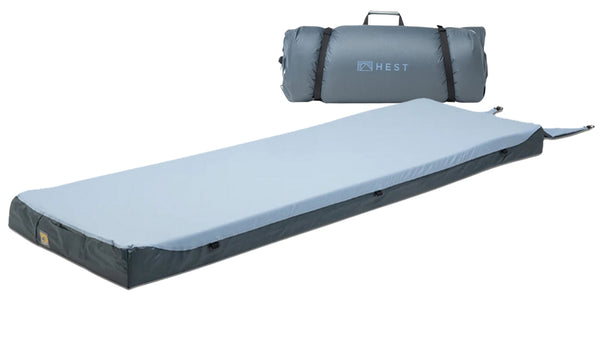
The Hest Foamy Sleeping Pad strips away mechanical valves and air bladders entirely, providing a pure memory foam camp bed praised by Switchback Travel for effortless setup. Unlike self-inflating pads that require burping, pumping, or careful puncture management, the Foamy simply unrolls and is immediately ready to sleep on, making late-night camp arrivals completely stress-free. Independent testers praise the Foamy for its durable dual-layer foam construction, which pairs a plush body-contouring upper layer with a firm, resilient lower base that keeps hips and shoulders elevated off the hard deck. Measuring 78 by 25 by 3.9 inches, it provides four inches of uninterrupted cushioning. The bottom fabric is rugged and water-resistant, allowing it to be used directly on damp grass, frozen ground, or rough wood platforms without fear of failure. The glaring drawback is weight and packed size: at an imposing 11 pounds, the Foamy is strictly a car, truck, or van-bound mattress. Rolling it tight enough to secure the integrated compression clips takes significant upper-body effort. For vehicle campers who prioritize zero setup time and guaranteed puncture-proof reliability, it is a formidable contender. **Highlights** - 100% foam construction means zero risk of punctures or mid-night leaks - Generous 3.9-inch thickness provides outstanding body cushioning - Instant setup with no valves, inflation pumps, or air topping required - Durable, water-resistant base material protects against dirt and moisture - Integrated roll-up straps and carry handle for tailgate transport **Watch-outs** - Extremely heavy at 11 pounds - Does not pack down small, taking up substantial trunk volume - Compressing and buckling the rolled foam requires noticeable physical effort
Pros
- Pure foam build eliminates the risk of midnight deflation and punctures
- Instantly ready to sleep on with zero pumping, blowing, or valving required
- Dual-layer 3.9-inch profile cushions hips and shoulders off hard ground
- Durable, water-resistant bottom fabric handles direct contact with dirt
Cons
- Massive packed volume takes up substantial vehicle cargo space
- Heavy 11-pound weight restricts use strictly to vehicle camping
- Rolling and cinching the dense foam demands noticeable physical effort
Best uses
- Overland and truck camping
- Frontcountry car camping
- Van build sleeping platforms
- Quick late-night camp setups
Specifications
- Pad Type
- Solid dual-layer open-cell foam
- Dimensions
- 78 x 25 x 3.9 in.
- Weight
- 11 lb. 0 oz.
- Inflation Method
- None (ready instantly upon unrolling)
- Packed Style
- Roll-up cylinder with integrated straps
- Approximate Price
- $279
Pricing
We don't publish a price we haven't verified. The retailer links below open the live listing for this exact model.
Full catalog listing & offersBest for
Overland and truck camping, Frontcountry car camping, Van build sleeping platforms, Quick late-night camp setups
Where to buy the Foamy Sleeping Pad
We don't have a direct Amazon listing on file yet — this opens an Amazon search for the exact make and model.
Some links are affiliate links. Buying through them supports our testing at no extra cost to you.
The Hest Foamy Sleeping Pad discards the conventional air chamber formula in favor of a solid, dual-layer polyurethane core. By completely eliminating internal bladders, micro-valves, and the need for pumps, it delivers an instant, fail-safe sleep surface designed for vehicle-supported trips. Campers who arrive late at a trailhead or campsite simply unbuckle the compression straps, unroll the pad, and have a bed ready in seconds. With 3.9 inches of continuous foam, the mattress provides a sleeping sensation far closer to a residential bed than typical camping mats. The top layer contours around hips and shoulders to alleviate pressure points, while the dense lower slab prevents bottoming out on frozen soil, rough plywood, or ridged truck beds. It directly solves the primary frustration of inflatable sleep systems: the lingering threat of a slow puncture leaving you flat on the ground before morning. The trade-off is uncompromising bulk. Weighing 11 pounds and rolling into a substantial cylinder, the Foamy demands considerable cargo room in your vehicle. Wrestling the dense foam back into a tight roll also takes real physical leverage. For car campers, van lifers, and overlanders with room to spare, however, its total reliability and zero-effort deployment outweigh the packability penalties.
Target Audience and Camp Setup
The Foamy is engineered specifically for vehicle-based campers who prioritize reliable sleep quality over compact packing. It suits overlanders, truck bed campers, and family car campers who dread setting up pump sacks or wrestling with finicky dual-action valves after a long drive. Because it contains no air chamber, it does not require acclimating to ambient temperatures or venting air pressure as night falls. Side sleepers who struggle with the bouncy, trampoline sensation of traditional air mattresses will appreciate the progressive sinking feel of memory foam. However, anyone operating out of a compact hatchback with a family, or anyone who needs to carry gear farther than a few yards from the rear hatch, will find the mattress simply too large and heavy to manage comfortably.
Foam Construction and Support
Beneath the removable cover, Hest implements a two-tier foam system. The upper layer consists of plush memory foam that responds to body warmth and contours closely to natural curves, distributing body weight evenly across the 25-inch width. Underneath, a high-resilience base foam provides firm mechanical support, stopping heavier contact points like the hips and shoulders from bottoming out against the ground. Independent assessments highlight that this arrangement completely isolates the sleeper from rocky surfaces, tree roots, and metal truck bed ribs. Unlike self-inflating open-cell pads that still rely on an air pocket for final loft and rigidity, the Foamy maintains uniform structural support regardless of ambient air temperature or barometric changes.
Field Durability and Materials
The primary advantage of eliminating inflatable bladders is total immunity to punctures. Sharp rocks, thorns, dog claws, and abrasive gear cannot compromise the mattress, removing the need for patch kits, sealant, or careful ground clearing. Hest pairs this solid core with a heavy-duty, water-resistant base textile designed to sit directly on wet grass, frozen turf, or gritty tailgate surfaces without soaking through. The top surface uses a softer, stretch-woven cover that feels pleasant against bare skin and can be removed for washing when dirt builds up. Reviewers consistently note that the stitching, buckles, and fabric treatments reflect a heavy-duty automotive aesthetic that easily withstands prolonged rough handling in open cargo beds.
Packing Effort and Handling
The Foamy demands compromise when it is time to break camp. Compressing 3.9 inches of resilient foam requires deliberate technique: campers generally need to put their knees and full body weight into the roll to get it down to its packed diameter. The integrated compression straps and metal buckles are sturdy enough to take tension, but reaching around the fat cylinder to cinch them down requires noticeable upper-body effort. At 11 pounds, shifting the rolled pad between the tent and vehicle is handled via an integrated carry handle, but it remains an awkward, hefty cargo item. In small vehicles, hauling two of these pads will quickly consume the majority of available trunk space.
Competitive Options and Value
At around $279, the Hest Foamy sits in premium car camping territory. Its main competitors are high-end self-inflating hybrid mats like the Therm-a-Rest MondoKing 3D and Exped MegaMat 10. Those hybrid models use expanding foam cores wrapped in airtight shells, allowing them to pack down somewhat smaller than the Foamy while offering comparable plushness. However, both still rely on mechanical valves, internal air pressure, and delicate fabrics that can puncture. Campers choosing the Foamy are deliberately paying for the peace of mind that comes from zero mechanical points of failure and an instant setup that requires zero pumping or burping.
How we picked
We started with a long list of camping mattresses that people actually buy, cut anything that could not clear our baseline for durability and field performance, then ranked the 10 that were left against the same criteria. Rankings are editorial. No brand pays for placement, and affiliate links never move a pick up or down.
- Real-world durability
- How the material, stitching, or steel holds up after a season of hard use — not how it looks new.
- Performance in bad conditions
- Wind, rain, cold, and grit are the test. Anything that only works on a nice day gets marked down.
- Weight and packability
- Every ounce has to earn its place in the pack, but not at the cost of something that fails in the field.
- Ease of use
- Setup, adjustment, and maintenance with cold hands, in the dark, without the manual.
- Value at its price point
- Compared against the closest competitors in the same tier, not against cheaper gear in a different class.
- Repairability and support
- Field-fixable design, available parts, and a warranty the maker actually honors.
Foamy Sleeping Pad — frequently asked questions
- Is the Foamy Sleeping Pad worth it?
- We rank it #10 in Camping Mattresses. The Hest Foamy Sleeping Pad strips away mechanical valves and air bladders entirely, providing a pure memory foam camp bed praised by Switchback Travel for effortless setup. Unlike self-inflating pads that require burping, pumping, or careful puncture management, the Foamy simply unrolls and is immediately ready to…
- What is the Foamy Sleeping Pad best for?
- Best for overland and truck camping, frontcountry car camping, van build sleeping platforms and quick late-night camp setups. Standouts: pure foam build eliminates the risk of midnight deflation and punctures and instantly ready to sleep on with zero pumping, blowing, or valving required.
- What are the downsides of the Foamy Sleeping Pad?
- Massive packed volume takes up substantial vehicle cargo space, Heavy 11-pound weight restricts use strictly to vehicle camping and Rolling and cinching the dense foam demands noticeable physical effort.
- What are the key specs of the Foamy Sleeping Pad?
- Pad Type: Solid dual-layer open-cell foam · Dimensions: 78 x 25 x 3.9 in. · Weight: 11 lb. 0 oz. · Inflation Method: None (ready instantly upon unrolling) · Packed Style: Roll-up cylinder with integrated straps
- Target Audience and Camp Setup — what should I know about the Foamy Sleeping Pad?
- The Foamy is engineered specifically for vehicle-based campers who prioritize reliable sleep quality over compact packing. It suits overlanders, truck bed campers, and family car campers who dread setting up pump sacks or wrestling with finicky dual-action valves after a long drive.
- Foam Construction and Support — what should I know about the Foamy Sleeping Pad?
- Beneath the removable cover, Hest implements a two-tier foam system. The upper layer consists of plush memory foam that responds to body warmth and contours closely to natural curves, distributing body weight evenly across the 25-inch width.
Compare side by side
Put the Foamy Sleeping Pad against any other pick on this list — specs, price, pros, cons and reader ratings.