



Updated October 2026 · 10 picks re-checked for availability and current spec, reader ratings refreshed live.
Car camping gear has shifted dramatically away from loud, bouncy vinyl air beds and thin foam rolls. Today’s top camping mattresses rival home beds for cushion, edge support, and thermal insulation, turning tent floors and truck beds into genuinely restorative sleeping spaces. The market largely divides into two camps: plush open-cell foam self-inflating pads that balance substantial cushioning with moderate packability, and pure memory foam beds designed strictly for vehicular basecamping where packed bulk is no object. To build this ranking, Wild10 evaluated consensus recommendations from leading outdoor testing authorities, including OutdoorGearLab, Switchback Travel, CleverHiker, and Treeline Review. We cross-referenced these expert assessments with published product specifications, retail pricing data, and material durability profiles. Each mattress is ranked according to its frequency of independent critical acclaim, mechanical reliability, thermal protection against cold ground, and overall value for real-world campers.
The short answer

The Exped MegaMat remains the undisputed gold standard among self-inflating camp mattresses, sweeping top awards across independent testing outlets…
Why it wins
Nemo's Roamer directly challenges the MegaMat for basecamp supremacy, earning wide acclaim across independent review publications for delivering…
Why it wins
The Sea to Summit Comfort Deluxe is engineered for campers who prioritize a soft, plush feel paired with dependable self-inflating architecture.
Why it winsDeep-dive product reviews
We've published full field-test reports and technical deep-dives for 10 of the picks in this list.
Compare all 10 picks at a glance
Editorial ranking, what each pick is best at, and how we assessed it. Tap a name to jump to the full write-up.
| # | Pick | Best for | Key spec | Evidence |
|---|---|---|---|---|
| 1 | MegaMat Exped | Dedicated Car Camping | Design Style: Self-inflating foam core | Research only |
| 2 | Roamer Nemo | Car camping basecamps | Thickness: 4 inches (10 cm) | Research only |
| 3 | Comfort Deluxe Sea to Summit | Vehicle and truck bed camping | Style: Self-inflating foam pad | Research only |
| 4 | Camp Self-Inflating Sleeping Pad Sea to Summit | Budget Car Camping | Dimensions: 72 x 25 x 1.5 inches (Rectangular Wide) | Research only |
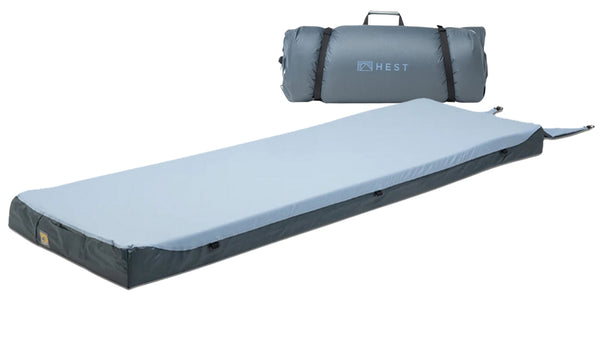
| 5 | Dually HEST | Overland rig sleeping setups | Mattress Type: Solid dual-density memory foam | Research only |
| 6 | Campwell Sleeping Pad REI | Car and tent camping | Base Price: Around $129 | Research only |
| 7 | Cozy Coleman | Three-season car camping | Pad Type: Self-inflating foam | Research only |
| 8 | DeepSleep Sleeping Pad Exped | Vehicle and tent camping | Pad Type: Self-inflating open-cell foam | Research only |
| 9 | Sleep System Sleeping Pad HEST | Four-season truck bed camping | R-Value: 11.8 | Research only |
| 10 | Foamy Sleeping Pad Hest | Overland and truck camping | Pad Type: Solid dual-layer open-cell foam | Research only |
How we picked
Ranked by Cal Brennan, Senior Gear Editor
We started with a long list of camping mattresses that people actually buy, cut anything that could not clear our baseline for durability and field performance, then ranked the 10 that were left against the same criteria. Rankings are editorial. No brand pays for placement, and affiliate links never move a pick up or down.
- Real-world durability
- How the material, stitching, or steel holds up after a season of hard use — not how it looks new.
- Performance in bad conditions
- Wind, rain, cold, and grit are the test. Anything that only works on a nice day gets marked down.
- Weight and packability
- Every ounce has to earn its place in the pack, but not at the cost of something that fails in the field.
- Ease of use
- Setup, adjustment, and maintenance with cold hands, in the dark, without the manual.
- Value at its price point
- Compared against the closest competitors in the same tier, not against cheaper gear in a different class.
- Repairability and support
- Field-fixable design, available parts, and a warranty the maker actually honors.
How often we recheck this: Reviewed on a rolling basis and rechecked at least once a year, or sooner if a pick is discontinued, revised, or beaten by something new.
Best of the Best · Head to Head
MegaMat vs Roamer
#1 vs #2 — side-by-side specs, pros & cons, and the final verdict.
Compare any two picks
Build your own side-by-side
Choose any two of these 10 picks and compare specs, price, pros, cons and reader ratings.
Topic summary
A meta-ranking of the ten best camping mattresses for car campers, overlanders, and basecampers, synthesising expert consensus across the outdoor industry.
Key takeaways
- #1 MegaMat — Exped
- #2 Roamer — Nemo
- #3 Comfort Deluxe — Sea to Summit
- #4 Camp Self-Inflating Sleeping Pad — Sea to Summit
- #5 Dually — HEST
- #6 Campwell Sleeping Pad — REI
Intended uses
Gear
Verification notes
Editorial ranked list, 10 entries. Evidence mix — 10 research only. Buy links open the maker or a retailer search. Last reviewed October 2026.
Best camping mattresses for a specific job
Skip the ranking — jump to the pick that matches how you actually use it.
- Best for dedicated car camping
- #1 MegaMat — ExpedThe Exped MegaMat remains the undisputed gold standard among self-inflating camp mattresses, sweeping top awards across independent testing outlets for both solo campers and couples. Engineered with open-cell polyurethane foam bonded to a durable stretch-tricot face fabric, it creates an exceptionally level, supportive sleeping surface that eliminates the bouncy, unstable feel typical of conventional air beds. It functions as a true four-season mattress, insulating campers against frozen ground while preventing pressure points at the hips and shoulders. In field assessments by major outlets, the MegaMat consistently scores at the top of the chart for pure sleeping comfort and thermal performance. The vertical sidewalls allow mattresses to be placed flush against each other or paired seamlessly inside a tent without creating a dead zone between sleepers. Deflation and rolling do require deliberate effort and technique due to the dense internal foam, but the oversized valves and dedicated purge systems make the process manageable once mastered. At roughly $450 in double configurations and weighing over five and a half pounds, it represents a serious investment in comfort and cargo space. For regular car campers, overlanders, or anyone using a cot, the build quality and sleep quality justify the price tag and the bulky packed footprint. **Highlights** - Open-cell foam core delivers consistent, firm support without bouncy air displacement - Soft stretch-tricot top fabric reduces rustling noise and feels soft against skin - 3D vertical sidewalls maximize usable sleeping area edge-to-edge - High-volume deflation and micro-adjust valves streamline firmness adjustments - Excellent thermal insulation for cold-weather ground sleeping **Watch-outs** - Expensive relative to traditional car-camping air beds - Large rolled dimensions occupy substantial trunk space - Requires deliberate knee-work and effort to compress and pack awayRead the full profile
- Best for car camping basecamps
- #2 Roamer — NemoNemo's Roamer directly challenges the MegaMat for basecamp supremacy, earning wide acclaim across independent review publications for delivering similar four-inch-thick comfort in a slightly more compact package. Nemo designed the Roamer with internal foam coring that cuts weight and bulk without compromising the mattress’s supportive structure, making it slightly easier to roll up and pack away into vehicle trunks. Testers from CleverHiker and OutdoorGearLab frequently highlight the Roamer’s fast inflation and deflation routines. Its Laylow zero-profile micro-adjustable valves sit completely flush, preventing snagging on tent floors while allowing campers to fine-tune the mattress firmness with minimal fuss. The rugged 75D polyester bottom protects against rough tent platforms, while the soft 50D stretch top provides a comfortable, quiet sleeping surface that holds sheets or sleeping bags well. Weighing 5 pounds 8 ounces in the XL Wide format and retailing around $400, the Roamer is strictly a car camping or vehicle-based mattress. It sacrifices a small amount of edge-to-edge firmness compared to denser competitors, but it balances comfort, packability, and rugged construction better than nearly anything else on the market. **Highlights** - Generous 4-inch profile insulates thoroughly and prevents bottoming out - Cored foam architecture reduces packed bulk compared to solid foam beds - Dual Laylow micro-adjust valves ensure flush placement and fast deflation - Durable 75-denier bottom fabric resists abrasion on rough surfaces - Quiet, non-slip stretch top fabric keeps bedding in place **Watch-outs** - High price point comparable to premium home mattresses - Still quite heavy and bulky for smaller vehicle trunks - Requires topping off with an inflation sack to achieve maximum firmnessRead the full profile
- Best for vehicle and truck bed camping
- #3 Comfort Deluxe — Sea to SummitThe Sea to Summit Comfort Deluxe is engineered for campers who prioritize a soft, plush feel paired with dependable self-inflating architecture. Widely praised by outlets like Switchback Travel and CleverHiker, this mattress uses Delta Core foam technology, which carves out horizontal sections of the polyurethane core to shave pack size while preserving a supportive, uninterrupted layer of foam above and below the sleeper. Reviewers consistently point out that the four-inch-thick Comfort Deluxe excels at temperature regulation and surface comfort. The 30-denier stretch polyester surface fabric offers a supple, quiet texture that feels less like outdoor technical gear and more like a high-end guest bed. The multi-function high-flow rate valve allows rapid self-inflation, simple burping to adjust firmness, and a one-way deflation setting that stops air from rushing back into the pad while rolling. At 5 pounds 3.3 ounces and a list price near $319, it sits firmly in the premium category. The lighter top fabric requires slightly more mindfulness around sharp pet claws compared to heavy-duty vinyl or laminated canvases, but for weekend car campers who want luxurious, quiet sleep, it delivers exceptional performance. **Highlights** - Delta Core construction removes foam bulk without creating cold spots - Four inches of supportive foam cushion side sleepers effectively - Quiet 30D stretch polyester face fabric feels soft and eliminates squeaking - Reversible multi-function valve simplifies packing and firmness tuning - Vertical sidewalls provide flat, stable sleeping space across the entire pad **Watch-outs** - Supple face fabric is more vulnerable to punctures than heavier utility pads - Deflation requires considerable rolling force to exhaust the core - Premium pricing for a car-camping-only sleeping padRead the full profile
- Best for budget car camping
- #4 Camp Self-Inflating Sleeping Pad — Sea to SummitThe Sea to Summit Camp Self-Inflating Sleeping Pad targets the sweet spot between utility, packability, and affordability, earning recognition from Switchback Travel as a top-tier budget camping option. Unlike four-inch basecamp behemoths, this pad uses a streamlined 1.5-inch profile that keeps weight down to 2 pounds 7 ounces and packs down small enough to cross over into casual walk-in campsites or short backpacking trips. Independent reviewers emphasize its reliable, low-maintenance character. The pad utilizes continuous, multi-directional foam coring to trim weight while maintaining an even bed of cushioning over rocky or root-strewn ground. Its 75-denier polyester outer shell provides genuine durability against dirt, grit, and tent abrasion, making it far more robust than lightweight technical backpacking gear. Retailing around $89, it delivers honest value, but the trade-offs are predictable. Dedicated side sleepers and heavier campers may find the 1.5-inch depth insufficient to prevent hip pressure points when sleeping on hard packed earth. However, for back sleepers, children, or campers who need a compact, durable mattress without crossing the $100 mark, it is a dependable workhorse. **Highlights** - Excellent value proposition for budget-conscious car campers - Compact packed dimensions and low weight under 2.5 pounds - Tough 75D polyester shell withstands rough terrain and frequent use - Multi-function valve prevents air re-entry during packing - Multi-core foam design provides reliable self-inflation **Watch-outs** - 1.5-inch thickness offers limited cushioning for side sleepers - Lacks the deep plushness of four-inch luxury basecamp pads - Requires occasional manual topping-off to maintain optimal firmnessRead the full profile
- Best for overland rig sleeping setups
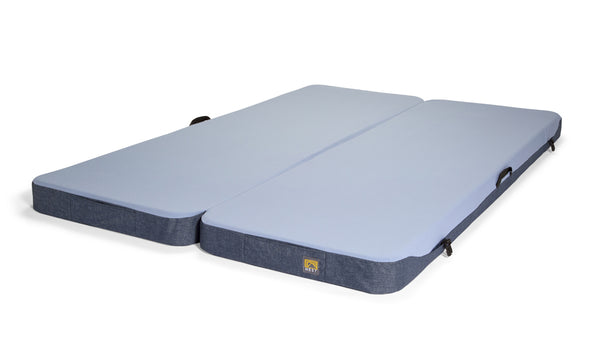
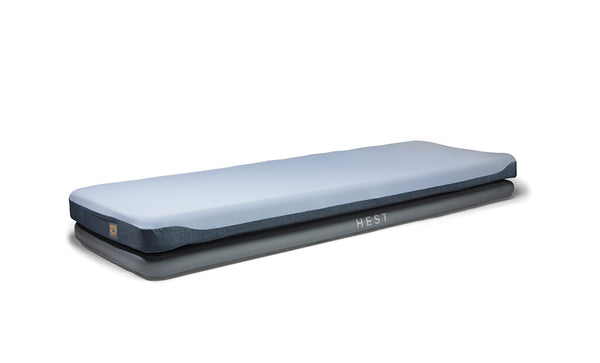
- #5 Dually — HESTThe HEST Dually is built without compromises for truck beds, overland rigs, and cavernous family tents, earning Treeline Review’s award for the most comfortable camping mattress available. Abandoning internal air chambers entirely, the Dually is constructed with a dual-density memory foam system that behaves exactly like an expensive residential mattress, completely eliminating the bouncy, unsupportive feel of inflatable alternatives. Reviewers praise the Dually for its exceptional ergonomic support and resilience against cold conditions. Because there is no internal air pocket to fluctuate with ambient air pressure or temperature drops, the sleeping surface maintains consistent firmness throughout the night. The heavy-duty zippered cover features a tough, water-resistant dirt-barrier bottom paired with a soft, breathable, removable top sheet that is machine-washable. All of that luxury comes with immense physical trade-offs. Stowing at 78 by 25 by 7.8 inches when folded, the Dually is massive, heavy, and strictly limited to vehicular transport with ample cargo room. It is also one of the most expensive sleep systems on the market, but for overlanders and van-lifers who demand home-level rest, it has virtually no equal. **Highlights** - Dual-density memory foam provides genuine home-grade orthopedic support - No air chambers means zero risk of midnight deflation or bouncy movement - Heavy-duty, dirt-resistant base stands up to truck beds and camp dirt - Removable, washable stretch cover simplifies long-term maintenance - Solid construction ensures performance in sub-freezing temperatures **Watch-outs** - Enormous packed footprint requires major cargo space - Significant weight makes it difficult to haul beyond the vehicle tailgate - Premium pricing places it out of reach for casual weekend campersRead the full profile
- Best for car and tent camping
- #6 Campwell Sleeping Pad — REIThe REI Campwell Sleeping Pad is designed to deliver reliable comfort and solid thermal isolation at an approachable price point, earning accolades from Switchback Travel for its performance-to-cost ratio. Built around 2.5 inches of self-inflating open-cell foam, it strikes a practical middle ground between ultra-thick car camping mattresses and thin, technical backpacking pads. Testers appreciate the straightforward, no-nonsense construction of the Campwell. In its 72 by 25-inch Regular size, it weighs 3 pounds 11.6 ounces, providing an easy-to-manage footprint that works well on cots, inside station wagons, or across tight tent floors. The 2.5-inch profile offers enough clearance to keep most side sleepers off the hard ground, while the foam interior provides natural insulation against cold soil during shoulder-season outings. At roughly $129, it represents a strong value for campers who find 4-inch pads too cumbersome to pack and store. The primary trade-off is deflation effort; the traditional brass or plastic twist valves on simpler pads can make rolling out the trapped air somewhat slower than the high-flow multi-function valves found on higher-priced competitors. **Highlights** - 2.5-inch foam depth provides solid cushion without excessive bulk - Generous thermal performance suitable for three-season ground sleeping - Fair price-to-performance ratio from a trusted outdoor retailer - Robust outer fabric resists scuffs and punctures - Manageable packed size fits easily in standard car trunks **Watch-outs** - Deflation requires more muscle than pads with modern one-way purge valves - Not as plush or forgiving on hips as 4-inch luxury mattresses - Foam needs time to expand naturally after extended storageRead the full profile
- Best for three-season car camping
- #7 Cozy — ColemanThe Coleman Cozy is an entry-level self-inflating mattress engineered for budget car campers who want to step up from thin closed-cell foam without spending premium dollars. Recognized by OutdoorGearLab for providing decent packability on a budget, this pad focuses on straightforward functionality, utilizing an open-cell foam core wrapped in a durable, wipe-clean polyester casing. Reviewers note that the Cozy provides an honest R-value over 3, giving it enough thermal insulation to handle typical three-season camping without transferring chilling ground temperatures to the sleeper. Its moderate thickness smooths out minor roots, pebbles, and uneven terrain, offering a noticeable upgrade over basic air beds that lack internal foam support. Priced near $100, the Cozy makes smart compromises to keep costs low. It lacks the ultra-soft stretch tricot surfaces and advanced micro-adjustment purge valves of top-tier pads, meaning deflation requires firm rolling and the outer shell can feel slightly plasticky against bare skin. For festival campers, scouting trips, or occasional weekend basecamps, however, it provides dependable service without breaking the bank. **Highlights** - Accessible price point undercutting most premium self-inflating options - R-value over 3 provides reliable three-season insulation - Tough exterior fabric wipes clean easily and resists ground moisture - Packs down reasonably well for a foam-filled car camping pad - Simple, dependable twist-valve operation **Watch-outs** - Exterior materials feel less plush and noisier than stretch fabrics - Slower to deflate and roll compared to pads with reverse-flow valves - Cushioning depth is modest compared to 4-inch basecamp luxury padsRead the full profile
- Best for vehicle and tent camping
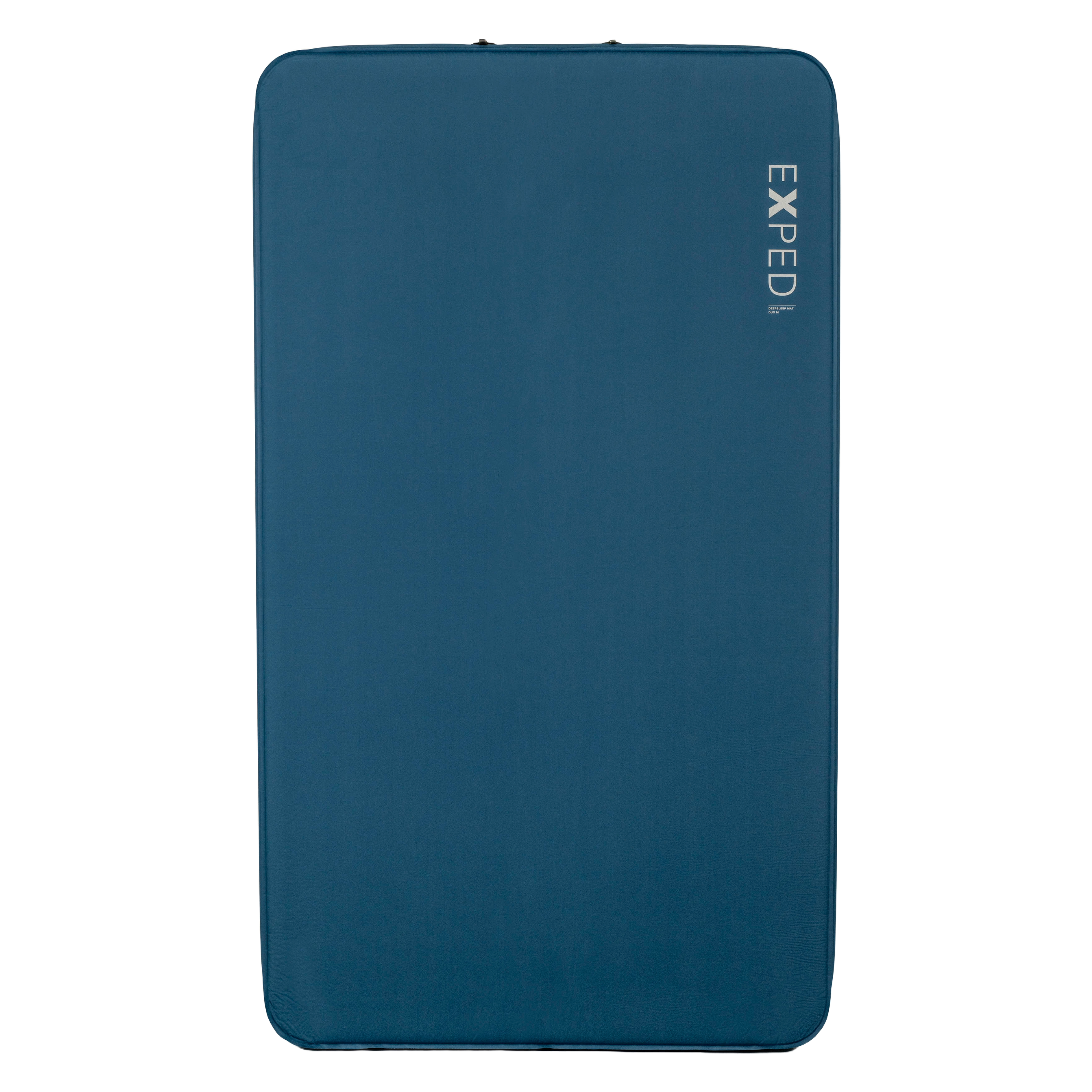
- #8 DeepSleep Sleeping Pad — ExpedThe Exped DeepSleep Sleeping Pad brings the core ergonomic strengths of Exped’s flagship MegaMat into a more accessible, streamlined package. Recommended by Switchback Travel as a top basecamp alternative, the DeepSleep maintains a generous 3-inch profile of supportive open-cell foam while eliminating some of the high-end accessories and multi-valves to keep the price around $190. In field reviews, the DeepSleep receives high marks for matching its more expensive siblings in edge-to-edge sleeping comfort. The 72 by 25.6-inch Medium-Wide model weighs 4 pounds 7.9 ounces, giving sleepers enough width to shift naturally without sliding off. It uses an extra-large deflation valve that lets air escape quickly when pressing and rolling the pad, though inflating the dense foam completely out of the box generally requires adding a few manual breaths or using an optional pump. The trade-off for the lower price point is the omission of an included mini-pump and the use of a standard brushed tricot top rather than the ultra-plush stretch face found on the MegaMat. For campers seeking four-season foam comfort from an industry leader under the $200 barrier, the DeepSleep is a very capable compromise. **Highlights** - Substantial 3-inch open-cell foam core provides excellent side-sleeper support - Extra-large purge valve facilitates fast, unobstructed air release during packing - Brushed polyester surface reduces sleeping bag sliding and dampens noise - 3D vertical sidewall construction maximizes usable mattress real estate - Reliable thermal protection for cold weather camping **Watch-outs** - Does not include a pump or inflation sack out of the box - Dense foam requires patience and a break-in period to self-inflate fully - Heavy and bulky, strictly suitable for vehicle-supported tripsRead the full profile
Our editors test the gear, pick the ten, and set the order the day a list publishes. After that, the ranking is live: every member star rating feeds the community order, so picks climb or slide as real owners report back. Editorial judgment decides what earns a spot — you help decide where it sits.
- Editors set the field
Hands-on testing and spec research choose the ten and the published order.
- Readers re-rank it
Your 1–5 star ratings drive the community order on every list.
- Rankings keep moving
Picks rise or fall over time — nothing is frozen at launch day.
Rank this list
Loading community ratings… Ratings re-order the picks — they never change which products make the list.
Sign in to add your own ratings — it's free.
- Pros
- Supple stretch-tricot fabric eliminates noise and sleeping bag sliding
- Vertical sidewall geometry maximizes edge-to-edge sleeping area
- Dense foam core yields true bed-like stability without bouncy air shifts
- Exceptional thermal protection suited for winter ground camping
Cons- Deflation and roll-up demand considerable physical effort and technique
- Packed volume consumes significant trunk space in compact vehicles
- Steep initial investment compared to traditional camping air beds
Key features- Weight
- 5 lb. 11.7 oz.
- Approximate Price
- Around $450 in double configurations
- Top Material
- Stretch-tricot polyester
- Design Style
- Self-inflating foam core
- Internal Core
- Open-cell polyurethane foam
- Intended Season
- True four-season performance
Best forDedicated Car Camping, Overlanding Basecamps, Winter Ground Sleeping, Permanent Tent Cot Bedding
Pros- Supple stretch-tricot fabric eliminates noise and sleeping bag sliding
- Vertical sidewall geometry maximizes edge-to-edge sleeping area
- Dense foam core yields true bed-like stability without bouncy air shifts
- Exceptional thermal protection suited for winter ground camping
Cons- Deflation and roll-up demand considerable physical effort and technique
- Packed volume consumes significant trunk space in compact vehicles
- Steep initial investment compared to traditional camping air beds
Assessed by Cal Brennan against our ranking criteria.No ratings yet - Pros
- Four inches of cored foam provides home-like cushioning without excessive bulk
- Packs down noticeably smaller than solid-foam luxury competitors
- Zero-profile Laylow valves make micro-adjustments and deflation straightforward
- Soft 50D stretch fabric prevents noisy rustling and slippery bedding
- Durable 75D polyester bottom handles rough surfaces and truck beds
Cons- Premium price point of roughly $400 presents a major financial commitment
- Perimeter edges have slightly less structural support than solid foam pads
- Requires top-off inflation after initial self-inflation cycle
Key features- Weight
- 5 lbs 8 oz (2.5 kg)
- Dimensions
- 78 x 30 x 4 inches (XL Wide)
- Thickness
- 4 inches (10 cm)
- Top Fabric
- 50D stretch polyester
- Bottom Fabric
- 75D abrasion-resistant polyester
- Valve Style
- Dual Laylow zero-profile micro-adjust
Best forCar camping basecamps, Truck bed sleeping setups, Extended frontcountry trips, Home guest bedding
Pros- Four inches of cored foam provides home-like cushioning without excessive bulk
- Packs down noticeably smaller than solid-foam luxury competitors
- Zero-profile Laylow valves make micro-adjustments and deflation straightforward
- Soft 50D stretch fabric prevents noisy rustling and slippery bedding
- Durable 75D polyester bottom handles rough surfaces and truck beds
Cons- Premium price point of roughly $400 presents a major financial commitment
- Perimeter edges have slightly less structural support than solid foam pads
- Requires top-off inflation after initial self-inflation cycle
Assessed by Cal Brennan against our ranking criteria.No ratings yet - Pros
- Horizontal Delta Core minimizes weight while eliminating cold spots
- Four-inch foam height provides generous cushioning for side sleepers
- Supple 30-denier stretch face fabric is silent and comfortable against skin
- Multi-function valve prevents air backflow during the deflation roll
Cons- Stretchy surface fabric is more vulnerable to punctures than heavy canvas
- Wrestling air out of a four-inch foam core demands physical effort
- Hefty price point around $319 limits appeal to dedicated campers
Key features- Weight
- 5 lb. 3.3 oz.
- Approx. Price
- $319
- Style
- Self-inflating foam pad
- Thickness
- 4.0 inches
- Top Fabric
- 30D stretch polyester knit
- Core Design
- Delta Core horizontal coring
Best forVehicle and truck bed camping, Cold-weather basecamp setups, Extended cabin or yurt stays, Side sleepers seeking joint relief
Pros- Horizontal Delta Core minimizes weight while eliminating cold spots
- Four-inch foam height provides generous cushioning for side sleepers
- Supple 30-denier stretch face fabric is silent and comfortable against skin
- Multi-function valve prevents air backflow during the deflation roll
Cons- Stretchy surface fabric is more vulnerable to punctures than heavy canvas
- Wrestling air out of a four-inch foam core demands physical effort
- Hefty price point around $319 limits appeal to dedicated campers
Assessed by Cal Brennan against our ranking criteria.No ratings yet - Pros
- Tough 75-denier polyester shell provides excellent puncture and abrasion resistance
- Multi-function valve prevents air re-entry, making rolling and deflation simple
- Generous 25-inch width on the Rectangular Wide prevents arms slipping off
- Accessible sub-$100 price point offers exceptional overall car camping value
Cons- 1.5-inch thickness offers insufficient hip clearance for most side sleepers
- Lacks the plush, deep cushioning found on dedicated four-inch basecamp mattresses
- Internal foam requires flat, unrolled home storage to maintain loft over time
Key features- Weight
- 2 lb 7.0 oz (1.11 kg)
- Dimensions
- 72 x 25 x 1.5 inches (Rectangular Wide)
- Pad Type
- Self-inflating open-cell foam
- Shell Fabric
- 75D polyester with TPU laminate
- MSRP
- Approximately $89
- Valve Style
- Reversible multi-function valve
Best forBudget Car Camping, Walk-in Campsite Trips, Back Sleepers, Canoe and Raft Camping
Pros- Tough 75-denier polyester shell provides excellent puncture and abrasion resistance
- Multi-function valve prevents air re-entry, making rolling and deflation simple
- Generous 25-inch width on the Rectangular Wide prevents arms slipping off
- Accessible sub-$100 price point offers exceptional overall car camping value
Cons- 1.5-inch thickness offers insufficient hip clearance for most side sleepers
- Lacks the plush, deep cushioning found on dedicated four-inch basecamp mattresses
- Internal foam requires flat, unrolled home storage to maintain loft over time
Assessed by Cal Brennan against our ranking criteria.No ratings yet - Pros
- Puncture-proof construction eliminates any risk of nighttime deflation
- True dual-density memory foam provides unmatched motion isolation
- Durable, water-resistant base stands up to direct truck bed and ground use
- Removable, machine-washable top cover simplifies cleanup after trips
Cons- Massive packed size demands immense vehicle cargo space
- Substantial weight makes it cumbersome to carry far from vehicle
- High price point represents a major investment for casual campers
Key features- Cover Material
- Dirt-resistant base with stretch nylon top
- Packed Dimensions
- 78 x 25 x 7.8 inches
- Mattress Type
- Solid dual-density memory foam
- Internal Air
- None (100% foam core)
- Removable Cover
- Yes, machine-washable top sheet
- Target Use
- Truck beds, rooftop tents, vehicle camping
Best forOverland rig sleeping setups, Pickup truck bed camping, Extended basecamp tent living, Van conversions and road trips
Pros- Puncture-proof construction eliminates any risk of nighttime deflation
- True dual-density memory foam provides unmatched motion isolation
- Durable, water-resistant base stands up to direct truck bed and ground use
- Removable, machine-washable top cover simplifies cleanup after trips
Cons- Massive packed size demands immense vehicle cargo space
- Substantial weight makes it cumbersome to carry far from vehicle
- High price point represents a major investment for casual campers
Assessed by Cal Brennan against our ranking criteria.No ratings yet - Pros
- Dense open-cell foam provides reliable thermal warmth on chilly ground
- Manageable 2.5-inch packed profile fits easily in standard car trunks
- Tough shell fabric resists abrasions, cot friction, and pine needles
- Solid balance of support, durability, and cost at approximately $129
Cons- Deflation takes noticeable elbow grease compared to pads with dump valves
- Side sleepers over 180 pounds may bottom out if not manually topped off
- Foam expansion is slow on initial setup after prolonged packed storage
Key features- Weight
- 3 lbs 11.6 oz
- Base Price
- Around $129
- Dimensions
- 72 x 25 x 2.5 inches (Regular)
- Pad Type
- Self-inflating open-cell foam
- Thickness
- 2.5 inches
- Ideal Seasons
- Three-season to early winter
Best forCar and tent camping, Cold-weather shoulder season trips, Vehicle and SUV sleeping, Camp cot sleeping pad
Pros- Dense open-cell foam provides reliable thermal warmth on chilly ground
- Manageable 2.5-inch packed profile fits easily in standard car trunks
- Tough shell fabric resists abrasions, cot friction, and pine needles
- Solid balance of support, durability, and cost at approximately $129
Cons- Deflation takes noticeable elbow grease compared to pads with dump valves
- Side sleepers over 180 pounds may bottom out if not manually topped off
- Foam expansion is slow on initial setup after prolonged packed storage
Assessed by Cal Brennan against our ranking criteria.No ratings yet - Pros
- Priced accessibly around $100 for an insulated foam mattress
- R-value over 3 provides dependable three-season warmth
- Durable polyester shell wipes clean easily after messy trips
- Packs down smaller than oversized four-inch luxury basecamp pads
Cons- Standard twist valve makes deflation and rolling labor-intensive
- Exterior polyester surface feels slick and noisy against bare skin
- Modest thickness may bottom out under heavy side sleepers
Key features- Retail Price
- Approximately $100
- Shell Material
- Durable polyester
- Insulation Rating
- R-value 3+
- Pad Type
- Self-inflating foam
- Target Use
- Three-season car camping
- Valve Style
- Standard twist valve
Best forThree-season car camping, Weekend music festivals, Scout troop campouts, Spare home guest bedding
Pros- Priced accessibly around $100 for an insulated foam mattress
- R-value over 3 provides dependable three-season warmth
- Durable polyester shell wipes clean easily after messy trips
- Packs down smaller than oversized four-inch luxury basecamp pads
Cons- Standard twist valve makes deflation and rolling labor-intensive
- Exterior polyester surface feels slick and noisy against bare skin
- Modest thickness may bottom out under heavy side sleepers
Assessed by Cal Brennan against our ranking criteria.No ratings yet - Pros
- Vertical 3D sidewalls maximize edge-to-edge usable sleeping surface
- Dense 3-inch foam core delivers dependable support for side sleepers
- Extra-large purge valve allows rapid, hassle-free air release
- Brushed fabric face reduces rustle and prevents sleeping bag slippage
Cons- Does not include an inflation pump or stuff-sack pump
- Substantial bulk and 4.5-pound weight restrict use strictly to car camping
- Dense foam requires significant resting time or manual air to fully loft
Key features- Weight
- 4 lb. 7.9 oz.
- Approx. Price
- $190
- Dimensions
- 72 x 25.6 x 3 inches (MW)
- Pad Type
- Self-inflating open-cell foam
- Construction
- 3D vertical sidewalls
- Face Fabric
- Brushed polyester tricot
Best forVehicle and tent camping, Truck bed sleeping setups, Cold-weather basecamp trips, Extended frontcountry stays
Pros- Vertical 3D sidewalls maximize edge-to-edge usable sleeping surface
- Dense 3-inch foam core delivers dependable support for side sleepers
- Extra-large purge valve allows rapid, hassle-free air release
- Brushed fabric face reduces rustle and prevents sleeping bag slippage
Cons- Does not include an inflation pump or stuff-sack pump
- Substantial bulk and 4.5-pound weight restrict use strictly to car camping
- Dense foam requires significant resting time or manual air to fully loft
Assessed by Cal Brennan against our ranking criteria.No ratings yet - Pros
- Unrivaled 11.8 R-value isolates against freezing ground and snow
- Drop-stitch base eliminates sagging over uneven or rocky surfaces
- Sculpted memory foam topper provides authentic residential support
- Removable, machine-washable cover simplifies post-trip maintenance
Cons- Packed size of 14 by 25 inches consumes significant cargo space
- High price point represents a major financial commitment
- Deflation and roll-up require noticeable physical effort
Key features- Packed Size
- 14 x 25 in
- R-Value
- 11.8
- Base Construction
- Drop-stitch high-pressure inflatable
- Comfort Layer
- Contoured memory foam
- Cover
- Removable and machine-washable
- Category
- Luxury four-season vehicle camping
Best forFour-season truck bed camping, Overland vehicle basecamps, Sub-zero winter ground camping, Extended hunting camp setups
Pros- Unrivaled 11.8 R-value isolates against freezing ground and snow
- Drop-stitch base eliminates sagging over uneven or rocky surfaces
- Sculpted memory foam topper provides authentic residential support
- Removable, machine-washable cover simplifies post-trip maintenance
Cons- Packed size of 14 by 25 inches consumes significant cargo space
- High price point represents a major financial commitment
- Deflation and roll-up require noticeable physical effort
Assessed by Cal Brennan against our ranking criteria.No ratings yet - Pros
- Pure foam build eliminates the risk of midnight deflation and punctures
- Instantly ready to sleep on with zero pumping, blowing, or valving required
- Dual-layer 3.9-inch profile cushions hips and shoulders off hard ground
- Durable, water-resistant bottom fabric handles direct contact with dirt
Cons- Massive packed volume takes up substantial vehicle cargo space
- Heavy 11-pound weight restricts use strictly to vehicle camping
- Rolling and cinching the dense foam demands noticeable physical effort
Key features- Weight
- 11 lb. 0 oz.
- Approximate Price
- $279
- Dimensions
- 78 x 25 x 3.9 in.
- Packed Style
- Roll-up cylinder with integrated straps
- Pad Type
- Solid dual-layer open-cell foam
- Inflation Method
- None (ready instantly upon unrolling)
Best forOverland and truck camping, Frontcountry car camping, Van build sleeping platforms, Quick late-night camp setups
Pros- Pure foam build eliminates the risk of midnight deflation and punctures
- Instantly ready to sleep on with zero pumping, blowing, or valving required
- Dual-layer 3.9-inch profile cushions hips and shoulders off hard ground
- Durable, water-resistant bottom fabric handles direct contact with dirt
Cons- Massive packed volume takes up substantial vehicle cargo space
- Heavy 11-pound weight restricts use strictly to vehicle camping
- Rolling and cinching the dense foam demands noticeable physical effort
Assessed by Cal Brennan against our ranking criteria.No ratings yet


Award picks
The ranking above is price-blind and judged on merit. These awards call out the pick we'd hand a specific person with a specific need.
Best Overall: MegaMat — Exped
The Exped MegaMat remains the undisputed gold standard among self-inflating camp mattresses, sweeping top awards across independent testing outlets for both solo campers and…
Ranked #1Runner-Up: Roamer — Nemo
Nemo's Roamer directly challenges the MegaMat for basecamp supremacy, earning wide acclaim across independent review publications for delivering similar four-inch-thick comfort in…
Ranked #2Best Value: Comfort Deluxe — Sea to Summit
The Sea to Summit Comfort Deluxe is engineered for campers who prioritize a soft, plush feel paired with dependable self-inflating architecture.
Ranked #3Best Ultralight Pick: Camp Self-Inflating Sleeping Pad — Sea to Summit
The Sea to Summit Camp Self-Inflating Sleeping Pad targets the sweet spot between utility, packability, and affordability, earning recognition from Switchback Travel as a top-tier…
Ranked #4Best for Rough Use: Dually — HEST
The HEST Dually is built without compromises for truck beds, overland rigs, and cavernous family tents, earning Treeline Review’s award for the most comfortable camping mattress…
Ranked #5Best for Beginners: Campwell Sleeping Pad — REI
The REI Campwell Sleeping Pad is designed to deliver reliable comfort and solid thermal isolation at an approachable price point, earning accolades from Switchback Travel for its…
Ranked #6The Exped MegaMat and Nemo Roamer lead the class as benchmark self-inflating mattresses offering home-like luxury and manageable packed sizes, while the HEST lineup delivers unbeatable pure-foam comfort for dedicated vehicle sleepers who have cargo space to burn.
How to choose camping mattresses
Every pick on this page was judged against the same criteria. If you want the short answer, MegaMat by Exped is the one we point most people at. If you want to decide for yourself, here is what actually separates a good camping mattresse from an expensive one.
Real-world durability
How the material, stitching, or steel holds up after a season of hard use — not how it looks new.
Performance in bad conditions
Wind, rain, cold, and grit are the test. Anything that only works on a nice day gets marked down.
Weight and packability
Every ounce has to earn its place in the pack, but not at the cost of something that fails in the field.
Ease of use
Setup, adjustment, and maintenance with cold hands, in the dark, without the manual.
Value at its price point
Compared against the closest competitors in the same tier, not against cheaper gear in a different class.
Repairability and support
Field-fixable design, available parts, and a warranty the maker actually honors.
Match the pick to your use
The right camping mattresses depends on what you are actually doing with it: Dedicated Car Camping; Overlanding Basecamps; Winter Ground Sleeping; Permanent Tent Cot Bedding; Car camping basecamps; Truck bed sleeping setups. Start from the use case, then work down the ranking until you hit the first pick that covers it.
Common mistakes
- Buying the lightest camping mattresses you can find and discovering it cannot take a season of hard use.
- Paying for a specialist feature you will use once a year instead of the versatile option.
- Comparing headline specs across tiers instead of within the same class.
- Skipping fit, sizing, or adjustment checks that decide whether you actually carry it.
Frequently asked questions
- What is the best camping mattresses in 2026?
- MegaMat by Exped takes the top spot. The Exped MegaMat remains the undisputed gold standard among self-inflating camp mattresses, sweeping top awards across independent testing outlets for both solo campers and couples.
- How did The Wild10 choose and rank these camping mattresses?
- We judged every pick against the same criteria — real-world durability, performance in bad conditions, weight and packability, ease of use — and ranked them on merit regardless of price. A meta-ranking of the ten best camping mattresses for car campers, overlanders, and basecampers, synthesising expert consensus across the outdoor industry.
- What is the best budget camping mattresses?
- Roamer by Nemo — Nemo's Roamer directly challenges the MegaMat for basecamp supremacy, earning wide acclaim across independent review publications for delivering similar four-inch-thick comfort in a slightly more compact package.
- MegaMat vs Roamer — which should I pick?
- MegaMat ranks first: The Exped MegaMat remains the undisputed gold standard among self-inflating camp mattresses, sweeping top awards across independent testing outlets for both… Roamer is the close second: Nemo's Roamer directly challenges the MegaMat for basecamp supremacy, earning wide acclaim across independent review publications for delivering similar… Our full head-to-head compares them side by side.
- How often is this list updated?
- We review this ranking on a rolling basis and update it whenever a pick is discontinued, meaningfully revised, or beaten by something new. Rankings are editorial — brands do not see them before publication and affiliate links never change the order.
Get The Field List
One short, honest email a week: gear we actually trust, planning guides, and survival-TV coverage. Free, unsubscribe anytime.