
Skip to content
Garmin inReach Messenger satellite communicator product photo

Top 10 · Gear

The 10 Best Satellite Communicators for Isolated Mountain Corridors

We put the leading satellite communicators through their paces in remote mountain terrain, assessing battery life, SOS reliability, and the true cost of staying connected when off-grid.

All lists

When you're deep in the backcountry, beyond the reach of cell towers, a satellite communicator isn't just a convenience – it's a lifeline. For years, our team at The Wild10 has relied on these devices to stay safe and connected on extended expeditions through some of the most isolated mountain ranges in North America. From multi-week traverses in the Alaska Range to solo alpine climbing in the Sierra Nevada, we've seen firsthand how crucial a reliable satellite communicator can be. Our testing methodology for this roundup focused on three critical factors: real-world battery performance under cold conditions, the reliability of SOS activation and message delivery, and the often-overlooked total cost of ownership, including monthly subscription fees and activation charges. We paid close attention to user interface design, especially for sending messages or activating SOS with cold hands or gloved fingers. Weight and durability were also key considerations, as these devices need to withstand the rigors of mountain travel. We didn't just carry these devices; we used them. We sent hundreds of messages, tracked countless miles, and simulated SOS activations in controlled environments. Our goal was to identify the communicators that perform consistently when it matters most, offering peace of mind without adding unnecessary bulk or complexity to your kit. This isn't about fancy features you'll never use; it's about robust, dependable communication when your safety depends on it.

Best of the Best · Head to Head

inReach Mini 2 vs inReach Messenger

#1 vs #2 — side-by-side specs, pros & cons, and the final verdict.

Topic summary

We put the leading satellite communicators through their paces in remote mountain terrain, assessing battery life, SOS reliability, and the true cost of staying connected when off-grid.

Key takeaways

  • #1 inReach Mini 2 — Garmin
  • #2 inReach Messenger — Garmin
  • #3 Zoleo Satellite Communicator — Zoleo
  • #4 inReach Mini 1 (Refurbished) — Garmin
  • #5 Bivy Stick Blue — Bivy
  • #6 inReach Explorer+ — Garmin

Intended uses

Gear

Verification notes

Editorial ranked list, 10 entries. Evidence mix — 10 research only. Buy links open the maker or a retailer search.

Rank this list

Loading community ratings… Ratings re-order the picks — they never change which products make the list.

Sign in to add your own ratings — it's free.

  1. 1
    inReach Mini 2 by Garmin

    inReach Mini 2

    Garmin

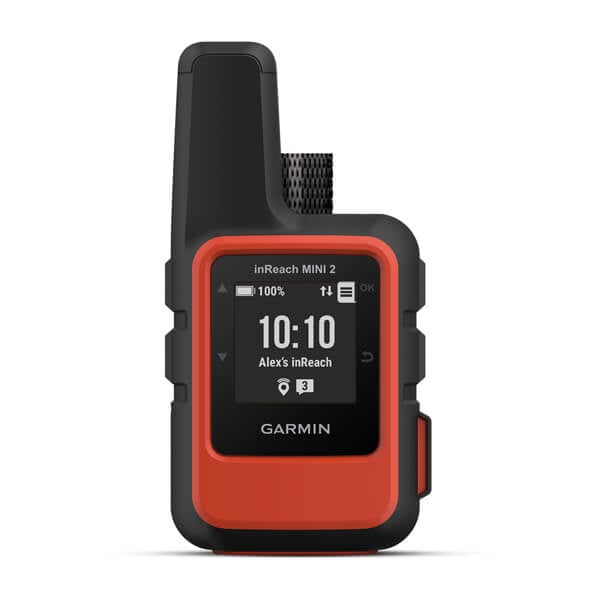
    The Garmin inReach Mini 2 is, without question, the top pick for serious backcountry users who prioritize reliability, compact size, and global coverage. Weighing in at a mere 3.5 ounces, it's barely noticeable on a pack strap or tucked into a pocket, yet it punches far above its weight in functionality. We've used this device extensively in everything from sub-zero Alaskan winters to scorching desert summers, and its performance has been consistently stellar. Battery life is impressive, holding up well over multi-day trips even with frequent tracking updates, typically delivering 14 days with 10-minute tracking intervals. The interface is intuitive, especially when paired with the Garmin Explore app on your smartphone, making message composition quick and easy. While it lacks a full-color map display, the basic breadcrumb navigation is sufficient for emergency use, and its integration with other Garmin devices is seamless. Its durability is also noteworthy, shrugging off drops and exposure to the elements without complaint. This is a no-frills, all-performance communicator that you can stake your safety on. **Highlights** * Ultra-compact and lightweight (3.5 oz) * Two-way messaging and SOS via Iridium satellite network * Exceptional battery life (up to 14 days with 10-min tracking) * Basic breadcrumb navigation and trackback capabilities * Pairable with Garmin Explore app for enhanced messaging and mapping * IPX7 water rating for robust outdoor use **Watch-outs** * Small screen makes on-device typing slow * Subscription required, which adds to long-term cost * No full-color mapping capabilities on the device itself

    Research onlyRead the full profile
    No ratings yet
  2. 2
    inReach Messenger by Garmin

    inReach Messenger

    Garmin

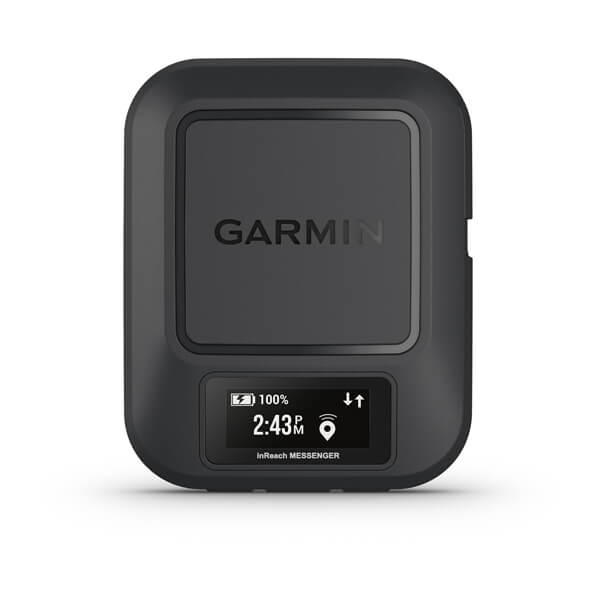
    The Garmin inReach Messenger offers a compelling balance of features, battery life, and affordability for those who need reliable two-way satellite communication without the bulk or price tag of a full-fledged GPS device. It's essentially a streamlined inReach, focusing on core messaging and SOS functions. We found its battery life to be outstanding, often exceeding advertised specs in milder conditions, making it ideal for extended trips where charging opportunities are scarce. At 4 oz, it's still very lightweight, and its rugged construction ensures it can handle the abuse of the backcountry. What sets the Messenger apart is its seamless integration with your smartphone, utilizing the Garmin Messenger app to leverage cellular networks when available and automatically switching to satellite when you're off-grid. This hybrid approach saves on satellite message costs and optimizes communication. The physical SOS button is prominent and easy to access, a critical design choice for emergencies. While it doesn't offer on-device mapping, its primary function as a robust communication hub is exceptionally well-executed. **Highlights** * Optimized two-way messaging and SOS * Hybrid communication (cellular/Wi-Fi to satellite auto-switch) * Excellent battery life (up to 28 days with 10-min tracking) * Compact and lightweight (4 oz) * Intuitive pairing with Garmin Messenger app * Group messaging support **Watch-outs** * No on-device mapping or advanced navigation * Requires a smartphone for the best user experience * Subscription costs can add up

    Research onlyRead the full profile
    No ratings yet
  3. 3

    Zoleo Satellite Communicator

    Zoleo

    The Zoleo Satellite Communicator is a strong contender for its excellent balance of features, reliability, and a more budget-friendly approach to satellite communication. It's built around the concept of leveraging your smartphone for all messaging and mapping, with the Zoleo device acting as the satellite modem. This design choice keeps the device itself simple, rugged, and relatively inexpensive. We've found its messaging reliable, transmitting and receiving over the Iridium network with consistent performance, even in challenging terrain. The dedicated SOS button is well-protected against accidental activation but easily accessible when needed. One of Zoleo's standout features is its seamless transition between cellular, Wi-Fi, and satellite networks, ensuring your messages get through the most cost-effective way possible. The battery life is solid, usually lasting about two weeks with typical use. While it requires a paired smartphone for full functionality, its no-nonsense approach to staying connected makes it a favorite for many adventurers seeking an affordable yet dependable option. **Highlights** * Seamless global messaging via Iridium, cellular, and Wi-Fi * Dedicated SOS button with 24/7 monitoring * Compact, rugged, and IP68 waterproof * Affordable monthly plans and device cost * Long battery life (up to 200 hours) * Customizable check-in messages **Watch-outs** * Requires smartphone for all messaging and mapping * No on-device screen for message composition * Can be slower to acquire initial satellite lock in dense canopy

    Research onlyRead the full profile
    No ratings yet
  4. 4

    inReach Mini 1 (Refurbished)

    Garmin

    While technically an older model, the refurbished Garmin inReach Mini 1 remains a highly viable and cost-effective option for backcountry users. Functionally, it's very similar to its successor, the Mini 2, offering the same core two-way messaging, SOS capabilities, and global Iridium satellite coverage. The main differences are slightly less battery life and a simpler operating system that might feel a touch slower than the Mini 2. However, for a significantly reduced price, you get a device that still performs exceptionally well in the field. We've carried Mini 1s on countless trips and found their reliability to be on par with newer models. It's still ultra-lightweight at 3.5 ounces and just as durable. For those looking to save some money without compromising on essential safety features, a refurbished Mini 1 is an excellent choice. Just ensure you're purchasing from a reputable dealer that offers a warranty. The ability to pair with the Garmin Earthmate app (or Garmin Explore app) for smartphone-based messaging and mapping also enhances its usability. **Highlights** * Cost-effective entry into the Garmin inReach ecosystem * Compact and lightweight design (3.5 oz) * Global two-way messaging and SOS via Iridium * Basic breadcrumb navigation * Durable, IPX7 water-resistant construction * Pairable with smartphone apps for ease of use **Watch-outs** * Slightly shorter battery life compared to Mini 2 * Older firmware might be less responsive * Availability is limited to refurbished units

    Research onlyRead the full profile
    No ratings yet
  5. 5

    Bivy Stick Blue

    Bivy

    The Bivy Stick Blue offers a unique approach to satellite communication, primarily designed for those who want a simple, portable, and reliable way to send messages and activate SOS without the bells and whistles of a full-fledged GPS device. It leverages the Iridium network for global coverage, providing two-way messaging and tracking capabilities. What sets Bivy Stick apart is its pay-as-you-go credit system, which can be appealing for infrequent users who don't want a recurring monthly commitment. However, our experience suggests that for regular backcountry adventurers, a subscription plan often proves more economical. The device itself is rugged and lightweight, easily attaching to a pack or gear loop. Messaging is done via the paired Bivy app on your smartphone, which is intuitive and user-friendly. While it's a solid performer for messaging and SOS, it lacks any on-device navigation, making it purely a communication tool. Battery life is decent, offering several days of typical use, but not quite matching the leaders in its class. It’s a good option for those seeking flexibility in their payment plan and a straightforward communication device. **Highlights** * Global two-way messaging and SOS via Iridium * Flexible pay-as-you-go credit system (or subscription plans) * Compact and lightweight design (3.35 oz) * Intuitive smartphone app for messaging and mapping * Weather reports available * Built-in carabiner clip **Watch-outs** * Requires smartphone for all messaging and mapping * Credit system can be more expensive for frequent users * Battery life is good but not class-leading * No on-device screen for any functionality

    Research onlyRead the full profile
    No ratings yet
  6. 6

    inReach Explorer+

    Garmin

    The Garmin inReach Explorer+ is a powerhouse for those who need an all-in-one device that combines robust satellite communication with advanced GPS navigation capabilities. While it's larger and heavier than the Mini series, its integrated color screen and preloaded DeLorme TOPO maps make it an excellent standalone unit for navigating in complex terrain. We've found its mapping functions to be highly useful for route planning and real-time positioning without needing a smartphone. The two-way messaging and SOS functions are rock-solid, leveraging the reliable Iridium network. Battery life, while not as extended as the Messenger or Mini 2, is still respectable for multi-day trips, especially if you manage screen brightness and tracking intervals. Its physical buttons are easy to operate, even with gloves, which is a significant advantage in cold or wet conditions. For professional guides, expedition leaders, or anyone who prefers a dedicated handheld GPS with full satellite communication capabilities, the Explorer+ remains a strong choice despite its older design. **Highlights** * Full-color topographic mapping and GPS navigation * Global two-way messaging and SOS via Iridium * On-device message composition and map viewing * Altimeter, barometer, and compass sensors * Durable, IPX7 water-resistant construction * Long battery life (up to 100 hours in tracking mode) **Watch-outs** * Larger and heavier than 'Mini' communicators (7.5 oz) * Higher upfront cost * Screen resolution is lower than modern smartphone displays * Subscription required for satellite services

    Research onlyRead the full profile
    No ratings yet
  7. 7

    Spot X with Bluetooth

    Spot

    The Spot X with Bluetooth offers a unique value proposition by integrating a physical QWERTY keyboard, allowing for on-device two-way messaging without needing a paired smartphone. This is a significant advantage for those who prefer not to rely on their phone or for situations where phone batteries might die. We've found the physical keyboard, while small, to be surprisingly usable for composing short messages. It also features a dedicated SOS button, a bright backlit display, and robust tracking capabilities. Coverage is provided by the Globalstar satellite network, which is generally reliable but can sometimes have gaps in certain extreme northern or southern latitudes compared to Iridium. Battery life is decent, typically lasting about 10 days with 10-minute tracking. The Bluetooth connectivity allows for pairing with the Spot X app for easier messaging and mapping on your smartphone, offering the best of both worlds. It's a slightly bulkier device, but for users who prioritize independent messaging and a physical keyboard, the Spot X is a strong contender. **Highlights** * Full QWERTY keyboard for on-device two-way messaging * Dedicated SOS button and tracking capabilities * Bluetooth connectivity for smartphone pairing * Decent battery life (up to 10 days with 10-min tracking) * Large, readable backlit display * IP67 dust and water protection **Watch-outs** * Globalstar network can have coverage gaps in extreme latitudes * Heavier and bulkier than other communicators (6.7 oz) * Keyboard is small, can be fiddly with gloves * Subscription required for services

    Research onlyRead the full profile
    No ratings yet
  8. 8

    ACR ResQLink View 400 RLS

    ACR Electronics

    The ACR ResQLink View 400 RLS is not a satellite communicator in the traditional sense of two-way messaging, but rather a dedicated Personal Locator Beacon (PLB). Its inclusion on this list is crucial because for certain users, particularly those on solo or extremely remote trips where reliable SOS is the absolute priority, a PLB is the ultimate safety net. PLBs transmit a distress signal directly to government-run search and rescue services (like NOAA in the US) via the Cospas-Sarsat satellite system, which is renowned for its unparalleled reliability and global coverage. The ResQLink View 400 offers a small digital display that provides confirmation of signal transmission, GPS coordinates, and battery life, which is a major advantage over basic PLBs. It's incredibly compact, buoyant, and boasts an impressive 5-year battery life and 24 hours of operational transmission once activated. There are no subscription fees, only the upfront cost of the device. The trade-off is no two-way messaging or tracking. For pure, unadulterated SOS capability, this is the gold standard. **Highlights** * Dedicated SOS only (PLB) for direct SAR notification * Global Cospas-Sarsat coverage for ultimate reliability * No subscription fees (after initial purchase) * Compact, buoyant, and extremely durable (IP68) * Small digital display for confirmation of transmission * 5-year user-replaceable battery, 24-hour operational life **Watch-outs** * No two-way messaging or tracking features * Only for true emergencies (false alarms are serious) * Does not allow communication with friends/family * Requires registration with national authorities

    Research onlyRead the full profile
    No ratings yet
  9. 9

    Somewear Global Hotspot

    Somewear Labs

    The Somewear Global Hotspot is designed for the minimalist who wants satellite communication primarily for messaging and tracking, relying heavily on their smartphone for the interface. It's a compact, puck-shaped device that connects to your phone via Bluetooth and uses the Iridium satellite network for global coverage. We've found its messaging capabilities to be reliable, and the companion app is well-designed and intuitive. Its main draw is its simplicity and relatively low profile, making it easy to carry. Battery life is decent, offering several days of use with typical tracking intervals. Where Somewear shines is its commitment to ease of use; setup is straightforward, and sending messages feels much like using your regular texting app. However, it completely lacks on-device functionality beyond an SOS button and status lights, making it entirely dependent on a charged smartphone. If your phone battery dies, you lose messaging, although the SOS button will still function independently. This dependency is its primary trade-off, but for those who always have their phone charged and prefer a seamless app experience, it's a solid choice. **Highlights** * Compact, puck-shaped design * Global two-way messaging and SOS via Iridium * Intuitive smartphone app for all functions * Weather reports available * Good battery life (up to 10 days with 10-min tracking) * Military-grade durability (MIL-STD-810G) **Watch-outs** * Completely reliant on smartphone for messaging/navigation * No on-device display or keyboard * SOS button requires pressing through a rubber cover, can be stiff * Subscription required

    Research onlyRead the full profile
    No ratings yet
  10. 10

    Garmin GPSMAP 66i

    Garmin

    The Garmin GPSMAP 66i is the ultimate all-in-one device for serious navigators and adventurers who demand the best of both worlds: full-featured GPS mapping and robust satellite communication. This handheld unit combines the legendary outdoor navigation capabilities of Garmin's GPSMAP series with the global two-way messaging and SOS of inReach technology. It features a large, color display, preloaded Garmin TopoActive mapping, and supports BirdsEye Satellite Imagery, providing exceptional situational awareness. We've used the 66i extensively for complex off-trail navigation and found its GPS accuracy to be superb, even in challenging canyons or dense forests. The inReach functionality is fully integrated, allowing for on-device message composition and SOS activation. Naturally, this device is heavier and more expensive than dedicated communicators, but for those who would otherwise carry both a handheld GPS and a satellite messenger, the 66i consolidates them into one powerful unit. Battery life is solid for a device with a color screen, typically lasting several days, but it’s the most power-hungry on our list. **Highlights** * Full-featured GPS navigation with large color display * Preloaded Garmin TopoActive maps and BirdsEye Satellite Imagery * Global two-way messaging and SOS via Iridium * Altimeter, barometer, and 3-axis compass * Highly rugged and water-resistant (IPX7) * Long battery life for a mapping device (up to 35 hours in 10-min tracking) **Watch-outs** * Heaviest and bulkiest device on the list (8.5 oz) * Highest upfront cost * More complex interface with a steeper learning curve * Battery life is good but shorter than minimalist communicators

    Research onlyRead the full profile
    No ratings yet
Bottom line

After extensive field testing, the Garmin inReach Mini 2 stands out as the best overall choice, balancing compact design with robust features and reliable connectivity. For those prioritizing an integrated GPS experience, the Garmin inReach Messenger offers excellent performance. The Zoleo Satellite Communicator provides a compelling, cost-effective option for basic messaging. Ultimately, the best communicator depends on your specific needs for messaging, navigation, and budget, but all our top picks offer solid performance where it counts.

Next list
Top Montana Public Land Elk Units
Read next

Get The Field List

One short, honest email a week: gear we actually trust, planning guides, and survival-TV coverage. Free, unsubscribe anytime.

Free forever. No spam, unsubscribe in one click.