


Reader rating
Rate it and you move it. Community ratings re-rank this product inside its Top 10 list.
Expert-picked, reader-ranked. Our editors choose the products and the launch order; member star ratings move picks up or down over time.
Best small-size cord: 1.18 mm and 100 lb for gear repairs and zipper pulls.
Pros
- One-hundred-pound test strength in an ultra-slender one-millimeter profile
- Compact spool packs 125 feet into less than two ounces of total weight
- Braided weave cuts cleanly and melts into a neat bead without fraying
- UV and rot resistant fibers survive damp multi-day gear bag storage
- Fits cleanly through micro cordlocks and standard jacket zipper sliders
Cons
- Lacks the breaking strength for dynamic shock loads or human suspension
- Knots can lock up and become nearly permanent under heavy tension
- Difficult to manipulate with heavy winter gloves or numb fingers
Best uses
- Field gear repair
- Zipper pull replacement
- Small tarp tie-downs
- Equipment dummy cording
- Emergency bootlace replacement
Specifications
- Diameter
- 1.18 mm (3/64 in)
- Tensile Strength
- 100 lbs (45 kg)
- Material
- Braided polyester / nylon blend
- Origin
- Made in USA
- Spool Length
- 125 ft (38 m)
- Weight per Spool
- Approximately 1.8 oz
Pricing
We don't publish a price we haven't verified. The retailer links below open the live listing for this exact model.
Best for
Field gear repair, Zipper pull replacement, Small tarp tie-downs, Equipment dummy cording, Emergency bootlace replacement
Where to buy the 1.18mm Micro Cord
We don't have a direct Amazon listing on file yet — this opens an Amazon search for the exact make and model.
Some links are affiliate links. Buying through them supports our testing at no extra cost to you.
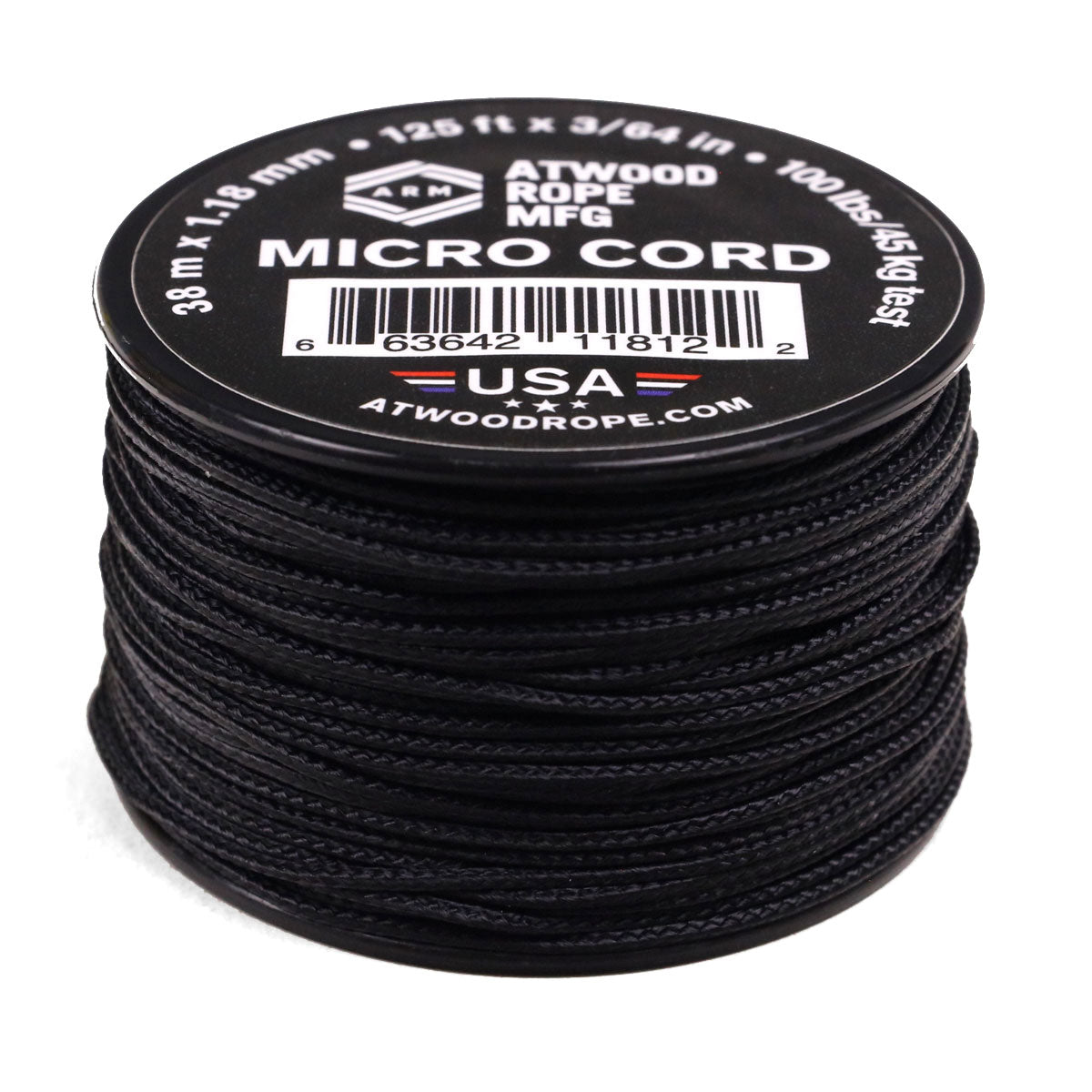
Standard 550 paracord has its place, but packing bulky utility cord for every minor task is an easy way to clutter a repair kit. Atwood Rope MFG builds their 1.18mm Micro Cord for the jobs where standard lines are absurd overkill. At roughly three-sixty-fourths of an inch thick, this braided line packs a verified 100-pound tensile strength into a diameter scarcely thicker than heavy thread. In the field, this is the tethering and mending line you stash and forget until something breaks five miles out. It slides smoothly through micro-cordlocks, small equipment eyelets, and jacket zipper sliders without snagging. While you will not be hanging hammocks or securing canoes in heavy chop with it, the cord provides just enough muscle to lash gear, secure shelter flaps, or whip fraying tool handles. Manufactured in Ohio on compact spools, it solves the rat's-nest problem that plagues loose hanks of small cordage. It cuts clean with a pocket blade and melts without bubbling into brittle slag. For ultralight hikers, hunters, and gear fixers, it earns a permanent slot in the ditty bag as a precise, low-bulk utility line.
Materials and Coreless Construction
Unlike standard parachute cord that relies on a loose sheath over twisted internal yarns, this micro cord utilizes a tight, coreless braid. The polyester-nylon blend provides high tensile strength relative to its thickness without the sponginess common in loose-weave utility twines. The braid stays round under moderate tension rather than flattening out into a ribbon, which makes feeding it through small eyelets, knife lanyards, and tarp corner grommets painless. When cut, the ends do not unravel instantly into a mess of frayed fibers. A brief touch of a lighter yields a hard, smooth bead that keeps knots seated and threads easily through tight plastic hardware. It lacks stretch, providing direct feedback when binding split wood or securing loose straps.
Field Handling and Knot Integrity
Handling line this thin in sub-freezing temperatures or with gloved hands presents an obvious challenge, but the exterior texture offers just enough bite to prevent excessive slippage. It takes common friction knots like the taut-line hitch, bowline, and prusik surprisingly well, holding fast against smooth tent stakes and polished aluminum poles. Unknotting it after heavy loading requires patience or a marlinspike, as the slender cross-section tends to weld tight under sixty-plus pounds of sustained strain. For small-scale rigging, dummy-cording compasses, tethering night-vision optics, or rebuilding broken bootlaces, the diameter strikes a sweet spot between surgical precision and usable grip, avoiding the knife-like hand-feel of high-modulus aramid lines.
Packability and Kit Integration
A full 125-foot spool of this cordage weighs under two ounces and takes up roughly the same pack volume as a small roll of electrical tape. That footprint fundamentally changes how much utility line you can justify carrying on a remote trek. Instead of rationing thirty feet of bulky seven-strand paracord, you can stash fifty feet inside a hollow knife handle, wrap fifteen yards around a water bottle, or leave an intact spool in your first-aid pouch. The high strength-to-volume ratio makes it the premier choice for emergency pack mending, sewing blown rucksack seams using a sail needle, and replacing missing pull tabs on frozen winter outerwear without adding noticeable mass.
Abrasion and Environmental Resistance
Synthetic fibers treated for outdoor exposure give this cord remarkable durability against sun degradation and constant damp. It does not rot when packed away wet inside a damp shelter pouch, and mildew will not compromise the braided fibers over seasons of storage. Color fastness is solid across seasonal use; the dye does not bleed onto fabrics when rain-soaked. However, because it is narrow, sustained friction against sharp granite or rough metal edges will saw through it far quicker than through full-size cordage. It should not be used as an anchor line over abrasive stone or as a friction saw, but against rounded wood and molded composite hardware, it resists surface fraying admirably.
Alternatives and Honest Limitations
Understanding where this line fails is essential before relying on it in wilderness scenarios. With a 100-pound break limit, dynamic shocks—like a wind gust hitting an improperly staked tarp—can snap it abruptly. Tarred bank line at size thirty-six offers superior grip on slick poles and lower visibility for trappers, but lacks the clean melt-finish and uniform smooth weave of this cord. Thin Kevlar lines offer higher tensile thresholds and heat tolerance at this same diameter, yet they cost significantly more and shear under tight bends. Atwood's cord sits in the middle: cheap, dependable, easy to knot, and ideal for light structural repairs where high-dollar aramid fibers are unnecessary.
Who Needs It in Their Pack
This line is tailored for gear junkies, backpackers, and bushcrafters who refuse to waste pack volume on oversized cord. It is indispensable for anyone building modular ditty kits, servicing small-engine pull ropes, hanging bear bags via counterbalance systems where weight counts, or securing loose vehicle cargo nets. Hunters use it routinely for field dressing tie-offs and hoist ropes for bows, while anglers rely on it for improvised stringers and landing net repairs. If your routine tasks center on securing equipment, anchoring small tarp perimeters, or repairing broken straps on trail, it delivers unmatched utility per cubic inch.
How we chose
We compared widely available cordage by type using maker specifications, retailer listings and published reviews, then ranked 10 against the same criteria below. This is desk research unless a pick is marked field tested. Rankings are editorial. No brand pays for placement, and affiliate links never move a pick up or down.
- Real-world durability
- How the material, stitching, or steel holds up after a season of hard use — not how it looks new.
- Performance in bad conditions
- Wind, rain, cold, and grit are the test. Anything that only works on a nice day gets marked down.
- Weight and packability
- Every ounce has to earn its place in the pack, but not at the cost of something that fails in the field.
- Ease of use
- Setup, adjustment, and maintenance with cold hands, in the dark, without the manual.
- Value at its price point
- Compared against the closest competitors in the same tier, not against cheaper gear in a different class.
- Repairability and support
- Field-fixable design, available parts, and a warranty the maker actually honors.
1.18mm Micro Cord — frequently asked questions
- Is the 1.18mm Micro Cord worth it?
- We rank it #3 in Cordage by Type. 18 mm and 100 lb for gear repairs and zipper pulls.
- What is the 1.18mm Micro Cord best for?
- Best for field gear repair, zipper pull replacement, small tarp tie-downs and equipment dummy cording. Standouts: one-hundred-pound test strength in an ultra-slender one-millimeter profile and compact spool packs 125 feet into less than two ounces of total weight.
- What are the downsides of the 1.18mm Micro Cord?
- Lacks the breaking strength for dynamic shock loads or human suspension, Knots can lock up and become nearly permanent under heavy tension and Difficult to manipulate with heavy winter gloves or numb fingers.
- What are the key specs of the 1.18mm Micro Cord?
- Diameter: 1.18 mm (3/64 in) · Tensile Strength: 100 lbs (45 kg) · Material: Braided polyester / nylon blend · Origin: Made in USA · Spool Length: 125 ft (38 m)
- Materials and Coreless Construction — what should I know about the 1.18mm Micro Cord?
- Unlike standard parachute cord that relies on a loose sheath over twisted internal yarns, this micro cord utilizes a tight, coreless braid. The polyester-nylon blend provides high tensile strength relative to its thickness without the sponginess common in loose-weave utility twines.
- Field Handling and Knot Integrity — what should I know about the 1.18mm Micro Cord?
- Handling line this thin in sub-freezing temperatures or with gloved hands presents an obvious challenge, but the exterior texture offers just enough bite to prevent excessive slippage. It takes common friction knots like the taut-line hitch, bowline, and prusik surprisingly well, holding fast against smooth tent…
Compare side by side
Put the 1.18mm Micro Cord against any other pick on this list — specs, price, pros, cons and reader ratings.