The 10 Best Cordage Types: Paracord, Bank Line, Kevlar and Micro Cord
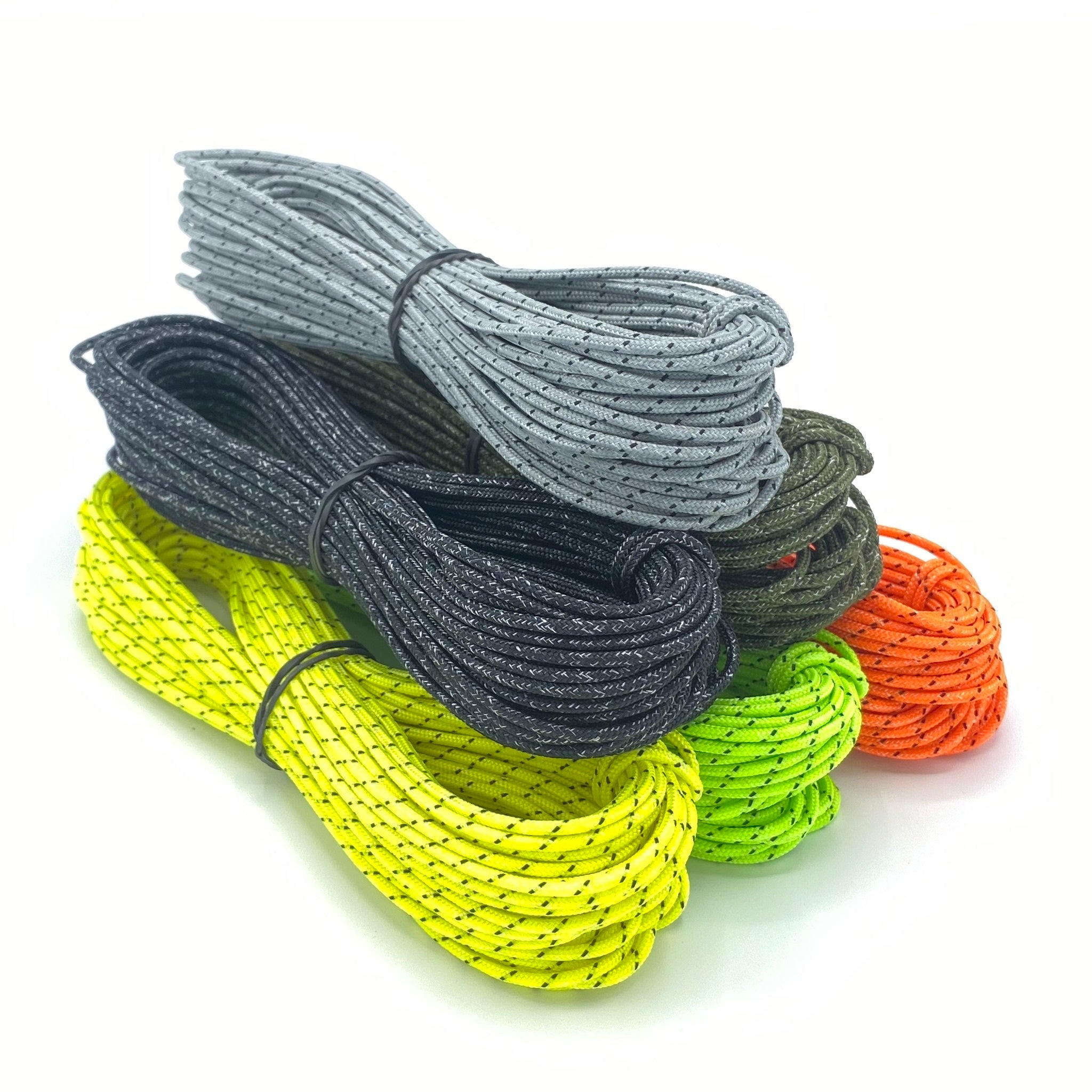
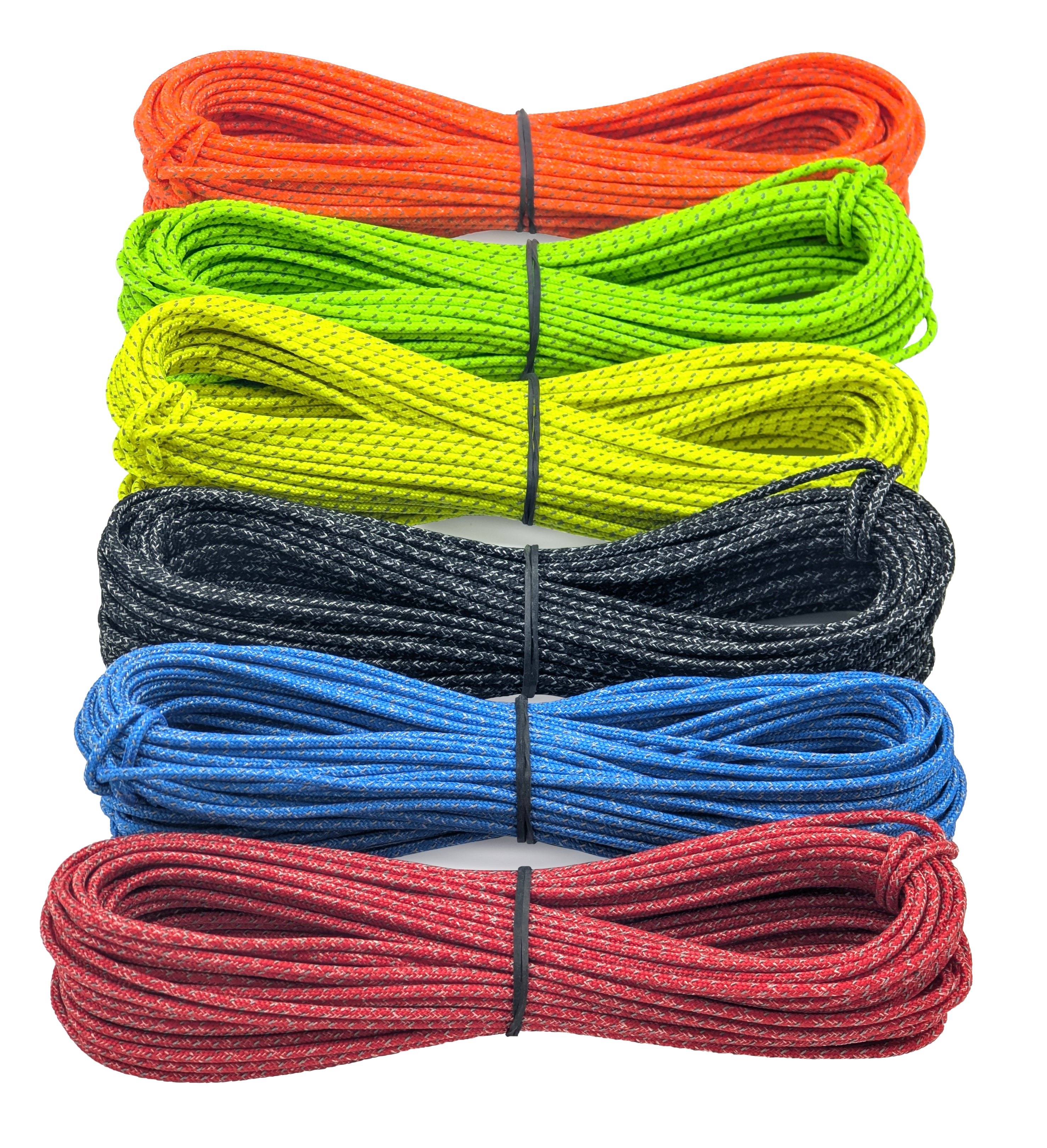
One pick for each kind of outdoor cord: 550 and 750 paracord, micro and nano cord, tarred bank line, Kevlar, Dyneema, reflective guyline, nylon accessory cord and survival cord.
Who this is for: campers, backpackers, paddlers, hunters and bushcrafters who want to know which kind of cord to carry, not just which brand. Each pick is a different type and size, from 0.75 mm nano cord to 5 mm Type IV paracord. How we chose: we used each maker's official product page for diameter, listed strength, construction, lengths and price. This is desk research, not a field test. Strength figures are the makers' tensile or break ratings, not safe working loads, and none of these cords are for climbing or life safety. Prices checked November 10, 2026. Already have our brand list? See the 10 Best Cordage: Paracord, Bank Line & Dyneema.
Quick picks
Shop links open Wild10 checkout products. External affiliate links may earn us a commission, at no extra cost to you.
One pick for each kind of outdoor cord: 550 and 750 paracord, micro and nano cord, tarred bank line, Kevlar, Dyneema, reflective guyline, nylon accessory cord and survival cord.
Rank this list
Loading community ratings… Ratings re-order the picks — they never change which products make the list.
Genuine Type III 550 paracord remains the gold standard utility line for general outdoor work, and Paracord Planet's MIL-C-5040 variant delivers the real deal rather than cheap decorative craft rope. Built with a 32-strand braided nylon sheath encasing seven individual inner strands, this cord offers an exceptional balance of tensile strength, knot security, and tactile grip. It has earned its place in rucksacks for decades because it strikes the sweet spot between working diameter and sheer utility.
While ultralight backpackers often scoff at its bulk and bushcrafters debate its stretch, standard 550 cord solves problems in camp that thinner, slicker high-tech lines fumble. It cuts cleanly with a pocket knife, melts shut reliably with a lighter, and provides enough surface area that it will not bite painfully into bare hands when hauling on a heavy ridge tie-out. If you only have room for one hank of cordage in your vehicle or camp box, this is still the benchmark.
Where it fits
General camp utility rigging
Tarp setup and shelters
Emergency vehicle survival kits
Field gear repairs
Securing vehicle roof loads
Pros
Seven-strand removable core allows field extraction of fine repair thread
Holds common camp knots securely without slipping or creeping
Tough nylon mantle resists fraying on sharp rock edges and coarse bark
Thick enough to tension by hand without slicing into skin
Cons
Significant natural stretch causes tarp ridgelines to sag overnight
Nylon absorbs water and can freeze stiff in sub-zero weather
Noticeably bulkier and heavier than modern micro cords and Dyneema
Commercial imitations frequently cut corners by substituting polyester jackets or loose, unplied fiber filler inside. True military-spec Type III cord relies entirely on high-grade nylon, featuring seven core yarns twisted into multi-ply strands. This architecture yields a consistent 550-pound static breaking limit and high abrasion resistance across rough granite and tree bark. The outer sheath weaves tightly enough to resist snagging on brush, yet remains pliable in sub-freezing temperatures. Cutting a section exposes individual inner yarns that can be pulled independently for fine tasks like gear repair, improvised fishing rigs, or stitching blown boot seams. Because it is all nylon, heat-sealing cut ends produces a uniform, clean bead rather than a charred mess.
Field Handling and Knots
One of paracord's greatest practical assets is friction. Modern UHMWPE lines like Dyneema are notoriously slippery, demanding specialized hitches that resist creeping under load. Paracord holds standard working knots effortlessly. Bowlines, taut-line hitches, and clove hitches bite securely without slipping, even when soaked by continuous autumn rain. Despite that grip, the cord remains relatively easy to untie after being tensioned overnight, provided you avoid over-cinching dead knots. The four-millimeter thickness sits comfortably in cold, stiff fingers, allowing quick rigging and adjustments while wearing work gloves. For general tarp rigging, lashings, and anchor points, the tactile feedback outclasses almost every slick, micro-diameter cord on the shelf.
Real-World Versatility
The ability to field-strip paracord into sub-components gives it multi-tool utility that solid-braid ropes cannot match. Removing the seven core strands yields roughly eight times the original cut length in lightweight utility thread. Hunters frequently use single inner strands to hang game quarters or secure gear blinds, while keeping the structural sheath intact as a flat binding strap. Outside of camp tasks, the cord functions well for dragging firewood, setting up clotheslines, replacing broken pack straps, and rigging trail splints. It is durable enough to endure weeks in full sunlight without catastrophic UV degradation, though extended multi-year exposure will eventually bleach the fibers and diminish overall tensile strength.
Bulk and Packability
Fifty feet of standard 550 cord takes up roughly the volume of an enamel camp mug and weighs close to four ounces. For car campers, hunters, and canoe travelers, that footprint is negligible. For ounce-counting backpackers traveling long distances, however, carrying one or two hundred feet of full-size paracord represents unnecessary dead weight. It packs down reasonably well when wound into a tidy figure-eight hank or donut spool, but it will crowd out small hip-belt pockets and tight emergency pouches. Those pursuing strictly minimalist shelters will find that smaller cords provide sufficient breaking strength with half the packed bulk, making standard paracord better suited for base camps than fast-and-light pushes.
The Inevitable Trade-offs
Nylon cordage carries two distinct weaknesses: elasticity and water absorption. Paracord can stretch up to thirty percent under sustained load, meaning a taut tarp ridgeline rigged in the evening will often sag noticeably by dawn, especially when weighted by rain. Furthermore, nylon absorbs ambient moisture, increasing packed weight when wet and freezing rock-hard in winter conditions. Wet paracord is noticeably tougher to untie if frozen solid. If you require zero-stretch performance for suspended hammock tarps or precise mechanical rigging, braided polyester or aramid lines are vastly superior choices. Accepting paracord means planning around its inherent flex and moisture retention.
How It Stacks Up
Compared to tarred mariner's bank line, paracord is thicker, easier on bare hands, and significantly simpler to untie and reuse. Bank line is much cheaper, packs tighter, and resists rot better, but it lacks the comfort and sheer shock absorption of nylon. Against premium Dyneema cordage, paracord is heavier and stretchier, but it costs a fraction of the price and does not require complex knots to prevent slippage. Micro cords are excellent for zipper pulls and small lanyards, but they lack the backbone for dragging logs or securing loose roof-rack loads. For general utility across varied environments, 550 cord remains the most forgiving compromise.
As an Amazon Associate, Wild10 earns from qualifying purchases.
No ratings yet
Pick 02Research-based review
750 Mil-Spec Type IV Paracord
Paracord Planet
750 Mil-Spec Type IV Paracord
Paracord Planet
Tensile Strength
750 lbs minimum break strength
Core Design
11 inner strands, 3-ply twisted nylon
Outer Sheath
32-strand braided nylon jacket
Diameter
Approximately 5mm (3/16 inch)
Specification
Compliant with Mil-C-5040H Type IV requirements
Origin
Made in the USA
Standard 550 cord built an almost mythical reputation in the surplus era, but when you genuinely need working insurance under tension, stepping up to Type IV is the logical move. Paracord Planet's 750 Mil-Spec line retains the familiar handling of military parachute cord while beefing up both the sheath and the core to deliver a legitimate 750-pound minimum tensile strength. In the hand, the line feels substantially firmer and slightly thicker than common utility cord, giving you immediate feedback that it was manufactured for harder assignments.
Inside the tightly woven 32-strand outer sheath lie 11 removable three-ply nylon strands. This internal architecture provides an exceptional pool of secondary cordage for field repairs, snare rigging, and heavy sewing without sacrificing the structural integrity of the outer jacket. While setting up an ultralight summer tarp hardly demands this kind of overkill, anyone securing overloaded roof racks, hanging elk quarters, or anchoring shelters against winter winds will appreciate the extra margin of safety.
You pay for that security in bulk and weight, which rules it out for ounce-conscious thru-hikers who prefer dyneema or micro cord. Yet for hunters, overland rigs, and winter bushcrafters who rely on nylon's shock absorption and raw muscle, this line occupies an ideal middle ground between standard commercial utility rope and bulky static climbing accessory cord.
Where it fits
Big game quarter hanging
Overland vehicle tie-downs
Winter shelter storm rigging
Heavy basecamp utility construction
Pros
750-pound break strength offers massive safety margins over standard 550 paracord
Eleven removable inner strands maximize scavenged cordage for emergency repairs
Thicker diameter provides an easy, comfortable grip in freezing or wet conditions
Braided nylon sheath holds friction hitches reliably without slipping
Cons
Noticeably heavier and bulkier to pack than standard commercial utility lines
Nylon stretch requires periodic retensioning on long static shelter ridgelines
Too thick to fit inside standard lightweight tent line tensioners
This line is tailored for outdoorsmen who routinely push standard utility cords past their safe working limits. Hunters packing out big game in bear country need cordage that can suspend an entire quarters load from high timber without snapping under sudden shifts. Overlanders and off-grid campers need reliable tie-downs that endure buffeting highway winds and rough trail vibrations without fraying across steel roof racks. If your primary focus is ultralight backpacking, this cord will simply add dead weight to your pack. For basecamp engineers, heavy-duty bushcrafters, and vehicle-supported travelers who view cordage as a structural tool rather than a dispensable shoelace, the added tensile capacity justifies the space it consumes.
Materials and Core Construction
The construction follows the classic MIL-C-5040 specification for Type IV nylon cordage. The heart of the line features 11 independent inner strands, each composed of three tightly twisted nylon fibers. These inner yarns are clean, consistent, and remarkably tough on their own. Surrounding the core is a 32-strand woven nylon jacket that provides substantial defense against friction and dirt ingress. Cutting and sealing the ends requires a solid heat source because the sheer mass of nylon takes longer to melt into a uniform mushroom cap than lighter cord. Once sealed, the sheath will not separate or fray backward, maintaining a clean terminal end that threads cleanly through medium-sized hardware.
Real-World Handling and Knots
At roughly five millimeters thick, this cord offers vastly superior hand feel compared to slick micro cords or thin bank lines. When your fingers are numb from winter rain, you can still grip the line firmly and pull significant tension without it digging painfully into your palms. It accepts standard hitches, bowlines, and truckers hitches with authority, gripping securely against itself under load. Nylon naturally softens slightly after initial exposure to moisture, but the weave remains tight enough that heavily torqued knots can still be worked loose without resorting to a marlinspike. The trade-off is friction through hardware; it will choke inside tiny mini-carabiners and standard tent line-locks designed around three-millimeter cord.
Weight, Packability, and Stretch
Nylon cordage inherently possesses dynamic stretch, and this cord is no exception. Under heavy loads, you should anticipate roughly ten to twenty percent elongation before the fibers lock out. This elasticity is a distinct advantage when securing tarps against howling winds or tying down loads on moving trailers, as it absorbs jarring shocks that would snap static lines. However, that same stretch makes it an annoying choice for long, horizontal tarp ridgelines where you need a tight, unyielding pitch overnight. Bulk is the other major reality check. A hundred-foot hank creates a dense, heavy coil that takes up noticeable volume in an external pack pocket, making fifty-foot cuts a more sensible carry for general trail use.
Durability and Abrasion Resistance
Abrasion over rough granite, split-firewood bark, and rusted truck beds is what kills utility cord in the wild. The increased density of the 32-strand jacket gives this cord far better wear life than standard commercial 550 cord, which often develops sheath fuzz and strand separation after minimal grinding. In field testing across abrasive limestone surfaces, the line resists snagging and maintains its round cross-section instead of flattening out like cheap hollow braid. It holds up well to sun exposure over a season of use, though prolonged outdoor rigging will eventually stiffen the fibers. For high-friction points, adding a quick wrap of duct tape or split hose remains good practice, but the raw sheath handles contact with tree limbs gracefully.
The Competitive Field
When stacked against standard commercial 550 paracord, the 750 line provides an undisputed upgrade in brute strength and durability for only a nominal bump in price. Its closer competition comes from high-modulus lines like Dyneema or AmSteel, as well as heavy tarred bank line. Dyneema cordage offers zero stretch and twice the tensile strength at a fraction of the weight, but it costs four to five times as much, slips easily in basic friction hitches, and provides no shock absorption. Heavy bank line is cheaper and far more compact, but it lacks the internal utility strands and is unpleasant to handle under high tension. For general-purpose brute force on a working budget, this cord holds its ground.
As an Amazon Associate, Wild10 earns from qualifying purchases.
No ratings yet
Pick 03Research-based review
1.18mm Micro Cord
Atwood Rope MFG
1.18mm Micro Cord
Atwood Rope MFG
Diameter
1.18 mm (3/64 in)
Tensile Strength
100 lbs (45 kg)
Material
Braided polyester / nylon blend
Origin
Made in USA
Spool Length
125 ft (38 m)
Weight per Spool
Approximately 1.8 oz
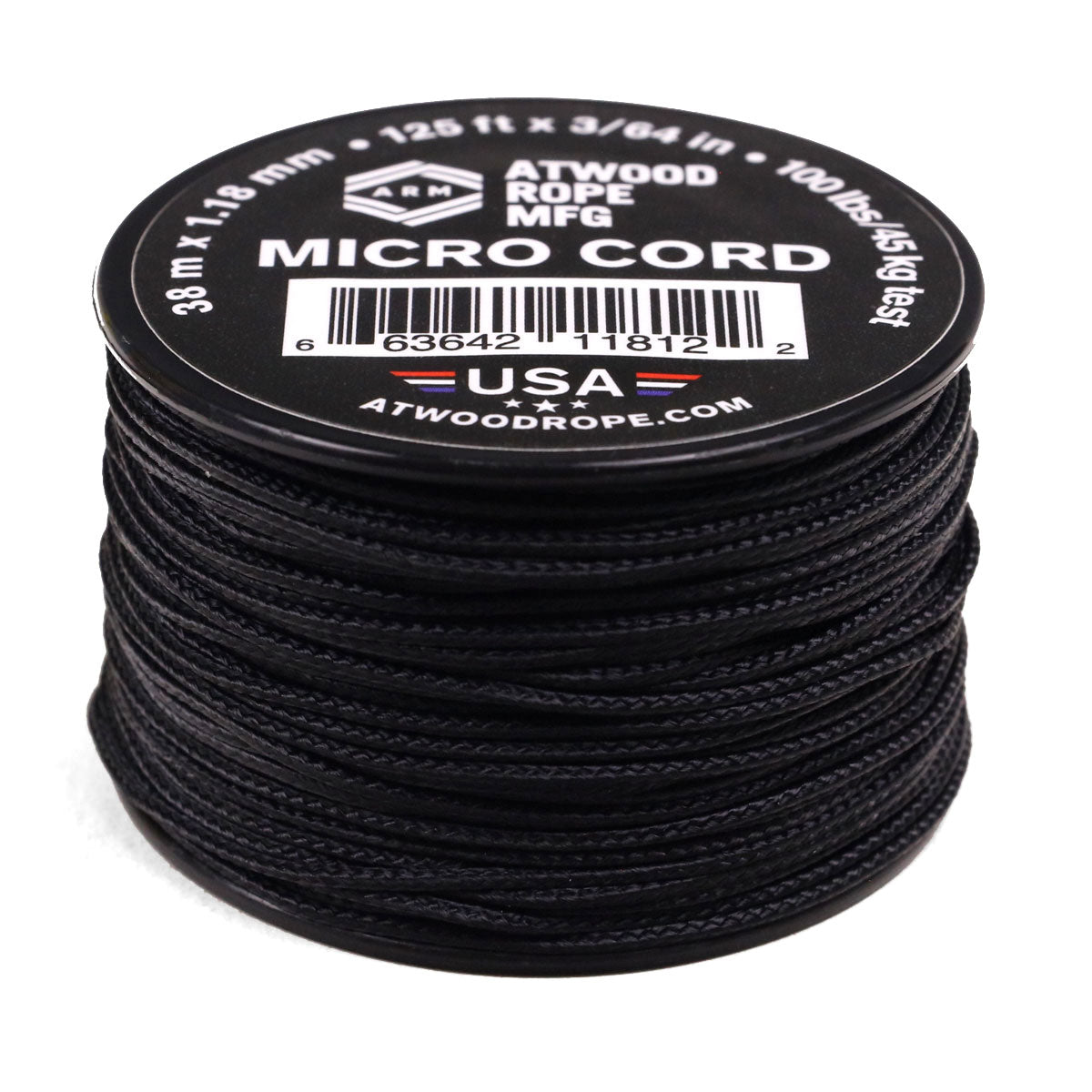
Standard 550 paracord has its place, but packing bulky utility cord for every minor task is an easy way to clutter a repair kit. Atwood Rope MFG builds their 1.18mm Micro Cord for the jobs where standard lines are absurd overkill. At roughly three-sixty-fourths of an inch thick, this braided line packs a verified 100-pound tensile strength into a diameter scarcely thicker than heavy thread.
In the field, this is the tethering and mending line you stash and forget until something breaks five miles out. It slides smoothly through micro-cordlocks, small equipment eyelets, and jacket zipper sliders without snagging. While you will not be hanging hammocks or securing canoes in heavy chop with it, the cord provides just enough muscle to lash gear, secure shelter flaps, or whip fraying tool handles.
Manufactured in Ohio on compact spools, it solves the rat's-nest problem that plagues loose hanks of small cordage. It cuts clean with a pocket blade and melts without bubbling into brittle slag. For ultralight hikers, hunters, and gear fixers, it earns a permanent slot in the ditty bag as a precise, low-bulk utility line.
Where it fits
Field gear repair
Zipper pull replacement
Small tarp tie-downs
Equipment dummy cording
Emergency bootlace replacement
Pros
One-hundred-pound test strength in an ultra-slender one-millimeter profile
Compact spool packs 125 feet into less than two ounces of total weight
Braided weave cuts cleanly and melts into a neat bead without fraying
UV and rot resistant fibers survive damp multi-day gear bag storage
Fits cleanly through micro cordlocks and standard jacket zipper sliders
Cons
Lacks the breaking strength for dynamic shock loads or human suspension
Knots can lock up and become nearly permanent under heavy tension
Difficult to manipulate with heavy winter gloves or numb fingers
Unlike standard parachute cord that relies on a loose sheath over twisted internal yarns, this micro cord utilizes a tight, coreless braid. The polyester-nylon blend provides high tensile strength relative to its thickness without the sponginess common in loose-weave utility twines. The braid stays round under moderate tension rather than flattening out into a ribbon, which makes feeding it through small eyelets, knife lanyards, and tarp corner grommets painless. When cut, the ends do not unravel instantly into a mess of frayed fibers. A brief touch of a lighter yields a hard, smooth bead that keeps knots seated and threads easily through tight plastic hardware. It lacks stretch, providing direct feedback when binding split wood or securing loose straps.
Field Handling and Knot Integrity
Handling line this thin in sub-freezing temperatures or with gloved hands presents an obvious challenge, but the exterior texture offers just enough bite to prevent excessive slippage. It takes common friction knots like the taut-line hitch, bowline, and prusik surprisingly well, holding fast against smooth tent stakes and polished aluminum poles. Unknotting it after heavy loading requires patience or a marlinspike, as the slender cross-section tends to weld tight under sixty-plus pounds of sustained strain. For small-scale rigging, dummy-cording compasses, tethering night-vision optics, or rebuilding broken bootlaces, the diameter strikes a sweet spot between surgical precision and usable grip, avoiding the knife-like hand-feel of high-modulus aramid lines.
Packability and Kit Integration
A full 125-foot spool of this cordage weighs under two ounces and takes up roughly the same pack volume as a small roll of electrical tape. That footprint fundamentally changes how much utility line you can justify carrying on a remote trek. Instead of rationing thirty feet of bulky seven-strand paracord, you can stash fifty feet inside a hollow knife handle, wrap fifteen yards around a water bottle, or leave an intact spool in your first-aid pouch. The high strength-to-volume ratio makes it the premier choice for emergency pack mending, sewing blown rucksack seams using a sail needle, and replacing missing pull tabs on frozen winter outerwear without adding noticeable mass.
Abrasion and Environmental Resistance
Synthetic fibers treated for outdoor exposure give this cord remarkable durability against sun degradation and constant damp. It does not rot when packed away wet inside a damp shelter pouch, and mildew will not compromise the braided fibers over seasons of storage. Color fastness is solid across seasonal use; the dye does not bleed onto fabrics when rain-soaked. However, because it is narrow, sustained friction against sharp granite or rough metal edges will saw through it far quicker than through full-size cordage. It should not be used as an anchor line over abrasive stone or as a friction saw, but against rounded wood and molded composite hardware, it resists surface fraying admirably.
Alternatives and Honest Limitations
Understanding where this line fails is essential before relying on it in wilderness scenarios. With a 100-pound break limit, dynamic shocks—like a wind gust hitting an improperly staked tarp—can snap it abruptly. Tarred bank line at size thirty-six offers superior grip on slick poles and lower visibility for trappers, but lacks the clean melt-finish and uniform smooth weave of this cord. Thin Kevlar lines offer higher tensile thresholds and heat tolerance at this same diameter, yet they cost significantly more and shear under tight bends. Atwood's cord sits in the middle: cheap, dependable, easy to knot, and ideal for light structural repairs where high-dollar aramid fibers are unnecessary.
Who Needs It in Their Pack
This line is tailored for gear junkies, backpackers, and bushcrafters who refuse to waste pack volume on oversized cord. It is indispensable for anyone building modular ditty kits, servicing small-engine pull ropes, hanging bear bags via counterbalance systems where weight counts, or securing loose vehicle cargo nets. Hunters use it routinely for field dressing tie-offs and hoist ropes for bows, while anglers rely on it for improvised stringers and landing net repairs. If your routine tasks center on securing equipment, anchoring small tarp perimeters, or repairing broken straps on trail, it delivers unmatched utility per cubic inch.
As an Amazon Associate, Wild10 earns from qualifying purchases.
No ratings yet
Pick 04Research-based review
.75mm Nano Cord
Atwood Rope MFG
.75mm Nano Cord
Atwood Rope MFG
Diameter
0.75 mm (approx. 1/32 in)
Tensile Strength
36 lbs (approx. 16.3 kg)
Material
Braided synthetic nylon/polyester blend
Spool Length
300 ft (91.4 m)
Total Weight
Approx. 1.6 oz (45 g) including spool
Origin
Made in USA
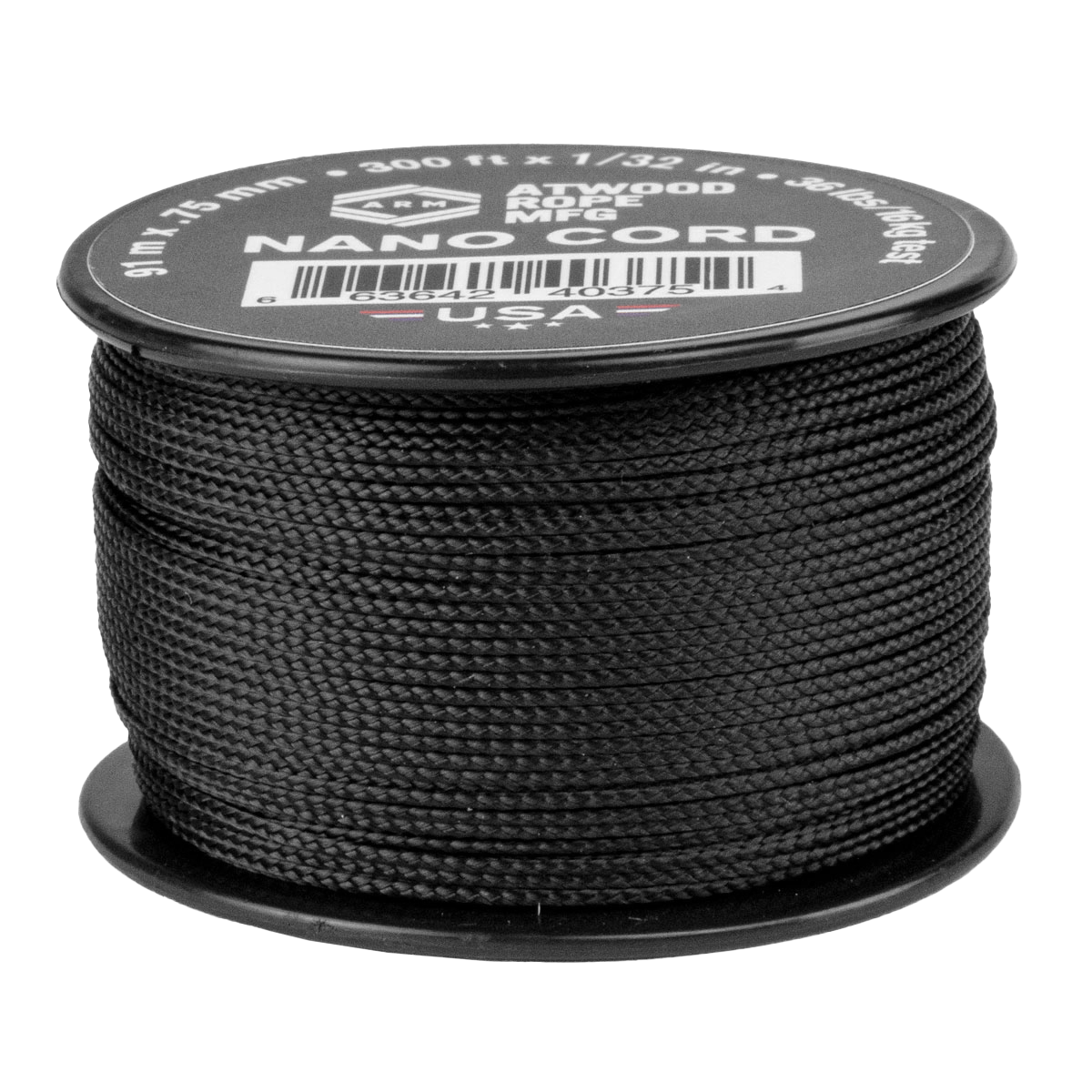
Atwood Rope MFG produces Nano Cord for situations where standard 550 cord or even 1.18mm micro cord feels like hauling lead pipe. Measuring a minuscule 0.75 millimeters in diameter, this braided strand sits right on the boundary between heavy-duty thread and structural cordage. It ships on a reusable mini spool containing 300 feet of line while weighing only about an ounce and a half, making it an immediate favorite for minimalist backpackers, survival tin builders, and tinkerers who resent dead weight.
In the field, Nano Cord serves as an indispensable utility strand rather than a load-bearing workhorse. It holds a nominal breaking strength of roughly 36 pounds, which instantly rules it out for heavy tarp ridgelines, bear bags, or anything involving serious dynamic shock. Instead, it thrives in secondary roles: dummy-cording compasses and firesteels to pocket loops, whipping frayed ends of larger ropes, replacing broken shoelaces, and handling field repairs on torn pack seams where standard needle thread is too fragile.
Handling cordage this slender requires realistic expectations. It cuts into bare fingers under tension and requires patience to untie once cinched down. Yet, for backcountry tasks where bulk is the enemy, carrying several hundred feet of dependable, UV-resistant line in the palm of your hand is hard to beat.
Where it fits
Heavy pack and boot repairs
Tethering small pocket tools
Minimalist survival kit packing
Trap triggers and snares
Pros
Vanishes into any pocket or emergency tin with near-zero weight penalty
Tight braided sheath resists fraying and handles high-friction lashing
Generous 300-foot spool length provides massive repair value per dollar
Holds micro hitches and friction knots without slipping loose
Cons
Cuts into bare fingers quickly when pulled under moderate tension
Low tensile rating offers zero tolerance for wind gusts or shock loads
Small knots jam tight under load and become difficult to untie
Atwood braids this line from synthetic fibers that resist rot, mildew, and UV degradation. Despite its thread-like profile, it is not a twisted monofilament; it is a genuinely braided strand that lies flat without immediately kinking into pig-tails when pulled off the spool. The weave is remarkably tight, which prevents the outer fibers from snagging or fuzzing when passed through needle eyes, narrow grommets, or zipper pull holes. The material maintains consistent coloration throughout, and the ends melt clean with a momentary tap from a lighter to lock the cut against unraveling.
Field Handling and Knot Integrity
Working with 0.75mm cord demands a delicate touch. Under heavy draw, the line acts like a wire cheese cutter against bare hands, so wrapping it around gloves or a stick is mandatory if you need to pull it tight. It grips well on itself, holding round turns, half hitches, and taut-line hitches securely without slipping. However, the trade-off for that grip is stubbornness; once loaded up near its working limit, knots like the square knot or overhand jam ferociously and often require a marlinspike or knife point to pick apart.
Packability and Kit Integration
The single strongest argument for Nano Cord is pack volume. A full 300-foot spool takes up less pocket space than a standard hockey puck and vanishes inside a hip belt pocket, fishing tackle kit, or Altoids-sized survival tin. Backpackers can strip fifty feet off the spool, wrap it around an old gift card, and slip it into an emergency ditty bag without noticing the weight. It eliminates the tough choice between packing enough cordage to handle extensive gear repairs and shaving ounces off base weight.
Abrasion Resistance and Limits
Given the hair-thin diameter, abrasion resistance is surprisingly decent against smooth wood and rounded nylon hardware, but sharp granite edges and gritty sandstone will shear it quickly. The 36-pound break strength provides zero safety margin for shock loading; a sudden wind gust catching a poorly pitched tarp will snap it instantly. It should never be trusted for life-safety, hammocks, or overhead suspension of critical gear. Treat it as heavy-duty binding material, decoy line, or lashing cord, and it will not let you down.
Everyday Carry and Utility Roles
This cord shines brightest in small organizational and maintenance tasks. It makes exceptional lanyard loops for pocket knives, small flashlights, and ferro rods, ensuring tools stay tethered without adding bulky clutter to your kit. In repair scenarios, it functions as super-thread when pushed through heavy canvas, webbing, or boot leather using a sailmaker needle. Crafters and anglers frequently use it for decoy rigging, wind chimes, and trap triggers because its matte finish blends into brush far better than reflective or brightly dyed utility cords.
Alternatives and Practical Trade-offs
If you require more grip and easier knot management, Atwood's 1.18mm Micro Cord or #18 braided bank line are superior choices that offer triple the tensile strength for only a slight increase in bulk. Bank line also brings a tarred coating that makes knotting simpler and resists fraying even better in wet dirt. Conversely, Kevlar thread offers higher heat resistance and raw break strength in similar diameters, but lacks the stretch and knot-holding friction of braided synthetic line. Nano Cord hits the sweet spot for cheap, lightweight, general-purpose binding.
As an Amazon Associate, Wild10 earns from qualifying purchases.
No ratings yet
Pick 05Research-based review
No.36 Bank Line
Self Reliance Outfitters / Pathfinder
No.36 Bank Line
Self Reliance Outfitters / Pathfinder
Material
Tarred 100% nylon
Construction
3-strand twisted
Tensile Rating
Approx. 320 lbs
Treatment
Petroleum/asphalt-based net tar
Rot Resistance
Immune to rot and mildew
Primary Advantage
Frictional knot retention
While mil-spec paracord captures most of the attention in modern survival kits, seasoned woodsmen often reach for tarred bank line instead. Originally manufactured for commercial trotlines and net repair, this black, resin-treated cord has quietly become the standard utility line for bushcraft and traditional camp setups. Number 36 is the sweet spot of the lineup, offering enough core strength to anchor structural shelter poles while staying thin enough to spool cleanly around a pocket toggle.
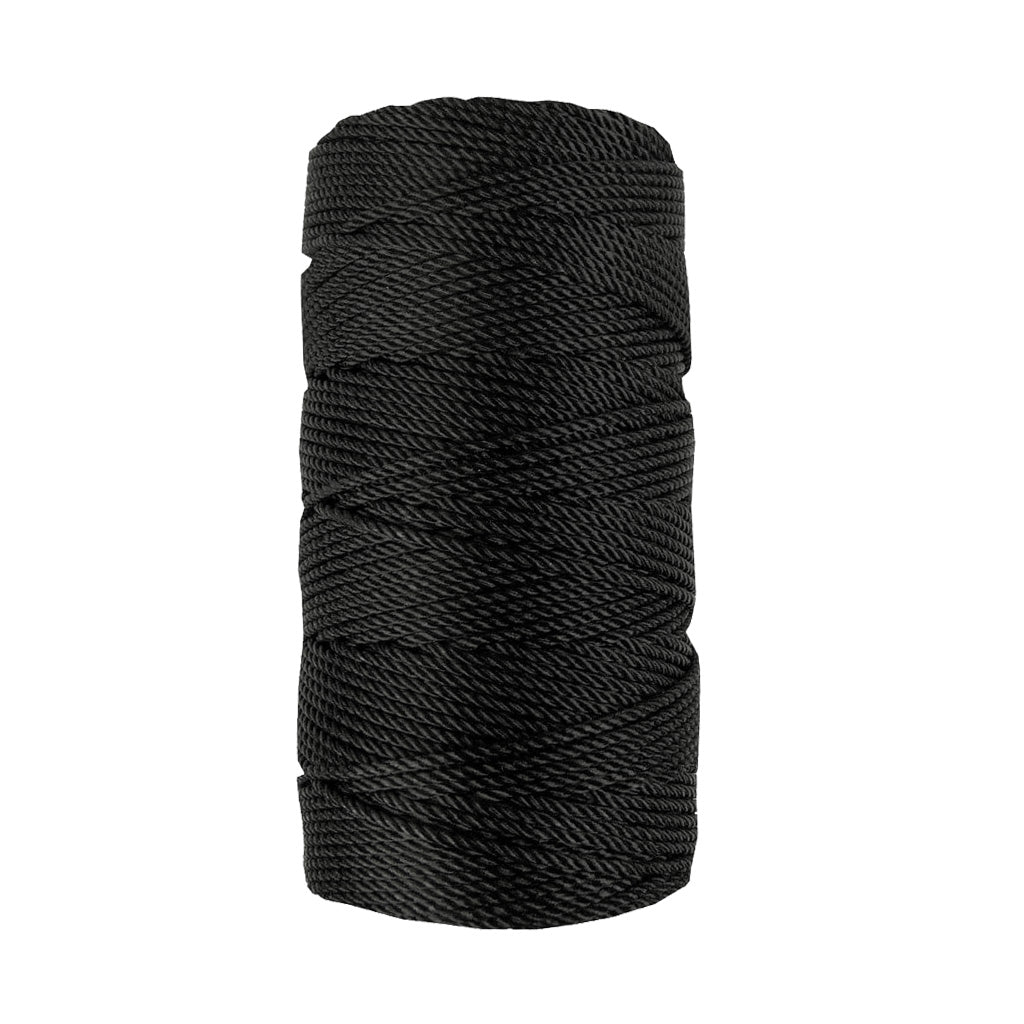
The version distributed by Self Reliance Outfitters relies on a classic three-strand twisted nylon construction impregnated with an oil-based tar treatment. This coating serves two critical functions: it prevents the nylon from rotting or becoming waterlogged in muddy terrain, and it adds a distinct, tacky friction that locks knots securely in place. Where slick commercial cords slip or work loose in gusting wind, bank line bites down and stays put.
Carrying enough line for a multi-day camp build usually requires bulky hanks of 550 cord that swallow prime real estate in your rucksack. A pocket-sized spool of bank line packs roughly four times the usable footage into the same footprint, drastically reducing pack volume without forcing you to ration your lashing material.
Where it fits
Semi-permanent bushcraft camp lashings
Tarp ridgelines and ground tie-outs
Trotline fishing and trap rigging
Emergency gear and pack repairs
Pros
Tacky tar coating prevents knots from slipping loose under load
Fraction of the bulk and weight of standard 550 paracord
Naturally resists UV decay, ground rot, and water saturation
Twisted construction easily separates into three functional threads
Cons
Tar leaves a sticky residue on skin and light-colored gear
Tensioned knots can jam permanently and require cutting
Lower break rating than heavier braided survival cords
The foundation of this utility cord is multi-filament nylon spun into three distinct strands, then twisted under uniform tension before dipping in a weatherproofing net coat. The tar permeates deep into the core fibers rather than sitting as a brittle surface film. This saturating process protects the nylon from ultraviolet breakdown, sub-surface rot, and water saturation during extended rainy stretches. Because the core stays dry, the cord does not freeze solid into an unworkable cable in winter conditions. When cut with a sharp field knife, the ends mushroom slightly and can be cleanly sealed with a quick flame, though the tar prevents the rapid unraveling typically seen on untreated synthetic lines.
Knot Holding and Handling
Handling tarred bank line is completely different from working with slick paracord or braided spectra. The tacky coating provides immediate mechanical friction, meaning simple hitches like taut-line, prusik, and timber hitches lock under load without needing extra wraps or back-up safety knots. Square lashings on green saplings bite into the bark and resist shifting even as the wood shrinks over several days. The trade-off for this grip is that knots tied under high strain can effectively weld shut. If you tie a standard overhand knot or bowline under serious tension, you should expect to cut it rather than pick it apart around the campfire.
Field Packability and Footprint
One of the primary reasons hikers and bushcrafters switch away from heavier utility cord is bulk efficiency. Standard 550 cord requires a significant amount of pack volume to yield a hundred feet, often requiring dedicated exterior pouches or elaborate chain-sinnet braids. In contrast, a quarter-pound spool of number 36 yields over a hundred feet of line in a roll scarcely larger than an apple. You can wrap twenty feet around a knife sheath or an emergency signal whistle without altering the tool's ergonomics. For minimalist setups, this density allows you to carry abundant backup cordage without noticing the physical weight in your pack.
Durability Under Sustained Exposure
Standard commercial cords degrade rapidly when left exposed to constant ground moisture, dirt, and summer sun. Uncoated nylon acts like a sponge, absorbing water, attracting soil grit into its interior weave, and weakening under extended UV exposure. Bank line handles sustained field exposure without flinching. You can lash an improvised camp bench, stake out a lean-to shelter in wet soil, or submerge a trotline for weeks without the fibers weakening or rotting. Even when buried in damp humus or frozen into ground ice, the line maintains its structural integrity and remains easy to handle without turning slimy or stiff.
Versatility and Component Breaking
Because this line uses a three-strand twisted lay rather than a braided sheath, it can be quickly separated in the field into finer utility fibers. Unraveling a six-foot section gives you eighteen feet of thinner, highly durable cordage suitable for repairing pack straps, sewing blown boot seams, or fashioning emergency fishing leaders. Each individual strand retains enough tar residue to keep its twist and resist fraying during detailed needlework. This modular nature makes a single roll a versatile raw material for wilderness problem-solving, far outperforming braided lines that require tedious picking to extract interior threads.
Trade-offs and Competitors
This line is not for every application. The tar treatment carries a distinct asphalt scent and leaves a mild, tacky residue on bare hands during prolonged knot-tying sessions, which can transfer to light-colored garments and clean sleeping bags. It also lacks the 550-pound break strength of true Type III paracord, meaning it should never be used where substantial dynamic shock loads or human suspension are involved. Braided bank line from brands like Catahoula offers smoother feeding and resists tangling better than twisted line, but it cannot be easily unstranded for fine repair work. For structural camp tasks, the twisted variety remains the more versatile choice.
As an Amazon Associate, Wild10 earns from qualifying purchases.
No ratings yet
Pick 06Research-based review
Navy Blue Kevlar Cord
EMMA KITES
Navy Blue Kevlar Cord
EMMA KITES
Fiber Type
100% Braided Kevlar Aramid
Heat Tolerance
Resists melting up to ~800°F decomposition point
Stretch Rating
Near-zero elongation under static load
Protective Finish
Navy blue UV- and abrasion-resistant coating
Structure
Dense hollow braid without inner core strands
Synthetic cordage dominates modern camp kits, but standard nylon paracord and polyester utility lines share a critical flaw: they soften, stretch, and liquefy when exposed to heat. Braided aramid line solves that specific vulnerability cleanly. Built entirely from continuous-filament Kevlar fiber, this cord will not melt, drip, or fuse under sparks or high radiant heat, charring only when temperatures climb past eight hundred degrees Fahrenheit. That makes it the premier choice for pot hangers, grill-suspension lines, and fire-pit tarp tie-outs where conventional cords fail catastrophically.
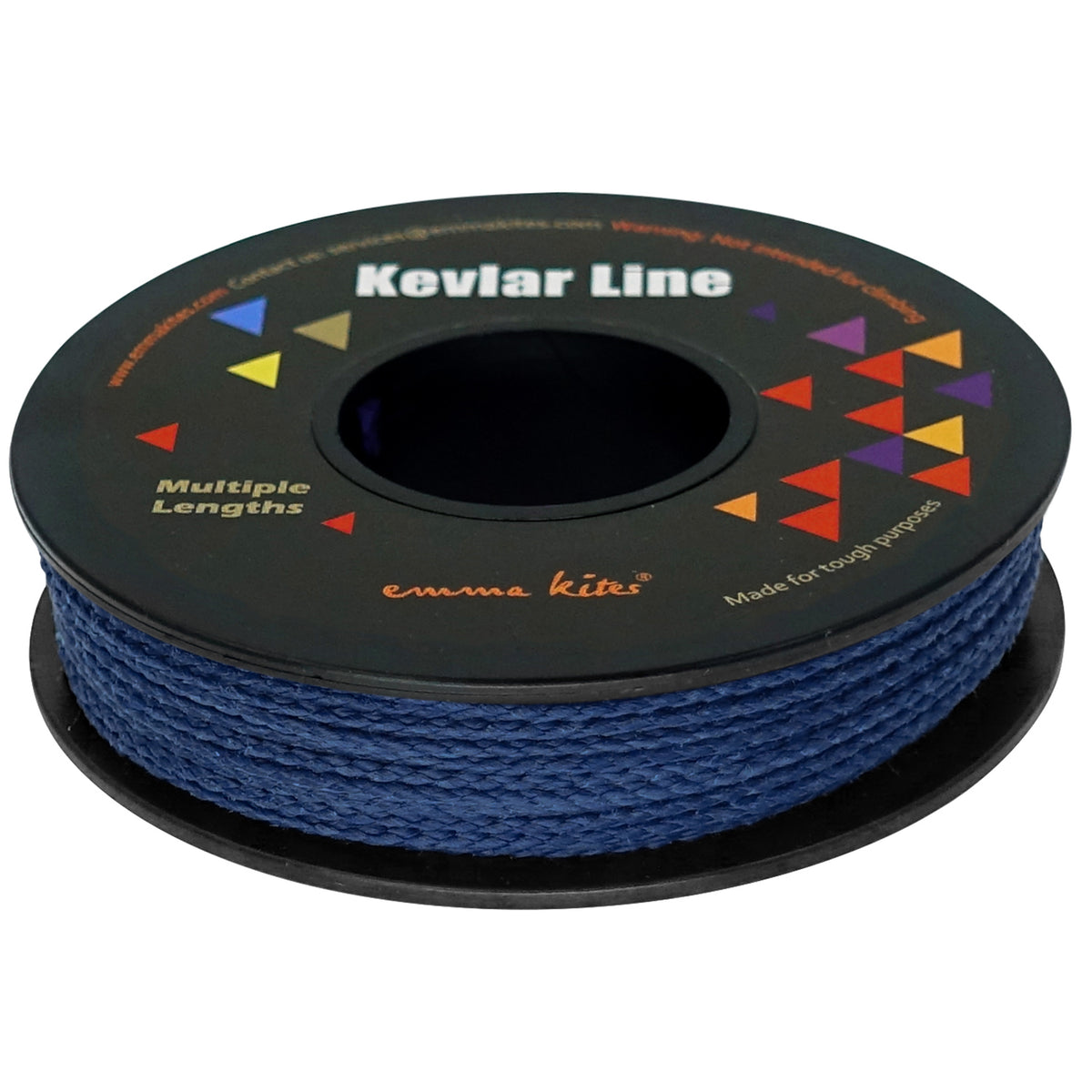
EMMA KITES treatments add a dark navy blue polyurethane bath to the raw golden aramid, which serves two practical field purposes. It tames the frayed, fibrous texture of bare braided Kevlar to improve knot handling, and it shields the underlying fibers from ultraviolet light, which notoriously degrades natural aramid. The line offers astronomical tensile strength for a cord thinner than a stick of standard pencil lead, packing flat spools into the smallest kit pockets with negligible weight.
Living with aramid requires adjusting field habits. It provides virtually zero elongation, transferring shock directly to stakes and anchor points rather than absorbing it. Slicing it cleanly in the woods also ruins common pocketknife edges in short order without a serrated blade or dedicated shears. For dedicated backcountry crafters who understand its mechanical quirks, however, it remains an indispensable specialized tool.
Where it fits
Campfire Dutch Oven Rigging
Zero-Stretch Tarp Ridgelines
Bear Bag Food Suspensions
High-Heat Emergency Lashing
Pros
Will not melt, soften, or fuse when rigged near flames or flying embers
Extreme tensile capacity in an ultra-thin, low-pack-volume diameter
Near-zero elongation keeps tarps drum-tight throughout wet storms
Polyurethane navy coating shields internal fibers from rapid UV decay
Cons
Quickly dulls plain-edge camp knives unless cut with serrations or shears
Slick surface requires deliberate, multi-wrap knots to prevent slippage
Lacks elasticity to absorb sudden heavy shock loads without stressing anchors
Suspending cooking gear or stringing windbreaks near an open fire pit routinely destroys standard nylon cordage, which weakens at temperatures as low as two hundred degrees and melts into molten beads shortly after. This braided aramid behaves entirely differently. When hit by drifting embers or placed directly above a cooking fire to hang a titanium pot, the fiber maintains structural integrity without softening or stretching. It will eventually decompose and char into inert carbon dust once exposed to temperatures beyond eight hundred degrees Fahrenheit, but it never forms the dangerous, sticky liquid drops characteristic of polyester and nylon. That thermal threshold allows you to rig closer to heat sources, utilize greenwood tripods over open flames without wire, and secure reflective fire tarps without fear of radiant heat collapsing your shelter in the middle of the night.
Tensile Muscle in Micro Diameters
The strength-to-diameter ratio of aramid cordage changes how you pack a repair and rigging kit. At diameters where common bank line or paracord might hold fifty to one hundred pounds, braided Kevlar safely manages multiple times that load with virtually zero noticeable bulk. The compact footprint means a fifty-foot spool occupies less pocket space than a box of stormproof matches, yet it can haul heavy dry bags into bear hangs without breaking a strand. Because the braid is dense and uniform, it runs smoothly over branch forks with minimal surface friction, resisting the internal friction burn that often compromises nylon when pulled hard over rough bark. It also shrugs off pinch points in hardware, holding form under high tension where softer sheath-and-core utility cords flatten, slip, and jam inside tight tensioners.
Handling, Cutting, and Knots
Working with aramid cordage in the field exposes its distinct mechanical trade-offs. The ultra-high-tenacity fibers are notoriously tough on plain-edge knives; sawing through this braid with a standard carbon or stainless pocket blade will dull the edge quickly and leave a frayed, messy tail. A micro-serrated blade, trauma shears, or a dedicated line cutter is essential for clean work. Knotting also requires careful selection. The stiff, slick surface does not grip against itself as cooperatively as tarred twine, meaning casual square knots or single half-hitches will creep and pull free under load. To lock tension reliably, you must lean on multi-turn friction hitches, such as the Blake's hitch, taut-line hitch with an extra wrap, or a carefully dressed figure-eight on a bight, which lock down cleanly without jamming irreparably under extreme load.
UV Defense and Environmental Durability
Natural, untreated Kevlar carries an Achilles' heel: ultraviolet radiation rapidly breaks down its chemical bonds, turning the bright yellow fibers brittle and weak after extended exposure to direct sunlight. EMMA KITES counters this vulnerability by saturating the braid in a dark navy blue polyurethane pigment. The dark coating creates a physical barrier against sunlight, vastly extending the operational lifespan of semi-permanent shelter tie-outs and drying lines left pitched for weeks. The coating also seals the exterior against moisture ingress, preventing the line from absorbing water, freezing stiff in sub-zero winter camps, or holding grit that could grind down the core. While still less UV-stable over multi-year setups than premium marine-grade polyester, the colored barrier turns an otherwise fragile aerospace fiber into a dependable, weather-hardy outdoor supply.
Comparative Trade-offs and Value
At this price bracket, outdoor cordage choices generally split between tarred nylon bank line, traditional 550 paracord, and ultra-high-molecular-weight polyethylene lines like Dyneema. Dyneema matches or exceeds Kevlar for raw strength-to-weight and boasts superior chemical slickness, but it shares nylon's fatal weakness of melting at low temperatures, making it useless around campfires. Tarred bank line handles knots more intuitively and costs less, but it weighs considerably more, bulks up quickly on a spool, and burns readily. The navy braided Kevlar sits in a distinct operational sweet spot: lighter and thinner than paracord, tougher and more heat-tolerant than Dyneema, and cleaner to handle than oily bank line. If campfire safety and zero-stretch performance matter more than casual knife-cutting convenience, it justifies its specialized spot in your pack.
As an Amazon Associate, Wild10 earns from qualifying purchases.
No ratings yet
Pick 07Research-based review
Ironwire High Strength Accessory Cord
Lawson Equipment
Ironwire High Strength Accessory Cord
Lawson Equipment
Core Material
High-modulus Dyneema (UHMWPE)
Sheath Material
Braided high-tenacity polyester
Stretch Profile
Near-zero elongation under load
Country of Origin
Made in USA
Water Absorption
Negligible moisture retention
Structure
Double-braid jacketed core
Anyone who has pitched a tarp with standard military-spec paracord knows the midnight sag. Wet nylon stretches under tension, leaving your shelter flapping in the wind and pooling rainwater by sunrise. Lawson Equipment addressed this exact failure point with Ironwire, an ultra-low-stretch accessory cord purpose-built for backcountry utility where structural tension cannot fail.
Crafted with a high-strength Dyneema core encased in an abrasion-resistant, tightly woven polyester sheath, this cord eliminates elongation without becoming completely unworkable in the hand. The hybrid construction gives it immense tensile capability while allowing the sheath to grip hardware and take friction knots better than slick, uncovered 100 percent Dyneema lines like Zing-It.
Where it fits
Continuous tarp ridgelines
PCT-style bear bag hanging
Stormproof hammock foul-weather guyouts
Rigid structural tent anchoring
Pros
Zero stretch maintains tarp tension through heavy storms and temperature shifts
Jacketed construction holds friction knots better than bare Dyneema lines
Hydrophobic fibers will not freeze solid or absorb water weight
High strength-to-diameter ratio significantly reduces pack bulk
Cons
Zero dynamic stretch transfers shock loads straight into shelter tie-outs
Knots pulled under heavy loads can be difficult to untie in the cold
Priced substantially higher than standard nylon utility cord
The interior fibers are genuine Dyneema, a high-modulus polyethylene renowned for boasting a strength-to-weight ratio that rivals steel wire. Unsheathed Dyneema cords are notoriously slippery, making standard knotcraft difficult and line hardware prone to slipping. Lawson combats this by braiding a dense polyester jacket over the core. This exterior gives the cord just enough tactile bite to seat a trucker hitch or hold a taut-line hitch, while the internal fibers handle the primary tensile strain without yielding under overnight load.
Field Handling and Knotcraft
In freezing temperatures or rain, the line handles far better than smooth, single-braid throw lines. The outer jacket provides reliable friction against itself, meaning prusik loops and friction hitches actually bite instead of sliding freely along the line. However, because the Dyneema core does not deform or compress like nylon, tight bends can be stubborn to untie after days of heavy tension. Dressing knots cleanly and ensuring hitches are seated properly before applying full tension is mandatory with cordage of this stiffness.
Real-World Rigging Performance
Strung across trees for a continuous tarp ridgeline, the line feels like a rigid bar once pulled tight. You can hang heavy soaked canvas or lightweight silpoly tarps in gusting gale-force winds, and the line will remain as drum-tight the following morning as when it was rigged. It does not stretch when wet, nor does it relax under continuous sustained tension. For food bag hangs, the slick jacket reduces friction over tree branches, though users must be careful not to saw into soft bark under heavy loads.
Weight and Pack Space
Because of its immense strength, a camper can step down in cord diameter without sacrificing safety margins, cutting bulk from a ditty bag. A fifty-foot hank coils tightly and fits inside a standard pocket or the corner of a stake bag with negligible mass. Unlike hollow nylon cords, the tight braid and hydrophobic Dyneema prevent it from absorbing water weight during downpours, so you never end up packing damp, frozen line into your dry kit.
Durability and Abrasion
The tightly woven polyester cover provides exceptional protection against rough rock edges, gritty dirt, and tree bark. Lawson weaves the sheath tightly to prevent dirt grains from migrating into the core, where they would otherwise act as internal abrasives against the Dyneema strands. Prolonged UV exposure degrades the polyester mantle slowly over several seasons of heavy exposure, but the core remains protected, delivering a working life that outlasts cheaper hardware-store cords by years.
The Honest Trade-Offs
This is a specialized utility cord, not an all-purpose shock absorber. The complete lack of stretch means any shock load, like a falling branch or a trip on a guyline, transfers instantly to your shelter stakes or tarp tie-outs, potentially ripping seams or pulling anchors. It also costs significantly more per foot than standard 550 cord or utility bank line. If you need dynamic give or cheap, sacrificial string for field repairs, reaching for an expensive Dyneema hybrid is counterproductive.
As an Amazon Associate, Wild10 earns from qualifying purchases.
No ratings yet
Pick 08Research-based review
Reflective Glowire Cord
Lawson Equipment
Reflective Glowire Cord
Lawson Equipment
Materials
High-tenacity polyester with 3M reflective yarn
Construction
Double-braid jacket over parallel core
Available Diameters
2mm, 2.5mm, 3mm, and 5mm
Stretch Profile
Ultra-low elongation
Country of Origin
Made in the USA
Primary Focus
Shelter guylines and ridgelines
Lawson Equipment developed Glowire specifically for wilderness campers tired of tripping over invisible tie-outs and retightening sagging shelters at two in the morning. Traditional nylon utility cords stretch noticeably under tension, absorb ambient moisture like a wick, and completely vanish against the forest floor once twilight settles. Glowire addresses these exact backcountry headaches by swapping out stretchy nylon for dense, pre-stretched polyester and integrating genuine reflective tracers directly into the outer sheath.
Manufactured in the United States, this specialty line features a distinct, wire-like stiffness that immediately separates it from common hardware-store cordage. It holds its shape, sheds water almost instantly, and glides effortlessly through micro-tensioners without snagging or flattening out. Offered in multiple diameters to suit everything from ultralight cuben-fiber tarps to beefy four-season mountaineering domes, it is built with an exacting attention to detail that experienced shelter users appreciate. While casual car campers might balk at replacing factory-supplied cord, anyone who has spent a miserable night in gale-force winds adjusting wet ridgelines understands the massive difference purpose-built cordage makes.
Where it fits
Ultralight tarp shelter guylines
Four-season storm tie-outs
Nighttime camp perimeter rigging
Backcountry bear bag hanging
Pros
Virtually zero stretch keeps shelter pitches drum-tight through rain
At the core of this cord is high-tenacity polyester, chosen deliberately over commercial nylon for its structural stability and natural resistance to water absorption. The outer jacket is braided tightly around a parallel strand core, creating a round, firm cross-section that refuses to collapse into a ribbon under load. Woven into that exterior sheath are dual strands of authentic 3M Scotchlite reflective material, embedded flush against the polyester fibers so they do not abrade or peel away with repeated use. Cutting the line requires a sharp blade, and melting the trimmed ends demands a quick touch with a flame, as the polyester fuses cleanly while sealing the reflective fibers into place. The end result is a tough, cohesive line that withstands abrasive ground contact against granite, limestone, and rough wooden stakes without fuzzing up prematurely.
Real-World Pitch Stability
In field conditions, the defining characteristic of this line is its utter refusal to stretch when wet. Many campers blame their tent fabric for overnight sag, unaware that standard nylon tie-outs can stretch as much as ten percent once rain or heavy morning dew sets in. Because polyester fibers do not relax when damp, a shelter anchored with this cord maintains drum-tight tension from dusk until dawn, preserving interior volume and preventing fly sheets from slapping against inner mesh walls. The dense weave also shrugs off torrential moisture, meaning you never pack away heavy, waterlogged coils that soak your shelter sack. In sub-freezing weather, the low water retention pays further dividends by preventing the cord from freezing into brittle, unmanageable sticks that refuse to untie.
Nighttime Visibility in Camp
The 3M reflective tracers provide exceptional visibility that transforms camp safety around dusk. Under the direct beam of a modern LED headlamp, the dual reflective spirals catch light from dozens of yards away, illuminating the campsite perimeter with bright, distinct dashes. This immediate visual feedback effectively eliminates the clumsy, frustrating midnight trip hazards that plague dark group camps and threaten to pull tent stakes from loose ground. Unlike cheap novelty cords that rely on glow-in-the-dark pigments that fade within twenty minutes of sundown, the retroreflective tracers operate indefinitely by returning available directional light back to its source. The tracers remain equally functional through heavy rain, standing out sharply against dark undergrowth and dense timber.
Hardware Compatibility and Knotting
The round, structured profile works exceptionally well with modern shelter hardware, particularly plastic cleats like LineLoc 3 tensioners and aluminum guyline adjusters. Where soft, limp paracord tends to jam or slip under sudden wind gusts, this cord bites firmly into mechanical teeth without jumping its track. Tying knots requires a minor mental adjustment due to the line's inherent memory and springiness; tight bends like bowlines, taut-line hitches, and Blake's hitches seat securely once dressed properly, but loose wraps can unravel if not firmly drawn down. The significant advantage of this stiffness is its total resistance to bird-nesting. You can stuff untied lines into a backpack pocket, yank them out hours later, and shake them free without picking at infuriating micro-tangles.
Weight and Field Handling
Carrying a full shelter kit of this cord adds negligible weight to an ultralight setup, particularly in the popular two-millimeter diameter. It rolls into compact hanks that slide neatly into stake bags alongside titanium pegs, never demanding excess pack volume. The firm, textured jacket provides excellent tactile purchase when working with cold or gloved fingers, a welcome contrast to slick, gel-spun braided lines that slip through damp palms. Pulling tension across rocky terrain reveals minimal surface friction, allowing guylines to glide smoothly around tree trunks or through boulder choke points without snagging bark. Its low-drag surface also simplifies teardown, allowing solo backpackers to rapidly coil lines without catching stray twigs or forest floor duff along the way.
Alternatives and Honest Trade-Offs
While this cord reigns supreme for shelter rigging, it is not a direct substitute for general-purpose utility ropes like 550 paracord or tarred bank line. Its lack of dynamic stretch means it offers zero shock absorption, transferring sudden shock loads directly to your shelter's tie-out webbing and stake anchors. Ultralight purists often cross-shop it against pure UHMWPE lines like Zing-It or Dyneema throw lines, which offer higher raw tensile strength for less weight but are notorious for slipping in tensioning hardware and holding stubborn tangles. At a higher price per foot than standard hardware-store nylon, this cord is an investment specifically for pitch reliability and nighttime safety rather than a bulk material you recklessly hack apart for improvised gear repairs.
As an Amazon Associate, Wild10 earns from qualifying purchases.
No ratings yet
Pick 09Research-based review
3 mm Accessory Cord
Sterling
3 mm Accessory Cord
Sterling
Material
100% Nylon kernmantle
Diameter
3 mm
Tensile Strength
472 lbs (2.1 kN)
Construction
Braided exterior over twisted core
Origin
Made in USA
Elongation
Moderate stretch under load
Climbers have relied on dedicated accessory cord for decades, but backcountry travelers often overlook it in favor of standard 550 paracord. That is a mistake. Sterling crafts this 3 mm line with a true kernmantle construction, pairing a twisted nylon core with a tightly woven, durable nylon sheath. The result is a utility line that behaves predictably under tension, holding a clean round profile where commercial paracord flattens out into an awkward ribbon.
In hand, the cord feels supple and forgiving. It strikes a rare balance between flexibility and structural integrity, allowing you to tie secure friction hitches and complex lashings without fighting stiff core fibers. Because the sheath weave is remarkably dense, dirt and grit struggle to penetrate the core, significantly extending the working life of the line in abrasive desert or alpine environments.
While ultralight Dyneema and Kevlar lines beat nylon on sheer tensile strength, they suffer from slickness and poor knot retention. Sterling's nylon cord solves that friction problem entirely. It grips bark, carabiners, and itself with authority, making it the premier choice when knot security matters far more than saving a few grams in your pocket.
Where it fits
Tarp ridge lines
Secondary gear lashings
Backcountry bear hangs
Emergency footwear laces
Pros
Exceptional knot retention with zero slippage on friction hitches
Dense sheath resists abrasion and grit intrusion much better than paracord
Holds a round cross-section under tension rather than flattening out
Soft hand feel makes handling comfortable in freezing conditions
Cons
Absorbs water and stretches slightly during prolonged rain
Heavier and bulkier per foot than equal-strength Dyneema lines
Lower tensile strength than high-modulus polyethylene cords
Sterling builds this cord using climbing-rope architecture scaled down to a miniature package. The core consists of twisted nylon filaments that provide the bulk of the tensile strength, shielded by a tightly braided outer mantle. This dense sheath protects against sharp rock edges, granite friction, and coarse dirt that routinely chew through loosely braided hardware-store twine. Unlike basic commercial paracord with floating internal strands, the core and sheath of this accessory cord work as an integrated unit, preventing the dreaded sheath slippage that ruins lines when tensioned across rough anchor points.
Field Handling and Knot Security
The standout attribute of nylon accessory cord is its tactile grip. Slick cords made from ultra-high-molecular-weight polyethylene frequently slip under load unless finished with specialized stopper knots. Sterling's nylon fibers exhibit natural friction that bites down on hitches, whether you are dressing a taut-line hitch on a shelter corner or tying a prusik around a larger host rope. The line takes knots cleanly, holds its shape without collapsing flat, and remains reasonably easy to untie even after bearing a heavy overnight load in wet, freezing weather.
Tensile Limits and Safe Use
Rated at 472 pounds, this cord offers plenty of strength for non-life-safety tasks. It functions reliably for guyouts, ridge lines, bear hangs, pack compression straps, and field bootlace replacements. However, users must remember that 3 mm cordage is not designed for human ascension or personal fall arrest. In practical camp applications, working loads should rarely exceed a fraction of the breaking limit to account for knot degradation, which can sap roughly fifty percent of total line strength depending on the knot chosen.
Weather and Environmental Durability
Nylon is inherently tough against abrasion and moderate ultraviolet exposure, outlasting cheaper polypropylene twines under constant sun. Its primary vulnerability is water absorption. When soaked during sustained rain, nylon cord absorbs moisture, gains noticeable weight, and can lose roughly ten to fifteen percent of its rated breaking strength until dry. Wet nylon also tends to elongate slightly more under continuous tension, requiring you to snug up shelter guyouts once or twice during a prolonged downpour.
Packability Versus Ultralight Options
Carrying fifty feet of 3 mm cord adds negligible volume to a backpack lid or repair pouch, coiling down tightly without bird-nesting. While it weighs more than hollow-braided aramid or micro lines, the added bulk pays dividends in usability. Thin micro cords under two millimeters tend to cut painfully into your hands when hauling heavy loads and easily jam into stubborn, permanent knots. This diameter provides enough body to wrap around cold fingers comfortably while remaining light enough for minimalist wilderness travel.
Competitive Trade-Offs
When stacked against milspec 550 paracord, the Sterling line is thinner, holds a rounder cross-section, and resists fraying far better over time. Against high-tech Dyneema lines like Zing-It or Lash-It, it loses heavily on raw strength-to-weight ratio and absorbs water where polyethylene sheds it completely. Yet those slick cords struggle with hitch holding and tangle relentlessly. Choosing Sterling comes down to utility: if you want dependable knot retention and effortless handling over laboratory-tested tensile numbers, this cord wins.
As an Amazon Associate, Wild10 earns from qualifying purchases.
No ratings yet
Pick 10Research-based review
Snakeskin SurvivorCord
TITAN Survival
Snakeskin SurvivorCord
TITAN Survival
Core Makeup
7 Nylon Strands + Jute, Brass, and Mono Line
Tensile Rating
Exceeds 600 lbs
Outer Sheath
32-Strand Braided Nylon
Pattern Style
Snakeskin Camouflage
Diameter
Approx. 4.5 to 5.0 mm
Fire Component
Paraffin-Waxed Jute Fiber
Standard 550 cord has long served as the jack-of-all-trades in backcountry packs, but TITAN Survival pushed the concept to its logical extreme when developing SurvivorCord. Built around the proven architecture of a braided nylon outer sheath and multi-strand core, this line incorporates three dedicated emergency assets directly alongside its structural nylon threads. It is tailored specifically for survivalists, preppers, and solo adventurers who insist that every ounce of kit perform multiple functions in a crunch.
The subdued Snakeskin pattern houses an inner anatomy that reads like an emergency manifest: standard triple-strand nylon filaments share the interior with waxed jute tinder, a high-test monofilament fishing line, and a ductile brass snare wire. It earns the final spot on our curated list not because it fails in field durability, but because it is fundamentally a specialty failsafe. When your primary goal is rigging a standard tarp or securing a canoe painter, dedicating expensive, specialized cordage to mundane chores proves awkward and cost-prohibitive.
In true survival scenarios, however, having immediate access to combustible tinder and snare wire without rummaging through a pack provides undeniable utility. The line strikes an unapologetic balance between general-purpose utility line and emergency insurance policy, delivering exceptional tensile capability wrapped in a durable, weather-resistant package.
Where it fits
Emergency Vehicle Kits
Knife Handle Lanyards
Bug Out Bags
Backcountry Survival Tins
Pros
Waxed jute core catches a ferrocerium spark instantly even in wet weather
Internal brass wire holds loops firmly for bushcraft snares and wire repairs
Consolidates critical survival supplies inside your primary structural cordage
Heavy-duty outer sheath offers exceptional resistance to rock abrasion
Cons
Noticeably stiffer and harder to dress into tight knots than standard cord
Harvesting internal survival components permanently ruins that section of line
Significantly higher cost per foot compared to commercial 550 cord
Beneath the high-density nylon sheath sits a layered internal core that differentiates this product from any commercial paracord on the market. Seven individual three-ply nylon strands provide the foundation, handling bulk tensile loads and resisting sudden shocks. Sandwiched alongside these conventional elements are three distinct survival lines: a single strand of twenty-five-pound test monofilament, a strand of multi-filament brass wire designed for small-game trapping or electrical bridging, and a strand of waxed jute fiber. The exterior weave is tight and uniform, protecting the sensitive interior components from abrasion against rock, grit, and rough timber. The execution is remarkably cohesive given the dissimilar materials stuffed inside, though the sheer density makes the line feel noticeably thicker in the hand than standard Mil-Spec cordage.
Field Testing the Sub-Strands
The integrated assets prove their worth once you separate them from the main body. The waxed jute strand fluffs up easily with the back of a bushcraft knife, catching sparks off a ferrocerium rod even in damp conditions because the paraffin wax prevents water absorption. The monofilament fishing line has minimal memory out of the sheath, making it practical for tying makeshift handlines, trotlines, or sewing torn canvas. The brass wire is supple enough to wrap tight snare loops for squirrels or rabbits, yet rigid enough to hold its shape when suspended over a game trail. None of these sub-strands outperform dedicated spools of professional gear, but having all three sealed waterproof inside your main lashing cord provides real peace of mind.
Handling and Knot Craft
Tying off this cord requires deliberate effort compared to standard nylon utility rope. The brass wire and waxed jute add significant stiffness to the core, which prevents the line from flattening out over friction points. Hitches like the taut-line and clove hitch hold securely under load, but tightening small, intricate bends requires sustained finger pressure. Knots also tend to have a bulkier profile, which can cause snagging when dragging gear through brush or hauling heavy packs. Untying dressed knots after heavy tension is slightly easier than with standard hollow cords because the dense core resists complete crushing. Still, anyone accustomed to the supple, fluid hand-feel of well-worn 550 paracord will immediately register the unyielding character of this reinforced build.
The Packability Penalty
Because brass and wax are inherently heavier and denser than standard nylon filaments, a hundred-foot hank carries a distinct weight penalty. It coils with more resistance and takes up roughly twenty percent more physical volume in a pack pocket than standard commercial cordage. Wrapping it tightly around survival knife handles, sheath lanyards, or gun slings is an efficient way to offset this footprint, turning dead space on your existing loadout into a self-contained cordage cache. For lightweight backpackers or thru-hikers watching base weight by the gram, standard bank line or Kevlar micro-cord remains a far more practical pick. This line belongs where absolute reliability in an isolated emergency takes precedence over ultralight trail efficiency.
The Extraction Catch-22
The primary operational flaw with multi-component cordage lies in the destructive nature of extraction. In order to access the fishing line, snare wire, or fire tinder, you must slice into the outer nylon sheath and pull the core strands out. Once you gut the cord for a five-inch piece of jute to light your evening stove, that entire section of rope loses its structural integrity and safety rating. In a genuine life-or-death crisis, sacrificing cordage to build fire or catch food is an obvious trade, but in typical camp situations, it creates hesitation. You will rarely want to butcher your expensive ridgeline just to mend a tear or start a campfire when ordinary fire starters remain available.
Value and Realistic Alternatives
At this price bracket, you are paying a sharp premium for integration rather than pure raw strength. A savvy outdoorsman could carry a fifty-foot hank of standard utility paracord, a small spool of brass wire, and a tin of storm matches for similar weight and lower overall cost. However, the true appeal here is consolidation. When rigging emergency kits for vehicles, life rafts, or pilot bail-out bags, having survival tools physically tethered inside your shelter line ensures you never drop or lose them separately. Compared to niche alternatives like commercial aramid cords or thin dyneema, this hybrid line sacrifices pack efficiency to ensure you always have food procurement, mechanical wire, and fire capability within arm's reach.
One pick for each kind of outdoor cord: 550 and 750 paracord, micro and nano cord, tarred bank line, Kevlar, Dyneema, reflective guyline, nylon accessory cord and survival cord.
Key takeaways
#1 550 Type III MIL-C-5040 Paracord — Paracord Planet
#2 750 Mil-Spec Type IV Paracord — Paracord Planet
#3 1.18mm Micro Cord — Atwood Rope MFG
#4 .75mm Nano Cord — Atwood Rope MFG
#5 No.36 Bank Line — Self Reliance Outfitters / Pathfinder
#6 Navy Blue Kevlar Cord — EMMA KITES
Intended uses
Gear
Verification notes
Editorial ranked list, 10 entries. Evidence mix — 10 research only. Buy links open the maker or a retailer search.
How we chose
Last updated
Ranked by Wild10 Editorial Team, Research desk
We compared widely available cordage by type using maker specifications, retailer listings and published reviews, then ranked 10 against the same criteria below. This is desk research unless a pick is marked field tested. Rankings are editorial. No brand pays for placement, and affiliate links never move a pick up or down.
Real-world durability
How the material, stitching, or steel holds up after a season of hard use — not how it looks new.
Performance in bad conditions
Wind, rain, cold, and grit are the test. Anything that only works on a nice day gets marked down.
Weight and packability
Every ounce has to earn its place in the pack, but not at the cost of something that fails in the field.
Ease of use
Setup, adjustment, and maintenance with cold hands, in the dark, without the manual.
Value at its price point
Compared against the closest competitors in the same tier, not against cheaper gear in a different class.
Repairability and support
Field-fixable design, available parts, and a warranty the maker actually honors.
How often we recheck this: Reviewed on a rolling basis and rechecked at least once a year, or sooner if a pick is discontinued, revised, or beaten by something new.
Best cordage by type for a specific job
Skip the ranking — jump to the pick that matches how you actually use it.
Our editors test the gear, pick the ten, and set the order the day a list publishes. After that, the ranking is live: every member star rating feeds the community order, so picks climb or slide as real owners report back. Editorial judgment decides what earns a spot — you help decide where it sits.
Editors set the field
Verified specs, feature and use-case comparison, and outside sources choose the ten and the published order; field-tested picks are labeled.
Readers re-rank it
Your 1–5 star ratings drive the community order on every list.
Rankings keep moving
Picks rise or fall over time — nothing is frozen at launch day.
Award picks
The ranking above is price-blind and judged on merit. These awards call out the pick we'd hand a specific person with a specific need.
Carry 550 Type III paracord as your all-round cord, add micro or nano cord for repairs, and use bank line for lashings. Choose Lawson Ironwire or Glowire for low-stretch ridgelines and guylines, Kevlar near fire, and Type IV only when you need extra strength.
How to choose cordage by type
Every pick on this page was judged against the same criteria. If you want the short answer, 550 Type III MIL-C-5040 Paracord by Paracord Planet is the one we point most people at. If you want to decide for yourself, here is what actually separates a good cordage by type from an expensive one.
Real-world durability
How the material, stitching, or steel holds up after a season of hard use — not how it looks new.
Performance in bad conditions
Wind, rain, cold, and grit are the test. Anything that only works on a nice day gets marked down.
Weight and packability
Every ounce has to earn its place in the pack, but not at the cost of something that fails in the field.
Ease of use
Setup, adjustment, and maintenance with cold hands, in the dark, without the manual.
Value at its price point
Compared against the closest competitors in the same tier, not against cheaper gear in a different class.
Repairability and support
Field-fixable design, available parts, and a warranty the maker actually honors.
Match the pick to your use
The right cordage by type depends on what you are actually doing with it: General camp utility rigging; Tarp setup and shelters; Emergency vehicle survival kits; Field gear repairs; Securing vehicle roof loads; Big game quarter hanging. Start from the use case, then work down the ranking until you hit the first pick that covers it.
Common mistakes
Buying the lightest cordage by type you can find and discovering it cannot take a season of hard use.
Paying for a specialist feature you will use once a year instead of the versatile option.
Comparing headline specs across tiers instead of within the same class.
Skipping fit, sizing, or adjustment checks that decide whether you actually carry it.
Frequently asked questions
What is the best cordage by type?
550 Type III MIL-C-5040 Paracord by Paracord Planet takes the top spot. Best all-round camp cord: certified Type III 550 in lengths from 1 ft to 1,000 ft.
How did The Wild10 choose and rank these cordage by type?
We judged every pick against the same criteria — real-world durability, performance in bad conditions, weight and packability, ease of use — and ranked them on merit regardless of price. One pick for each kind of outdoor cord: 550 and 750 paracord, micro and nano cord, tarred bank line, Kevlar, Dyneema, reflective guyline, nylon accessory cord and survival cord.
550 Type III MIL-C-5040 Paracord vs 750 Mil-Spec Type IV Paracord — which should I pick?
550 Type III MIL-C-5040 Paracord ranks first: Best all-round camp cord: certified Type III 550 in lengths from 1 ft to 1,000 ft. 750 Mil-Spec Type IV Paracord is the close second: Heavy-duty pick: 750 lb minimum break strength and 11 inner strands. Our full head-to-head compares them side by side.
How often is this list updated?
We review this ranking on a rolling basis and update it whenever a pick is discontinued, meaningfully revised, or beaten by something new. Rankings are editorial — brands do not see them before publication and affiliate links never change the order.