


Reader rating
Rate it and you move it. Community ratings re-rank this product inside its Top 10 list.
Expert-picked, reader-ranked. Our editors choose the products and the launch order; member star ratings move picks up or down over time.
Best all-round camp cord: certified Type III 550 in lengths from 1 ft to 1,000 ft.
Pros
- Seven-strand removable core allows field extraction of fine repair thread
- Holds common camp knots securely without slipping or creeping
- Tough nylon mantle resists fraying on sharp rock edges and coarse bark
- Thick enough to tension by hand without slicing into skin
Cons
- Significant natural stretch causes tarp ridgelines to sag overnight
- Nylon absorbs water and can freeze stiff in sub-zero weather
- Noticeably bulkier and heavier than modern micro cords and Dyneema
Best uses
- General camp utility rigging
- Tarp setup and shelters
- Emergency vehicle survival kits
- Field gear repairs
- Securing vehicle roof loads
Specifications
- Tensile Rating
- 550 lbs minimum breaking strength
- Construction
- 32-strand woven sheath, 7-strand inner core
- Material
- 100% continuous filament nylon
- Nominal Diameter
- Approximately 5/32 inch (4 mm)
- Elongation
- Roughly 30% stretch at break
- Origin
- Manufactured in the USA
Pricing
We don't publish a price we haven't verified. The retailer links below open the live listing for this exact model.
Best for
General camp utility rigging, Tarp setup and shelters, Emergency vehicle survival kits, Field gear repairs, Securing vehicle roof loads
Where to buy the 550 Type III MIL-C-5040 Paracord
We don't have a direct Amazon listing on file yet — this opens an Amazon search for the exact make and model.
Some links are affiliate links. Buying through them supports our testing at no extra cost to you.
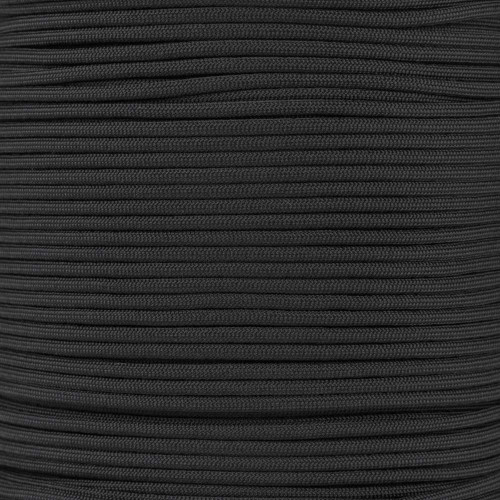
Genuine Type III 550 paracord remains the gold standard utility line for general outdoor work, and Paracord Planet's MIL-C-5040 variant delivers the real deal rather than cheap decorative craft rope. Built with a 32-strand braided nylon sheath encasing seven individual inner strands, this cord offers an exceptional balance of tensile strength, knot security, and tactile grip. It has earned its place in rucksacks for decades because it strikes the sweet spot between working diameter and sheer utility. While ultralight backpackers often scoff at its bulk and bushcrafters debate its stretch, standard 550 cord solves problems in camp that thinner, slicker high-tech lines fumble. It cuts cleanly with a pocket knife, melts shut reliably with a lighter, and provides enough surface area that it will not bite painfully into bare hands when hauling on a heavy ridge tie-out. If you only have room for one hank of cordage in your vehicle or camp box, this is still the benchmark.
Materials and Mil-Spec Build
Commercial imitations frequently cut corners by substituting polyester jackets or loose, unplied fiber filler inside. True military-spec Type III cord relies entirely on high-grade nylon, featuring seven core yarns twisted into multi-ply strands. This architecture yields a consistent 550-pound static breaking limit and high abrasion resistance across rough granite and tree bark. The outer sheath weaves tightly enough to resist snagging on brush, yet remains pliable in sub-freezing temperatures. Cutting a section exposes individual inner yarns that can be pulled independently for fine tasks like gear repair, improvised fishing rigs, or stitching blown boot seams. Because it is all nylon, heat-sealing cut ends produces a uniform, clean bead rather than a charred mess.
Field Handling and Knots
One of paracord's greatest practical assets is friction. Modern UHMWPE lines like Dyneema are notoriously slippery, demanding specialized hitches that resist creeping under load. Paracord holds standard working knots effortlessly. Bowlines, taut-line hitches, and clove hitches bite securely without slipping, even when soaked by continuous autumn rain. Despite that grip, the cord remains relatively easy to untie after being tensioned overnight, provided you avoid over-cinching dead knots. The four-millimeter thickness sits comfortably in cold, stiff fingers, allowing quick rigging and adjustments while wearing work gloves. For general tarp rigging, lashings, and anchor points, the tactile feedback outclasses almost every slick, micro-diameter cord on the shelf.
Real-World Versatility
The ability to field-strip paracord into sub-components gives it multi-tool utility that solid-braid ropes cannot match. Removing the seven core strands yields roughly eight times the original cut length in lightweight utility thread. Hunters frequently use single inner strands to hang game quarters or secure gear blinds, while keeping the structural sheath intact as a flat binding strap. Outside of camp tasks, the cord functions well for dragging firewood, setting up clotheslines, replacing broken pack straps, and rigging trail splints. It is durable enough to endure weeks in full sunlight without catastrophic UV degradation, though extended multi-year exposure will eventually bleach the fibers and diminish overall tensile strength.
Bulk and Packability
Fifty feet of standard 550 cord takes up roughly the volume of an enamel camp mug and weighs close to four ounces. For car campers, hunters, and canoe travelers, that footprint is negligible. For ounce-counting backpackers traveling long distances, however, carrying one or two hundred feet of full-size paracord represents unnecessary dead weight. It packs down reasonably well when wound into a tidy figure-eight hank or donut spool, but it will crowd out small hip-belt pockets and tight emergency pouches. Those pursuing strictly minimalist shelters will find that smaller cords provide sufficient breaking strength with half the packed bulk, making standard paracord better suited for base camps than fast-and-light pushes.
The Inevitable Trade-offs
Nylon cordage carries two distinct weaknesses: elasticity and water absorption. Paracord can stretch up to thirty percent under sustained load, meaning a taut tarp ridgeline rigged in the evening will often sag noticeably by dawn, especially when weighted by rain. Furthermore, nylon absorbs ambient moisture, increasing packed weight when wet and freezing rock-hard in winter conditions. Wet paracord is noticeably tougher to untie if frozen solid. If you require zero-stretch performance for suspended hammock tarps or precise mechanical rigging, braided polyester or aramid lines are vastly superior choices. Accepting paracord means planning around its inherent flex and moisture retention.
How It Stacks Up
Compared to tarred mariner's bank line, paracord is thicker, easier on bare hands, and significantly simpler to untie and reuse. Bank line is much cheaper, packs tighter, and resists rot better, but it lacks the comfort and sheer shock absorption of nylon. Against premium Dyneema cordage, paracord is heavier and stretchier, but it costs a fraction of the price and does not require complex knots to prevent slippage. Micro cords are excellent for zipper pulls and small lanyards, but they lack the backbone for dragging logs or securing loose roof-rack loads. For general utility across varied environments, 550 cord remains the most forgiving compromise.
How we chose
We compared widely available cordage by type using maker specifications, retailer listings and published reviews, then ranked 10 against the same criteria below. This is desk research unless a pick is marked field tested. Rankings are editorial. No brand pays for placement, and affiliate links never move a pick up or down.
- Real-world durability
- How the material, stitching, or steel holds up after a season of hard use — not how it looks new.
- Performance in bad conditions
- Wind, rain, cold, and grit are the test. Anything that only works on a nice day gets marked down.
- Weight and packability
- Every ounce has to earn its place in the pack, but not at the cost of something that fails in the field.
- Ease of use
- Setup, adjustment, and maintenance with cold hands, in the dark, without the manual.
- Value at its price point
- Compared against the closest competitors in the same tier, not against cheaper gear in a different class.
- Repairability and support
- Field-fixable design, available parts, and a warranty the maker actually honors.
550 Type III MIL-C-5040 Paracord — frequently asked questions
- Is the 550 Type III MIL-C-5040 Paracord worth it?
- We rank it #1 in Cordage by Type. Best all-round camp cord: certified Type III 550 in lengths from 1 ft to 1,000 ft.
- What is the 550 Type III MIL-C-5040 Paracord best for?
- Best for general camp utility rigging, tarp setup and shelters, emergency vehicle survival kits and field gear repairs. Standouts: seven-strand removable core allows field extraction of fine repair thread and holds common camp knots securely without slipping or creeping.
- What are the downsides of the 550 Type III MIL-C-5040 Paracord?
- Significant natural stretch causes tarp ridgelines to sag overnight, Nylon absorbs water and can freeze stiff in sub-zero weather and Noticeably bulkier and heavier than modern micro cords and Dyneema.
- What are the key specs of the 550 Type III MIL-C-5040 Paracord?
- Tensile Rating: 550 lbs minimum breaking strength · Construction: 32-strand woven sheath, 7-strand inner core · Material: 100% continuous filament nylon · Nominal Diameter: Approximately 5/32 inch (4 mm) · Elongation: Roughly 30% stretch at break
- Materials and Mil-Spec Build — what should I know about the 550 Type III MIL-C-5040 Paracord?
- Commercial imitations frequently cut corners by substituting polyester jackets or loose, unplied fiber filler inside. True military-spec Type III cord relies entirely on high-grade nylon, featuring seven core yarns twisted into multi-ply strands.
- Field Handling and Knots — what should I know about the 550 Type III MIL-C-5040 Paracord?
- One of paracord's greatest practical assets is friction. Modern UHMWPE lines like Dyneema are notoriously slippery, demanding specialized hitches that resist creeping under load.
Compare side by side
Put the 550 Type III MIL-C-5040 Paracord against any other pick on this list — specs, price, pros, cons and reader ratings.