


Reader rating
Rate it and you move it. Community ratings re-rank this product inside its Top 10 list.
Expert-picked, reader-ranked. Our editors choose the products and the launch order; member star ratings move picks up or down over time.
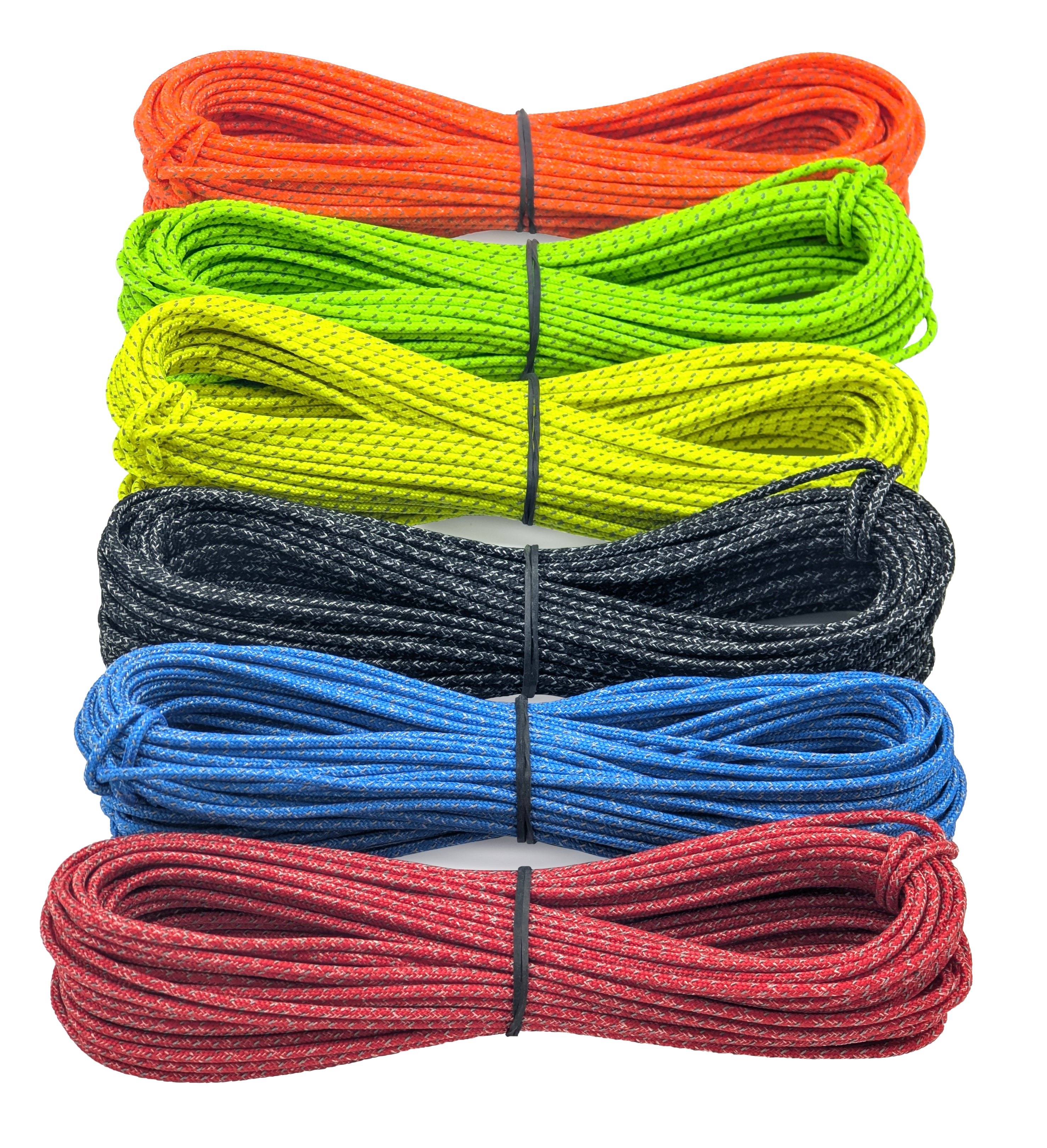
Best tent guyline: reflective tracers and four sizes.
Pros
- Virtually zero stretch keeps shelter pitches drum-tight through rain
- Bright 3M reflective tracers eliminate nighttime tripping hazards
- Firm round shape resists tangling and grips hardware reliably
- Minimal water absorption prevents freezing and excess pack weight
Cons
- Stiff profile requires careful dressing on traditional friction hitches
- Higher cost per foot than standard nylon paracord or bank line
- Zero dynamic stretch transfers full shock directly to tent anchors
Best uses
- Ultralight tarp shelter guylines
- Four-season storm tie-outs
- Nighttime camp perimeter rigging
- Backcountry bear bag hanging
Specifications
- Materials
- High-tenacity polyester with 3M reflective yarn
- Construction
- Double-braid jacket over parallel core
- Available Diameters
- 2mm, 2.5mm, 3mm, and 5mm
- Stretch Profile
- Ultra-low elongation
- Country of Origin
- Made in the USA
- Primary Focus
- Shelter guylines and ridgelines
Pricing
We don't publish a price we haven't verified. The retailer links below open the live listing for this exact model.
Best for
Ultralight tarp shelter guylines, Four-season storm tie-outs, Nighttime camp perimeter rigging, Backcountry bear bag hanging
Where to buy the Reflective Glowire Cord
We don't have a direct Amazon listing on file yet — this opens an Amazon search for the exact make and model.
Some links are affiliate links. Buying through them supports our testing at no extra cost to you.
Lawson Equipment developed Glowire specifically for wilderness campers tired of tripping over invisible tie-outs and retightening sagging shelters at two in the morning. Traditional nylon utility cords stretch noticeably under tension, absorb ambient moisture like a wick, and completely vanish against the forest floor once twilight settles. Glowire addresses these exact backcountry headaches by swapping out stretchy nylon for dense, pre-stretched polyester and integrating genuine reflective tracers directly into the outer sheath. Manufactured in the United States, this specialty line features a distinct, wire-like stiffness that immediately separates it from common hardware-store cordage. It holds its shape, sheds water almost instantly, and glides effortlessly through micro-tensioners without snagging or flattening out. Offered in multiple diameters to suit everything from ultralight cuben-fiber tarps to beefy four-season mountaineering domes, it is built with an exacting attention to detail that experienced shelter users appreciate. While casual car campers might balk at replacing factory-supplied cord, anyone who has spent a miserable night in gale-force winds adjusting wet ridgelines understands the massive difference purpose-built cordage makes.
Materials and Braid Construction
At the core of this cord is high-tenacity polyester, chosen deliberately over commercial nylon for its structural stability and natural resistance to water absorption. The outer jacket is braided tightly around a parallel strand core, creating a round, firm cross-section that refuses to collapse into a ribbon under load. Woven into that exterior sheath are dual strands of authentic 3M Scotchlite reflective material, embedded flush against the polyester fibers so they do not abrade or peel away with repeated use. Cutting the line requires a sharp blade, and melting the trimmed ends demands a quick touch with a flame, as the polyester fuses cleanly while sealing the reflective fibers into place. The end result is a tough, cohesive line that withstands abrasive ground contact against granite, limestone, and rough wooden stakes without fuzzing up prematurely.
Real-World Pitch Stability
In field conditions, the defining characteristic of this line is its utter refusal to stretch when wet. Many campers blame their tent fabric for overnight sag, unaware that standard nylon tie-outs can stretch as much as ten percent once rain or heavy morning dew sets in. Because polyester fibers do not relax when damp, a shelter anchored with this cord maintains drum-tight tension from dusk until dawn, preserving interior volume and preventing fly sheets from slapping against inner mesh walls. The dense weave also shrugs off torrential moisture, meaning you never pack away heavy, waterlogged coils that soak your shelter sack. In sub-freezing weather, the low water retention pays further dividends by preventing the cord from freezing into brittle, unmanageable sticks that refuse to untie.
Nighttime Visibility in Camp
The 3M reflective tracers provide exceptional visibility that transforms camp safety around dusk. Under the direct beam of a modern LED headlamp, the dual reflective spirals catch light from dozens of yards away, illuminating the campsite perimeter with bright, distinct dashes. This immediate visual feedback effectively eliminates the clumsy, frustrating midnight trip hazards that plague dark group camps and threaten to pull tent stakes from loose ground. Unlike cheap novelty cords that rely on glow-in-the-dark pigments that fade within twenty minutes of sundown, the retroreflective tracers operate indefinitely by returning available directional light back to its source. The tracers remain equally functional through heavy rain, standing out sharply against dark undergrowth and dense timber.
Hardware Compatibility and Knotting
The round, structured profile works exceptionally well with modern shelter hardware, particularly plastic cleats like LineLoc 3 tensioners and aluminum guyline adjusters. Where soft, limp paracord tends to jam or slip under sudden wind gusts, this cord bites firmly into mechanical teeth without jumping its track. Tying knots requires a minor mental adjustment due to the line's inherent memory and springiness; tight bends like bowlines, taut-line hitches, and Blake's hitches seat securely once dressed properly, but loose wraps can unravel if not firmly drawn down. The significant advantage of this stiffness is its total resistance to bird-nesting. You can stuff untied lines into a backpack pocket, yank them out hours later, and shake them free without picking at infuriating micro-tangles.
Weight and Field Handling
Carrying a full shelter kit of this cord adds negligible weight to an ultralight setup, particularly in the popular two-millimeter diameter. It rolls into compact hanks that slide neatly into stake bags alongside titanium pegs, never demanding excess pack volume. The firm, textured jacket provides excellent tactile purchase when working with cold or gloved fingers, a welcome contrast to slick, gel-spun braided lines that slip through damp palms. Pulling tension across rocky terrain reveals minimal surface friction, allowing guylines to glide smoothly around tree trunks or through boulder choke points without snagging bark. Its low-drag surface also simplifies teardown, allowing solo backpackers to rapidly coil lines without catching stray twigs or forest floor duff along the way.
Alternatives and Honest Trade-Offs
While this cord reigns supreme for shelter rigging, it is not a direct substitute for general-purpose utility ropes like 550 paracord or tarred bank line. Its lack of dynamic stretch means it offers zero shock absorption, transferring sudden shock loads directly to your shelter's tie-out webbing and stake anchors. Ultralight purists often cross-shop it against pure UHMWPE lines like Zing-It or Dyneema throw lines, which offer higher raw tensile strength for less weight but are notorious for slipping in tensioning hardware and holding stubborn tangles. At a higher price per foot than standard hardware-store nylon, this cord is an investment specifically for pitch reliability and nighttime safety rather than a bulk material you recklessly hack apart for improvised gear repairs.
How we chose
We compared widely available cordage by type using maker specifications, retailer listings and published reviews, then ranked 10 against the same criteria below. This is desk research unless a pick is marked field tested. Rankings are editorial. No brand pays for placement, and affiliate links never move a pick up or down.
- Real-world durability
- How the material, stitching, or steel holds up after a season of hard use — not how it looks new.
- Performance in bad conditions
- Wind, rain, cold, and grit are the test. Anything that only works on a nice day gets marked down.
- Weight and packability
- Every ounce has to earn its place in the pack, but not at the cost of something that fails in the field.
- Ease of use
- Setup, adjustment, and maintenance with cold hands, in the dark, without the manual.
- Value at its price point
- Compared against the closest competitors in the same tier, not against cheaper gear in a different class.
- Repairability and support
- Field-fixable design, available parts, and a warranty the maker actually honors.
Reflective Glowire Cord — frequently asked questions
- Is the Reflective Glowire Cord worth it?
- We rank it #8 in Cordage by Type. Best tent guyline: reflective tracers and four sizes.
- What is the Reflective Glowire Cord best for?
- Best for ultralight tarp shelter guylines, four-season storm tie-outs, nighttime camp perimeter rigging and backcountry bear bag hanging. Standouts: virtually zero stretch keeps shelter pitches drum-tight through rain and bright 3m reflective tracers eliminate nighttime tripping hazards.
- What are the downsides of the Reflective Glowire Cord?
- Stiff profile requires careful dressing on traditional friction hitches, Higher cost per foot than standard nylon paracord or bank line and Zero dynamic stretch transfers full shock directly to tent anchors.
- What are the key specs of the Reflective Glowire Cord?
- Materials: High-tenacity polyester with 3M reflective yarn · Construction: Double-braid jacket over parallel core · Available Diameters: 2mm, 2.5mm, 3mm, and 5mm · Stretch Profile: Ultra-low elongation · Country of Origin: Made in the USA
- Materials and Braid Construction — what should I know about the Reflective Glowire Cord?
- At the core of this cord is high-tenacity polyester, chosen deliberately over commercial nylon for its structural stability and natural resistance to water absorption. The outer jacket is braided tightly around a parallel strand core, creating a round, firm cross-section that refuses to collapse into a ribbon under…
- Real-World Pitch Stability — what should I know about the Reflective Glowire Cord?
- In field conditions, the defining characteristic of this line is its utter refusal to stretch when wet. Many campers blame their tent fabric for overnight sag, unaware that standard nylon tie-outs can stretch as much as ten percent once rain or heavy morning dew sets in.
Compare side by side
Put the Reflective Glowire Cord against any other pick on this list — specs, price, pros, cons and reader ratings.