A hunting axe can mean a purpose-built game-handling tool or simply the hatchet that keeps hunting camp supplied with kindling. This researched shortlist separates those roles; rankings are based on documented designs and specifications, not hands-on testing. Discontinued or unverified candidates were replaced with current catalog models, and no general camp hatchet is assumed suitable for splitting a pelvis merely because it can chop wood.
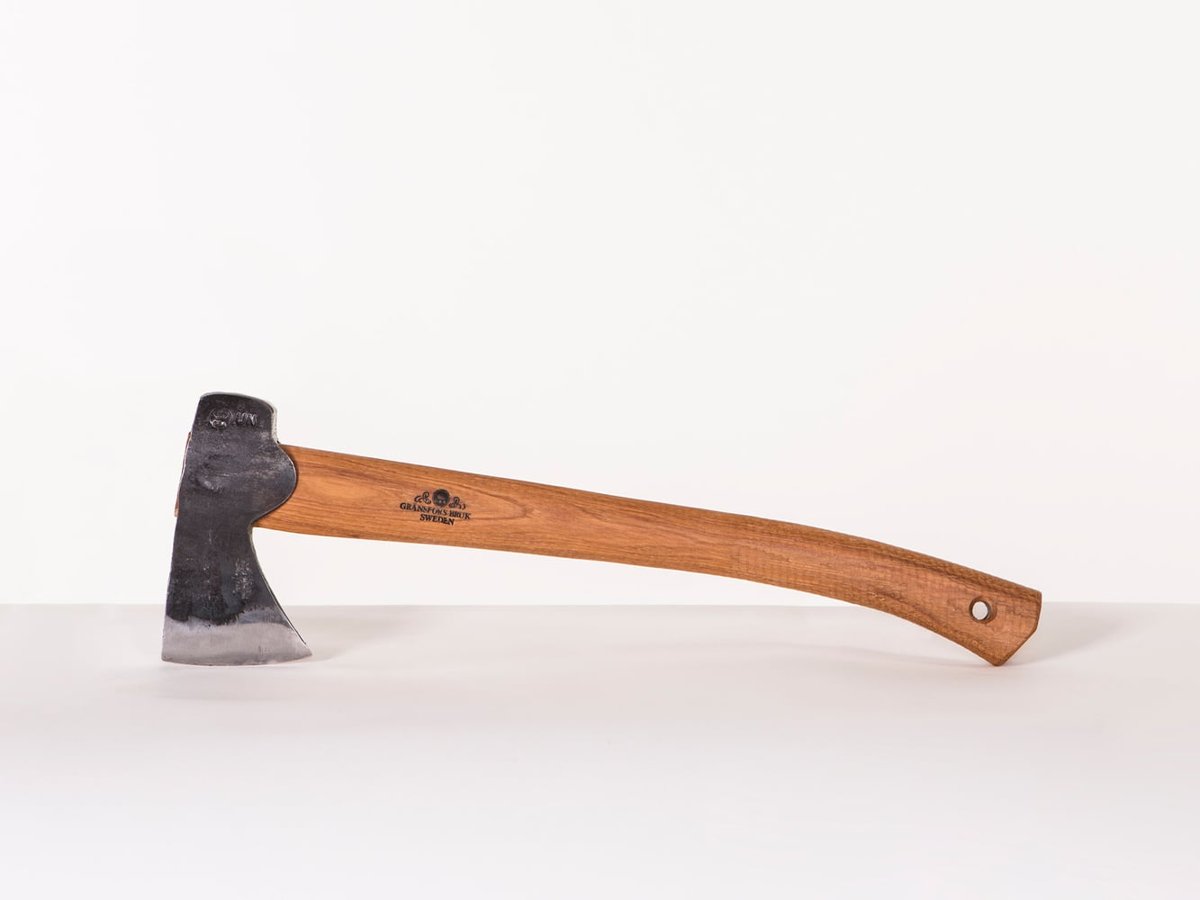
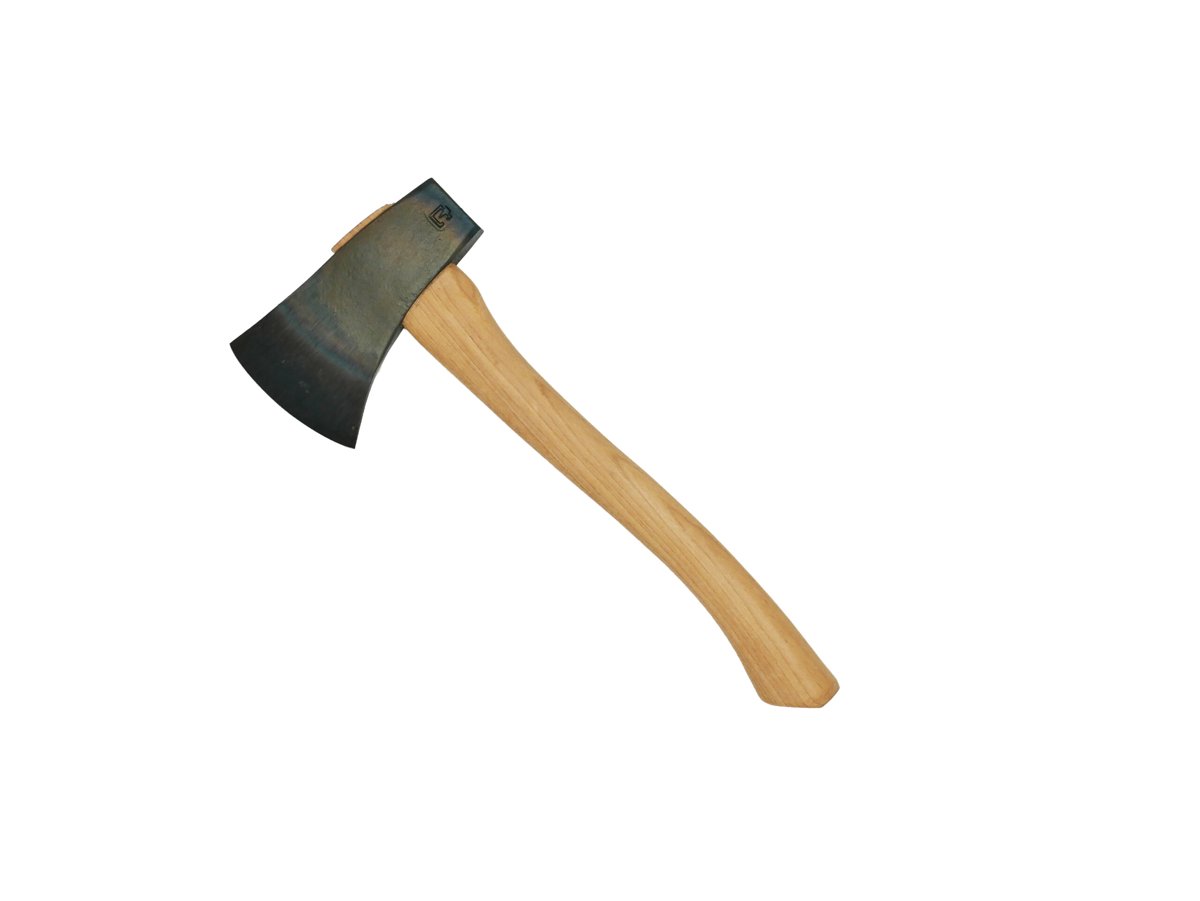
The Hunter’s Axe is the most hunting-specific choice here, combining a cutting edge for wood and meat with a rounded, polished flay poll for skinning. Its grooved hickory grip is specifically intended to remain secure when hands are wet or sticky.
The head is hand-forged in Sweden, and the maker specifies recycled C55/C60 high-carbon steel. The rounded flay poll avoids the sharp corners of a conventional axe poll.
Performance in the field
This is the clearest fit for a hunter wanting one axe for camp wood and assistance with skinning. The maker explicitly describes chopping wood and meat, rather than presenting it only as a camping hatchet.
Trade-offs
The $230 US listing makes this a substantial purchase. It is also larger than the compact hatchets below, so its hunting features need to justify the pack space.
Who it’s for
Choose it when game-handling features matter as much as camp utility. Its purpose-built poll is the principal reason to buy it over an ordinary woodcutting hatchet.
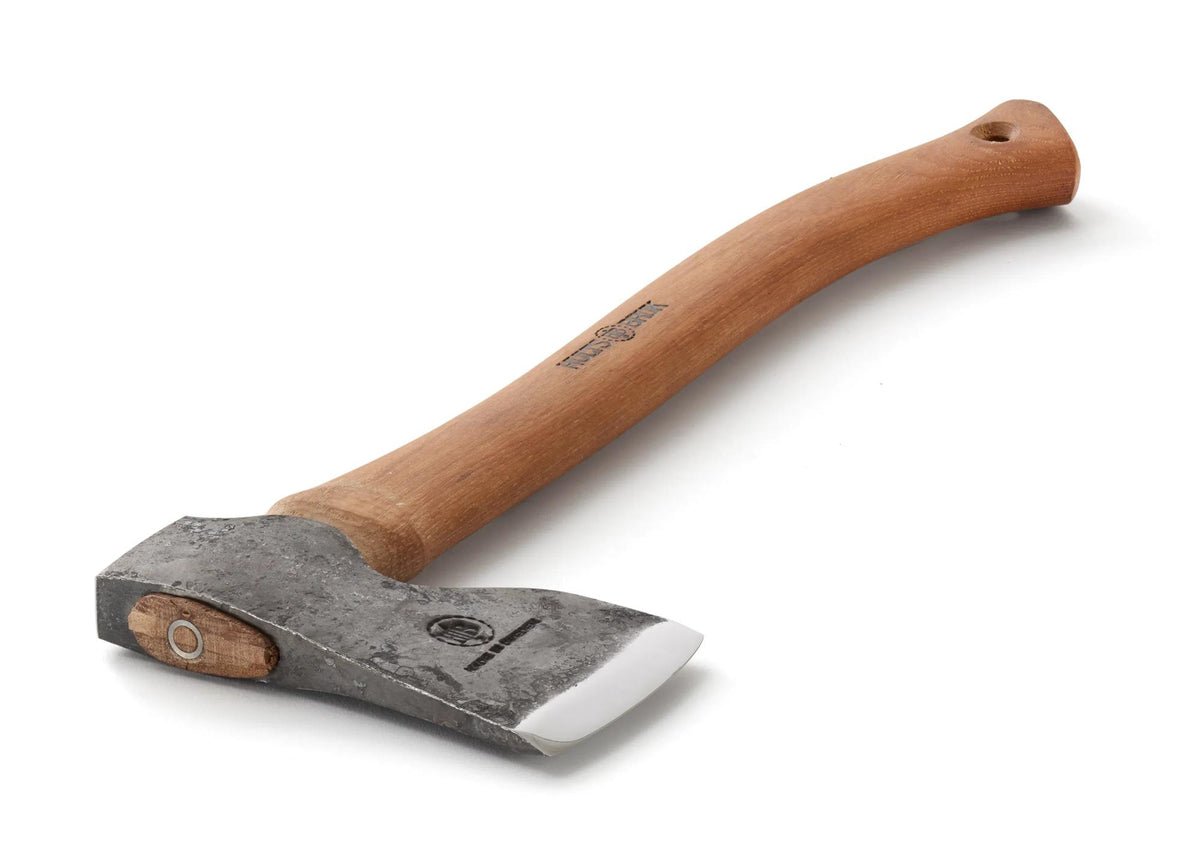
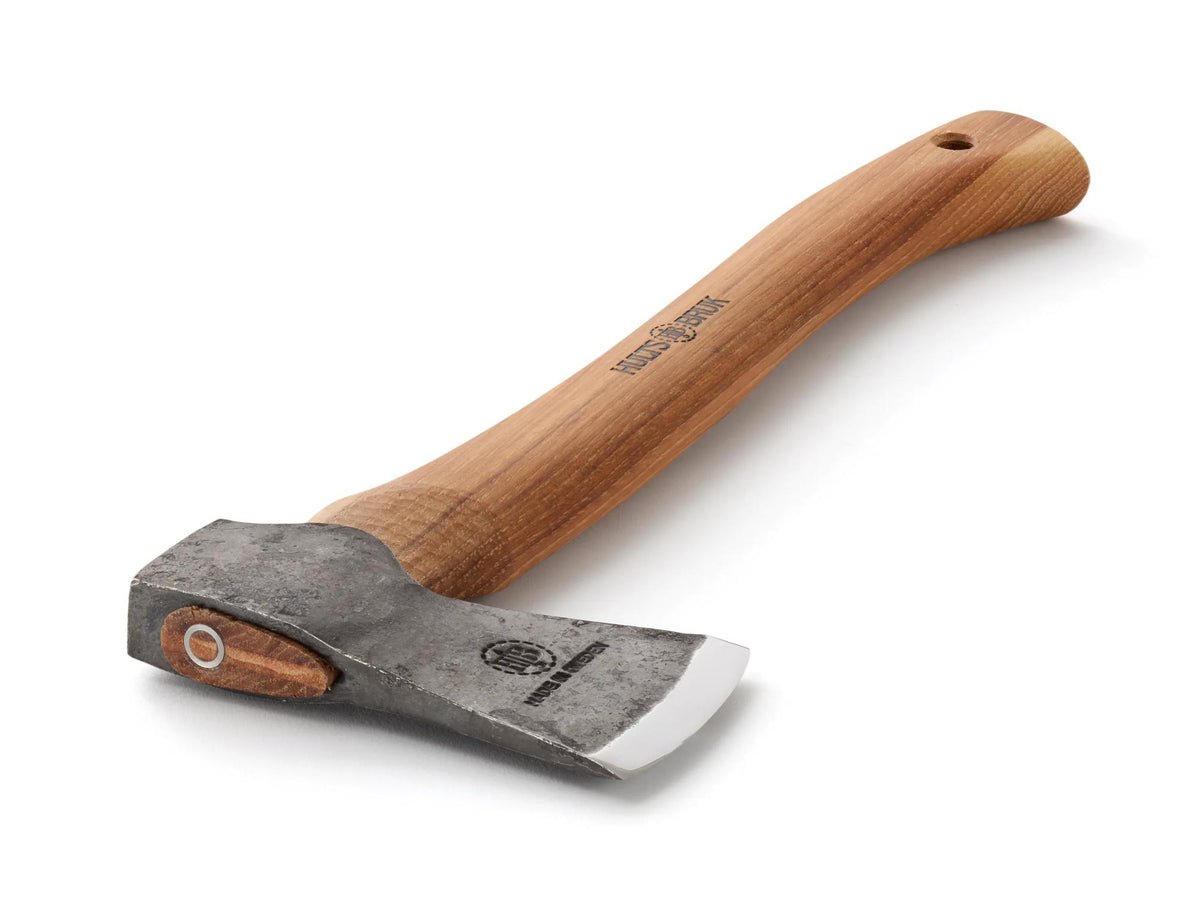
The Dvardala is a current hunting-and-forest model with a hybrid head shared with the longer Åby. Its 17.5-inch format makes it a sensible middle ground between a tiny hatchet and a forest axe.
Hults Bruk specifies hand-forged steel, a hand-ground and polished edge, and a hickory handle. Listed total weight is 2.2 pounds with a 1.5-pound head.
Performance in the field
The manufacturer positions the hybrid head for varied hunting and forest tasks. On specifications, it is a logical option when a hunt also involves routine woodcutting around camp.
Trade-offs
This is not the Gränsfors design: the product page does not identify a dedicated flay poll. At $205, it is also a premium purchase rather than an inexpensive backup tool.
Who it’s for
It suits hunters seeking a traditional Swedish axe primarily for mixed forest and camp work. Select the Hunter’s Axe instead if a specifically documented skinning poll is essential.
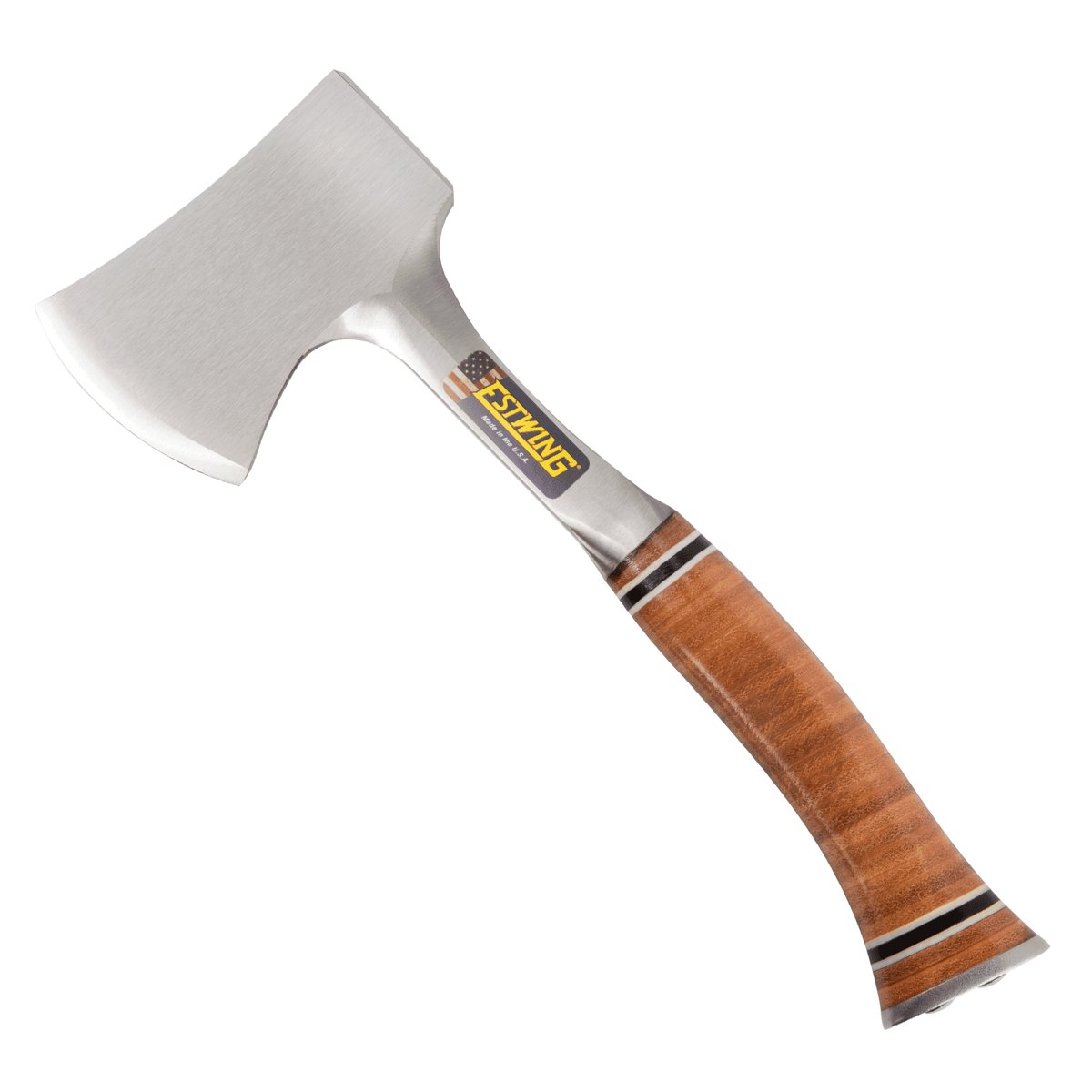
The E14A Sportsman’s Axe pairs one-piece forged steel construction with a genuine leather grip. This listing deliberately selects the shorter 12.5-inch E14A, not the 13.5-inch E24A.
Estwing forges the axe in one piece, eliminating a separate wooden handle-to-head joint. The manufacturer lists a hand-sharpened edge and US production.
Performance in the field
The compact format is attractive for small camp chores when a full-size axe would be excessive. It is a camping-oriented design, not a tool with a documented skinning poll.
Trade-offs
The 12.5-inch length offers less reach than the longer hunting axes here. Its integral steel construction also does not offer the conventional replaceable hickory haft of a traditional axe.
Who it’s for
Choose it if a short, straightforward steel hatchet appeals more than a premium forged head on wood. Confirm E14A when buying because the manufacturer page also covers E24A.
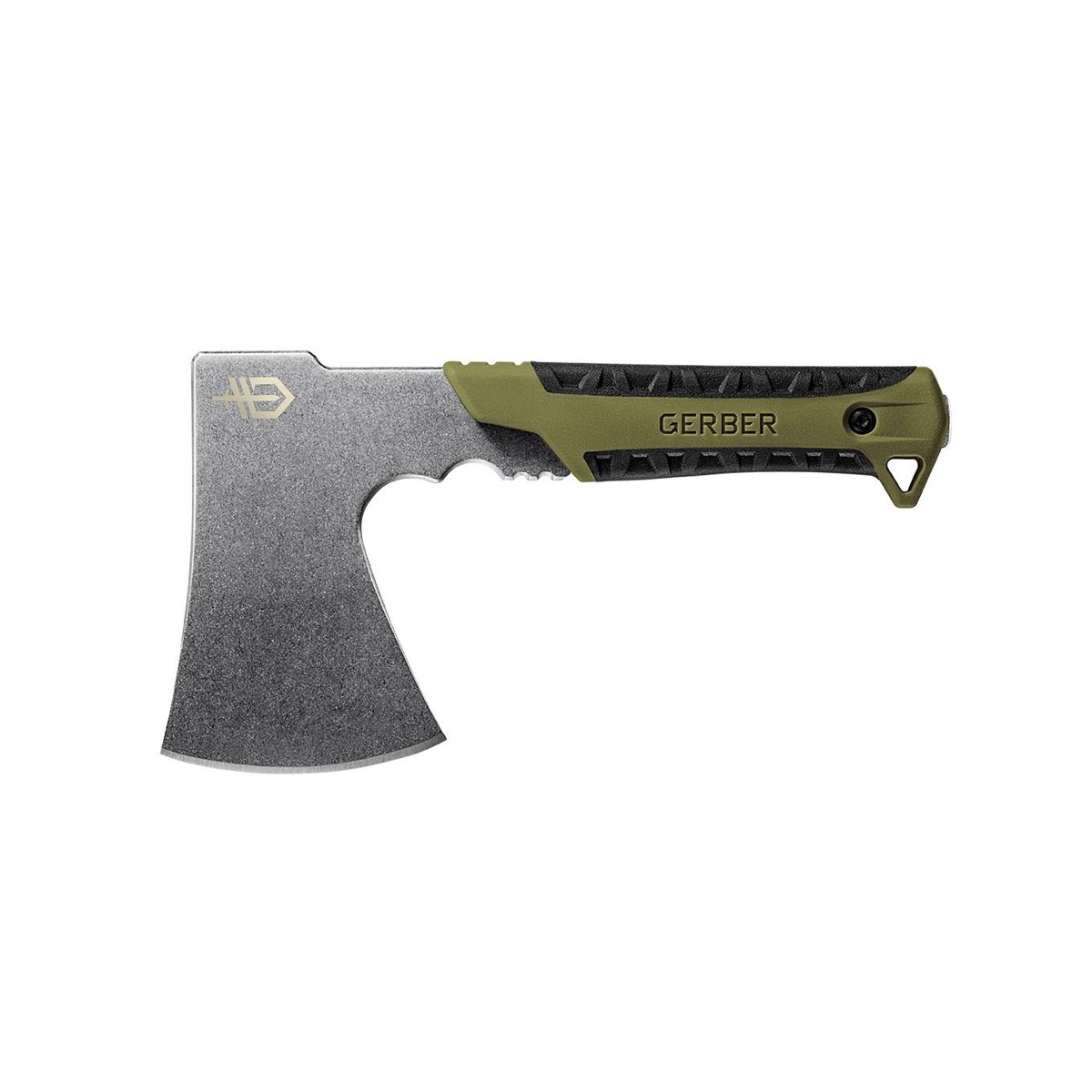
Gerber’s Pack Hatchet is a short, full-tang stainless tool with a rubber-overmold grip. Pronounced finger grooves support a choked-up hold for controlled detail cuts.
The maker combines stainless construction, a tall grind, a lanyard hole, and a nylon carry sheath. The selected variant is Flat Sage, product number 31-003482N.
Performance in the field
Its strongest role is close-control work and small camp cutting rather than substantial splitting. Gerber explicitly includes hunters among its intended outdoor users.
Trade-offs
A 9.46-inch overall length sacrifices reach and leverage. Gerber’s page gives conflicting blade-length figures, so no blade-length specification is reproduced here.
Who it’s for
Choose it for a compact hunting-pack tool when modest wood chores are the priority. Do not mistake its portability for the chopping capability of an 18-inch axe.
Council Tool Sport Utility Flying Fox Woodsman Hatchet
Head weight
1 lb 11 oz, per product description
Handle length
Trimmed to under 16 in
Bit length
3 7/8 in
Handle
Hickory
Poll
Hardened for hammering
MSRP
$67.85
The Flying Fox is a multipurpose camp hatchet with a hardened poll that the manufacturer explicitly approves for hammering. It is an appealing practical pick for hunters who spend more time building camp than processing game with an axe.
The design combines a hickory handle with a hardened bit and poll. Council’s page title says 1.625 pounds, while its detailed head-weight bullet says 1 pound 11 ounces; the quick facts preserve the latter wording.
Performance in the field
The manufacturer describes woodcutting chores and driving nails, spikes, and fasteners. That documented hammer function distinguishes it from axes whose polls should not automatically be treated as hammers.
Trade-offs
The poll is a utility hammering feature, not a rounded flay poll. The maker’s inconsistent head-weight figures are worth clarifying if exact carried weight matters.
Who it’s for
This is a strong match for hunters assembling and maintaining a working camp. Its utility emphasis is more compelling than its secondary suitability for competitive throwing.
Council Tool Hudson Bay Camp Axe 18-inch Sport Utility
Head weight
2 lb
Handle
Curved American hickory
Nominal handle length
18 in before assembly trimming
Assembly note
Approximately 1.25 in removed from handle
Head
Forged tool steel
MSRP
$76.64
This Hudson Bay model puts a two-pound head on a nominal 18-inch curved hickory handle. It is a camp-first choice for hunters who want more head mass than a small pack hatchet provides.
Where it fits
Light splitting
Camp chopping
Tent-peg work
Pros
Substantial two-pound head
Traditional curved hickory handle
Tapered bit for light splitting
Made in USA
Cons
Head alone weighs two pounds
Nominal handle length is shortened during assembly
Council specifies a forged tool-steel head, a tapered hand-sharpened bit, and a double-wedge handle attachment. The as-forged finish is coated with boiled linseed oil.
Performance in the field
The manufacturer describes one-handed camp use, light splitting, chopping, and driving tent pegs. Those are useful hunting-camp applications, without implying specialized game-processing geometry.
Trade-offs
Two pounds is the head weight, not the complete tool weight. Also, the nominal 18-inch handle is trimmed during assembly, so it should not be represented as an exact finished overall length.
Who it’s for
Pick this for camp wood tasks when portability matters but an ultrashort hatchet feels too limited. It is less compelling for a minimalist hunter carrying an axe mainly for occasional detail work.
The Hultån is a compact traditional hatchet marketed for hiking and camp use. Its 15-inch handle and 1.8-pound total weight place it between tiny detail hatchets and longer hunting axes.
Hults Bruk hand-forges the steel head and hand-grinds and polishes its edge. The manufacturer lists a hickory handle and approximately 54–56 HRC hardness.
Performance in the field
Its intended role is broad outdoor utility, making it a sensible camp companion on hunts. The lighter head favors manageable carry over the greater head mass of the Hudson Bay.
Trade-offs
At $200, it is expensive for a general-purpose hatchet. The product description does not document a specialized meat-cutting or skinning feature.
Who it’s for
Choose it if camp work is your main reason to carry an axe and you prefer a traditional Swedish design. Hunting-specific poll geometry is better served by the Gränsfors.
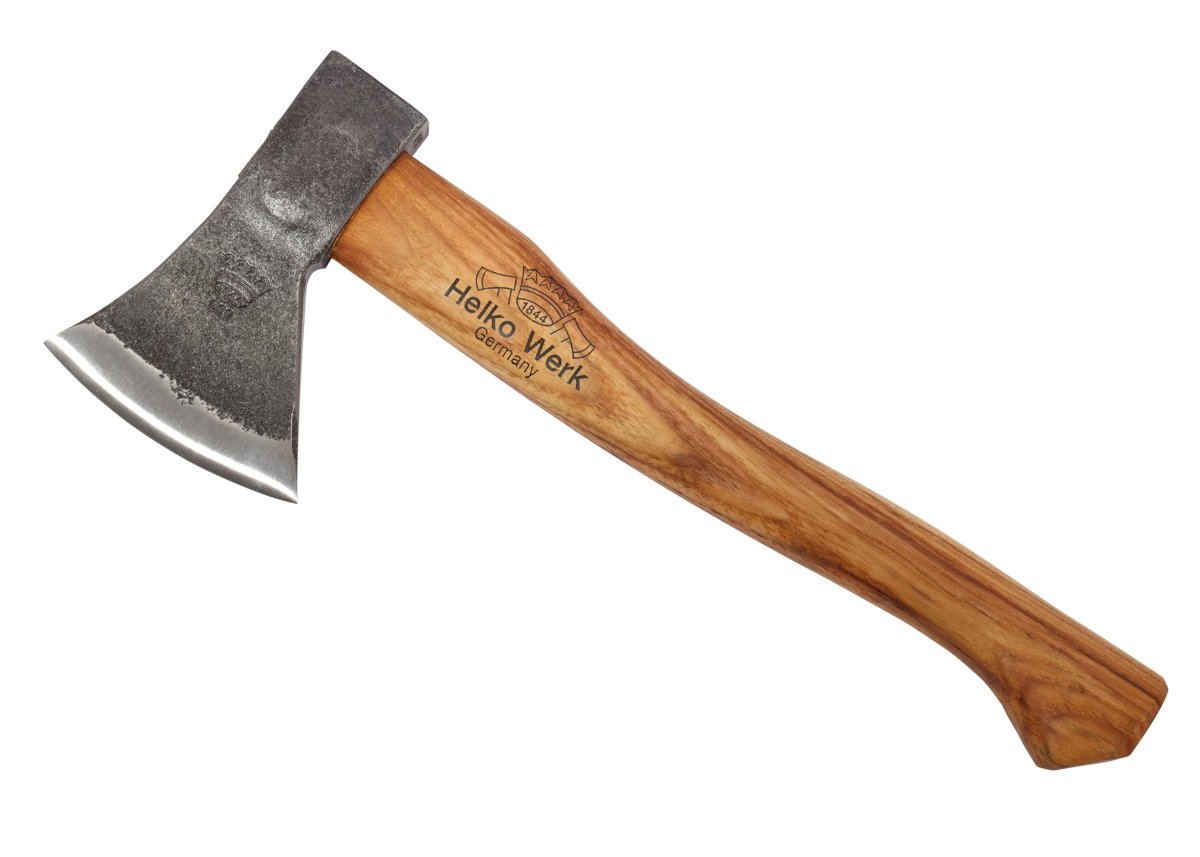
Helko’s Rheinlander uses a broad Rheinland-pattern bit for light cutting work. It combines a 14-inch hickory handle with a listed total weight of 1.75 pounds.
The head is hand-forged in Germany from C50 high-carbon steel. Helko supplies a vegetable-tanned leather sheath and a one-ounce bottle of protective oil.
Performance in the field
The maker lists limbing, kindling, carving, and other fine cutting tasks. Those applications suit the woodwork side of a hunting trip rather than establishing it as a specialized bone-processing tool.
Trade-offs
The 14-inch handle remains a hatchet-length compromise for larger wood. There is no documented flay poll to distinguish it as a skinning aid.
Who it’s for
Choose it when a wide cutting bit and traditional materials are priorities. It is particularly appealing for hunters who also enjoy carving and camp woodcraft.
As an Amazon Associate, Wild10 earns from qualifying purchases.
No ratings yet
Pick 09Research-based review
Helko Werk Traditional Wölfling Hatchet
Head weight
0.75 lb
Total weight
1 lb
Handle length
10.5 in
Bit length
3 in
Steel
C50 high-carbon, 53–56 HRC
Listed price
$160
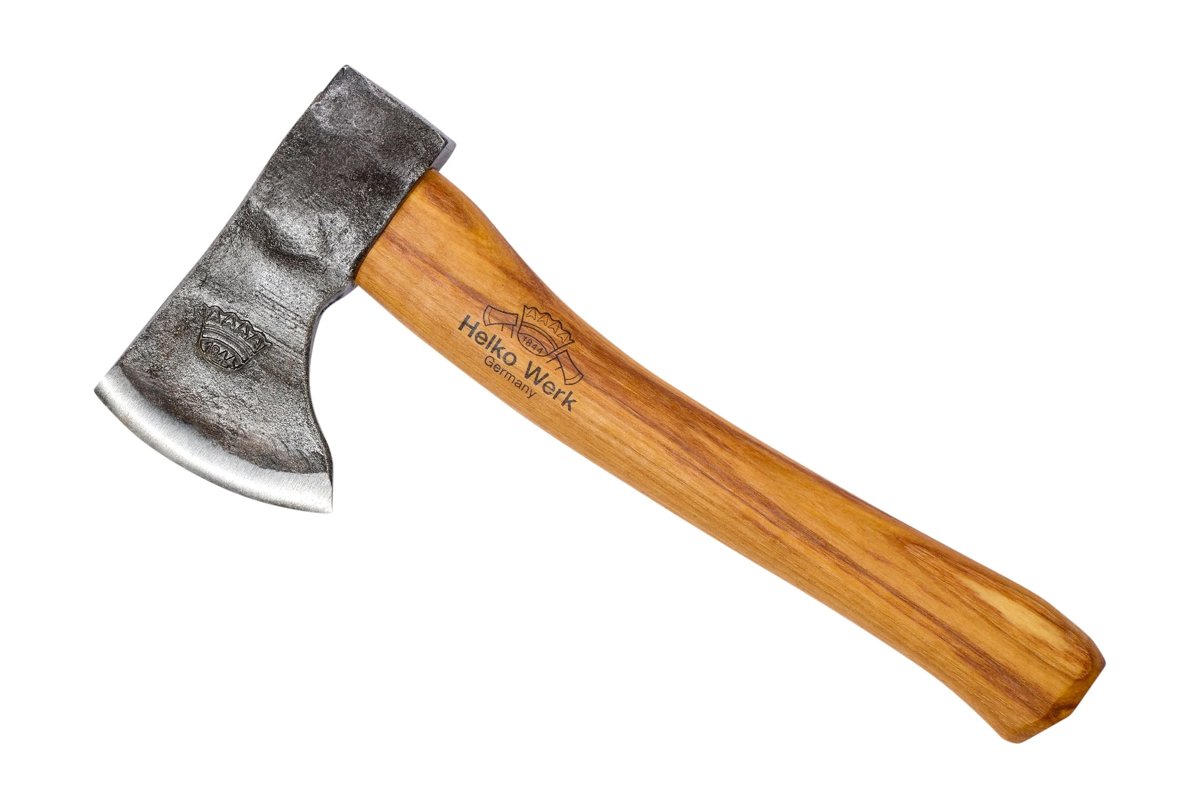
The Wölfling is Helko’s smallest hatchet, with a listed total weight of one pound. Its short hickory handle and small head prioritize packability and fine work.
Helko specifies a German-forged C50 steel head and an American hickory handle finished with boiled linseed oil. A vegetable-tanned leather sheath and protective oil are included.
Performance in the field
The maker recommends kindling, carving, and fine cutting, including a choked-up grip near the head. That makes it a small-task companion rather than a substitute for a camp splitting axe.
Trade-offs
A 10.5-inch handle and three-quarter-pound head limit chopping momentum. Its $160 price is substantial for a tool intended for relatively modest cutting chores.
Who it’s for
It suits weight-conscious hunters who still want a traditional wood-handled hatchet. Carry it for fine woodwork and small kindling, not because you expect full-size axe performance.
As an Amazon Associate, Wild10 earns from qualifying purchases.
No ratings yet
Pick 10Research-based review
Marble’s Camp Axe MR701SB
Overall length
15.75 in
Head length
6 in
Cutting edge
4 in
Steel
1045 high-carbon
Handle
American hickory
Country
El Salvador
Observed retailer prices
$26.83–$27.95
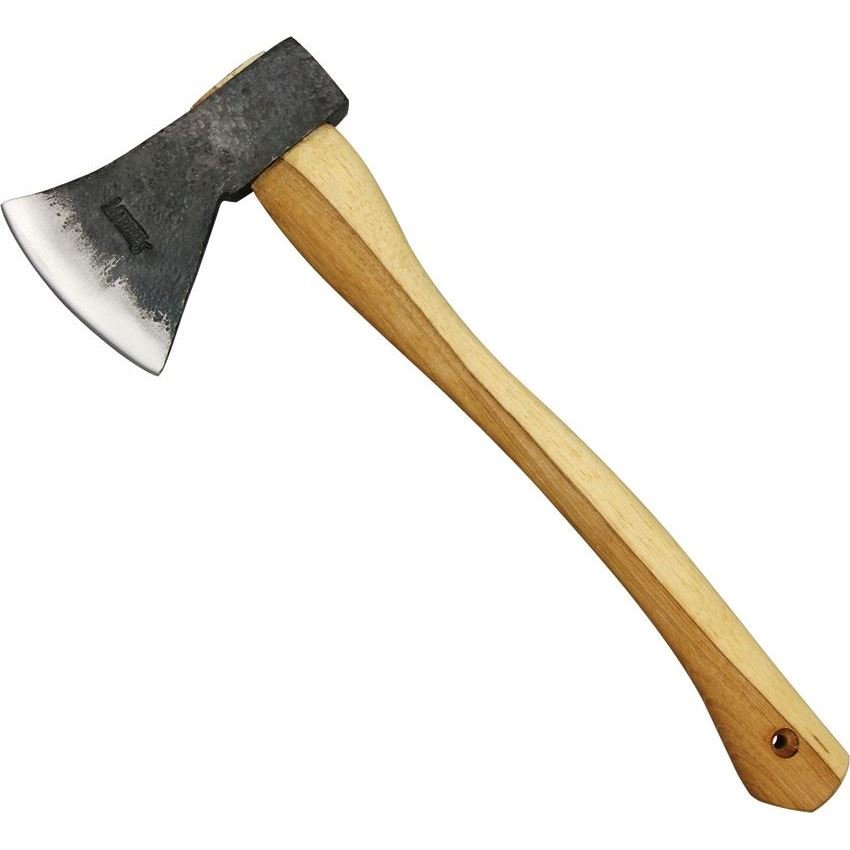
The MR701SB is a low-cost traditional camp axe with a 1045 high-carbon steel head and American hickory handle. Current retailer listings make it a more defensible budget selection than discontinued hunting-branded tools.
The listed dimensions are 15.75 inches overall with a six-inch head and four-inch cutting edge. The handle includes an enlarged lanyard hole.
Performance in the field
Its useful role on a hunt is ordinary camp cutting and kindling preparation. KnifeCenter customer feedback includes reports of sharpening or edge refinement before satisfactory use.
Trade-offs
Budget for inspecting and sharpening the edge rather than assuming premium finishing. Neither cited listing establishes a dedicated skinning poll or specialized game-processing design.
Who it’s for
Choose it when initial cost matters and you are comfortable tuning a basic axe. Hunters wanting documented hunting-specific features should move up to the purpose-built choices.
As an Amazon Associate, Wild10 earns from qualifying purchases.
No ratings yet
How we picked
Ranked by Theo Hartigan, Bushcraft & Survival Editor
We started with a long list of hunting axes that people actually buy, cut anything that could not clear our baseline for durability and field performance, then ranked the 10 that were left against the same criteria. Rankings are editorial. No brand pays for placement, and affiliate links never move a pick up or down.
Edge geometry and steel
Grind, stock thickness, and how the steel behaves between sharpenings in real camp tasks.
Real-world durability
How the material, stitching, or steel holds up after a season of hard use — not how it looks new.
Performance in bad conditions
Wind, rain, cold, and grit are the test. Anything that only works on a nice day gets marked down.
Weight and packability
Every ounce has to earn its place in the pack, but not at the cost of something that fails in the field.
Ease of use
Setup, adjustment, and maintenance with cold hands, in the dark, without the manual.
Value at its price point
Compared against the closest competitors in the same tier, not against cheaper gear in a different class.
How often we recheck this: Reviewed on a rolling basis and rechecked at least once a year, or sooner if a pick is discontinued, revised, or beaten by something new.
Best hunting axes for a specific job
Skip the ranking — jump to the pick that matches how you actually use it.
Our editors test the gear, pick the ten, and set the order the day a list publishes. After that, the ranking is live: every member star rating feeds the community order, so picks climb or slide as real owners report back. Editorial judgment decides what earns a spot — you help decide where it sits.
Editors set the field
Hands-on testing and spec research choose the ten and the published order.
Readers re-rank it
Your 1–5 star ratings drive the community order on every list.
Rankings keep moving
Picks rise or fall over time — nothing is frozen at launch day.
Award picks
The ranking above is price-blind and judged on merit. These awards call out the pick we'd hand a specific person with a specific need.
Choose the Gränsfors Hunter’s Axe for its documented hunting features, or the Dvardala for mixed forest and camp work. For most other picks, the strongest case is camp utility rather than specialized game processing; verify stock and price before ordering.
How to choose hunting axes
Every pick on this page was judged against the same criteria. If you want the short answer, Gränsfors Bruk Hunter’s Axe 418 by Gränsfors Bruk is the one we point most people at. If you want to decide for yourself, here is what actually separates a good hunting axe from an expensive one.
Edge geometry and steel
Grind, stock thickness, and how the steel behaves between sharpenings in real camp tasks.
Real-world durability
How the material, stitching, or steel holds up after a season of hard use — not how it looks new.
Performance in bad conditions
Wind, rain, cold, and grit are the test. Anything that only works on a nice day gets marked down.
Weight and packability
Every ounce has to earn its place in the pack, but not at the cost of something that fails in the field.
Ease of use
Setup, adjustment, and maintenance with cold hands, in the dark, without the manual.
Value at its price point
Compared against the closest competitors in the same tier, not against cheaper gear in a different class.
Match the pick to your use
The right hunting axes depends on what you are actually doing with it: Skinning assistance; Hunting-camp wood chores; Meat chopping; Mixed hunting-camp chores; Light forest work; Small camp chores. Start from the use case, then work down the ranking until you hit the first pick that covers it.
Common mistakes
Buying the lightest hunting axes you can find and discovering it cannot take a season of hard use.
Paying for a specialist feature you will use once a year instead of the versatile option.
Comparing headline specs across tiers instead of within the same class.
Skipping fit, sizing, or adjustment checks that decide whether you actually carry it.
Frequently asked questions
What is the best hunting axes?
Gränsfors Bruk Hunter’s Axe 418 by Gränsfors Bruk takes the top spot. Best overall for hunting
How did The Wild10 choose and rank these hunting axes?
We judged every pick against the same criteria — edge geometry and steel, real-world durability, performance in bad conditions, weight and packability — and ranked them on merit regardless of price. Hunting-specific axes and compact camp hatchets, ranked for practical use on a hunt.
What is the best budget hunting axes?
Hults Bruk Dvardala Hunting & Forest Axe by Hults Bruk — Best compact hunting-and-forest crossover
Gränsfors Bruk Hunter’s Axe 418 vs Hults Bruk Dvardala Hunting & Forest Axe — which should I pick?
Gränsfors Bruk Hunter’s Axe 418 ranks first: Best overall for hunting Hults Bruk Dvardala Hunting & Forest Axe is the close second: Best compact hunting-and-forest crossover Our full head-to-head compares them side by side.
How often is this list updated?
We review this ranking on a rolling basis and update it whenever a pick is discontinued, meaningfully revised, or beaten by something new. Rankings are editorial — brands do not see them before publication and affiliate links never change the order.