


#6 on this list
DromLite Bags
MSR
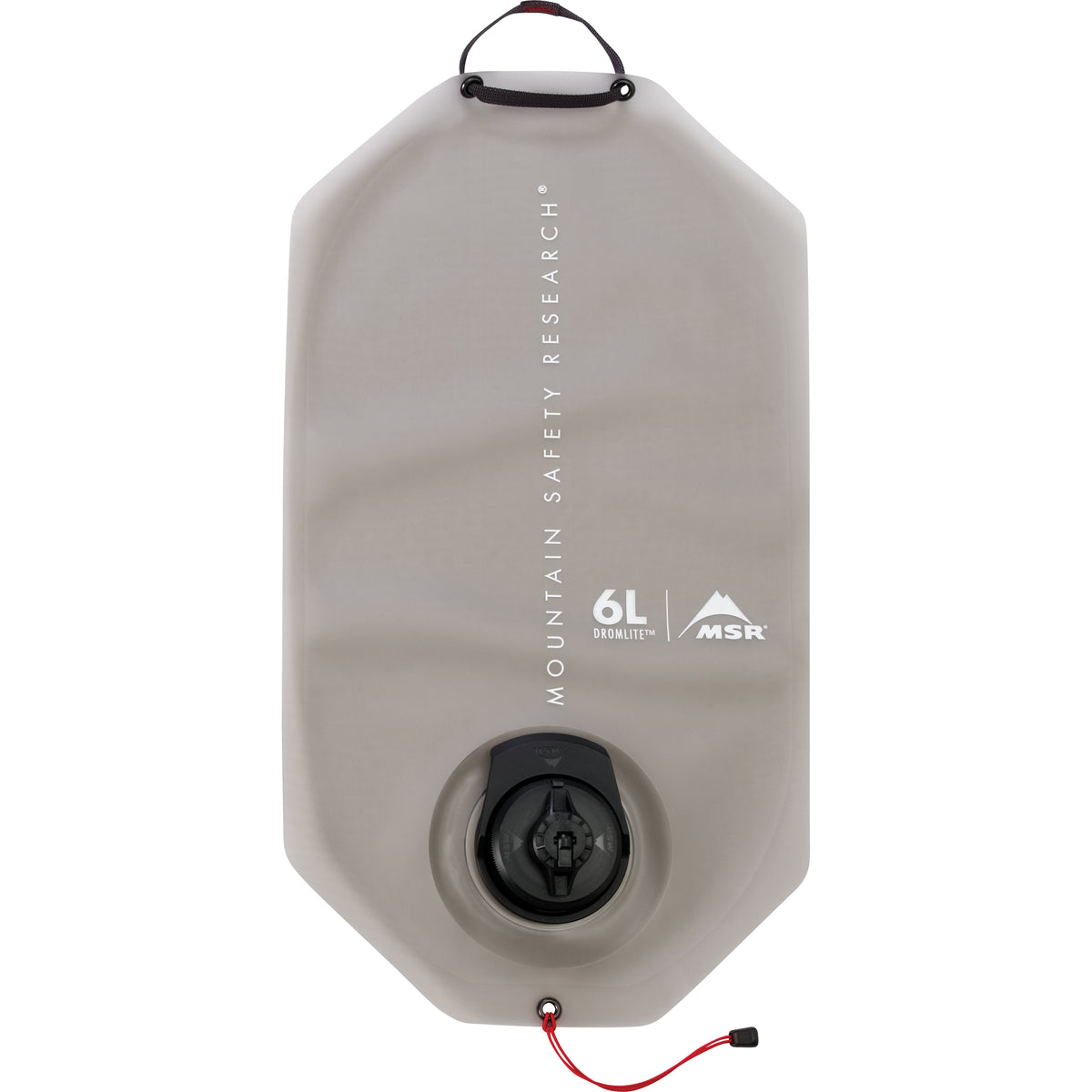
The MSR DromLite Bag occupies a unique space between a dedicated backpacking water reservoir and a rugged backcountry water hauler. Crafted from lightweight 200-denier Cordura fabric laminated with a food-grade polyurethane lining, the DromLite is built to withstand rough granite surfaces, overstuffed packs, and brutal field abuse that would puncture conventional film reservoirs. For rugged off-trail backpacking and basecamp water storage, it is exceptionally dependable. Unlike traditional hydration reservoirs that come pre-packaged with hoses and bite valves, the DromLite comes standard with a low-profile 3-in-1 cap that allows for pouring, dispensing, and filling. However, MSR sells a dedicated hydration kit that threads directly onto the cap, transforming the bag into an ultra-durable personal drinking system. When empty, the supple fabric collapses down to the size of its cap, packing away far more efficiently than standard plastic bladders. Using the DromLite as your primary on-trail hydration bladder does involve trade-offs. The Cordura exterior fabric absorbs surface moisture, meaning it takes longer to dry externally if splashed during filling. Additionally, purchasing the hydration hose accessory adds extra cost to an already premium base price. But if your trips involve abrasive desert canyon environments, bushwhacking, or you need a bladder that doubles as a high-capacity camp reservoir, its bombproof construction is hard to top. **Highlights** - Extremely rugged 200D Cordura exterior resists punctures, tears, and rough rock - Collapses completely flat to the size of the cap when drained - Multi-function 3-in-1 cap allows controlled pouring, filling, and slow dripping - Compatible with MSR hydration tube accessories and water filters - Perimeter webbing loops make hanging at camp or strapping to packs simple **Watch-outs** - Requires separate purchase of drinking tube accessory for use as a hydration bladder - Fabric exterior can absorb water and requires external drying time - Cap system is slower to fill than wide-mouth slide reservoirs
- Price
- Check current price
- Reader rating
- No reader votes yet
- How we assessed it
- Specification researched

#7 on this list
Crux
CamelBak
The CamelBak Crux is the modern evolution of the classic reservoir that popularized hands-free hydration. Built around CamelBak's distinctive oversized quarter-turn screw cap, the Crux is designed for users who prefer mechanical security over slide-style closures. It is a workhorse bladder favored by day hikers, mountain bikers, and tactical users who value a robust, leak-free design that can endure heavy everyday abuse. Reviewers consistently rate the Crux near the top for water delivery. The ergonomic bite valve delivers 20 percent more water per sip than older CamelBak models, requiring minimal suction effort when you are breathing heavily on steep climbs. The integrated shutoff lever on the valve is exceptionally crisp, providing positive tactile feedback so you know the system is locked before setting your pack down. A rigid front handle provides leverage, letting you hold the reservoir steady under high-pressure sink taps without folding. The primary limitation of the Crux remains its large screw-top design. While secure, cross-threading the cap is possible if you are in a rush, leading to unexpected leaks if not visually checked. The internal chamber is also more difficult to reach into and hand-dry compared to fully reversible bladders, necessitating either a dedicated drying hanger or paper towels to wick away moisture inside the corners. Nevertheless, for reliable high-volume water flow, it remains a proven choice. **Highlights** - High-flow Big Bite valve delivers generous water volume per sip with low effort - Ergonomic on/off valve lever shuts off water flow with a simple thumb flick - Sturdy integrated handle makes refilling at taps and natural sources stable - Internal baffle stabilizes water to reduce side-to-side slosh - Heavy-duty polyurethane film offers reliable puncture resistance **Watch-outs** - Screw cap can be cross-threaded if not lined up carefully - Interior is difficult to reach into for manual towel drying - Thicker plastic and broad handle make it heavier than ultralight alternatives
- Price
- Check current price
- Reader rating
- No reader votes yet
- How we assessed it
- Specification researched
Specs side by side
| Spec | DromLite Bags | Crux |
|---|---|---|
| Shell Material | 200D Cordura nylon | — |
| Lining Material | Food-grade polyurethane laminate | — |
| Cap Style | 3-in-1 threaded cap (fill, pour, dispense) | Quarter-turn screw cap |
| Capacities Offered | 2L, 4L, and 6L options | — |
| Hydration Hose | Sold separately via MSR Drink Tube kit | — |
| Estimated MSRP | Around $48 for base reservoir | — |
| Weight | — | 7 oz (2L version) |
| Dimensions | — | 15 x 7.5 in |
| Valve Type | — | Big Bite valve with shutoff lever |
| Approx. Price | — | $40 |
What our reviewers liked and didn't
DromLite Bags
- 200D Cordura exterior provides exceptional puncture and abrasion resistance
- Highly packable fabric rolls down to the size of the cap when empty
- Versatile 3-in-1 cap works well for controlled camp dispensing and pouring
- Perimeter webbing loops make hanging and pack attachment easy
- Hydration hose and bite valve must be purchased separately
- Cordura exterior absorbs moisture and takes longer to dry when wet
- Opaque fabric prevents quick visual checks of remaining water volume
Crux
- High-flow bite valve delivers generous water per sip
- Ergonomic shutoff lever prevents accidental leaks in transit
- Sturdy carry handle stabilizes the bladder during fills
- Puncture-resistant polyurethane film endures heavy abuse
- Threaded cap can cross-thread if rushed during closure
- Internal chamber is hard to access for manual towel-drying
- Rigid cap assembly adds bulk compared to slide-top designs
Prices change constantly — the figure shown is the last verified catalog price, and the buy buttons always go to the current listing.