



Updated October 2026 · 10 picks re-checked for availability and current spec, reader ratings refreshed live.
Midlayers sit at the core of any functional outdoor layering system. Whether you are skinning up an icy skintrack, scrambling over exposed granite, or hiking through shoulder-season precipitation, your midlayer has to manage an impossible contradiction: trap enough ambient body heat to prevent chilling while dumping sweat vapor fast enough to prevent clammy, hypothermia-inducing wet-out. Depending on your output and conditions, that equation calls for either a highly breathable grid fleece, a thermoregulating merino wool blend, or a lightly insulated active synthetic jacket. To find the top performers, we examined consensus data and top award selections from trusted independent gear testing outlets, including GearJunkie, Outside Magazine, Switchback Travel, and Treeline Review. We then weighted those expert field evaluations against Wild10’s editorial benchmarks for long-term textile durability, real-world packability, thermal efficiency, and overall price-to-performance value. The resulting ranking reflects the real compromises outdoor athletes must navigate. While no single garment handles every microclimate, matching your midlayer to your aerobic output and local weather ensures your core stays warm without soaking your layering system from the inside out.
The short answer

The Patagonia R1 Thermal Full-Zip Hoody is designed for alpinists, ski tourers, and cold-weather hikers who require dependable thermal efficiency…
Why it wins
The Arc’teryx Atom Hoody (formerly the Atom LT) is built for alpine climbers, backcountry skiers, and cold-weather backpackers who need a versatile…
Why it wins
The Arc’teryx Proton Hoody is designed for alpine climbers, ice climbers, and ski mountaineers who need sustained static warmth combined with active…
Why it winsDeep-dive product reviews
We've published full field-test reports and technical deep-dives for 10 of the picks in this list.
Compare all 10 picks at a glance
Editorial ranking, what each pick is best at, and how we assessed it. Tap a name to jump to the full write-up.
| # | Pick | Best for | Key spec | Evidence |
|---|---|---|---|---|
| 1 | R1 Thermal Full-Zip Hoody Patagonia | Ski touring | Category: Fleece midlayer | Research only |
| 2 | Atom Hoody Arc’teryx | Backcountry Ski Touring | Weight: 12.5 oz / 354 g | Research only |
| 3 | R1 Air Hoody Patagonia | Backcountry ski touring | Weight (Men's): 13 oz. | Research only |
| 4 | Merino Convict Canyon Half Zip Ridge | Multi-day backcountry backpacking | Weight: 9 oz | Research only |
| 5 | Dawner Hooded Jacket Stio | Shoulder-Season Backpacking | Weight: 12.2 oz | Research only |
| 6 | Steens Mountain 2.0 Columbia | Car Camping | Midlayer Type: Full-zip fleece jacket | Research only |
| 7 | Merino Cloudripper Fleece Ridge | Backcountry ski touring | Fabric Blend: Merino wool, polyester, and spandex | Research only |
| 8 | Dynawool SKuba Hoodie Kuhl | Deep-winter mountaineering | Primary Material: Merino wool, polyester, and spandex blend | Research only |
| 9 | Proton Hoody Arc’teryx | Alpine and ice climbing | Insulation Type: Coreloft Compact synthetic fill | Research only |
| 10 | Highlands Shirt Jacket Strafe | Resort Ski Midlayer | Weight: 10.4 oz | Research only |
How we picked
Ranked by Renata Cho, Apparel & Layering Editor
We started with a long list of insulated vests and midlayers that people actually buy, cut anything that could not clear our baseline for durability and field performance, then ranked the 10 that were left against the same criteria. Rankings are editorial. No brand pays for placement, and affiliate links never move a pick up or down.
- Fabric behavior over time
- Breathability, DWR life, loft retention, and how the piece performs after repeated washing.
- Real-world durability
- How the material, stitching, or steel holds up after a season of hard use — not how it looks new.
- Performance in bad conditions
- Wind, rain, cold, and grit are the test. Anything that only works on a nice day gets marked down.
- Weight and packability
- Every ounce has to earn its place in the pack, but not at the cost of something that fails in the field.
- Ease of use
- Setup, adjustment, and maintenance with cold hands, in the dark, without the manual.
- Value at its price point
- Compared against the closest competitors in the same tier, not against cheaper gear in a different class.
How often we recheck this: Reviewed on a rolling basis and rechecked at least once a year, or sooner if a pick is discontinued, revised, or beaten by something new.
Best of the Best · Head to Head
R1 Thermal Full-Zip Hoody vs Atom Hoody
#1 vs #2 — side-by-side specs, pros & cons, and the final verdict.
Compare any two picks
Build your own side-by-side
Choose any two of these 10 picks and compare specs, price, pros, cons and reader ratings.
Topic summary
We synthesized expert field testing and consensus awards to rank the 10 best insulated vests and midlayers for staying warm, dry, and mobile in cold weather.
Key takeaways
- #1 R1 Thermal Full-Zip Hoody — Patagonia
- #2 Atom Hoody — Arc’teryx
- #3 R1 Air Hoody — Patagonia
- #4 Merino Convict Canyon Half Zip — Ridge
- #5 Dawner Hooded Jacket — Stio
- #6 Steens Mountain 2.0 — Columbia
Intended uses
Gear
Verification notes
Editorial ranked list, 10 entries. Evidence mix — 10 research only. Buy links open the maker or a retailer search. Last reviewed October 2026.
Best insulated vests and midlayers for a specific job
Skip the ranking — jump to the pick that matches how you actually use it.
- Best for ski touring
- #1 R1 Thermal Full-Zip Hoody — PatagoniaThe Patagonia R1 Thermal Full-Zip Hoody is designed for alpinists, ski tourers, and cold-weather hikers who require dependable thermal efficiency paired with rapid moisture transfer. Built as a heavier, more protective iteration of Patagonia’s legendary R1 active insulation line, this piece excels during cold starts and sustained aerobic movement where standard fleece would hold onto sweat or trap excessive heat. Patagonia builds the R1 Thermal with a 6.5-ounce Technostretch fleece combining 91% recycled polyester and 9% spandex. The construction pairs a smooth, flat-faced exterior with a brushed micro-grid interior. The interior grid channels trap warm air against your base layer while creating exit paths for moisture vapor. Crucially, the slick face fabric slides cleanly under outer shells and harness straps without the binding, bunching, or friction common to high-pile fleeces. As a trade-off, this is an active midlayer first and foremost. While the flat-faced finish resists light breezes better than open-knit fabrics, it is not windproof; cold gusts will strip warmth away if worn without an outer shell. The athletic, low-profile cut layers cleanly under a technical shell, but leaves little room for wearing anything bulkier than a thin base layer underneath. **Highlights** - Flat-faced Technostretch exterior glides smoothly beneath technical shells - Brushed micro-grid interior balances heat retention with active venting - Full-length front zipper offers rapid manual temperature regulation - Integrated low-profile hood fits comfortably under climbing and ski helmets - High elastane content delivers four-way stretch for technical mountain movement **Watch-outs** - Lacks a windproof membrane; requires an outer shell in exposed conditions - Trim, technical fit limits layering options over anything beyond thin base layers - Premium pricing relative to standard outdoor fleece garmentsRead the full profile
- Best for backcountry ski touring
- #2 Atom Hoody — Arc’teryxThe Arc’teryx Atom Hoody (formerly the Atom LT) is built for alpine climbers, backcountry skiers, and cold-weather backpackers who need a versatile hybrid layer that bridges the gap between a breathable fleece and a weather-resistant puffy. It is best suited for cool-to-cold stop-and-go mountain pursuits where maintaining core warmth without soaking out during moderate exertion is essential. Weighing in around 12.5 ounces, the Atom relies on Coreloft Compact synthetic insulation mapped across the torso, arms, and hood, paired with stretchy fleece side panels under the arms. This hybrid construction allows excessive body heat and perspiration to escape during movement while preserving dead air insulation around vital organs. The exterior Tyono face fabric is treated with a durable water repellent (DWR) finish, giving it enough wind and light-moisture resistance to serve as a standalone outer layer in crisp, dry weather. The trade-offs center on durability and wind penetration. The air-permeable fleece side panels provide excellent breathability, but bitter crosswinds easily punch through them if you are stationary without a hardshell. Furthermore, while Coreloft handles moisture far better than down, repetitive compression inside a tightly packed pack will gradually degrade the synthetic fibers over years of heavy use. **Highlights** - Coreloft Compact synthetic insulation retains thermal loft even when damp - Stretchy fleece side panels dump excess body heat during movement - Lightweight Tyono face fabric resists light wind and incidental precipitation - Insulated, helmet-compatible StormHood with single-pull adjustment - Extremely soft lining provides exceptional next-to-skin and over-layer comfort **Watch-outs** - Fleece side panels allow cold wind to penetrate directly to the core - Shell fabric is thin and susceptible to abrasion from rough rock - Expensive investment, typically retailing around the $300 thresholdRead the full profile
- Best for multi-day backcountry backpacking
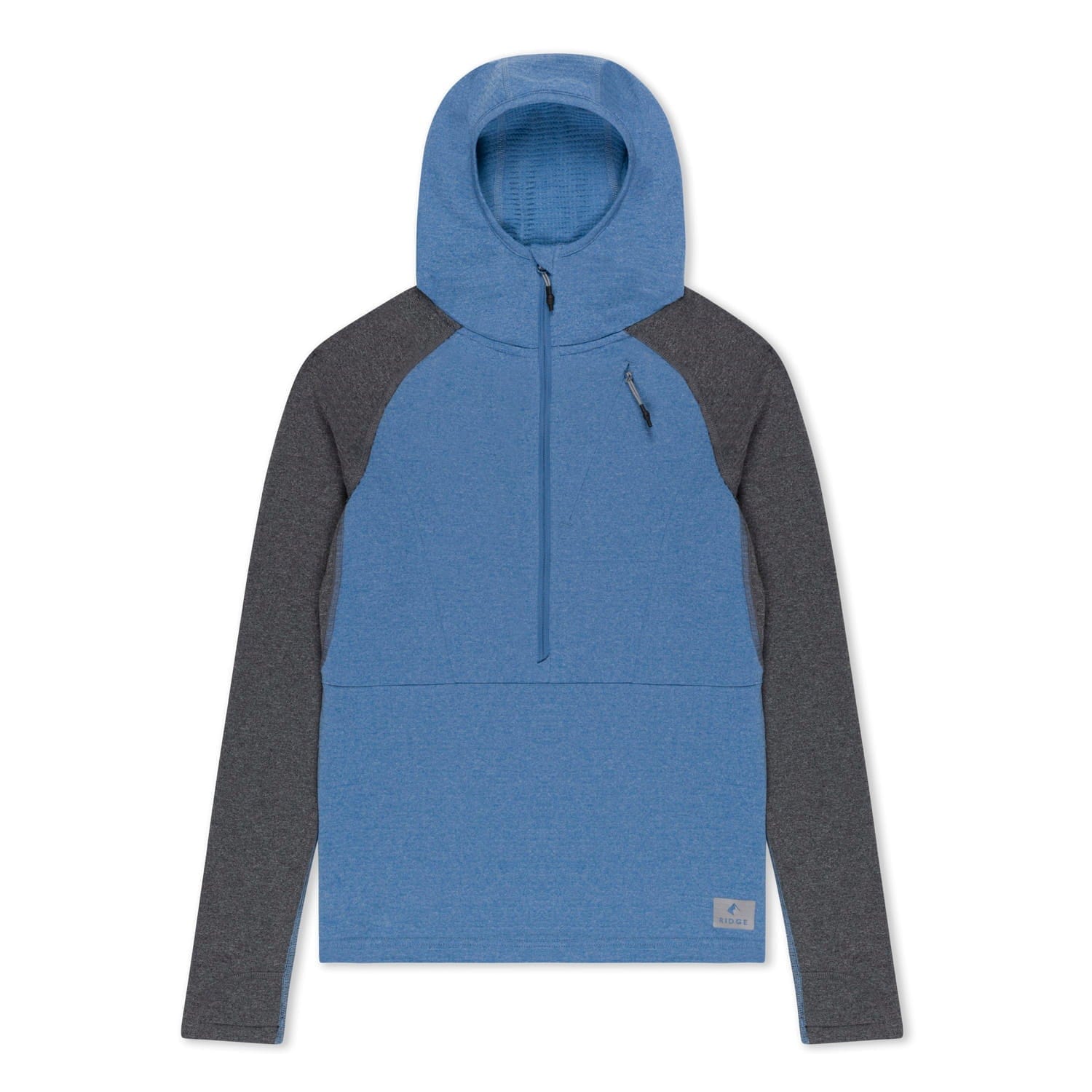
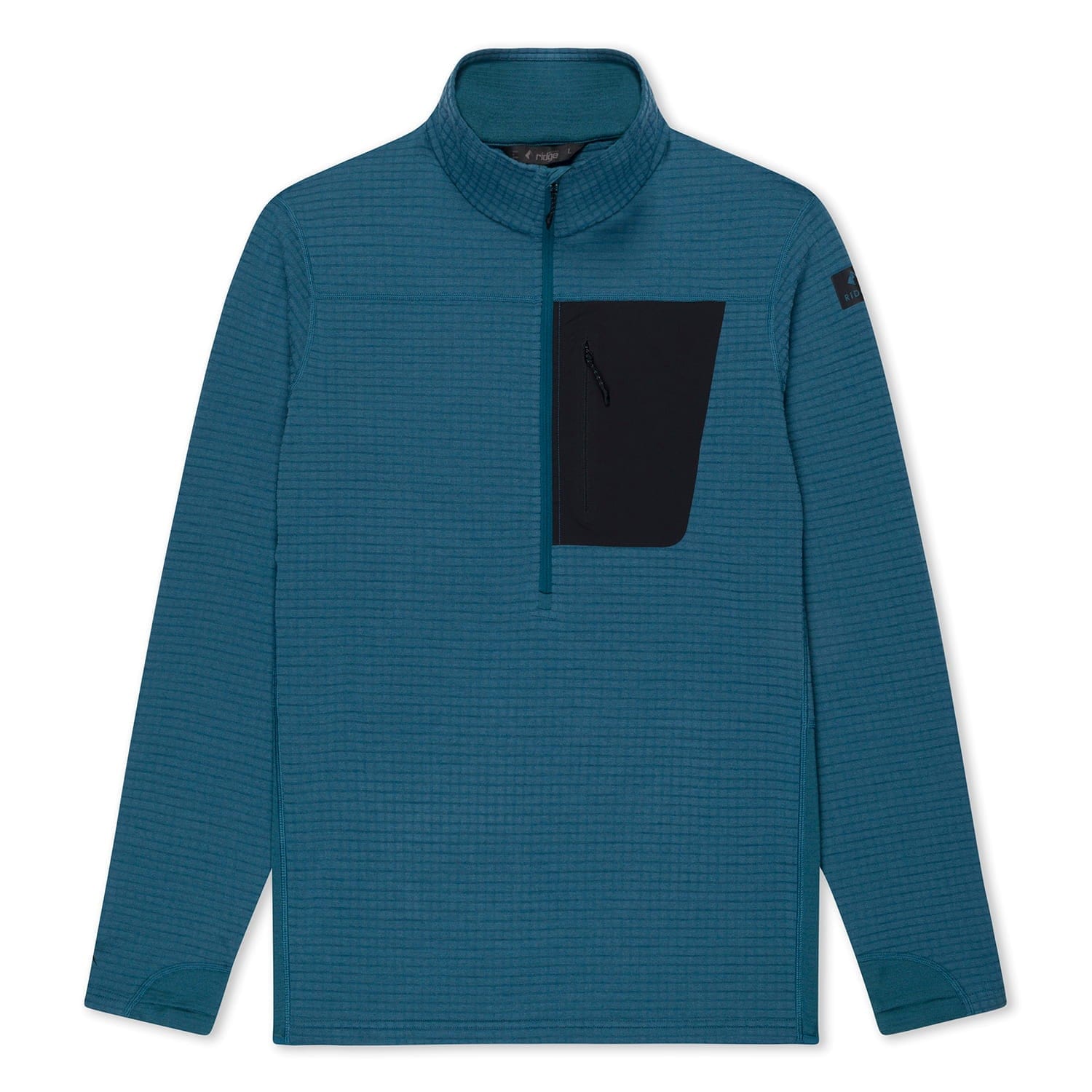
- #4 Merino Convict Canyon Half Zip — RidgeThe Ridge Merino Convict Canyon Half Zip is tailored for long-distance backpackers, mountain hunters, and multi-day trekkers who value the natural thermoregulating and odor-resistant benefits of merino wool. It serves hikers who need a dependable, lightweight midlayer capable of staying fresh through days of continuous trail wear without requiring a washing machine. Weighing a minimalist 9 ounces, this layer uses a technical hybrid blend composed of 51% polyester, 42% merino wool, and 7% spandex. The interior features a grid-fleece pattern that traps warm air pockets against the body while moving perspiration away from the skin. The inclusion of polyester gives the fabric structural durability and speeds up drying times, while the merino component controls odor-causing bacteria and stabilizes body temperature across shifting weather patterns. The main trade-offs stem from its stripped-down, ultralight design. With a half-zip configuration and no hand pockets, the garment favors minimalism over storage and venting adjustability. While the synthetic reinforcement helps, merino blends inherently require gentler washing care and remain slightly more delicate under aggressive pack strap friction than full synthetic fleeces. **Highlights** - 42% merino wool content naturally neutralizes odors on multi-day trips - Interior grid structure promotes efficient air trapping and moisture wicking - Ultralight 9-ounce build minimizes pack weight for distance hikers - Deep half-zip neck allows immediate chest venting during climbs - Spandex content provides comfortable four-way stretch without sag **Watch-outs** - Half-zip design is less versatile for rapid shedding than full-zip jackets - Minimalist design lacks hand pockets for warming hands or storage - Wool content demands more careful laundering than pure synthetic garmentsRead the full profile
- Best for shoulder-season backpacking
- #5 Dawner Hooded Jacket — StioThe Stio Dawner Hooded Jacket is built for fastpackers, climbers, and minimalist backcountry travelers who require reliable synthetic warmth packed into a tiny footprint. It is ideal for variable shoulder-season conditions where surprise squalls or sudden drops in temperature demand an emergency insulating layer that fits easily into a crowded daypack. At approximately 12.2 ounces, the Dawner emphasizes packability without sacrificing functional weather resistance. The lightweight synthetic insulation retains its loft and thermal value even if exposed to condensation or driving sleet, outperforming down in damp, wet-heavy regions like the Pacific Northwest. Encased in a tightly woven, weather-shedding shell, the jacket can serve as a brisk-weather standalone outer layer or slip smoothly beneath a rain shell when conditions deteriorate. Because the jacket relies on a continuous protective shell fabric rather than open-air fleece panels, its active breathability is limited. If you wear the Dawner during strenuous uphill efforts, heat and sweat will build up faster than in a hybrid or grid-fleece layer, requiring you to unzip or pack it away until you hit the summit. Additionally, the gossamer shell fabric requires care around sharp climbing hardware and trail hazards. **Highlights** - Lightweight 12.2-ounce profile compresses down into compact pack space - Synthetic insulation maintains thermal efficiency when exposed to moisture - Weather-resistant shell fabric cuts wind and sheds light precipitation - Streamlined, low-bulk hood seals out cold drafts around the head and ears - Clean exterior styling transitions smoothly between technical trails and travel **Watch-outs** - Traps moisture faster during high-output climbs than open-knit grid fleeces - Ultralight outer shell requires caution around sharp rock and dense brush - Higher retail price point around $249 for a minimalist synthetic jacketRead the full profile
- Best for car camping
- #6 Steens Mountain 2.0 — ColumbiaThe Columbia Steens Mountain 2.0 is designed for car campers, casual day hikers, and budget-conscious outdoorspeople who want straightforward, reliable fleece insulation without paying for high-end alpine features. It excels as an everyday campsite layer, a cool-weather neighborhood walking jacket, or a supplemental insulating piece for non-technical winter recreation. Constructed from traditional, dense polyester fleece, the Steens Mountain 2.0 weighs roughly 14.4 ounces in men’s sizing and 14 ounces in women’s sizing. The jacket uses classic, double-sided brushed fleece that traps a significant amount of ambient dead air, providing solid static warmth for around $65. The construction is famously durable and forgiving, tolerating rough laundering, campfire embers, and heavy everyday abuse without losing structural integrity. The trade-offs are directly tied to its non-technical design. The dense, traditional fleece fabric lacks the moisture-wicking channels of modern grid fleece, meaning it breathes poorly during strenuous ascents and gets uncomfortably clammy under sweat. It is also bulky, taking up considerable volume inside a backpacking pack, and the loose-knit construction offers virtually zero resistance to chilly wind gusts. **Highlights** - Accessible price point around $65 delivers exceptional warmth per dollar - Rugged, low-maintenance polyester fleece withstands years of heavy laundering - Full-length front zipper and stand-up collar provide classic, draft-free coverage - Zippered hand security pockets keep small personal items safe and hands warm - Relaxed cut allows effortless layering over heavy flannels and base layers **Watch-outs** - Bulky and heavy compared to modern technical alpine midlayers - Traps sweat and dries slowly during strenuous, high-output aerobic activity - Wind cuts directly through the fabric, demanding a shell in breezy weatherRead the full profile
- Best for deep-winter mountaineering
- #8 Dynawool SKuba Hoodie — KuhlThe Kuhl Dynawool SKuba Hoodie is built for mountaineers, winter trekkers, and outdoor workers who spend long hours facing deep freezes and sub-zero temperatures. Engineered specifically as a heavyweight midlayer, this garment is designed for deep-winter environments where standard thin fleeces fail to provide adequate thermal protection against sustained, biting cold. Kuhl utilizes a dense, heavyweight textile matrix composed of merino wool, polyester, and spandex. This dense construction traps substantial quantities of dead air, providing an exceptionally warm barrier against extreme thermal loss. The wool component maintains its insulating capabilities even when absorbing interior condensation, while synthetic fibers lend durability and mechanical stretch. A signature scuba-style hood wraps tightly around the neck and head, creating a draft-free seal that prevents bitter ambient air from penetrating the collar line. Because of its heavy construction, the Dynawool SKuba is highly specialized. In mild conditions or during intense, high-output uphill skinning, it will quickly cause severe overheating. It is also heavy and takes up significant pack volume, making it an impractical choice for warm shoulder-season trips or ultralight, fast-moving summer alpine pushes. **Highlights** - Heavyweight merino wool blend delivers exceptional insulation in extreme cold - Scuba-style hood design seals out drafts around the neck, chin, and ears - Dense knit construction provides better wind resistance than open-structure fleeces - Integrated thumb loops keep sleeves locked down and wrists fully protected - Sturdy synthetic reinforcement withstands rough, demanding winter mountain use **Watch-outs** - High thermal output easily causes overheating during high-intensity ascents - Heavy and bulky, consuming considerable volume inside a backpack - Overbuilt for mild, moderate, or variable shoulder-season conditionsRead the full profile
- Best for alpine and ice climbing
- #9 Proton Hoody — Arc’teryxThe Arc’teryx Proton Hoody is designed for alpine climbers, ice climbers, and ski mountaineers who need sustained static warmth combined with active permeability during strenuous climbs in cold alpine environments. While similar in purpose to the Atom, the Proton is specifically engineered to handle higher abrasion and provide greater continuous airflow during movement. Built around an air-permeable Fortius Air 20 nylon face fabric and a 20D Toray liner, the Proton allows excess vapor to escape freely while maintaining a tough exterior that resists tearing against sharp granite and ice screws. Between the fabrics sits Coreloft Compact synthetic insulation, which maintains loft even when damp with sweat or spindrift. Unlike garments with fleece side panels, the Proton provides continuous insulation throughout the torso and arms, offering better static warmth during frigid belays while still venting vapor through the permeable outer shell. That continuous air permeability means the Proton does not block wind completely; strong gusts on exposed belay ledges will cut into the insulation unless shielded by a hardshell. Furthermore, the specialized materials and alpine-specific construction place the Proton in the upper echelon of technical midlayer pricing. **Highlights** - Fortius Air 20 nylon face fabric provides class-leading abrasion resistance - Fully air-permeable design allows continuous vapor transfer during exertion - Coreloft Compact synthetic insulation maintains dependable warmth when damp - Helmet-compatible, insulated hood with single-pull drawcord adjustment - Chest pocket and high hand pockets remain accessible while wearing a harness **Watch-outs** - Air-permeable construction allows high winds to penetrate without a shell - Premium alpine price point represents a significant gear investment - Slightly heavier and less compressible than minimalist packable puffiesRead the full profile
- Best for resort ski midlayer
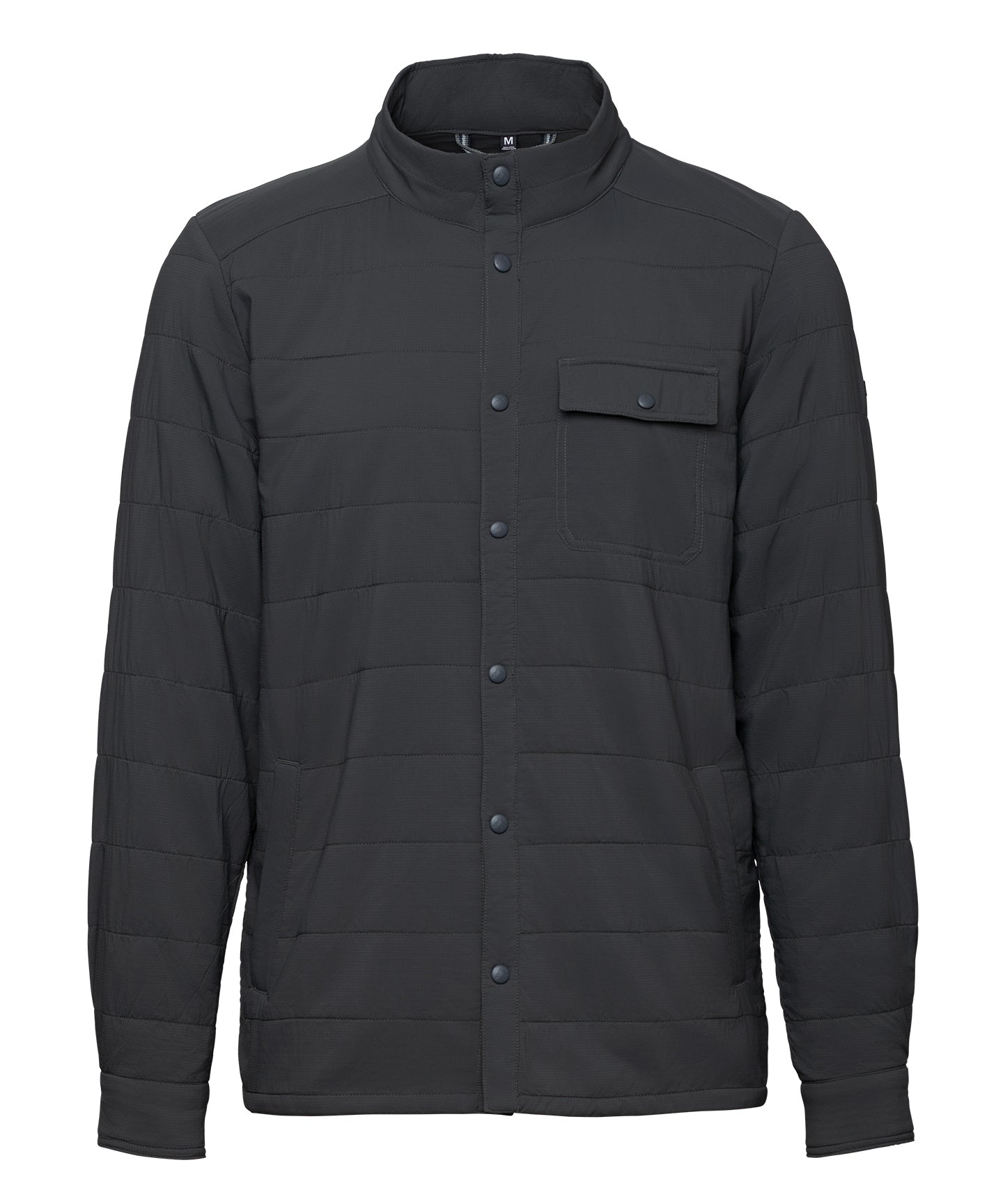
- #10 Highlands Shirt Jacket — StrafeThe Strafe Highlands Shirt Jacket is designed for freeride skiers, mountain-town locals, and outdoor adventurers seeking a versatile crossover piece that blends technical midlayer warmth with casual, everyday workshirt aesthetics. It is ideal for cool days at the resort, chilly campfire evenings, and shoulder-season trail walks where technical alpine appearance feels out of place. Weighing approximately 10.4 ounces, the Highlands Shirt Jacket combines a lightweight synthetic fill with a smooth, wind-resistant outer shell. The insulation provides dependable warmth for brisk days, while the snap-front placket and fold-down collar deliver a clean, timeless silhouette. Its smooth interior lining slides effortlessly over base layers or t-shirts, making it exceptionally easy to throw on when temperatures drop around the trailhead. The compromises relate directly to its lifestyle-oriented construction. The snap-front closure is noticeably slower to operate and far more prone to letting cold drafts enter between snaps than a continuous, draft-flapped zipper. Additionally, the lack of an alpine hood leaves your head and neck exposed to elements, and the premium $319 price tag makes it a luxury purchase compared to purely technical performance midlayers. **Highlights** - Lightweight 10.4-ounce design delivers versatile warmth for town and trail - Synthetic insulation provides reliable thermal performance in damp conditions - Casual snap-front shirt design bridges outdoor function with everyday wear - Smooth inner lining glides effortlessly over base layers and flannels - Dual chest flap pockets provide accessible storage for everyday essentials **Watch-outs** - Front snap closure allows cold drafts to penetrate in windy mountain weather - Lacks a protective hood for technical alpine weather and storm protection - High retail price around $319 reflects lifestyle crossover styling over pure utilityRead the full profile
Our editors test the gear, pick the ten, and set the order the day a list publishes. After that, the ranking is live: every member star rating feeds the community order, so picks climb or slide as real owners report back. Editorial judgment decides what earns a spot — you help decide where it sits.
- Editors set the field
Hands-on testing and spec research choose the ten and the published order.
- Readers re-rank it
Your 1–5 star ratings drive the community order on every list.
- Rankings keep moving
Picks rise or fall over time — nothing is frozen at launch day.
Rank this list
Loading community ratings… Ratings re-order the picks — they never change which products make the list.
Sign in to add your own ratings — it's free.
- Pros
- Flat-faced exterior layers smoothly under outerwear without bunching
- Brushed interior micro-grid balances warmth and moisture venting
- Generous four-way stretch accommodates wide ranges of motion
- Snug, low-profile hood fits comfortably under climbing helmets
Cons- Zero standalone wind protection requires carrying an outer shell
- Trim athletic fit accommodates only thin base layers underneath
- Higher price point than conventional fleece midlayers
Key features- Fabric Weight
- 6.5 oz / sq yd Technostretch
- Material
- 91% recycled polyester, 9% spandex
- Category
- Fleece midlayer
- Fit
- Slim / Athletic fit
- Closure
- Full-length center front zipper
- Hood Style
- Low-profile, under-helmet design
Best forSki touring, Alpine and ice climbing, Cold-weather hiking, Winter mountaineering
Pros- Flat-faced exterior layers smoothly under outerwear without bunching
- Brushed interior micro-grid balances warmth and moisture venting
- Generous four-way stretch accommodates wide ranges of motion
- Snug, low-profile hood fits comfortably under climbing helmets
Cons- Zero standalone wind protection requires carrying an outer shell
- Trim athletic fit accommodates only thin base layers underneath
- Higher price point than conventional fleece midlayers
Assessed by Renata Cho against our ranking criteria.No ratings yet - Pros
- Balanced temperature regulation during stop-and-go mountain output
- Soft internal lining slides smoothly over wool and synthetic base layers
- Synthetic Coreloft insulation retains thermal loft in damp environments
- Low-profile StormHood fits comfortably under or over climbing helmets
Cons- Uninsulated fleece side panels allow cold winds to cut through quickly
- 20-denier shell requires care around rough rock and dense foliage
- High initial price point relative to traditional synthetic midlayers
Key features- Weight
- 12.5 oz / 354 g
- Retail Price
- Approximately $300
- Insulation
- Coreloft Compact synthetic fill (60 g/m²)
- Face Fabric
- 20-denier Tyono nylon with DWR finish
- Side Panels
- Air-permeable stretch fleece
- Layering Role
- Active midlayer or standalone dry-weather outer
Best forBackcountry Ski Touring, Alpine Rock and Ice Climbing, Cold Weather Mountain Trekking, Shoulder Season Active Layering
Pros- Balanced temperature regulation during stop-and-go mountain output
- Soft internal lining slides smoothly over wool and synthetic base layers
- Synthetic Coreloft insulation retains thermal loft in damp environments
- Low-profile StormHood fits comfortably under or over climbing helmets
Cons- Uninsulated fleece side panels allow cold winds to cut through quickly
- 20-denier shell requires care around rough rock and dense foliage
- High initial price point relative to traditional synthetic midlayers
Assessed by Renata Cho against our ranking criteria.No ratings yet - Pros
- Exceptional breathability prevents overheating on steep ascents
- Hollow-core yarns dry rapidly to prevent post-exertion chill
- Fitted under-helmet hood adds low-bulk warmth without excess fabric
- Off-shoulder seams eliminate chafing under heavy backpack straps
Cons- Zero wind resistance requires carrying an additional outer shell
- Lofted zigzag knit is susceptible to snagging on rock and brush
- Insufficient static insulation for sedentary use in freezing camp settings
Key features- Weight (Men's)
- 13 oz.
- Weight (Women's)
- 11 oz.
- Retail Price
- Around $199
- Insulation
- Hollow-core 100% recycled polyester fleece
- Hood Style
- Fitted under-helmet hood
- Pockets
- Zippered chest pocket, two hand pockets
Best forBackcountry ski touring, Winter trail running, Cold alpine climbing, High-output snowshoeing
Pros- Exceptional breathability prevents overheating on steep ascents
- Hollow-core yarns dry rapidly to prevent post-exertion chill
- Fitted under-helmet hood adds low-bulk warmth without excess fabric
- Off-shoulder seams eliminate chafing under heavy backpack straps
Cons- Zero wind resistance requires carrying an additional outer shell
- Lofted zigzag knit is susceptible to snagging on rock and brush
- Insufficient static insulation for sedentary use in freezing camp settings
Assessed by Renata Cho against our ranking criteria.No ratings yet - Pros
- Merino blend effectively suppresses odor across multiple days of continuous trail wear
- Nine-ounce total weight keeps pack payload minimal for ultralight hikers
- Internal grid channels provide an exceptional balance of warmth and ventilation
- Generous four-way stretch moves fluidly during high-mobility scrambles
Cons- Half-zip pullover format is less versatile for rapid shedding than full-zip styles
- Zero integrated pockets requires relying entirely on packs for gear storage
- High air permeability requires pairing with a shell to stop chilling winds
Key features- Weight
- 9 oz
- Fabric Blend
- 51% polyester, 42% wool, 7% spandex
- Interior
- Brushed grid-knit channels
- Front Closure
- Deep half-zip front
- Pockets
- None (streamlined build)
Best forMulti-day backcountry backpacking, Shoulder-season fastpacking, High-output ski touring, Cool-weather trail running
Pros- Merino blend effectively suppresses odor across multiple days of continuous trail wear
- Nine-ounce total weight keeps pack payload minimal for ultralight hikers
- Internal grid channels provide an exceptional balance of warmth and ventilation
- Generous four-way stretch moves fluidly during high-mobility scrambles
Cons- Half-zip pullover format is less versatile for rapid shedding than full-zip styles
- Zero integrated pockets requires relying entirely on packs for gear storage
- High air permeability requires pairing with a shell to stop chilling winds
Assessed by Renata Cho against our ranking criteria.No ratings yet - Pros
- Compresses down tightly to consume minimal backpack volume
- Synthetic insulation retains warmth in wet and humid environments
- Wind-resistant exterior doubles as a capable standalone outer layer
- Close-fitting hood seals effectively against cold drafts
Cons- Traps sweat quickly during steep, high-output ascents
- Ultralight face fabric requires caution around abrasive rock
- Premium $249 price point sits high for a minimalist piece
Key features- Weight
- 12.2 oz
- Insulation Type
- Synthetic fill
- Approximate MSRP
- $249
- Key Recognition
- Most Packable (Outside Magazine)
- Intended Fit
- Streamlined athletic cut
- Category
- Insulated hooded jacket
Best forShoulder-Season Backpacking, Alpine Rock Scrambling, Emergency Packable Warmth, Damp-Climate Day Hiking
Pros- Compresses down tightly to consume minimal backpack volume
- Synthetic insulation retains warmth in wet and humid environments
- Wind-resistant exterior doubles as a capable standalone outer layer
- Close-fitting hood seals effectively against cold drafts
Cons- Traps sweat quickly during steep, high-output ascents
- Ultralight face fabric requires caution around abrasive rock
- Premium $249 price point sits high for a minimalist piece
Assessed by Renata Cho against our ranking criteria.No ratings yet - Pros
- High thermal warmth output for an accessible price point
- Rugged polyester fleece withstands rough use and frequent laundering
- Relaxed fit accommodates thick underlayers without binding
- Deep zippered hand pockets keep small items secure
Cons- Bulky packed size takes up substantial pack space
- Zero wind resistance requires an outer shell in breezy conditions
- Traps moisture and breathes poorly during steep, aerobic ascents
Key features- Published Weight
- 14.4 oz (men's) / 14.0 oz (women's)
- Midlayer Type
- Full-zip fleece jacket
- Insulation
- 100% polyester brushed fleece
- Standard MSRP
- Approximately $65
- Pockets
- Two zippered handwarmer pockets
- Fit Profile
- Regular, relaxed cut
Best forCar Camping, Casual Day Hiking, Cold-Weather Yard Chores, Everyday Commuting
Pros- High thermal warmth output for an accessible price point
- Rugged polyester fleece withstands rough use and frequent laundering
- Relaxed fit accommodates thick underlayers without binding
- Deep zippered hand pockets keep small items secure
Cons- Bulky packed size takes up substantial pack space
- Zero wind resistance requires an outer shell in breezy conditions
- Traps moisture and breathes poorly during steep, aerobic ascents
Assessed by Renata Cho against our ranking criteria.No ratings yet - Pros
- Merino blend regulates temperature and resists multi-day odor buildup
- Full-length front zipper enables rapid mechanical venting on steep climbs
- Spandex component provides unrestricted mobility under technical shells
- Soft brushed interior feels comfortable directly over bare skin or base layers
Cons- Dries slower than fully synthetic grid fleeces when heavily soaked with sweat
- Pack volume and total weight exceed minimalist ultralight midlayer pullovers
- Requires gentle laundry care and line drying to avoid damaging wool fibers
Key features- Weight Class
- Midweight midlayer
- Fabric Blend
- Merino wool, polyester, and spandex
- Closure Style
- Full-length front zipper
- Odor Control
- Natural merino wool resistance
- Primary Recognition
- Best Full Zip Midlayer (Treeline Review)
- Care Requirement
- Gentle wash cycle, line dry recommended
Best forBackcountry ski touring, Cold weather hiking, Resort skiing midlayer, Multi-day winter travel
Pros- Merino blend regulates temperature and resists multi-day odor buildup
- Full-length front zipper enables rapid mechanical venting on steep climbs
- Spandex component provides unrestricted mobility under technical shells
- Soft brushed interior feels comfortable directly over bare skin or base layers
Cons- Dries slower than fully synthetic grid fleeces when heavily soaked with sweat
- Pack volume and total weight exceed minimalist ultralight midlayer pullovers
- Requires gentle laundry care and line drying to avoid damaging wool fibers
Assessed by Renata Cho against our ranking criteria.No ratings yet - Pros
- Substantial thermal output built specifically for deep-winter conditions
- Merino wool blend preserves insulation value and controls odor over multi-day trips
- Form-fitting scuba hood creates an effective draft barrier around the neck and chin
- Dense outer knit provides far greater abrasion resistance than thin active shells
Cons- Excessive warmth causes rapid overheating during high-intensity ascents
- Heavier and significantly more voluminous to pack than modern synthetic midlayers
- Takes longer to dry than lightweight, 100-percent synthetic grid fleeces
Key features- Primary Material
- Merino wool, polyester, and spandex blend
- Layer Category
- Heavyweight midlayer hoodie
- Hood Style
- Fitted scuba-style hood
- Intended Conditions
- Sub-freezing and extreme deep winter
- Key Feature
- Integrated thumb loops and high draft collar
Best forDeep-winter mountaineering, Sub-zero backcountry trekking, Cold-weather camp insulation, Freezing-temperature field work
Pros- Substantial thermal output built specifically for deep-winter conditions
- Merino wool blend preserves insulation value and controls odor over multi-day trips
- Form-fitting scuba hood creates an effective draft barrier around the neck and chin
- Dense outer knit provides far greater abrasion resistance than thin active shells
Cons- Excessive warmth causes rapid overheating during high-intensity ascents
- Heavier and significantly more voluminous to pack than modern synthetic midlayers
- Takes longer to dry than lightweight, 100-percent synthetic grid fleeces
Assessed by Renata Cho against our ranking criteria.No ratings yet - Pros
- High abrasion resistance relative to other breathable active midlayers
- Full-body continuous synthetic insulation avoids cold spots from fleece panels
- Retains warmth effectively even when damp from exertion or spindrift
- Clean alpine patterning accommodates climbing harnesses and helmets easily
Cons- Air-permeable shell offers minimal defense against strong alpine winds
- Heavier and less compressible than dedicated down-filled alternatives
- Premium pricing represents a significant investment for a midlayer
Key features- Insulation Type
- Coreloft Compact synthetic fill
- Face Fabric
- Fortius Air 20 nylon plain weave
- Lining Fabric
- 20D Toray air-permeable textile
- Hood Design
- Adjustable, helmet-compatible insulated hood
- Pocket Layout
- Dual zippered hand pockets, zippered chest pocket
- Fit Profile
- Trim fit for low-bulk layering
Best forAlpine and ice climbing, Cold-weather backcountry ski touring, Winter mountaineering midlayer, Chilly shoulder-season technical scrambles
Pros- High abrasion resistance relative to other breathable active midlayers
- Full-body continuous synthetic insulation avoids cold spots from fleece panels
- Retains warmth effectively even when damp from exertion or spindrift
- Clean alpine patterning accommodates climbing harnesses and helmets easily
Cons- Air-permeable shell offers minimal defense against strong alpine winds
- Heavier and less compressible than dedicated down-filled alternatives
- Premium pricing represents a significant investment for a midlayer
Assessed by Renata Cho against our ranking criteria.No ratings yet - Pros
- Clean, classic shirt styling transitions seamlessly from town to trail
- Lightweight at 10.4 ounces while providing reliable synthetic warmth
- Slick interior lining glides over textured underlayers without binding
- Dual snap chest pockets offer secure storage for smaller items
Cons- Snap-front placket allows cold wind to penetrate between closures
- High retail price around $319 limits its value compared to dedicated midlayers
- Lacks an insulated hood and zippered hand pockets for cold weather
Key features- Weight
- 10.4 oz
- Insulation
- Synthetic fill
- Closure
- Full snap-button front
- Pockets
- Dual snap chest pockets
- MSRP
- Approximately $319
- Primary Style
- Insulated shirt jacket
Best forResort Ski Midlayer, Shoulder-Season Day Hiking, Everyday Mountain Town Wear, Campfire and Cabin Lounging
Pros- Clean, classic shirt styling transitions seamlessly from town to trail
- Lightweight at 10.4 ounces while providing reliable synthetic warmth
- Slick interior lining glides over textured underlayers without binding
- Dual snap chest pockets offer secure storage for smaller items
Cons- Snap-front placket allows cold wind to penetrate between closures
- High retail price around $319 limits its value compared to dedicated midlayers
- Lacks an insulated hood and zippered hand pockets for cold weather
Assessed by Renata Cho against our ranking criteria.No ratings yet




Award picks
The ranking above is price-blind and judged on merit. These awards call out the pick we'd hand a specific person with a specific need.
Best Overall: R1 Thermal Full-Zip Hoody — Patagonia
The Patagonia R1 Thermal Full-Zip Hoody is designed for alpinists, ski tourers, and cold-weather hikers who require dependable thermal efficiency paired with rapid moisture…
Ranked #1Runner-Up: Atom Hoody — Arc’teryx
The Arc’teryx Atom Hoody (formerly the Atom LT) is built for alpine climbers, backcountry skiers, and cold-weather backpackers who need a versatile hybrid layer that bridges the…
Ranked #2Best Value: R1 Air Hoody — Patagonia
The Patagonia R1 Air Hoody is engineered specifically for fast-and-light mountain athletes, trail runners, and ski mountaineers who produce high heat in cold environments.
Ranked #3Best Ultralight Pick: Merino Convict Canyon Half Zip — Ridge
The Ridge Merino Convict Canyon Half Zip is tailored for long-distance backpackers, mountain hunters, and multi-day trekkers who value the natural thermoregulating and…
Ranked #4Best for Rough Use: Steens Mountain 2.0 — Columbia
The Columbia Steens Mountain 2.
Ranked #6Best for Beginners: Highlands Shirt Jacket — Strafe
The Strafe Highlands Shirt Jacket is designed for freeride skiers, mountain-town locals, and outdoor adventurers seeking a versatile crossover piece that blends technical midlayer…
Ranked #10For high-output endurance objectives where moisture management is paramount, dedicated grid fleeces like the Patagonia R1 Thermal Hoody and R1 Air Hoody remain benchmark active layers. If your cold-weather outings involve windy belays, ridge travel, or start-and-stop efforts, synthetic puffies like the Arc’teryx Atom Hoody and Proton Hoody deliver superior wind protection and static warmth. Meanwhile, budget-conscious day hikers will find reliable everyday insulation in the Columbia Steens Mountain 2.0, and natural-fiber advocates can depend on Ridge Merino's versatile wool-blend lineup.
How to choose insulated vests and midlayers
Every pick on this page was judged against the same criteria. If you want the short answer, R1 Thermal Full-Zip Hoody by Patagonia is the one we point most people at. If you want to decide for yourself, here is what actually separates a good insulated vests and midlayer from an expensive one.
Fabric behavior over time
Breathability, DWR life, loft retention, and how the piece performs after repeated washing.
Real-world durability
How the material, stitching, or steel holds up after a season of hard use — not how it looks new.
Performance in bad conditions
Wind, rain, cold, and grit are the test. Anything that only works on a nice day gets marked down.
Weight and packability
Every ounce has to earn its place in the pack, but not at the cost of something that fails in the field.
Ease of use
Setup, adjustment, and maintenance with cold hands, in the dark, without the manual.
Value at its price point
Compared against the closest competitors in the same tier, not against cheaper gear in a different class.
Match the pick to your use
The right insulated vests and midlayers depends on what you are actually doing with it: Ski touring; Alpine and ice climbing; Cold-weather hiking; Winter mountaineering; Backcountry Ski Touring; Alpine Rock and Ice Climbing. Start from the use case, then work down the ranking until you hit the first pick that covers it.
Common mistakes
- Buying the lightest insulated vests and midlayers you can find and discovering it cannot take a season of hard use.
- Paying for a specialist feature you will use once a year instead of the versatile option.
- Comparing headline specs across tiers instead of within the same class.
- Skipping fit, sizing, or adjustment checks that decide whether you actually carry it.
Frequently asked questions
- What is the best insulated vests and midlayers in 2026?
- R1 Thermal Full-Zip Hoody by Patagonia takes the top spot. The Patagonia R1 Thermal Full-Zip Hoody is designed for alpinists, ski tourers, and cold-weather hikers who require dependable thermal efficiency paired with rapid moisture transfer.
- How did The Wild10 choose and rank these insulated vests and midlayers?
- We judged every pick against the same criteria — fabric behavior over time, real-world durability, performance in bad conditions, weight and packability — and ranked them on merit regardless of price. We synthesized expert field testing and consensus awards to rank the 10 best insulated vests and midlayers for staying warm, dry, and mobile in cold weather.
- What is the best budget insulated vests and midlayers?
- Atom Hoody by Arc’teryx — The Arc’teryx Atom Hoody (formerly the Atom LT) is built for alpine climbers, backcountry skiers, and cold-weather backpackers who need a versatile hybrid layer that bridges the gap between a breathable fleece and a weather-resistant puffy.
- R1 Thermal Full-Zip Hoody vs Atom Hoody — which should I pick?
- R1 Thermal Full-Zip Hoody ranks first: The Patagonia R1 Thermal Full-Zip Hoody is designed for alpinists, ski tourers, and cold-weather hikers who require dependable thermal efficiency paired with… Atom Hoody is the close second: The Arc’teryx Atom Hoody (formerly the Atom LT) is built for alpine climbers, backcountry skiers, and cold-weather backpackers who need a versatile hybrid… Our full head-to-head compares them side by side.
- How often is this list updated?
- We review this ranking on a rolling basis and update it whenever a pick is discontinued, meaningfully revised, or beaten by something new. Rankings are editorial — brands do not see them before publication and affiliate links never change the order.
Get The Field List
One short, honest email a week: gear we actually trust, planning guides, and survival-TV coverage. Free, unsubscribe anytime.