


Reader rating
Rate it and you move it. Community ratings re-rank this product inside its Top 10 list.
Expert-picked, reader-ranked. Our editors choose the products and the launch order; member star ratings move picks up or down over time.
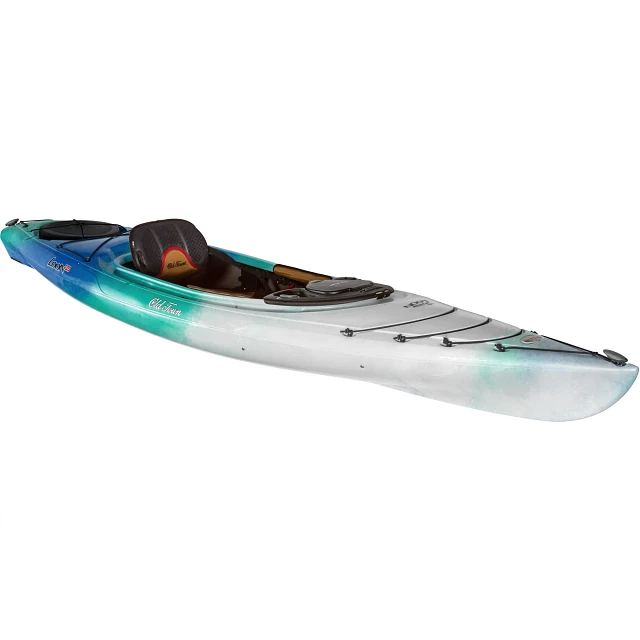
The Old Town Loon 120 rivals the top spot in recreational paddling, offering a traditional, exceptionally stable sit-inside experience. Old Town built the Loon around a sharp keel line and a clean entry bow, giving it surprisingly fast acceleration and crisp forward tracking for a boat in this class. It targets paddlers who want a dependable, do-it-all platform for lakes, ponds, and calm tidal marshes without dealing with the sluggishness common to wide recreation hulls. Construction is based on Old Town's three-layer polyethylene process, which creates a rigid, impact-resistant hull that limits hull flex under power while shrugging off impacts against submerged gravel and dock edges. Comfort is anchored by the Active Comfort System 2.0 (ACS2) seat, which provides intuitive pull-cord adjustments, breathable padding, and solid lumbar support. The boat also features a removable workdeck equipped with dry storage and USB-ready cord routes, giving day-trippers and casual anglers a tidy place to secure gear within reach. The durability of three-layer polyethylene comes at the cost of weight. The Loon 120 is noticeably heavy, making transport from vehicle to water a workout without a dedicated cart. Additionally, its tracking efficiency means turning requires deliberate edging or wide sweep strokes compared to more maneuverable, rockered river craft. **Highlights** - Rigid three-layer polyethylene construction built for maximum impact resistance - Sharp keel design delivering clean tracking and efficient glide - ACS2 seating system featuring straightforward cord-operated adjustability - Removable workdeck with integrated hatch and gear tracks - Stern Click Seal hatch providing watertight storage behind a sealed bulkhead **Watch-outs** - Substantial overall weight makes solo transport and cartopping cumbersome - Stiff tracking reduces responsiveness in tight, winding river channels
Pros
- Rigid three-layer polyethylene hull withstands heavy impacts and resists flexing
- Sharp keel and bow entry deliver excellent straight-line tracking and glide
- ACS2 seating system provides comprehensive, cord-adjustable ergonomic support
- Removable cockpit workdeck offers handy dry storage and accessory mounting
Cons
- Substantial overall weight makes solo transport and cartopping demanding
- Strong forward tracking limits quick turning in narrow, winding streams
Best uses
- Flatwater Lake Touring
- Calm River Paddling
- Recreational Kayak Photography
- Casual Inshore Day Trips
Specifications
- Kayak Style
- Sit-inside recreational
- Length
- 12 feet
- Hull Construction
- Three-layer polyethylene
- Seating System
- Active Comfort System 2.0 (ACS2)
- Bulkhead Storage
- Stern Click Seal hatch
- Deck Outfitting
- Removable utility workdeck
Pricing
We don't publish a price we haven't verified. The retailer links below open the live listing for this exact model.
Full catalog listing & offersBest for
Flatwater Lake Touring, Calm River Paddling, Recreational Kayak Photography, Casual Inshore Day Trips
Where to buy the Loon 120
We don't have a direct Amazon listing on file yet — this opens an Amazon search for the exact make and model.
Some links are affiliate links. Buying through them supports our testing at no extra cost to you.
The Old Town Loon 120 holds a prominent reputation among traditional sit-inside recreational kayaks, designed for paddlers who prioritize predictable handling, effortless glide, and all-day comfort. At twelve feet in length, it balances a manageable footprint with enough waterline to cover flatwater distances efficiently. It is built primarily for touring quiet lakes, slow-moving rivers, and sheltered coastal inlets where consistent forward tracking matters far more than rapid pivoting. At the heart of the boat's design is Old Town's proprietary three-layer polyethylene hull, paired with a pronounced keel line that cuts cleanly through choppy surfaces. Inside the generous cockpit opening, the boat integrates the Active Comfort System 2.0 (ACS2) seating platform alongside a removable utility workdeck. These additions cater directly to day tourers, photographers, and casual anglers who want essential gear secured directly in front of them without sacrificing legroom. While its performance on the water sets a high standard for the recreational class, the Loon 120 requires commitment off the water. The robust multi-layer plastic makes it substantially heavy to haul and load onto vehicle racks solo, and the hull’s insistence on holding a straight line means tight river maneuvering requires deliberate, assertive paddle strokes.
Materials and Hull Construction
Old Town builds the Loon 120 using a closed-cell foam core sandwiched between outer layers of high-density polyethylene. This three-layer rotomolded approach yields a hull that is substantially stiffer than standard single-layer plastic recreational boats. The added rigidity prevents hull distortion—often referred to as oil-canning—under strong forward strokes or in hot summer sun. On rocky shores and sandy launches, the outer skin tolerates scrapes against gravel, submerged debris, and concrete boat ramps without compromising its structural integrity. While lighter composite kayaks offer easier portaging, the Loon’s multi-layer build delivers the peace of mind needed for everyday recreational launches where scrapes are inevitable. Additionally, the foam core provides positive buoyancy, complementing the integrated rear bulkhead to ensure the boat retains flotation even if the cockpit takes on water in turbulent conditions.
Glide and Tracking Dynamics
Recreational sit-inside hulls often err on the side of extreme beam width, sacrificing forward speed for primary stability. The Loon 120 avoids that sluggish feeling by pairing a stable bottom profile with a sharp bow entry and a distinct keel line running down the hull. On open lakes or calm bays, the boat tracks straight with minimal wandering between strokes, translating paddle energy into forward momentum rather than lateral wag. This efficiency makes it suitable for covering moderate distances without tiring out the paddler. The trade-off for this tracking performance is reduced responsiveness when navigating fast, winding creeks. Turning the Loon requires deliberate sweep strokes and slight hull edging; it does not pivot effortlessly on a dime like rockered river craft. For wide flatwater routes, however, its cruising behavior is remarkably composed.
Cockpit Ergonomics and Adjustability
The Loon 120 features Old Town’s Active Comfort System 2.0 (ACS2) seat, which serves as one of the most adjustable seating platforms found in a rotomolded recreational boat. The seat pan and backrest utilize vented, quick-drying padding designed to circulate air on warm days. Adjustments for backrest height, tilt angle, and thigh support under the legs are controlled via intuitive cord-lock systems, allowing paddlers to dial in their posture while seated on the water. The cockpit opening is sized generously, allowing larger paddlers to step in and out comfortably without scraping their shins against the rim. Integrated adjustable foot pegs provide firm bracing points to recruit leg drive into each paddle stroke, helping reduce lower-back strain during longer outings. Paddlers of varying heights can readily find an ergonomic configuration that avoids numbness.
Storage and Workdeck Utility
Outfitting on the Loon 120 bridges the gap between casual paddling, recreational angling, and day touring. Positioned just forward of the cockpit rim is a removable console workdeck. This console features a splash-resistant storage compartment, integrated accessory tracks, and designated channels to route small electronics or power cords. Paddlers can easily remove the entire unit if they prefer an open cockpit for easy entry. Behind the cockpit, a fully sealed stern bulkhead isolates the rear compartment, which is accessed via a rubberized Click Seal hatch. This compartment keeps extra layers and dry bags contained, while also creating an airtight flotation chamber. Deck bungees on the bow and stern provide additional exterior lash points for items like bilge pumps, dry bags, or light jackets that need immediate accessibility.
Transport and Weight Realities
The primary compromise of the Loon 120's durable three-layer hull is its significant physical bulk. Heavy recreational kayaks are notoriously cumbersome to handle on land, and the Loon is no exception. Loading the boat onto a tall vehicle roof rack without assistance requires strong upper-body mechanics or mechanical loading aids like roller bars. Moving it from a parking area to the water's edge solo quickly becomes tiring without a dedicated wheeled kayak cart, particularly across soft sand or uneven terrain. While the bow and stern feature sturdy carry handles, solo paddlers should realistically assess their hauling setup before committing. For paddlers with shoreline storage, a trailer, or a partner to share the load, the heft is negligible, but it remains a daily logistical consideration for solitary cartop travelers.
Market Context and Alternatives
Priced at the premium end of the sit-inside recreational market, the Loon 120 competes against boats like the Wilderness Systems Pungo 120 and Dagger Stratos 12.5. The Pungo offers a comparable focus on speed and cockpit consoles, utilizing single-layer polyethylene that saves some weight while sacrificing the foam-core rigidity of Old Town’s three-layer structure. Meanwhile, touring crossovers like the Dagger Stratos offer skegs and dual bulkheads for rougher coastal conditions, but they feature tighter cockpits that feel restrictive to casual recreation seekers. The Loon 120 occupies the sweet spot for paddlers who want superior durability, comfortable open-cockpit seating, and reliable tracking without transitioning into a full sea kayak. For flatwater enthusiasts willing to accept the carrying weight, it represents a lasting, well-engineered investment.
How we picked
We started with a long list of kayaks that people actually buy, cut anything that could not clear our baseline for durability and field performance, then ranked the 10 that were left against the same criteria. Rankings are editorial. No brand pays for placement, and affiliate links never move a pick up or down.
- Real-world durability
- How the material, stitching, or steel holds up after a season of hard use — not how it looks new.
- Performance in bad conditions
- Wind, rain, cold, and grit are the test. Anything that only works on a nice day gets marked down.
- Weight and packability
- Every ounce has to earn its place in the pack, but not at the cost of something that fails in the field.
- Ease of use
- Setup, adjustment, and maintenance with cold hands, in the dark, without the manual.
- Value at its price point
- Compared against the closest competitors in the same tier, not against cheaper gear in a different class.
- Repairability and support
- Field-fixable design, available parts, and a warranty the maker actually honors.
Loon 120 — frequently asked questions
- Is the Loon 120 worth it?
- We rank it #2 in Kayaks. The Old Town Loon 120 rivals the top spot in recreational paddling, offering a traditional, exceptionally stable sit-inside experience. Old Town built the Loon around a sharp keel line and a clean entry bow, giving it surprisingly fast acceleration and crisp forward tracking for a boat in this class.
- What is the Loon 120 best for?
- Best for flatwater lake touring, calm river paddling, recreational kayak photography and casual inshore day trips. Standouts: rigid three-layer polyethylene hull withstands heavy impacts and resists flexing and sharp keel and bow entry deliver excellent straight-line tracking and glide.
- What are the downsides of the Loon 120?
- Substantial overall weight makes solo transport and cartopping demanding and Strong forward tracking limits quick turning in narrow, winding streams.
- What are the key specs of the Loon 120?
- Kayak Style: Sit-inside recreational · Length: 12 feet · Hull Construction: Three-layer polyethylene · Seating System: Active Comfort System 2.0 (ACS2) · Bulkhead Storage: Stern Click Seal hatch
- Materials and Hull Construction — what should I know about the Loon 120?
- Old Town builds the Loon 120 using a closed-cell foam core sandwiched between outer layers of high-density polyethylene. This three-layer rotomolded approach yields a hull that is substantially stiffer than standard single-layer plastic recreational boats.
- Glide and Tracking Dynamics — what should I know about the Loon 120?
- Recreational sit-inside hulls often err on the side of extreme beam width, sacrificing forward speed for primary stability. The Loon 120 avoids that sluggish feeling by pairing a stable bottom profile with a sharp bow entry and a distinct keel line running down the hull.
Compare side by side
Put the Loon 120 against any other pick on this list — specs, price, pros, cons and reader ratings.